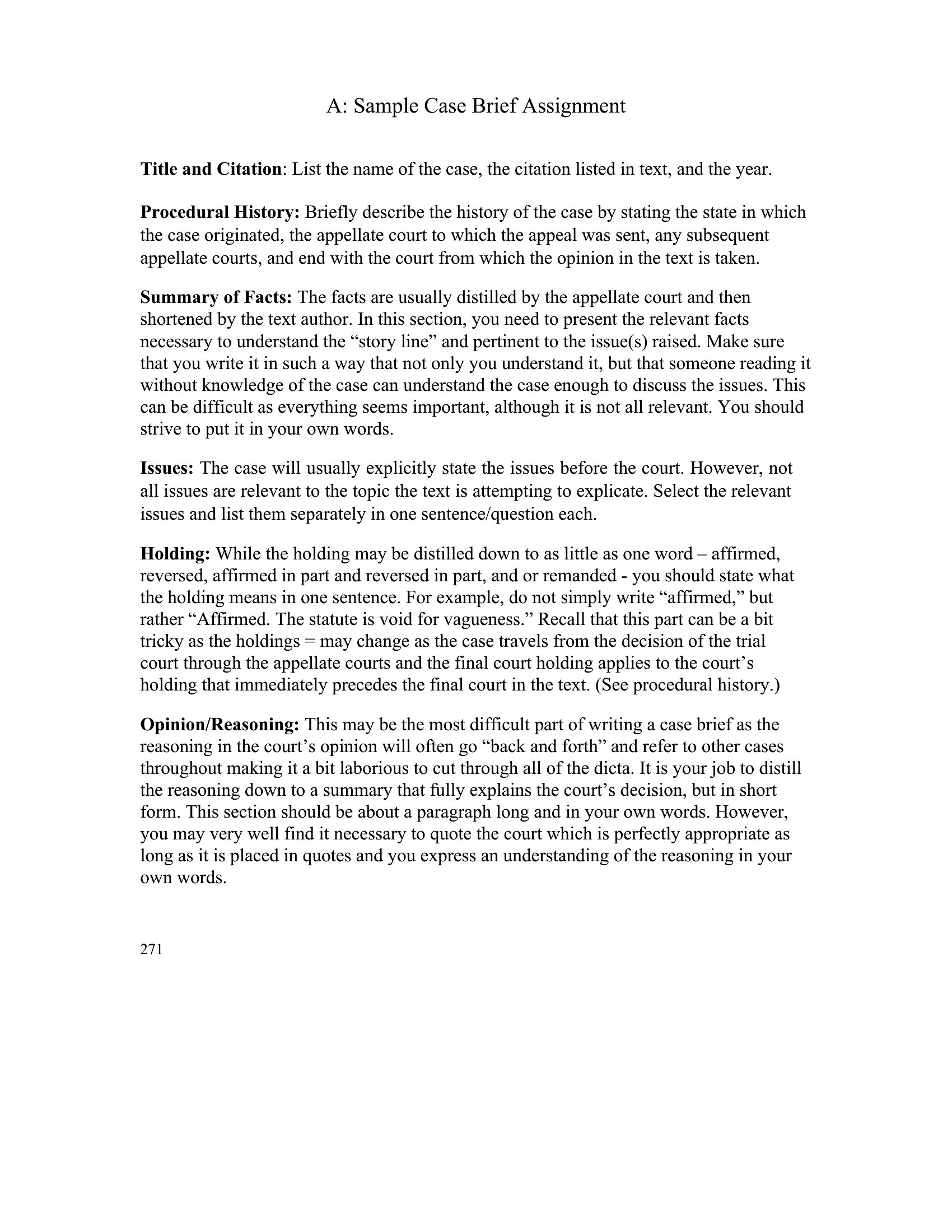
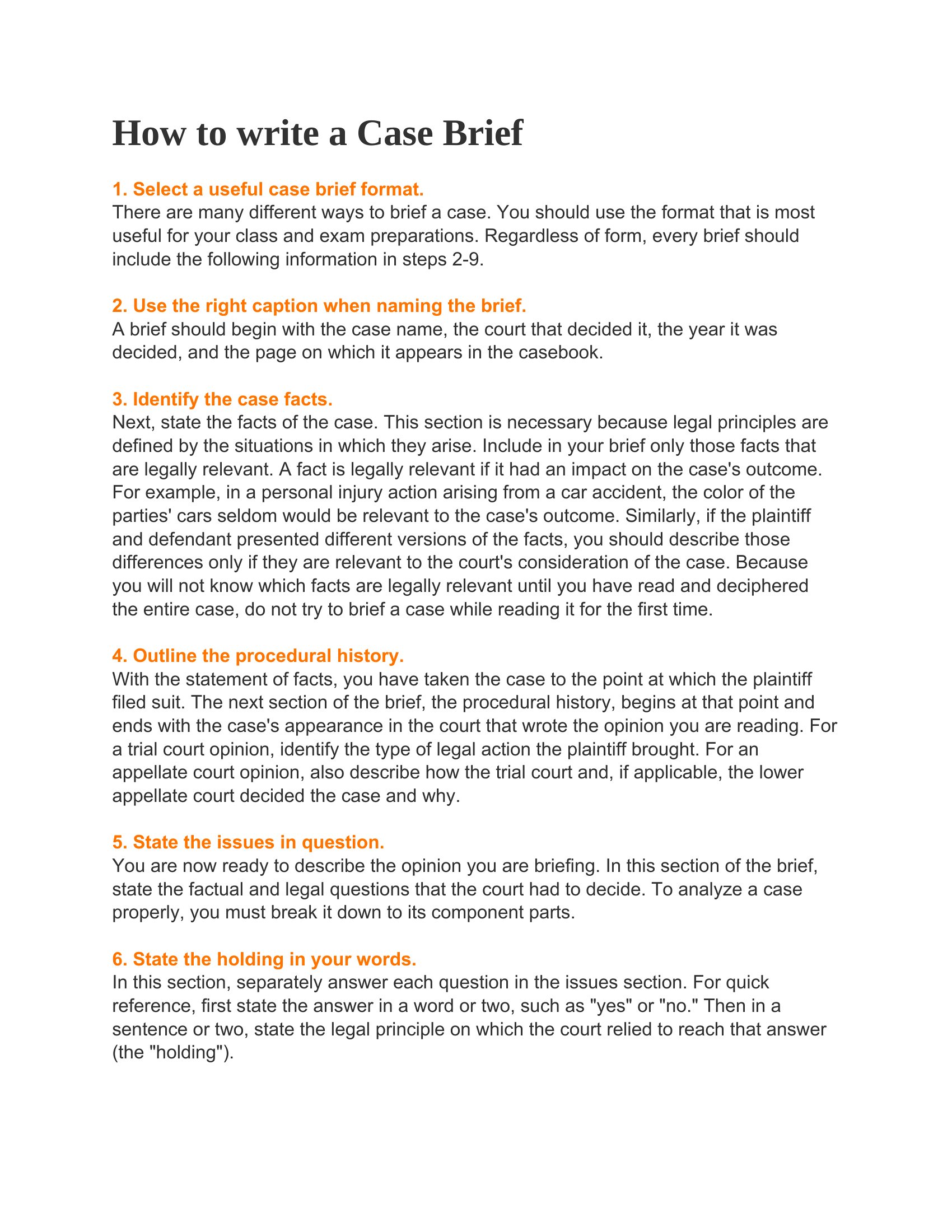
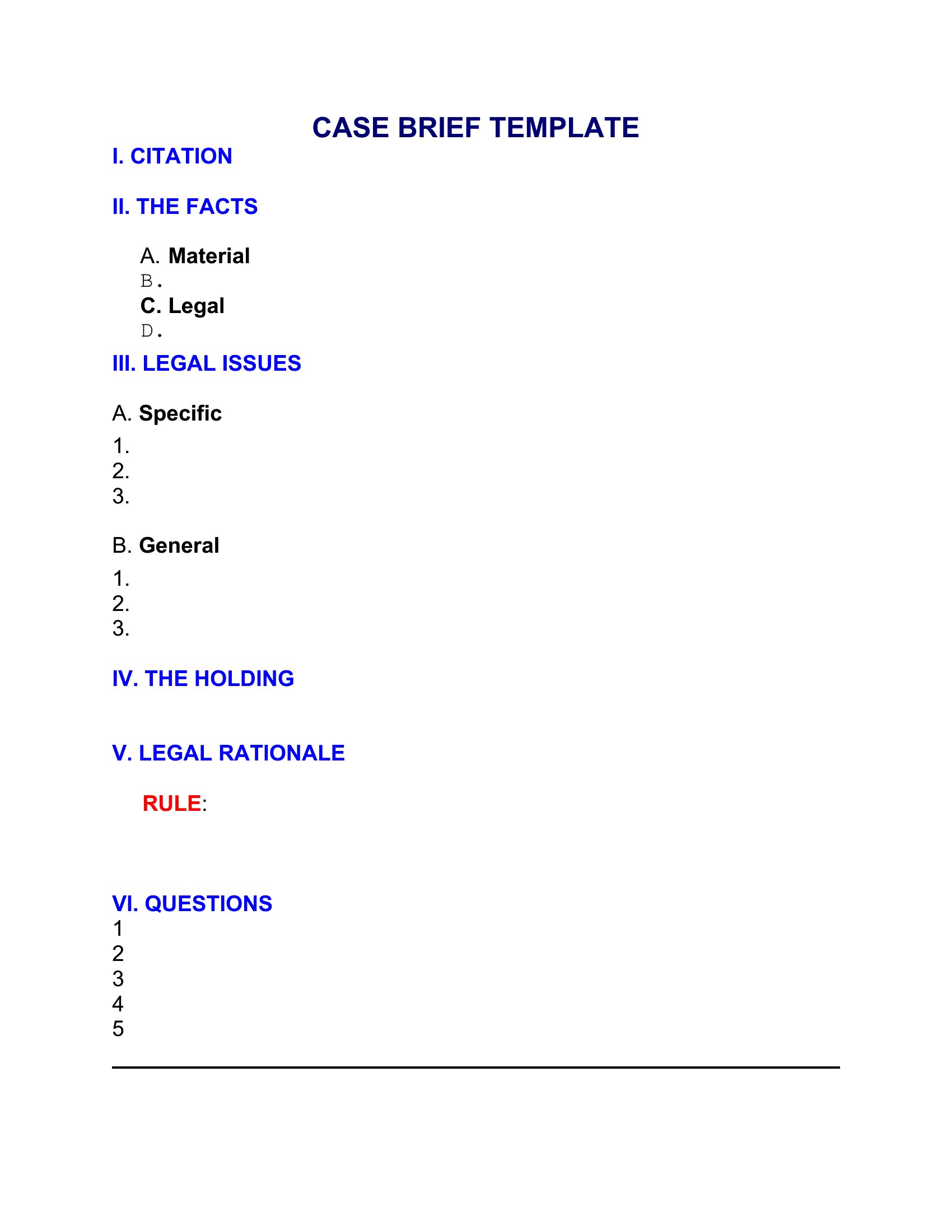
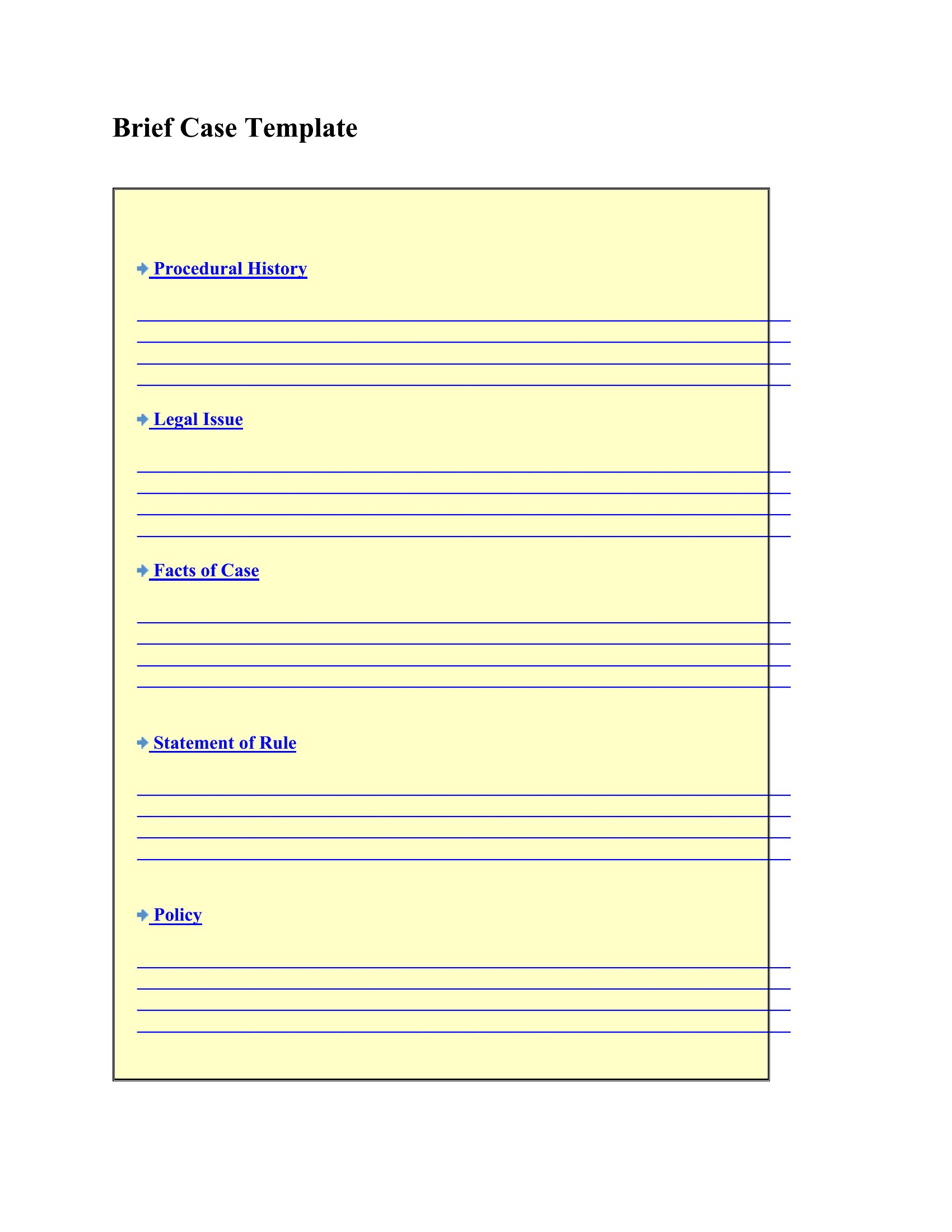
Free Case Brief Templates (Word)
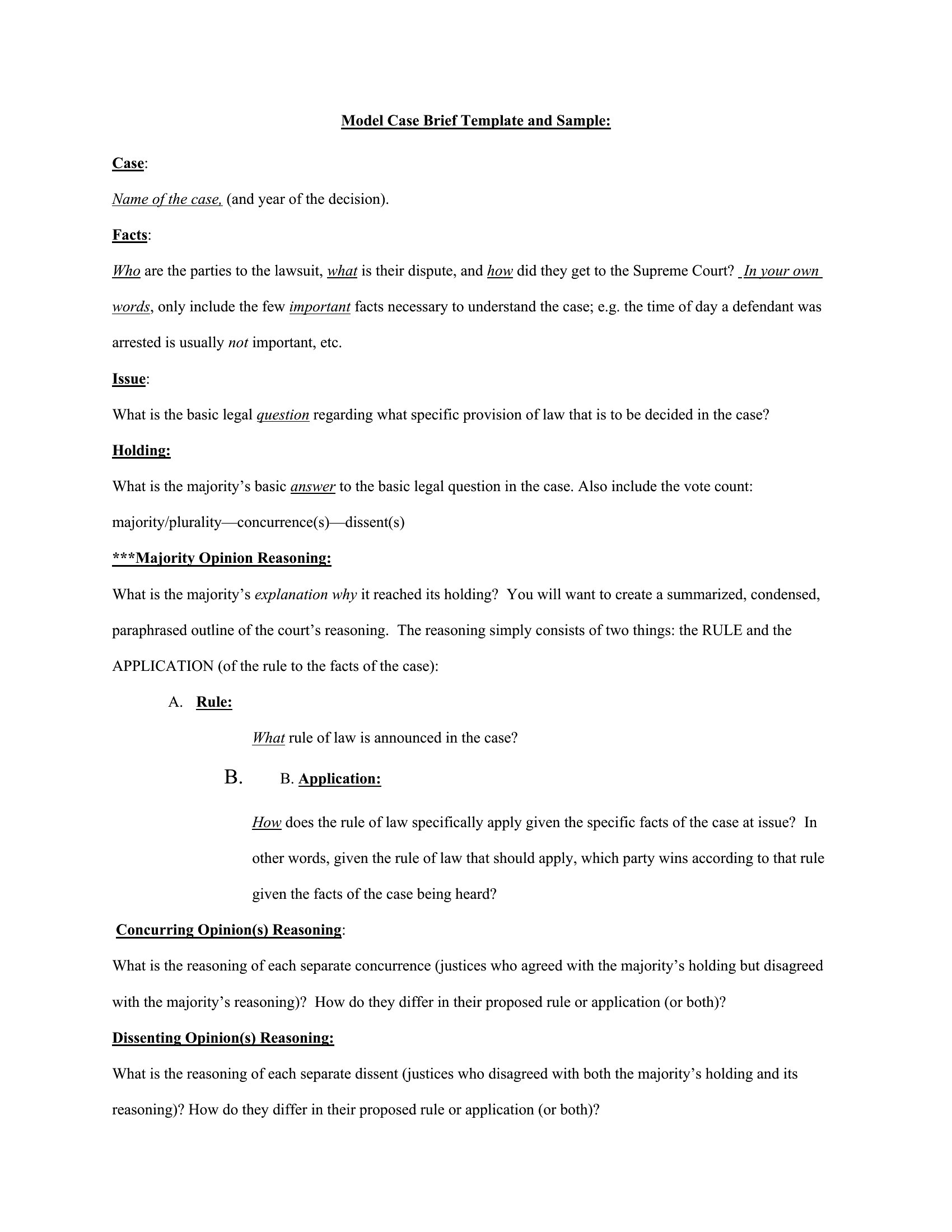
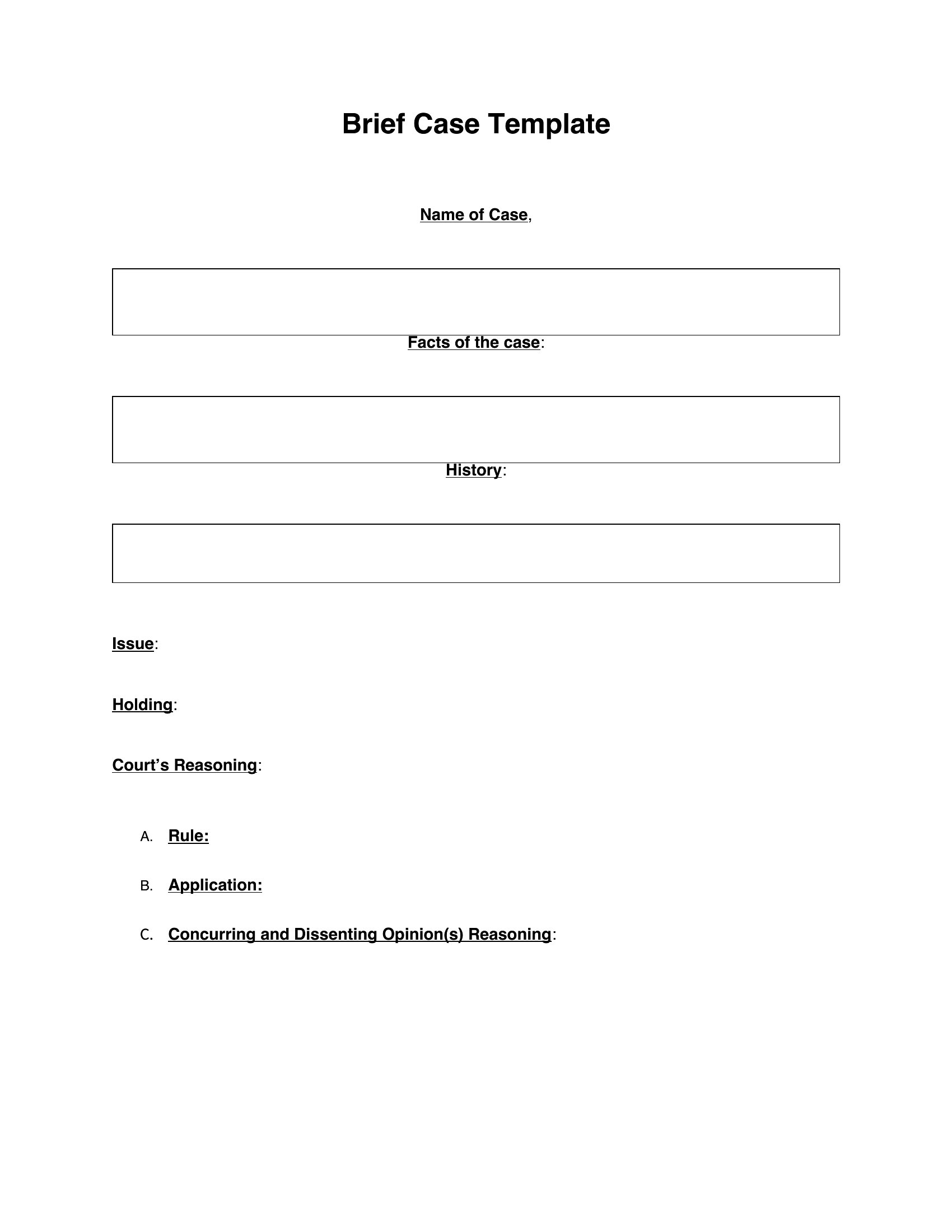
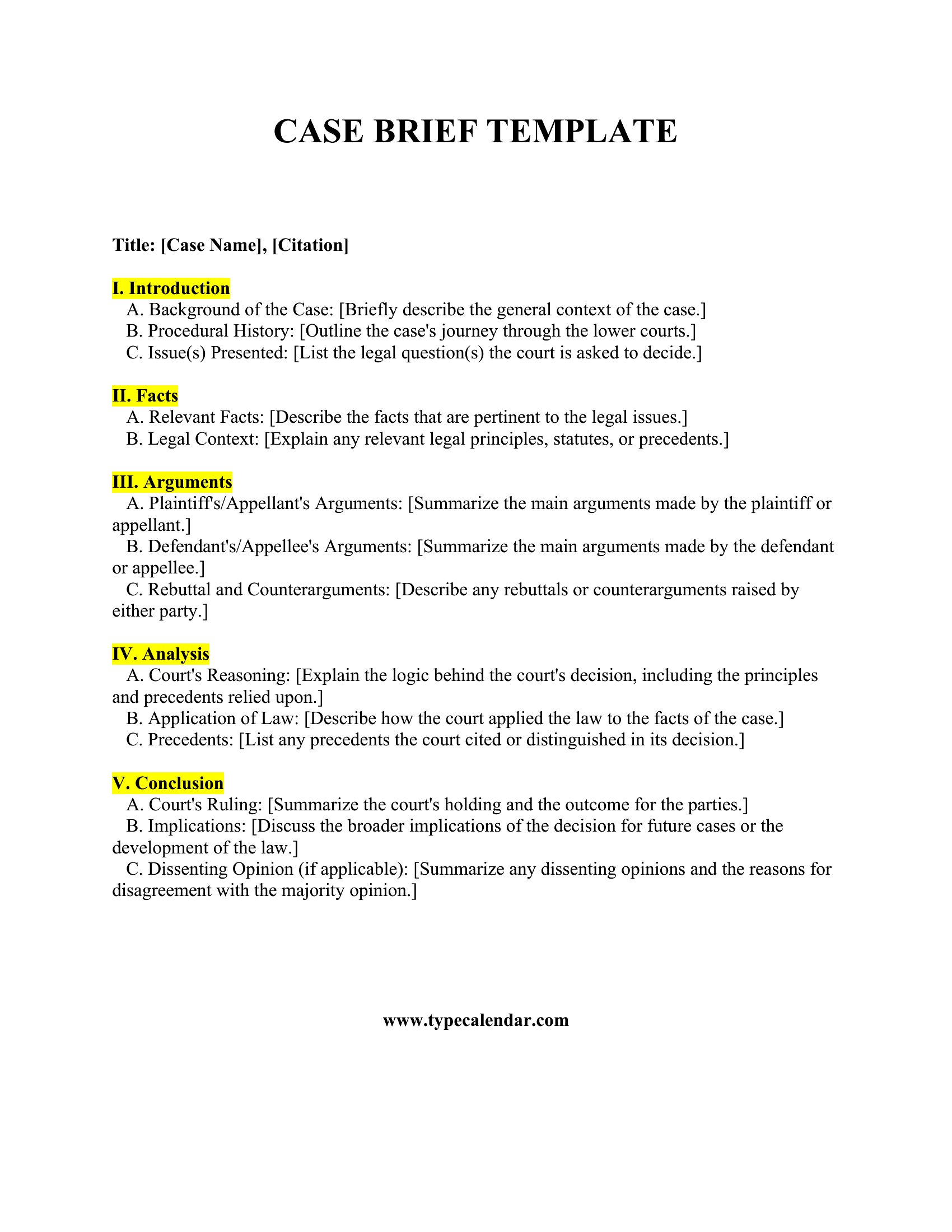
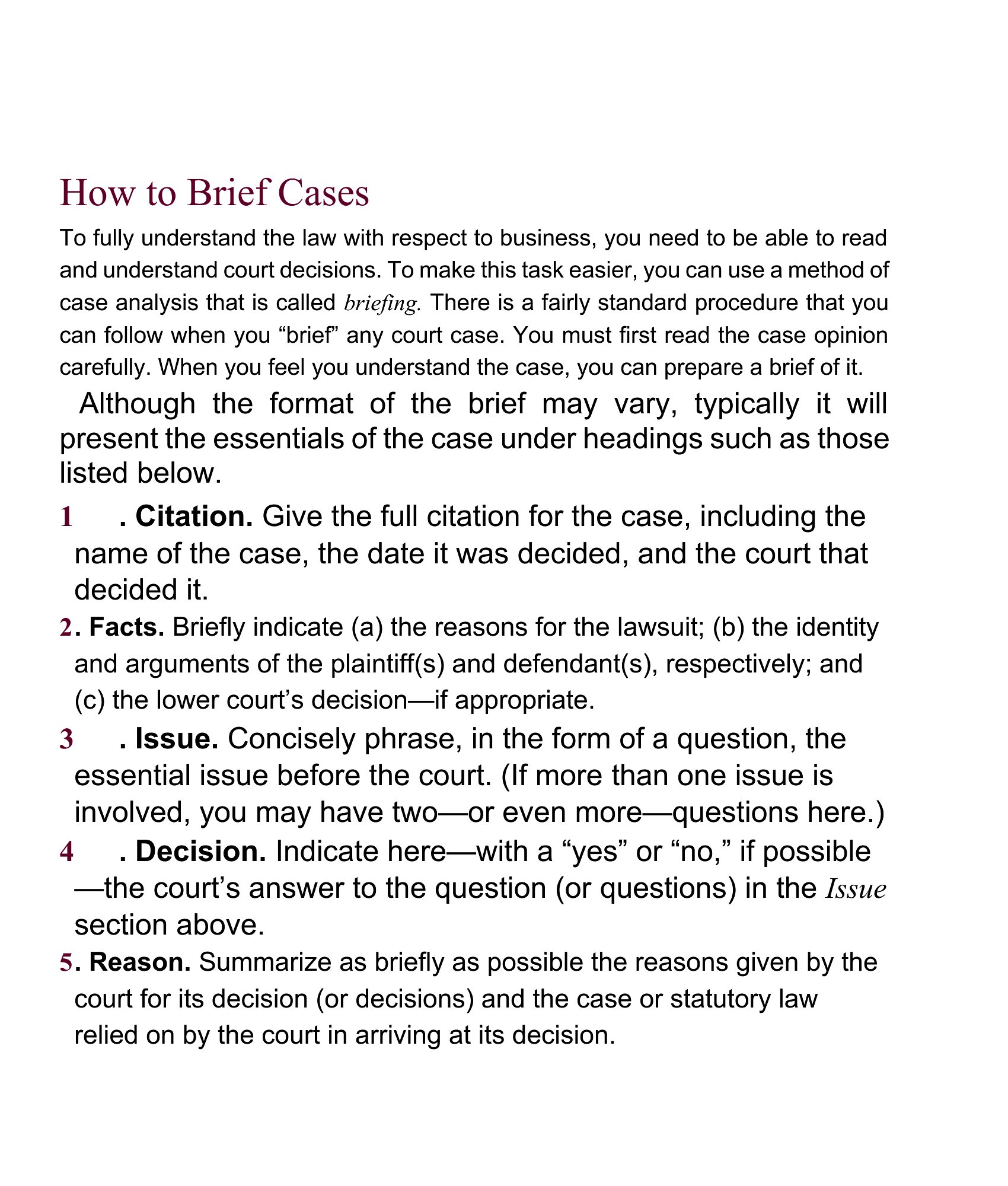
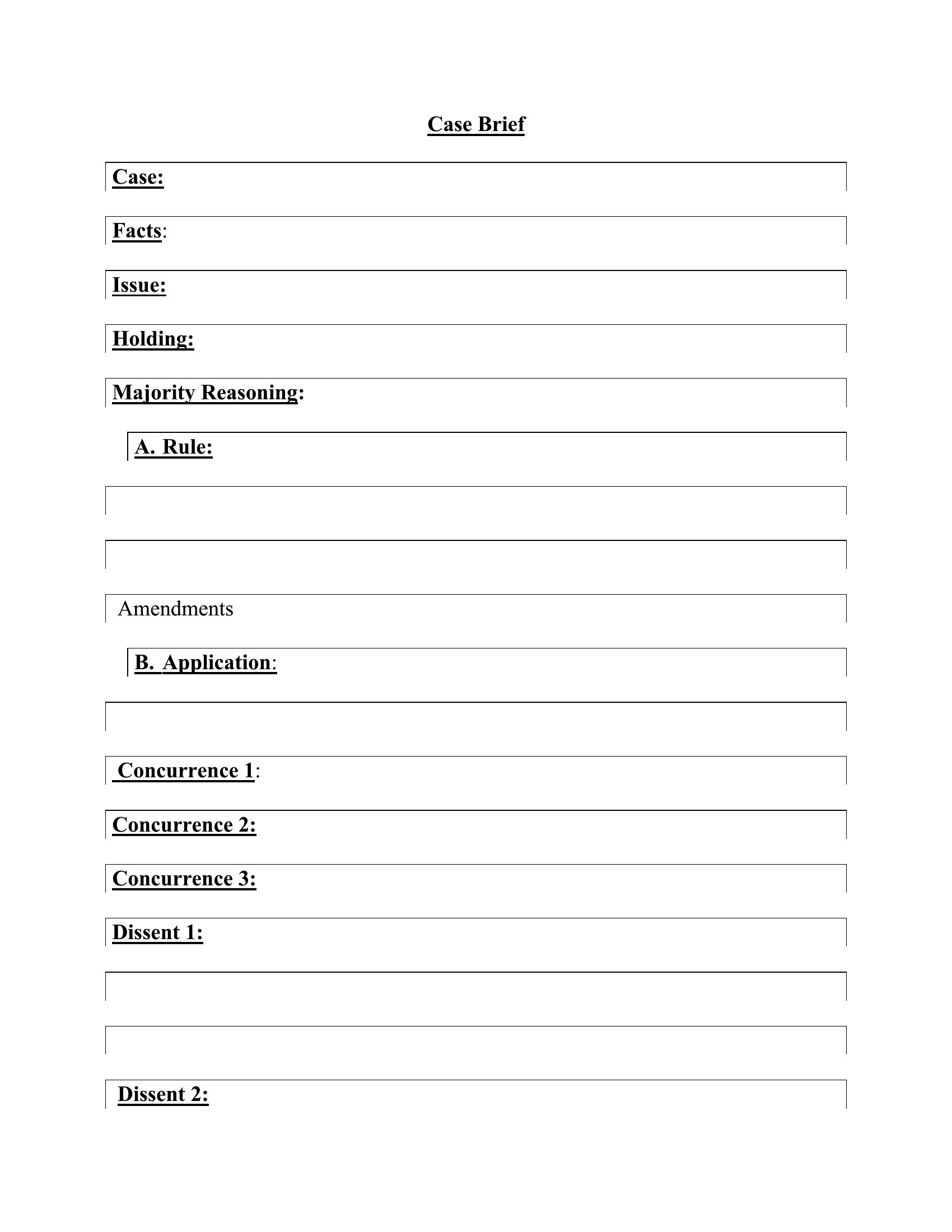
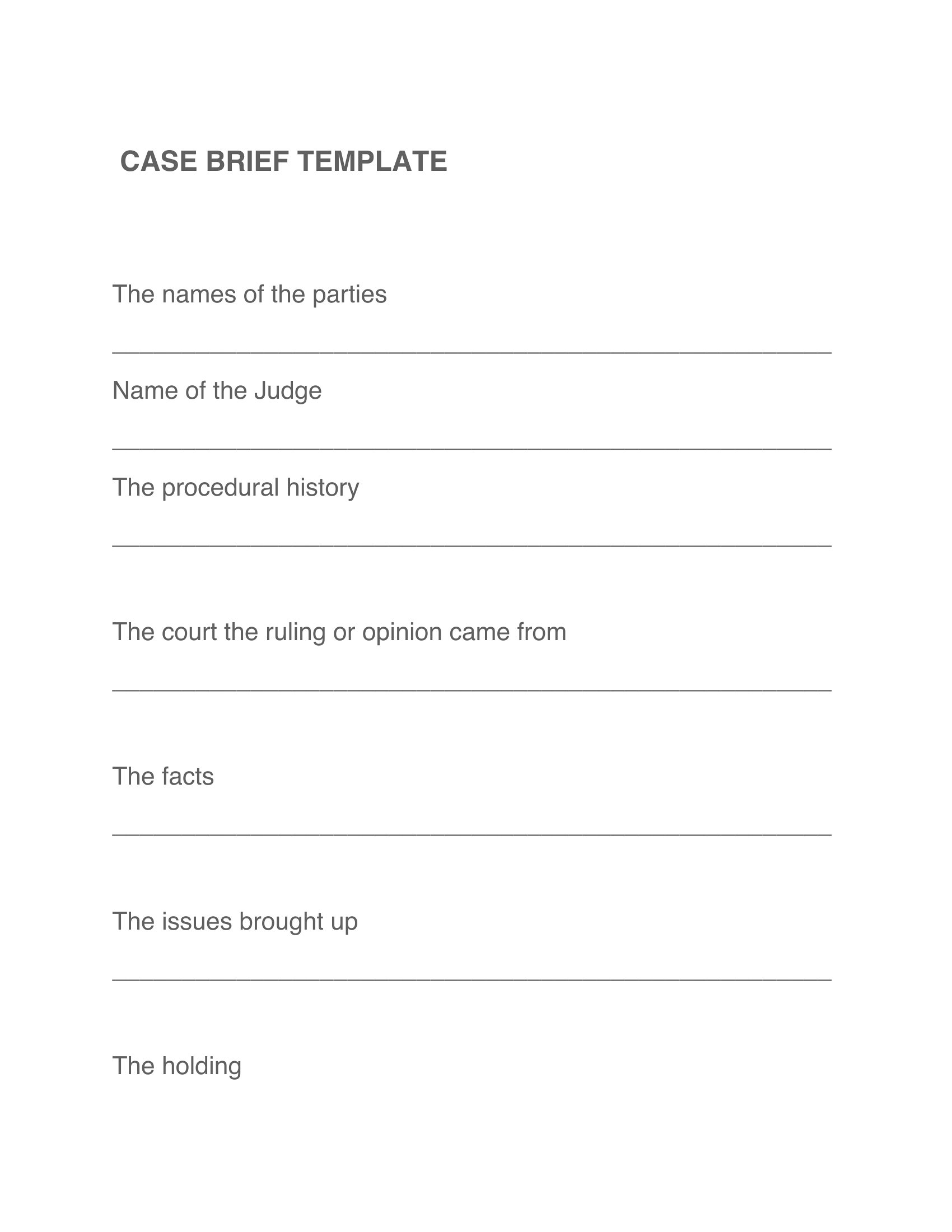
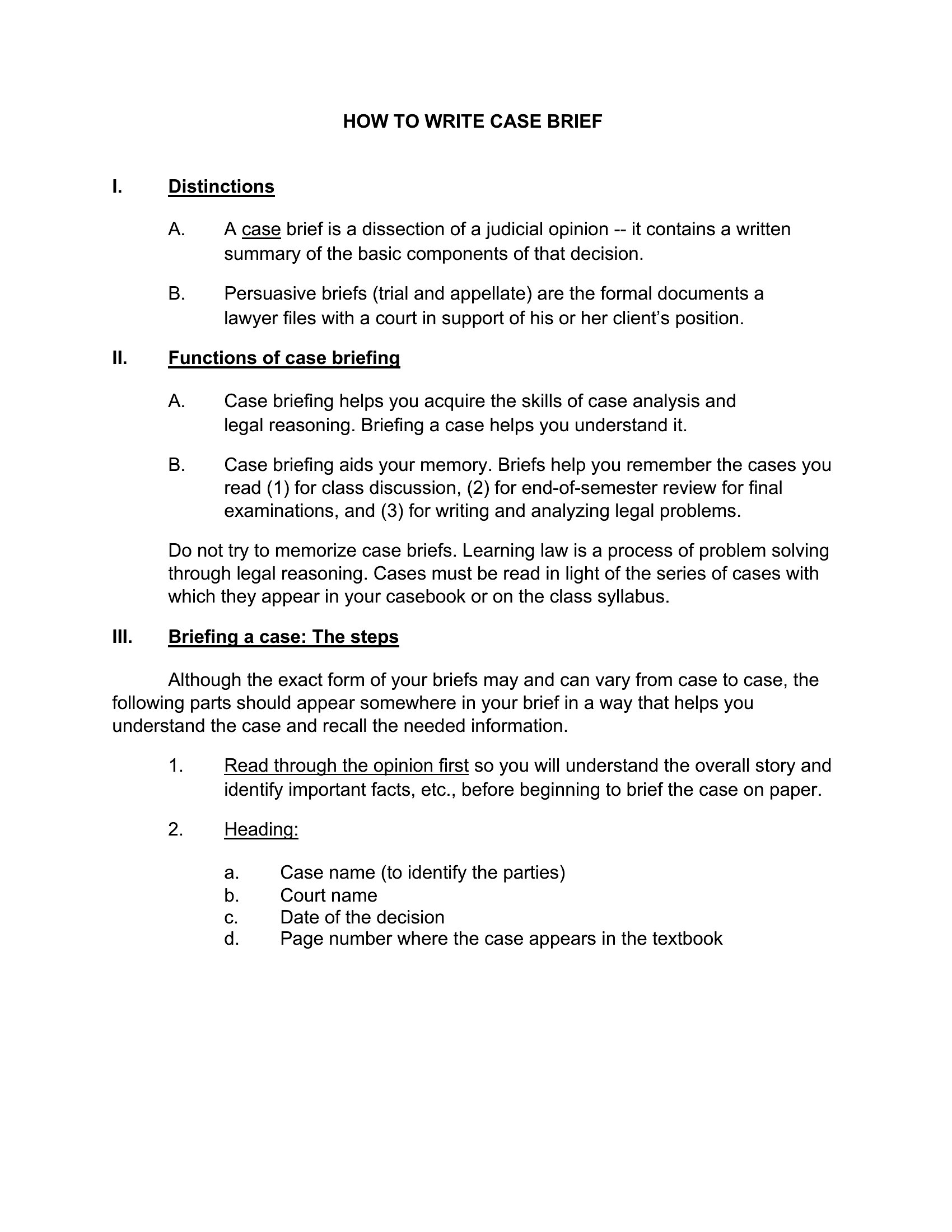
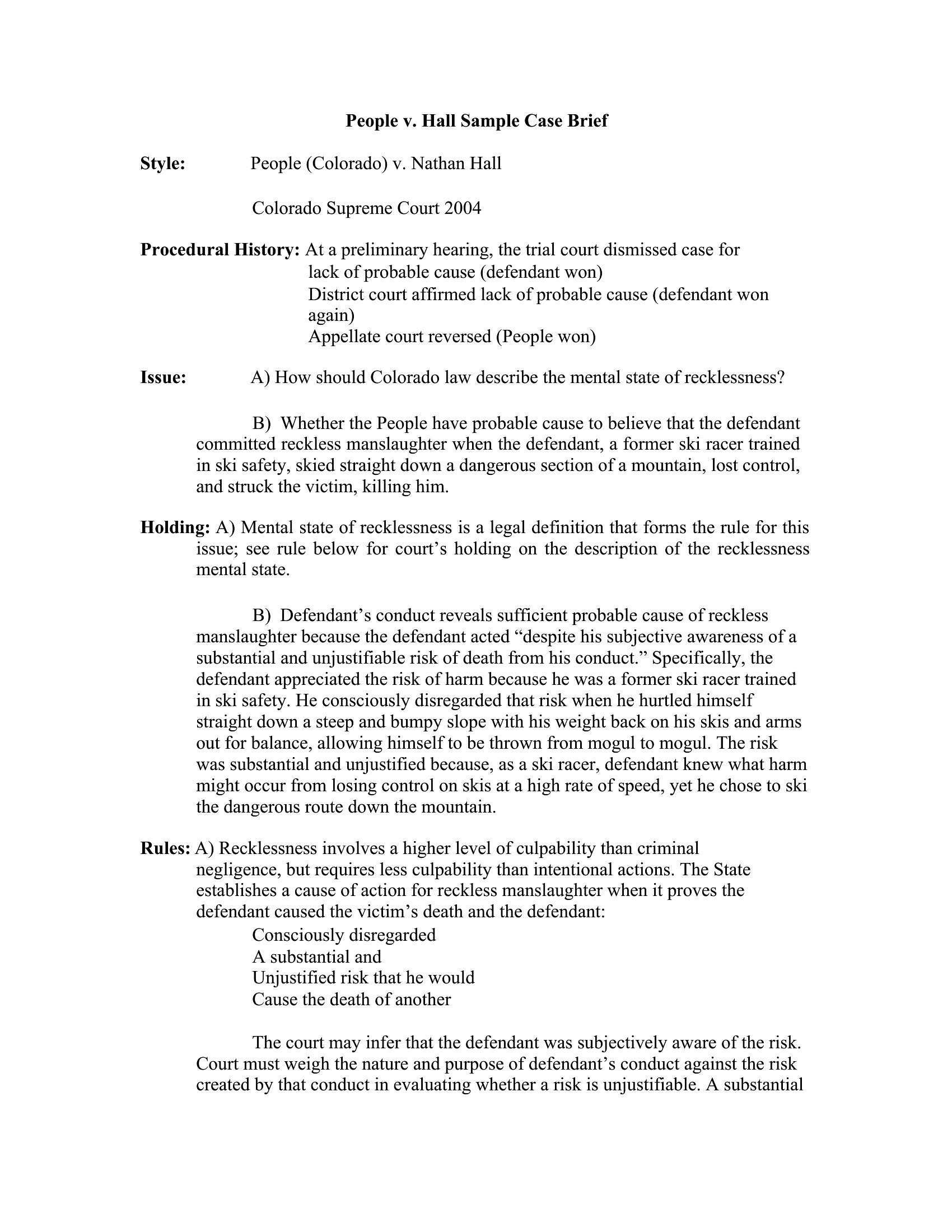
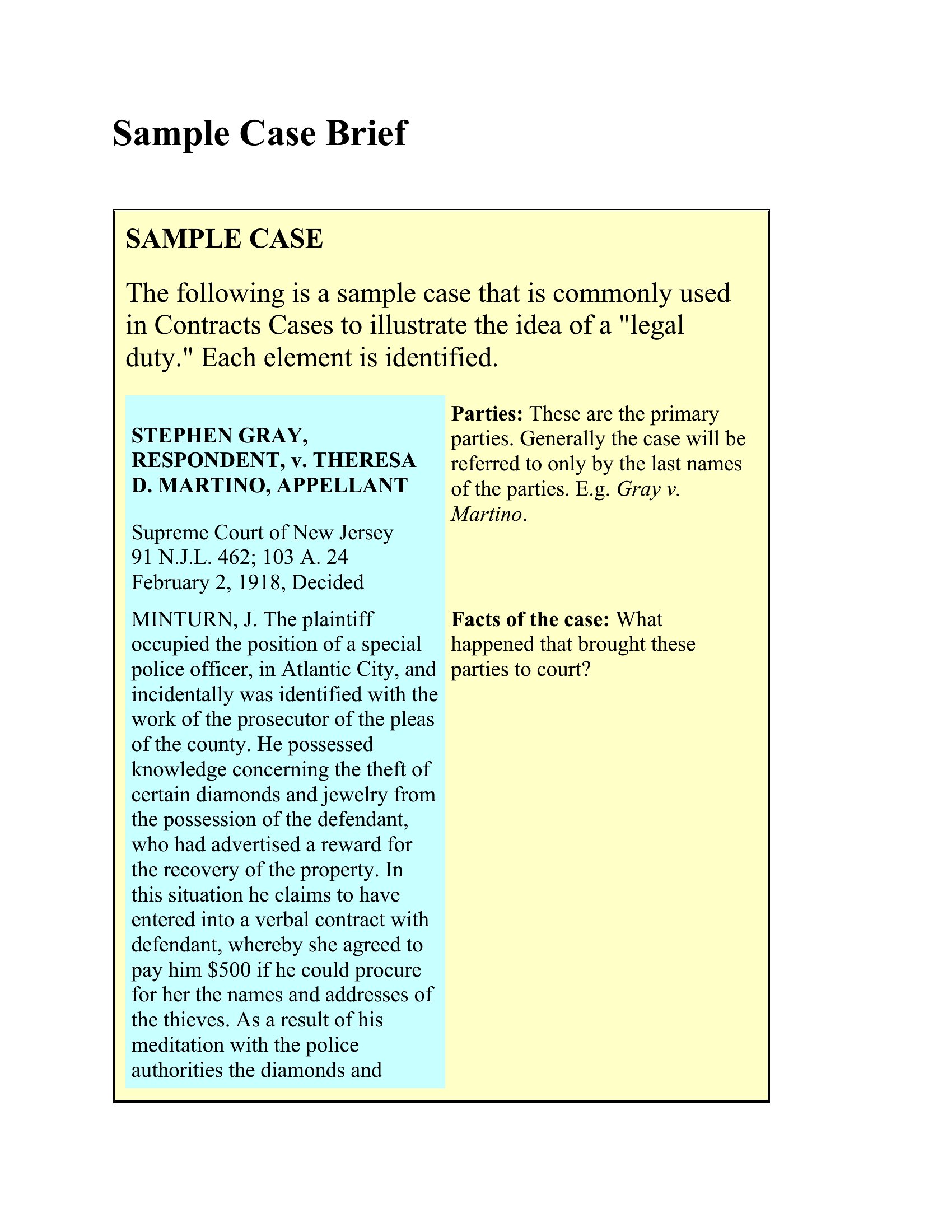
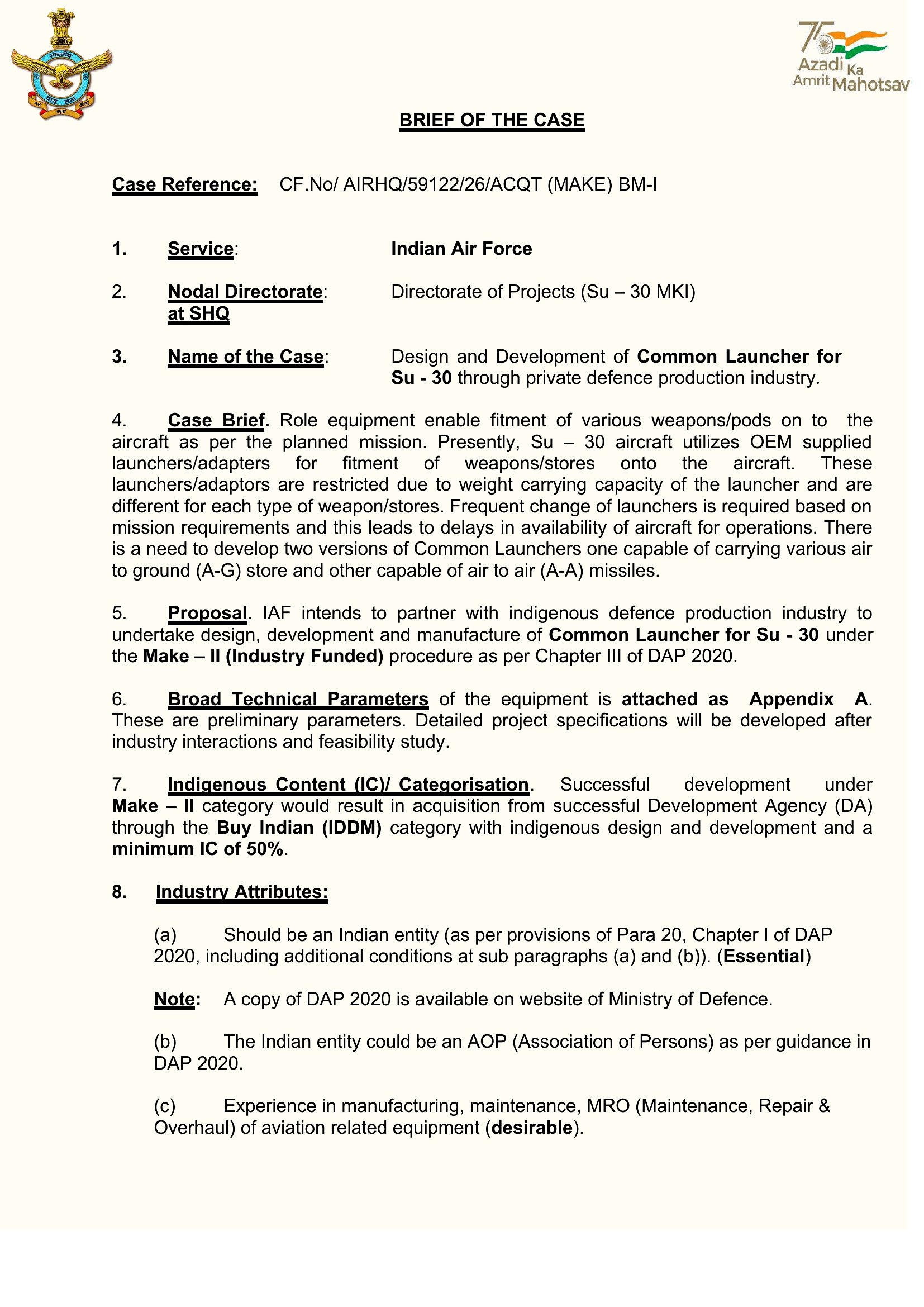
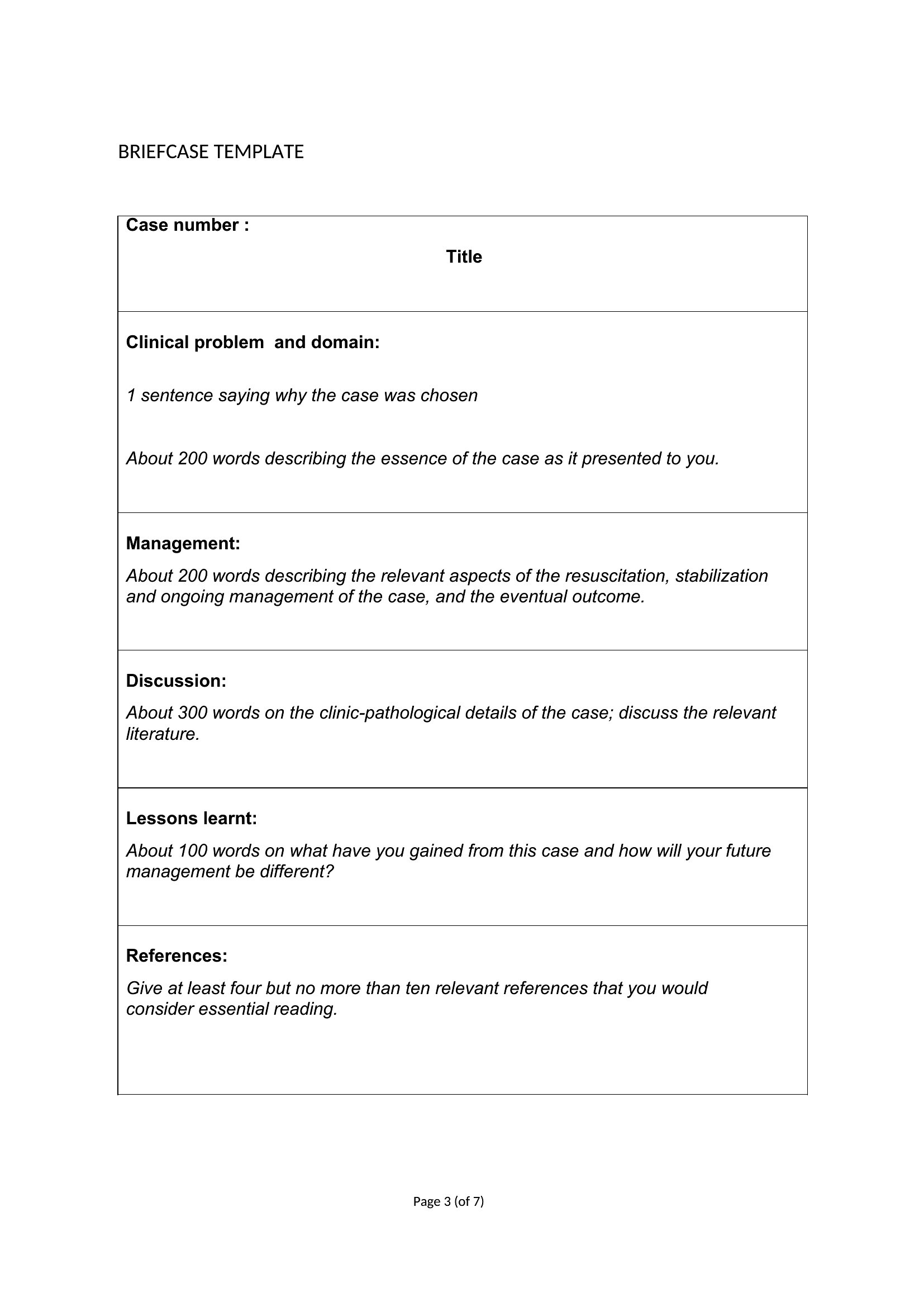
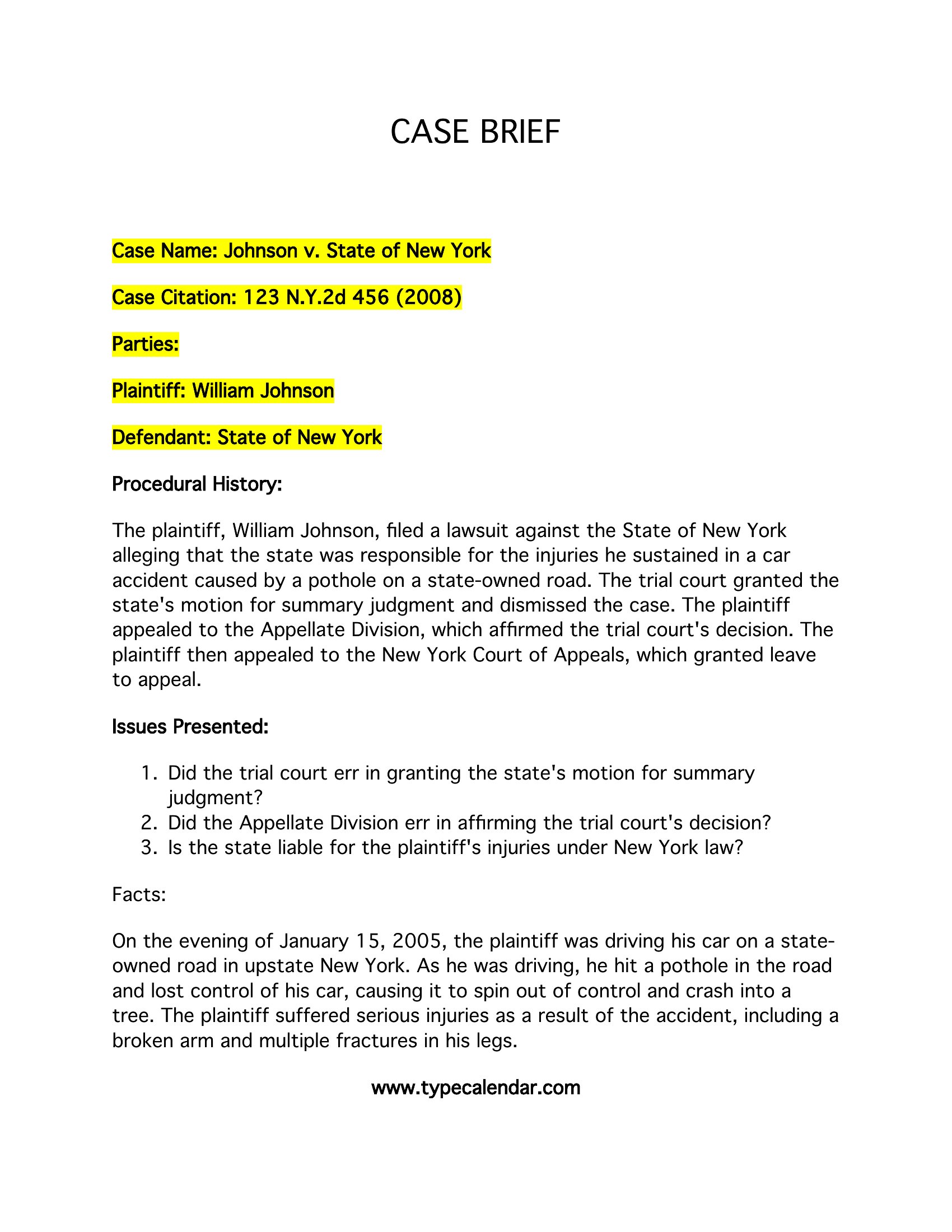
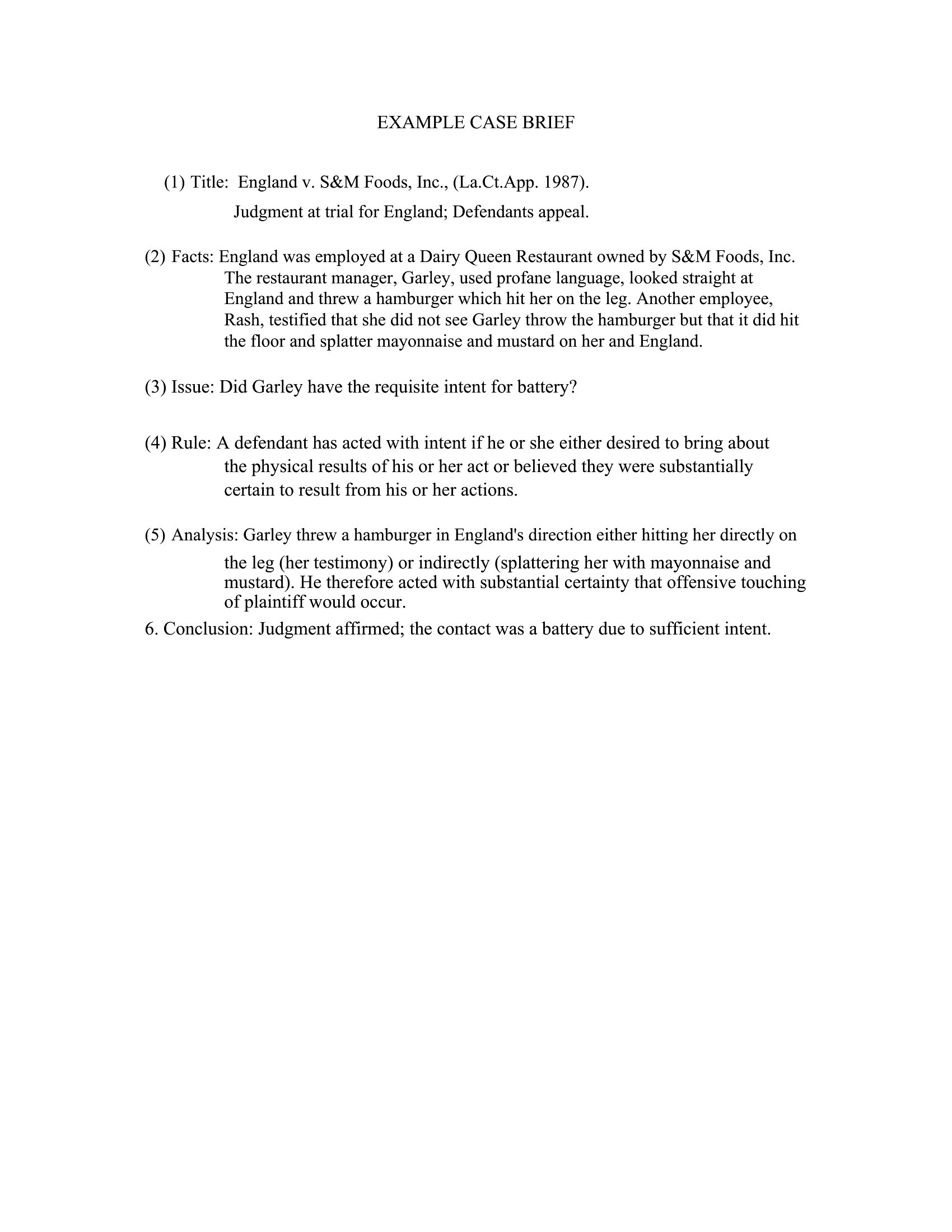
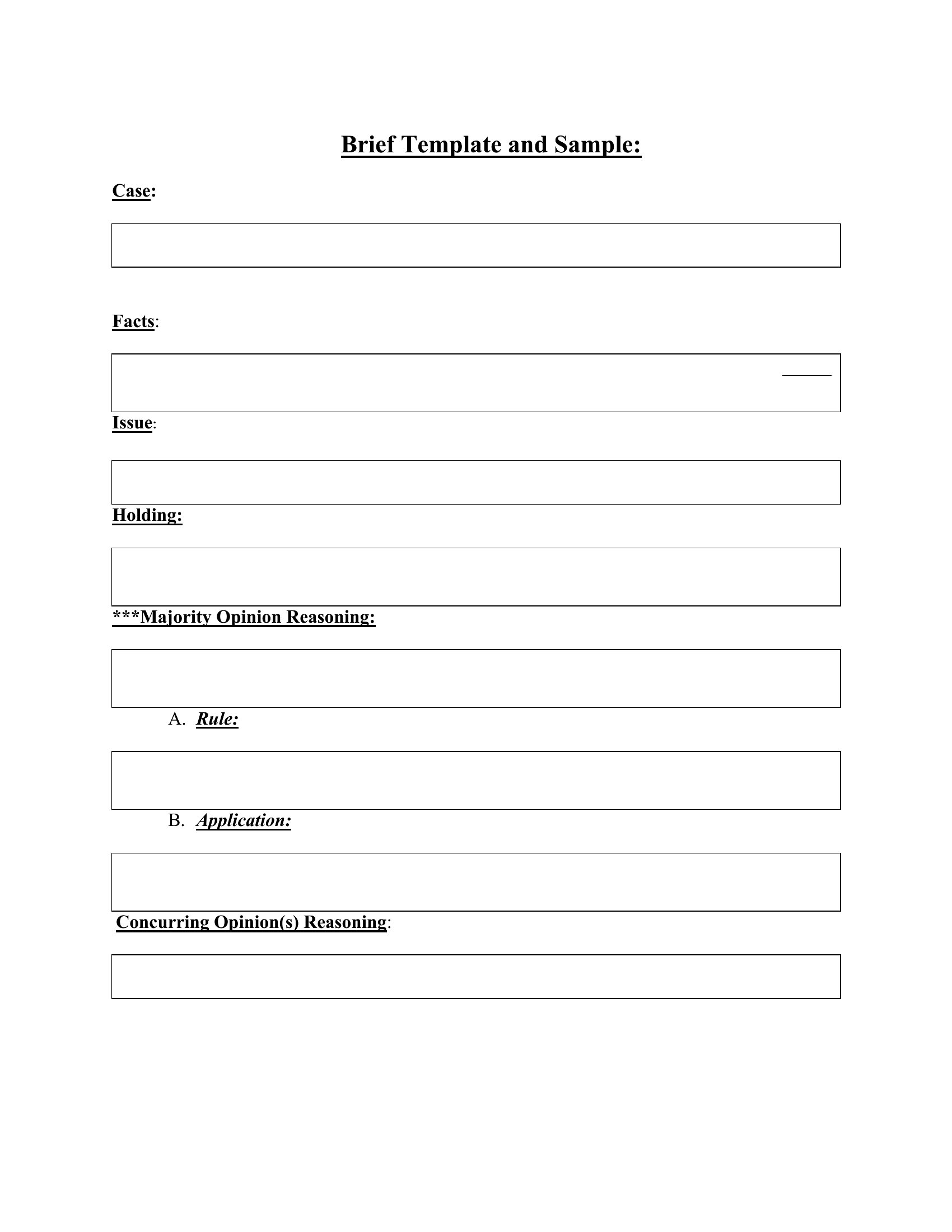
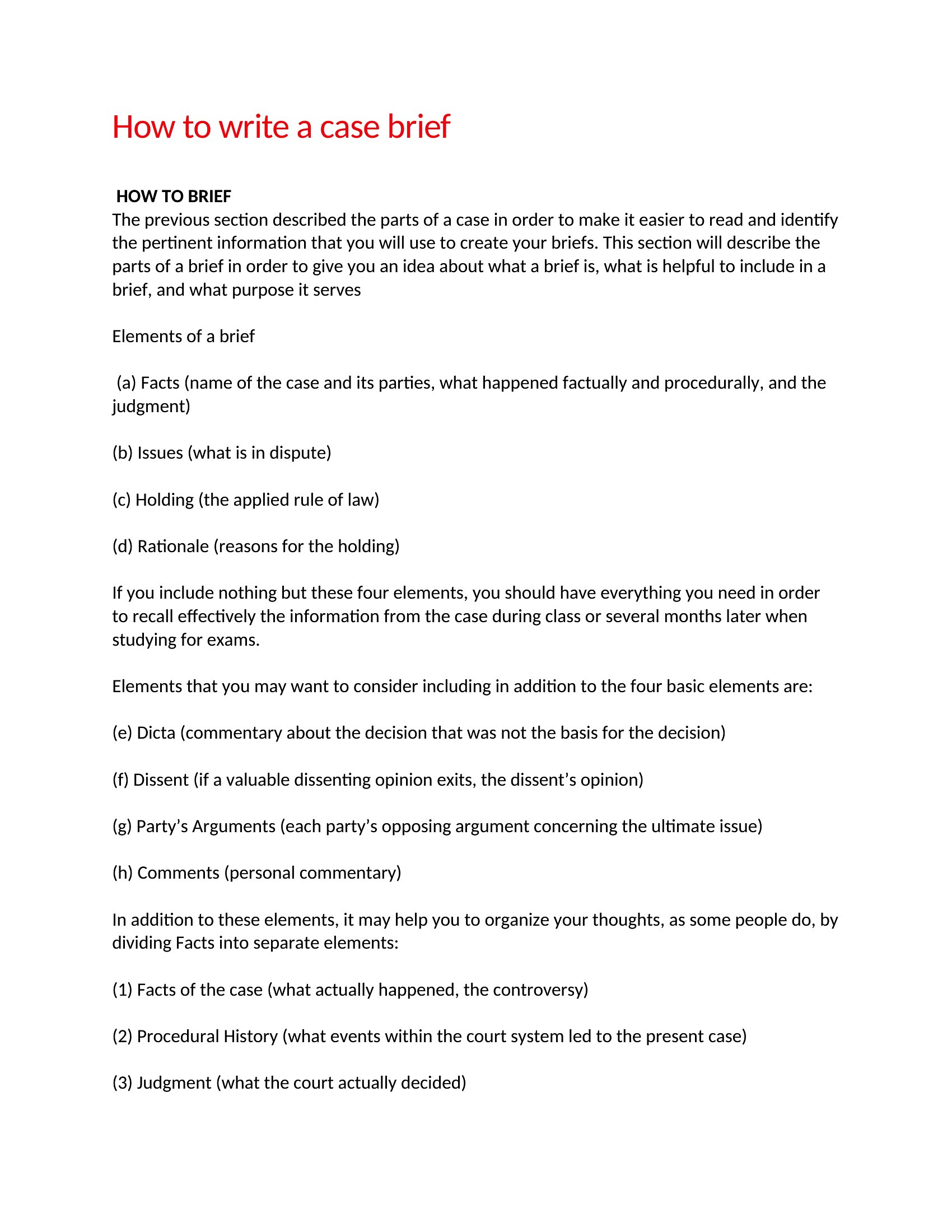
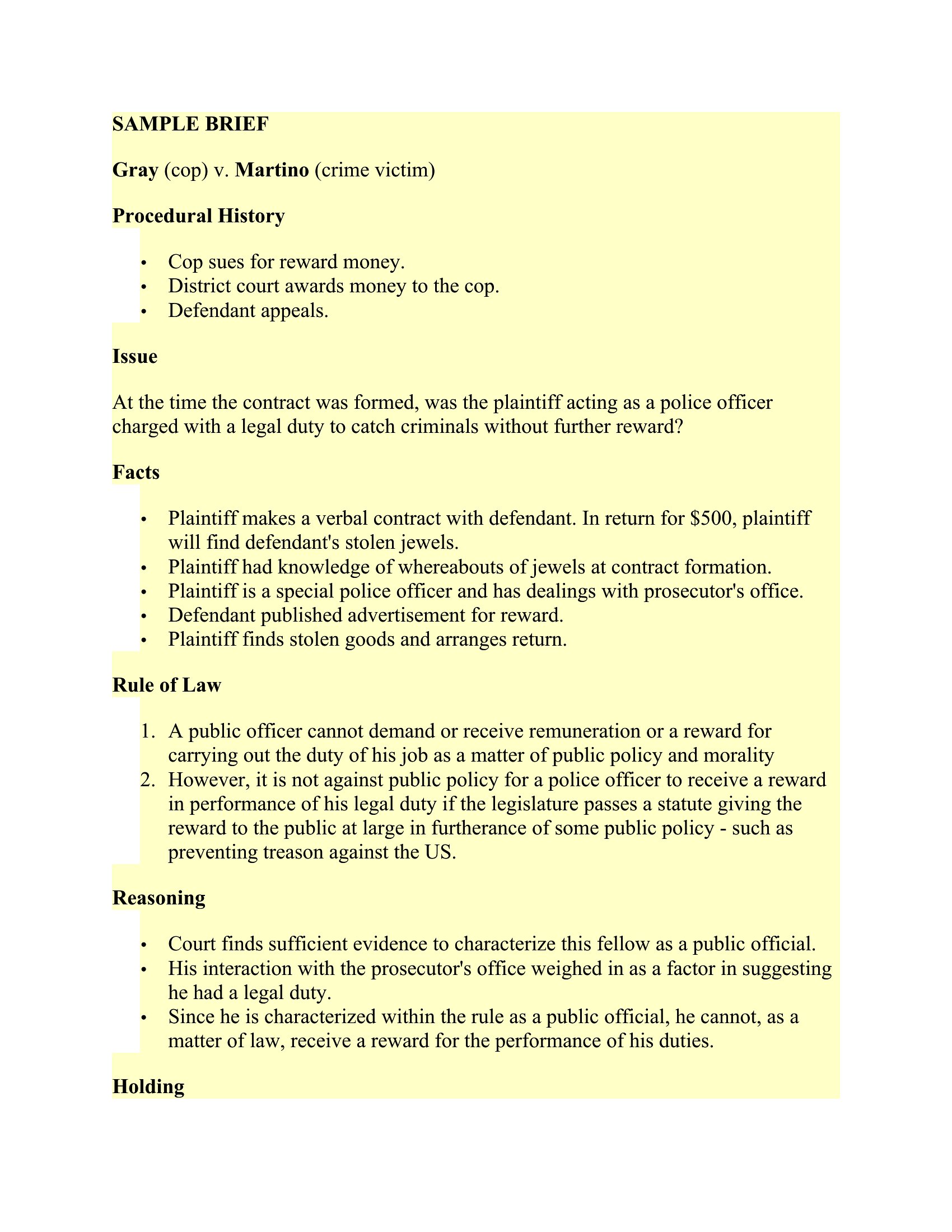
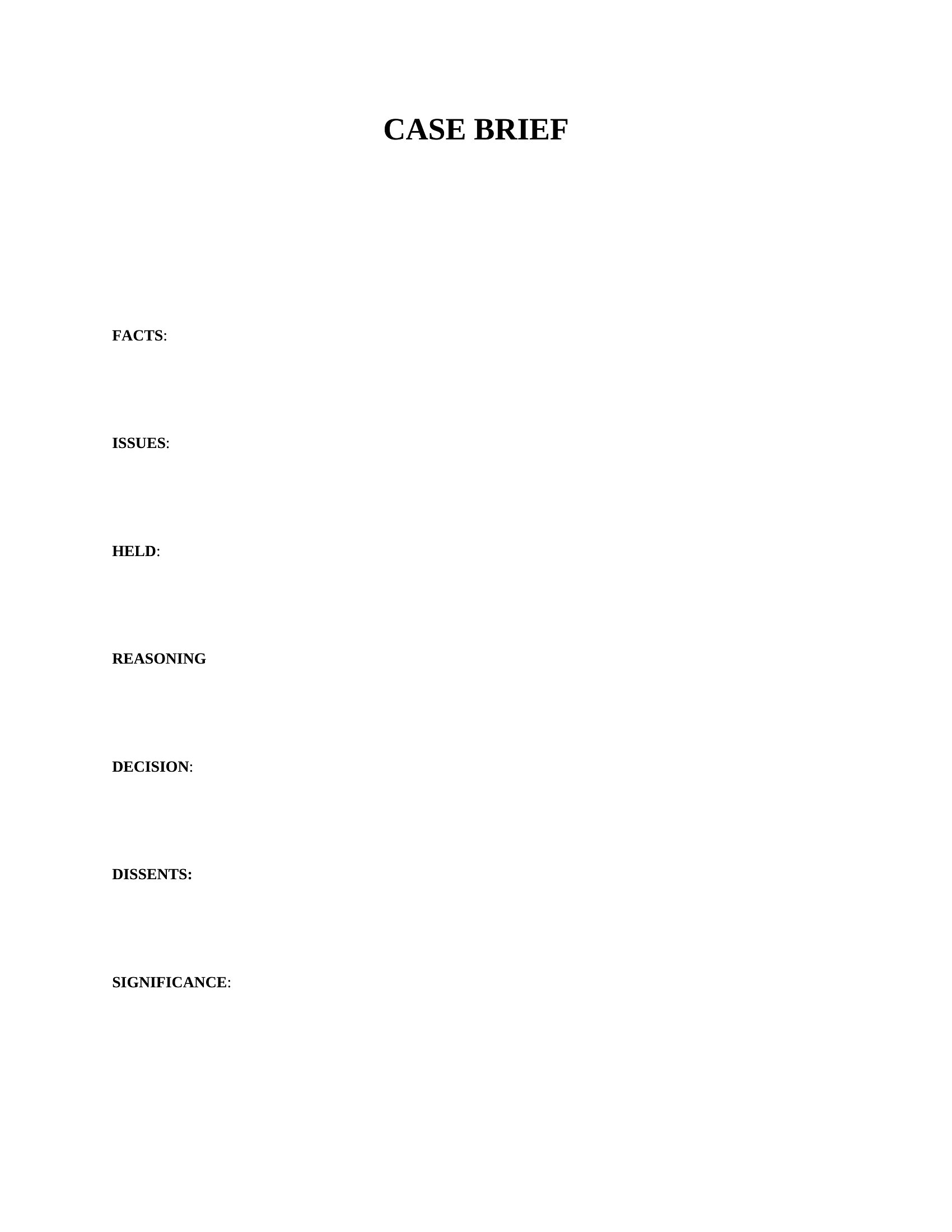
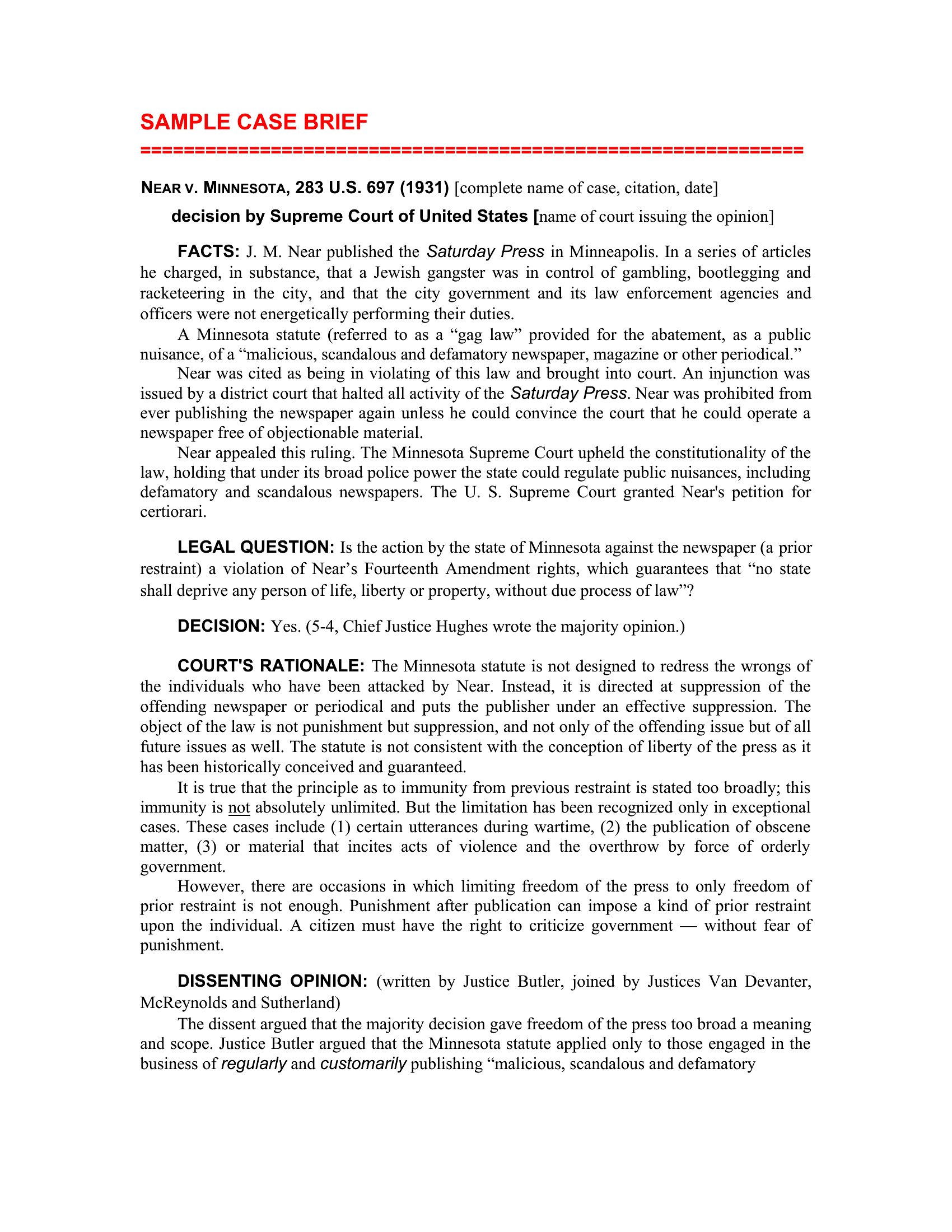
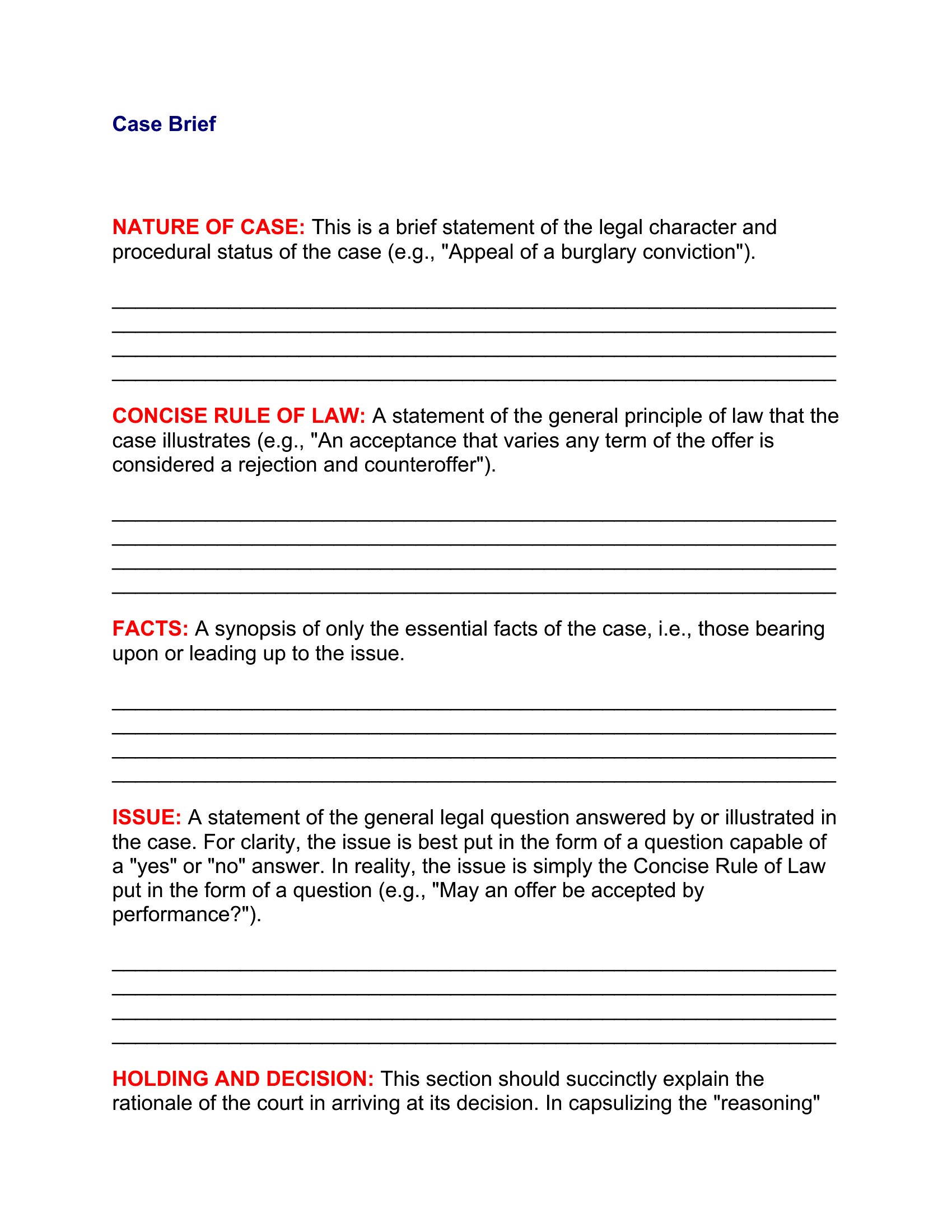
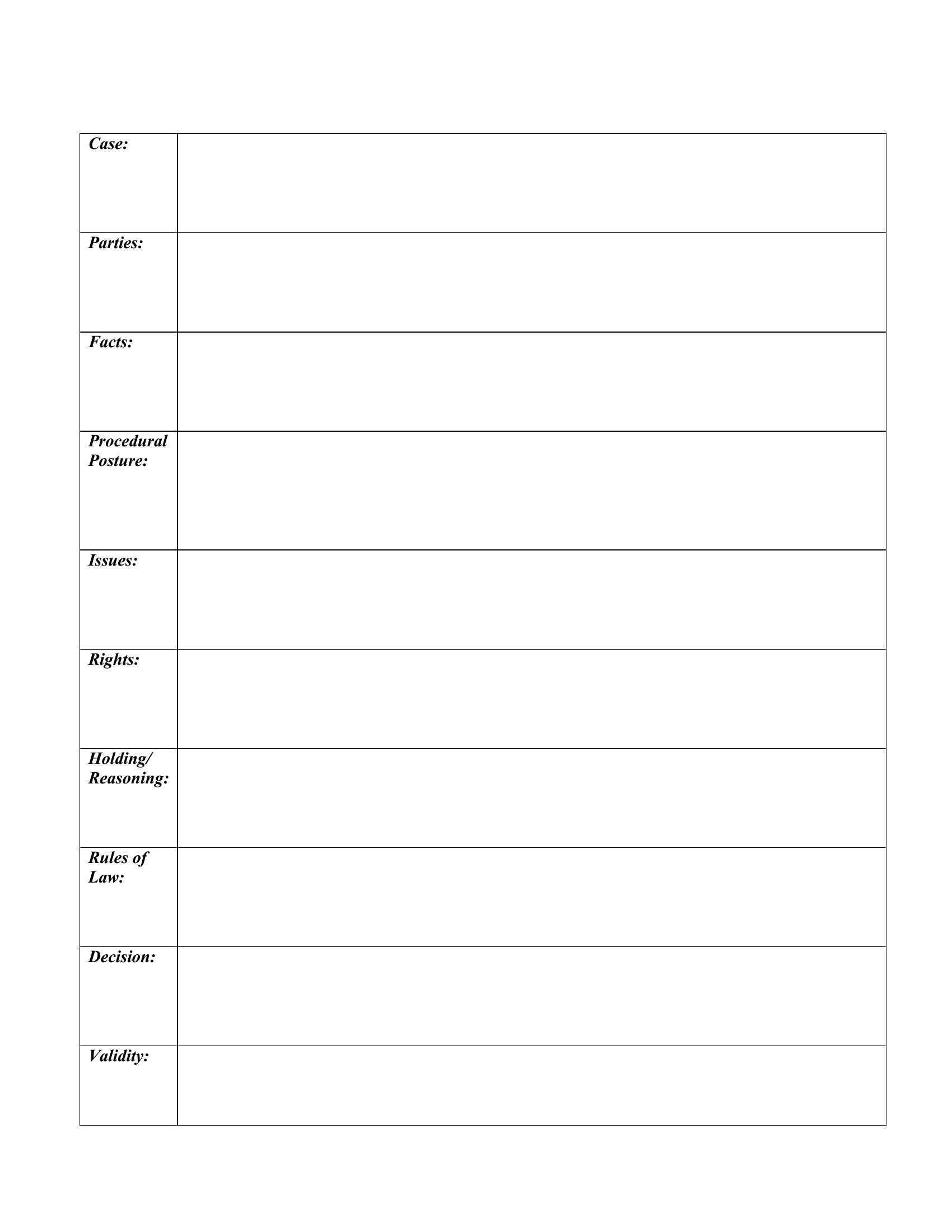
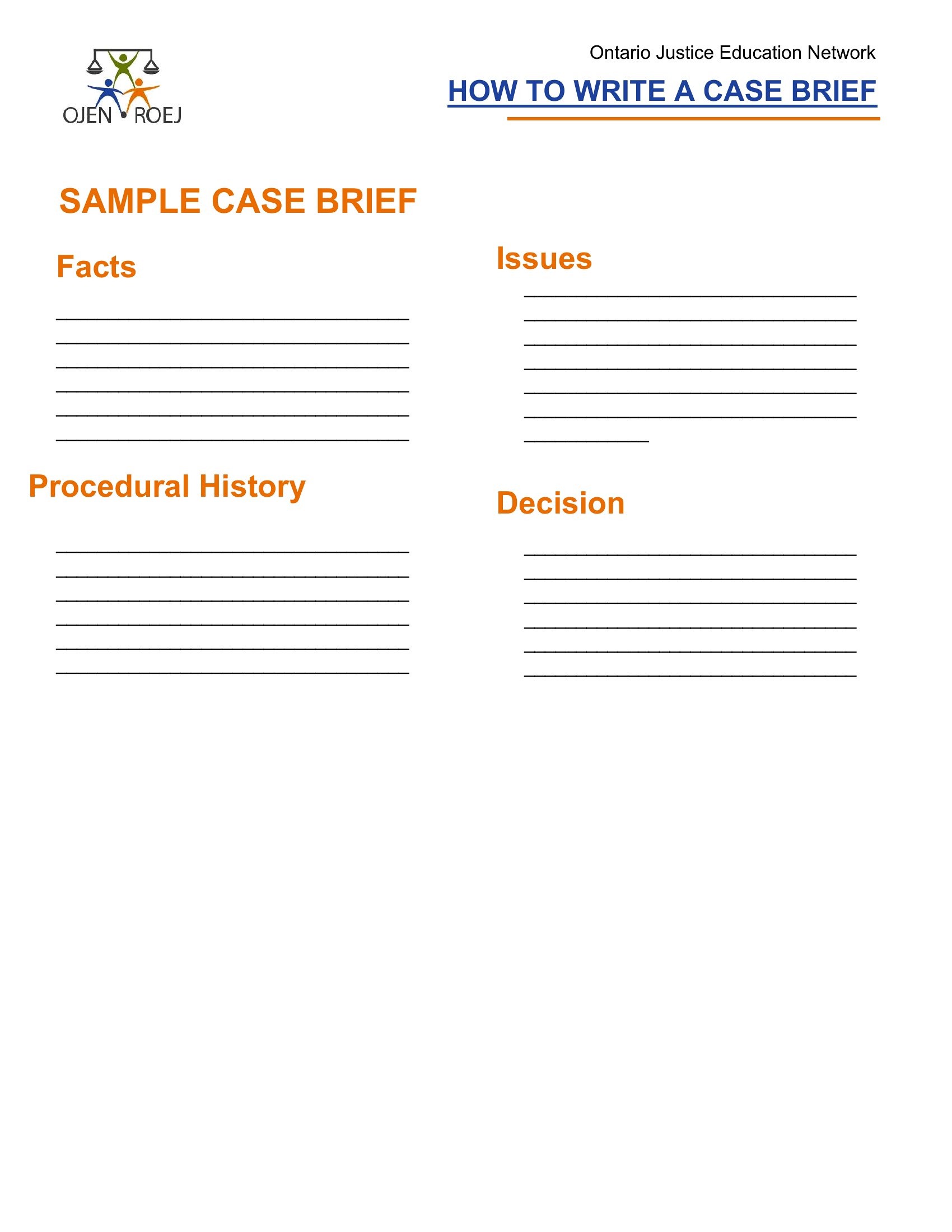
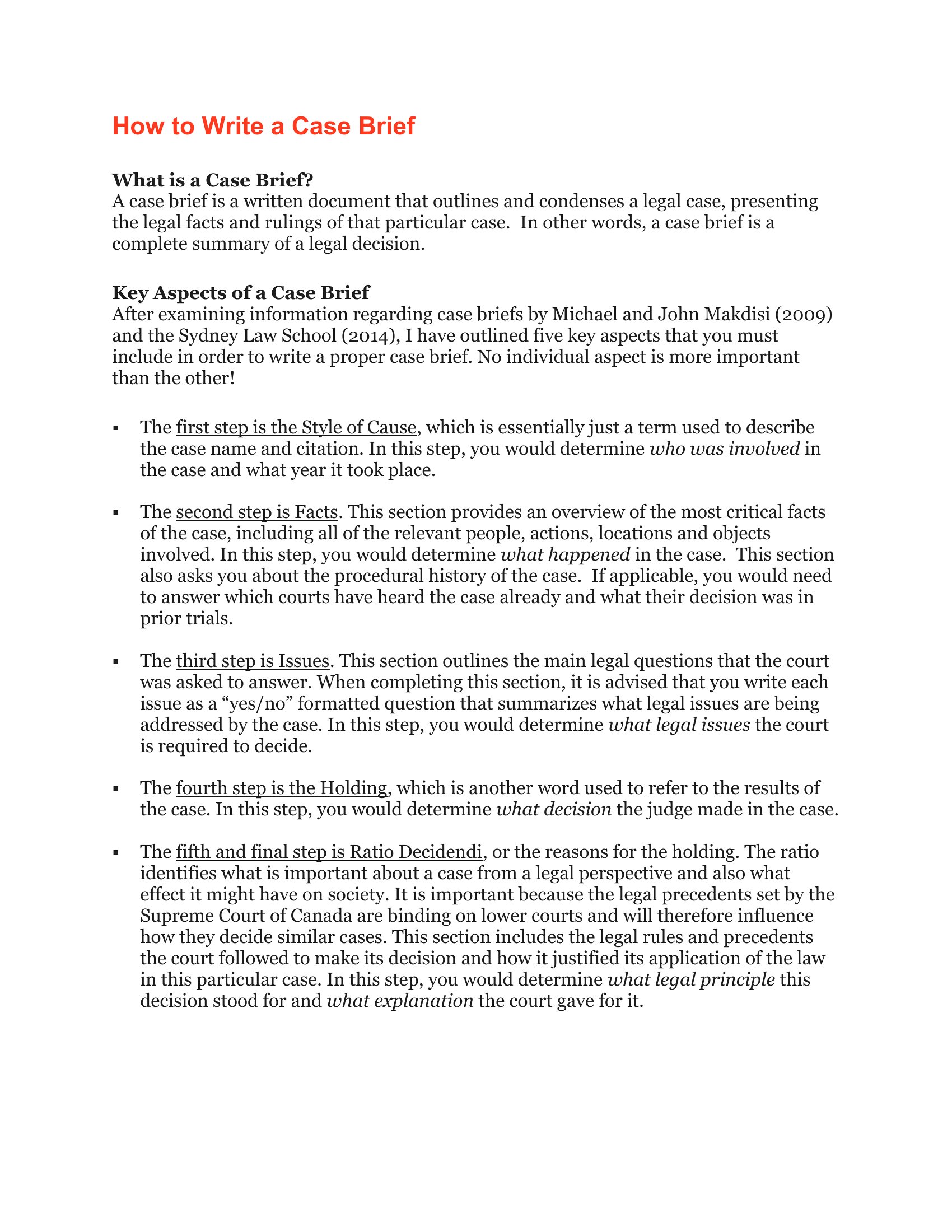
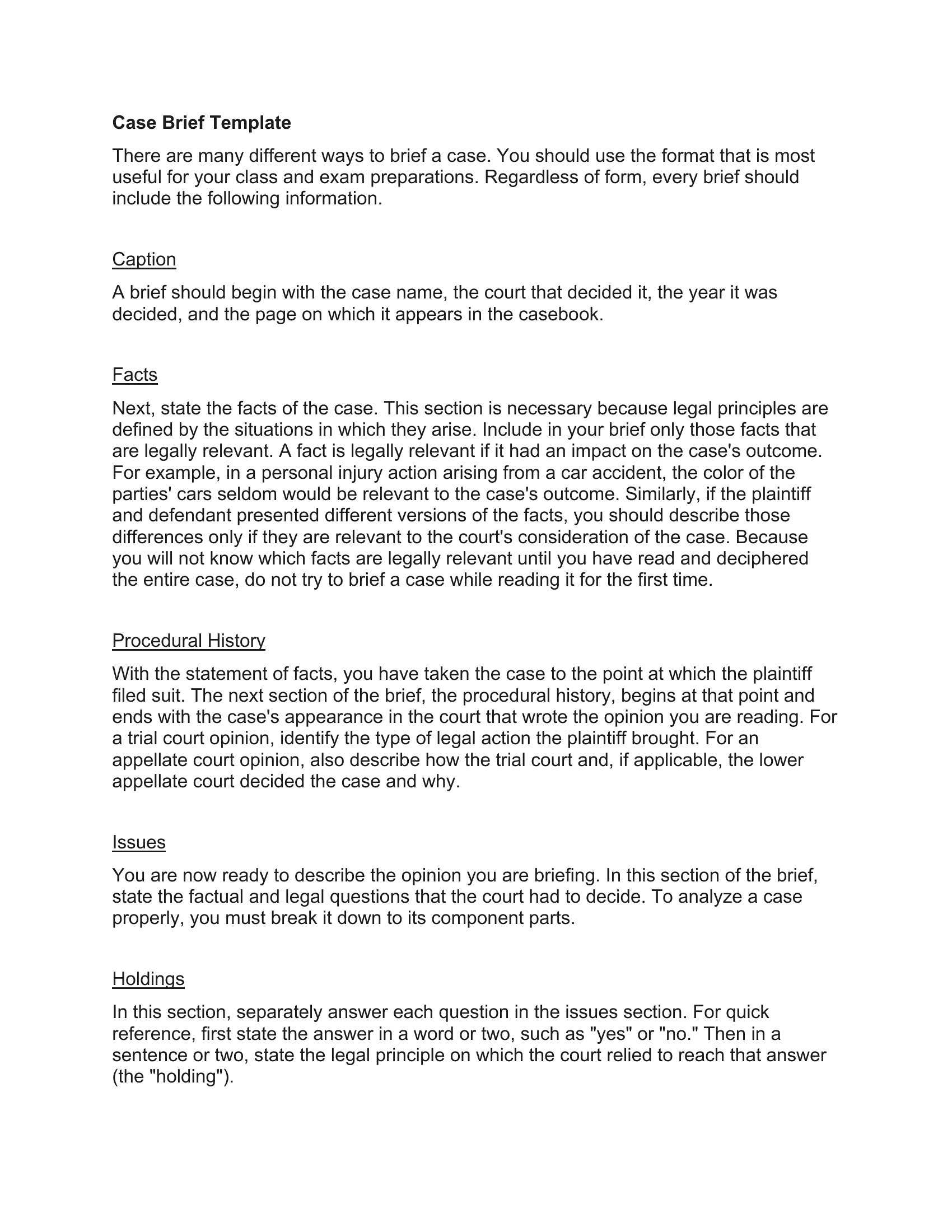
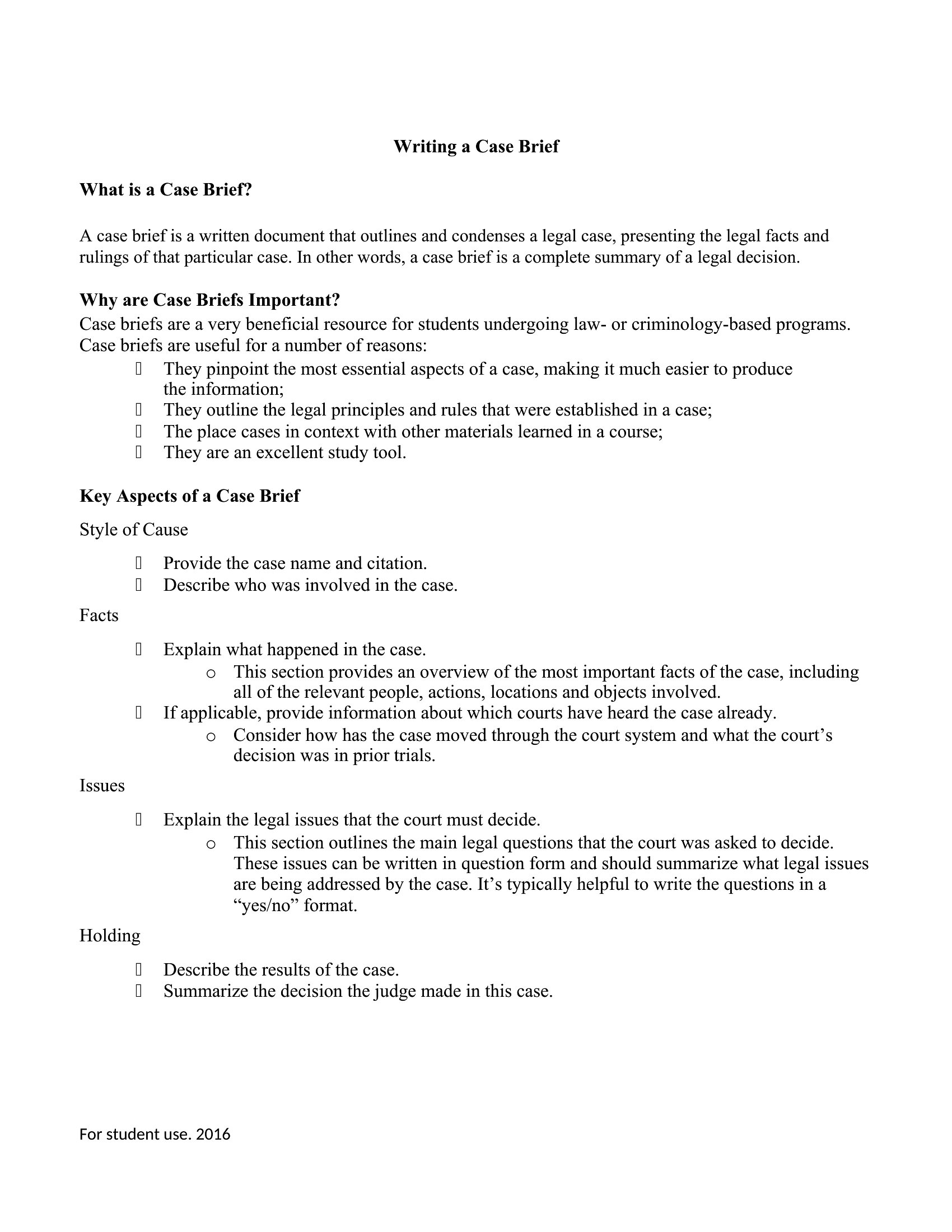
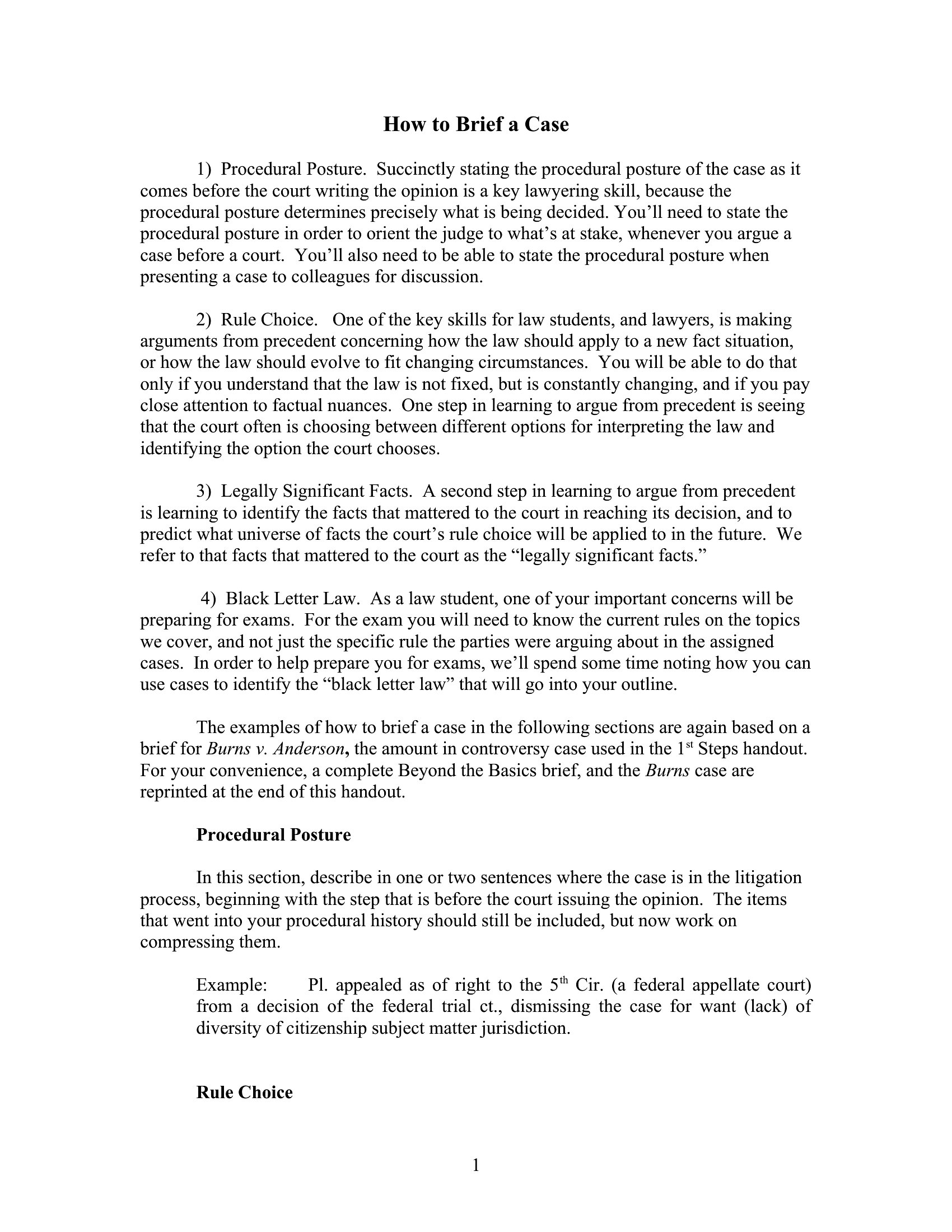
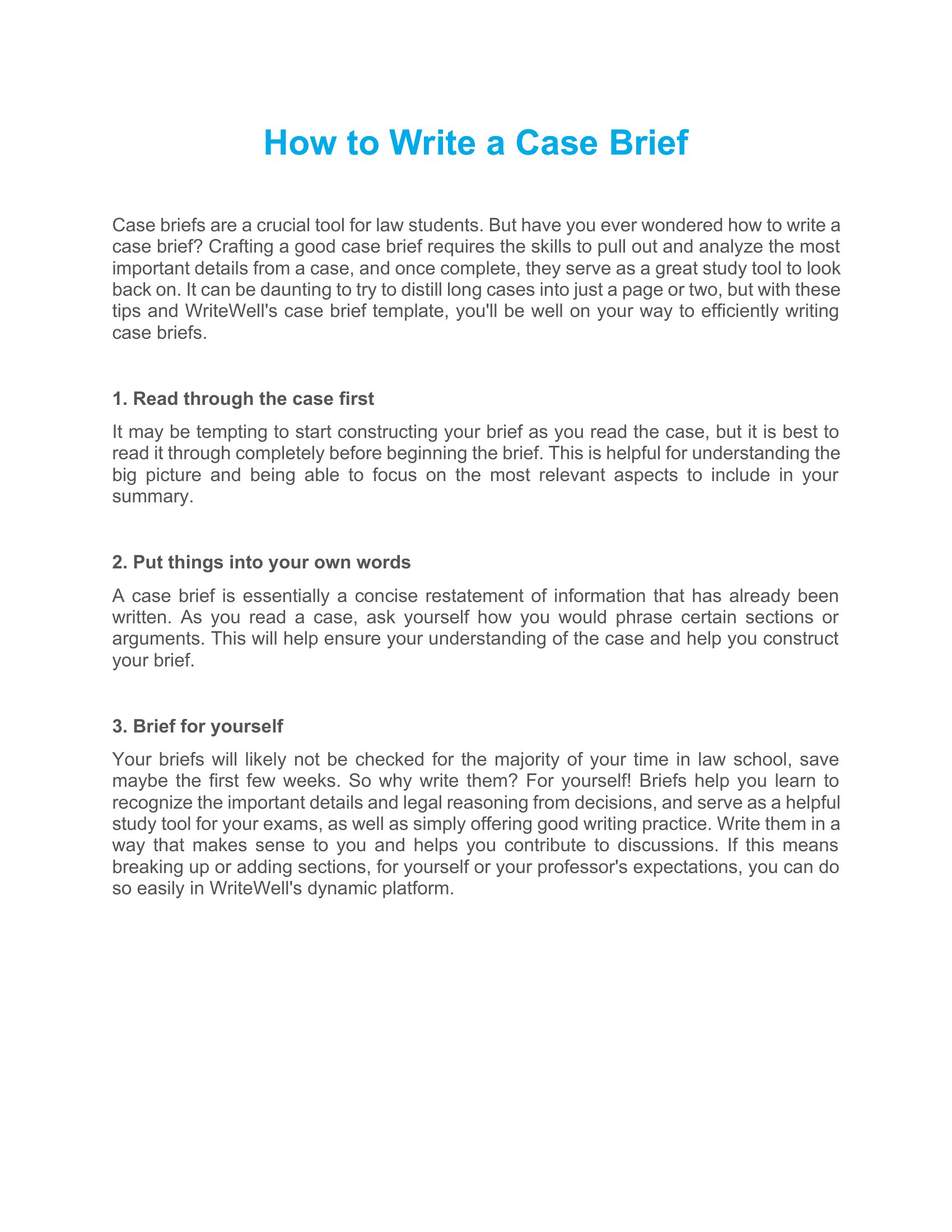
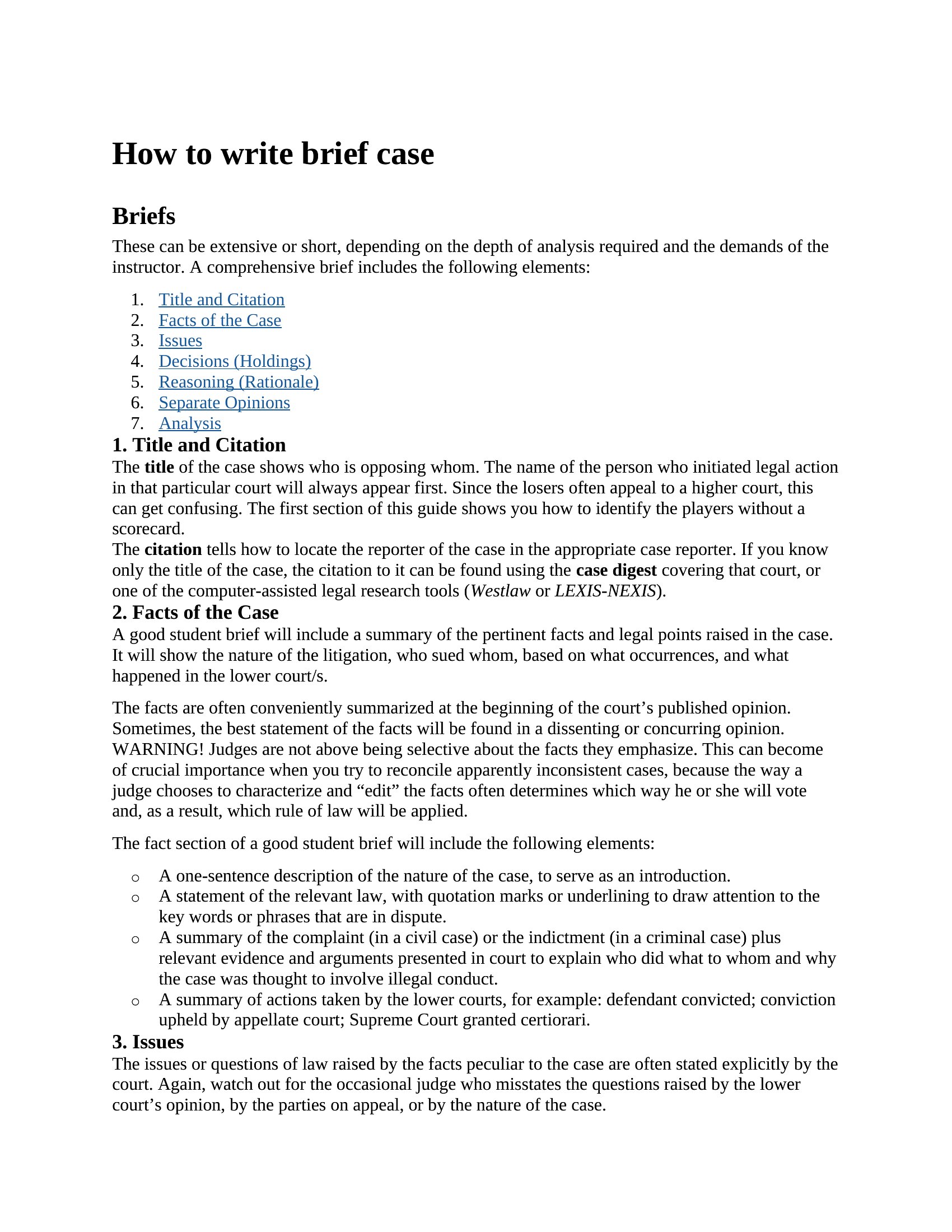
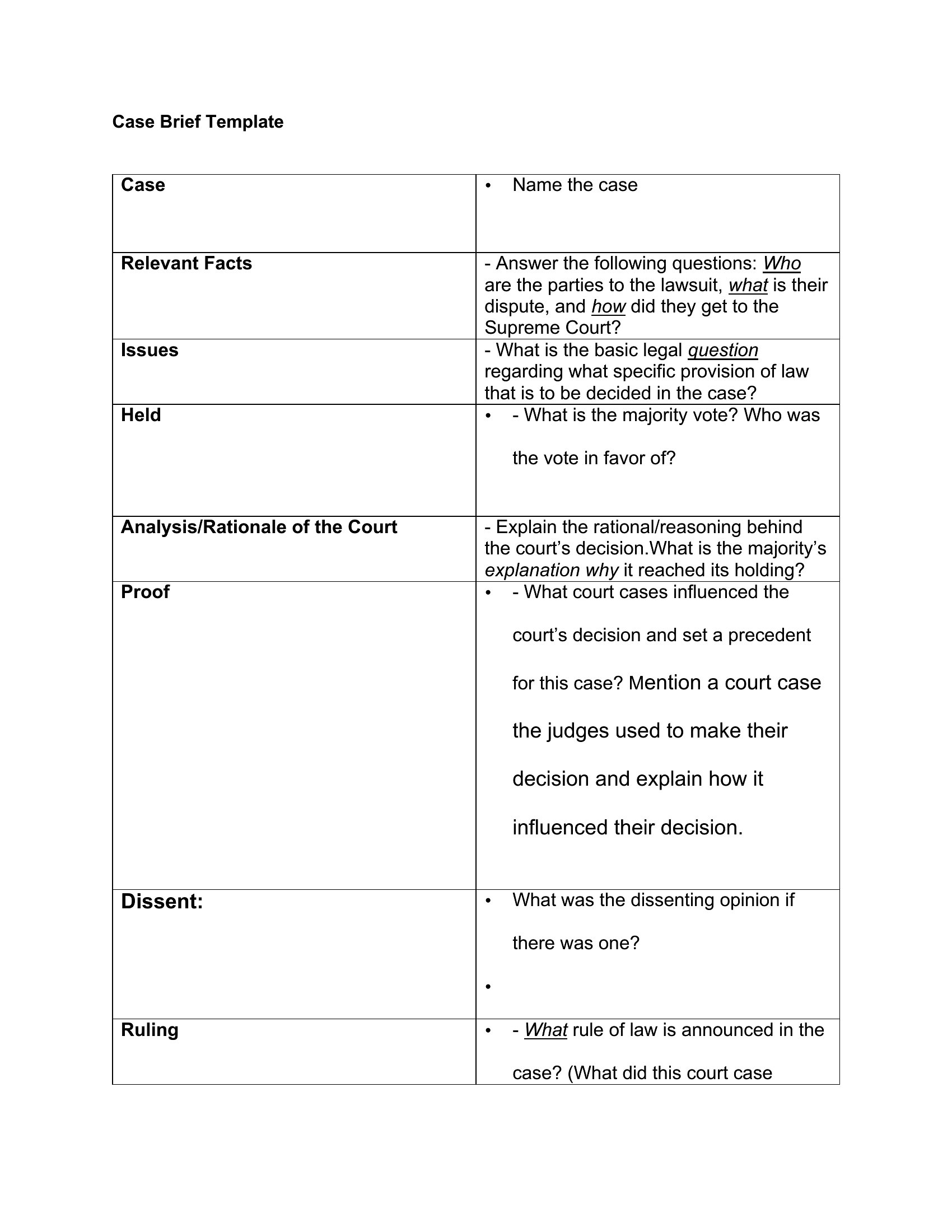
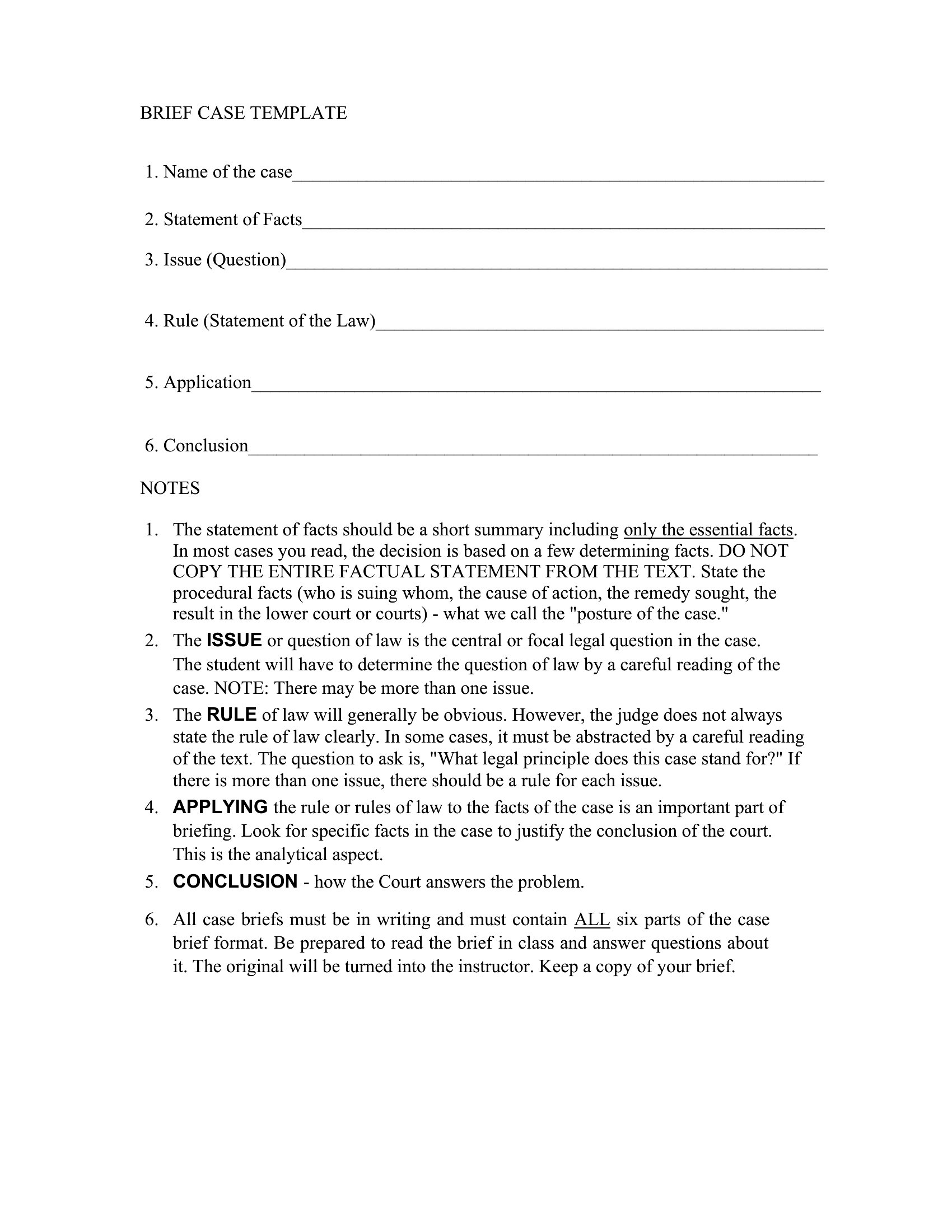
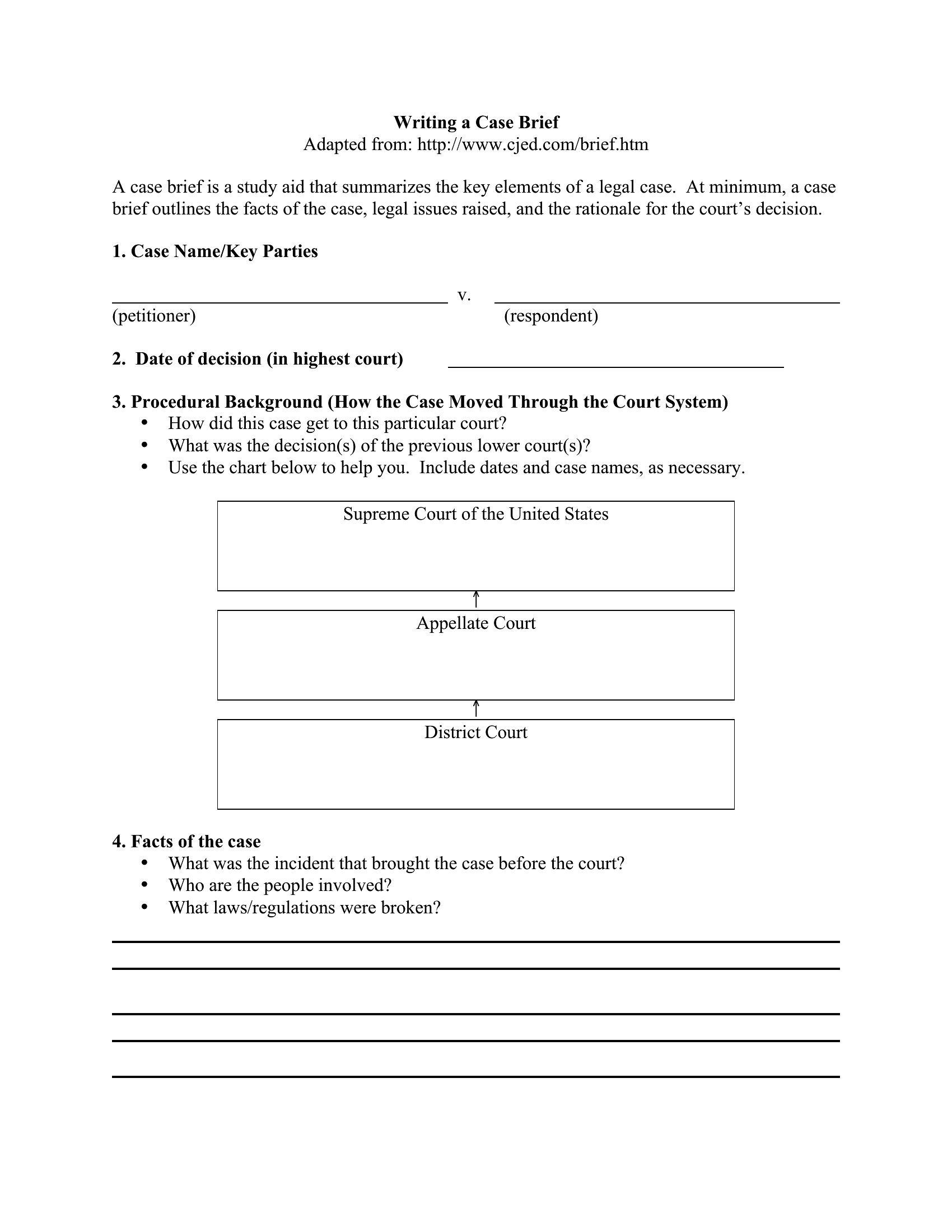
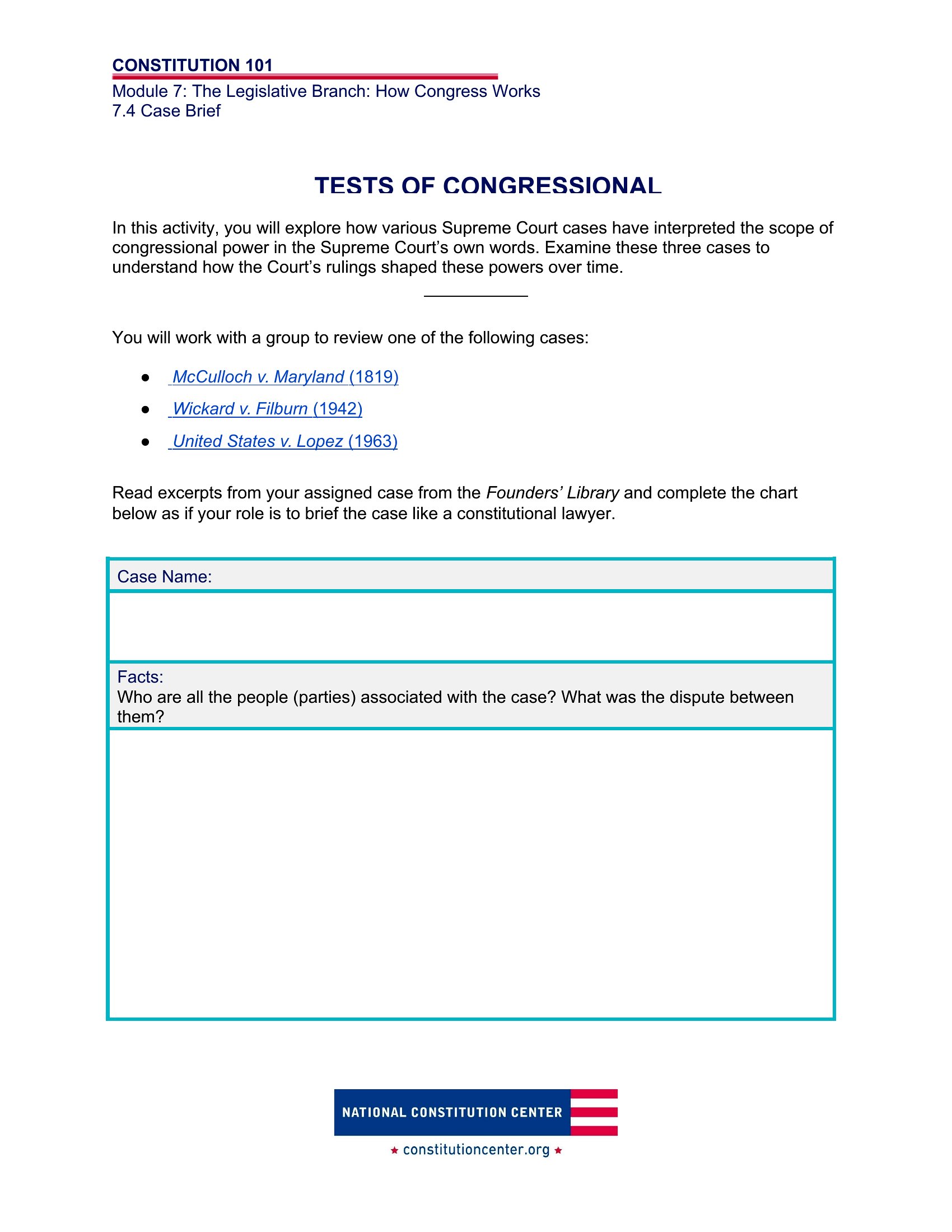
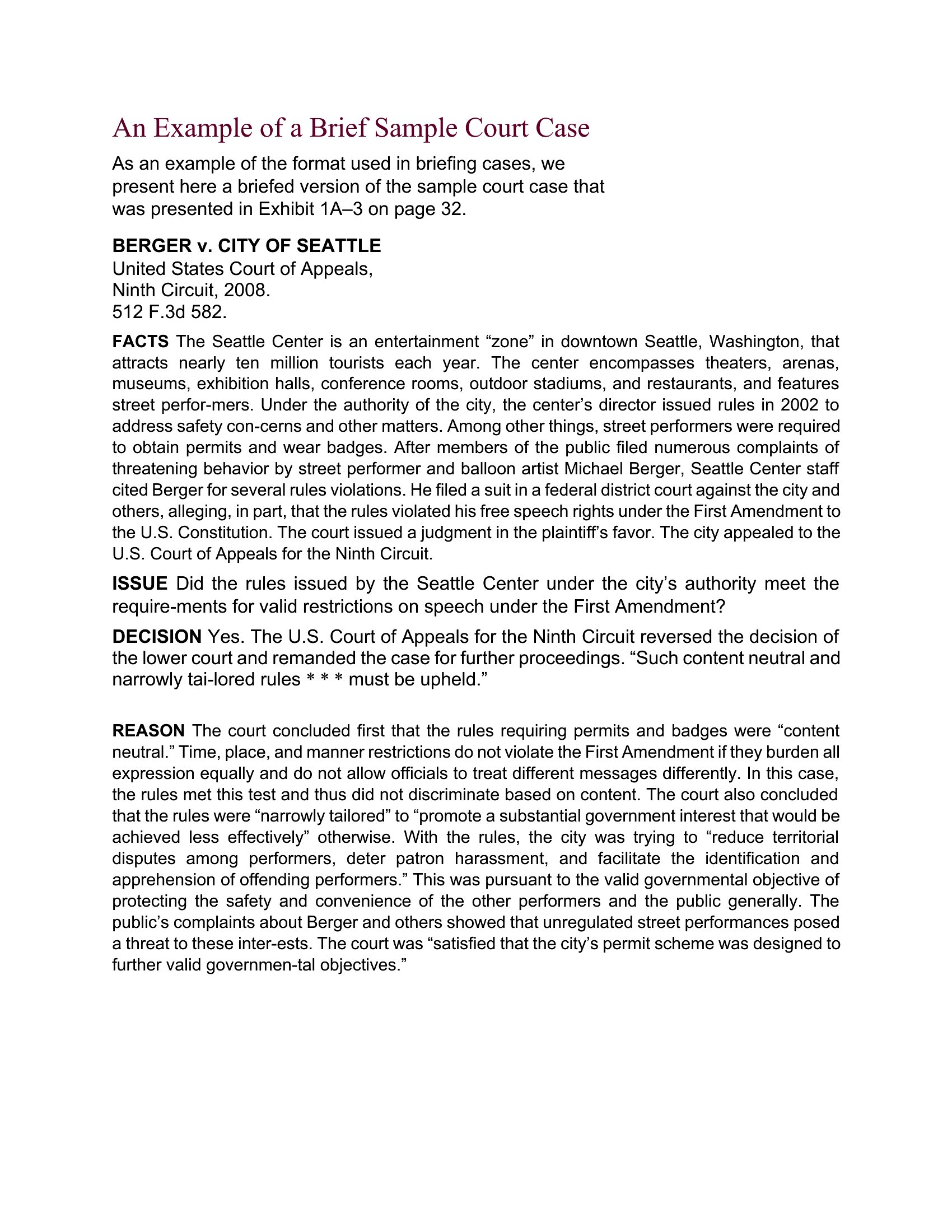
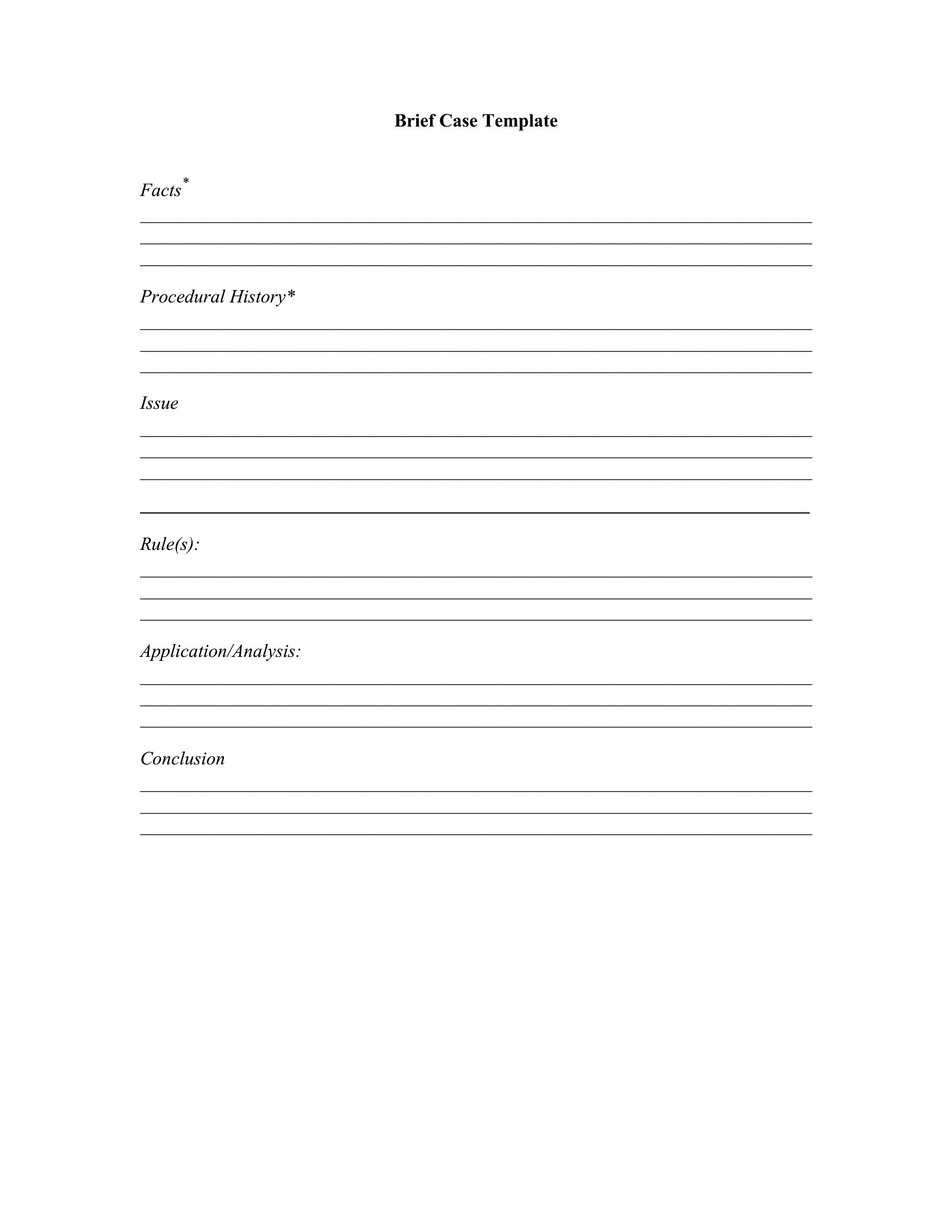
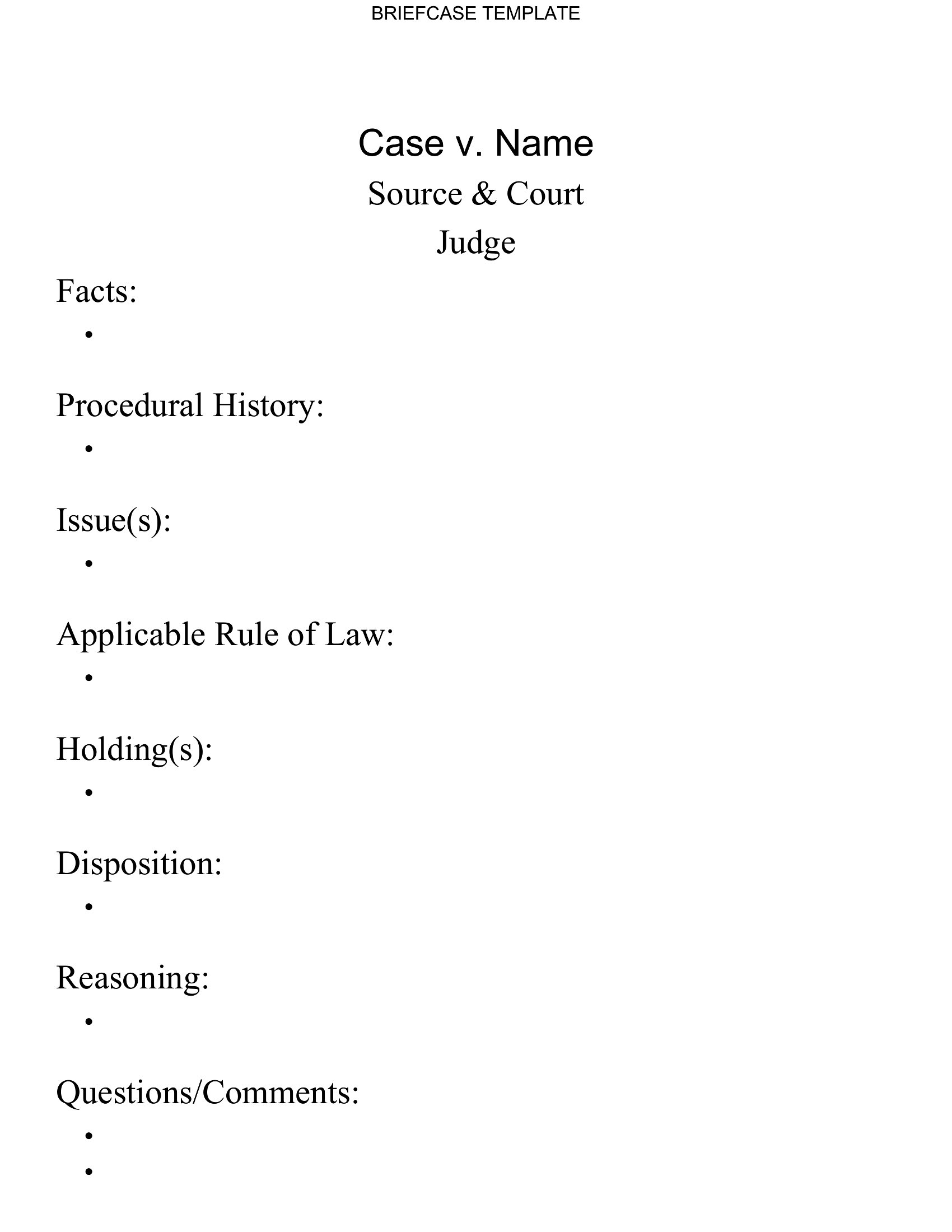
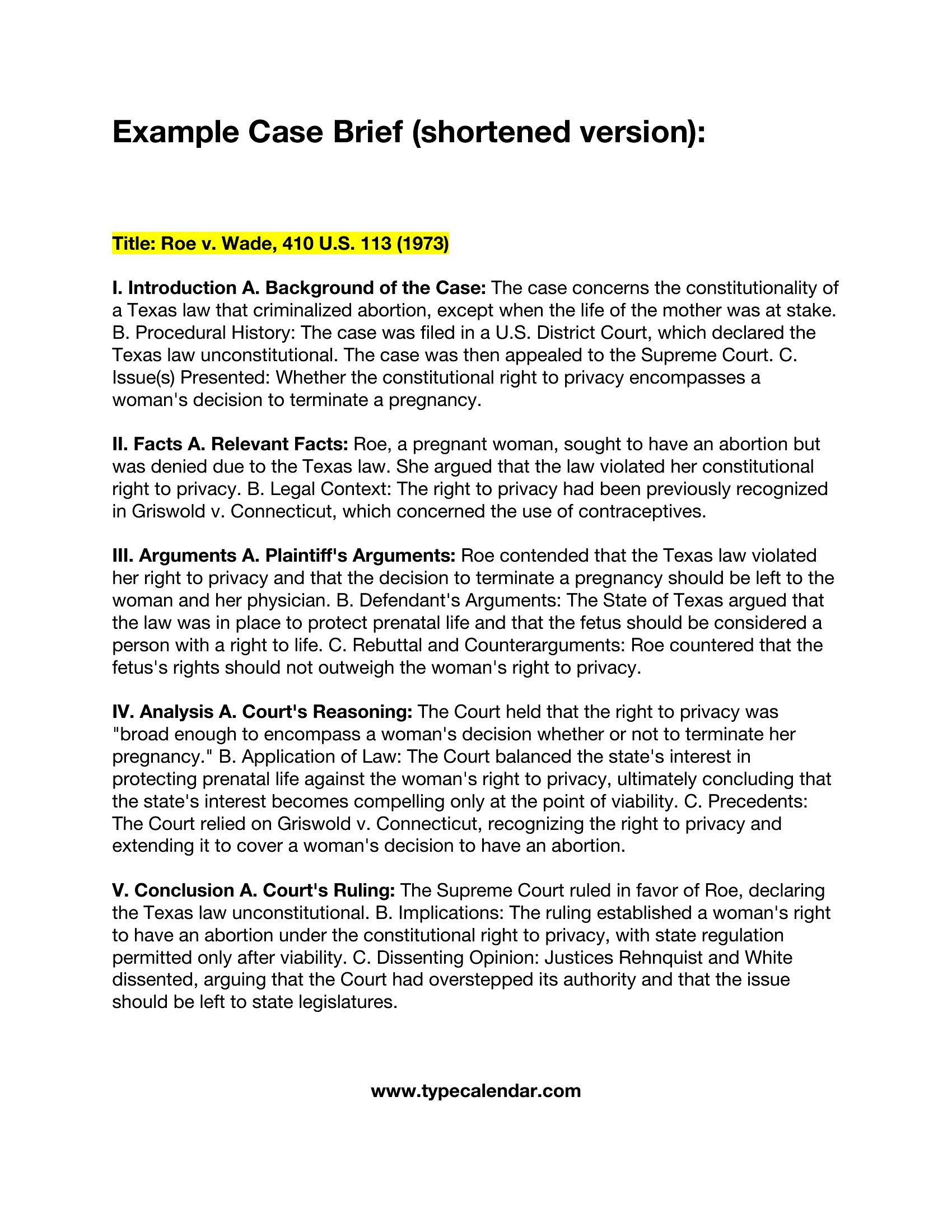
ResearchBriefing a case forces you to boil a long opinion down to the parts that matter, and a consistent format makes that far quicker. This collection of 48 case brief templates helps law students and paralegals capture the facts, issue, rule, holding, and reasoning of a decision in a structured way. Using the same layout for every case also makes exam review and class prep much smoother.
Each template opens in Word, so you can adjust the headings to match your professor's preferred format and type your notes directly. Fill in each section as you read, and you'll build a tidy set of briefs to study from. Download the layout that fits your course and brief your next case with less effort.
When to use this Case Brief template
- Law students reviewing complex appellate opinions before class to extract key elements for discussion, ensuring they can quickly compare multiple cases during study sessions.
- Paralegals preparing concise summaries of newly decided cases for attorneys to review, helping legal teams stay updated on relevant rulings without parsing full opinions.
- Graduate students in policy or ethics programs analyzing landmark court decisions to identify precedents for research papers, standardizing their note-taking for consistency.
- Practicing attorneys drafting case summaries for internal training sessions, where a uniform structure helps junior associates recognize patterns in legal reasoning across different jurisdictions.
Which format should I download?
Since this collection offers only Word templates, choose Word because it’s the gold standard for legal and academic briefing—widely compatible with court filings, easy to annotate collaboratively, and perfectly formatted for print or digital sharing. Law schools and firms standardize on Word for its reliability in handling tables, citations, and structured outlines, which are critical for case briefs.
Choose from 48 Case Brief Templates
How to use this Case Brief template
Are these templates designed to match specific legal systems, like U.S. common law vs. civil law jurisdictions?
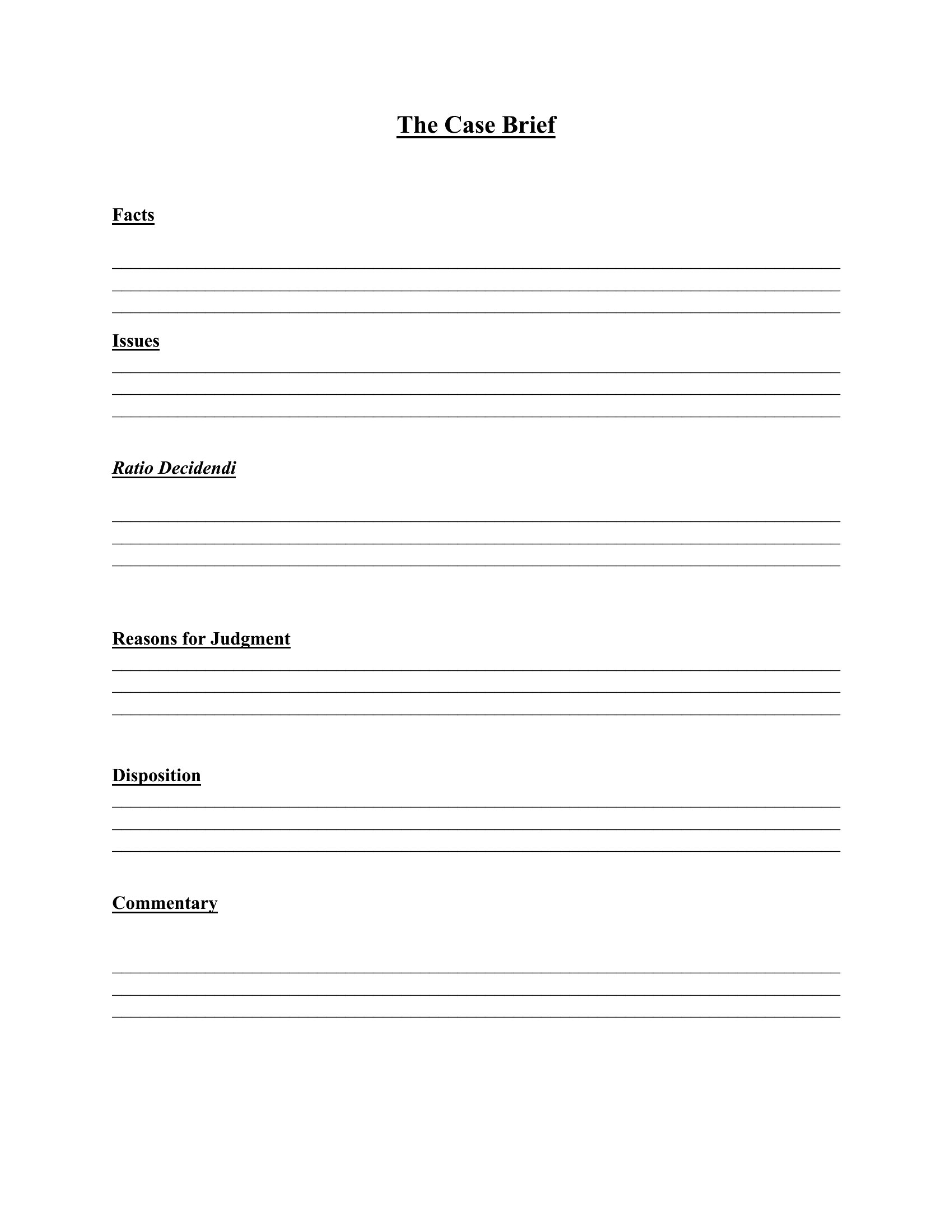
These templates follow a classic common-law structure (facts, issue, rule, holding, reasoning), which works well for U.S. law school exams and many civil law jurisdictions that emphasize similar analytical frameworks. For highly specialized systems, you may need to adjust headings like ‘ratio decidendi’ or ‘obiter dicta’—start with the basic layout and tailor it to your course’s requirements.
How do I adapt these templates if my professor expects a different order of elements, like ‘holding’ before ‘reasoning’?
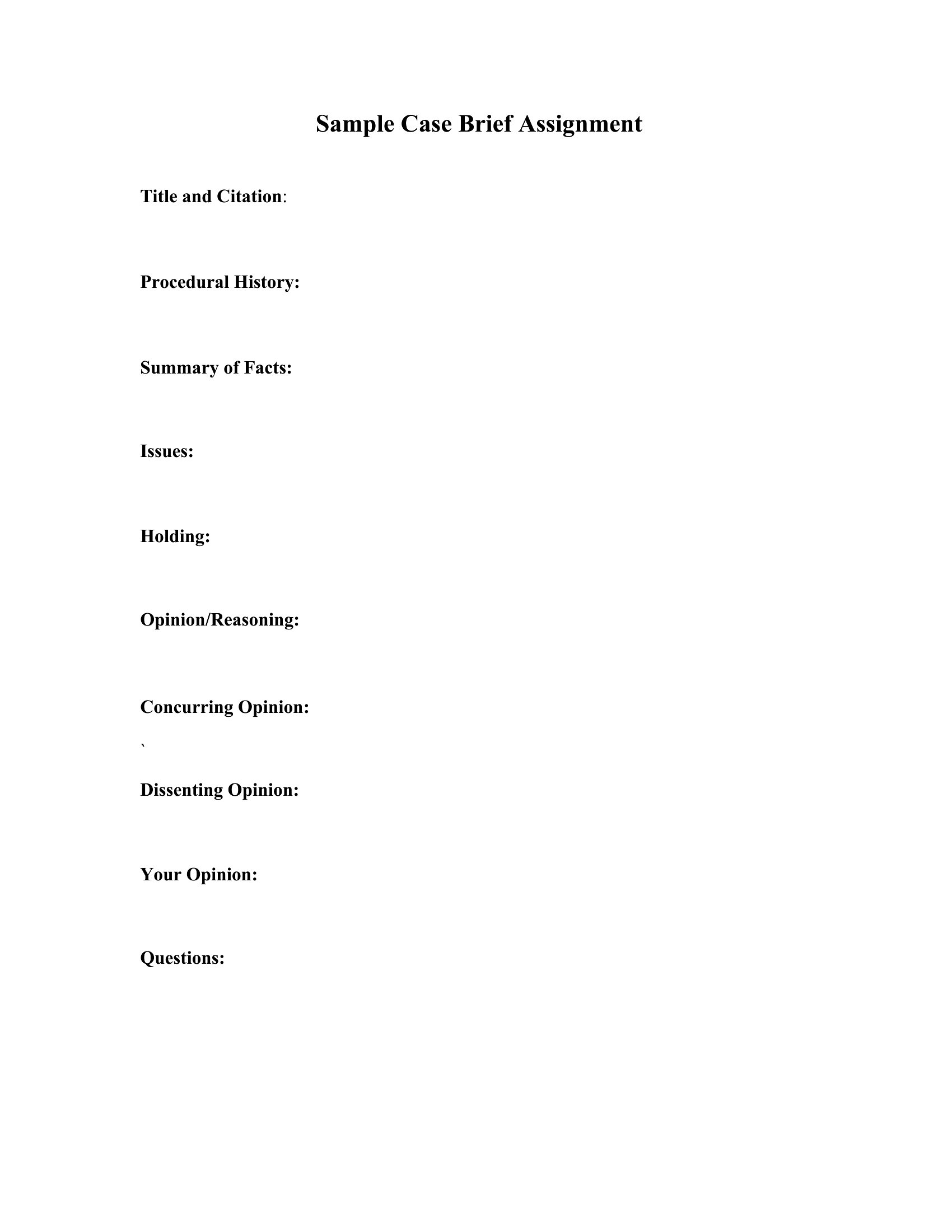
Simply rearrange the sections in the Word document—copy and paste headings into your preferred sequence. The templates are flexible enough to accommodate variations, such as combining ‘reasoning’ with ‘analysis’ or adding a ‘dissent’ section. The key is consistency across all your briefs to streamline review sessions.
Can I use these templates to brief international cases where the legal reasoning style differs, like statutory-focused decisions?
Yes, but focus on the core analytical framework. For statutory-heavy cases, emphasize the ‘rule’ section by expanding it to include legislative intent or textual analysis. Reduce emphasis on ‘policy implications’ unless they’re central to the decision. The template’s modularity lets you prioritize what matters most for cross-border comparisons.
Comments
Join the conversation
Sign in to share your thoughts and leave a comment on this resource.