
Skip to content
50% off this one-time $1.99 pack with HALFOFF — or unlimited with Pro.HALFOFF
Premium

Free Printable Morse Code Charts (PDF)

Data
iracemadesouza by iracemadesouza
Updated 0 downloads Quality-checked template

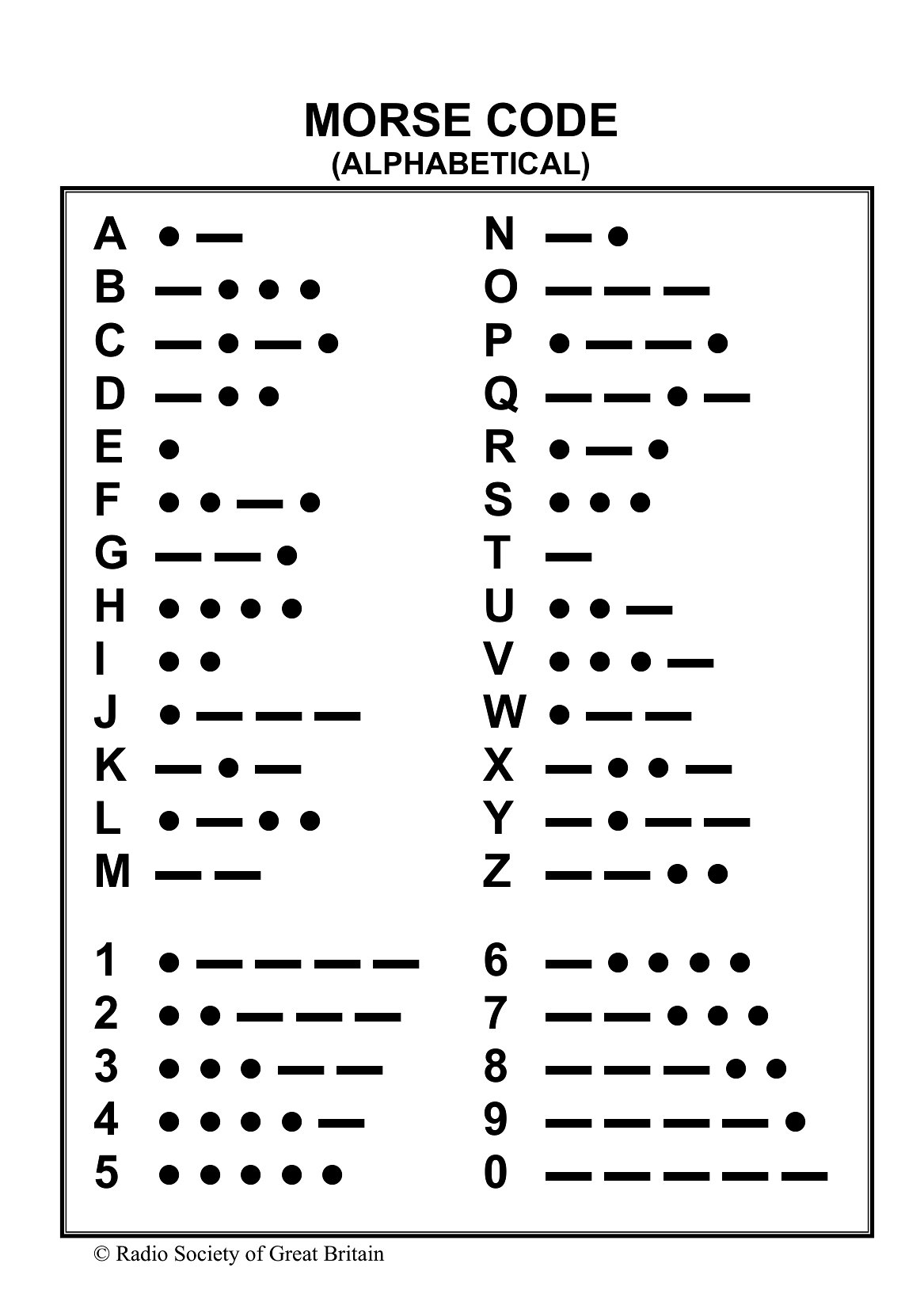
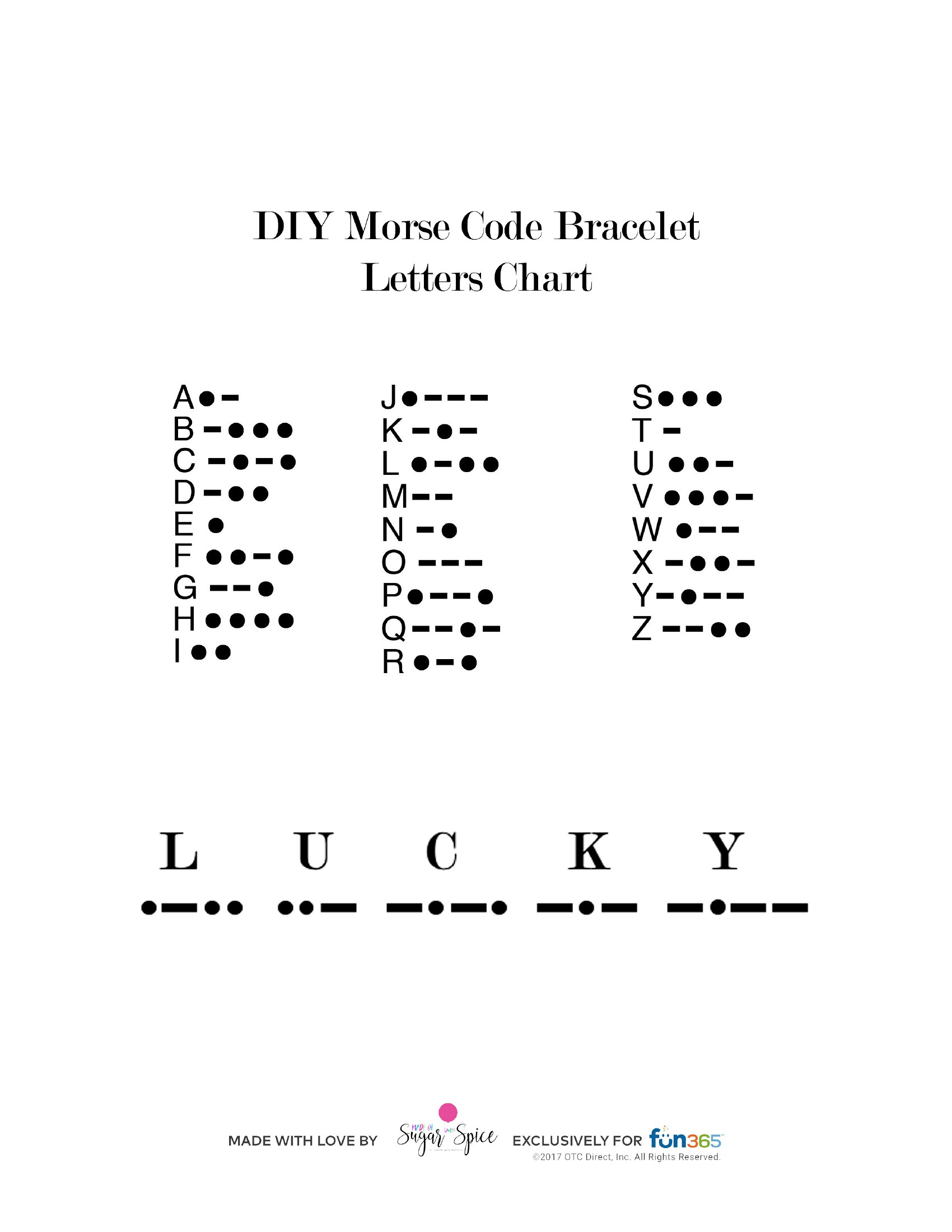
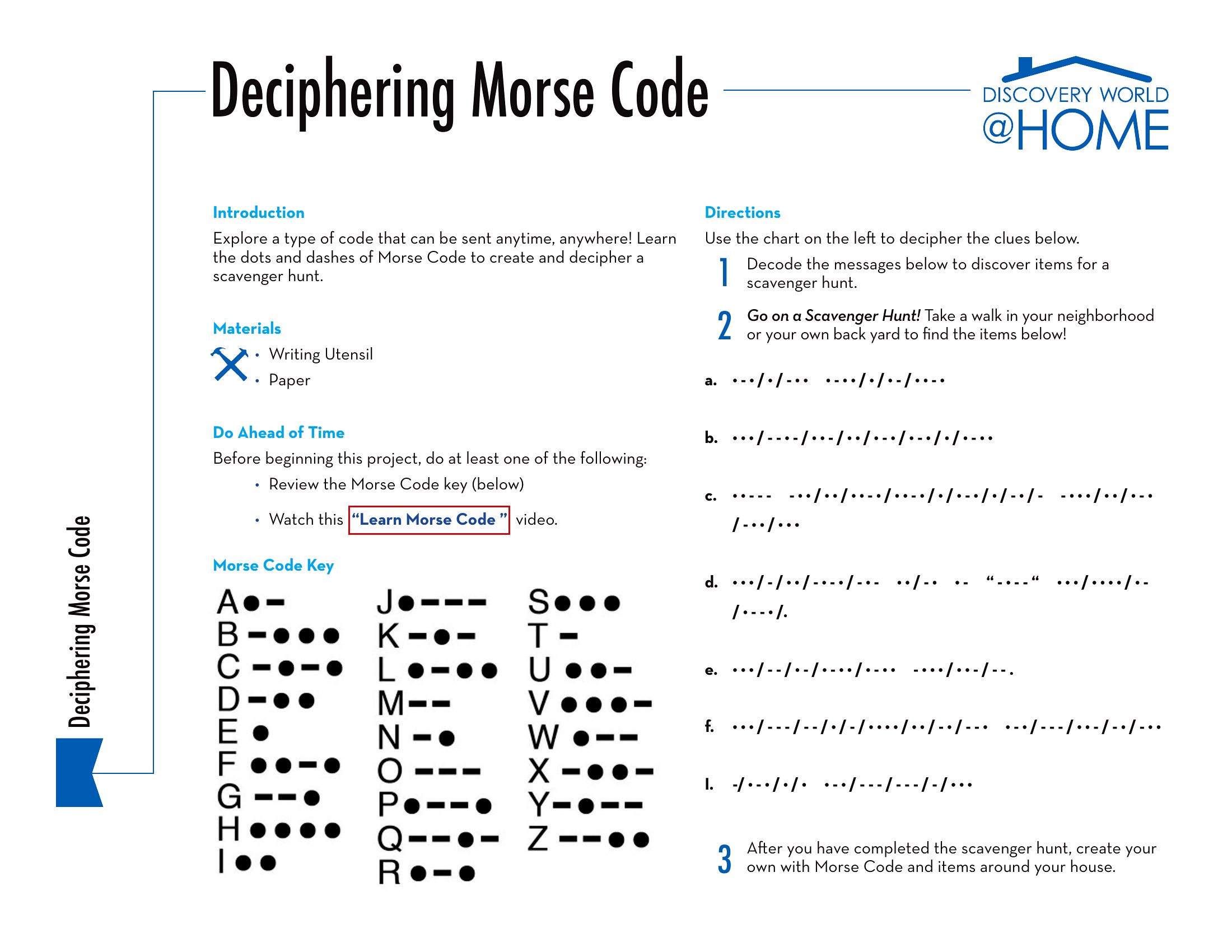
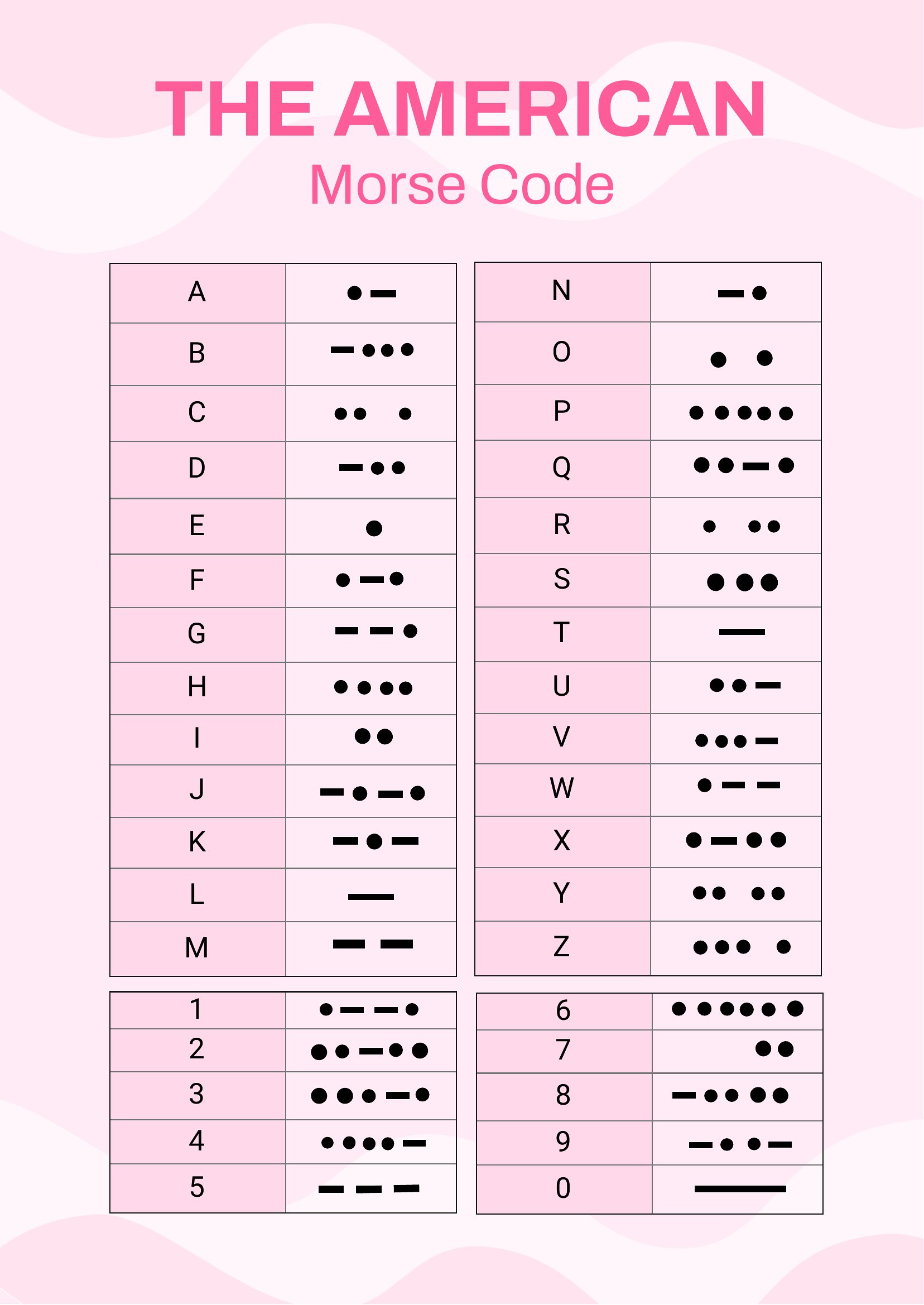
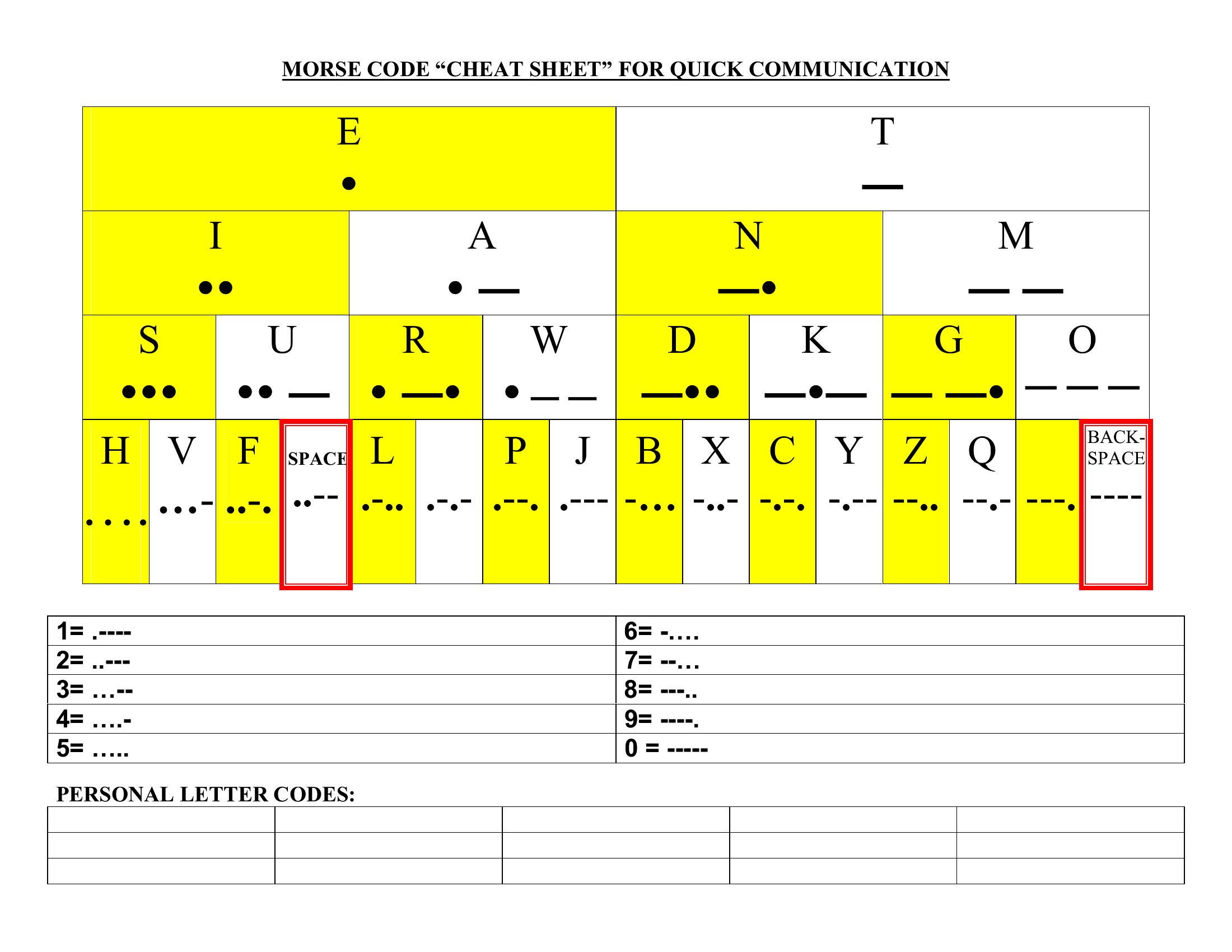
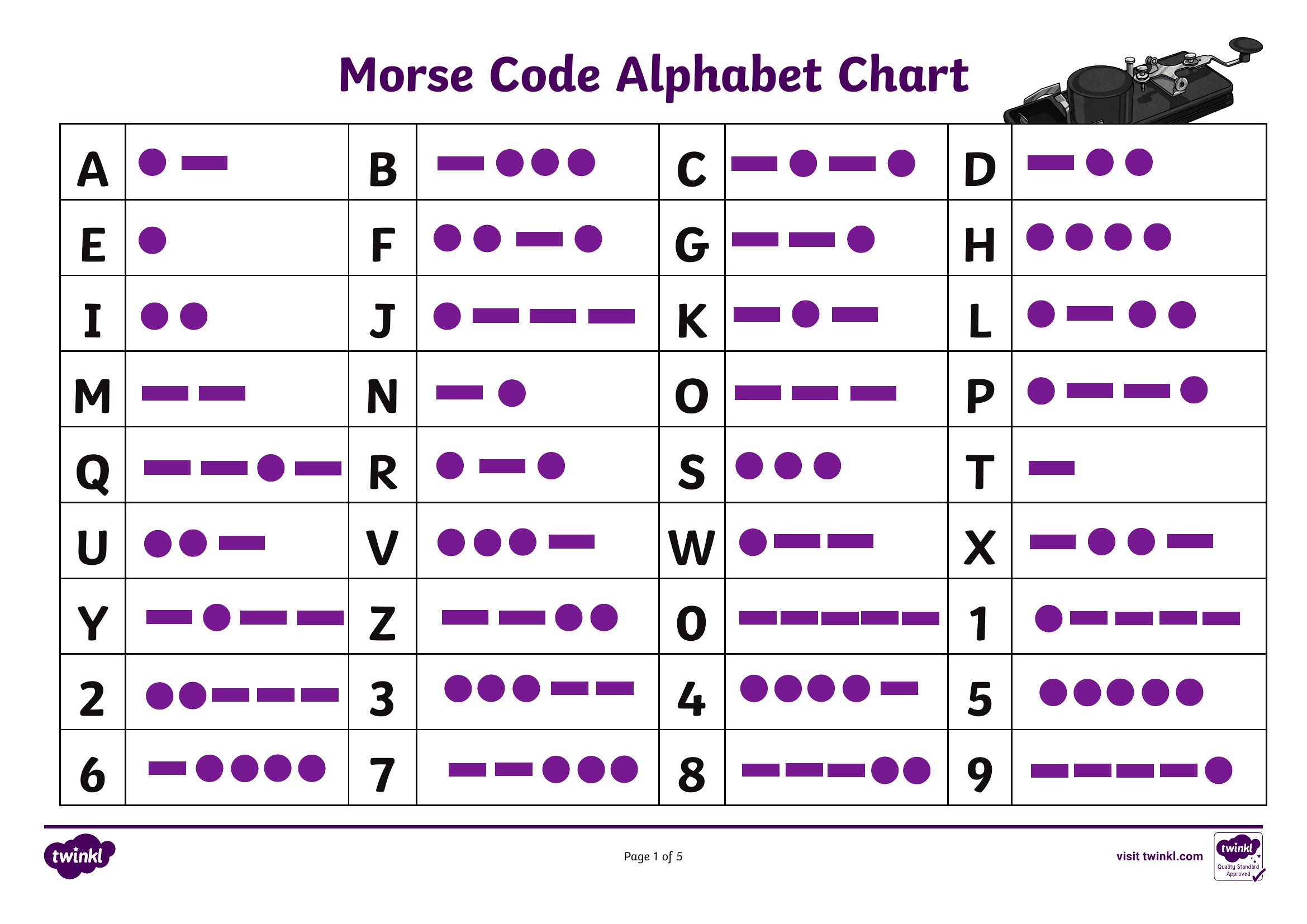
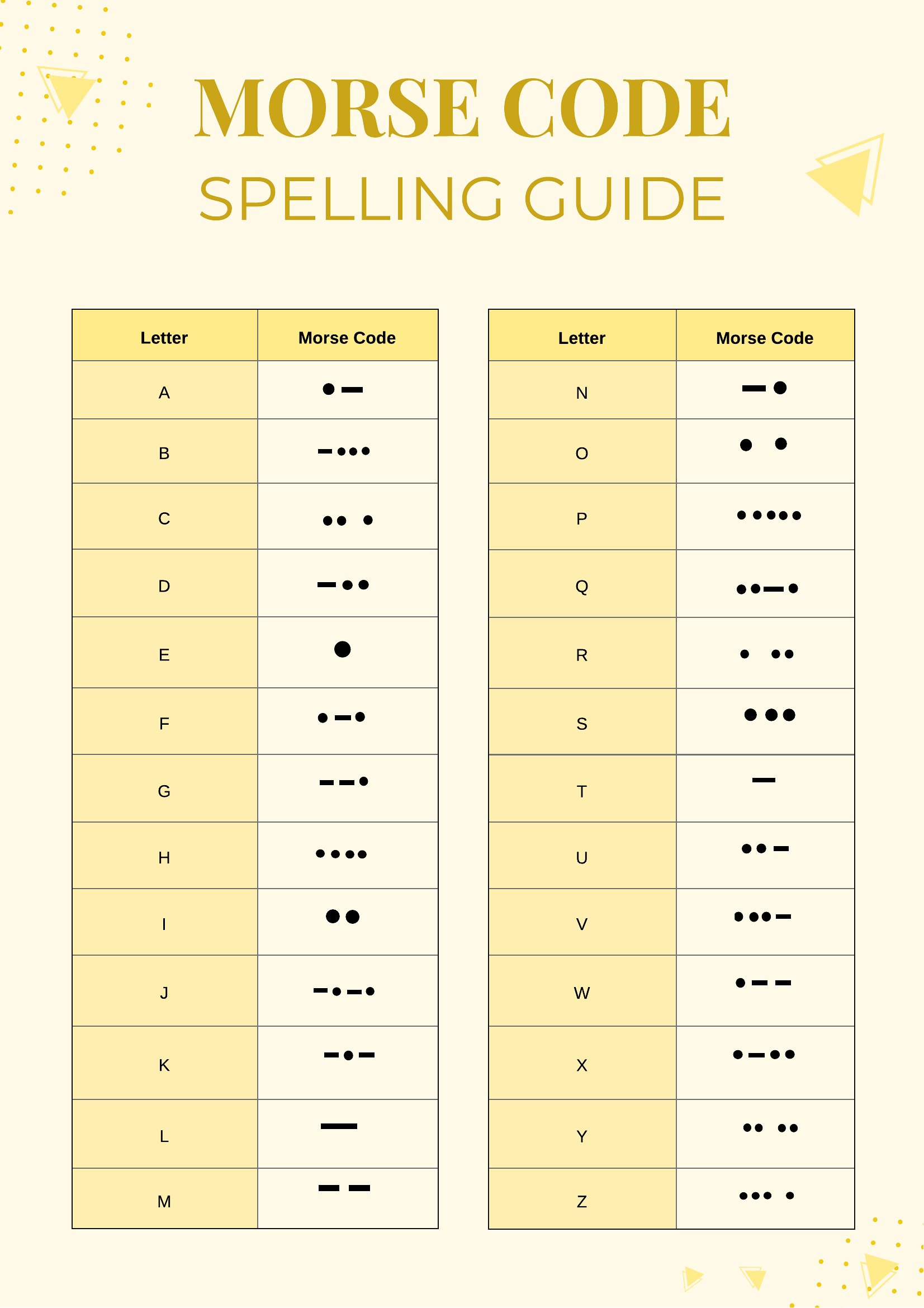
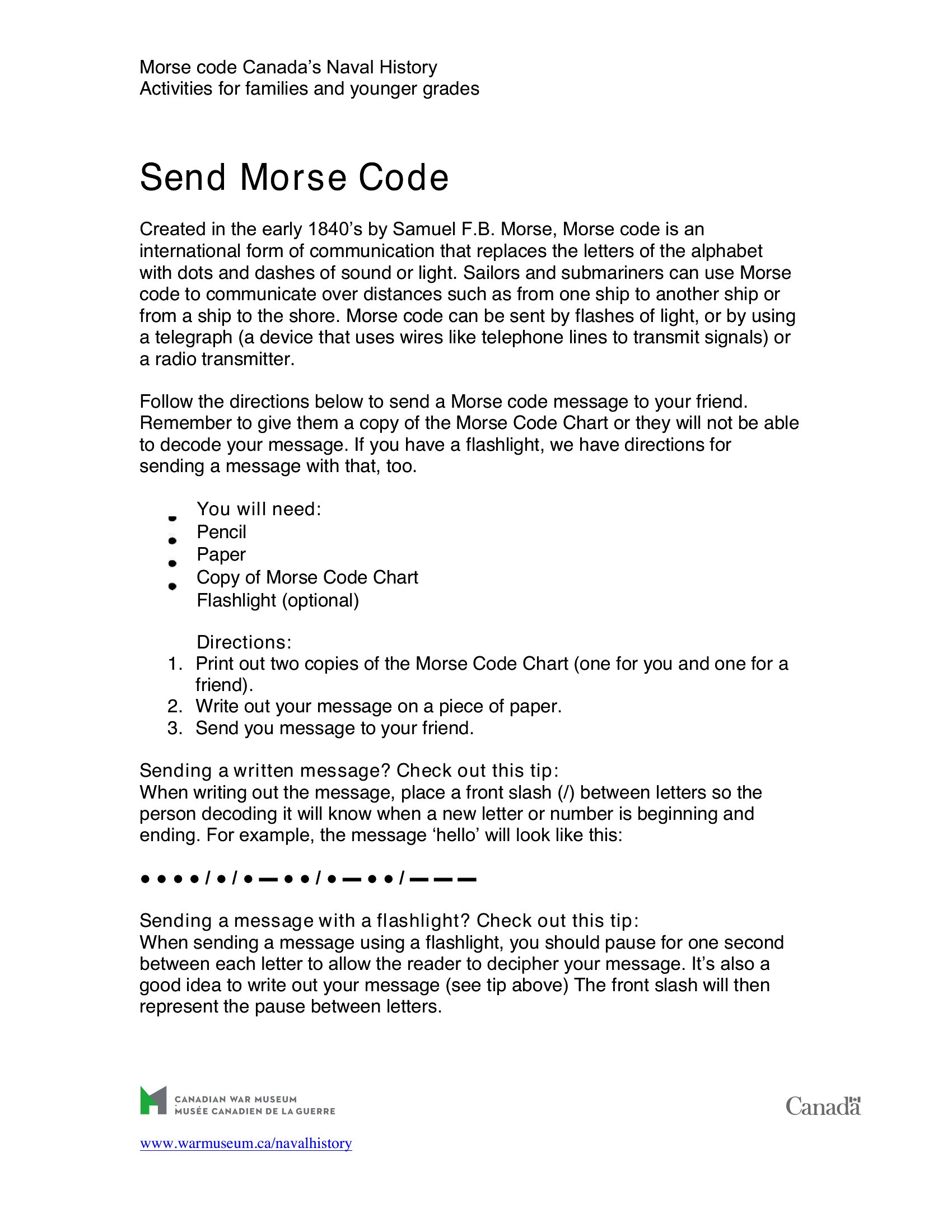
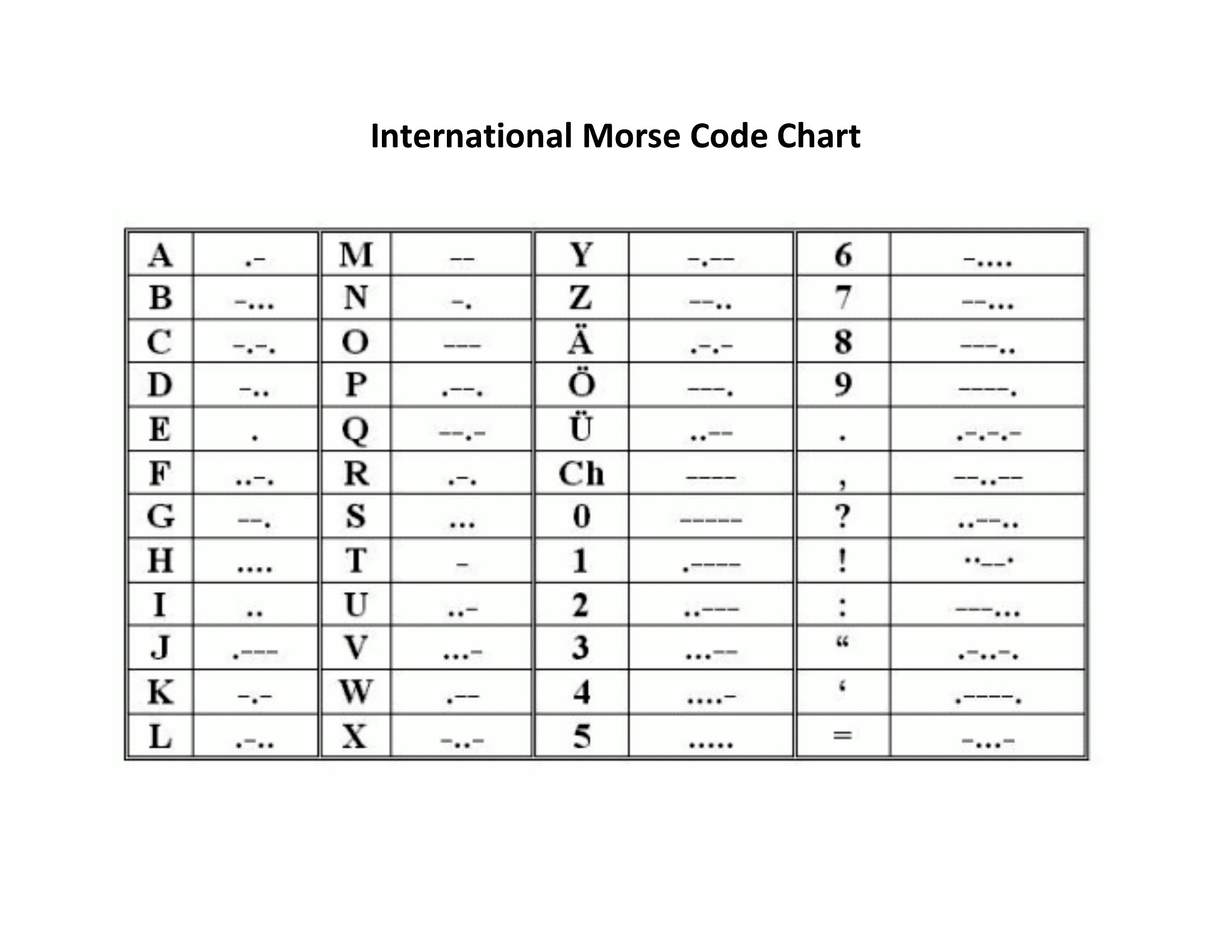
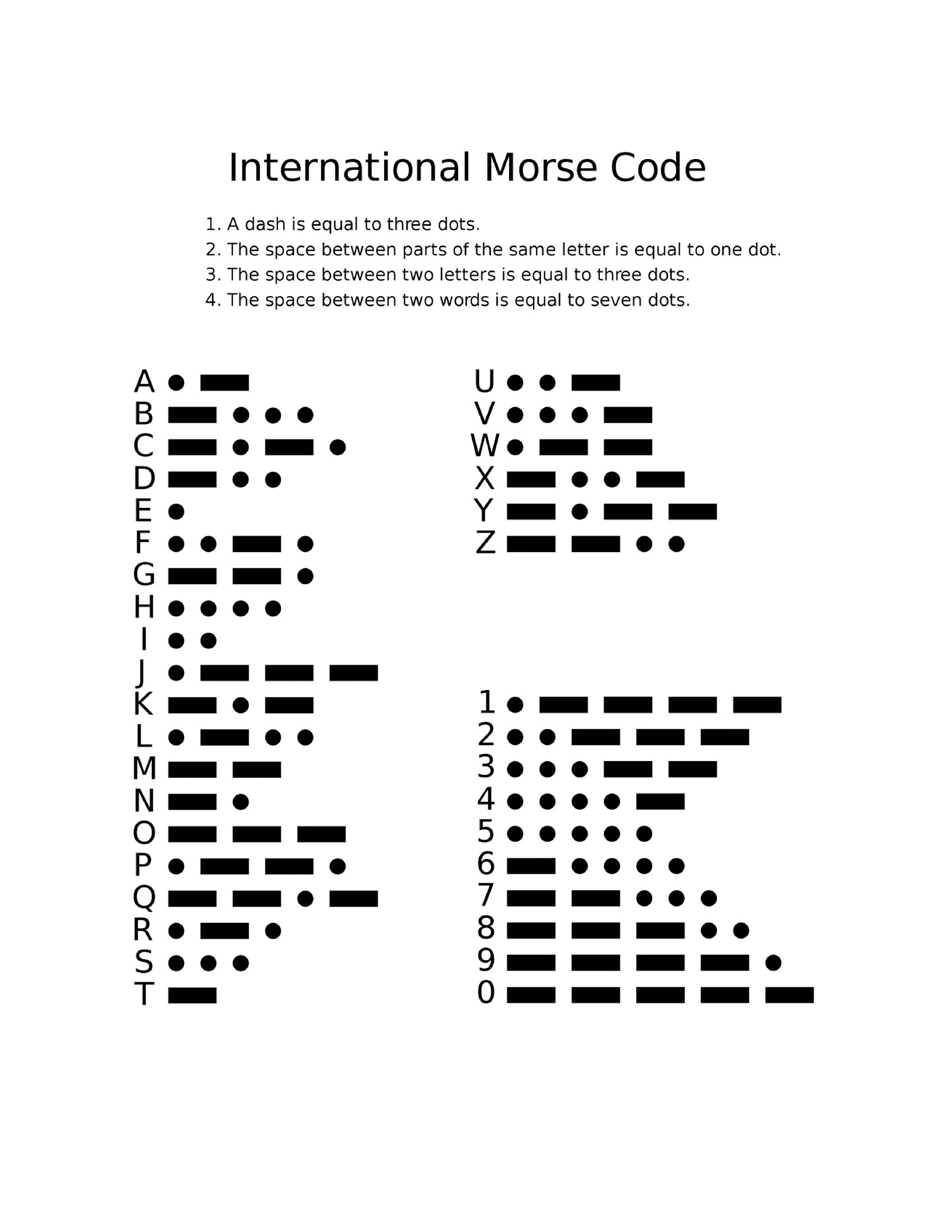
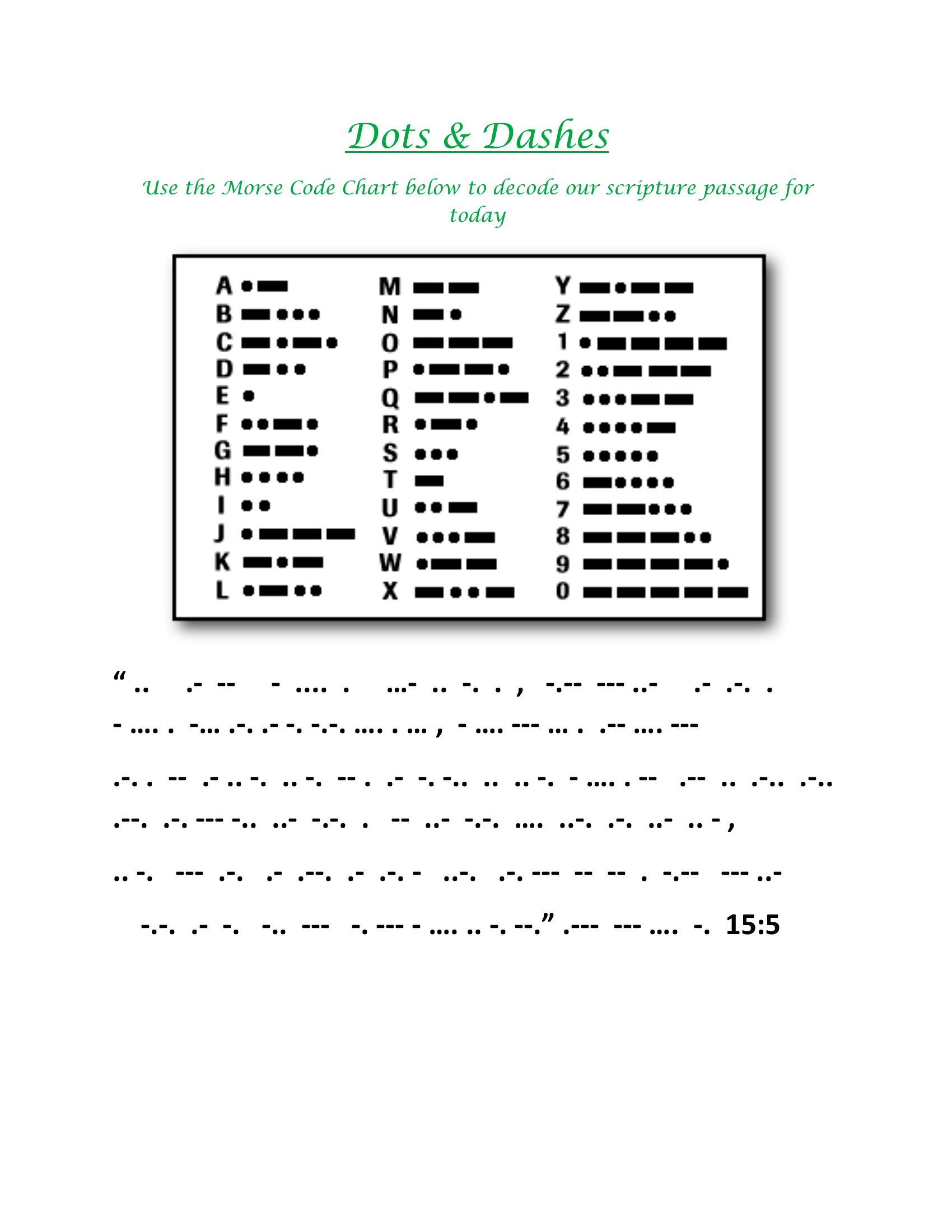
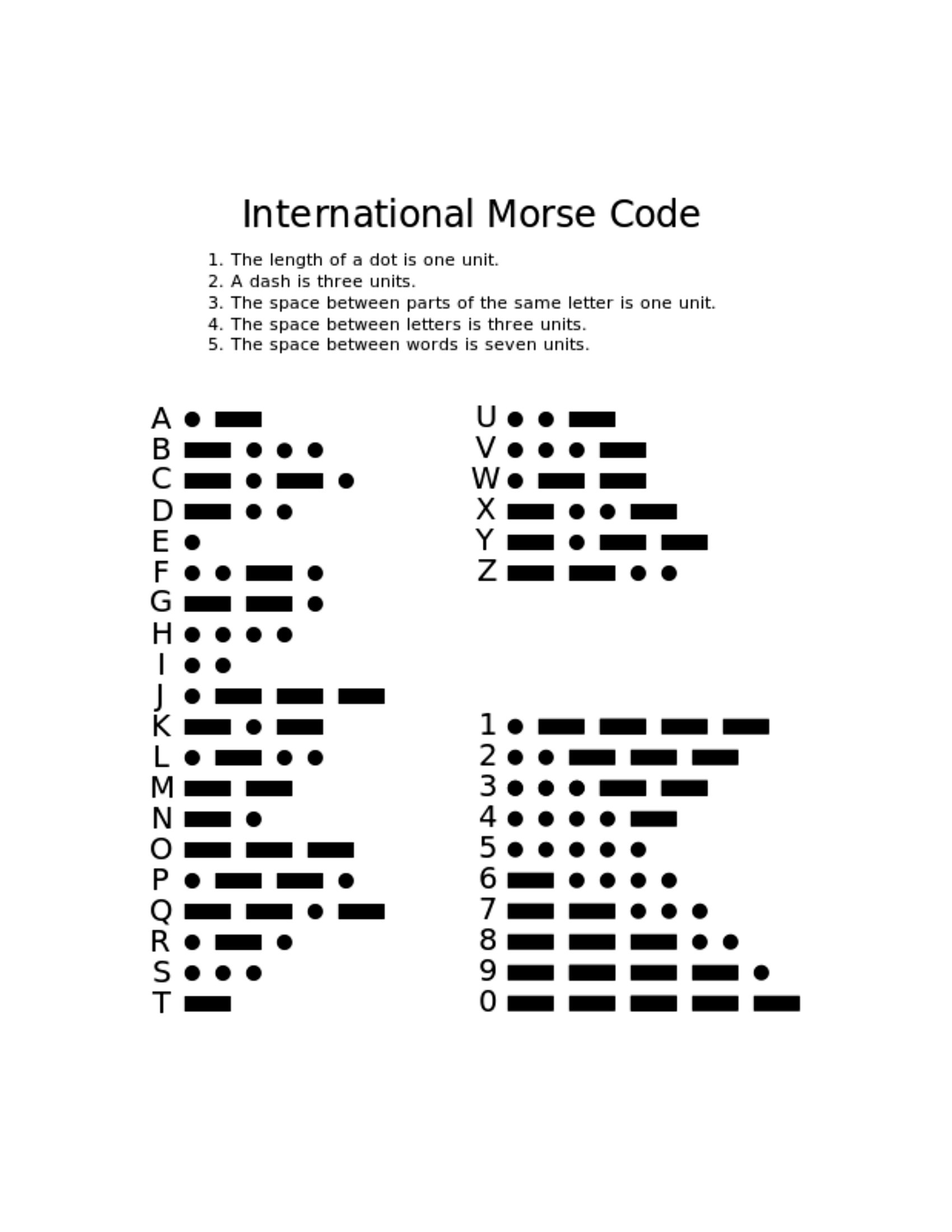
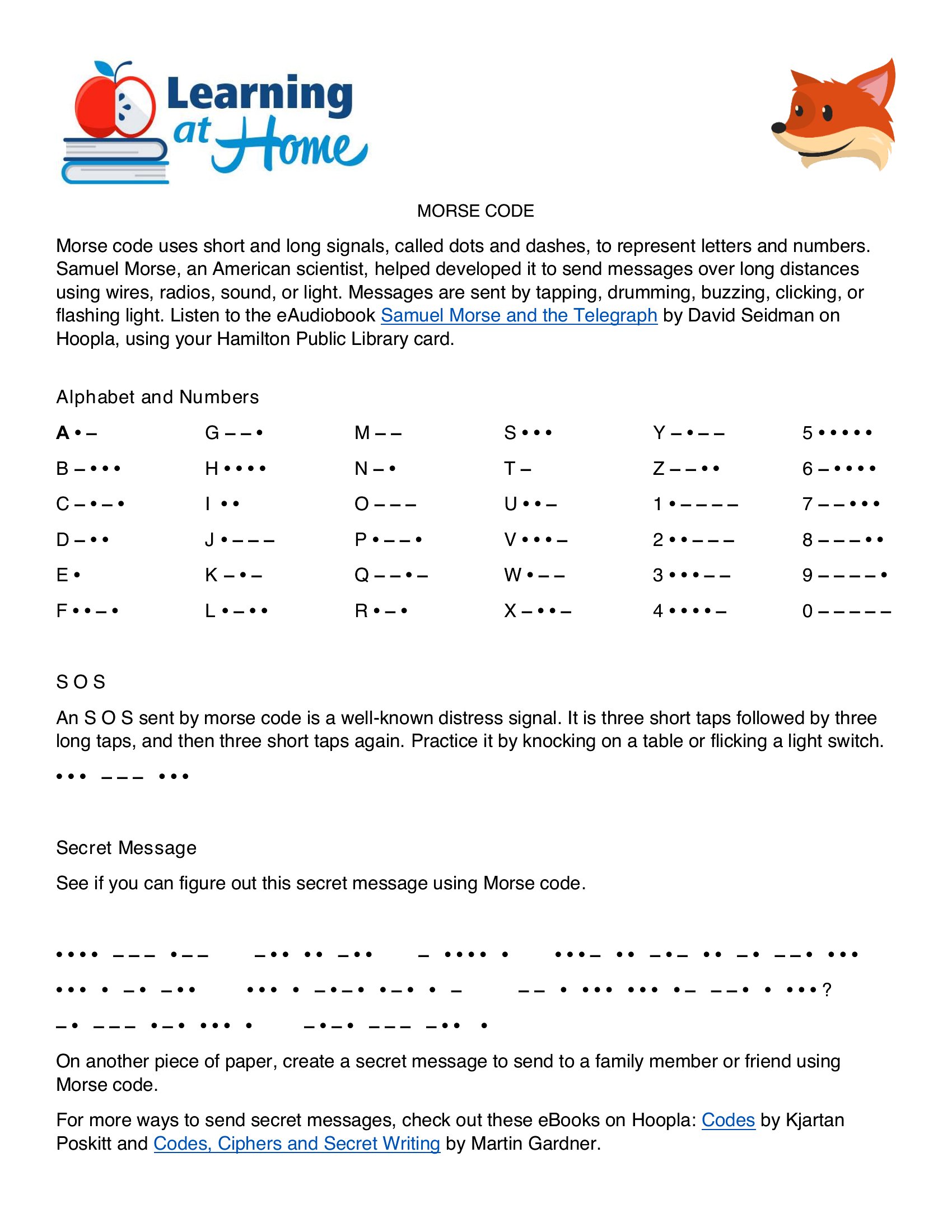
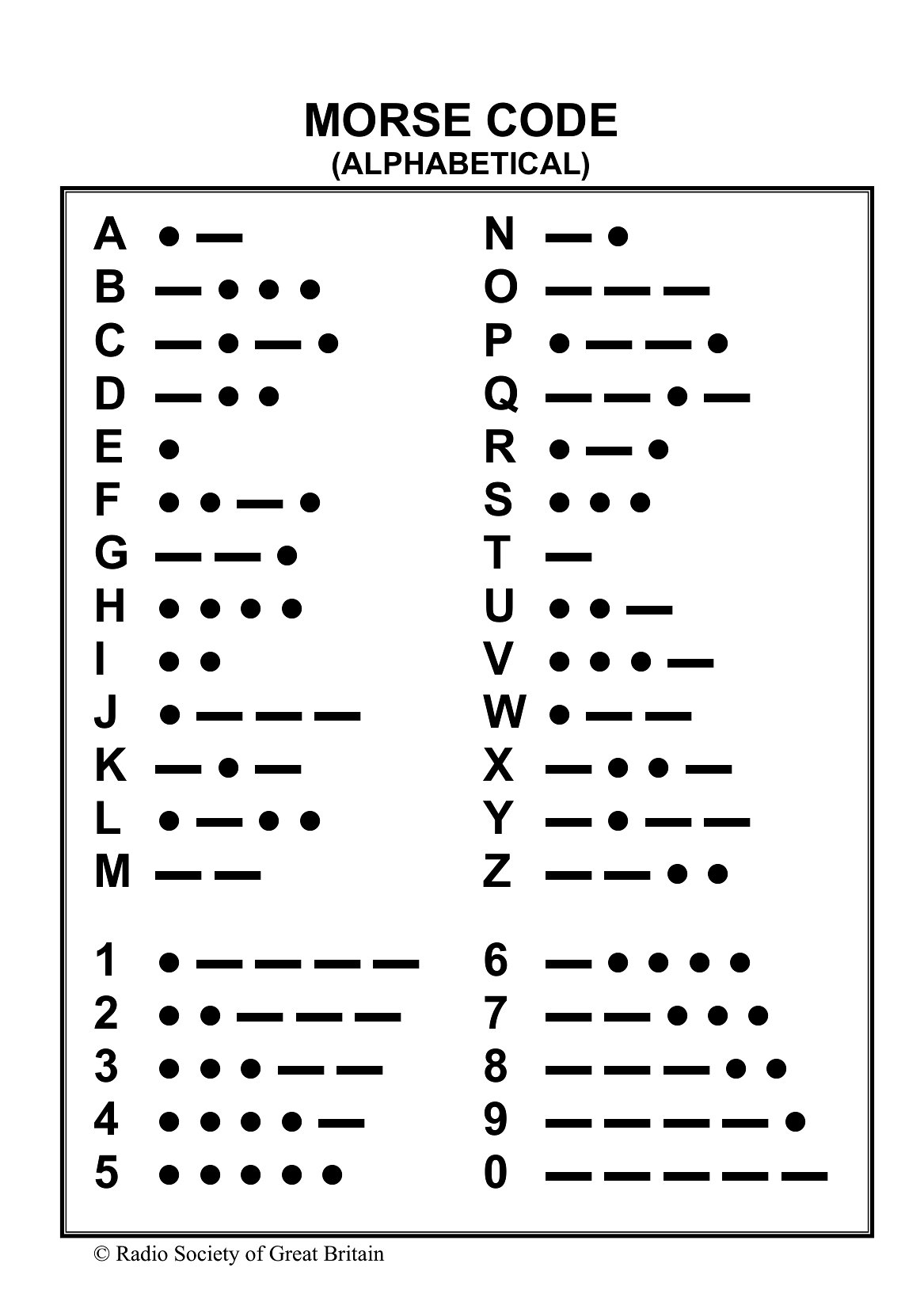
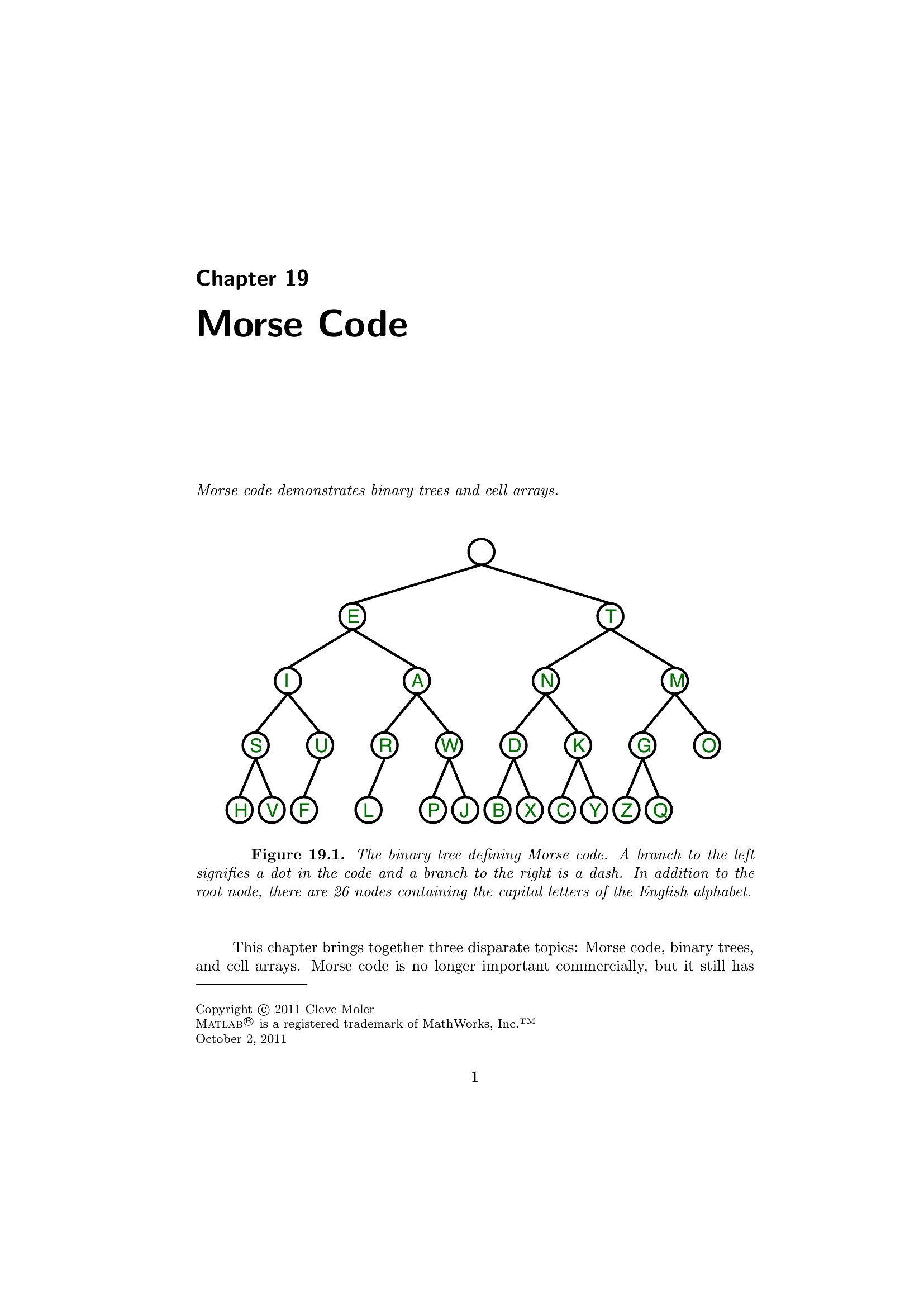
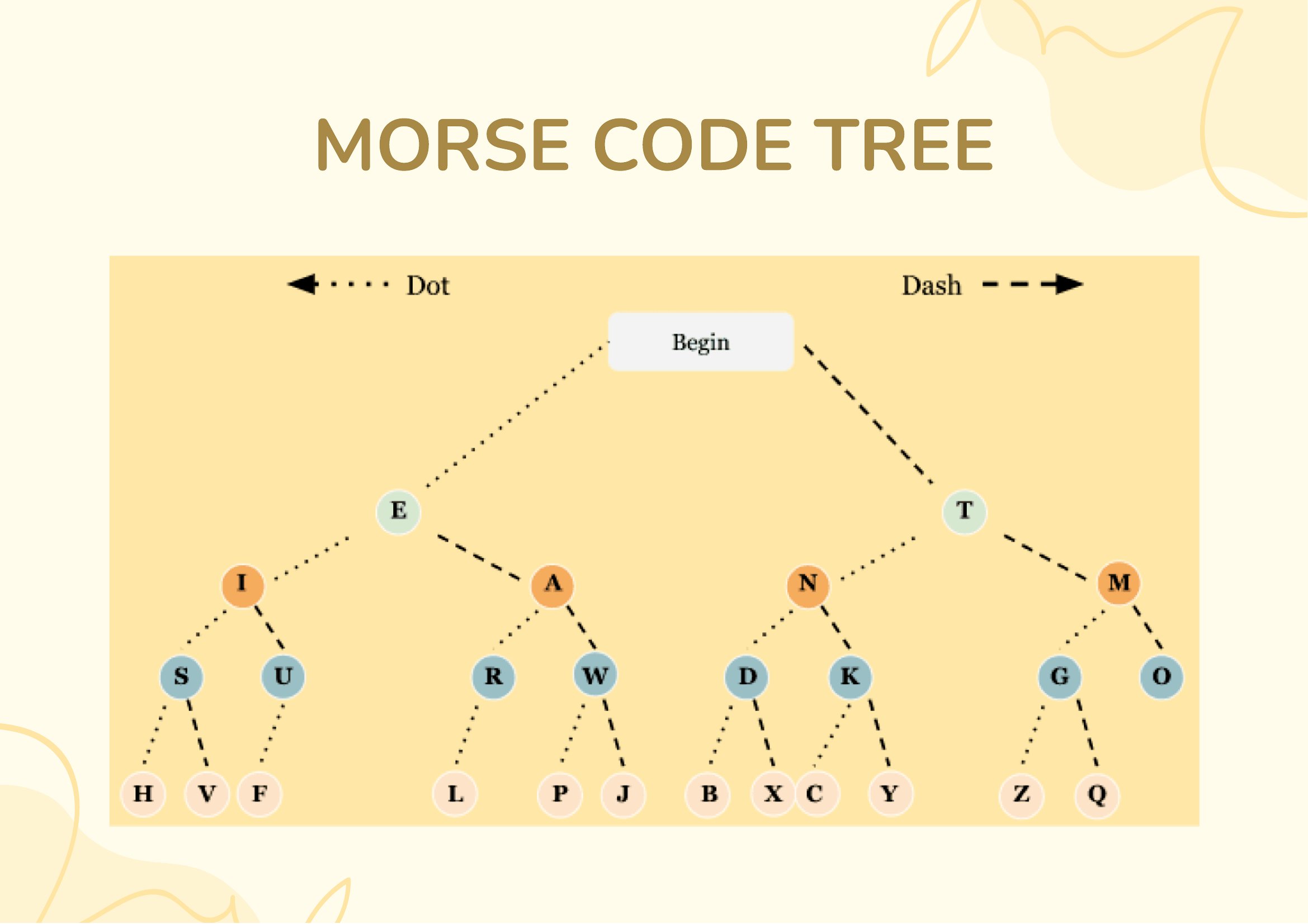
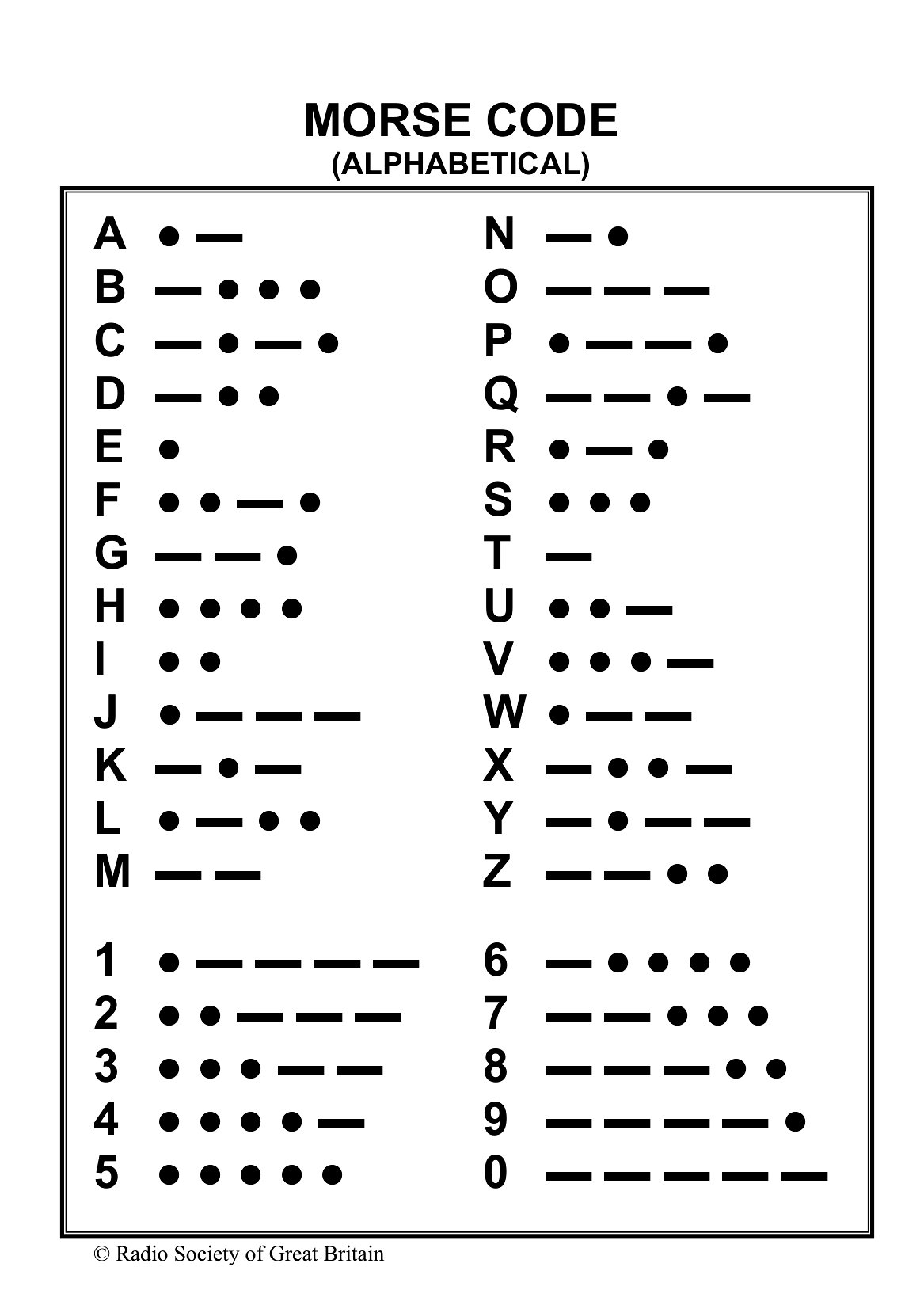
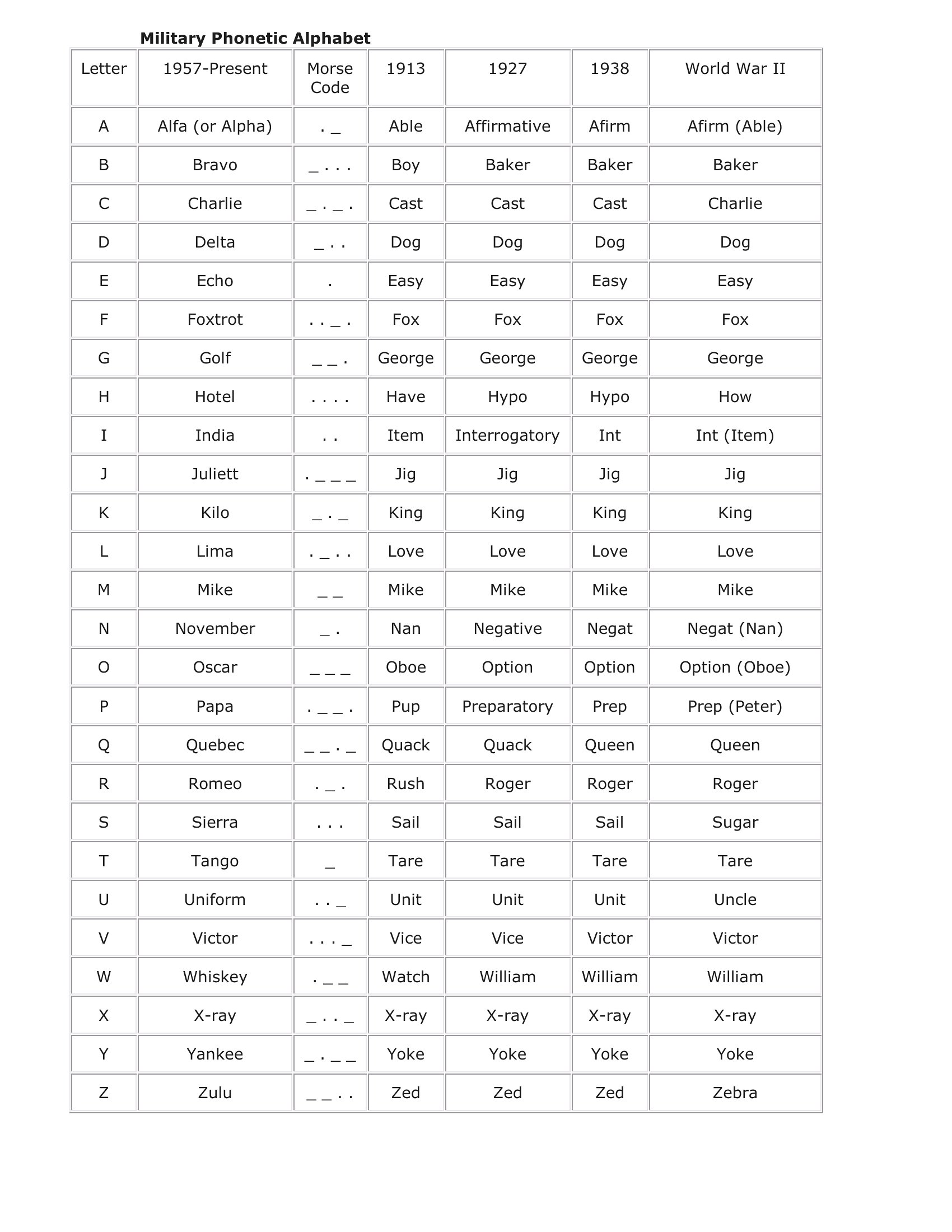
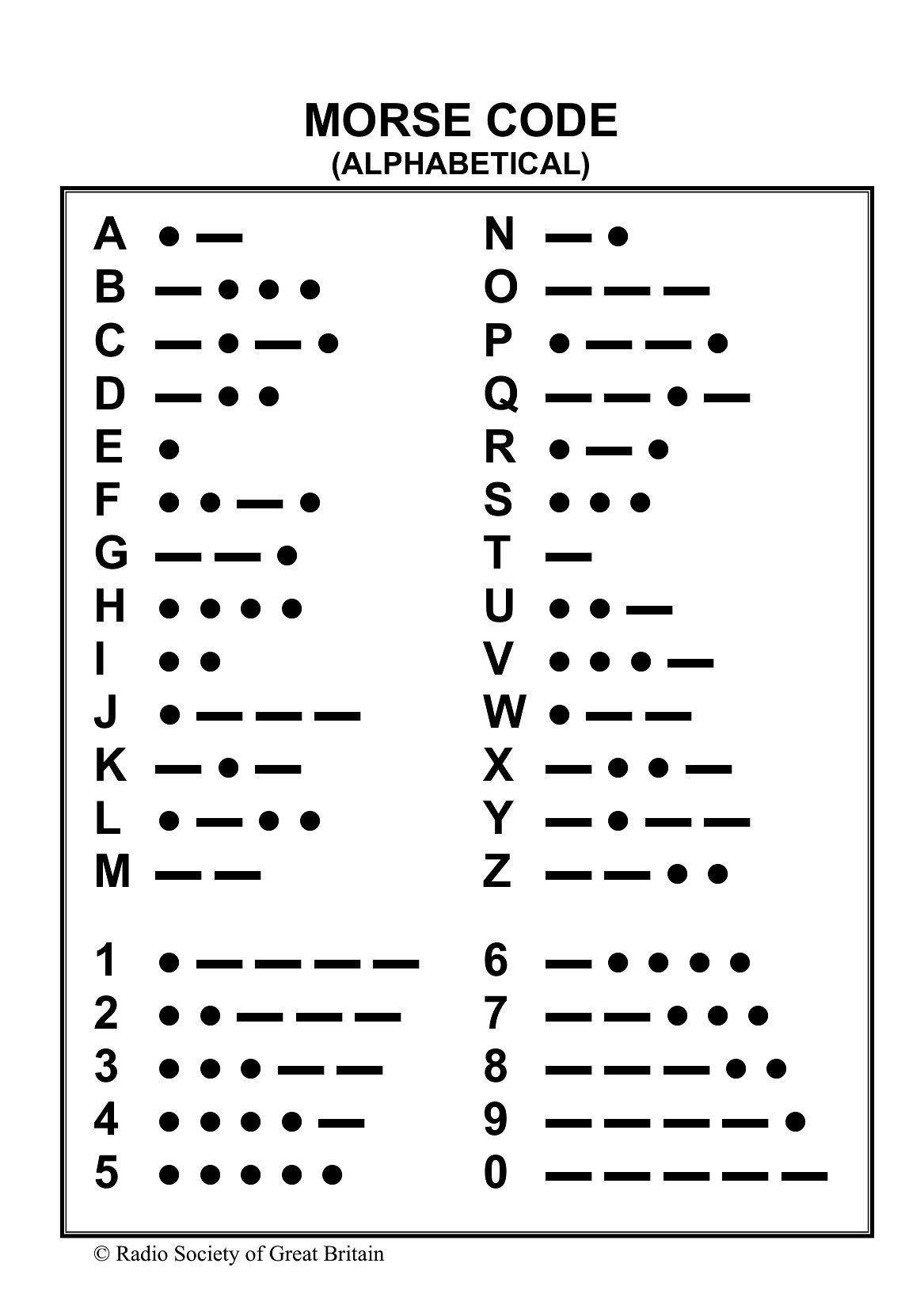
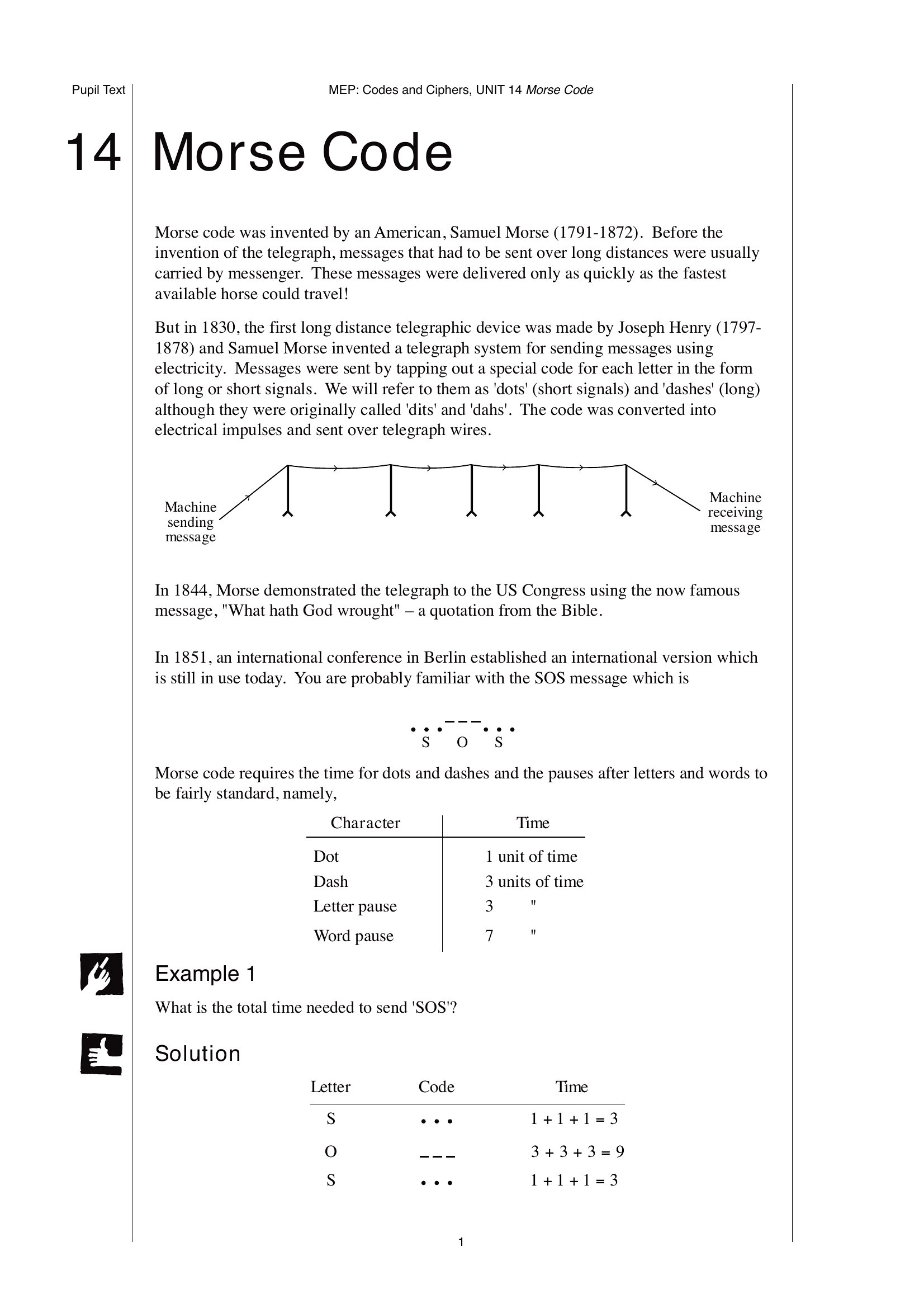
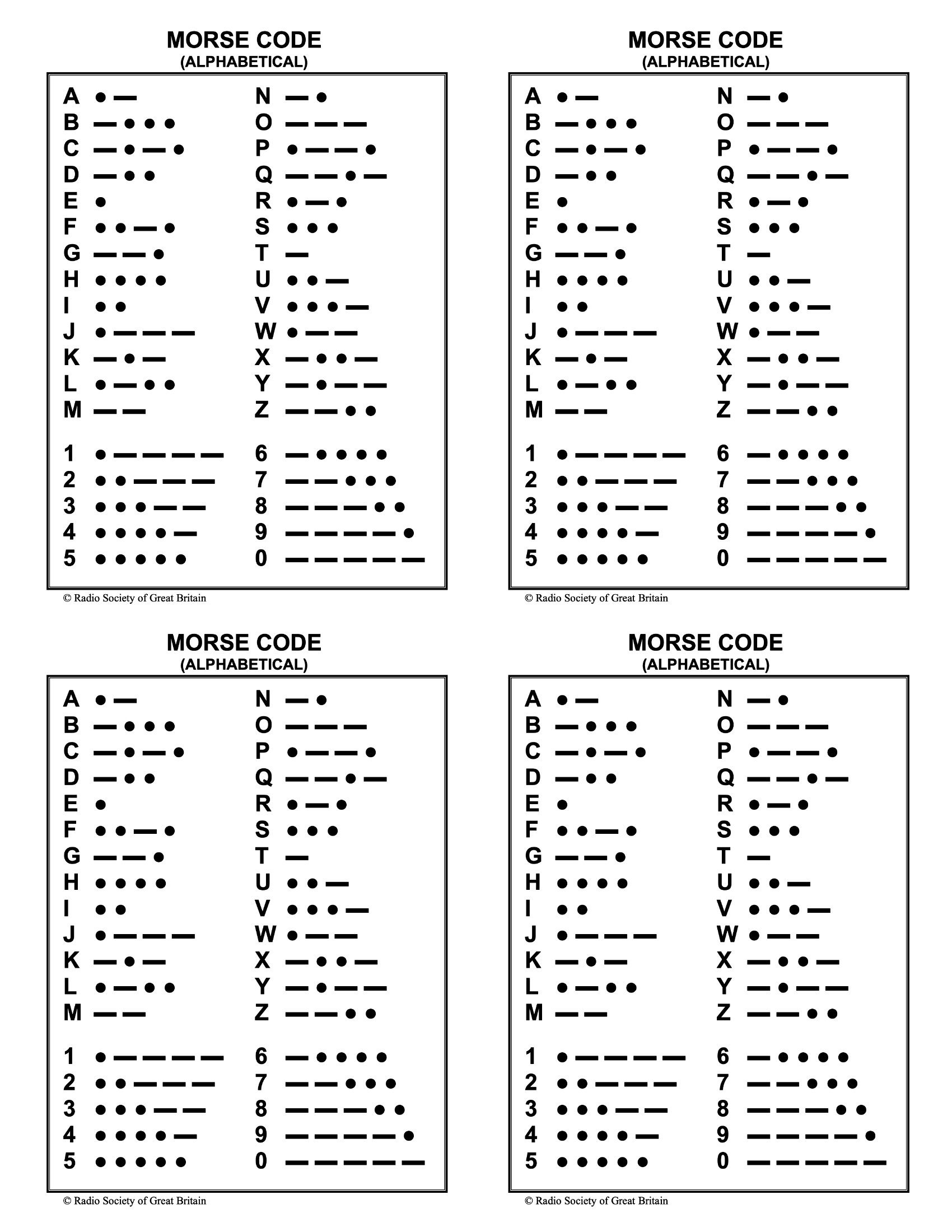
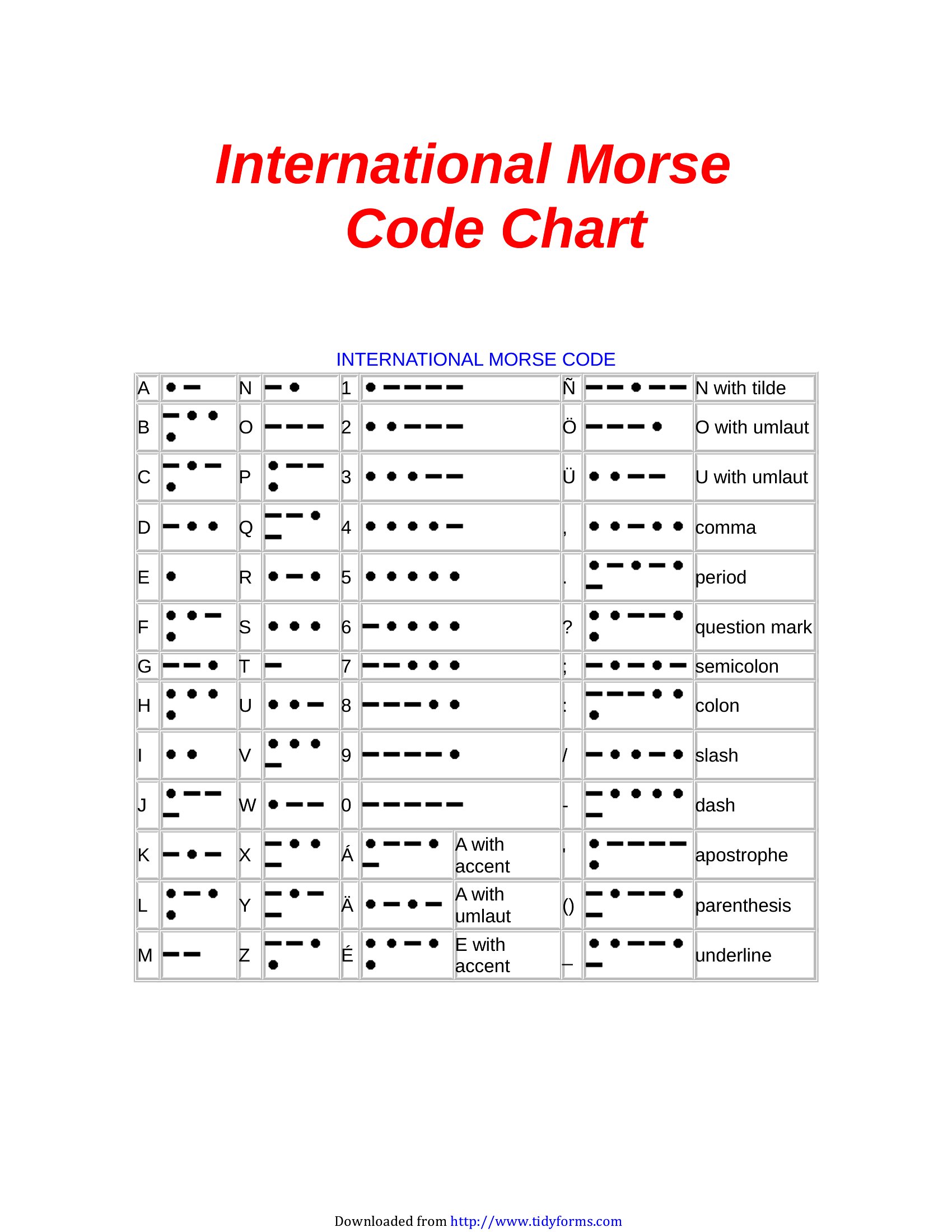
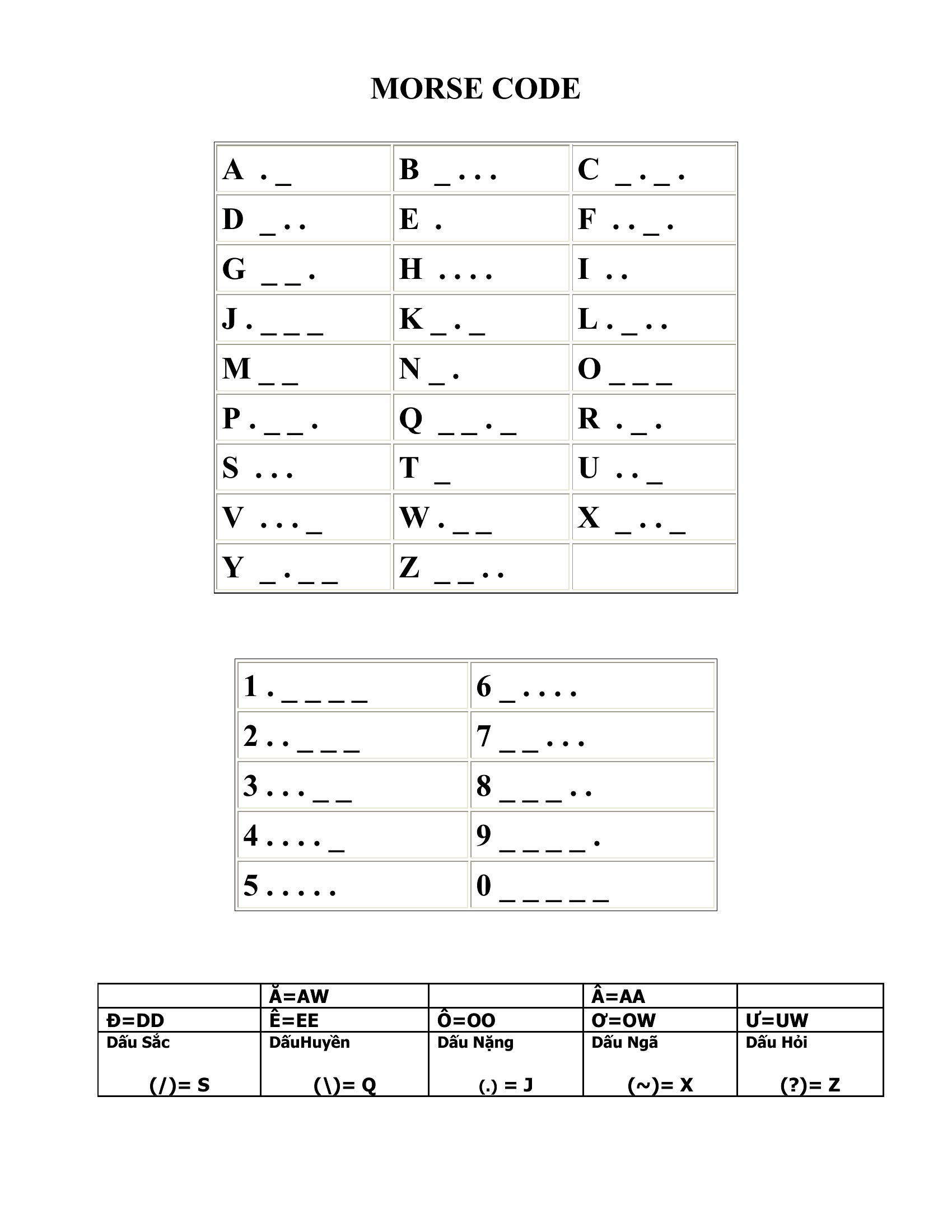
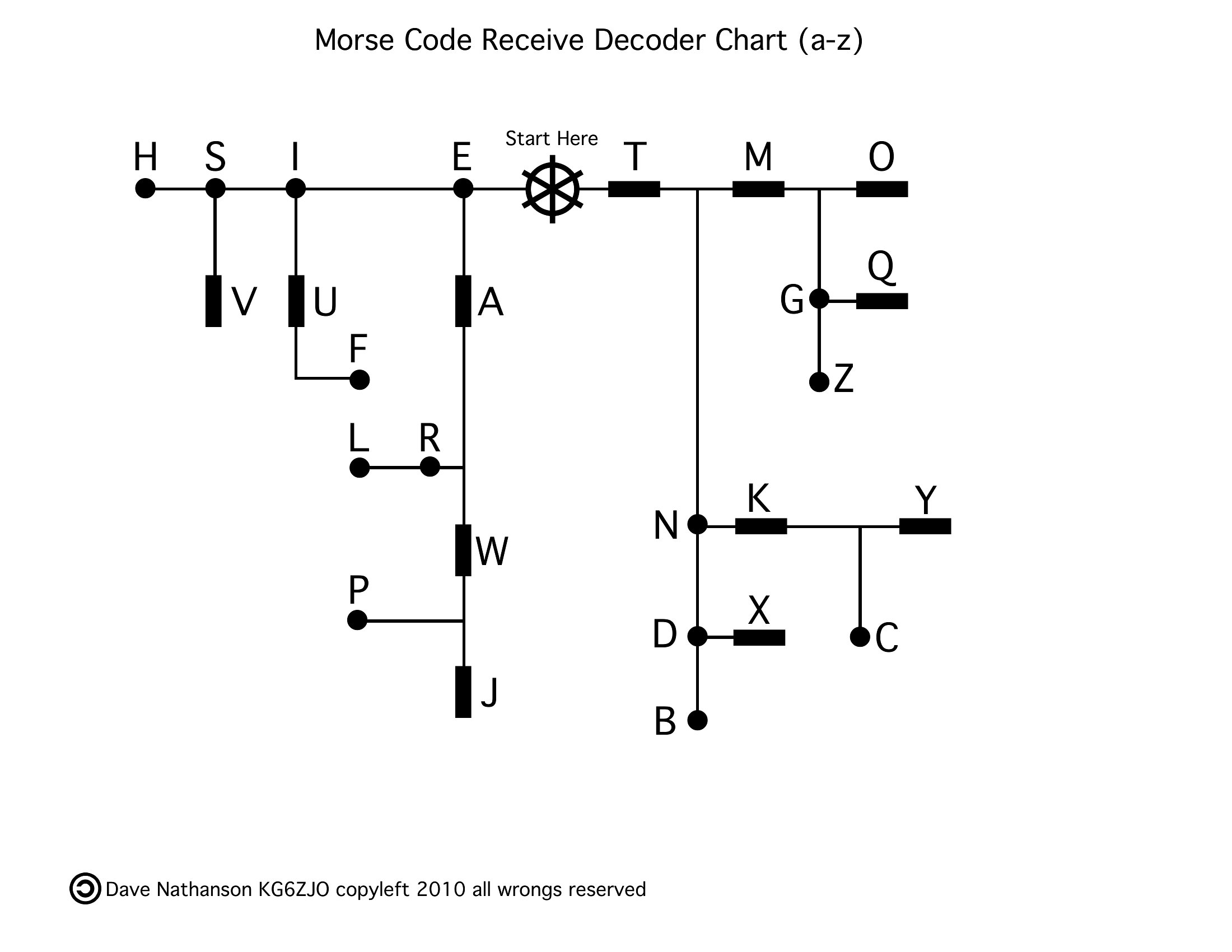
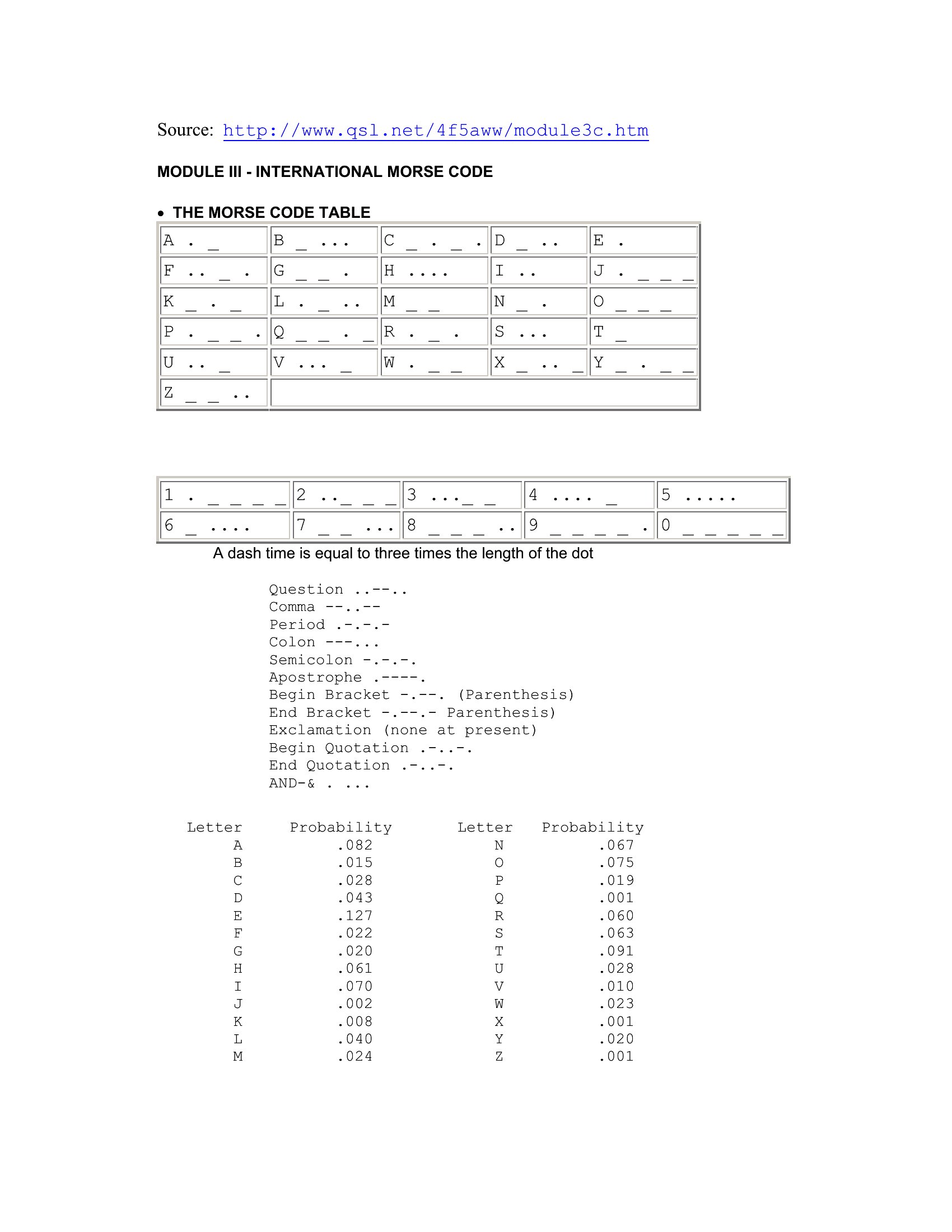
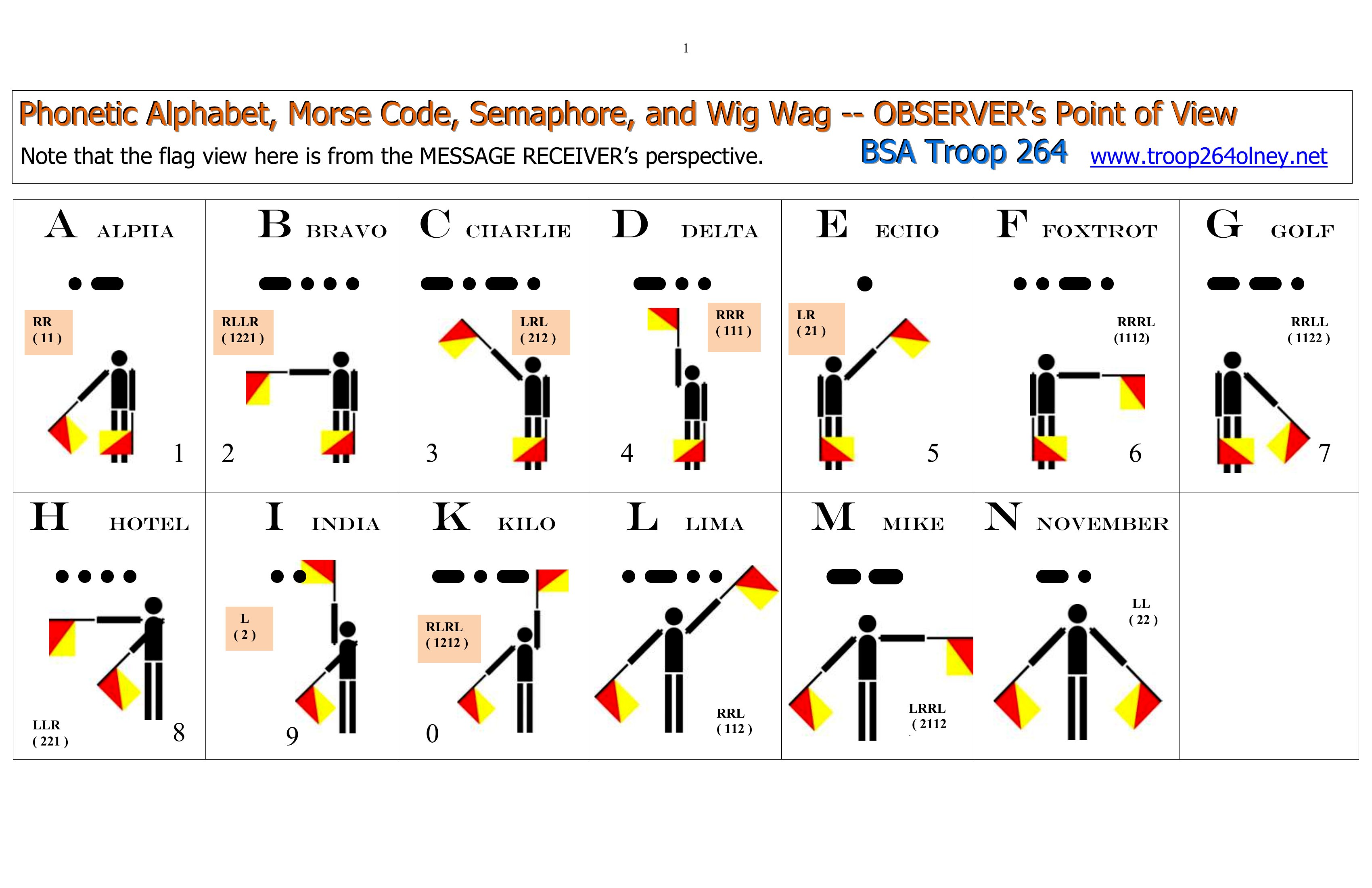
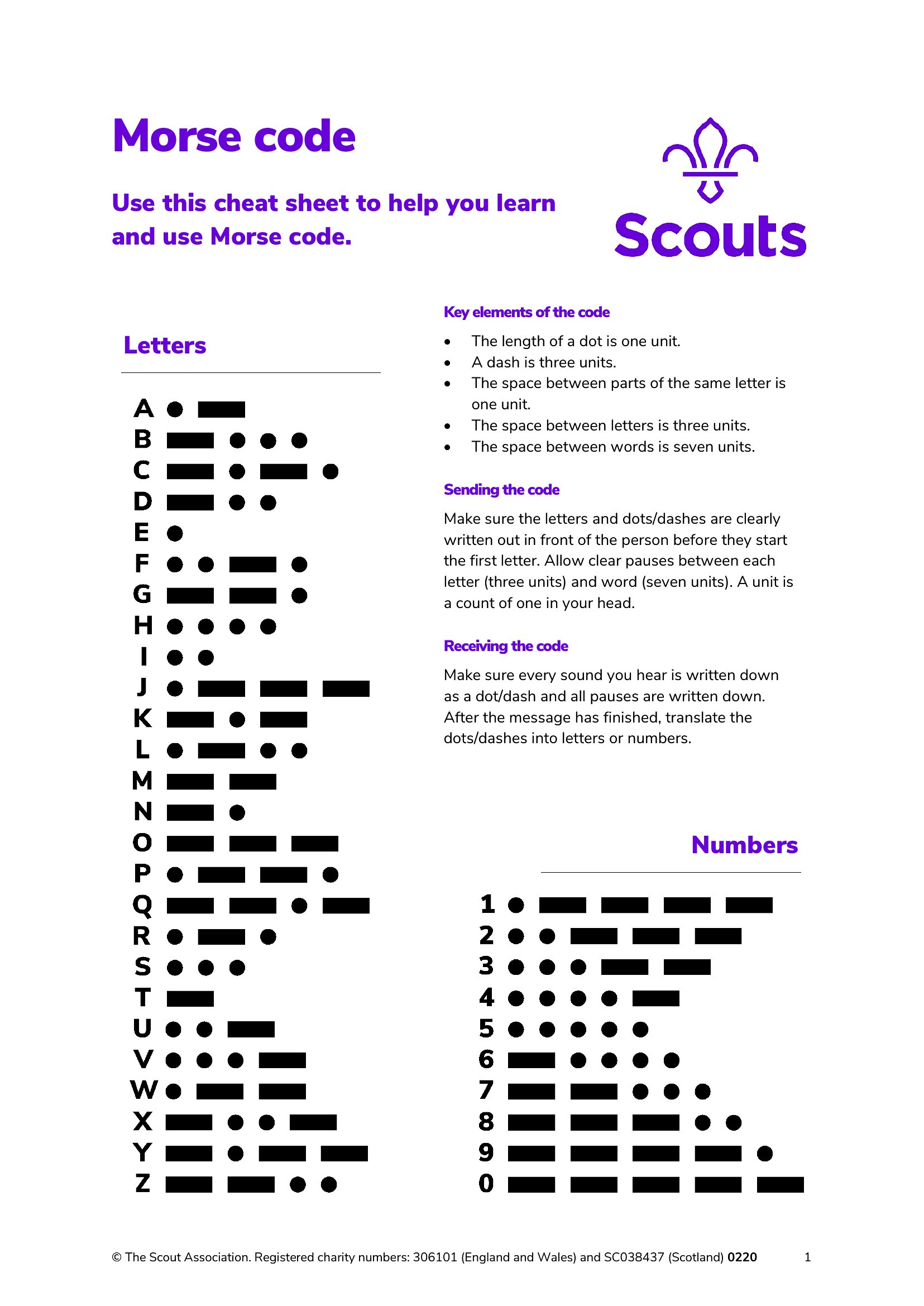
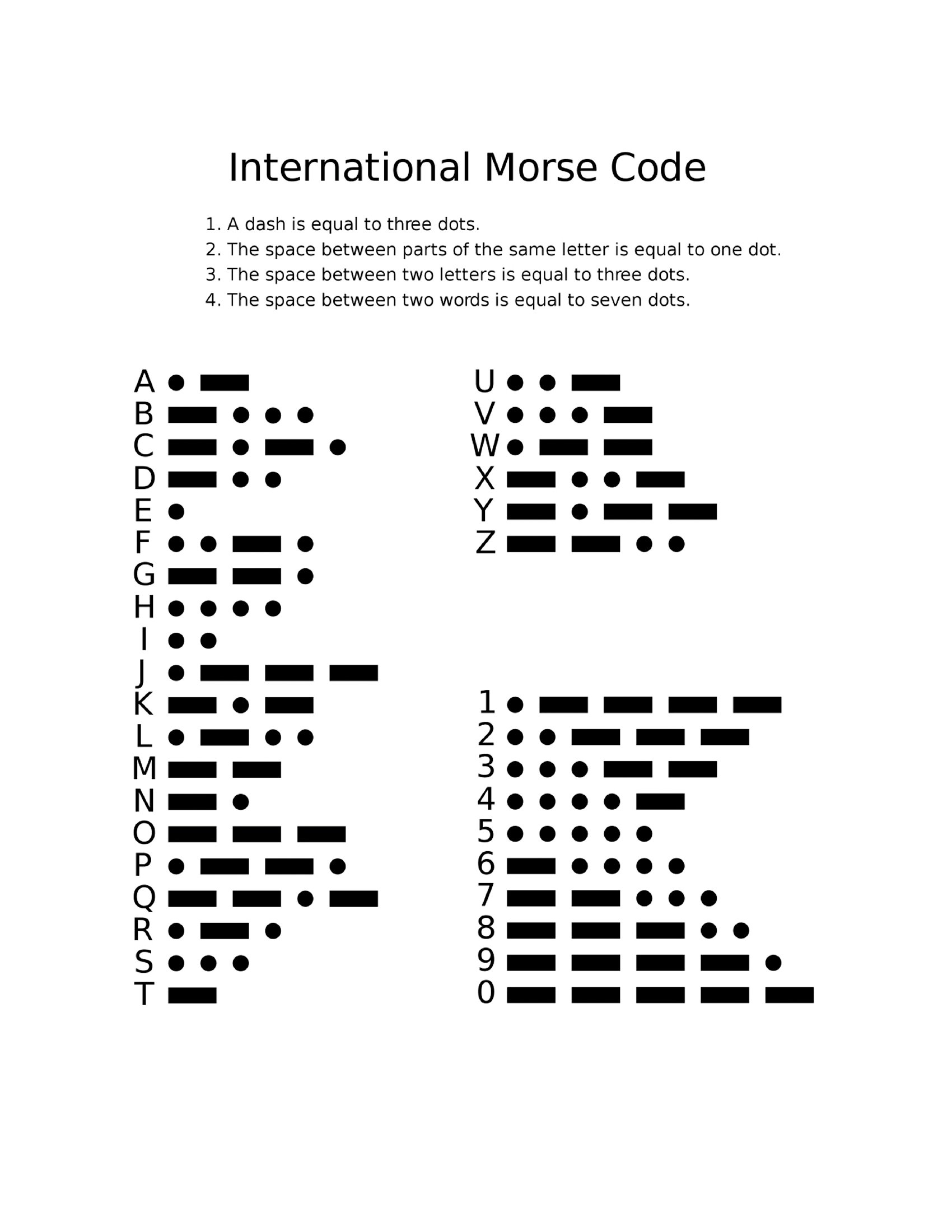
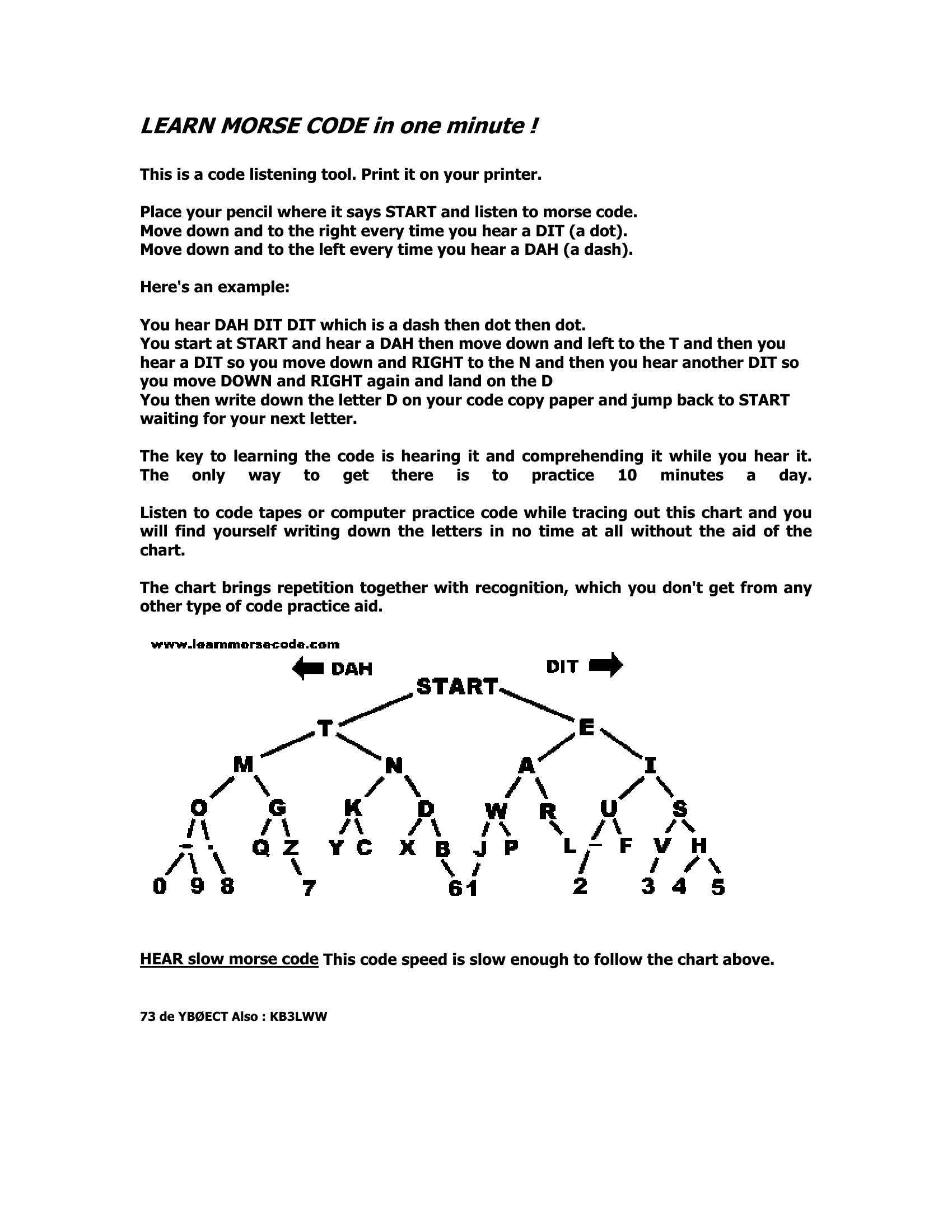
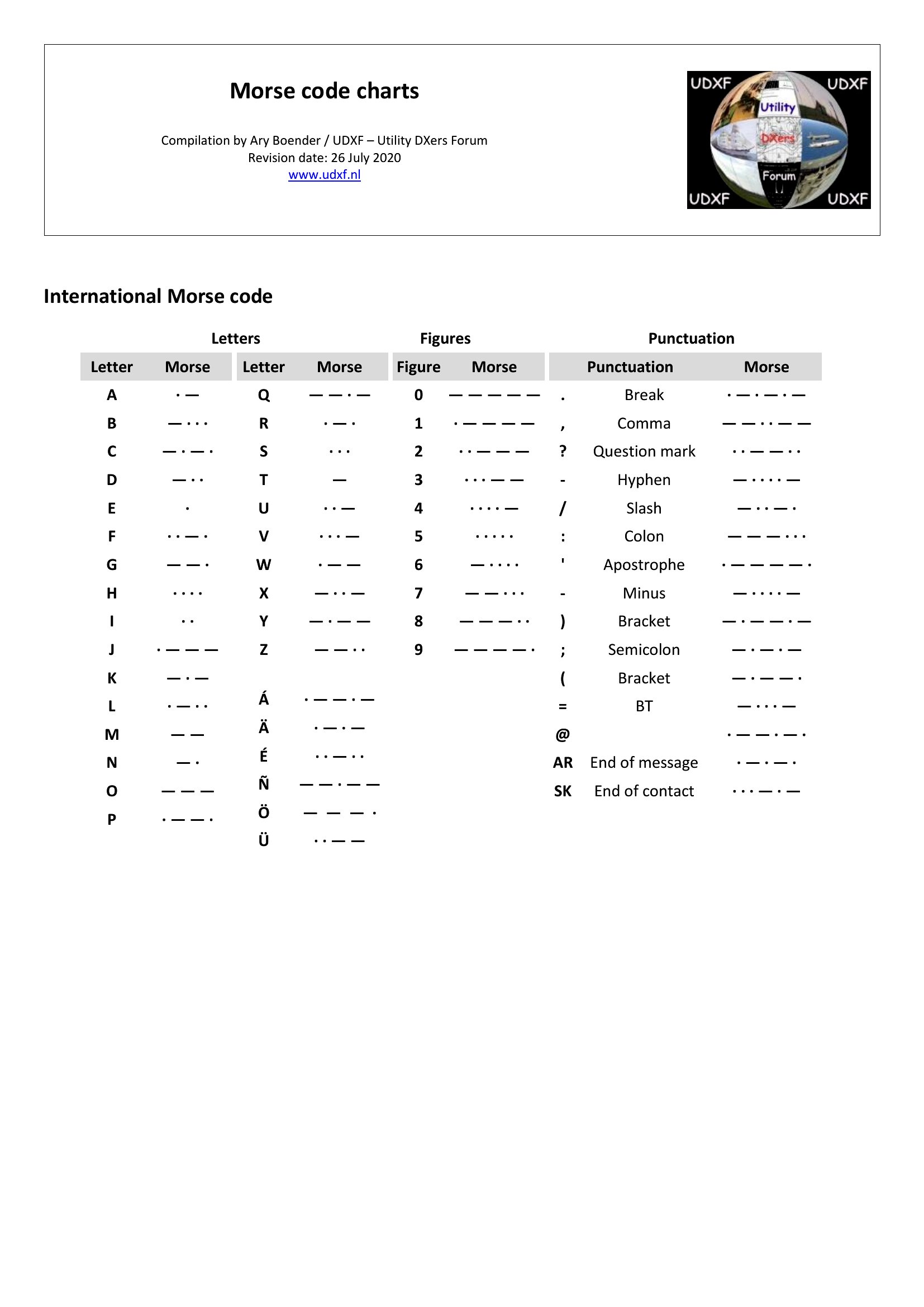
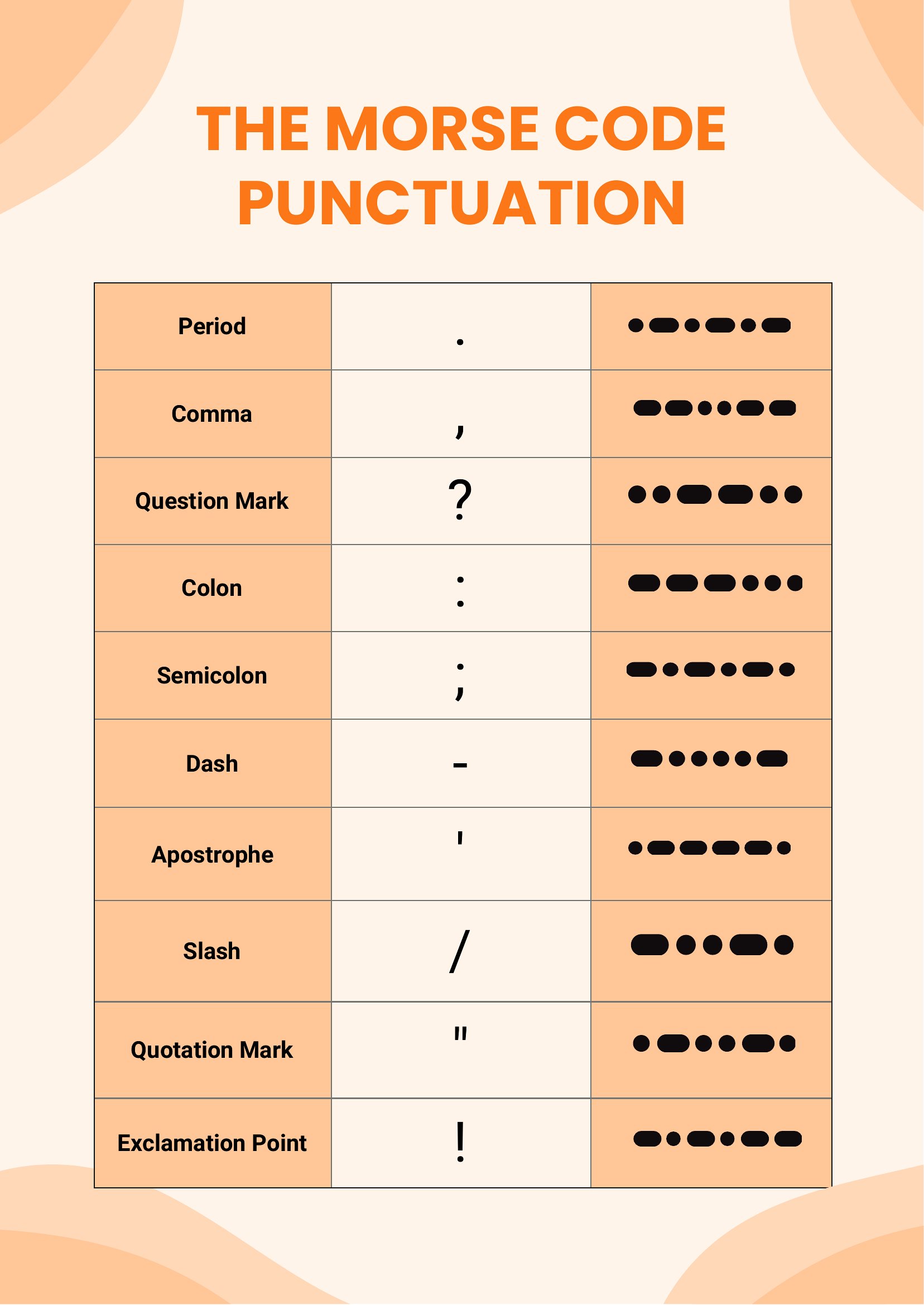
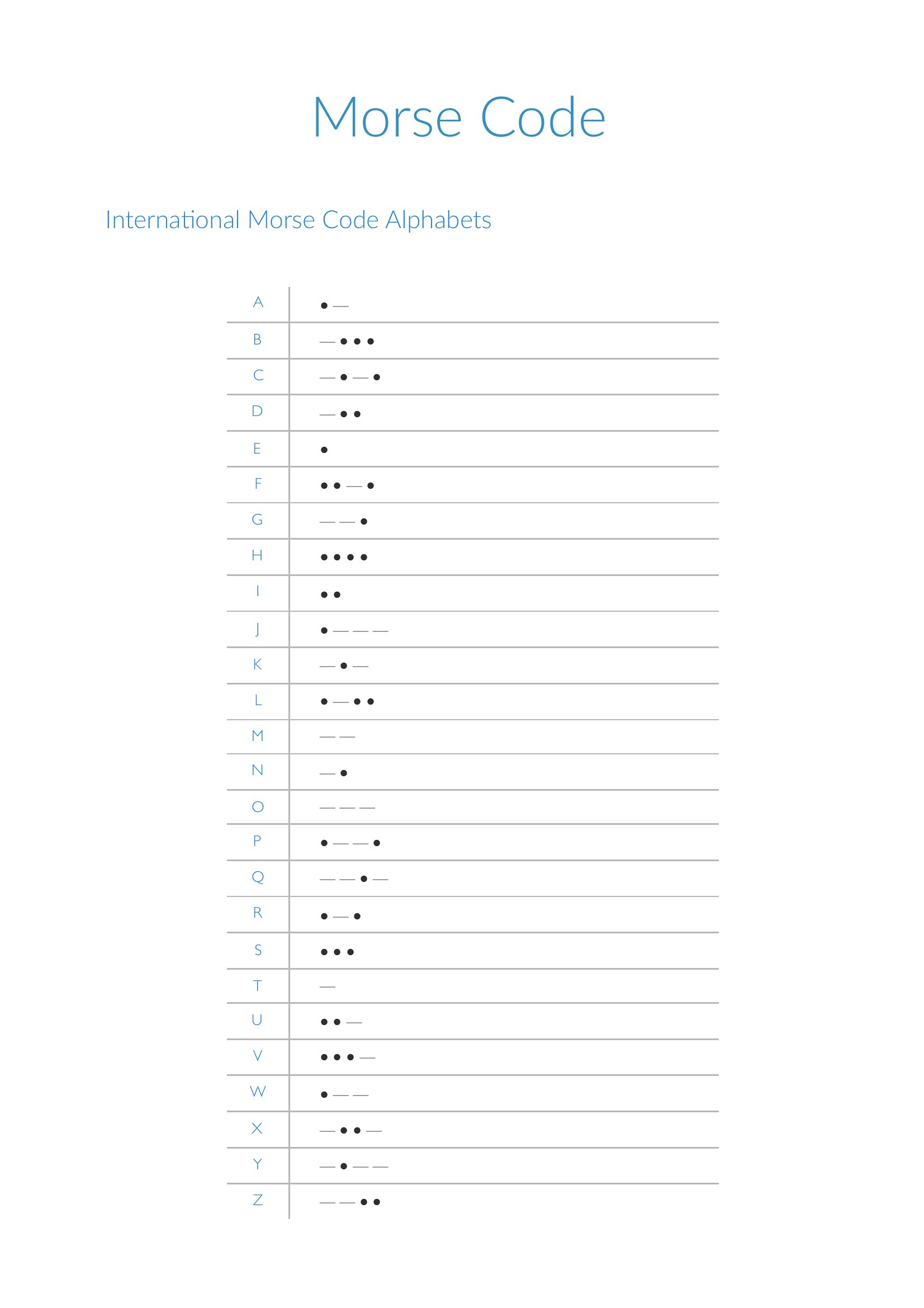
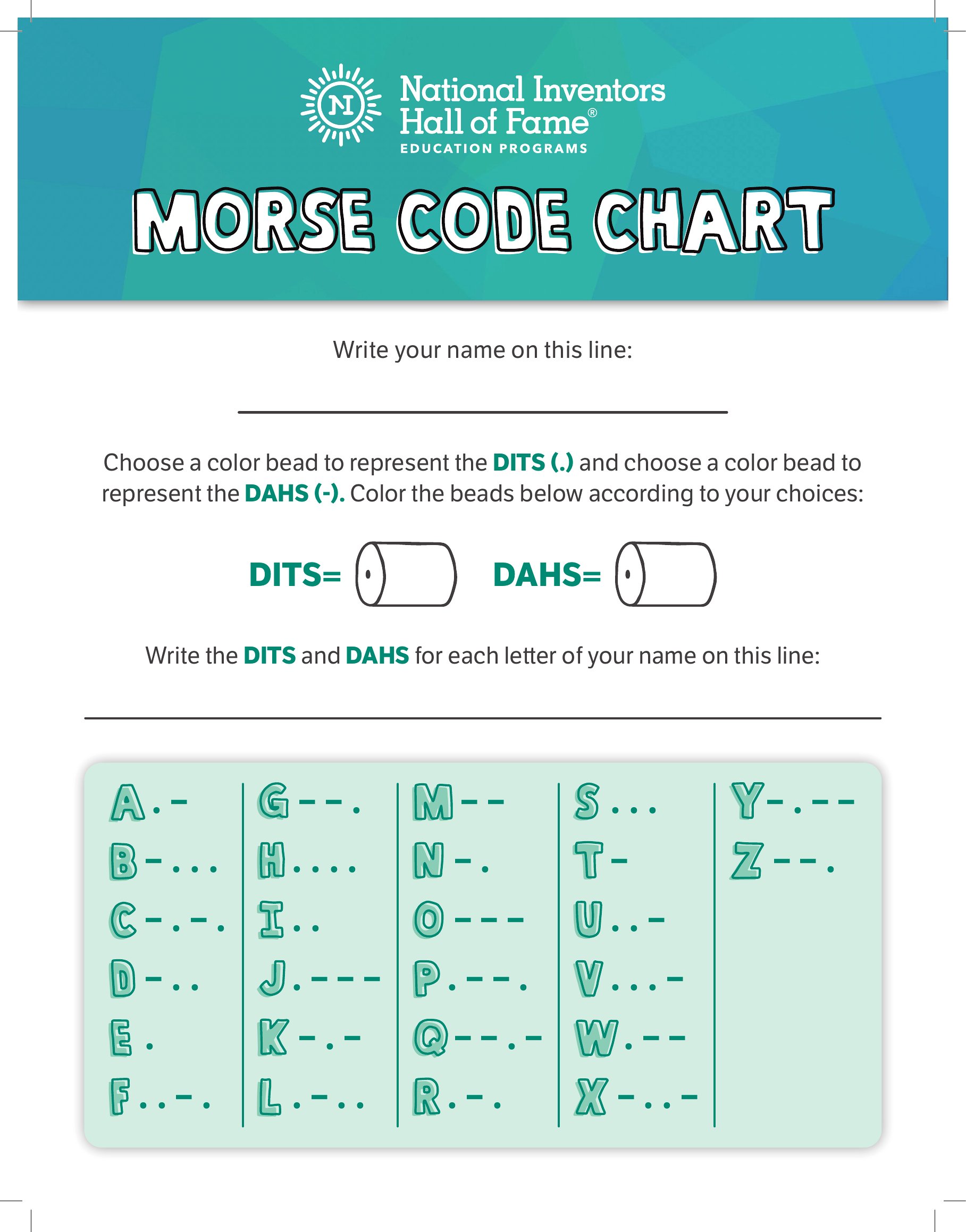
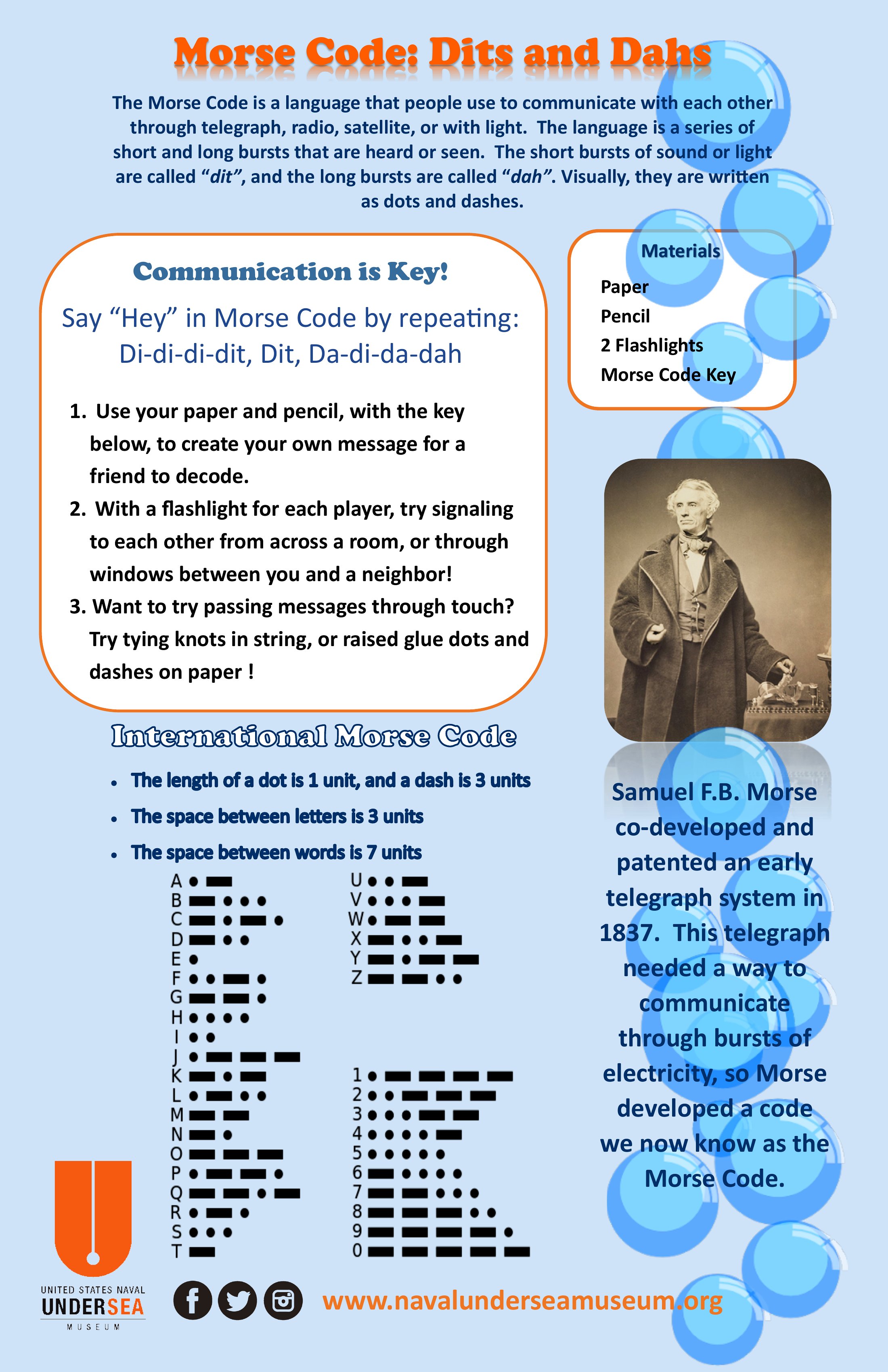
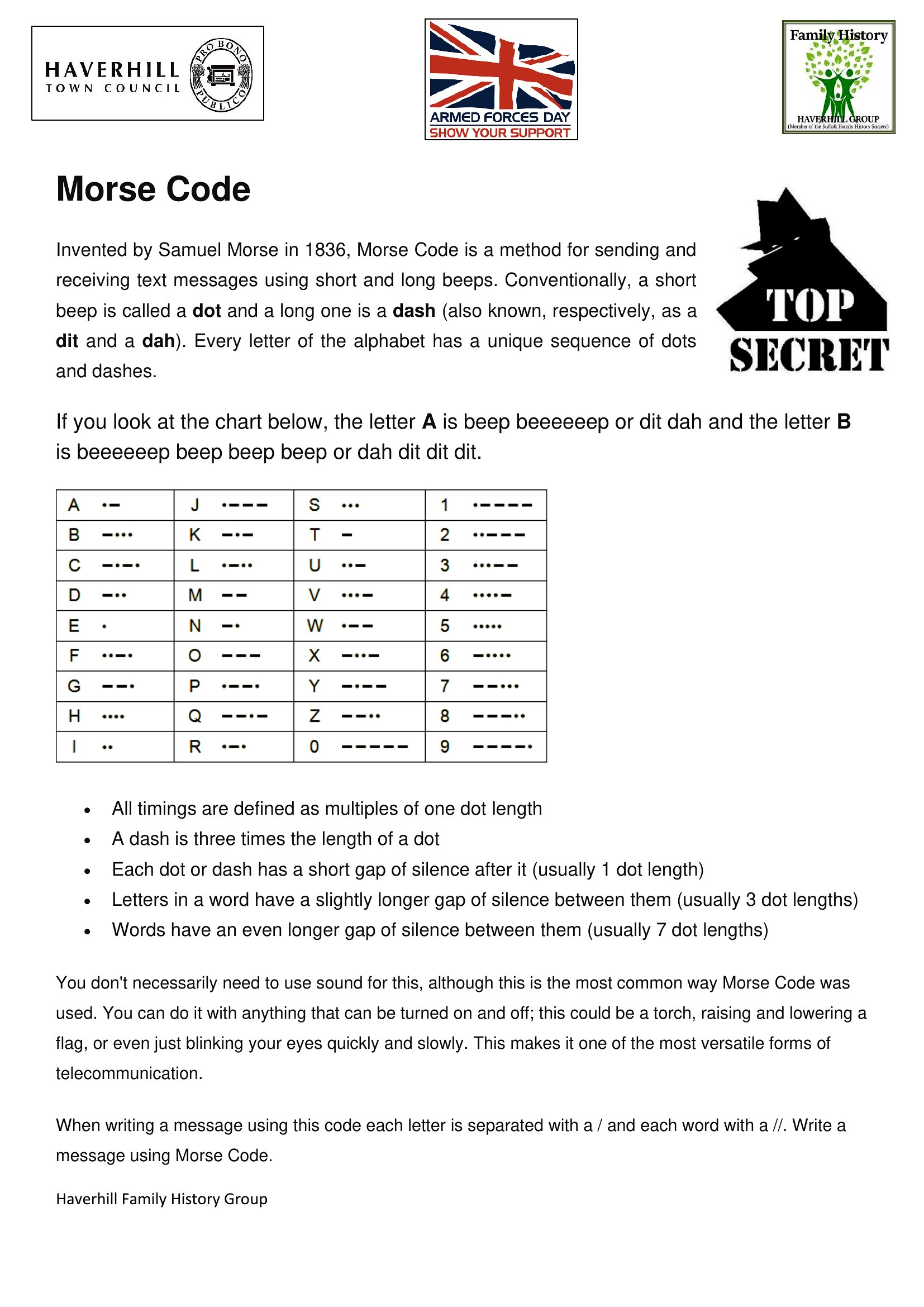
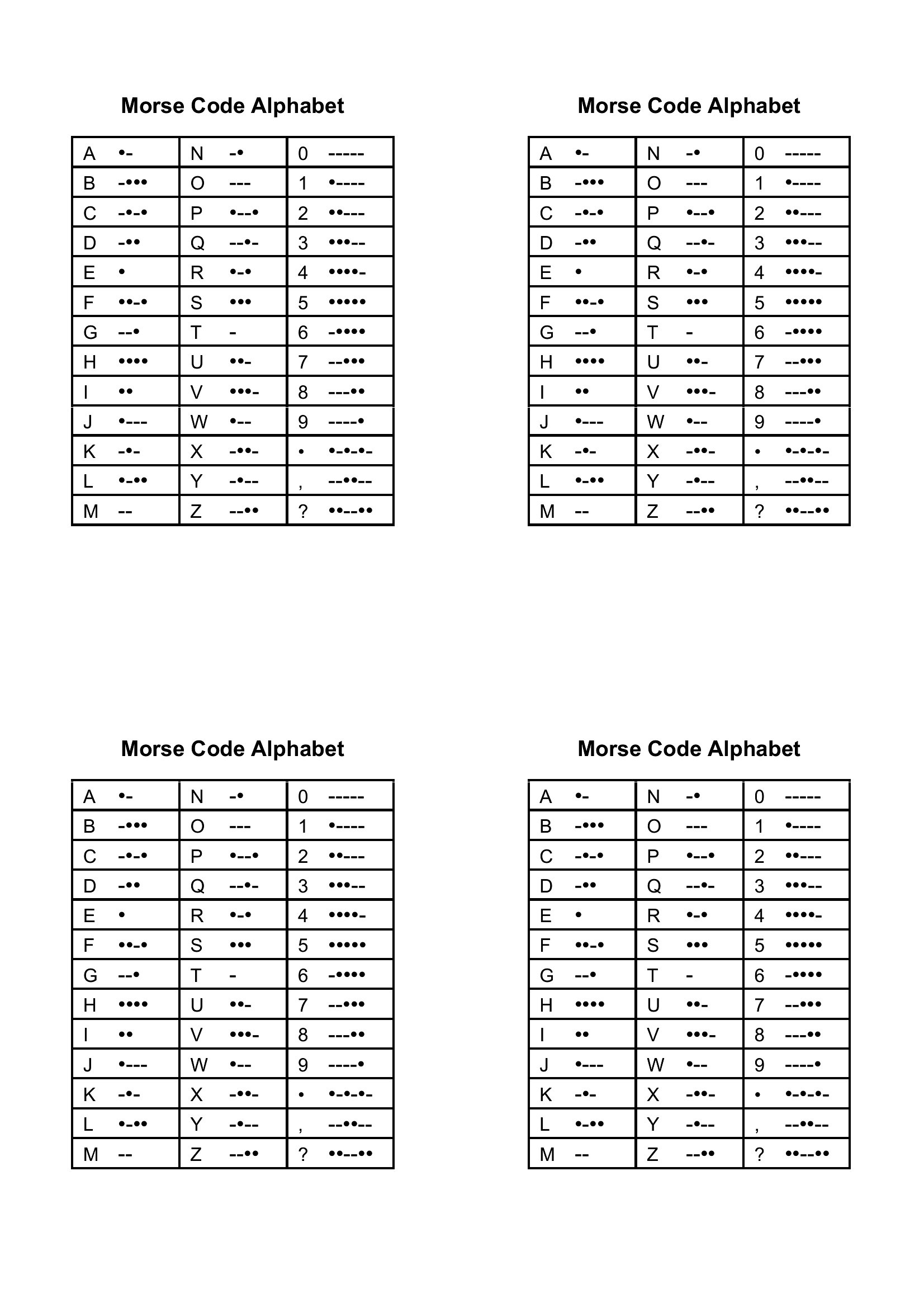
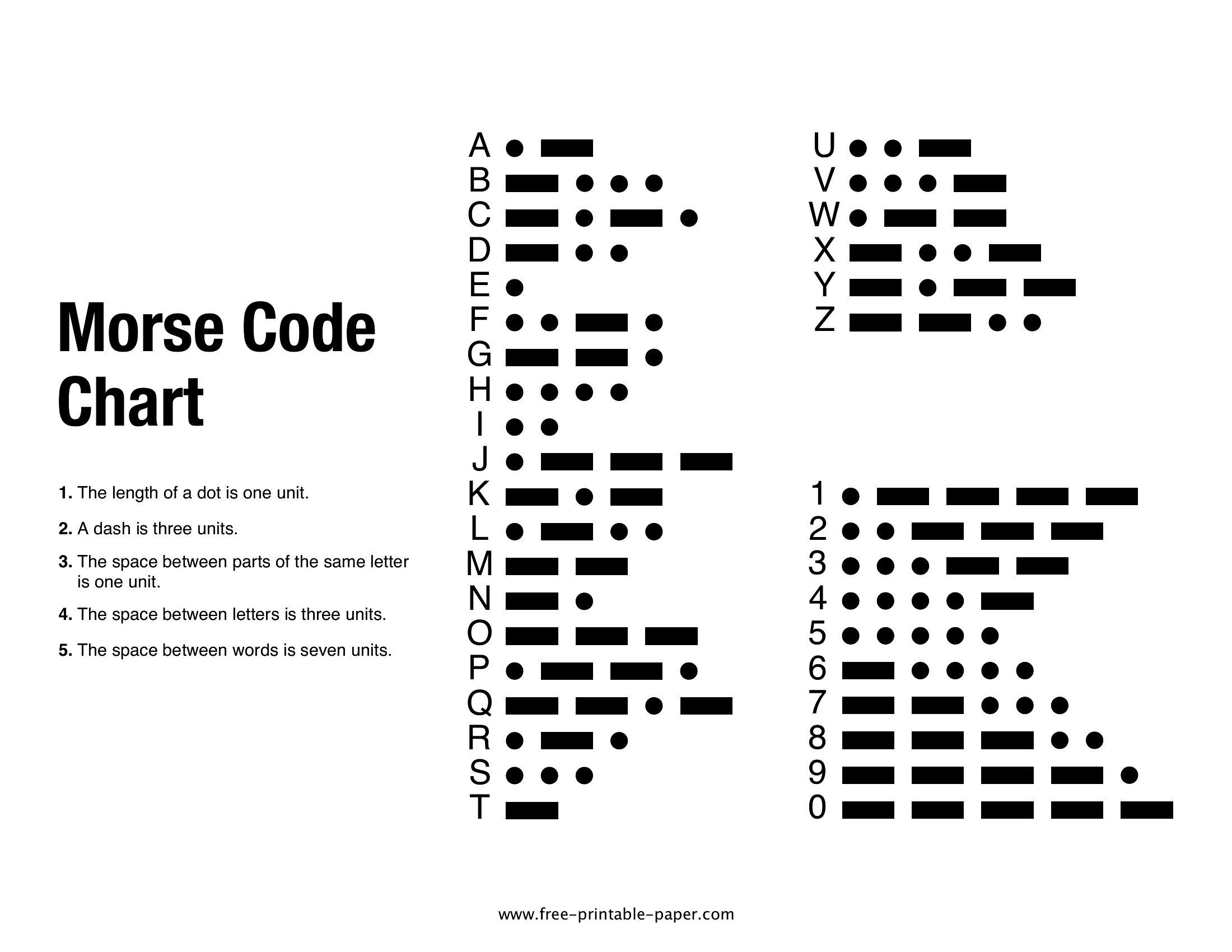
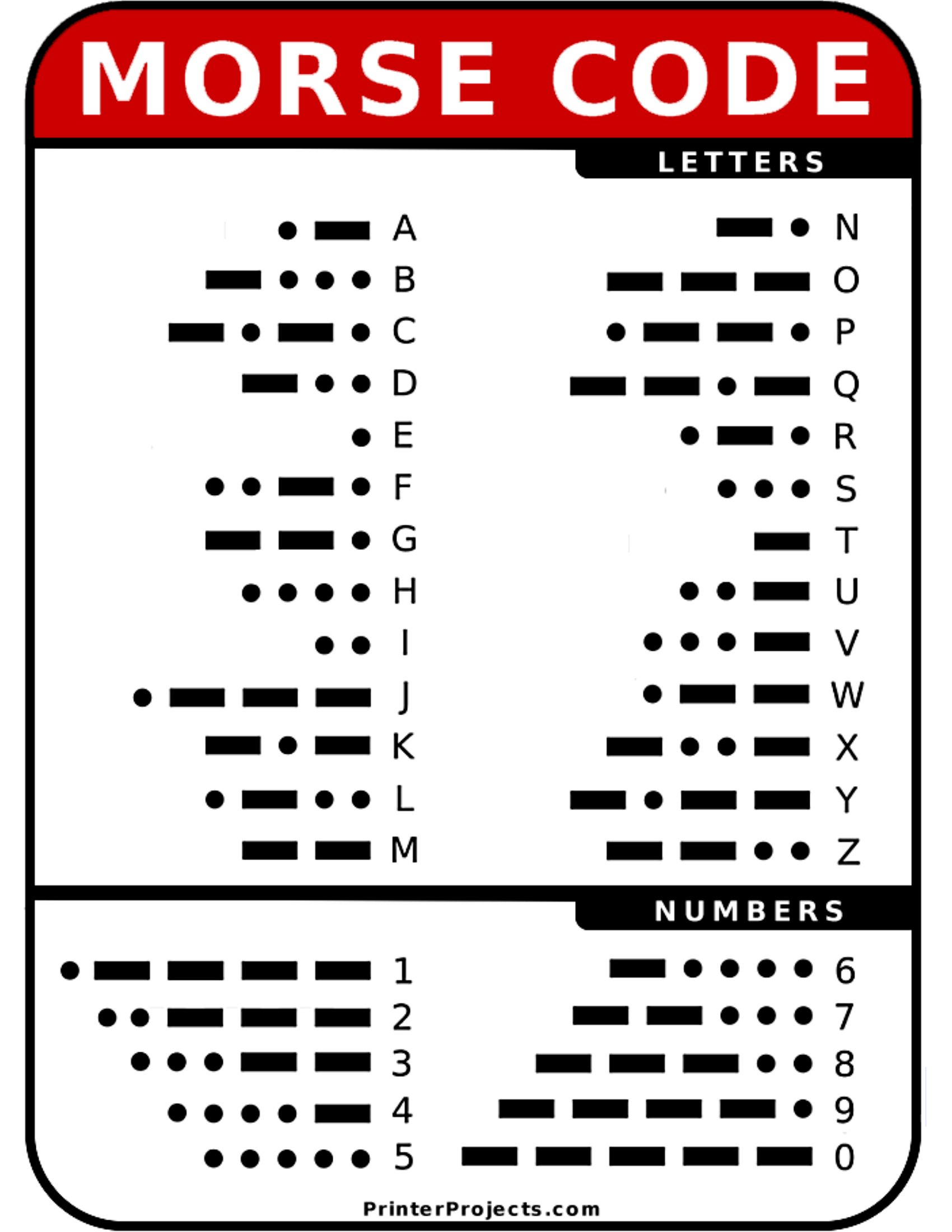
Morse code still earns its keep in amateur radio, scouting, and emergency signaling, and a clear chart is the fastest way to learn it. This collection of 45 charts spells out the dots and dashes for every letter, number, and common punctuation mark, with several visual layouts to suit different learners. Radio operators, teachers, and curious beginners can pick the style that clicks and start tapping out messages.

All of them download as print-ready PDFs, easy to post on a wall or carry in a field notebook. The patterns stay sharp and readable so you can reference them mid-message. Print the chart you like best and practice until the rhythm sticks.

When to use this Morse Code Charts template

  • Amateur radio operators preparing for their license exam need a quick-reference chart to memorize Morse code call signs and distress signals during study sessions.
  • Boy Scout troop leaders teaching merit badge requirements can use a visually clear chart to help scouts practice Morse code signaling in field exercises.
  • Emergency responders training for low-tech communication scenarios use these charts to practice sending SOS and weather alerts during drills.
  • Homeschooling parents introducing Morse code to children can select a simple, colorful layout to make learning dots and dashes engaging and stress-free.

Which format should I download?

PDF

PDF is the ideal format for Morse code charts because it preserves crisp text and clear spacing when printed or viewed on devices. Choose a PDF with a grid layout if you prefer structured rows for systematic memorization. Opt for a single-page design if you need a compact reference for quick checks during practice sessions. Avoid overly decorative templates—clean, high-contrast fonts ensure readability in low-light conditions, which is critical for field use.

Choose from 45 Morse Code Charts Templates

How to use this Morse Code Charts template

How do I decide which Morse code chart layout works best for my learning style?

If you’re a visual learner, pick a chart with color-coded letters or grouped by frequency (e.g., vowels first). For auditory learners, select a chart that pairs symbols with their sounds, like ‘E’ = dot. Kinesthetic learners may prefer tracing dotted lines or using a grid to practice writing sequences by hand. Start with a simple design and switch if it feels overwhelming.

Can I use these charts for teaching Morse code to people with visual impairments?

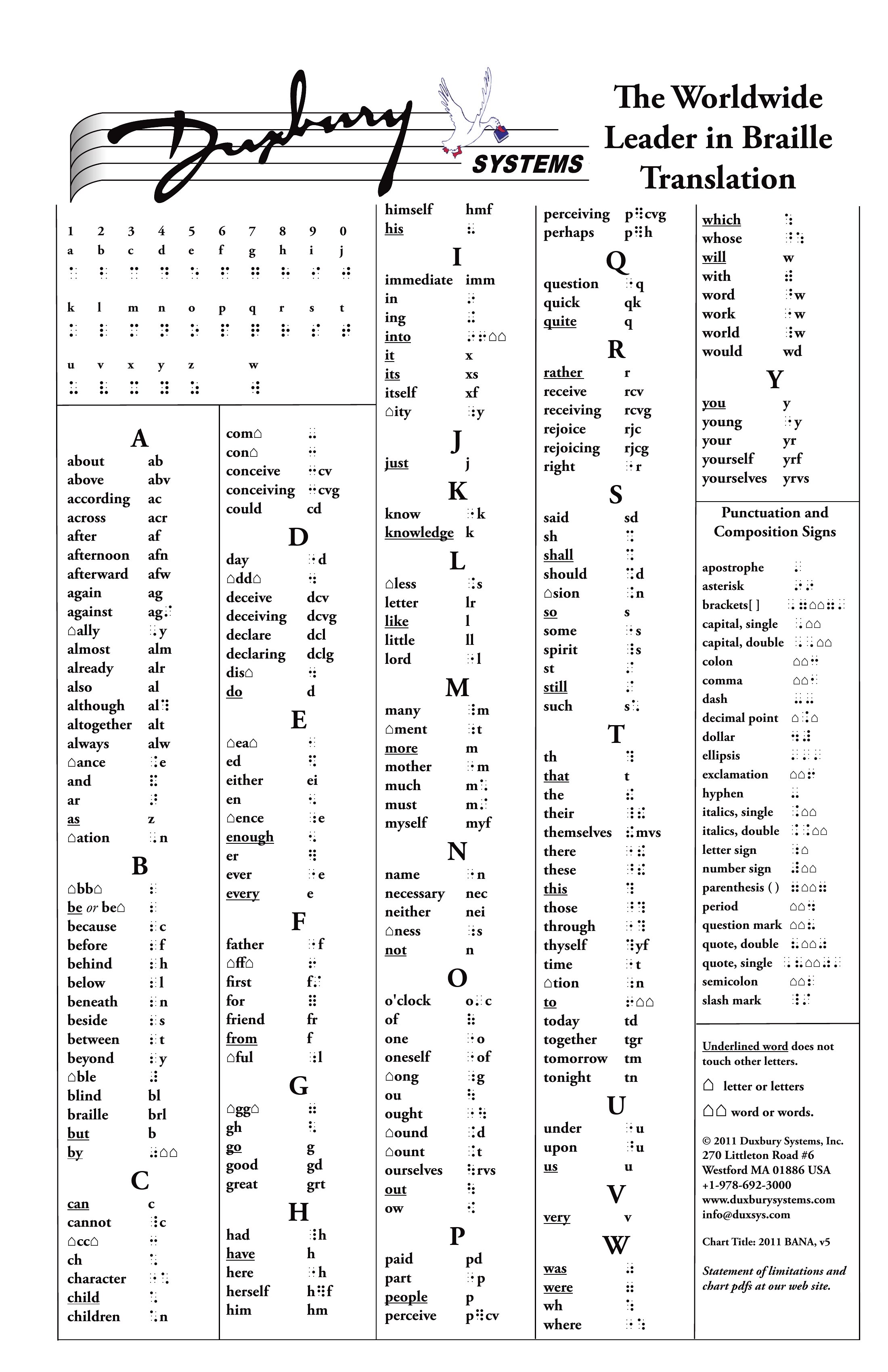
These charts are designed for visual reference, but you can adapt them by pairing them with tactile methods like braille dots or audio recordings. For example, print a large-format chart with raised letters or use a high-contrast black-and-white PDF to improve visibility. Always combine visual aids with hands-on practice, like tapping rhythms on a table, to reinforce learning.

Are there charts that include prosigns (prosignals) like ‘SK’ for end of transmission or ‘AR’ for ‘end of message’?

Some advanced templates in this collection include common prosigns alongside letters and numbers, often grouped under a ‘Special Symbols’ section. Look for charts labeled ‘Advanced’ or ‘Radio Operator’—these typically cover distress signals, punctuation, and prosigns used in formal transmissions. For beginners, start with the basic alphabet and numbers before adding these symbols.

Comments

Join the conversation

Sign in to share your thoughts and leave a comment on this resource.

Newsletter

Get Weekly Design Updates

Join our community to receive curated resources and inspiration.

Weekly Tips Resources Early Access

We respect your privacy. Confirmation email required. Privacy Policy