Free Printable Tap Drill Size Charts (PDF)
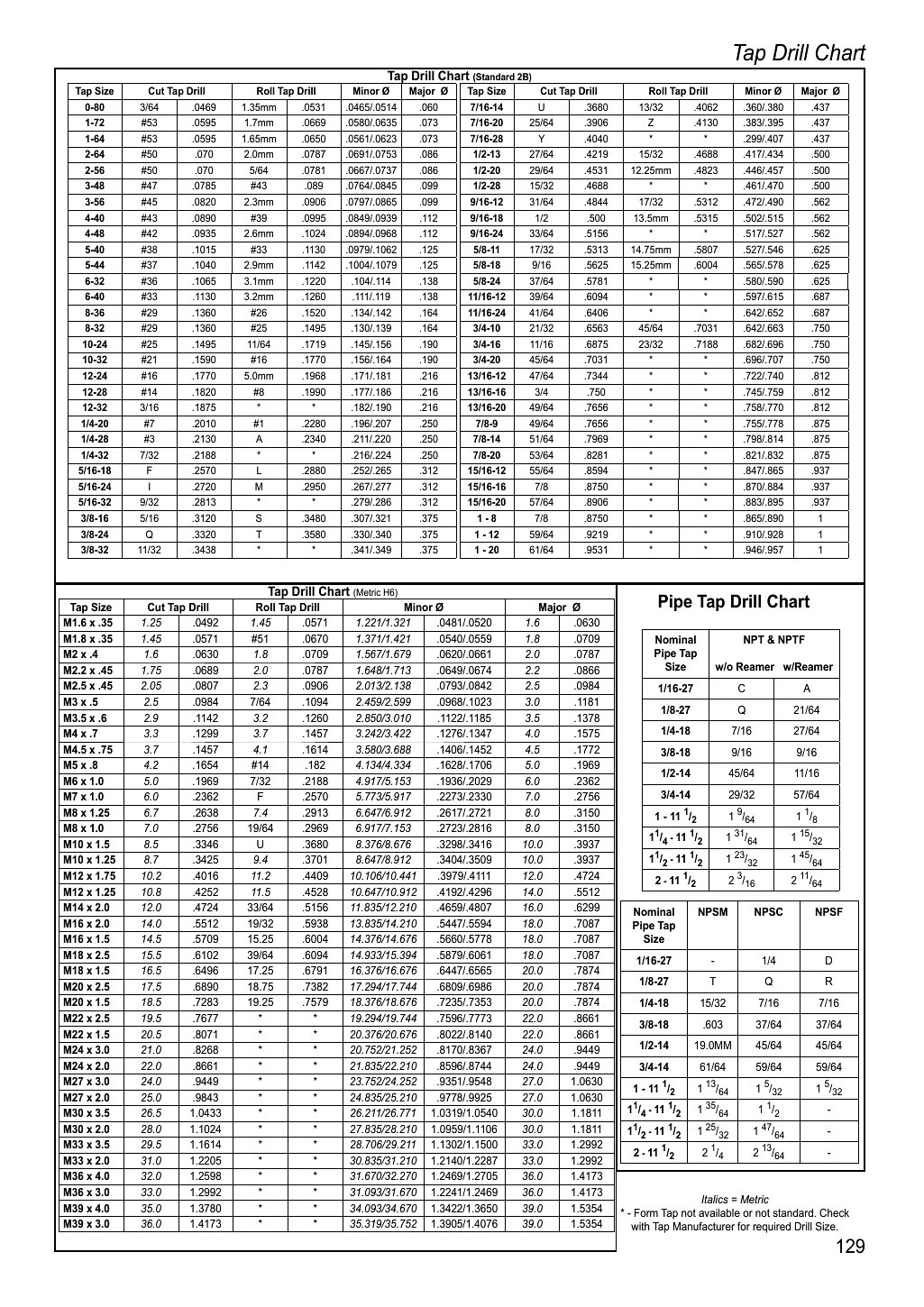
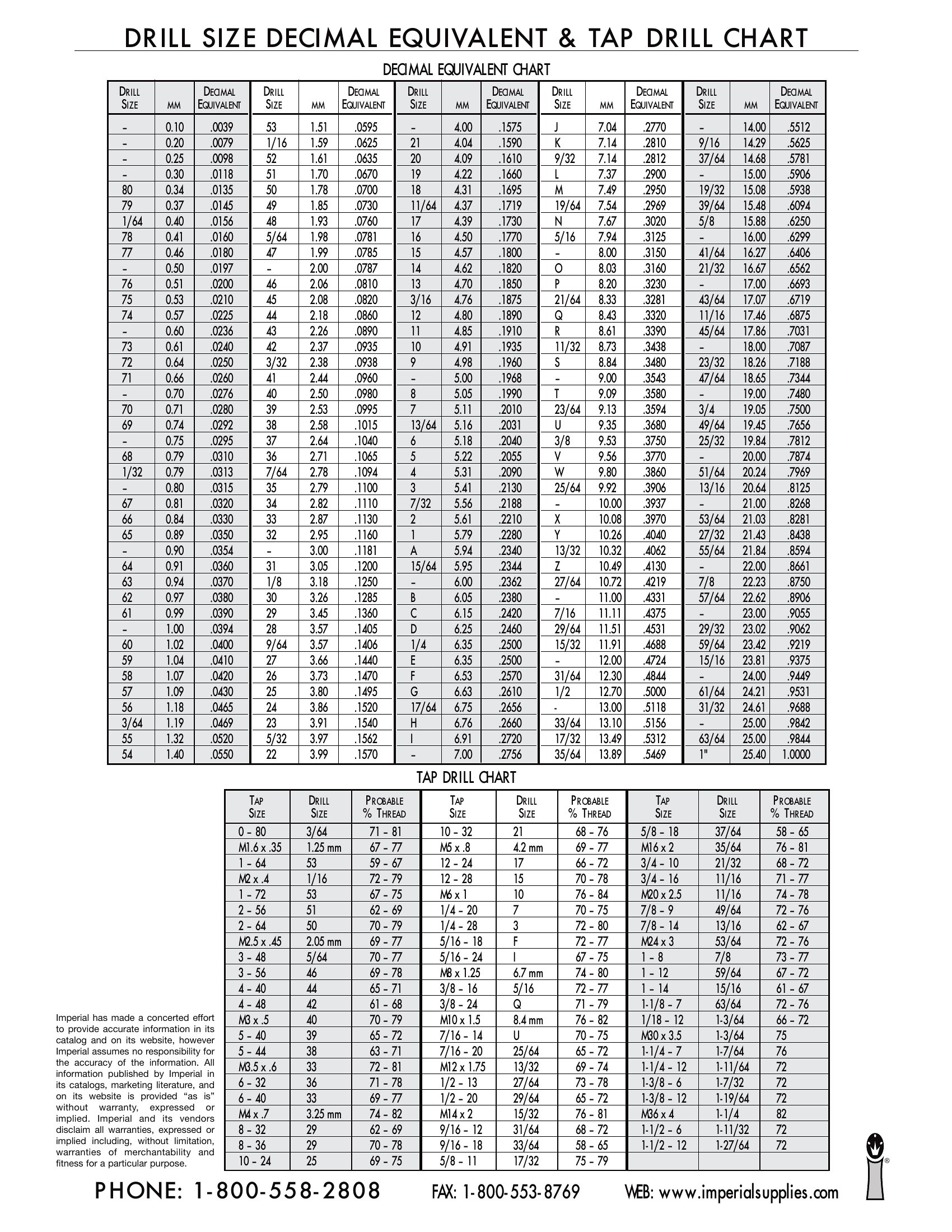
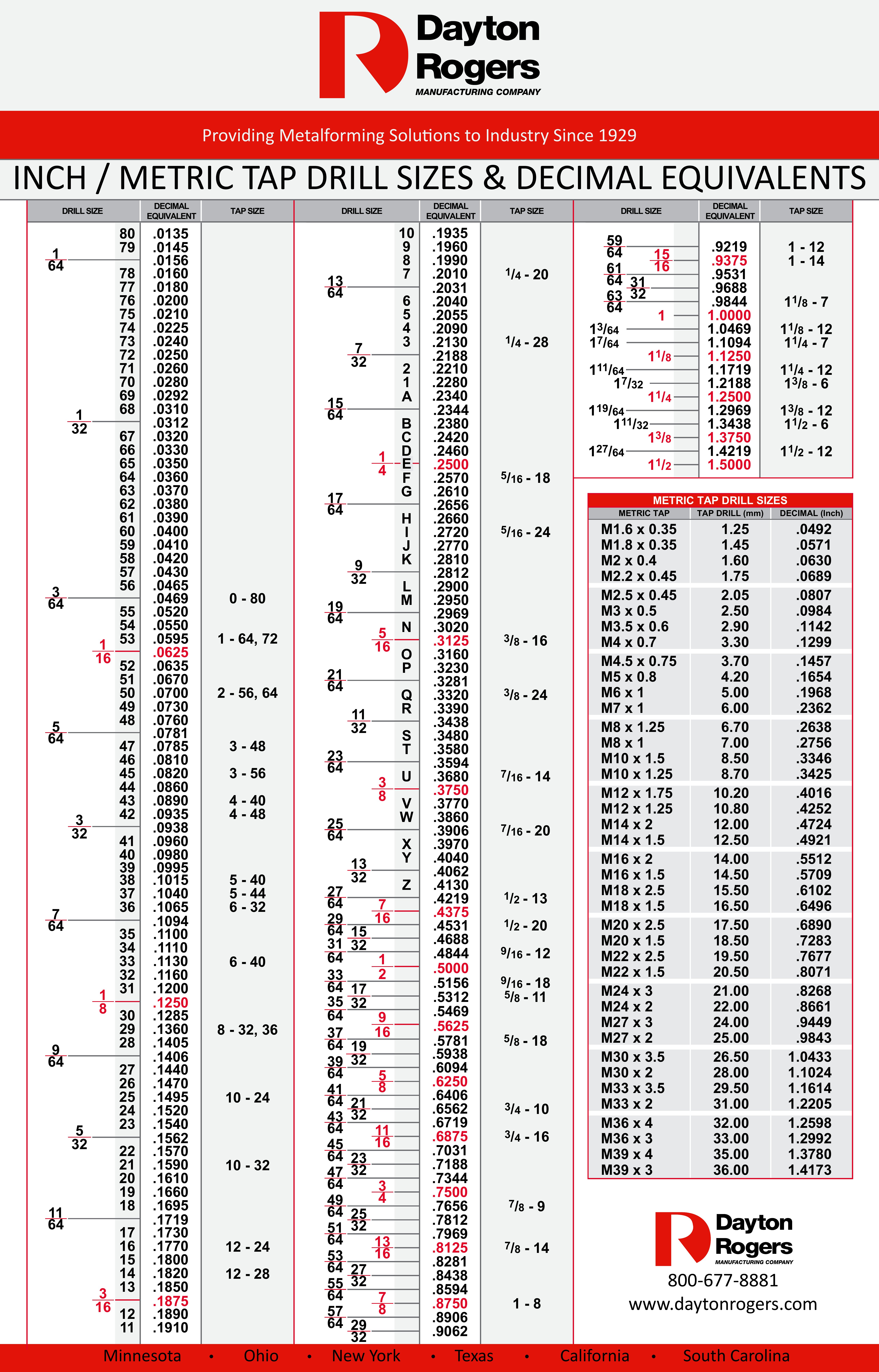
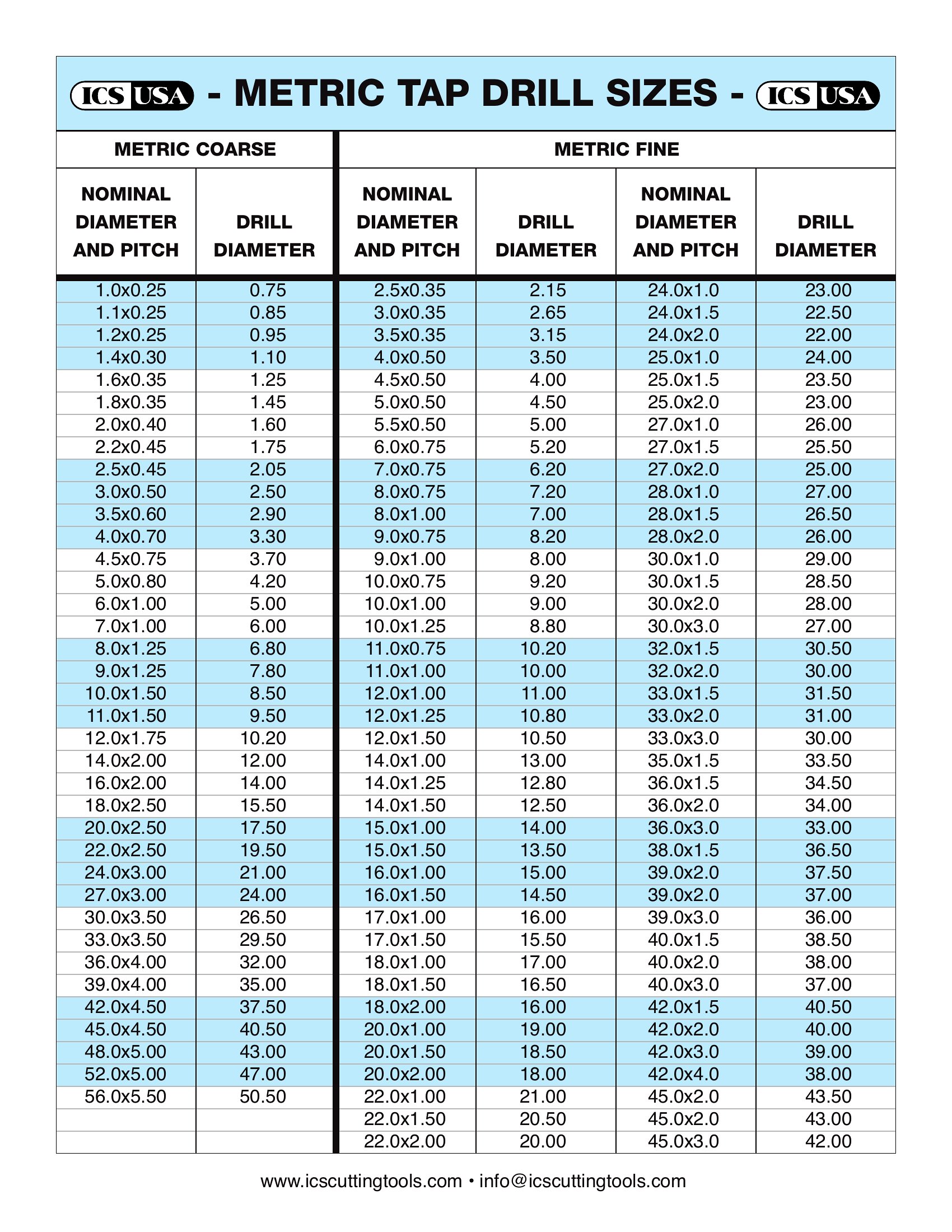
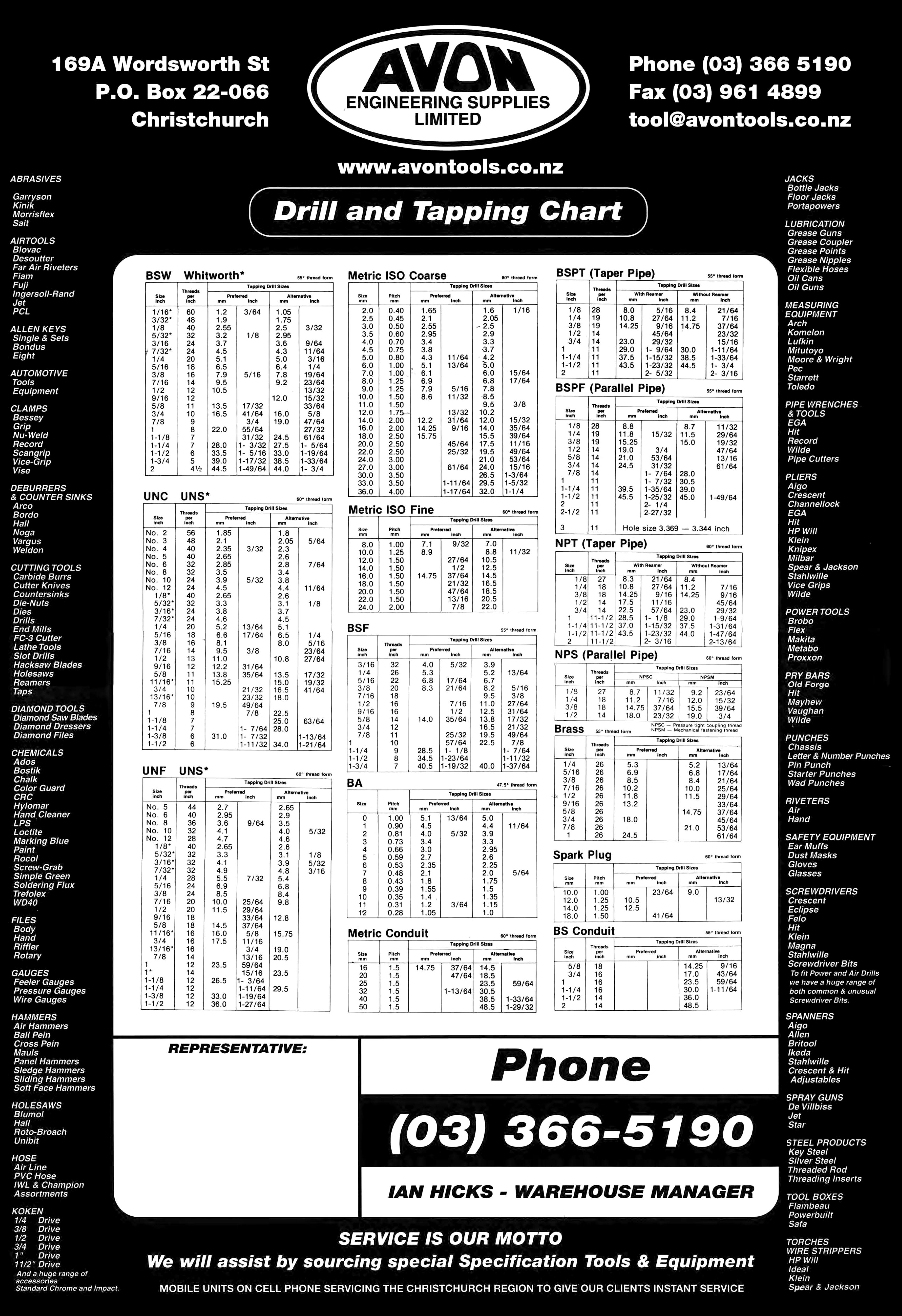
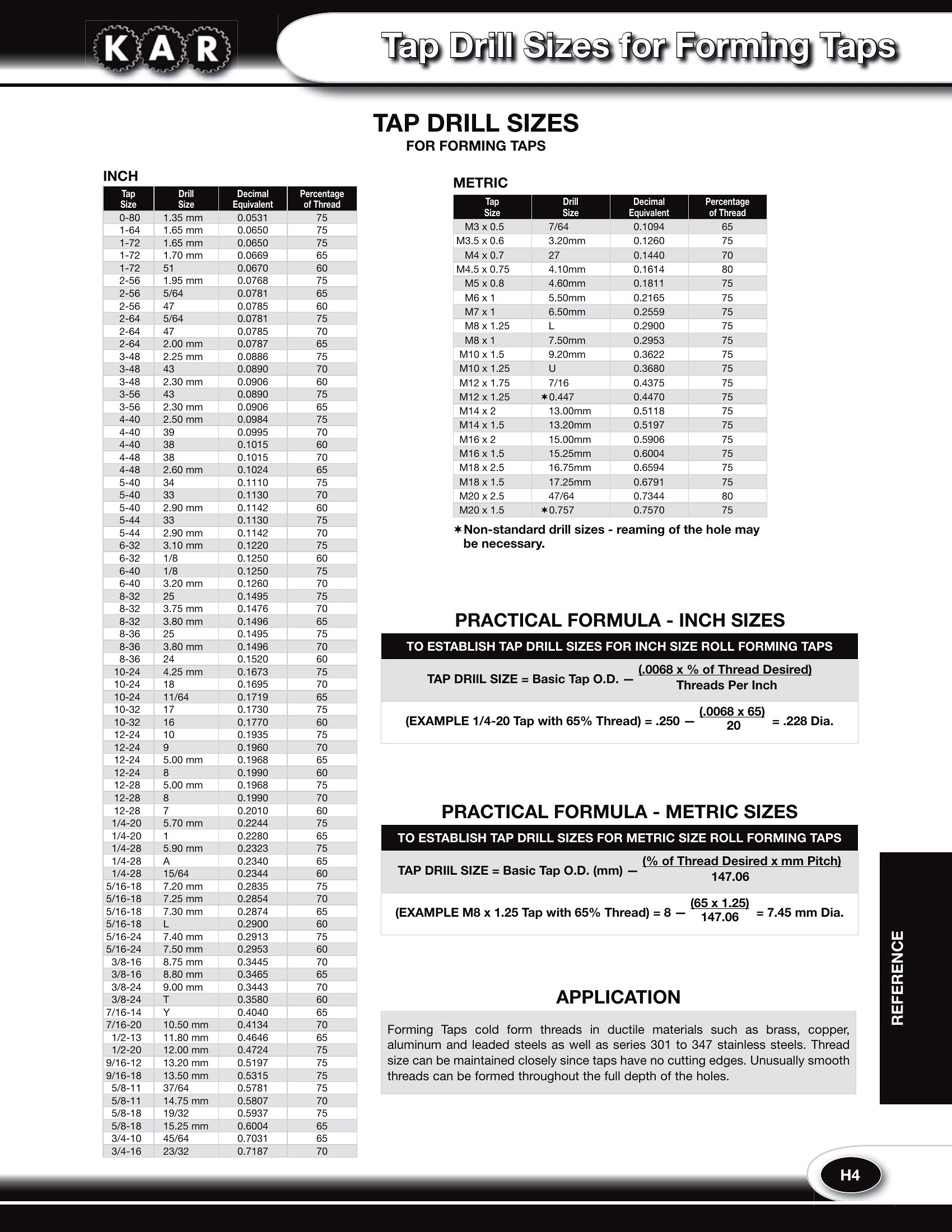
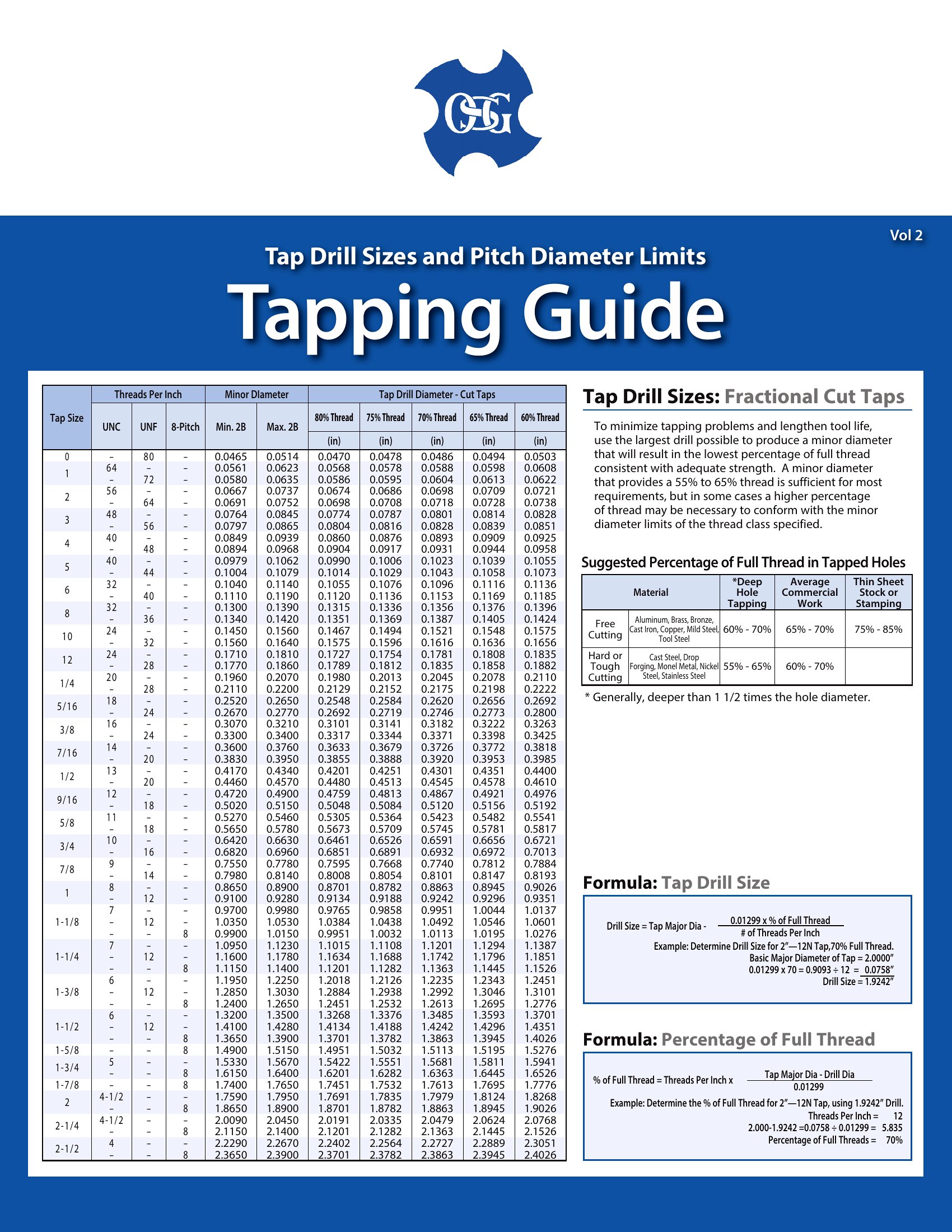
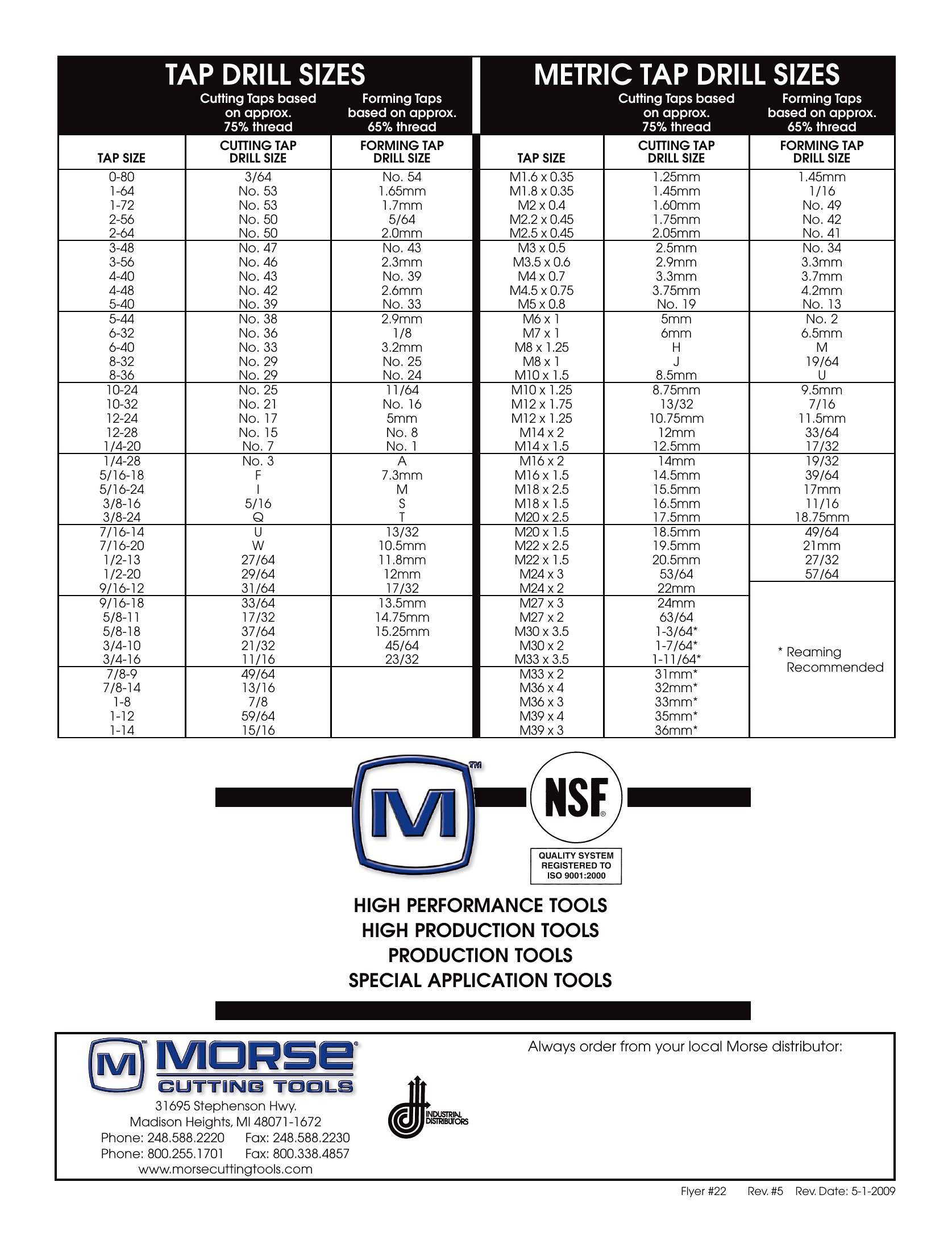
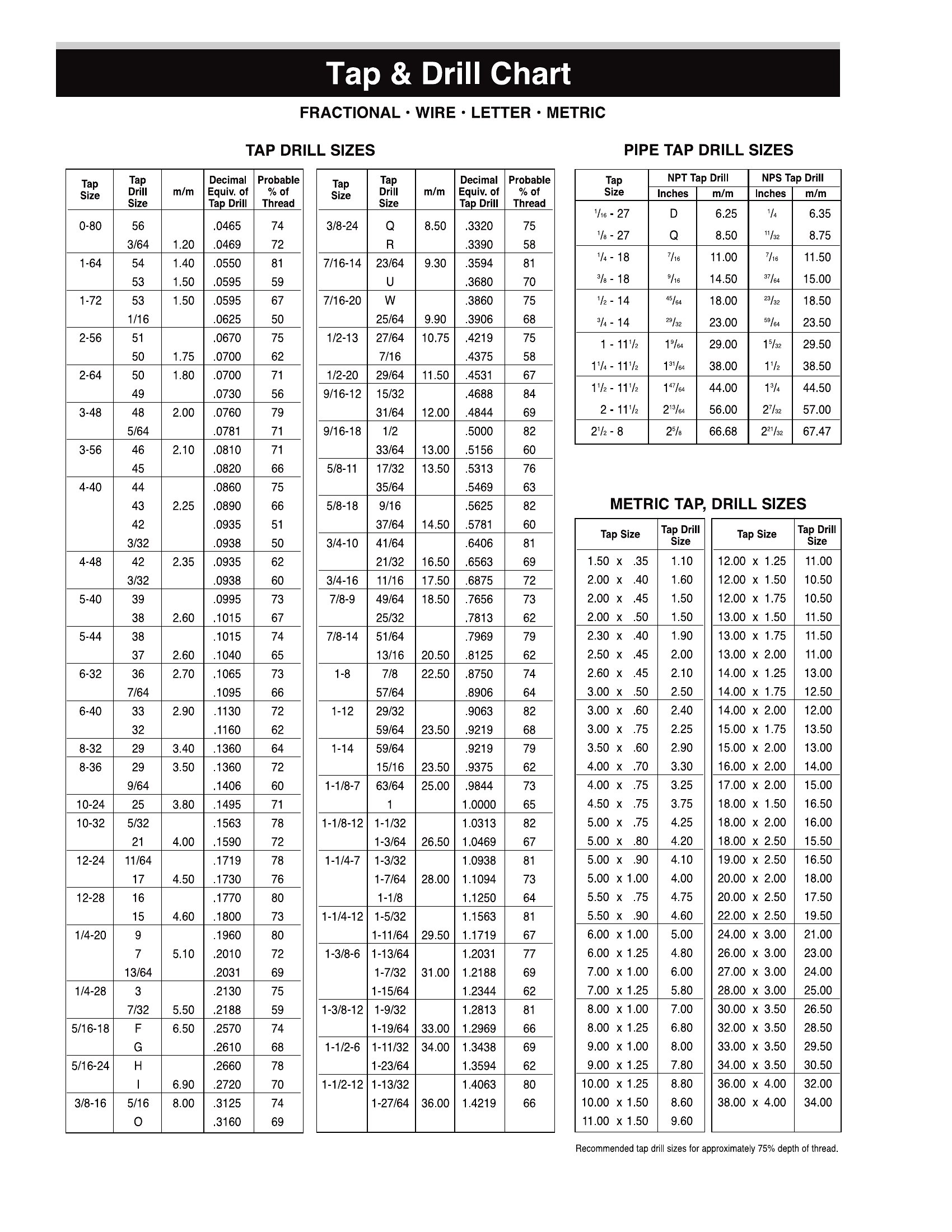
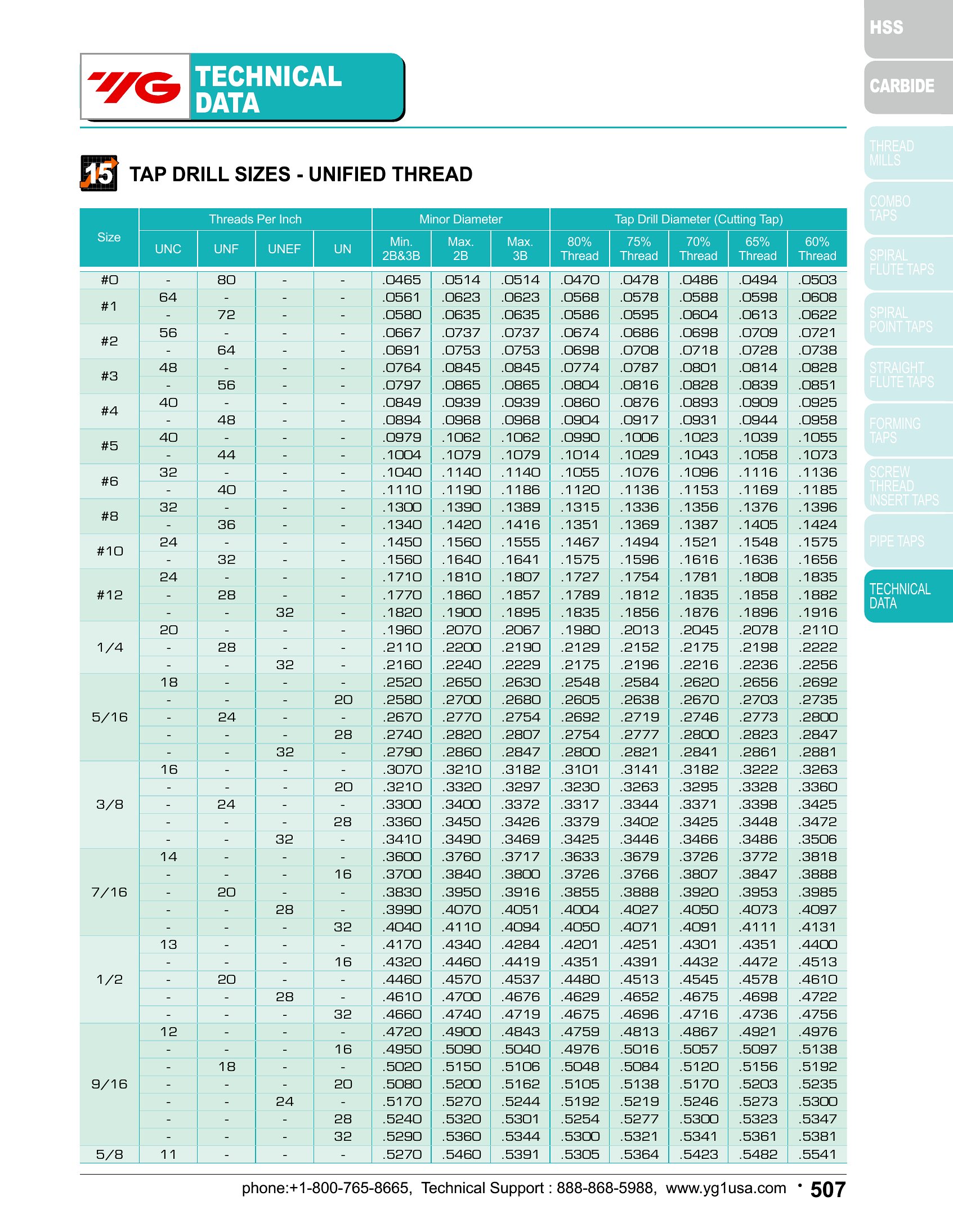
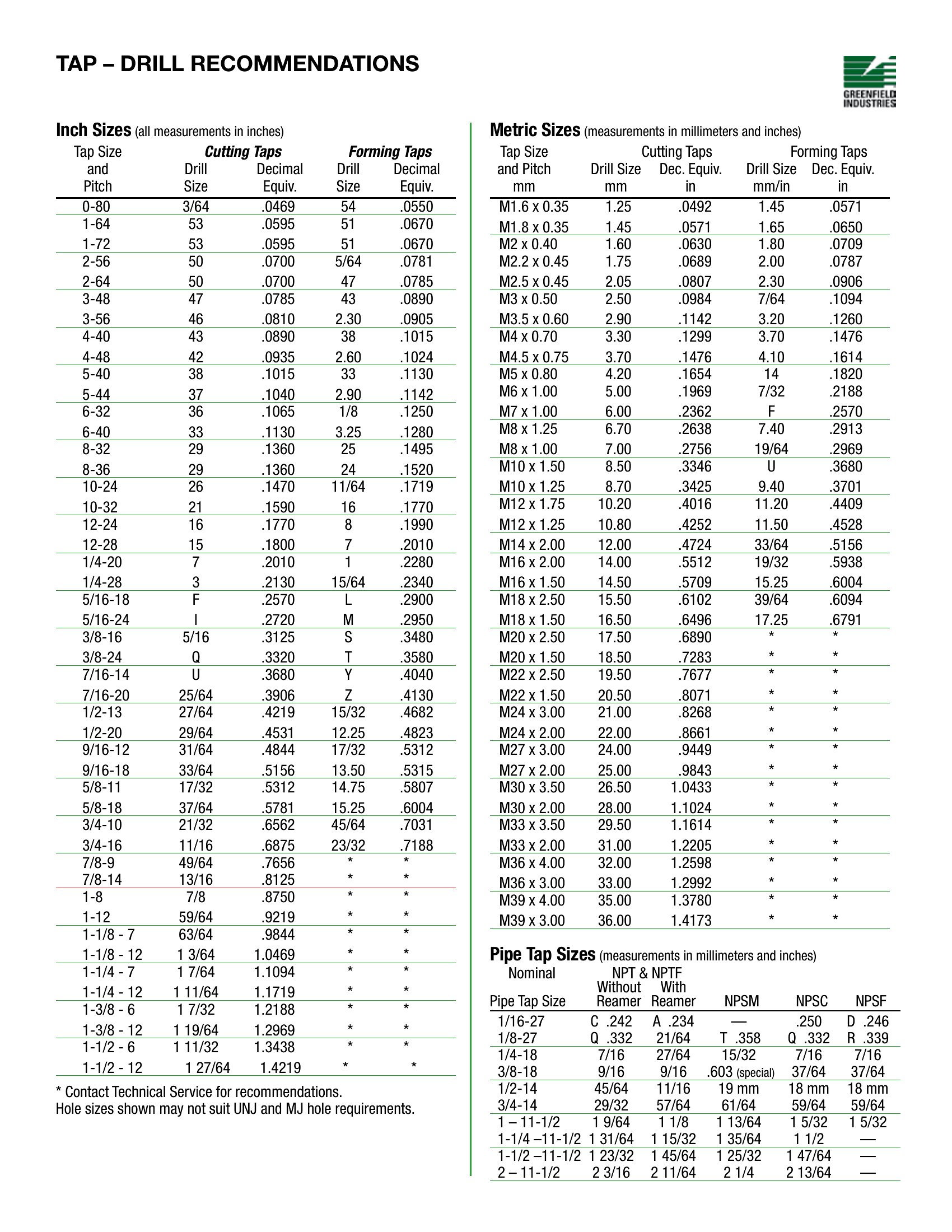
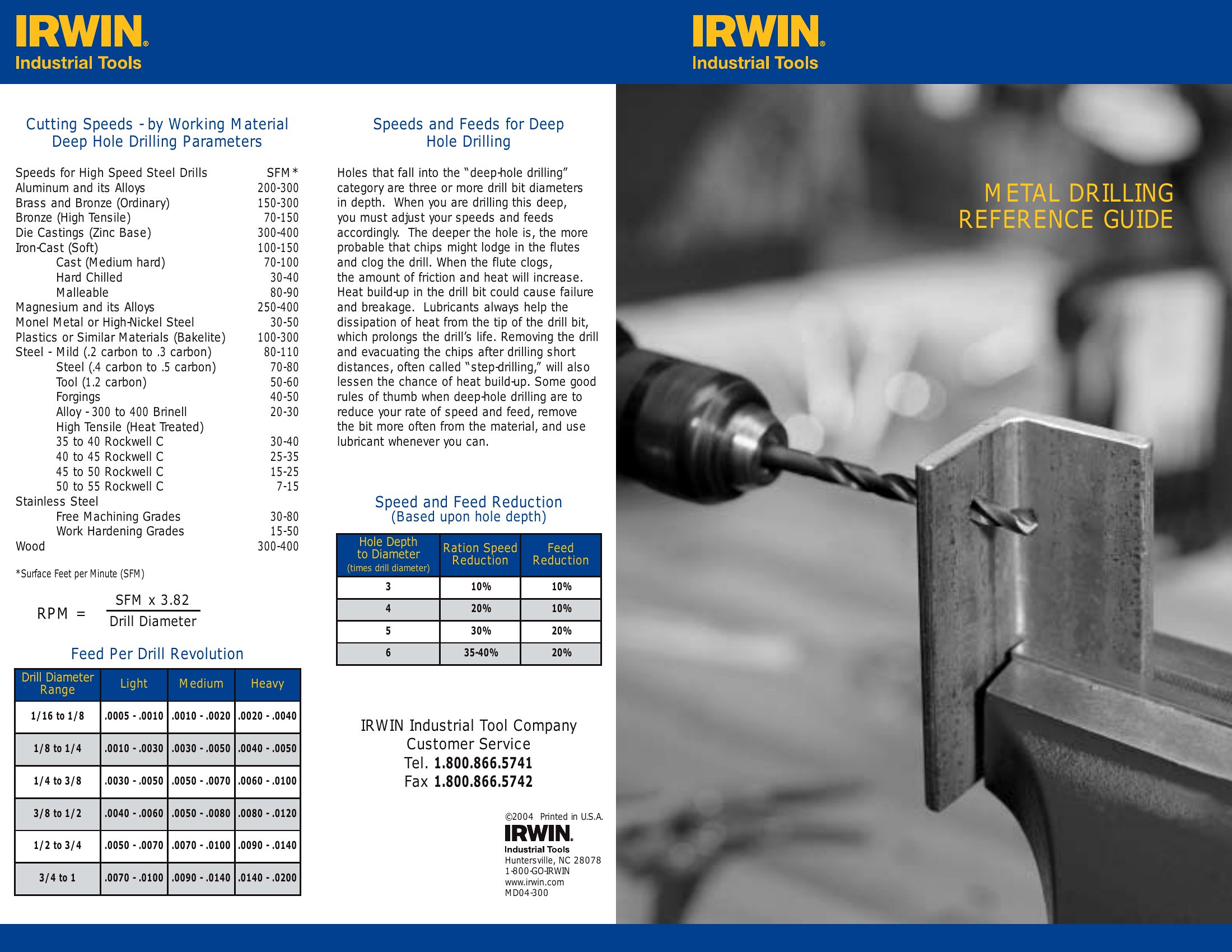
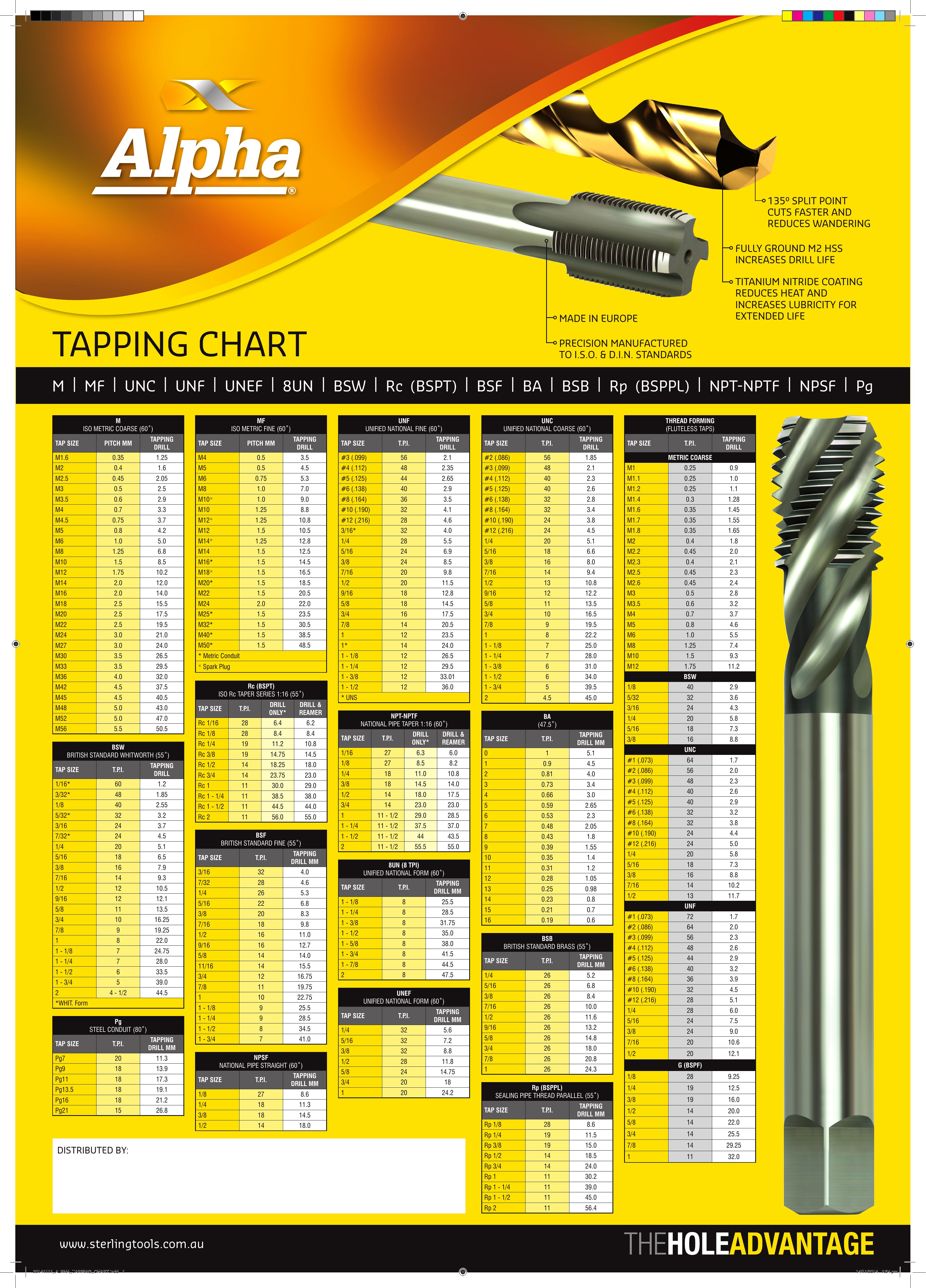
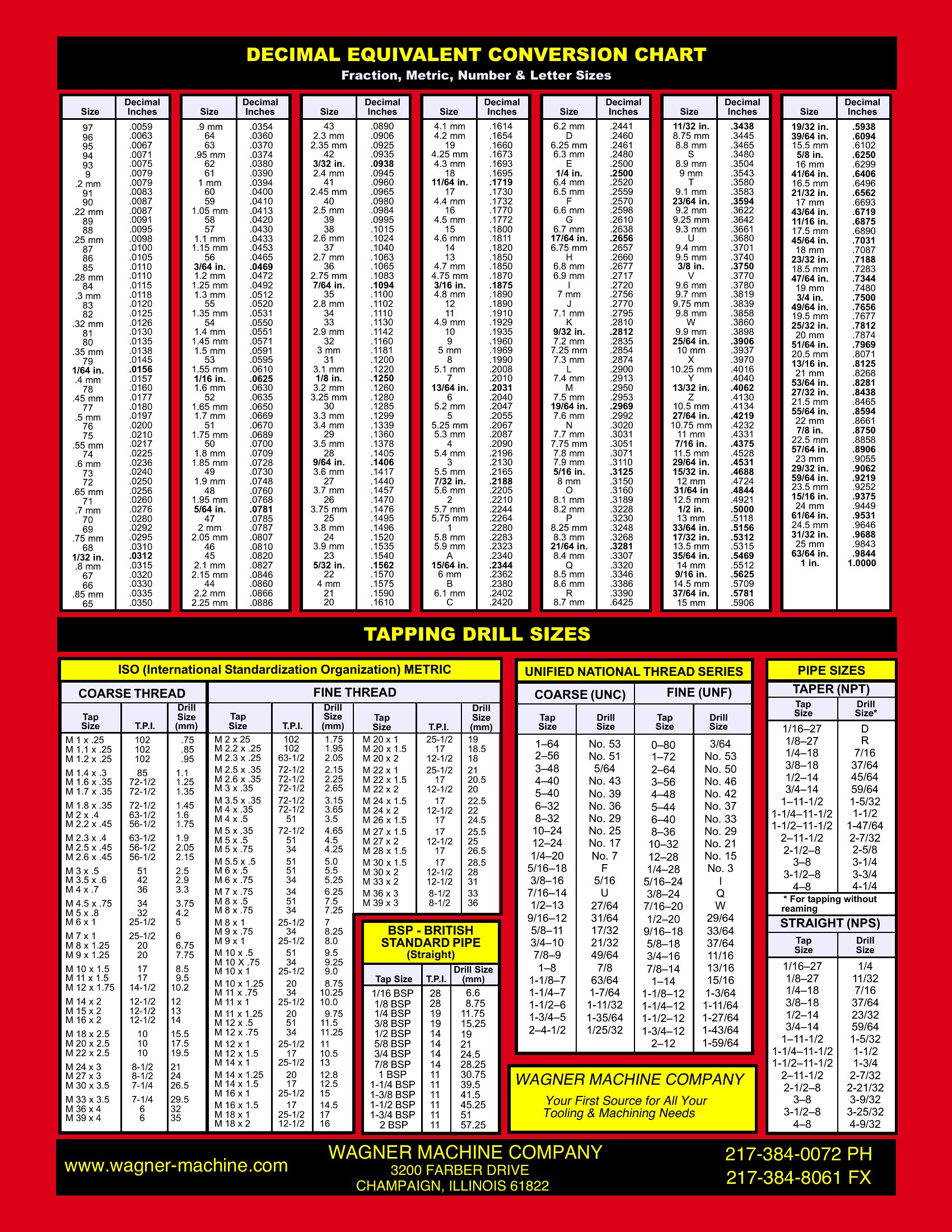
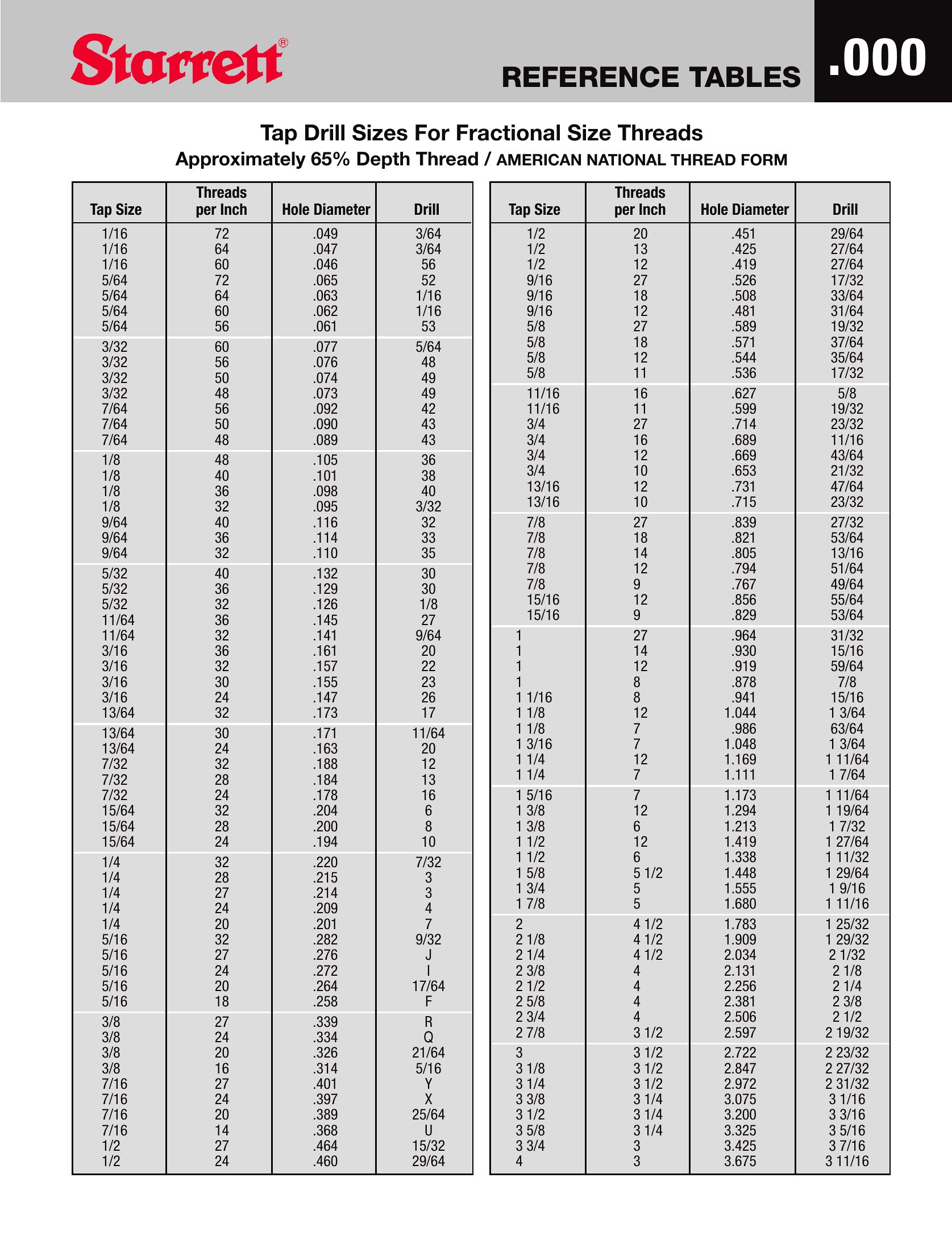
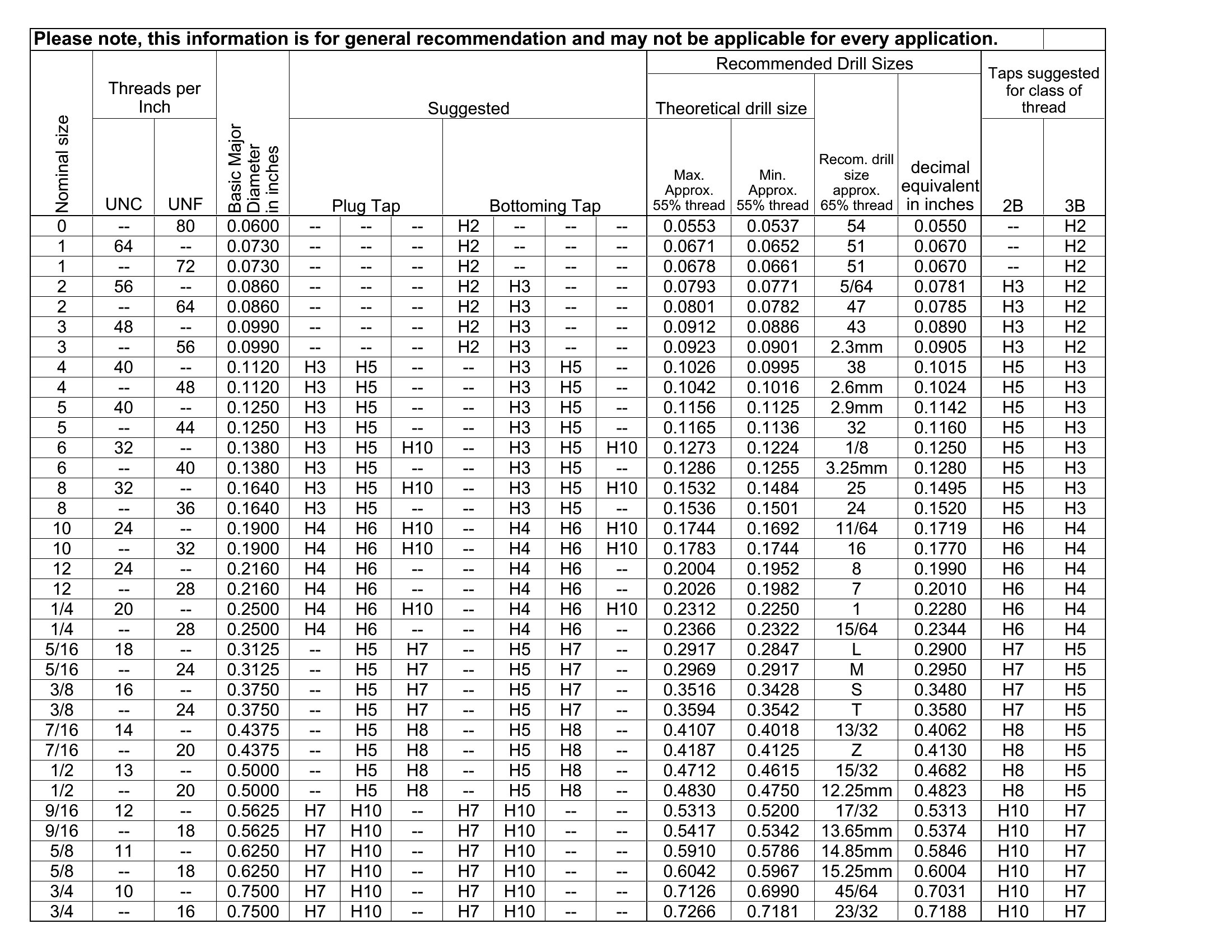
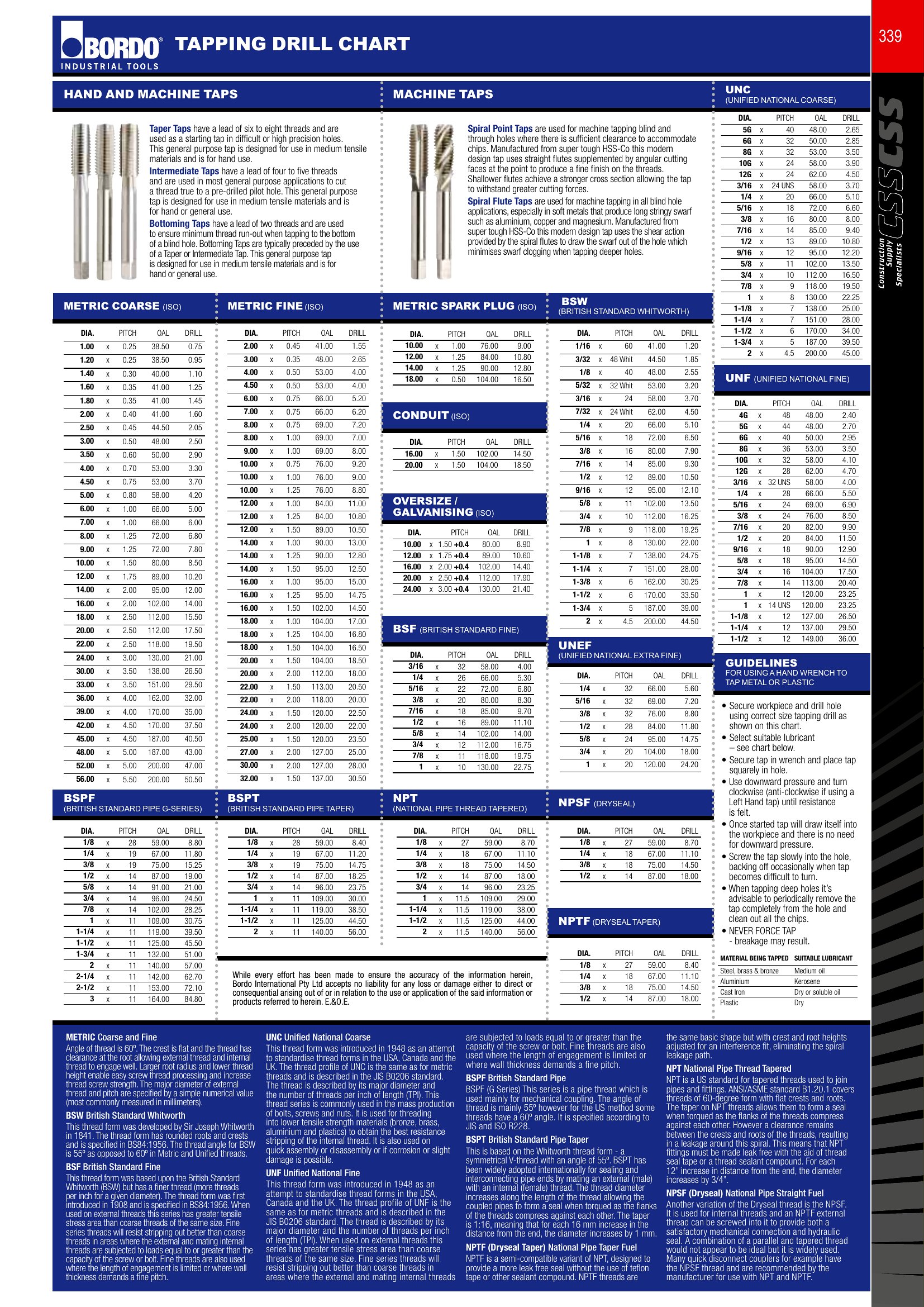
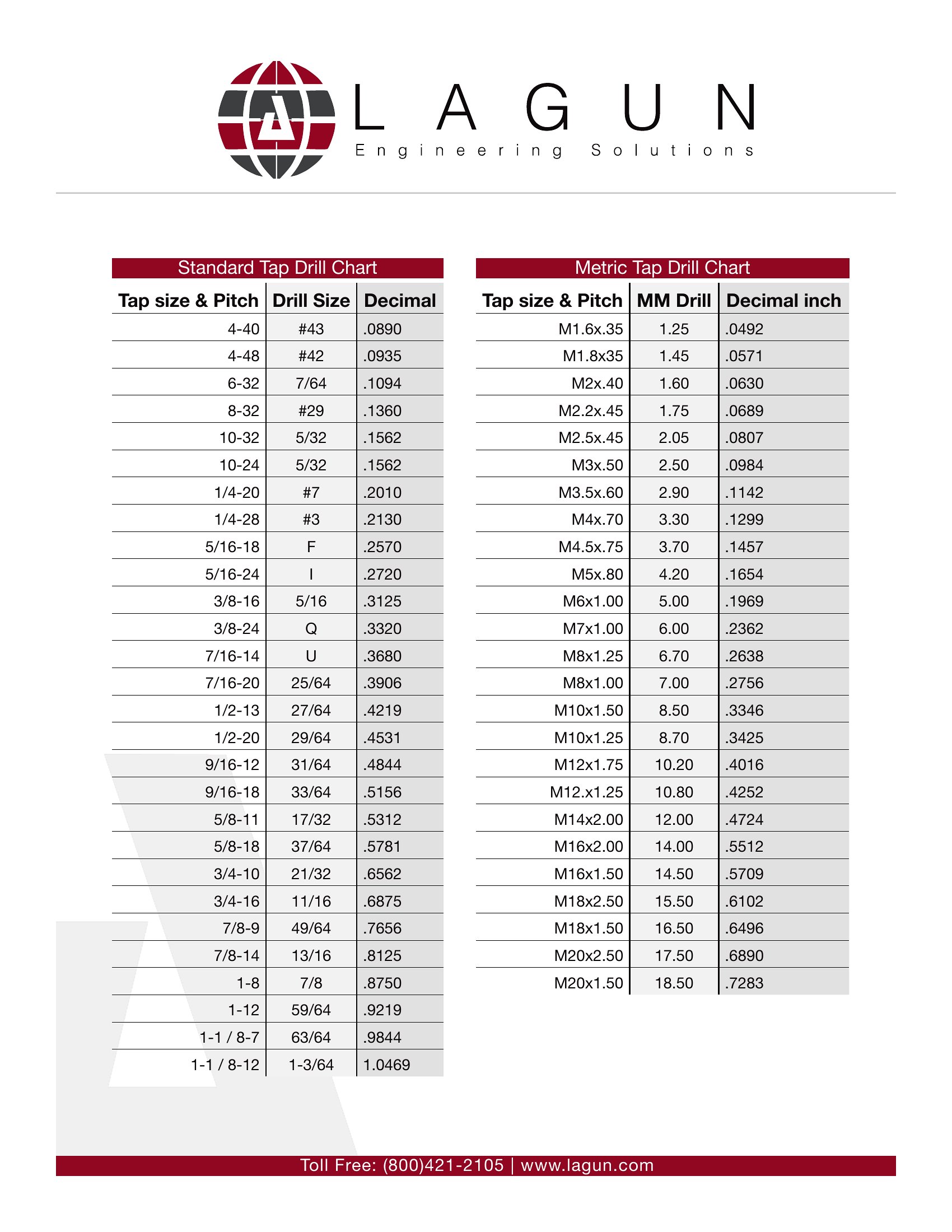
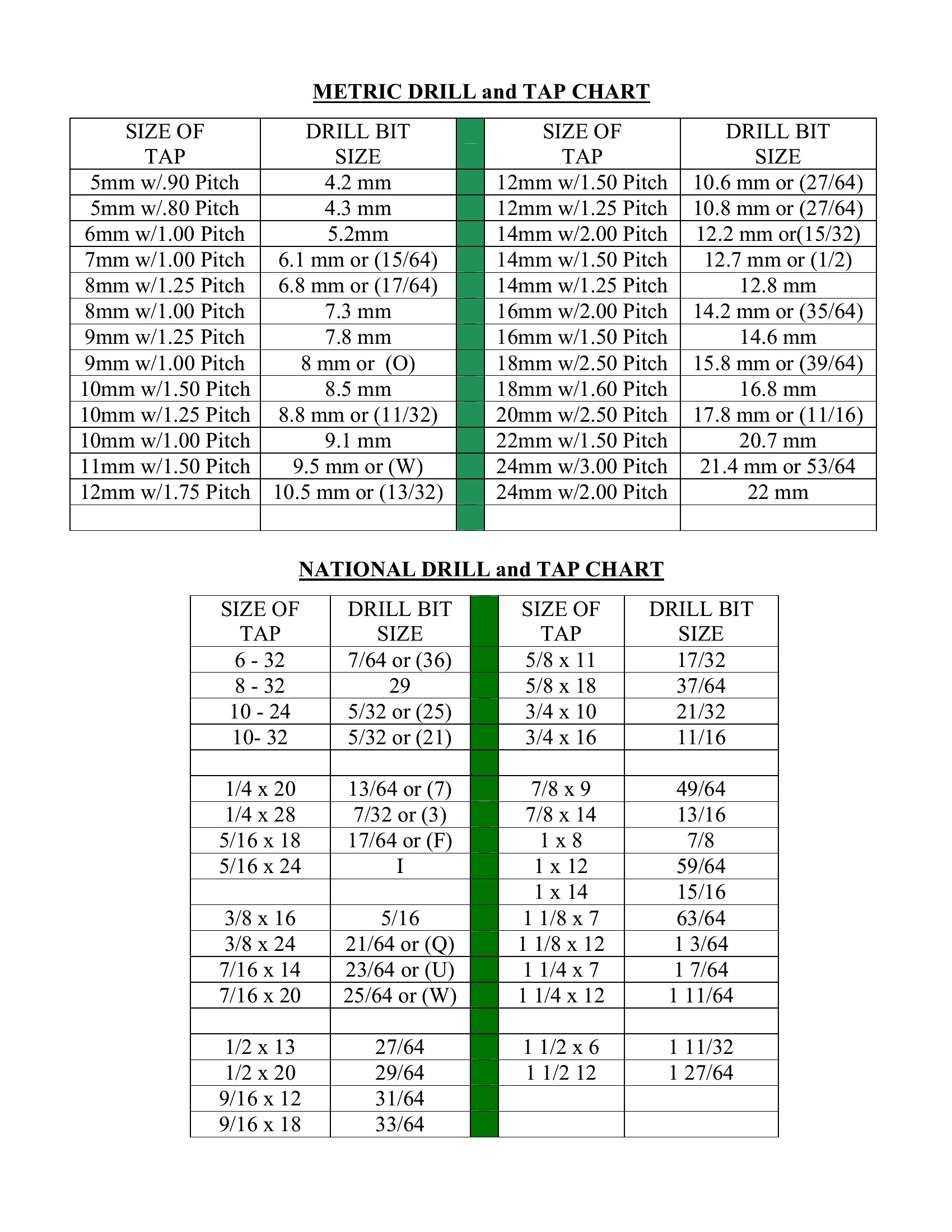
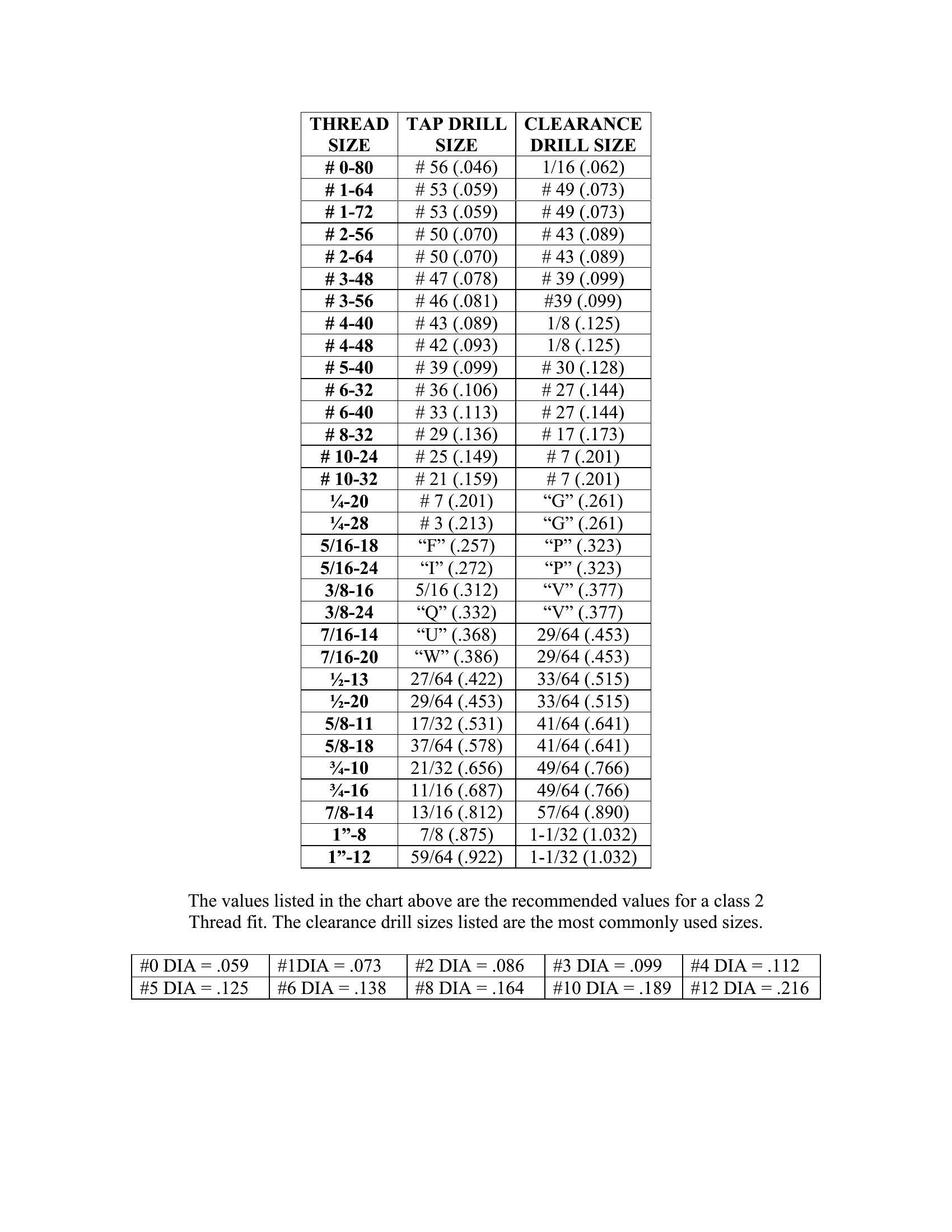
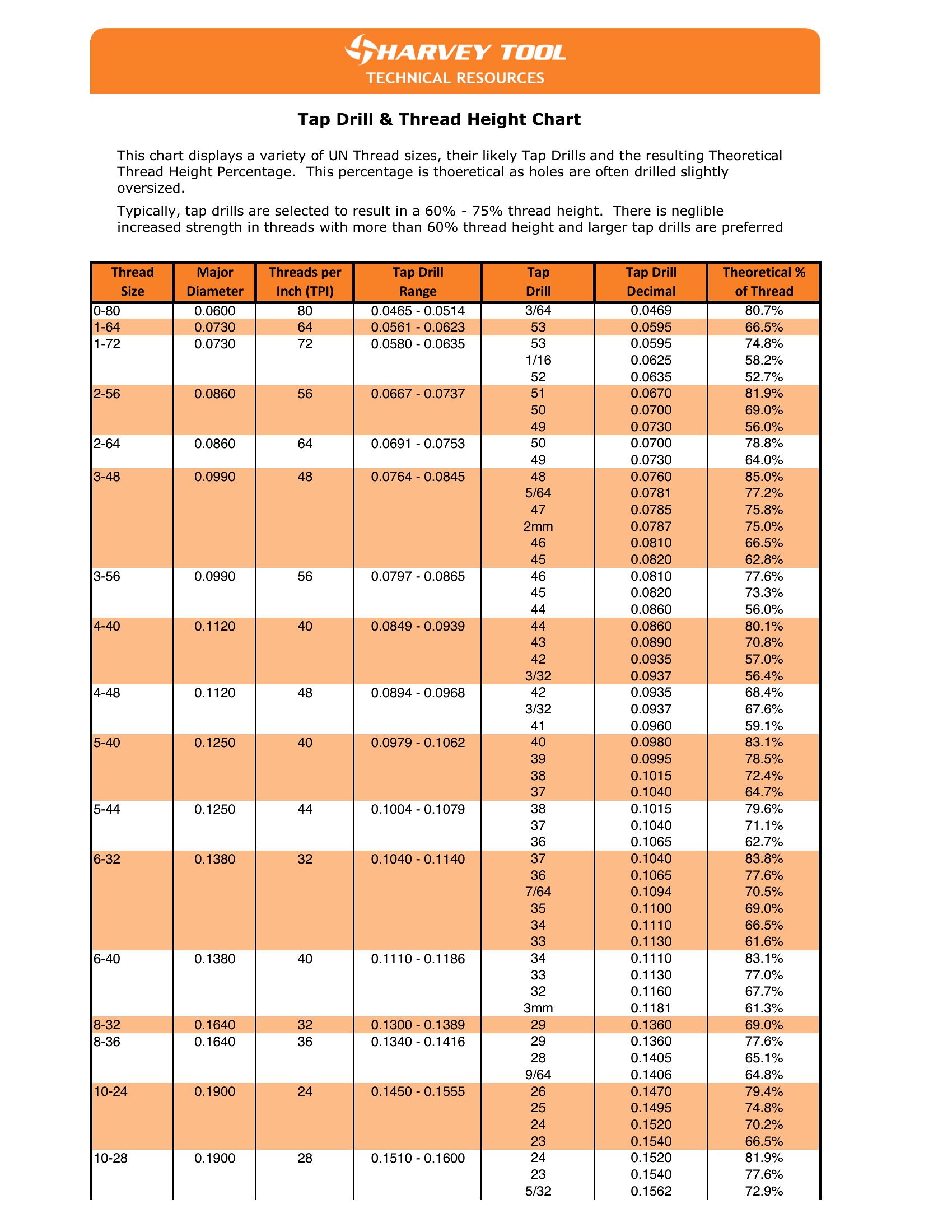
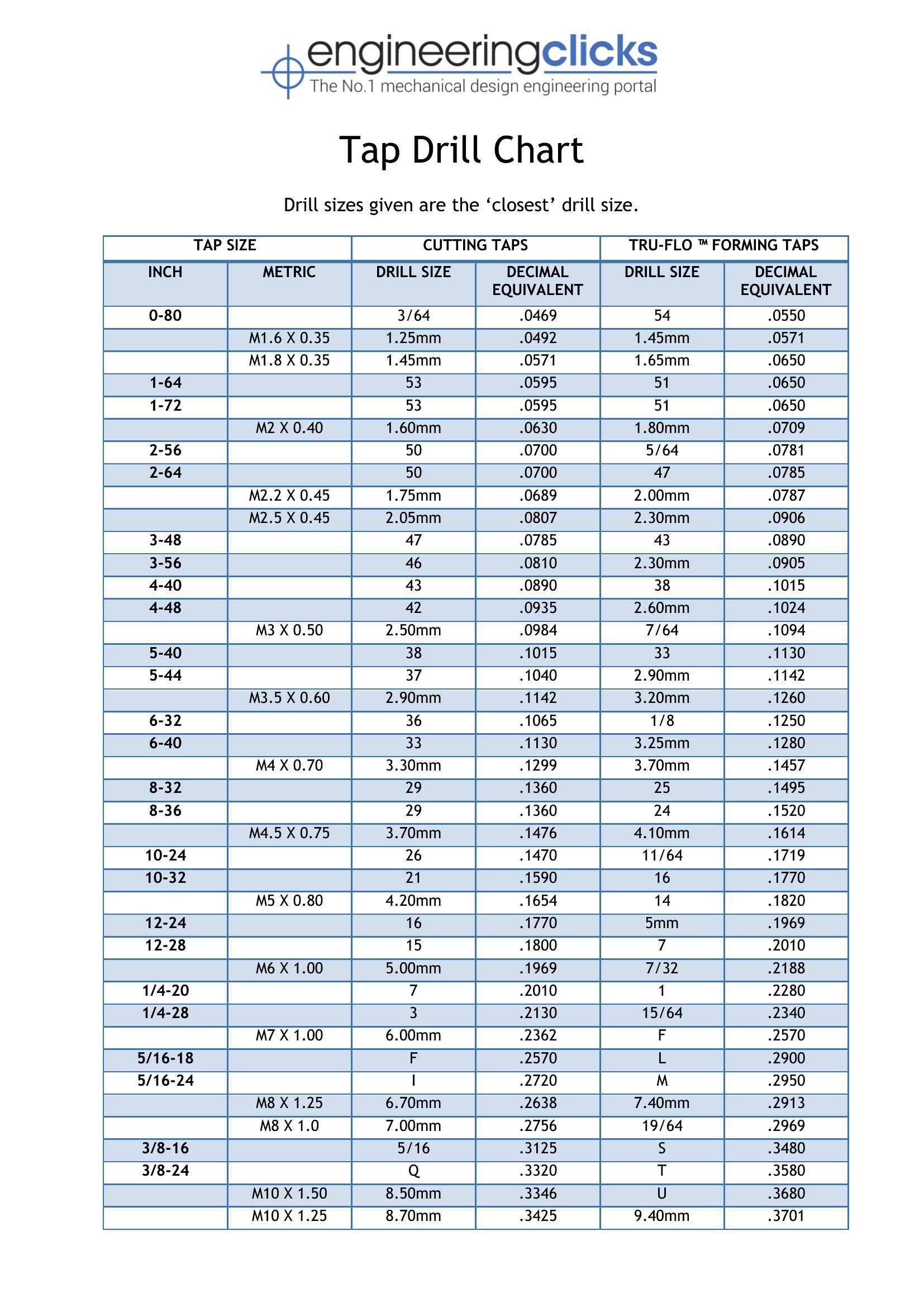
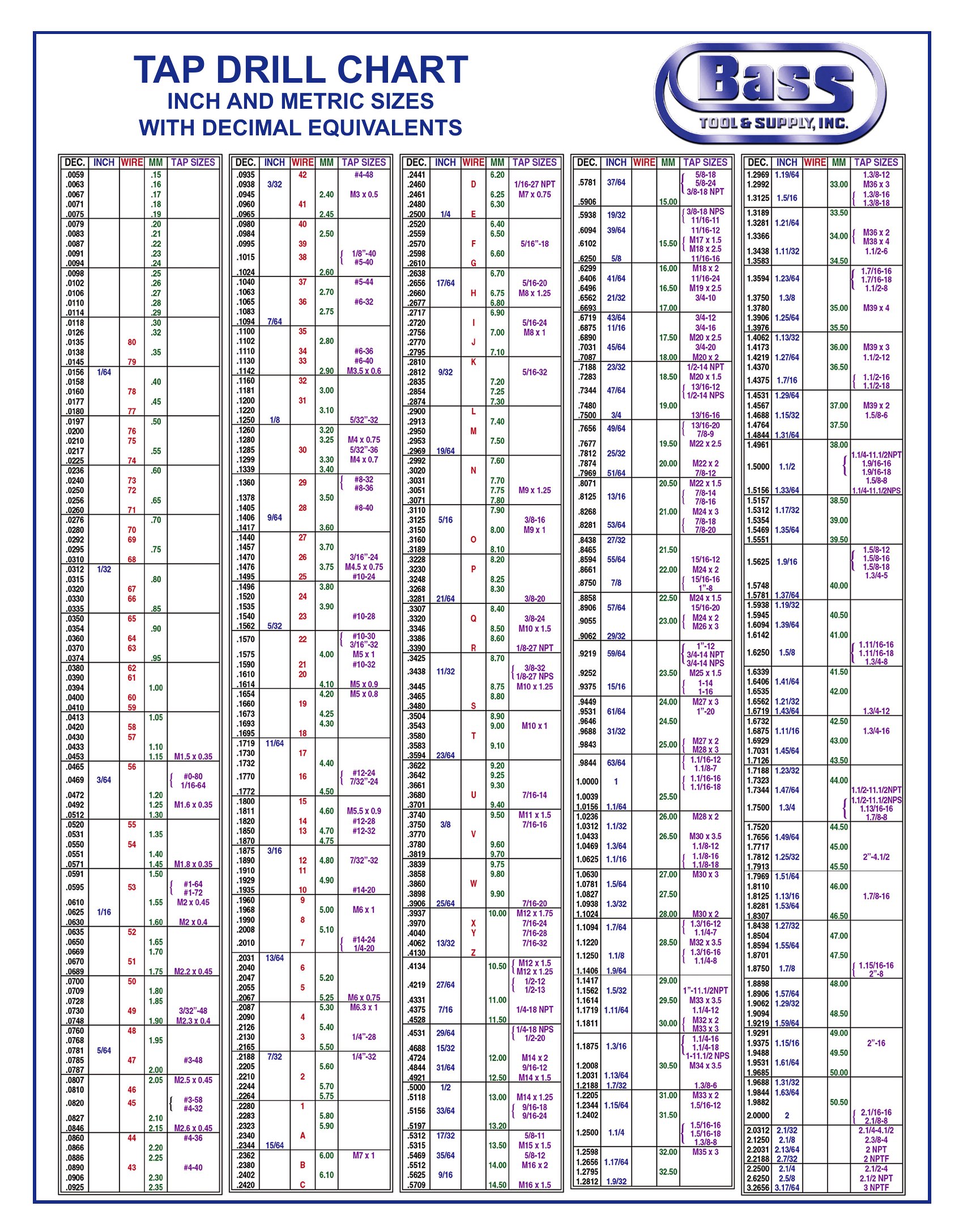
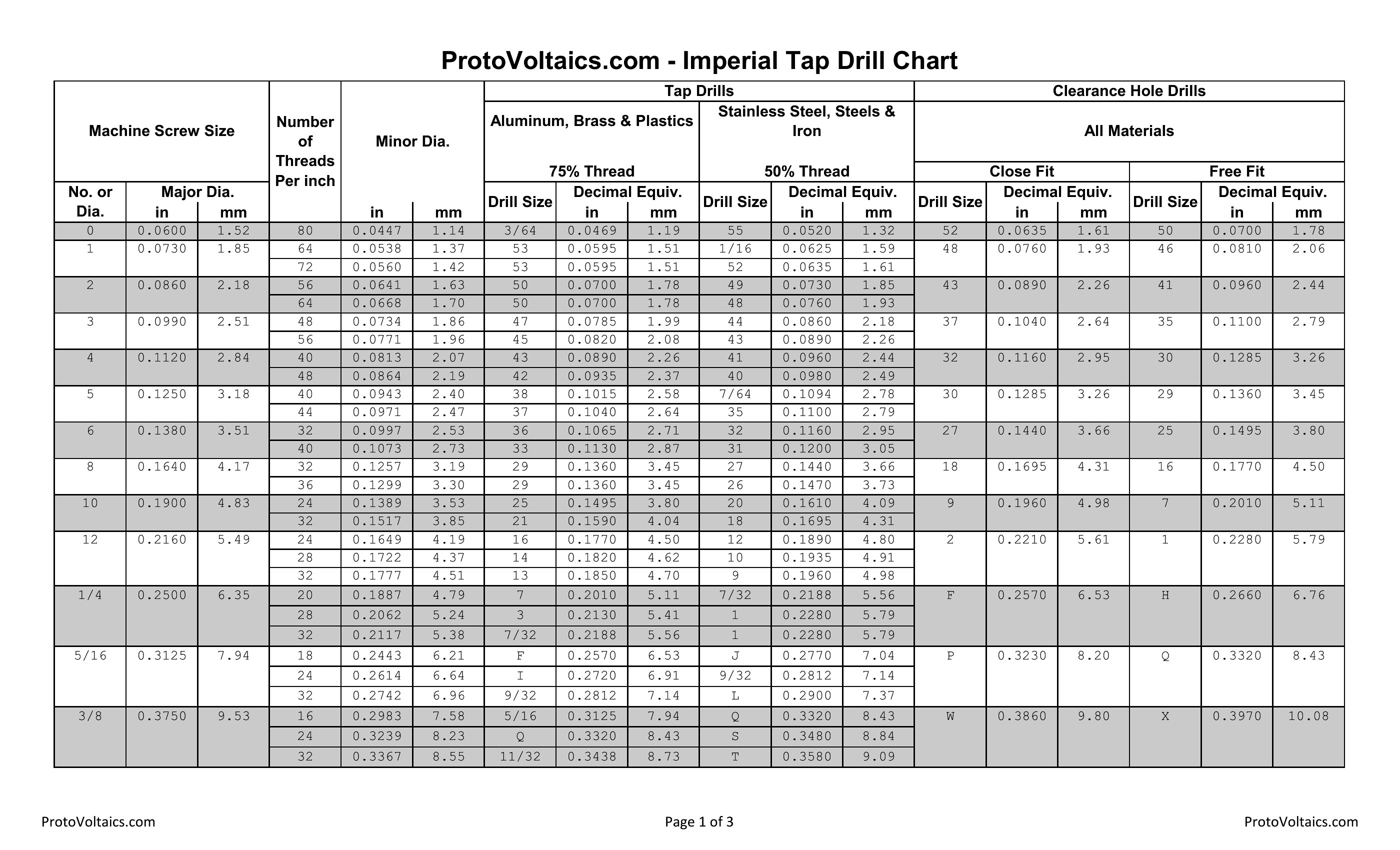
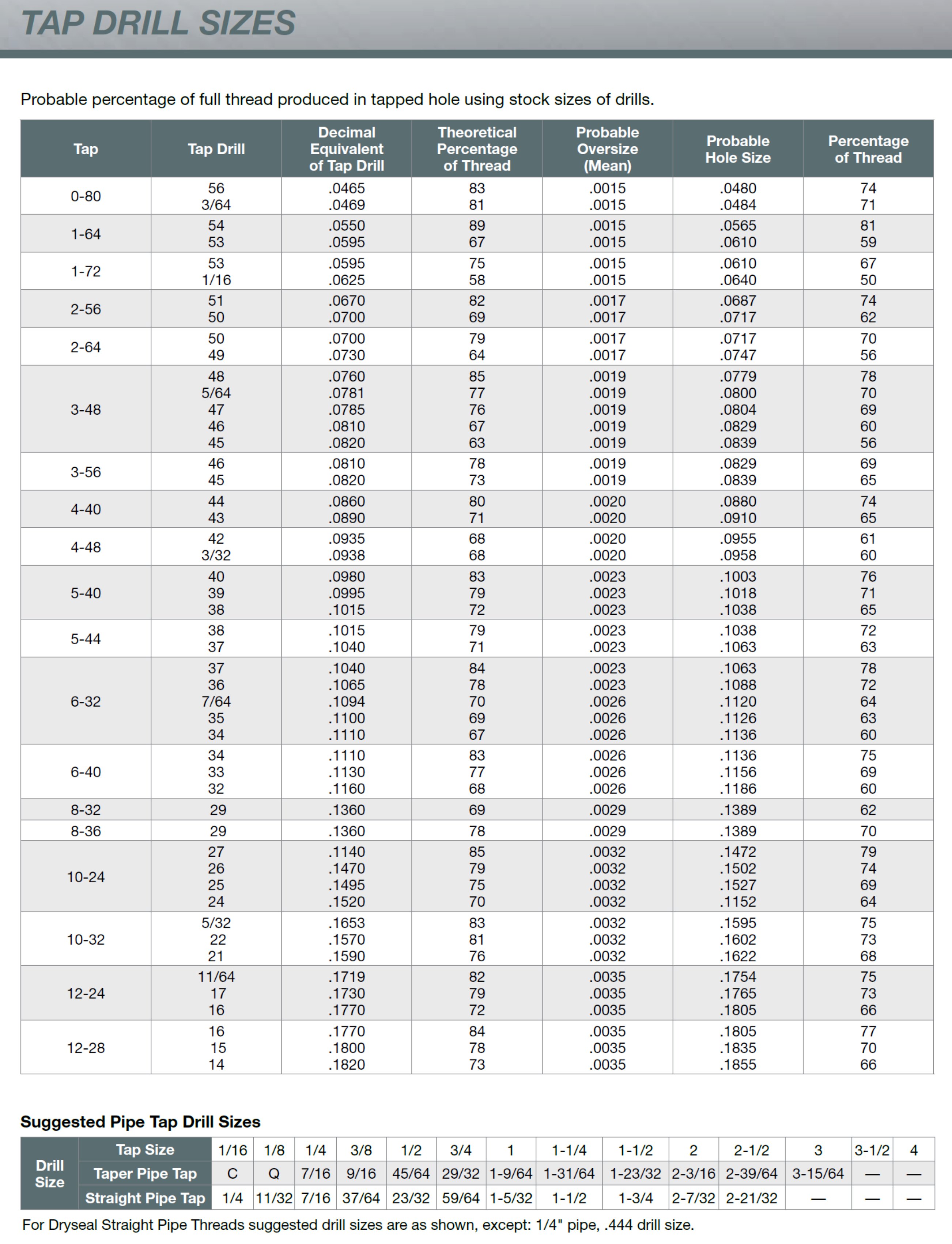
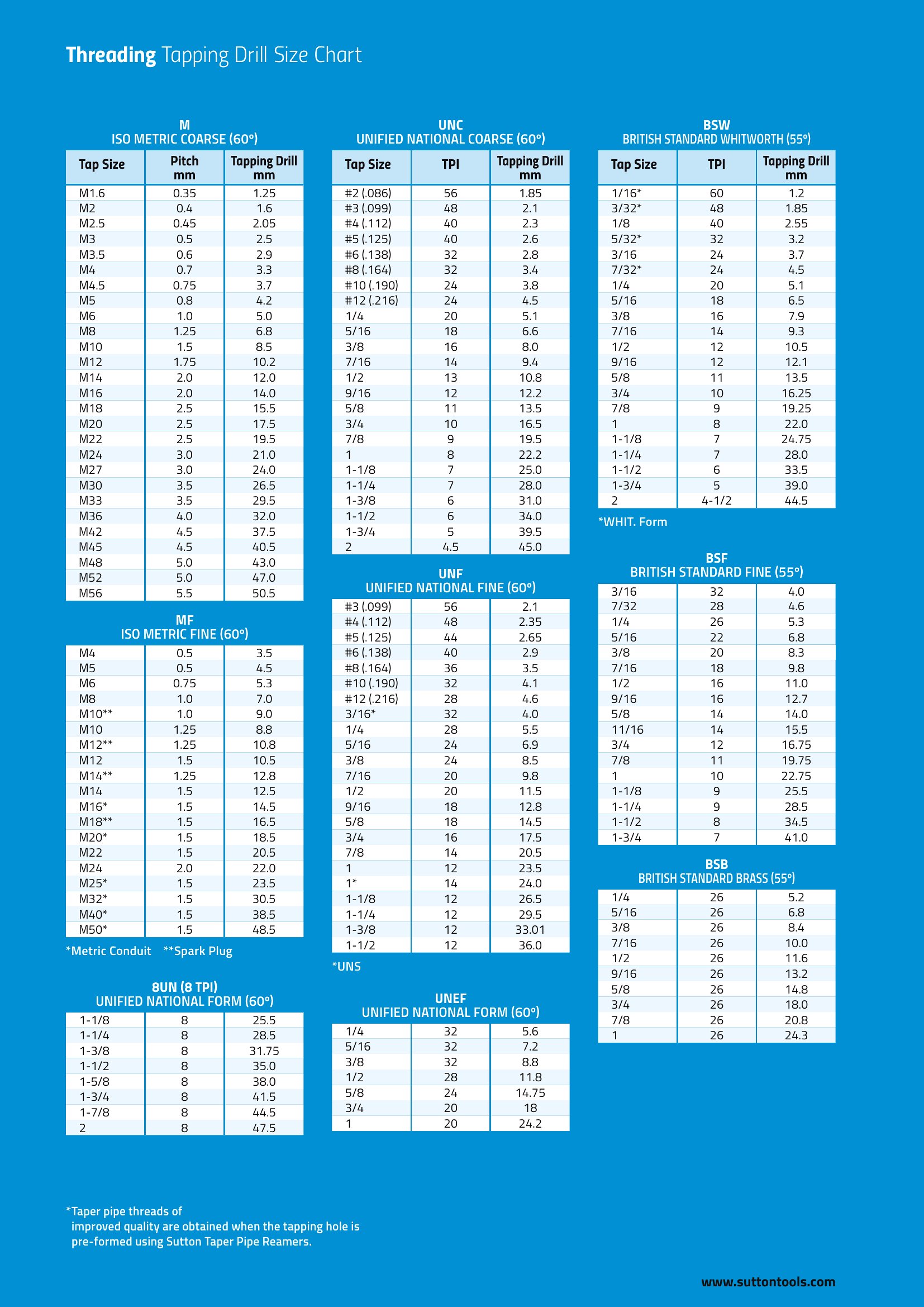
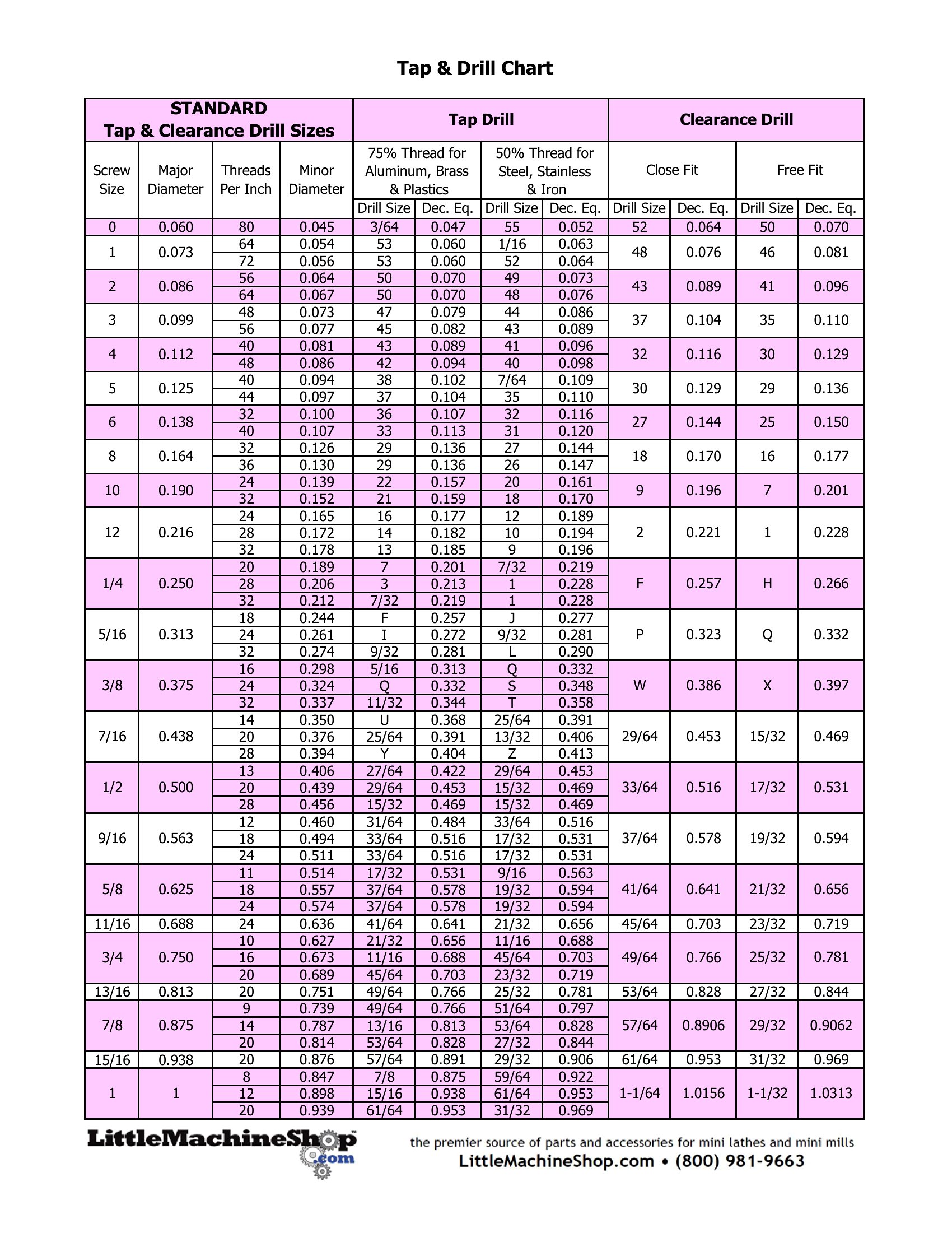
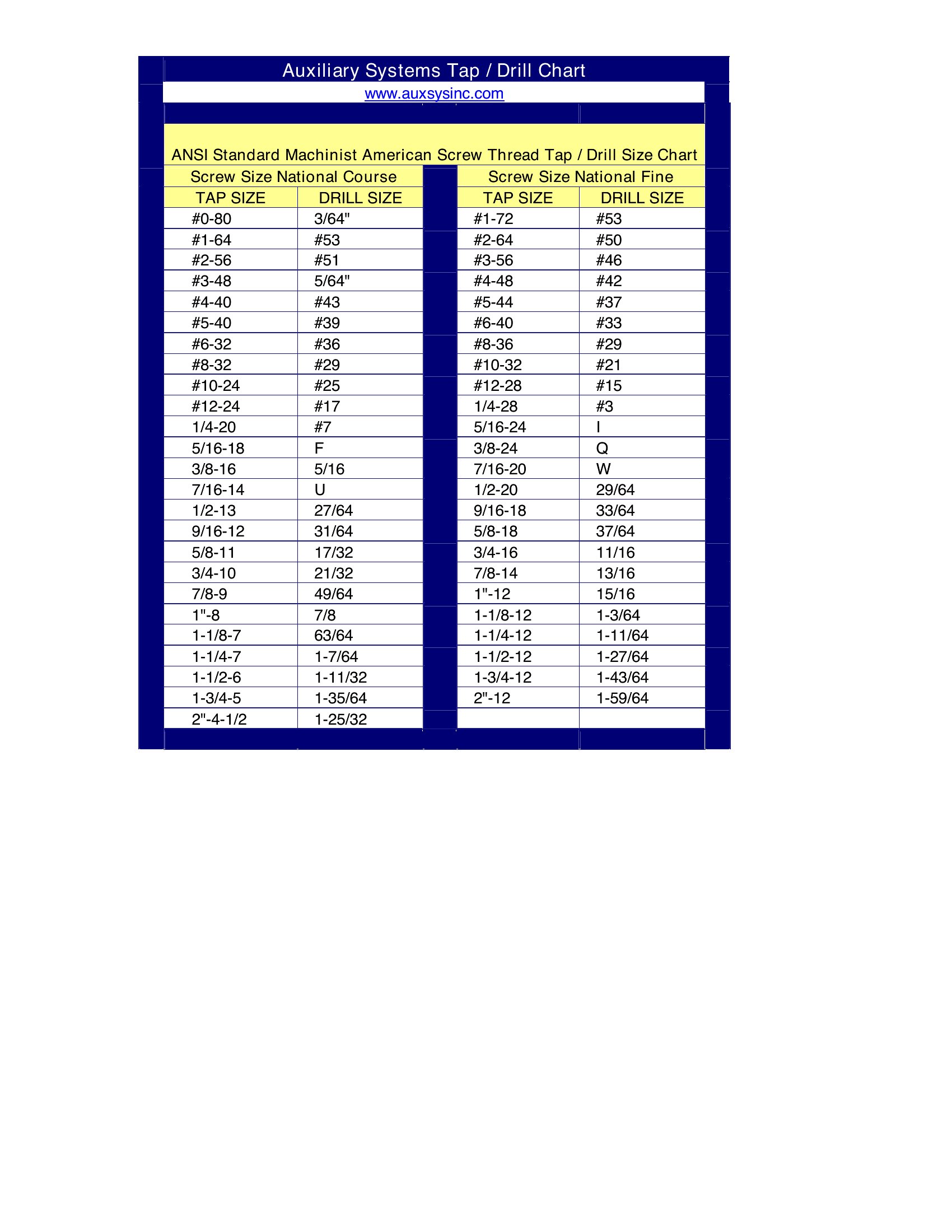
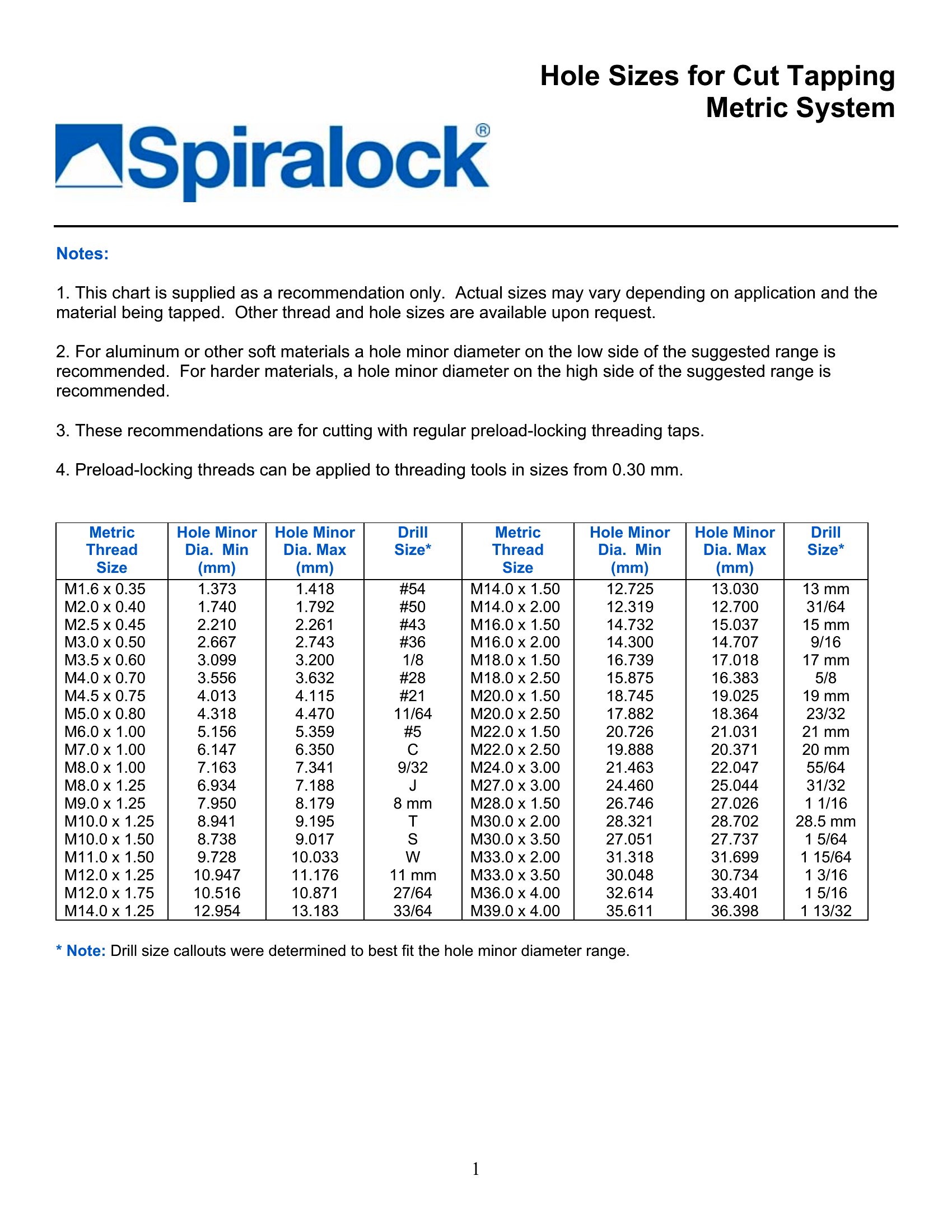
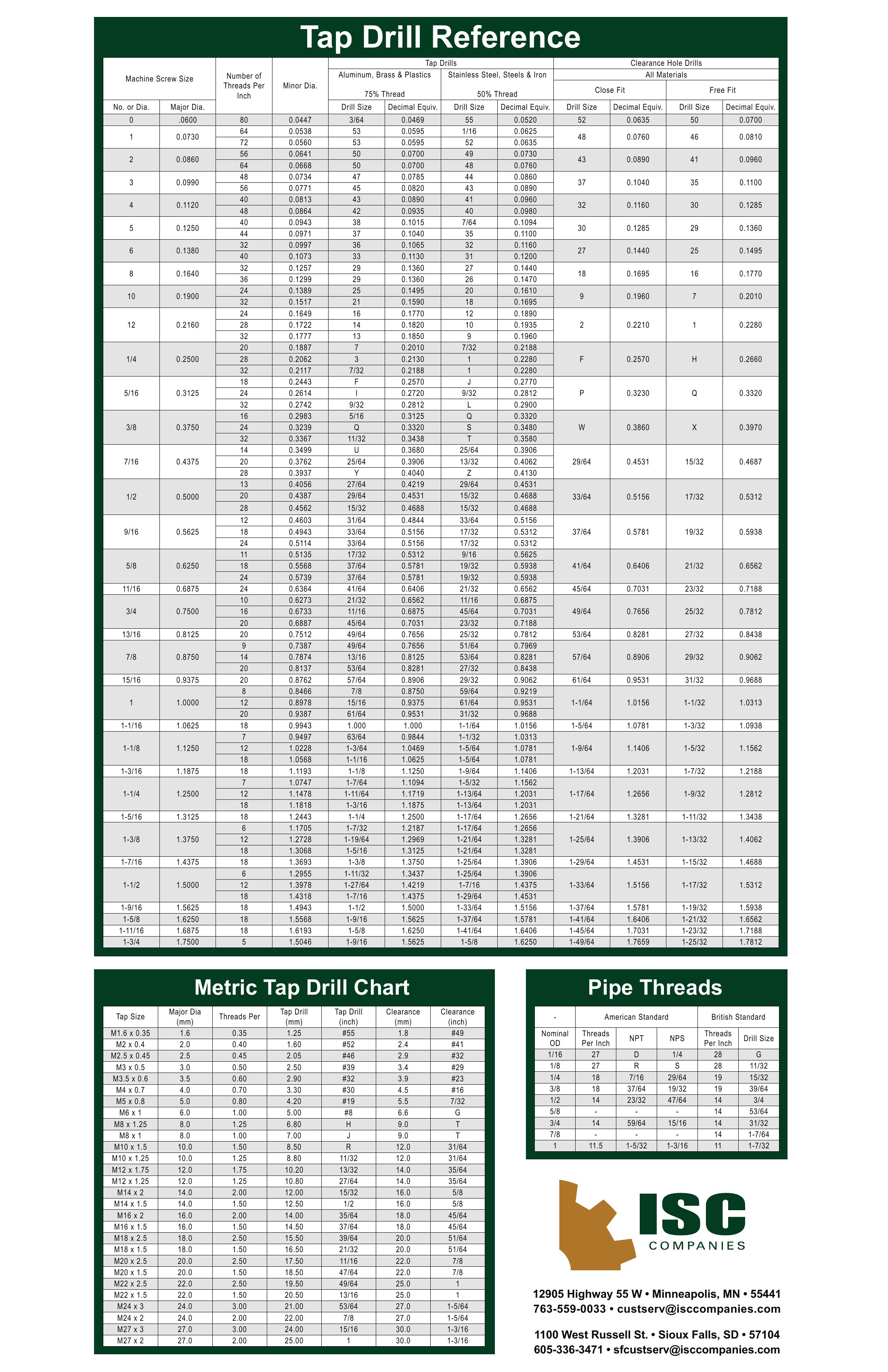
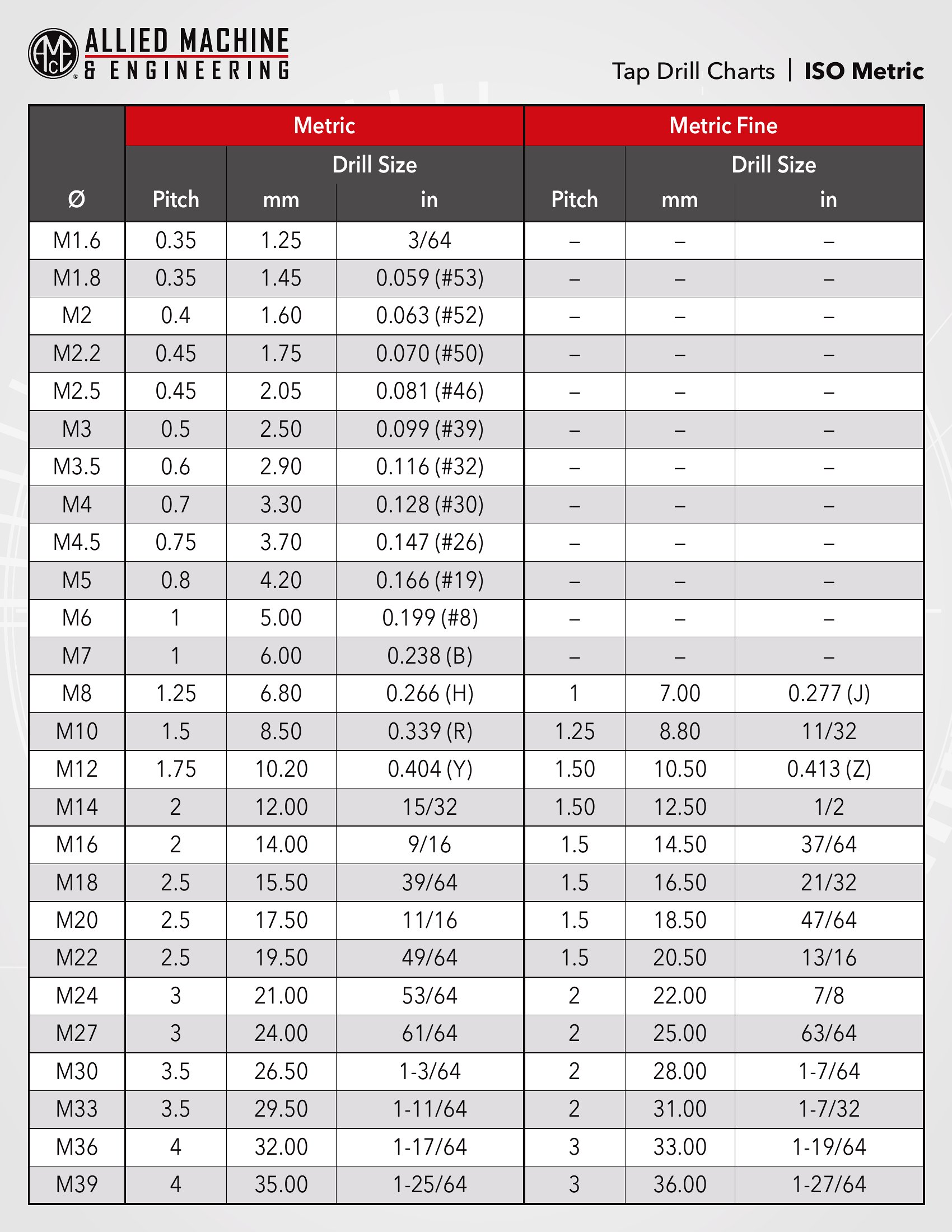
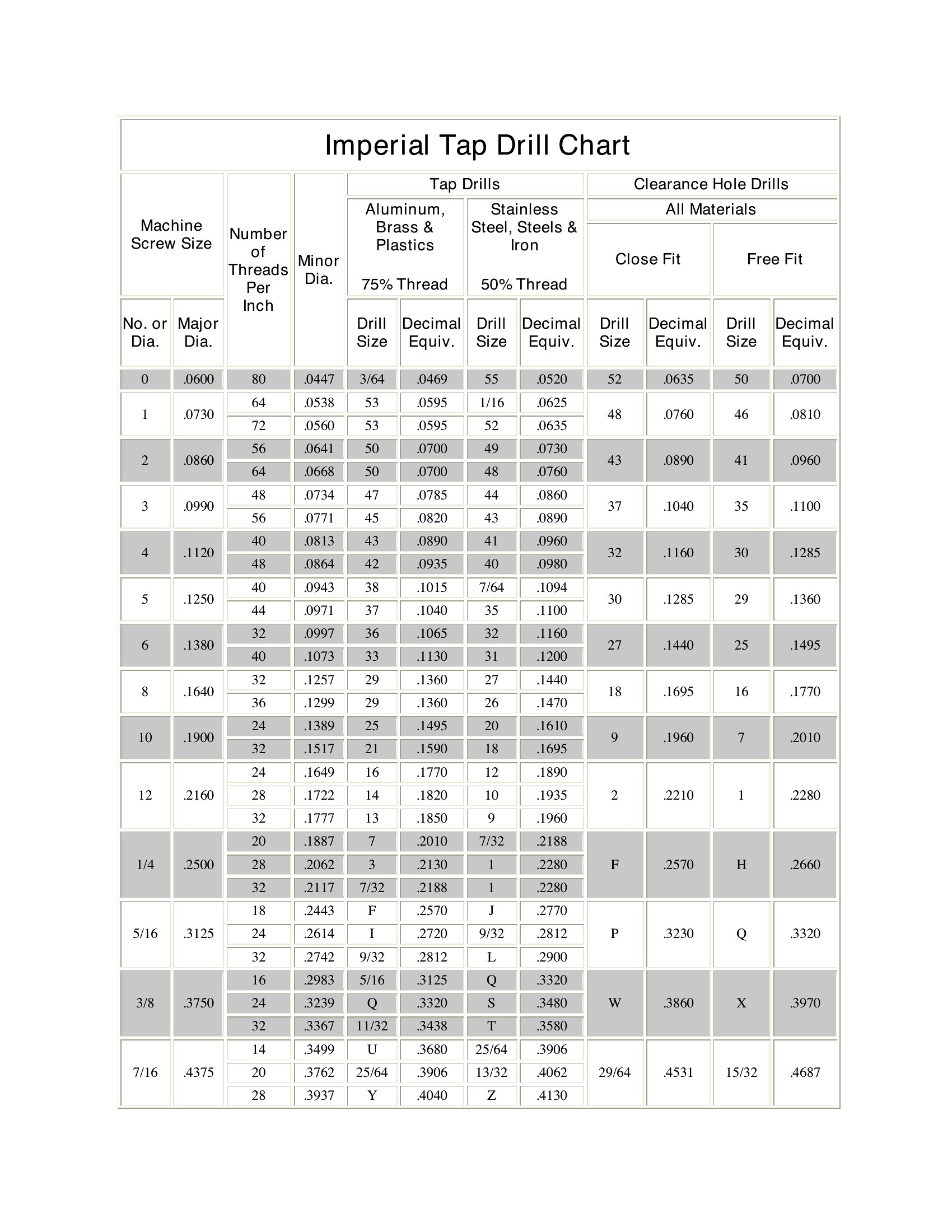
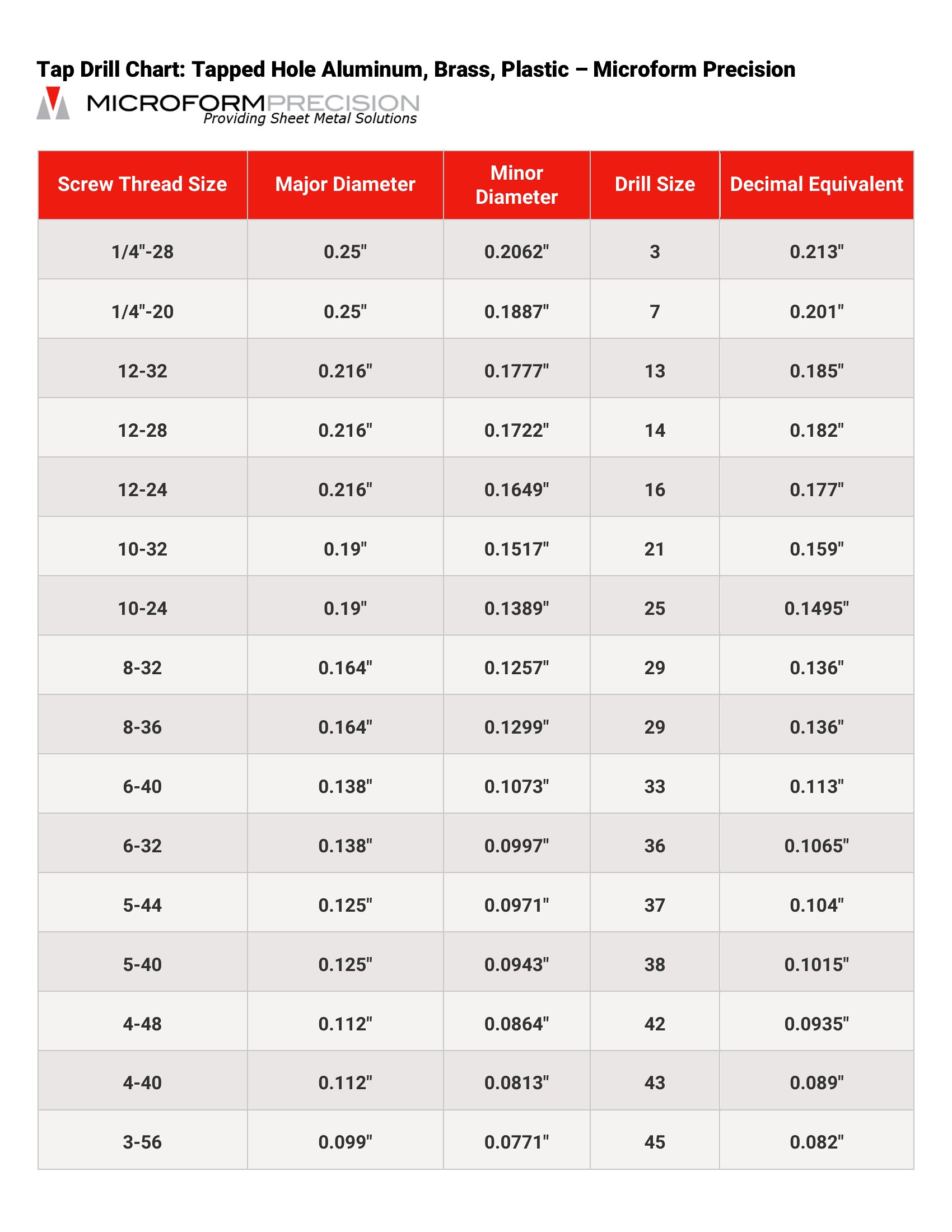
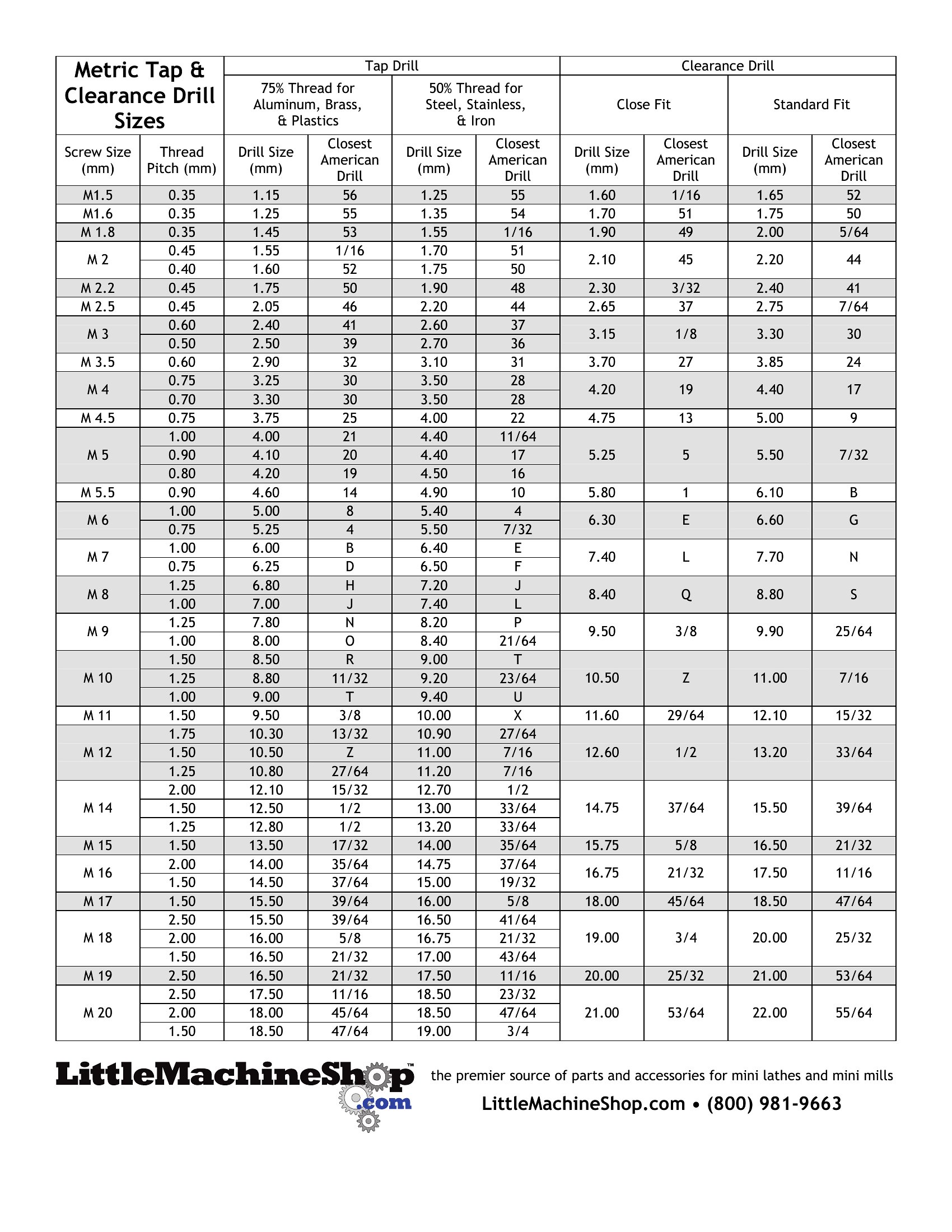
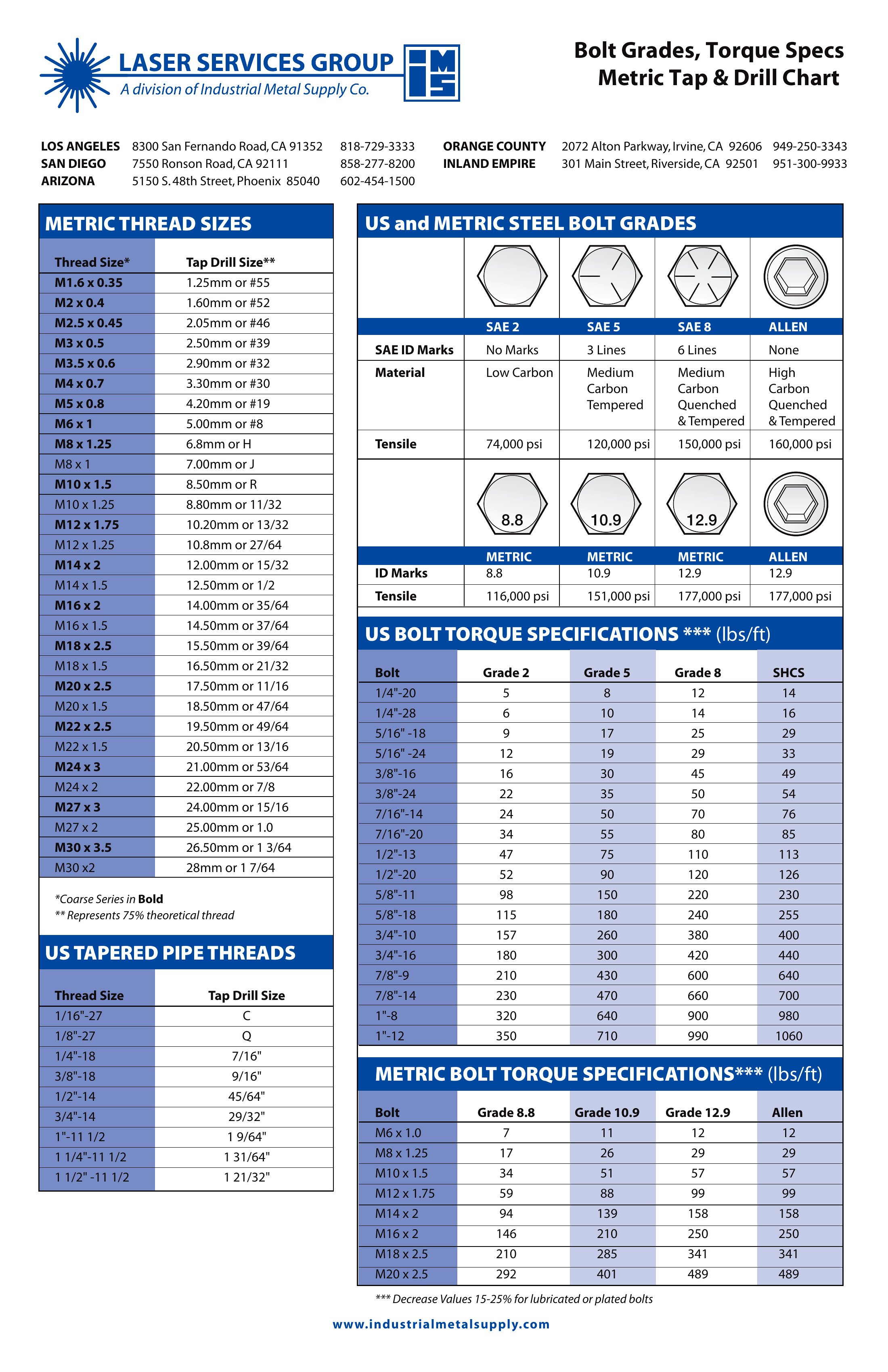
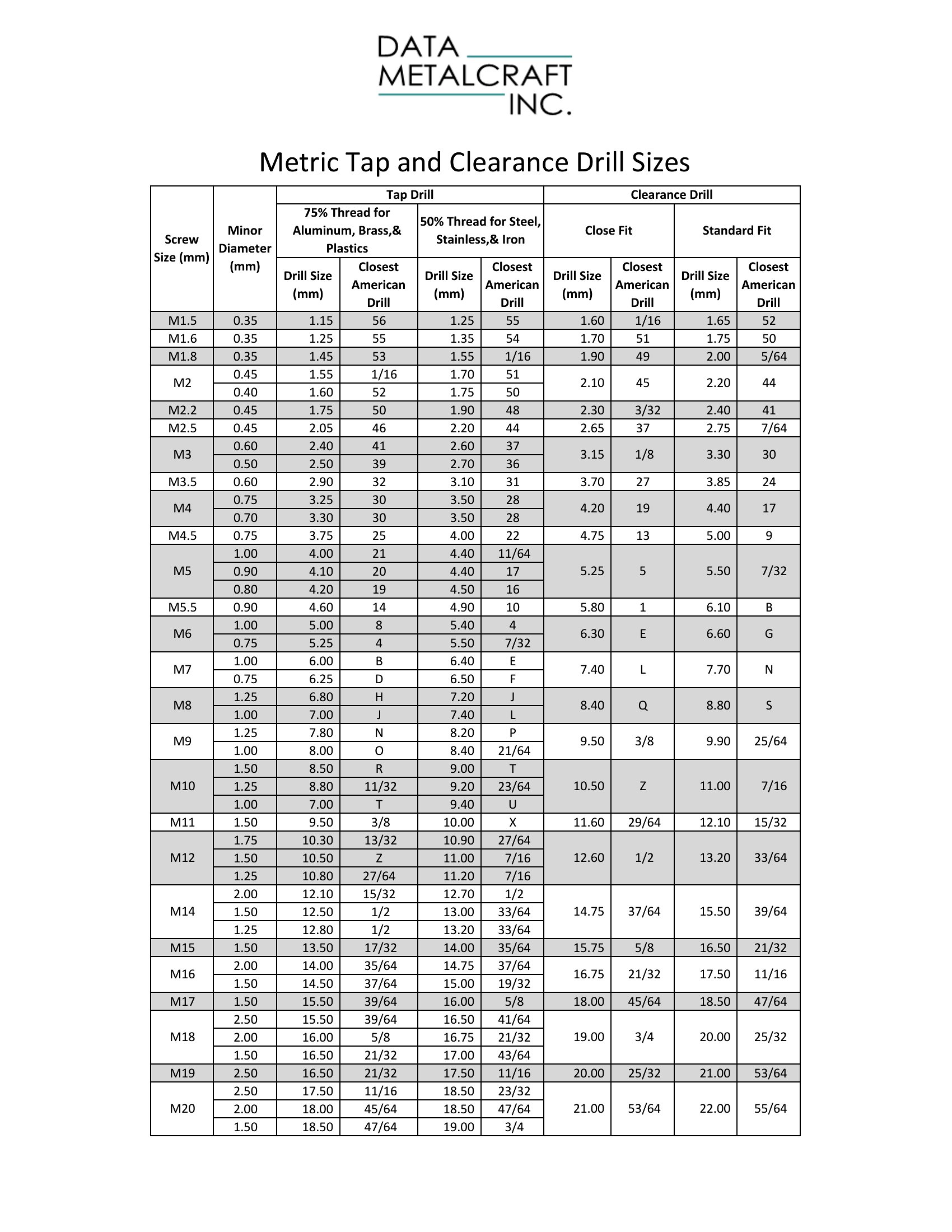
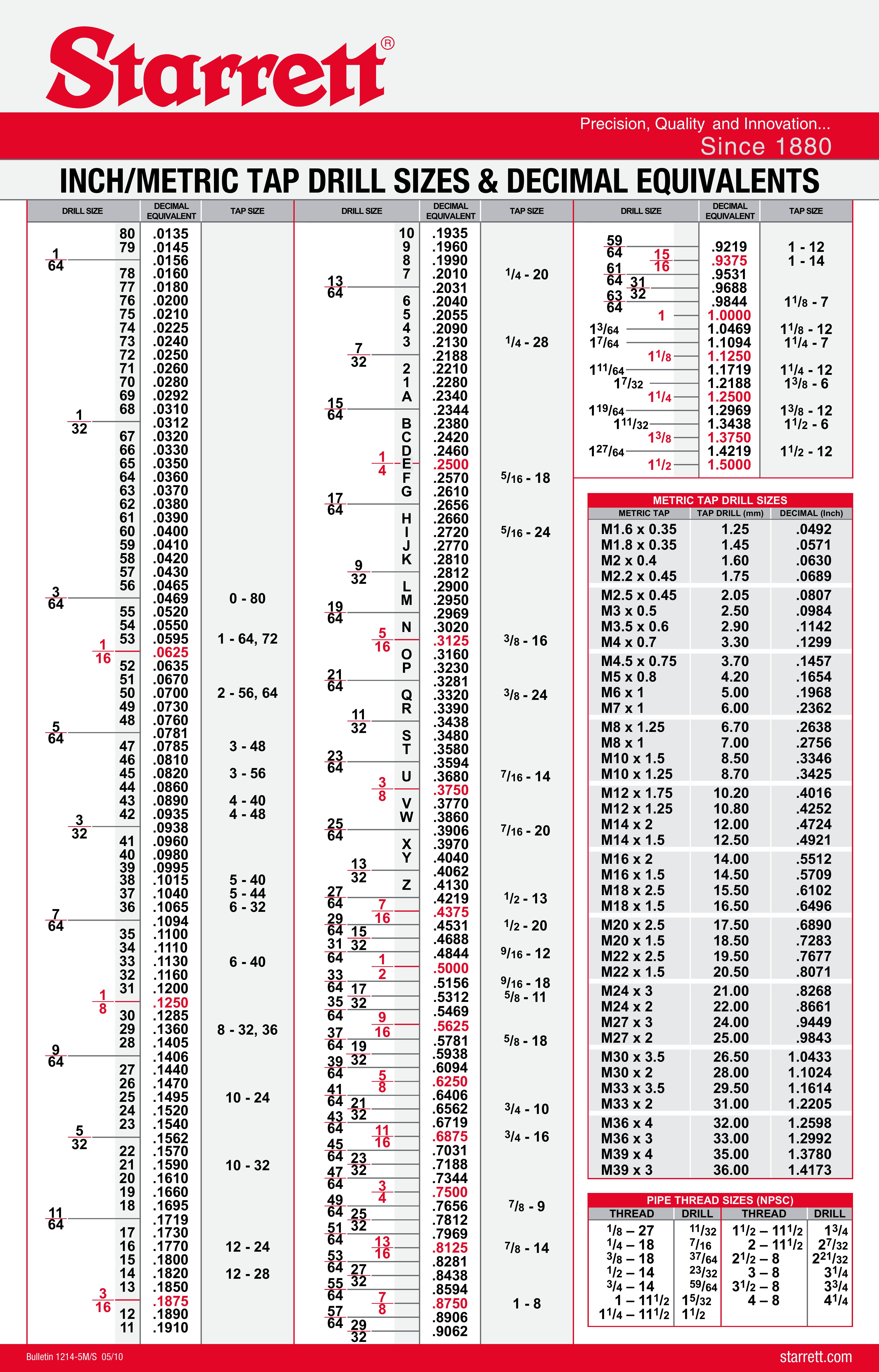
DataDrilling a hole that's the wrong size for your tap is a quick way to strip threads or snap a bit, which is exactly what a good tap drill chart prevents. This set of 40 charts pairs every common screw and thread size with the correct drill diameter, covering coarse, fine, metric, and NPT pipe threads. Machinists, hobbyists, and shop teachers can keep the right reference within arm's reach instead of guessing at the bench.
Each chart arrives as a print-ready PDF sized for letter paper, so you can post one above the drill press or slip it into a shop binder. The layouts stay clean and easy to scan, with tap sizes and matching drill bits lined up side by side. Print the chart that matches your work and stop hunting for thread specs mid-job.
When to use this Tap Drill Size Charts template
- A machinist prepping for a custom fabrication project needs to match 1/4-20 UNC threads to the exact drill size, avoiding costly thread damage on stainless steel stock.
- A high school shop teacher prints wall charts for students learning thread-cutting basics, ensuring metric and standard drill sizes are clearly paired for hands-on lathe and tap work.
- A plumbing contractor cross-referencing NPT pipe thread sizes with tap drill diameters before starting a gas line retrofit to guarantee leak-free connections and tool longevity.
- A hobbyist woodworker assembling threaded joints in a miniature steam engine model, referencing the chart to select the correct drill bit for 6-32 fine threads without stripping the pilot holes.
Which format should I download?
The PDF format is ideal here because it preserves the precision of the charts while allowing for easy printing at various sizes—from wallet-sized references in a toolbox to full-page wall charts in a workshop. The non-editable nature ensures accuracy, while searchable text (if enabled) helps quickly locate specific thread sizes during tight deadlines. For digital use, the PDF maintains crisp resolution on tablets or shop computers, reducing errors from misread handwritten charts. Since these are reference tools, no other format matches the balance of portability and readability needed in hands-on environments.
Choose from 40 Tap Drill Size Charts Templates
How to use this Tap Drill Size Charts template
How do I know whether to use the metric or standard (inch) chart for a mixed-project toolkit?
Check the thread marking on your screws or bolts—if it has a number like 1/4-20 or 3/8-16, use the standard chart. For sizes labeled in millimeters (e.g., M6 or M10), the metric chart applies. Many templates include both systems side-by-side for quick comparison, which is helpful when working with imported hardware or dual-standard projects.
Can I use these charts for tapping aluminum or softer metals without adjusting the drill size?
These charts provide the standard drill sizes for clean threads in steel or hardened materials. For aluminum or softer metals, you may need to drill *slightly smaller* to avoid oversized holes that weaken the thread. Consult a machinist’s handbook for metal-specific adjustments, as tap drill sizes can vary by material hardness and tap design.
What’s the best way to organize these charts in a workshop where multiple people access them?
Laminate and mount the most frequently used charts (e.g., 10-32, M6, or NPT) near workstations, while keeping a full set in a three-ring binder or on a clipboard for portability. For digital access, save PDFs on a shared network drive or tablet with a note-taking app for marking personal preferences, like which chart is used most often for a specific project type.
Comments
Join the conversation
Sign in to share your thoughts and leave a comment on this resource.