Skip to content
50% off this one-time $1.99 pack with HALFOFF — or unlimited with Pro.HALFOFF
Premium

Free Behavior Contract Templates (Word)
Diagrams
waltherdewald by waltherdewald
Updated 0 downloads Quality-checked template

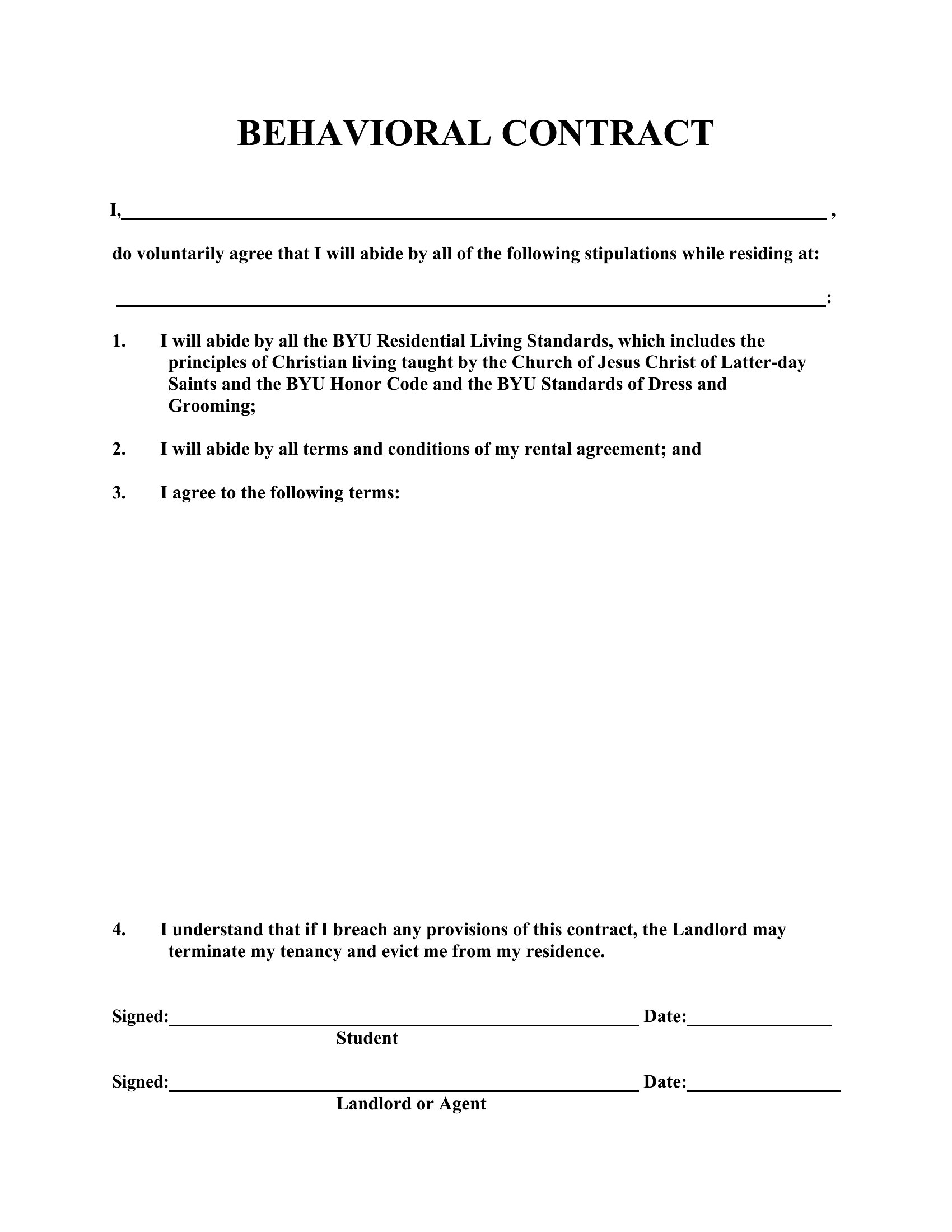
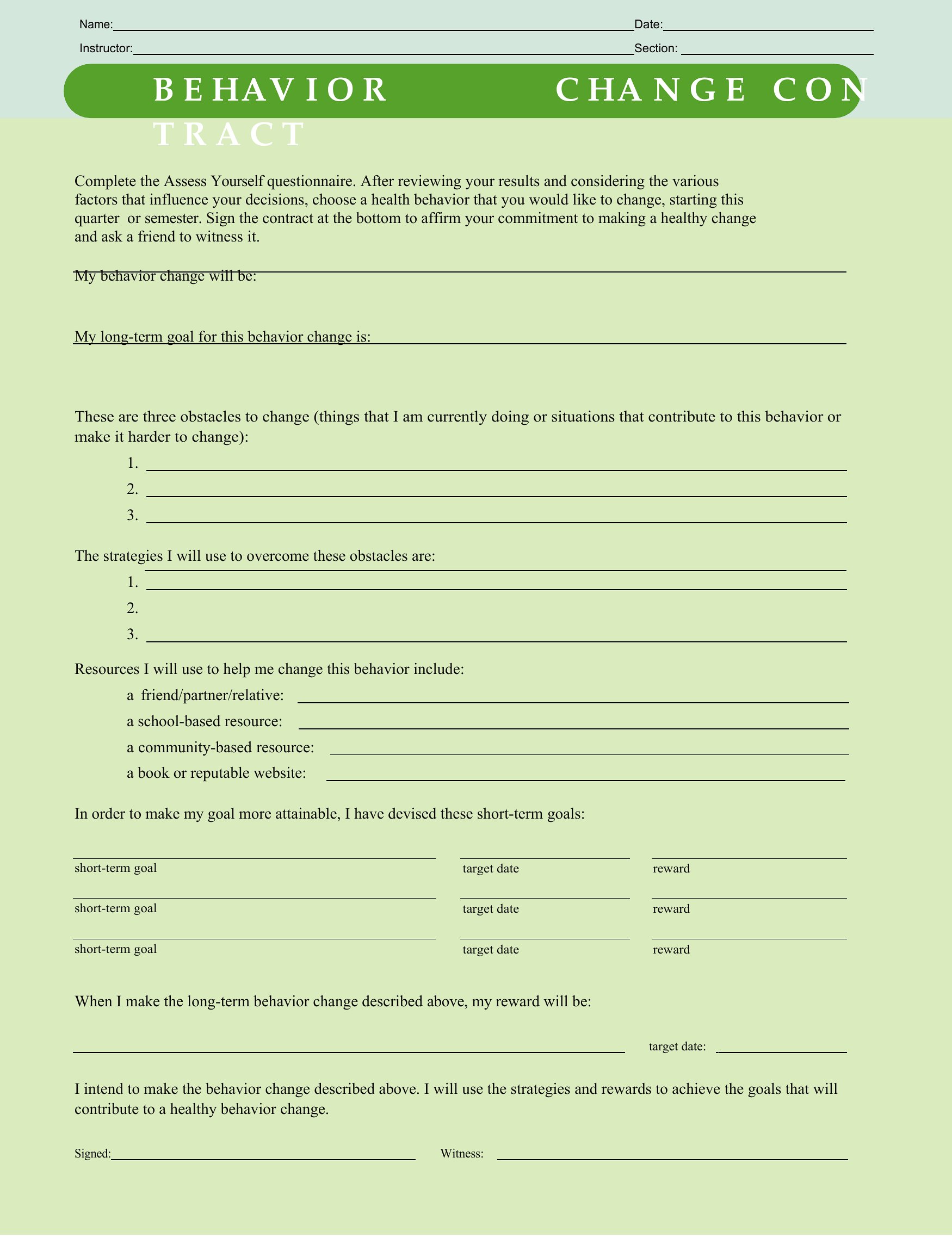
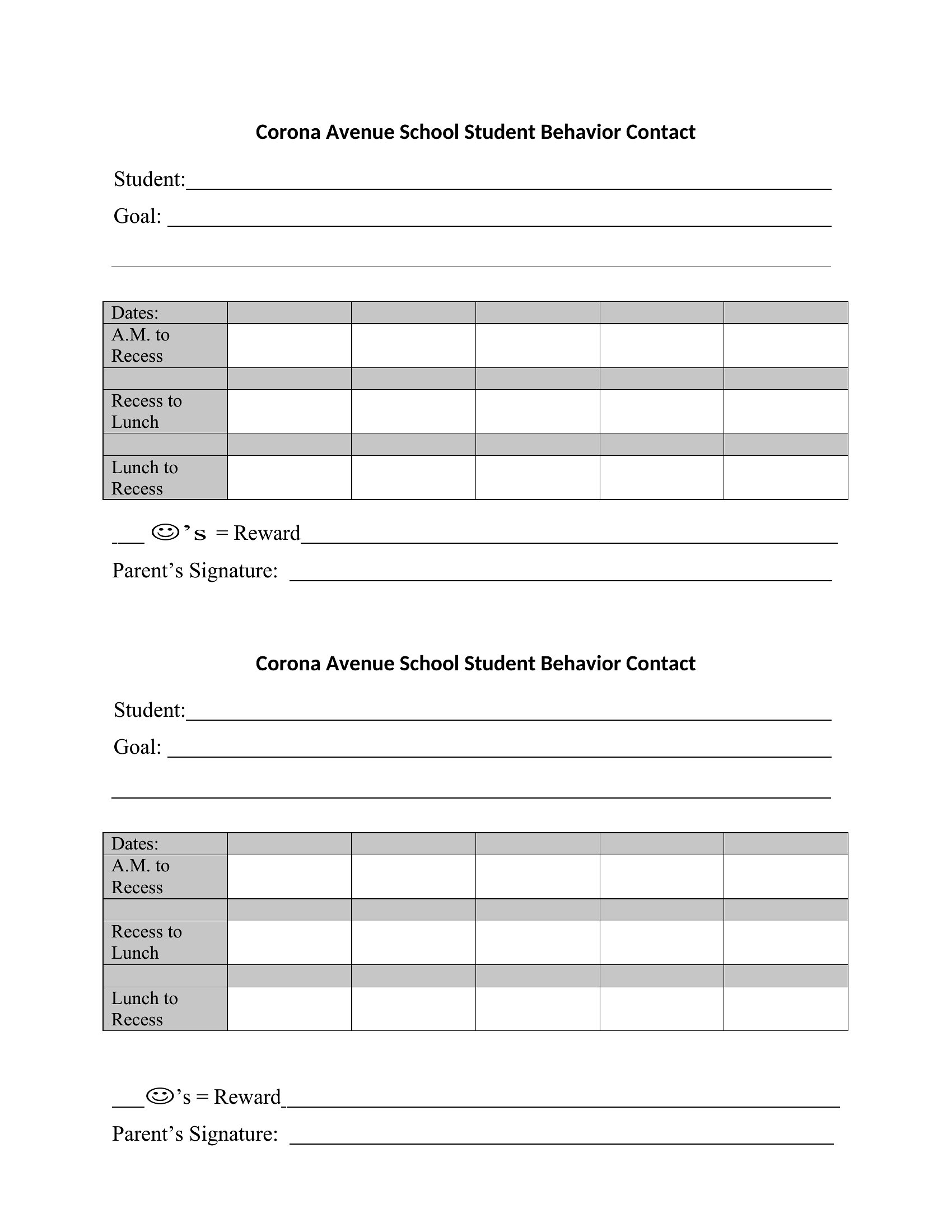
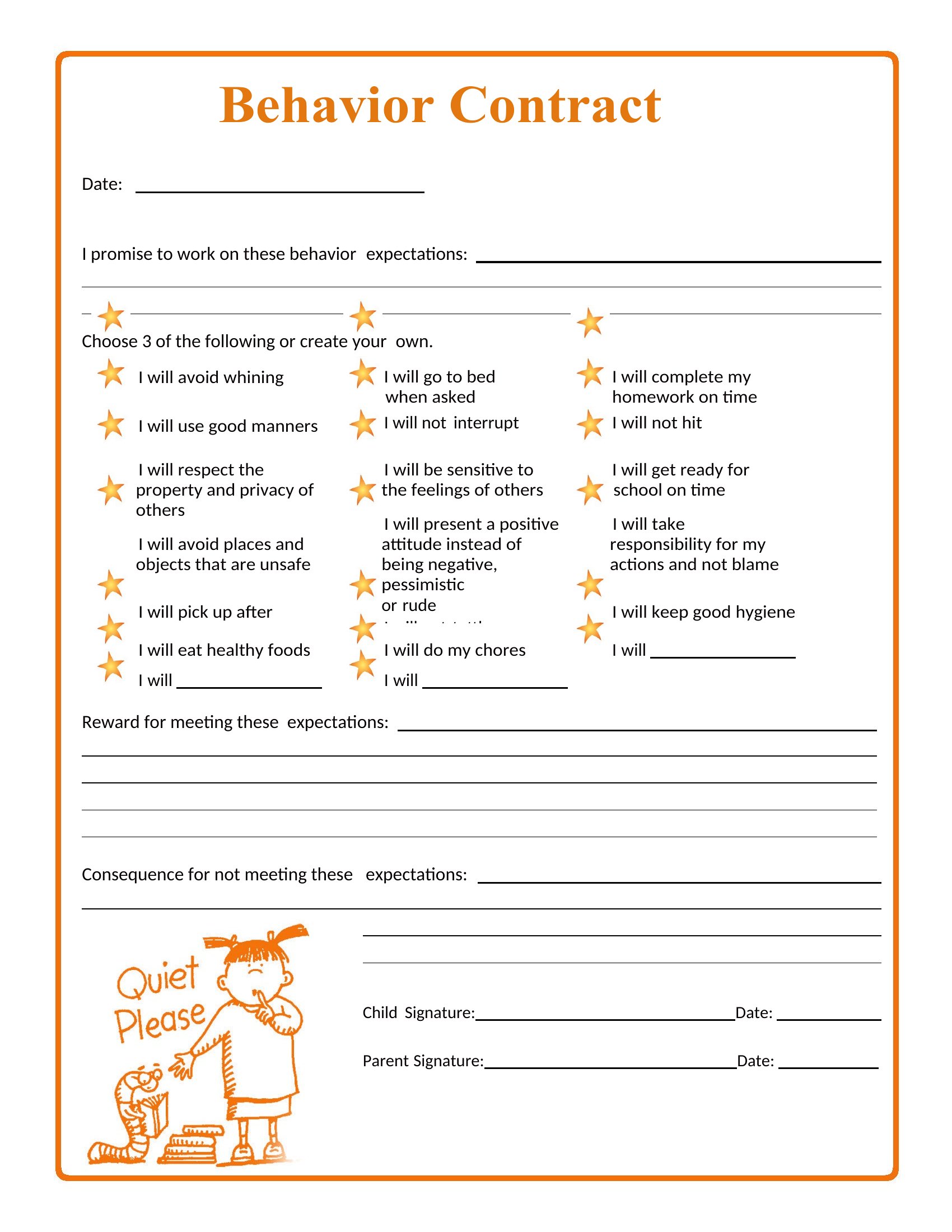
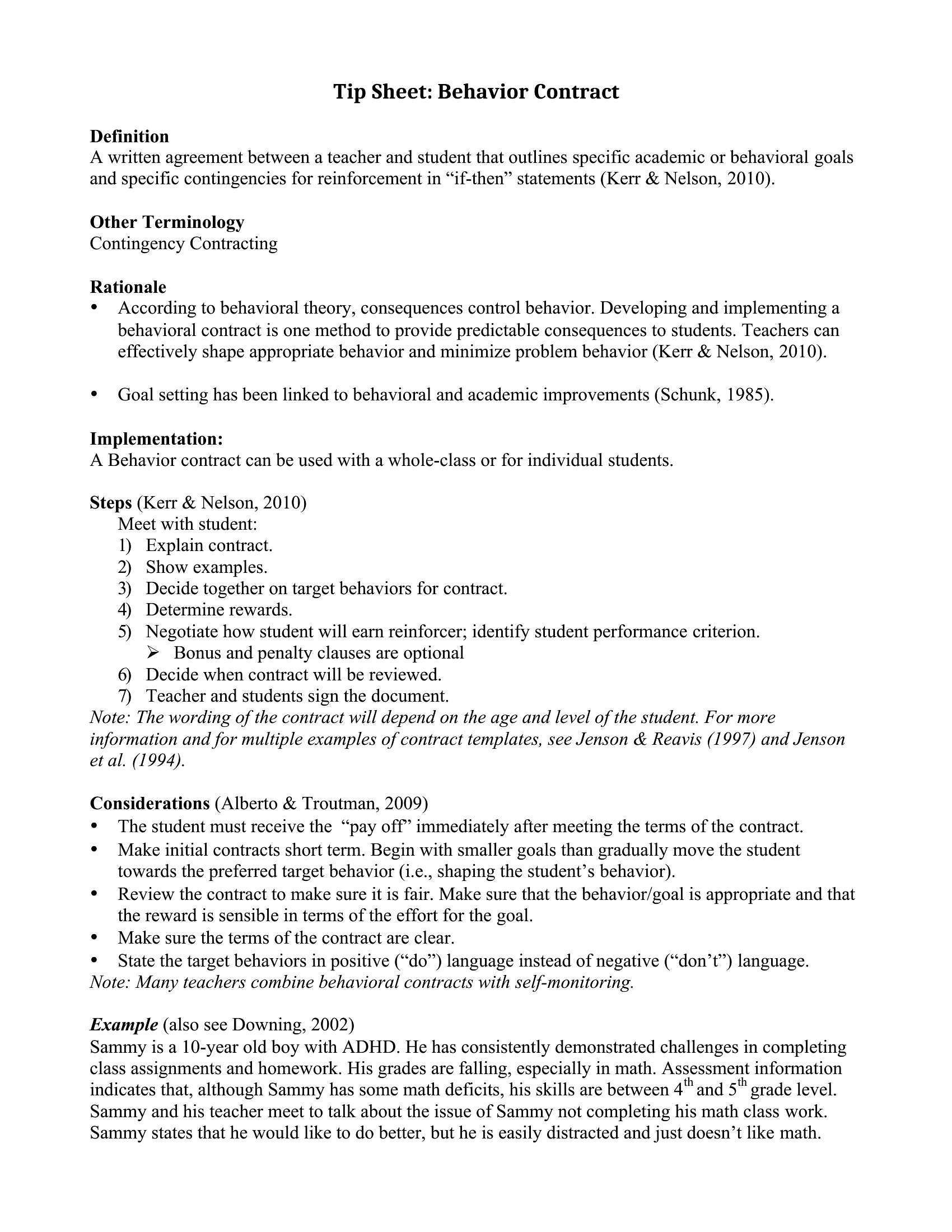
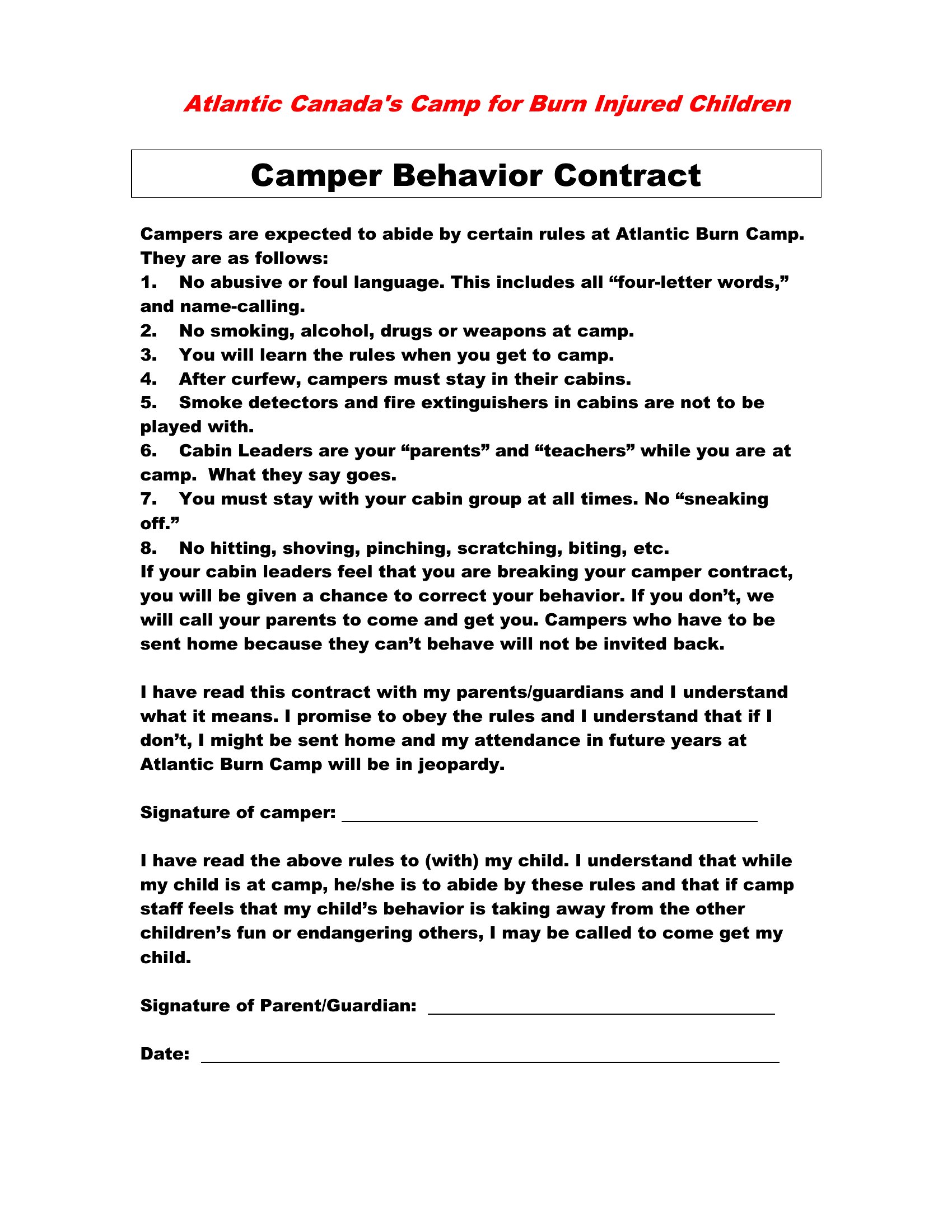
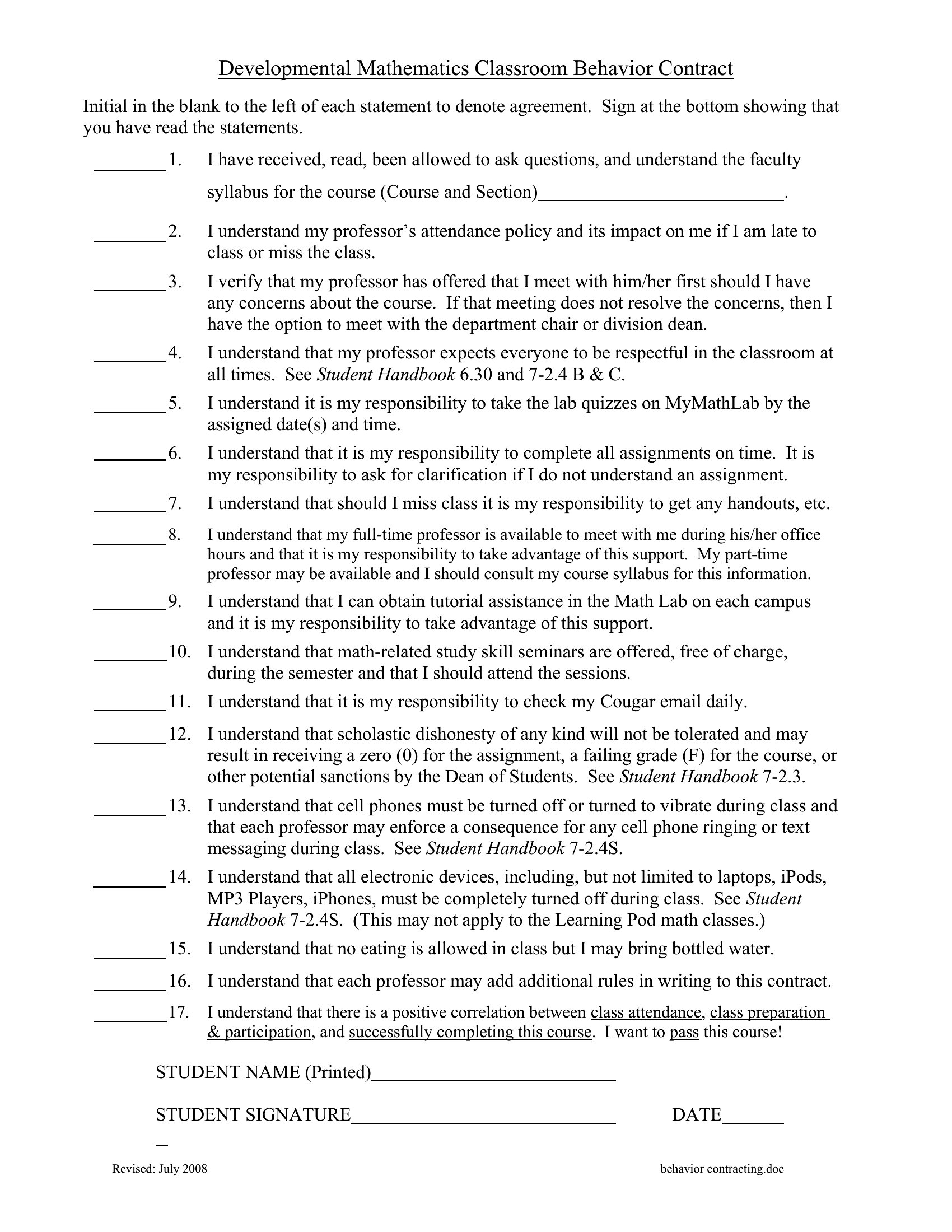
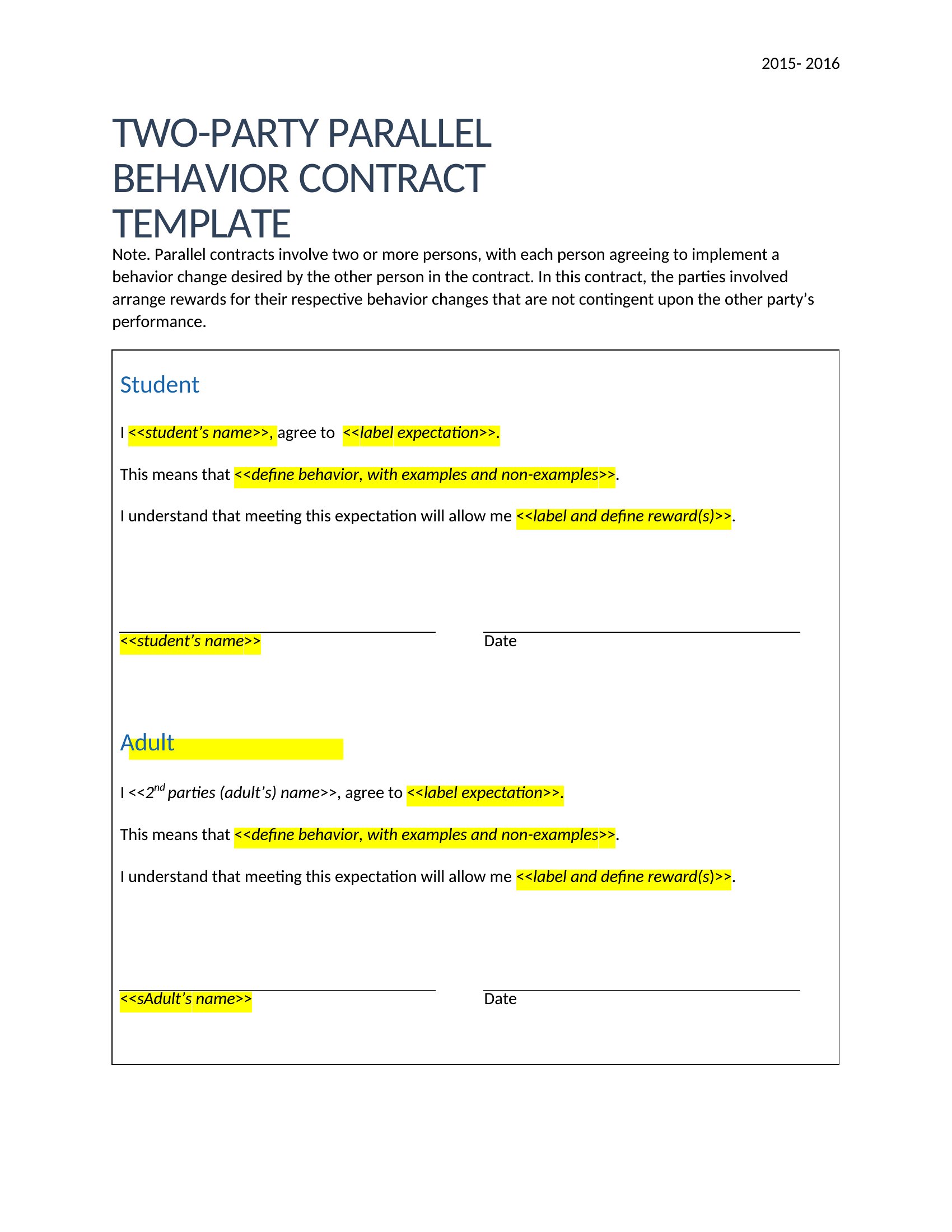
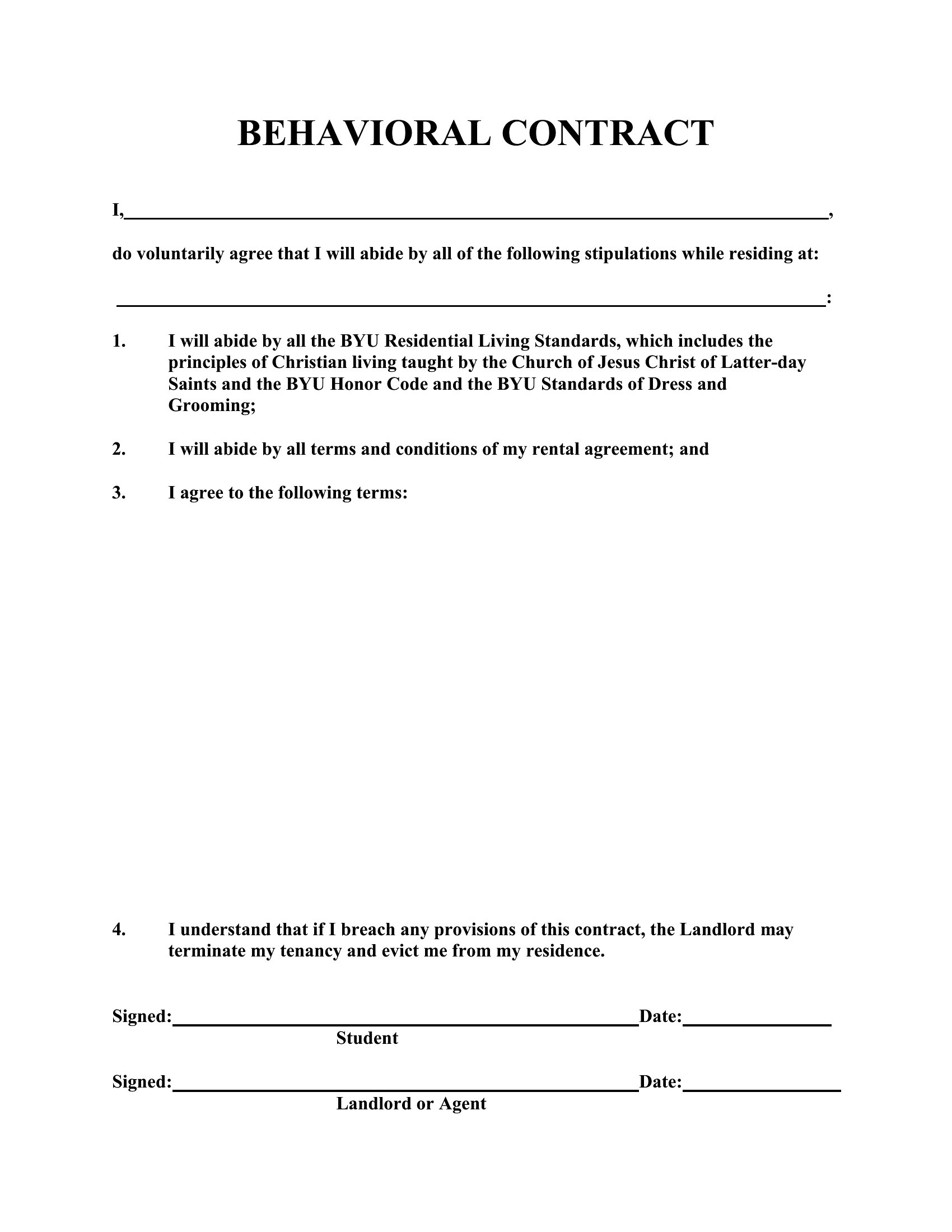
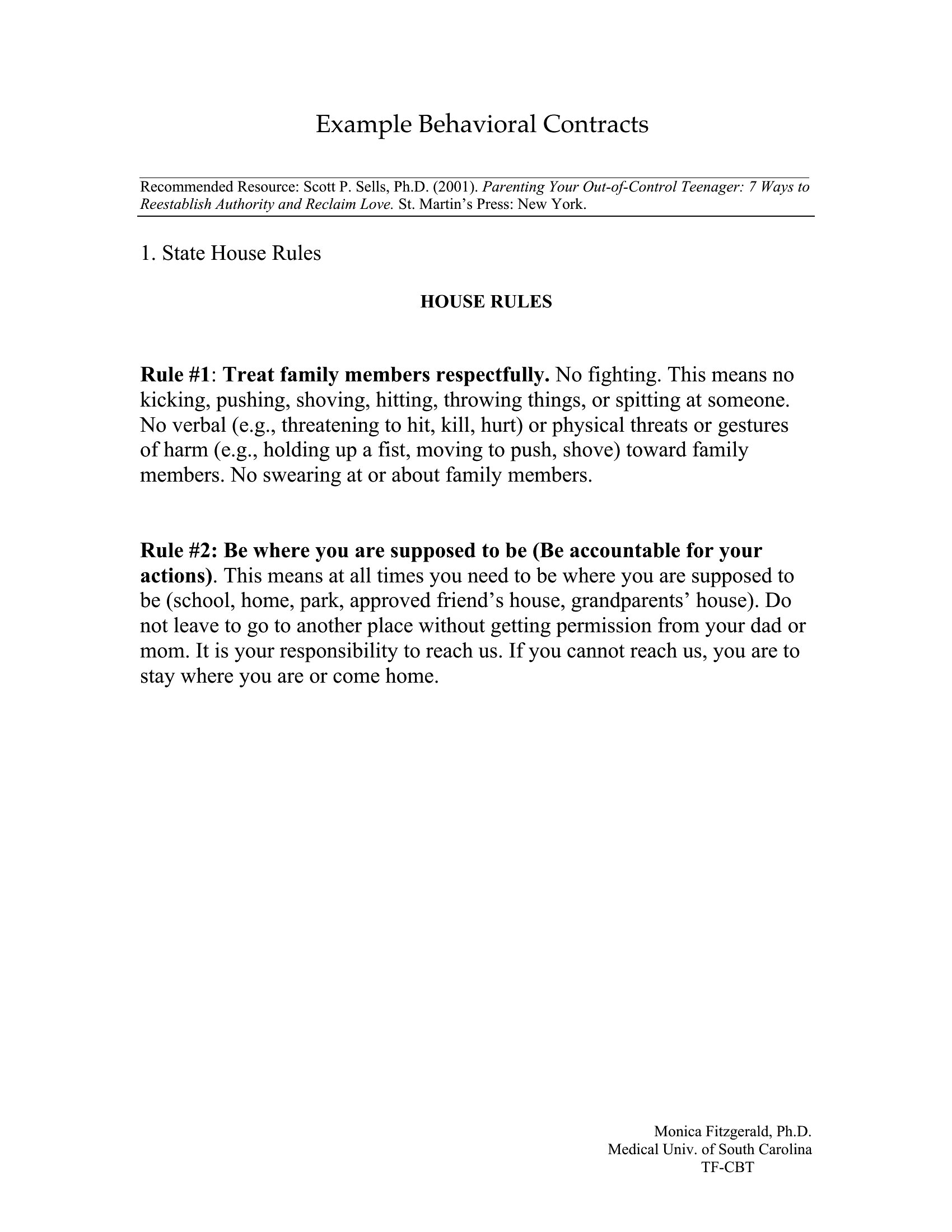
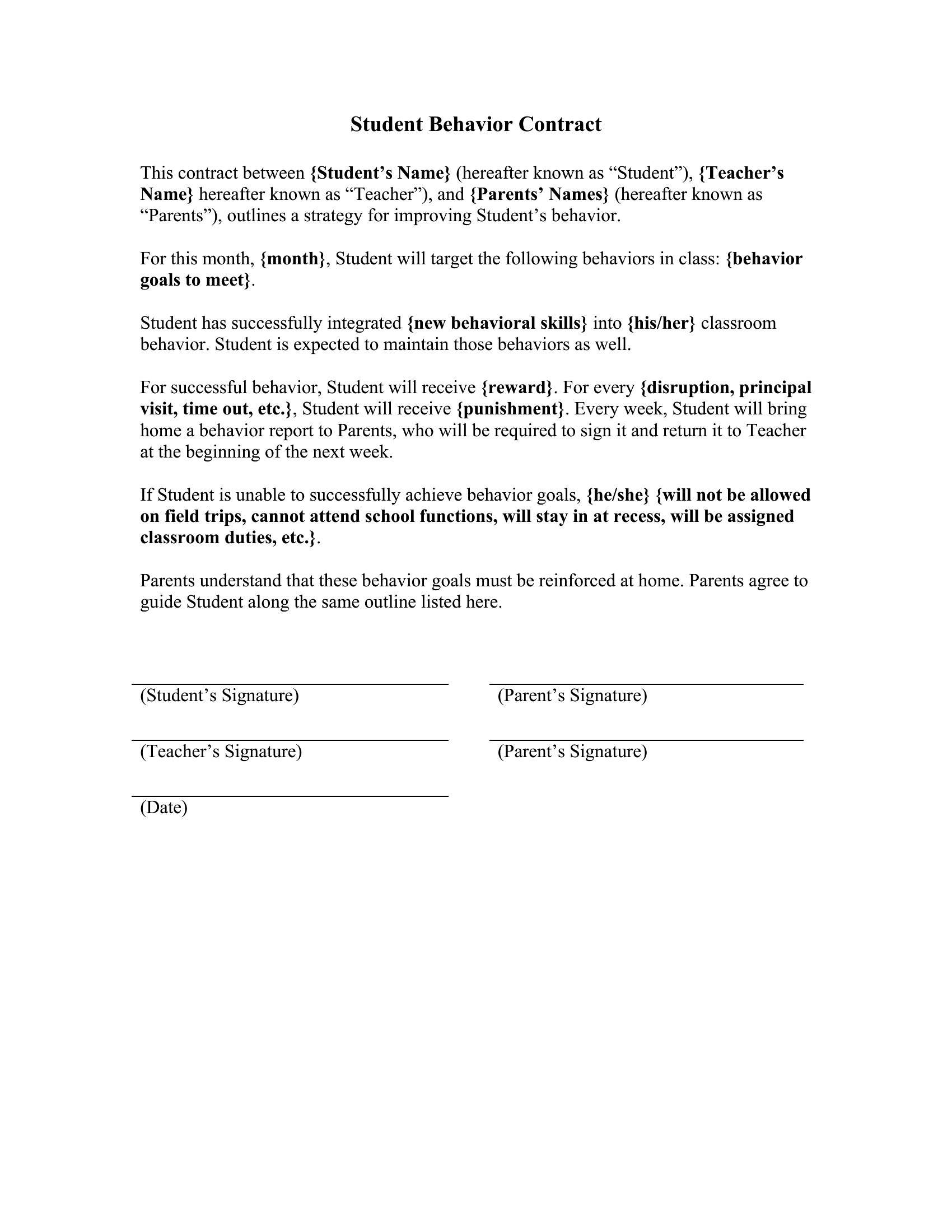
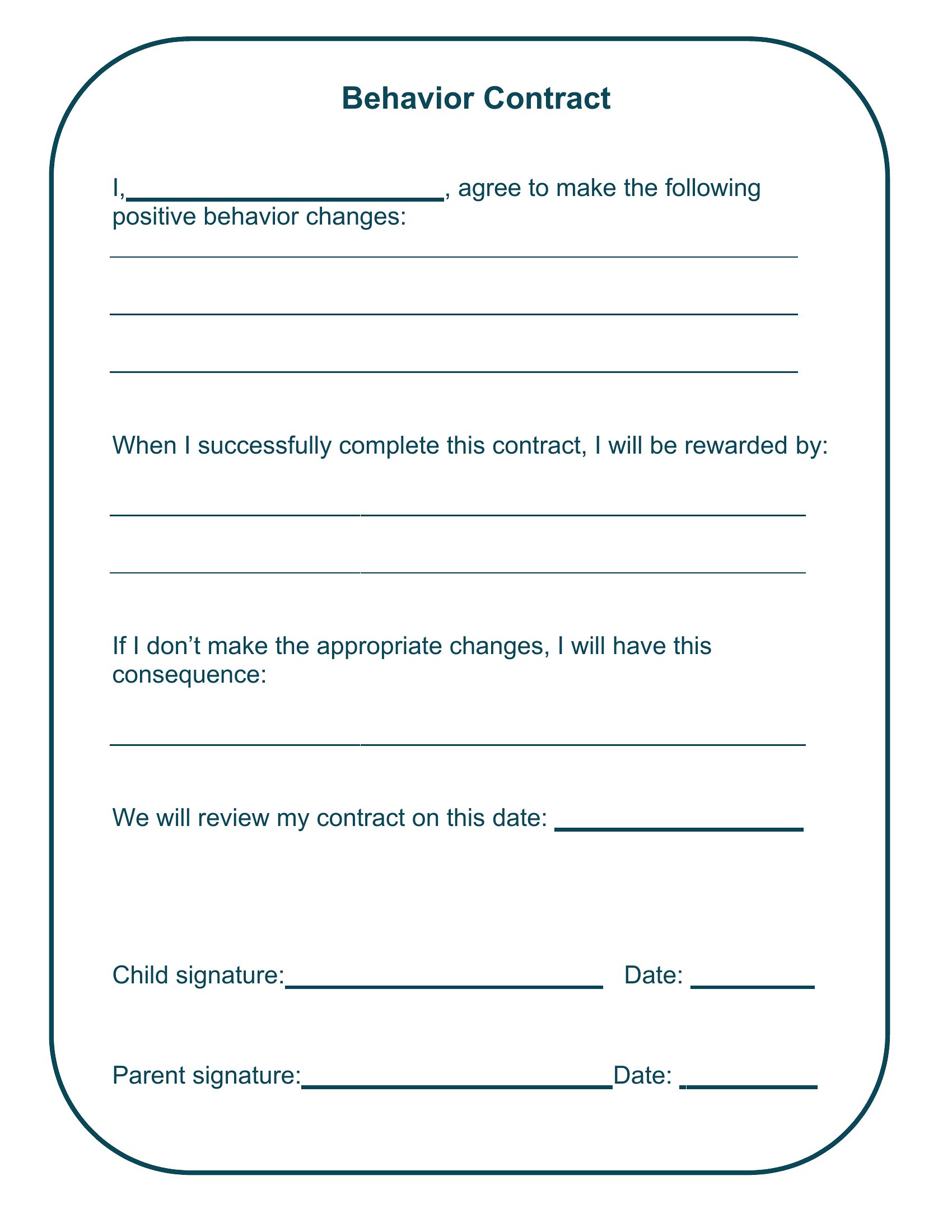
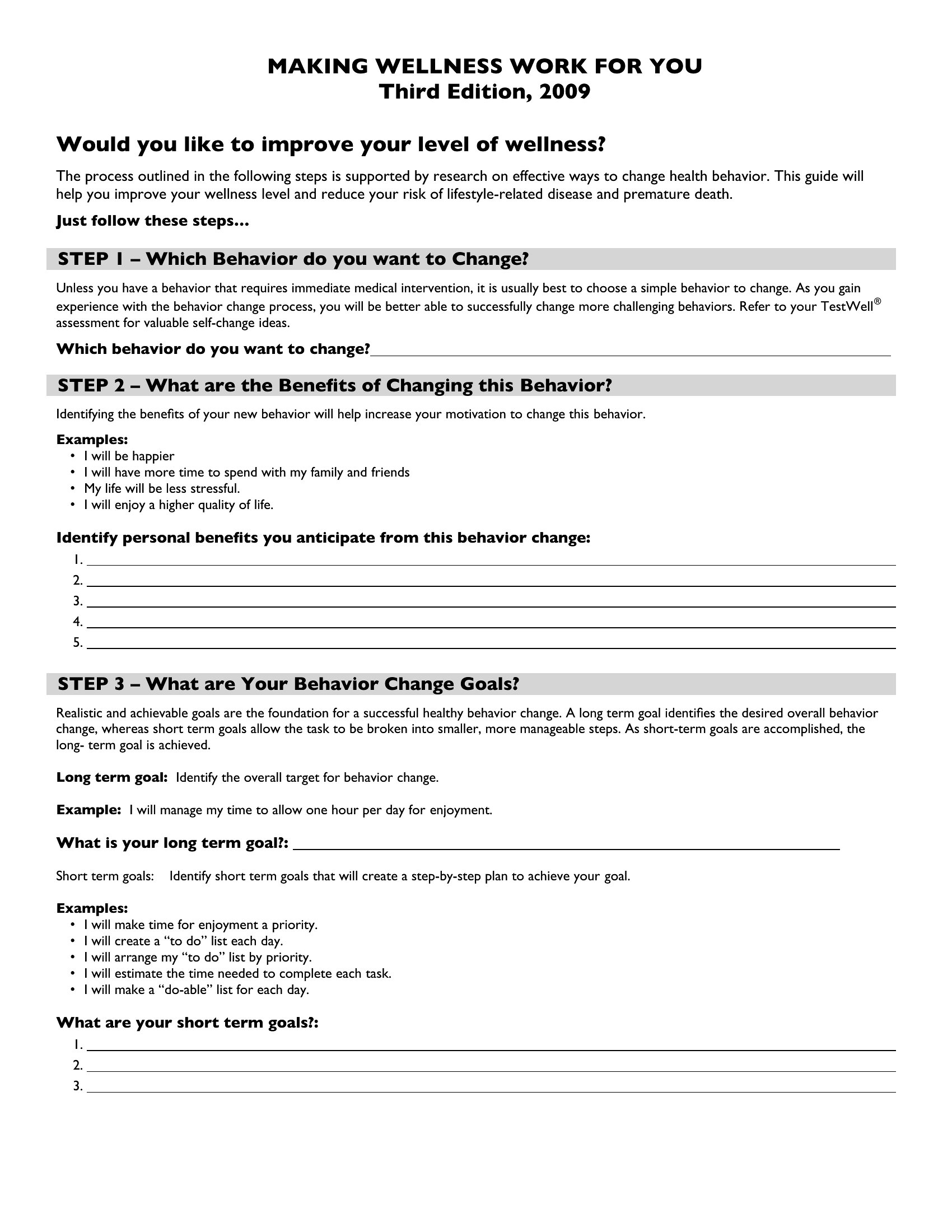
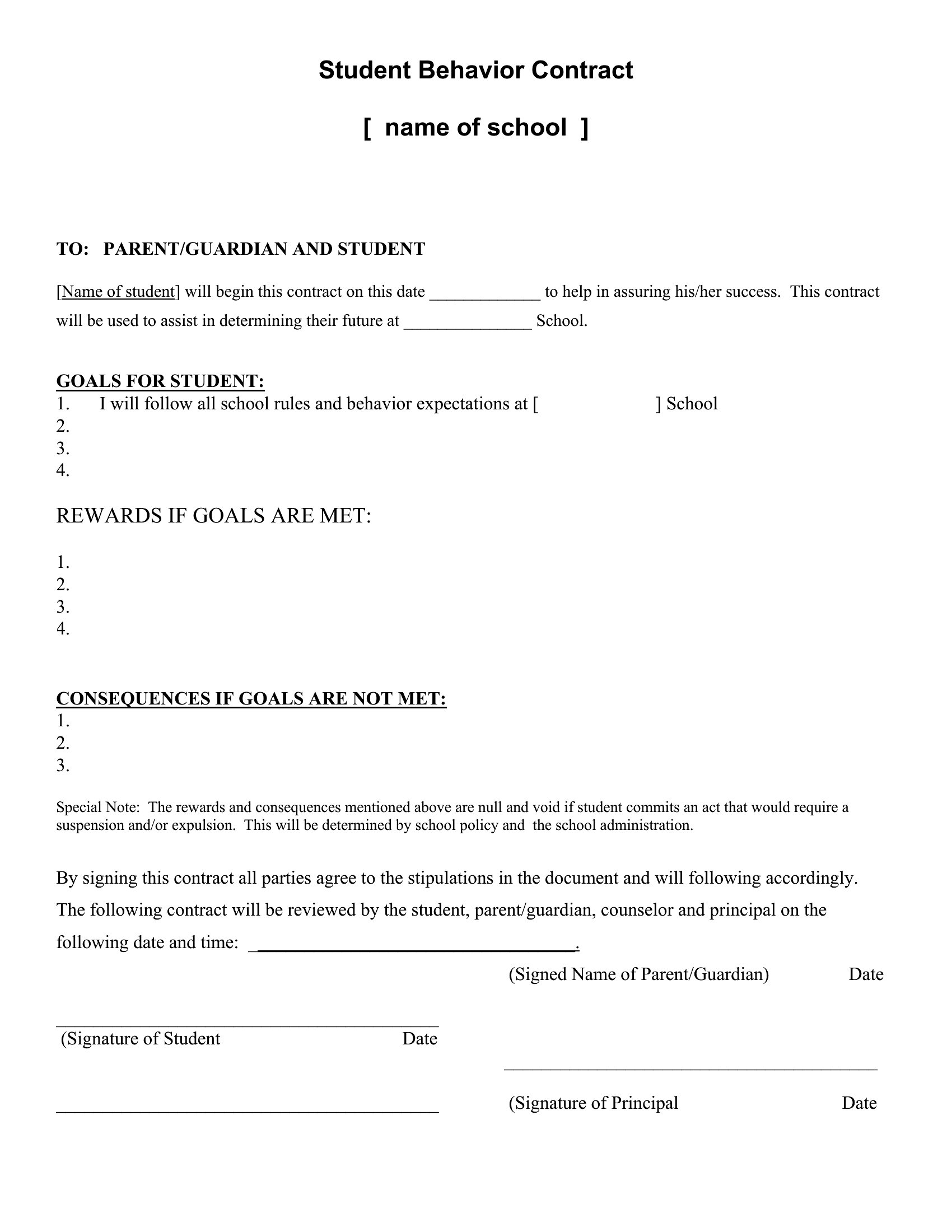
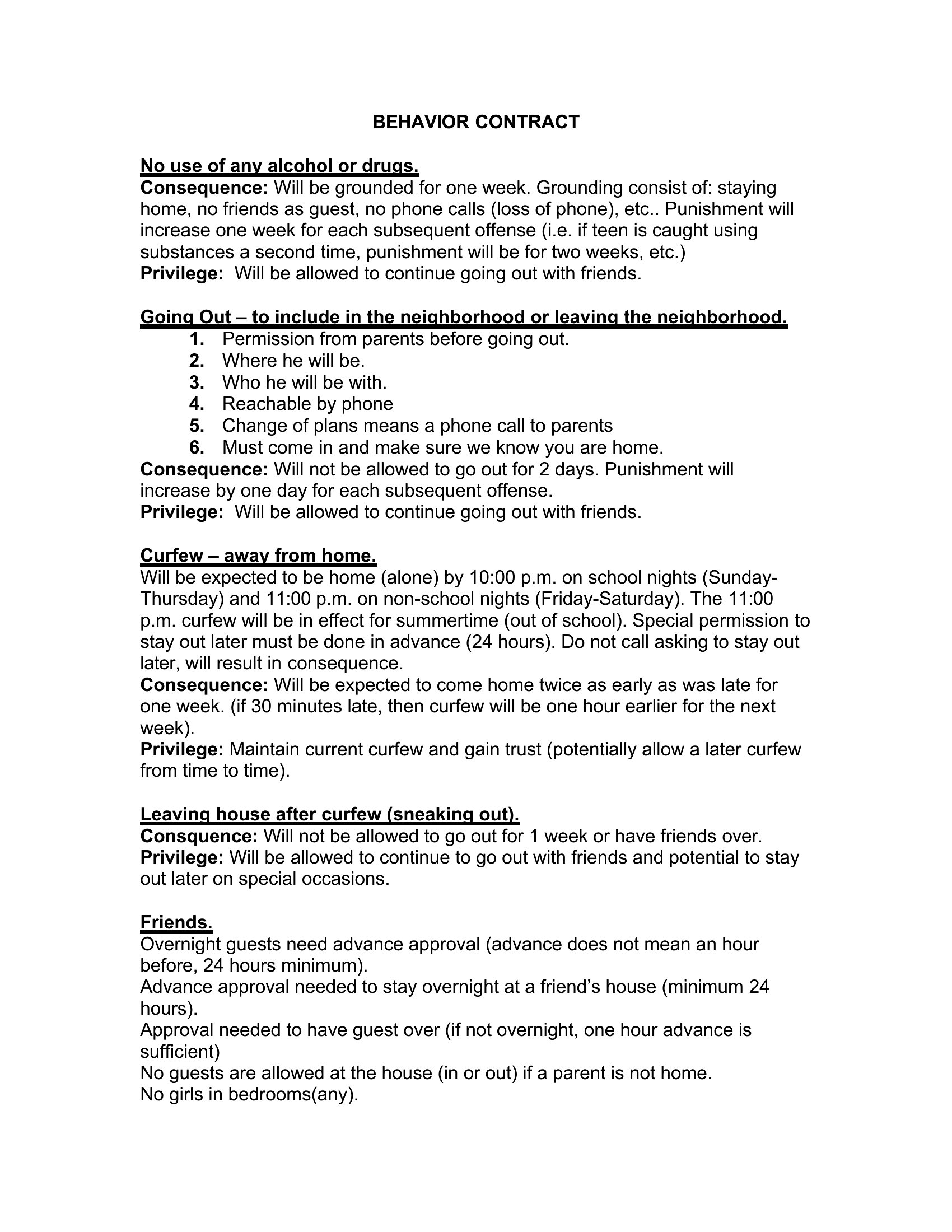
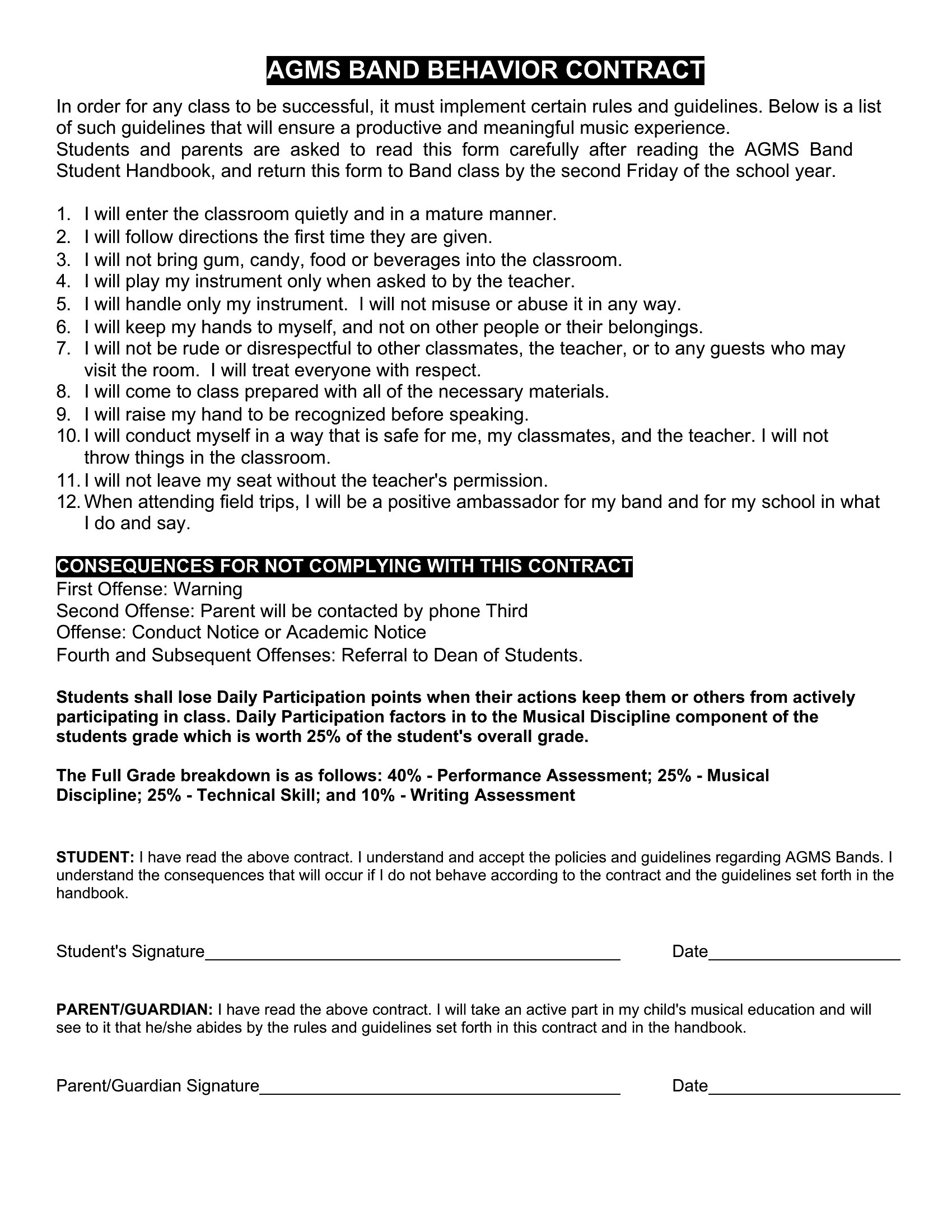
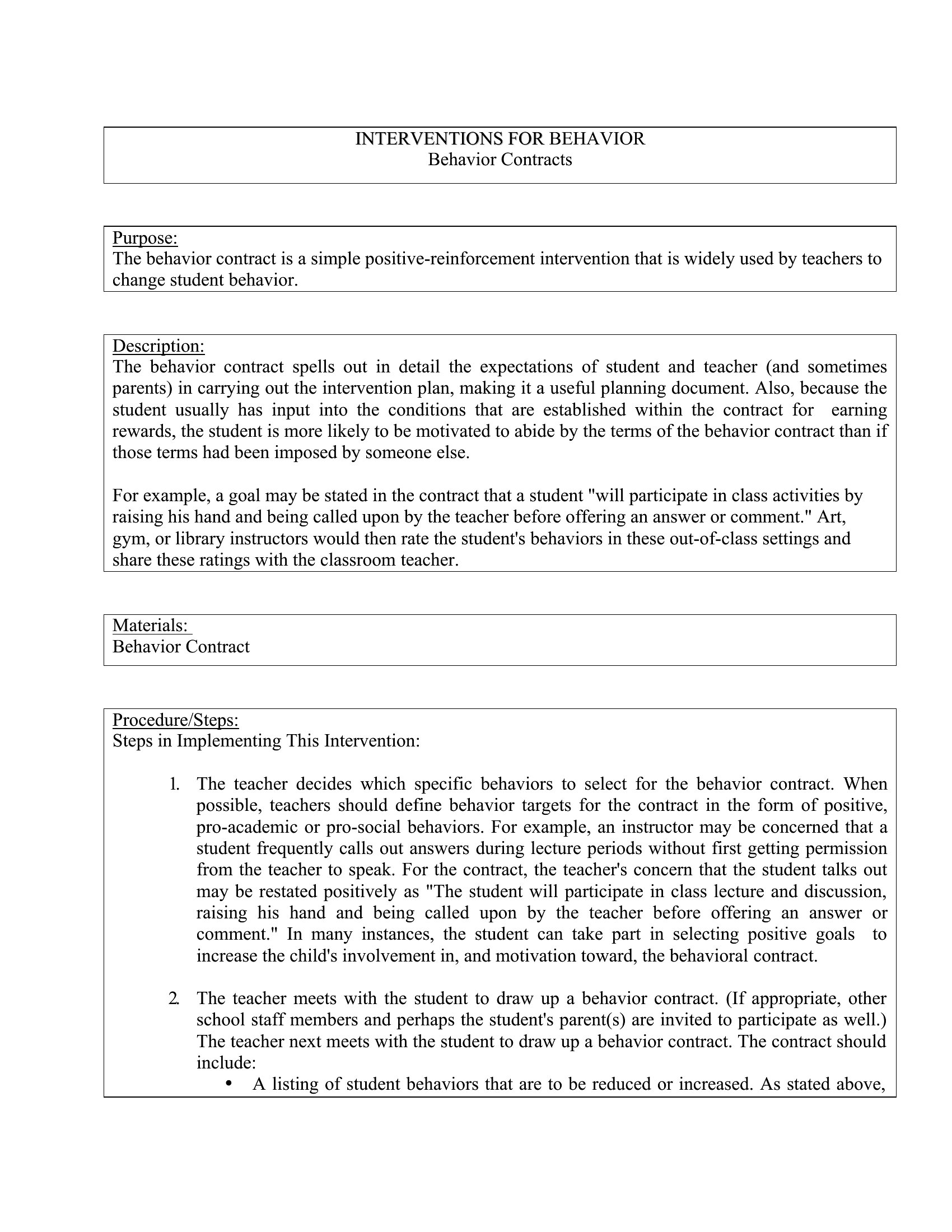
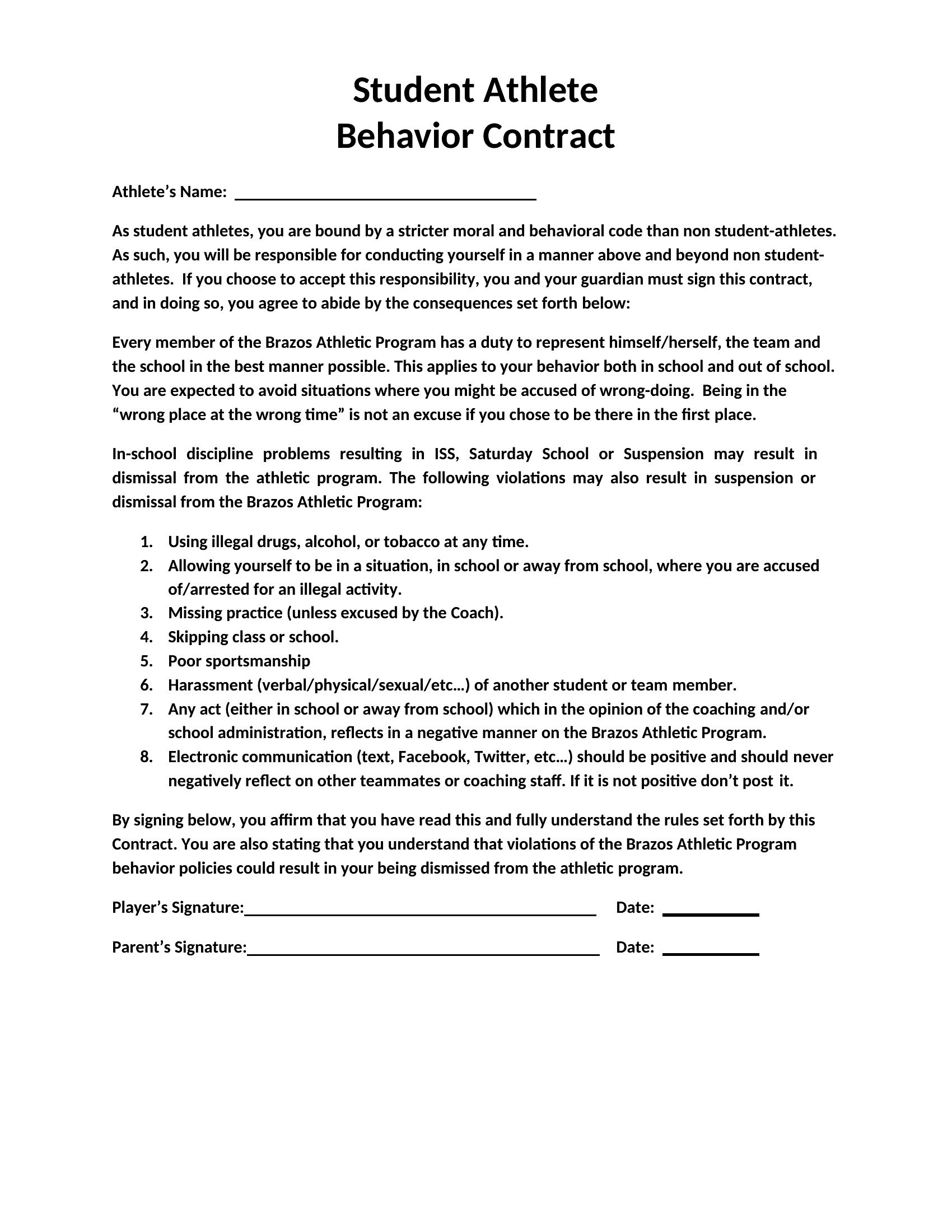
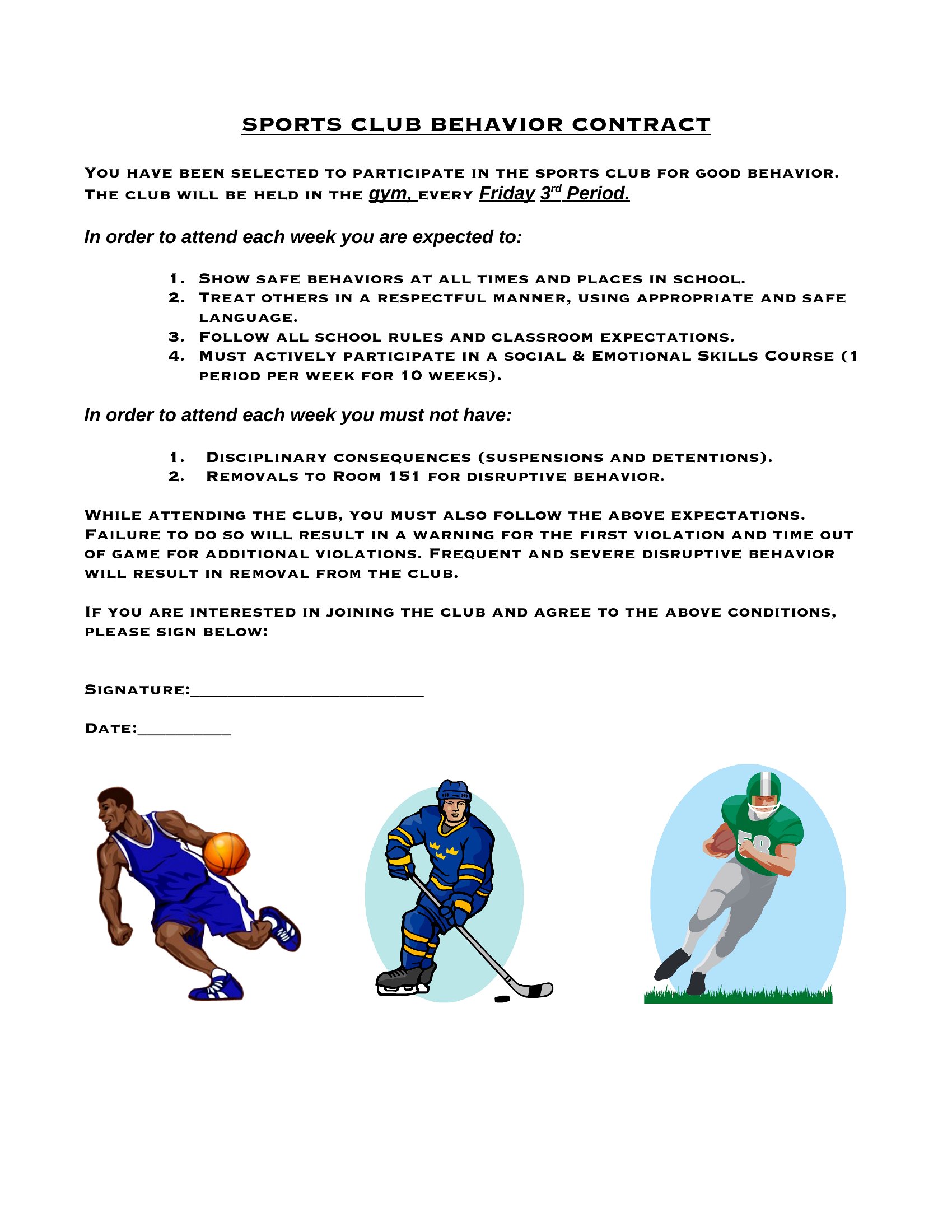
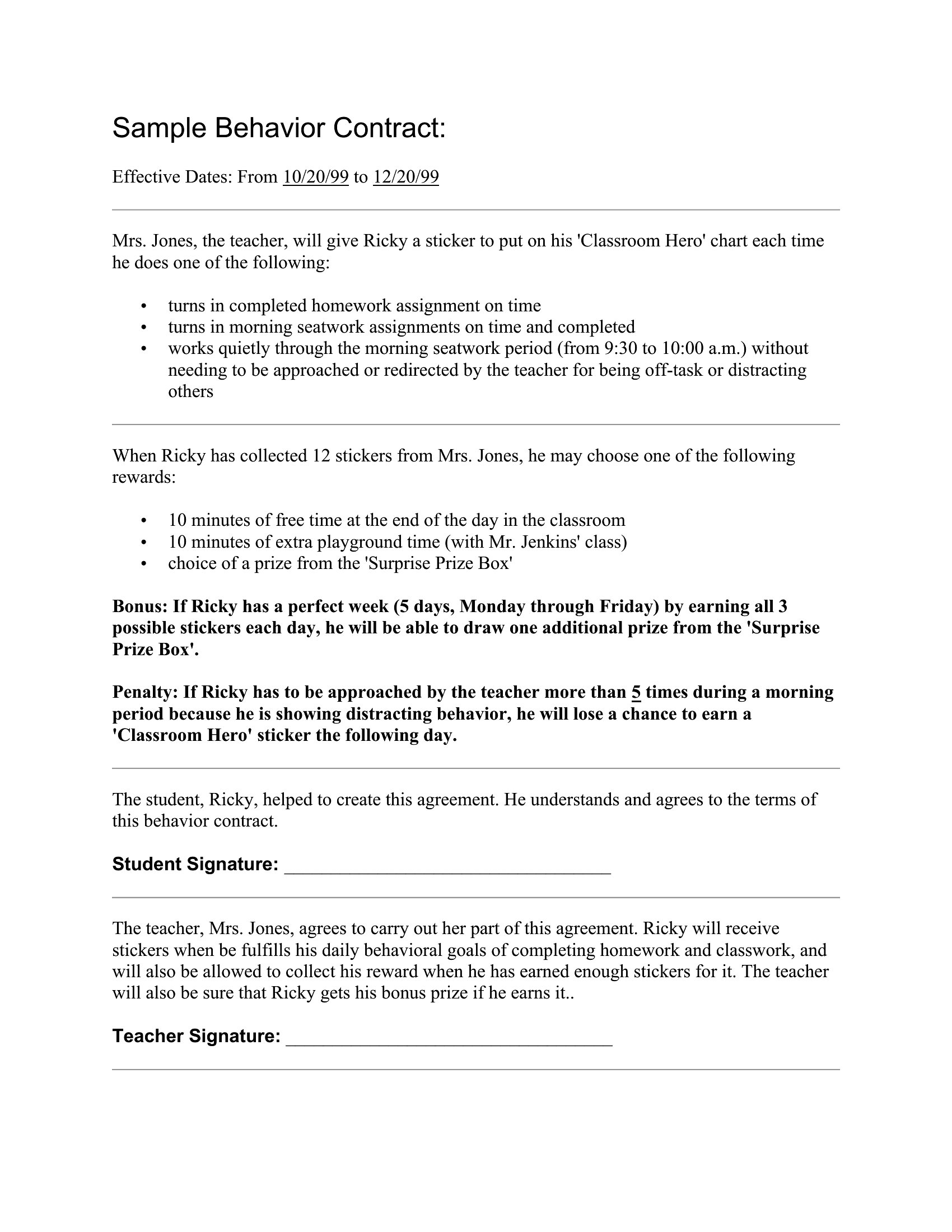
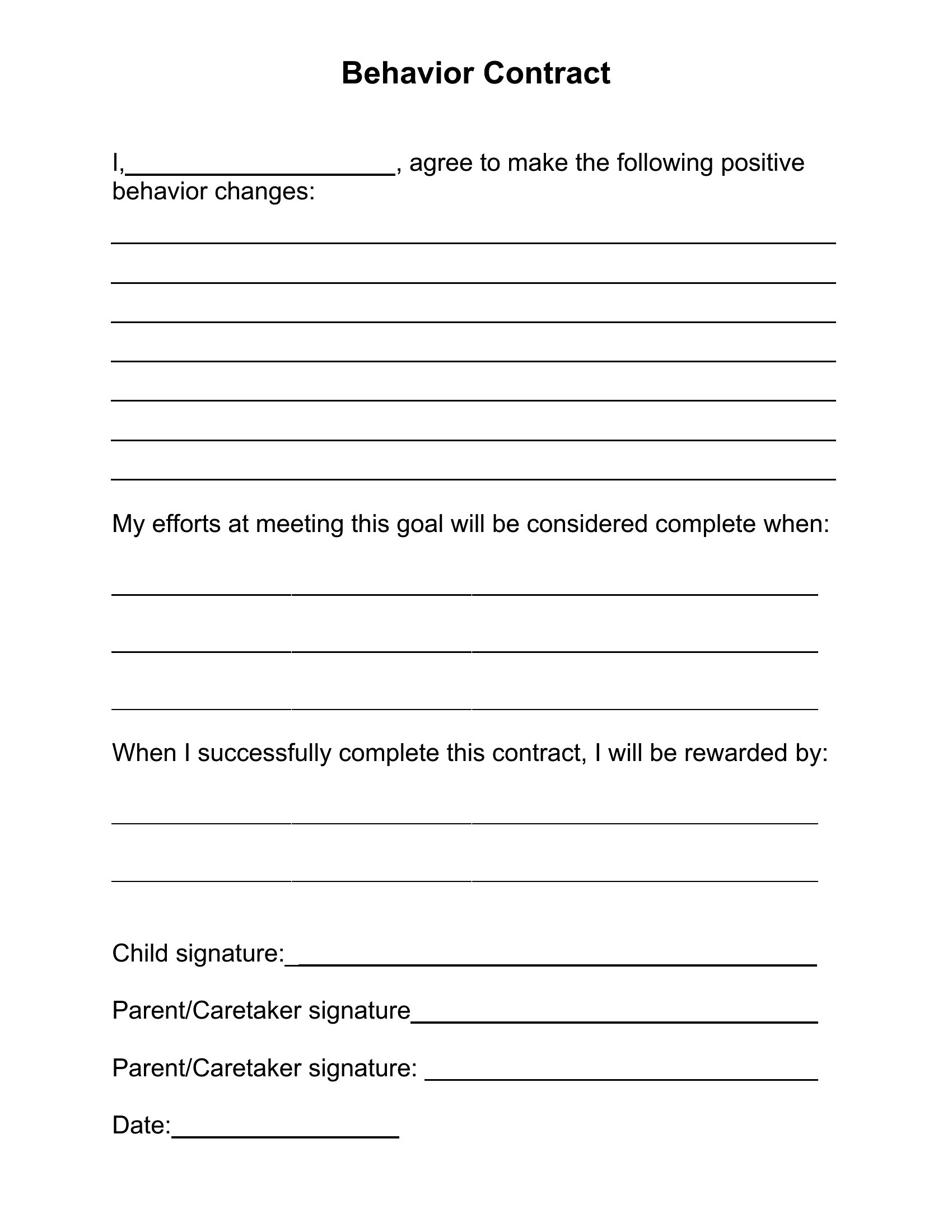
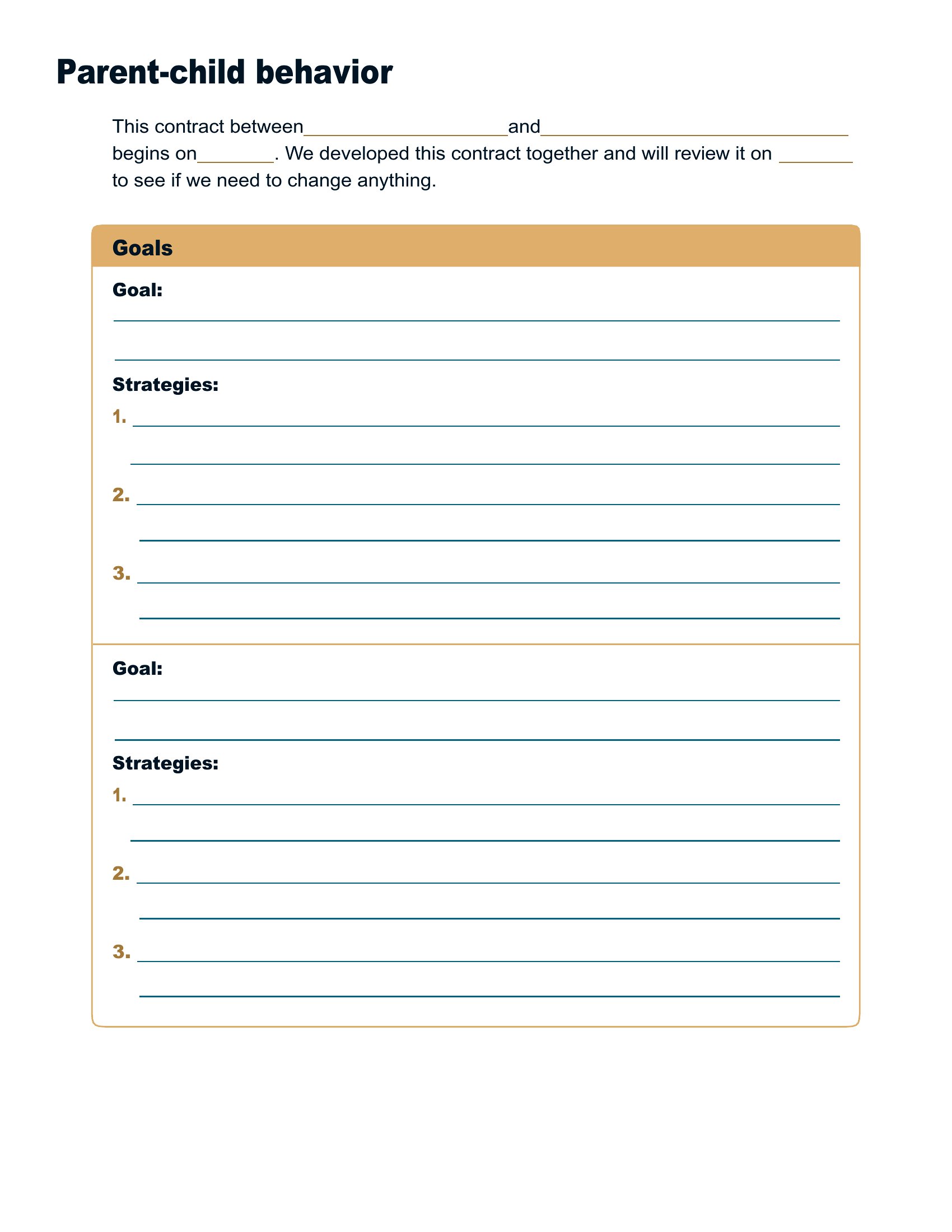
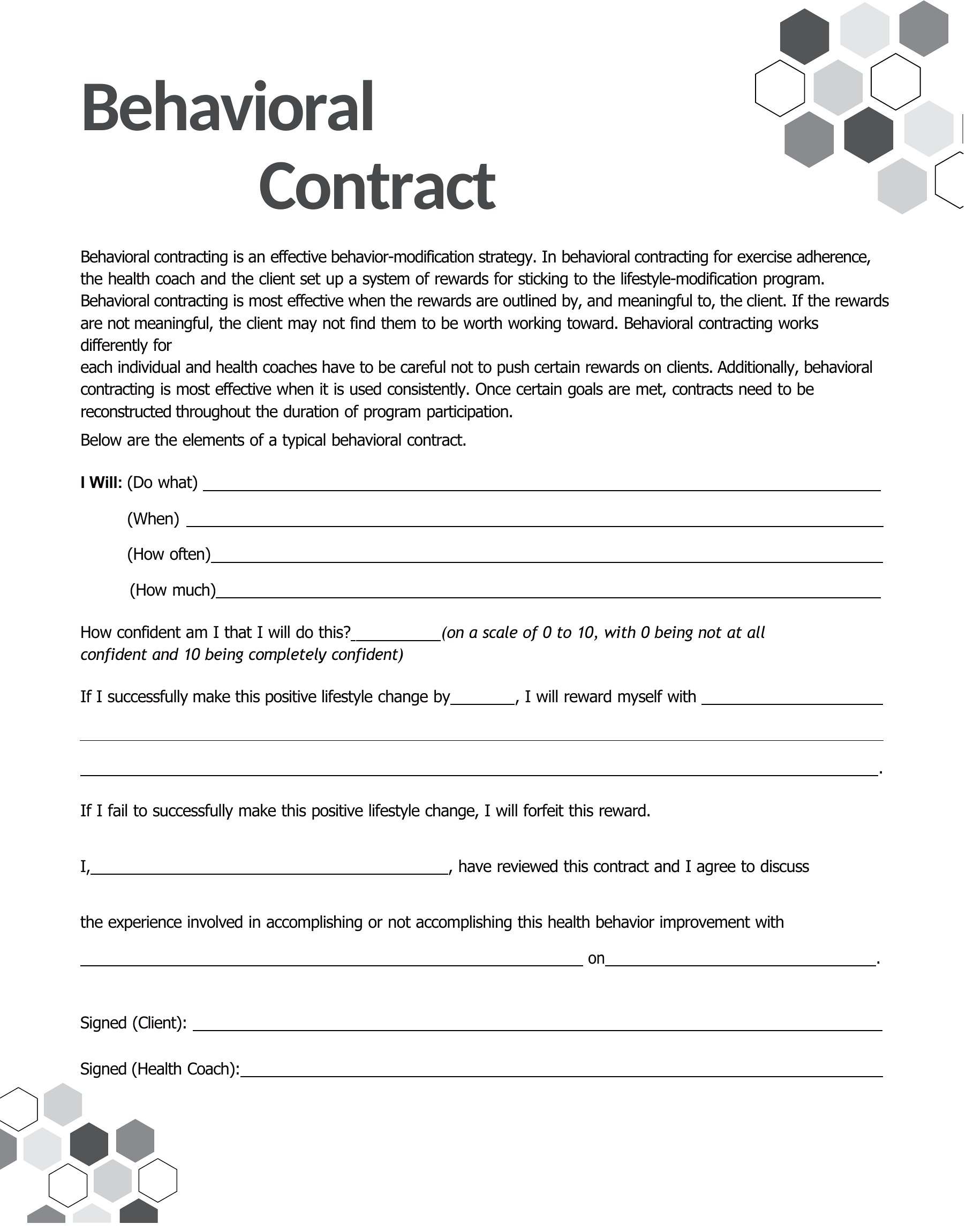
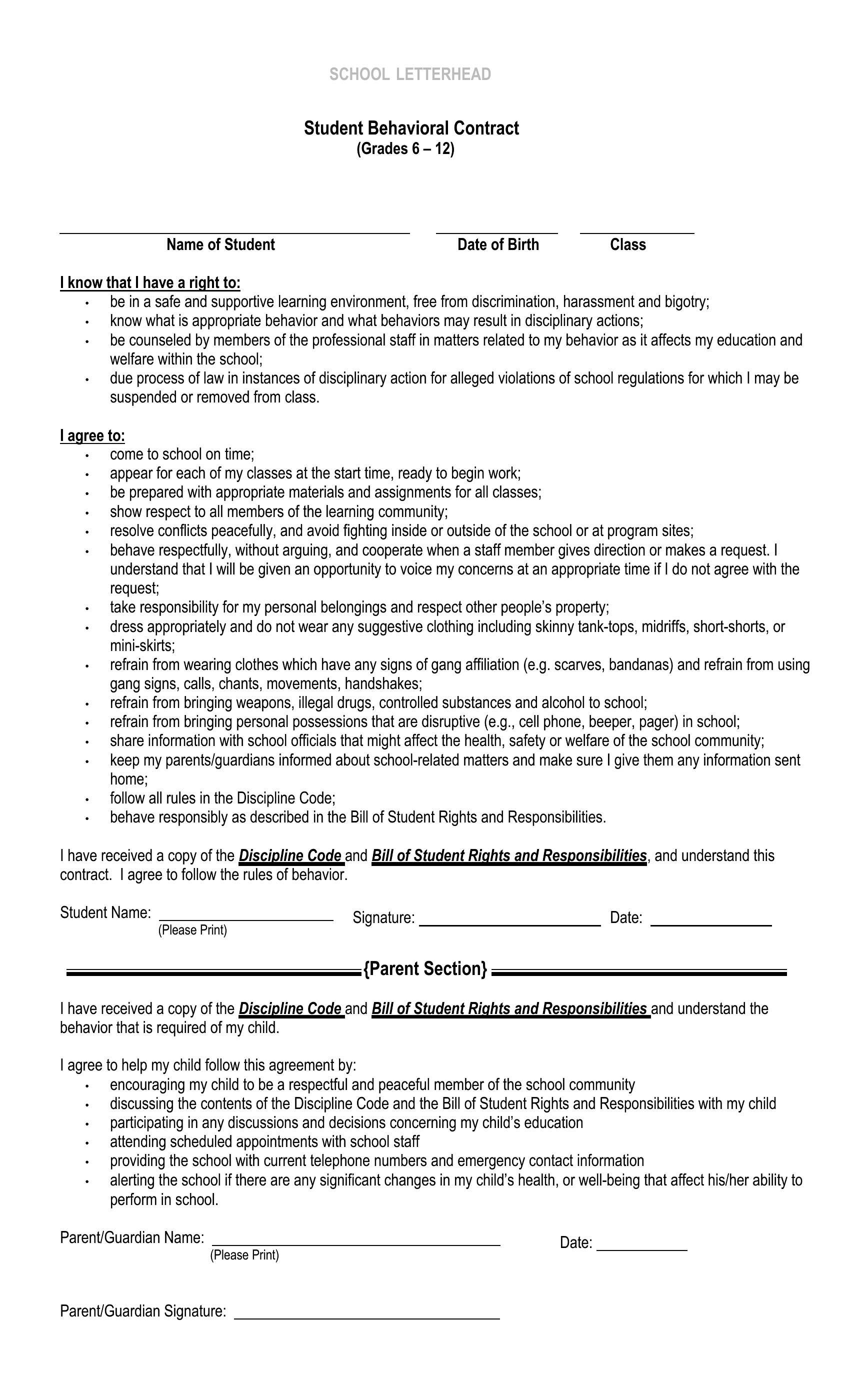
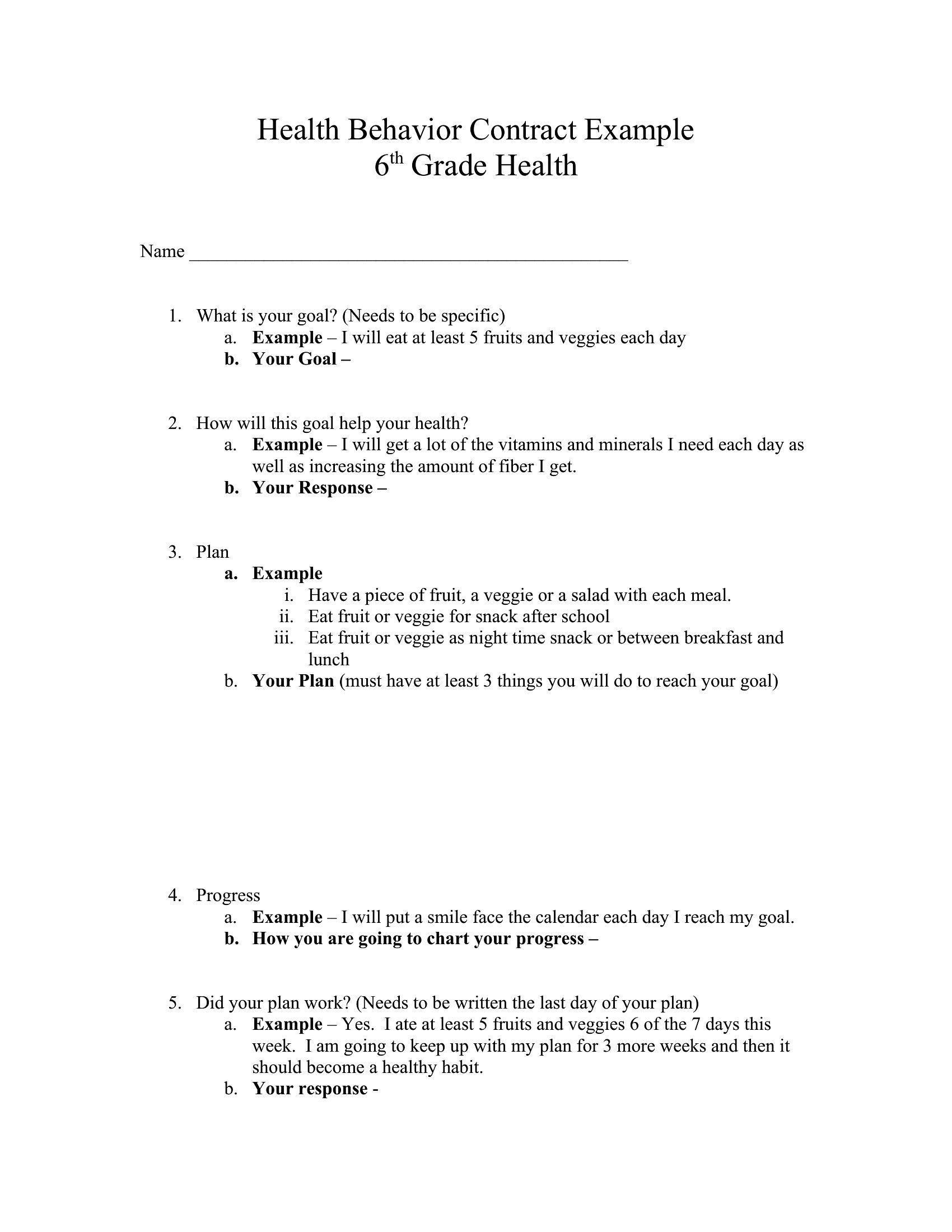
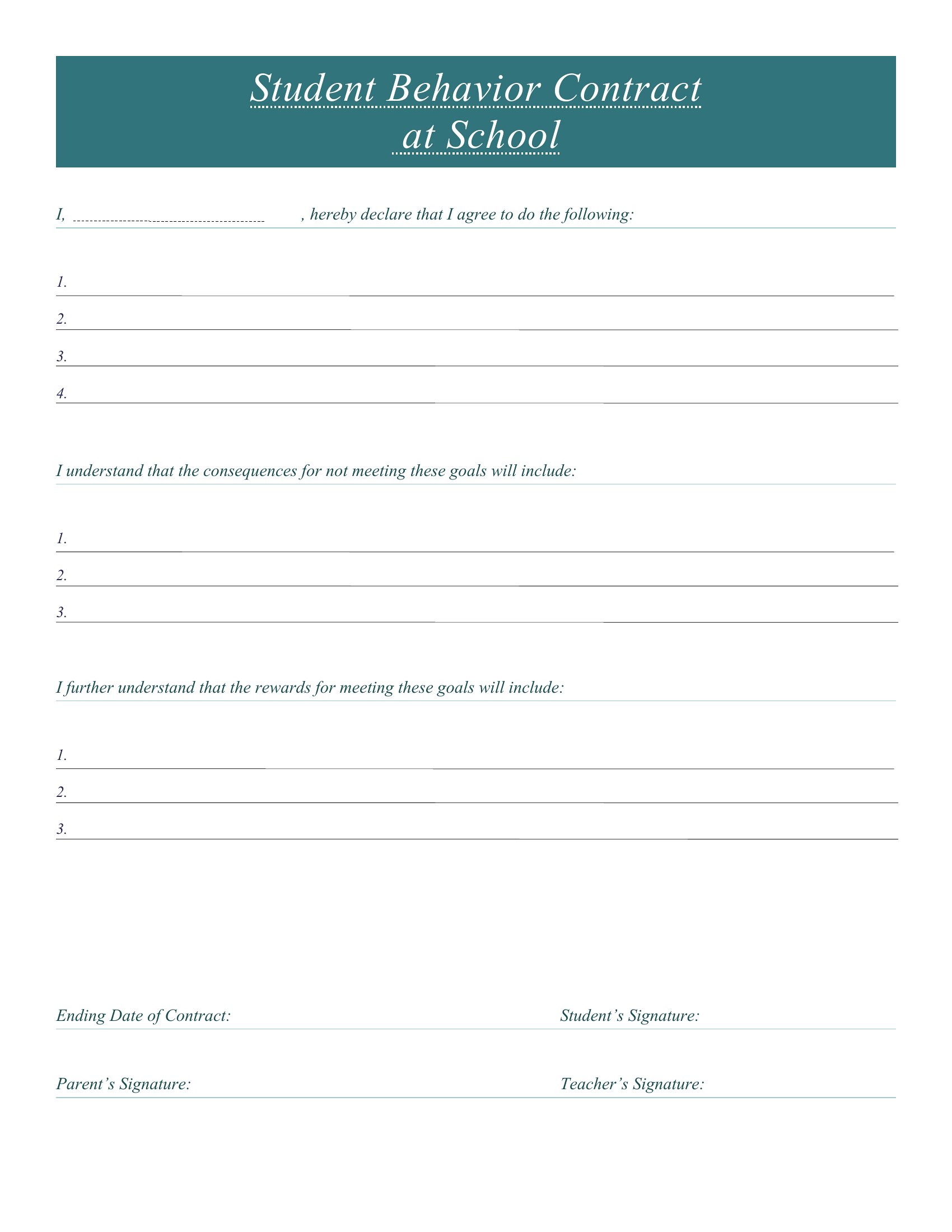
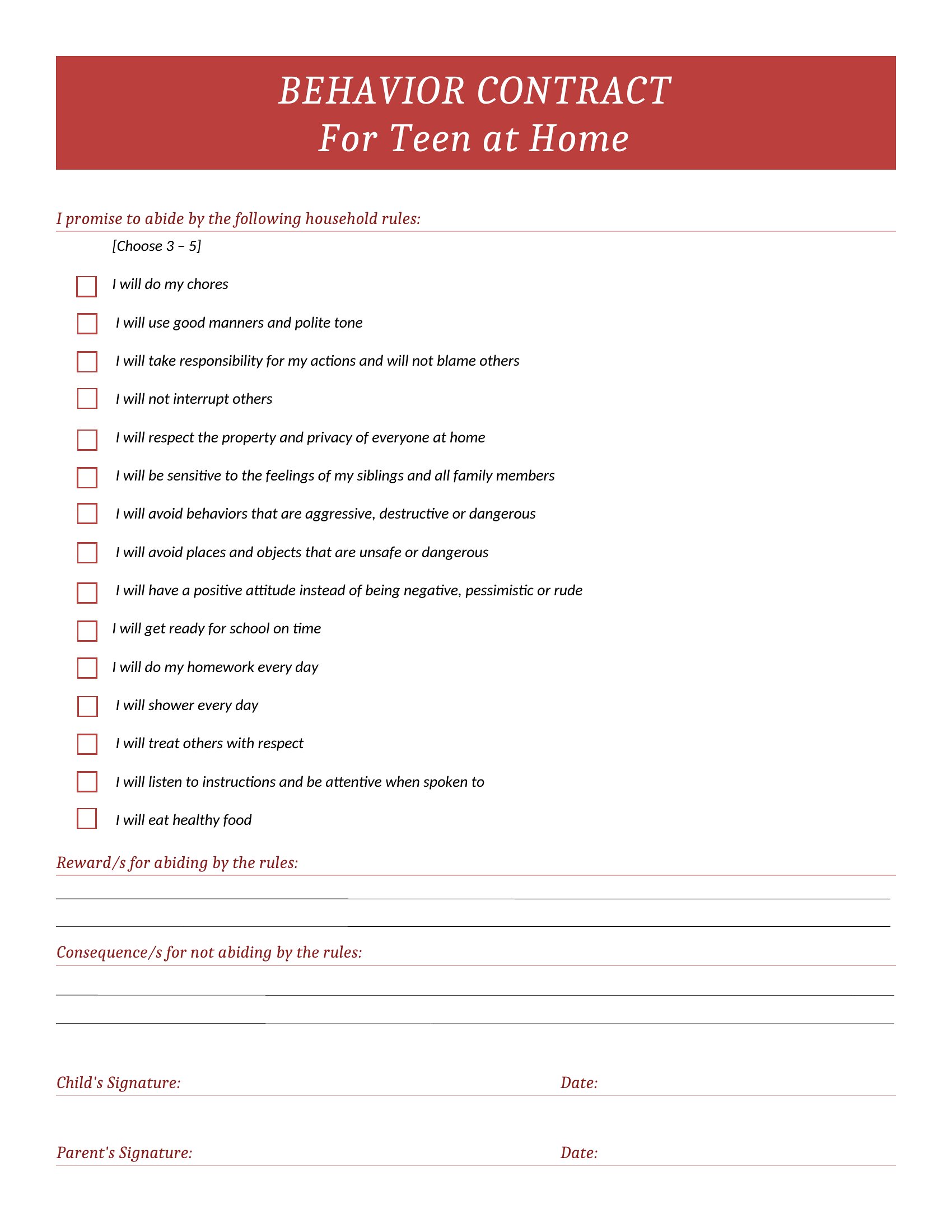
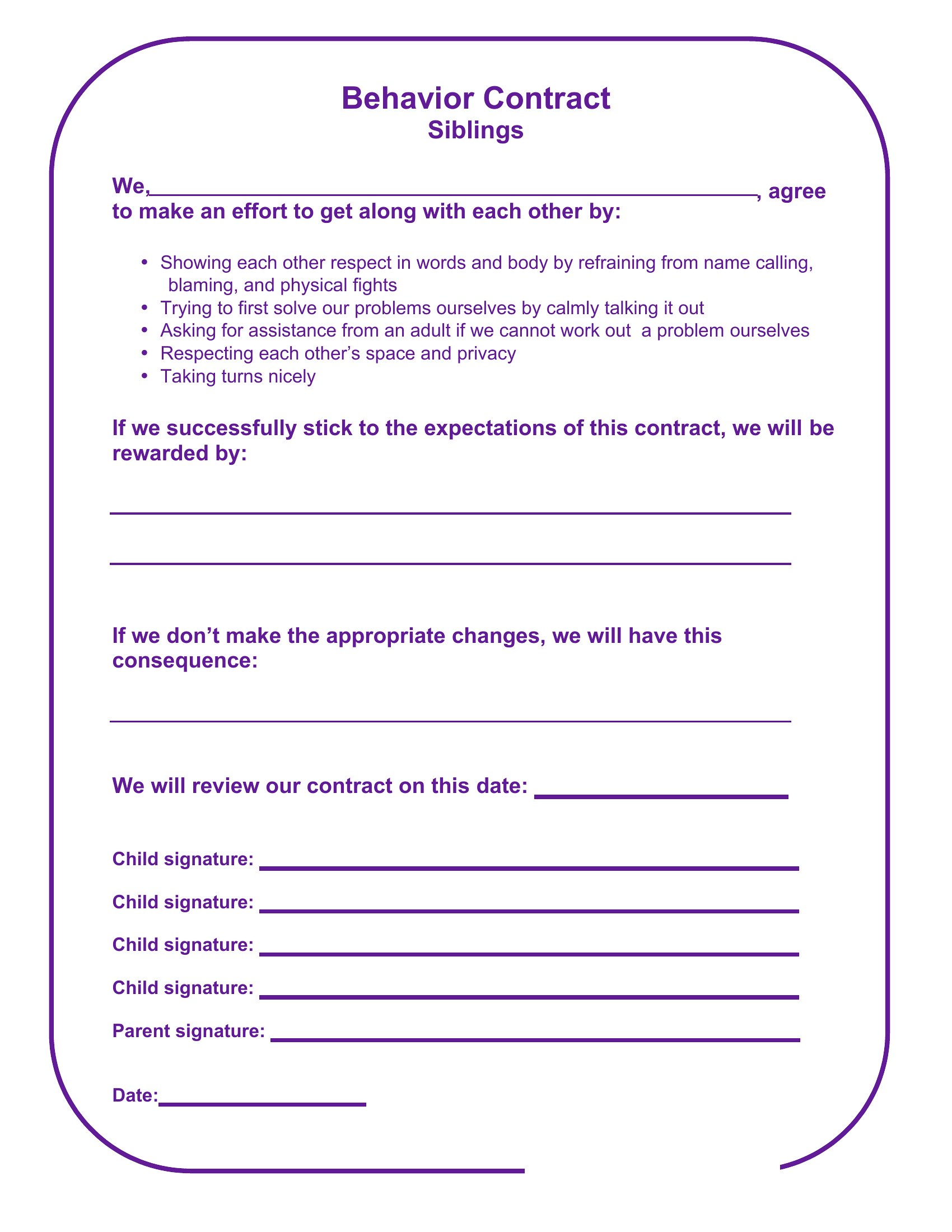
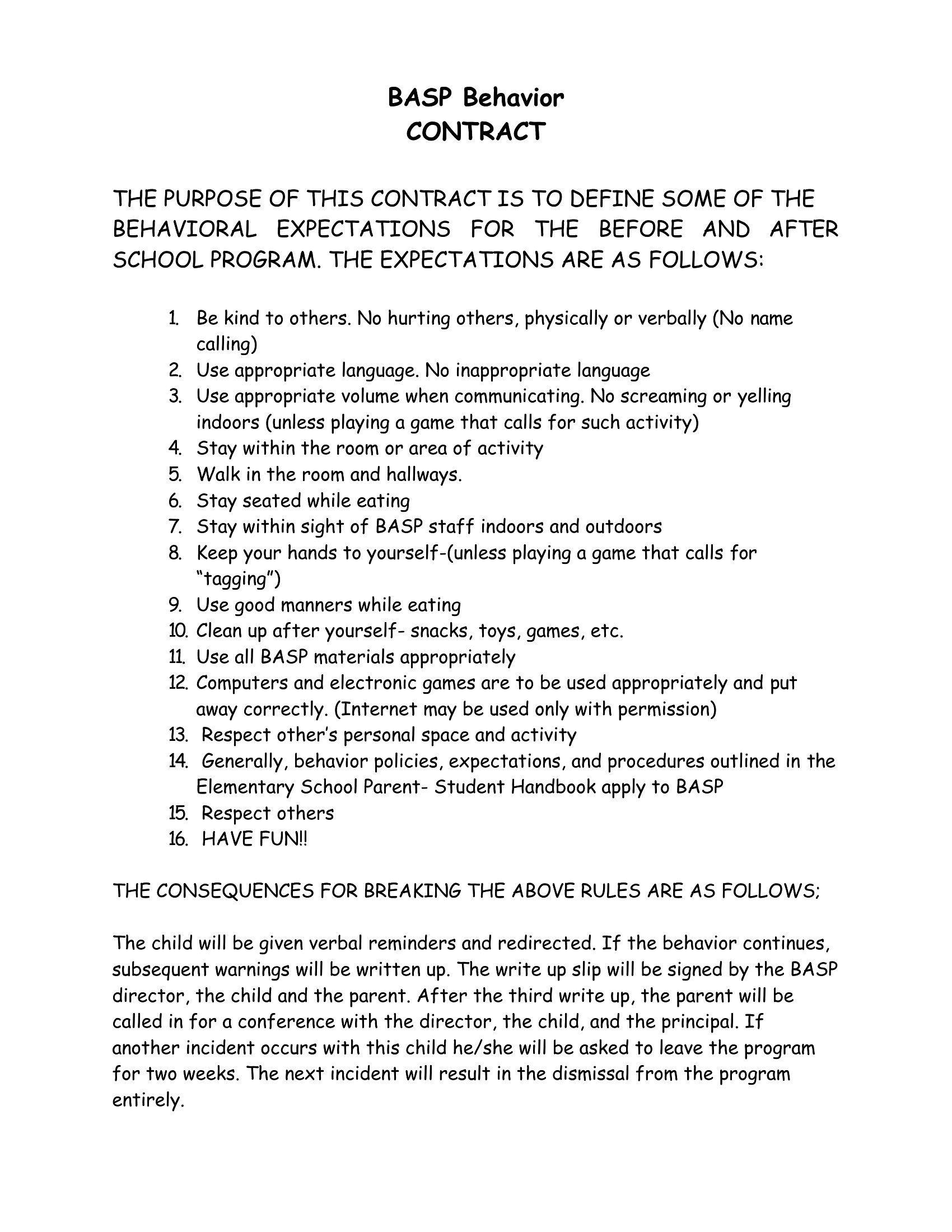
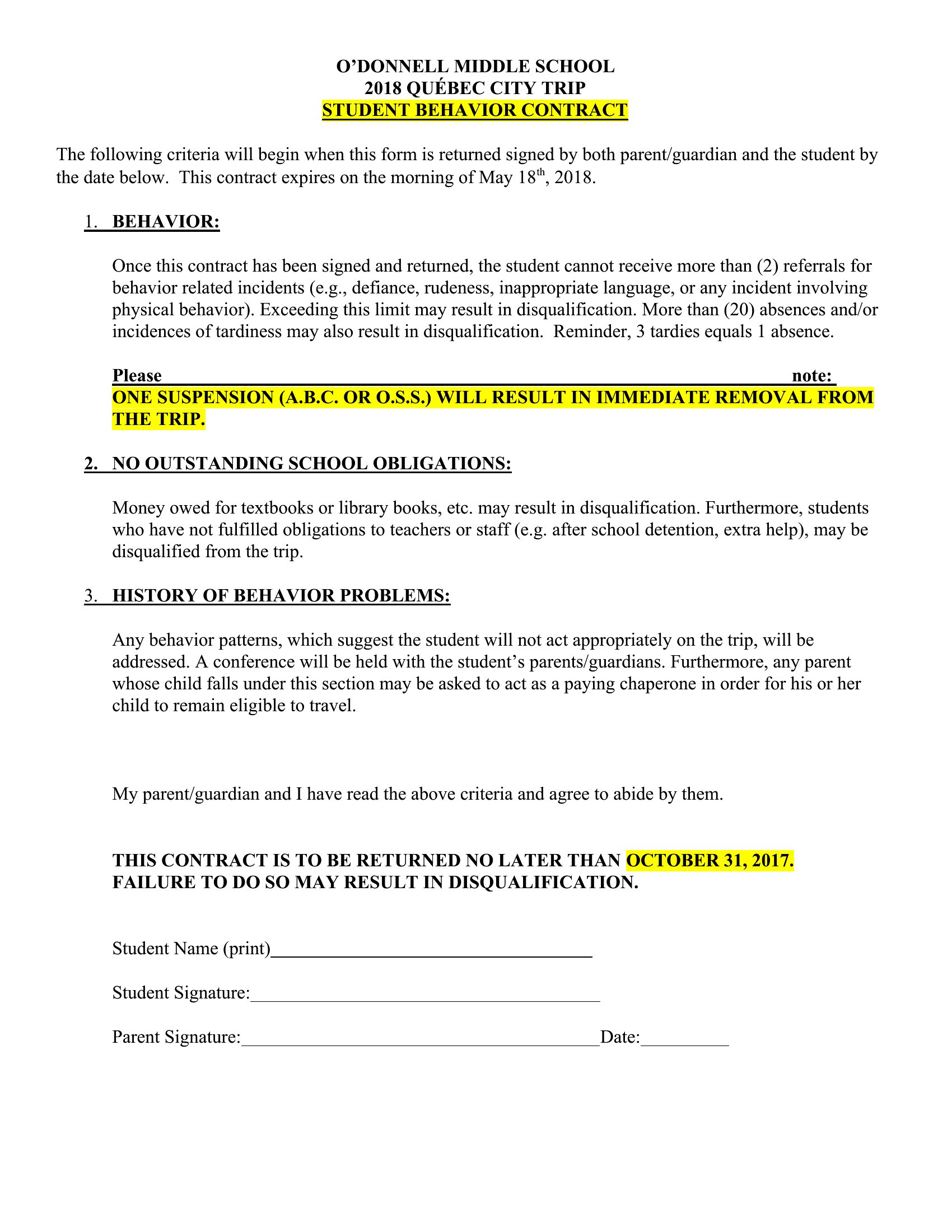
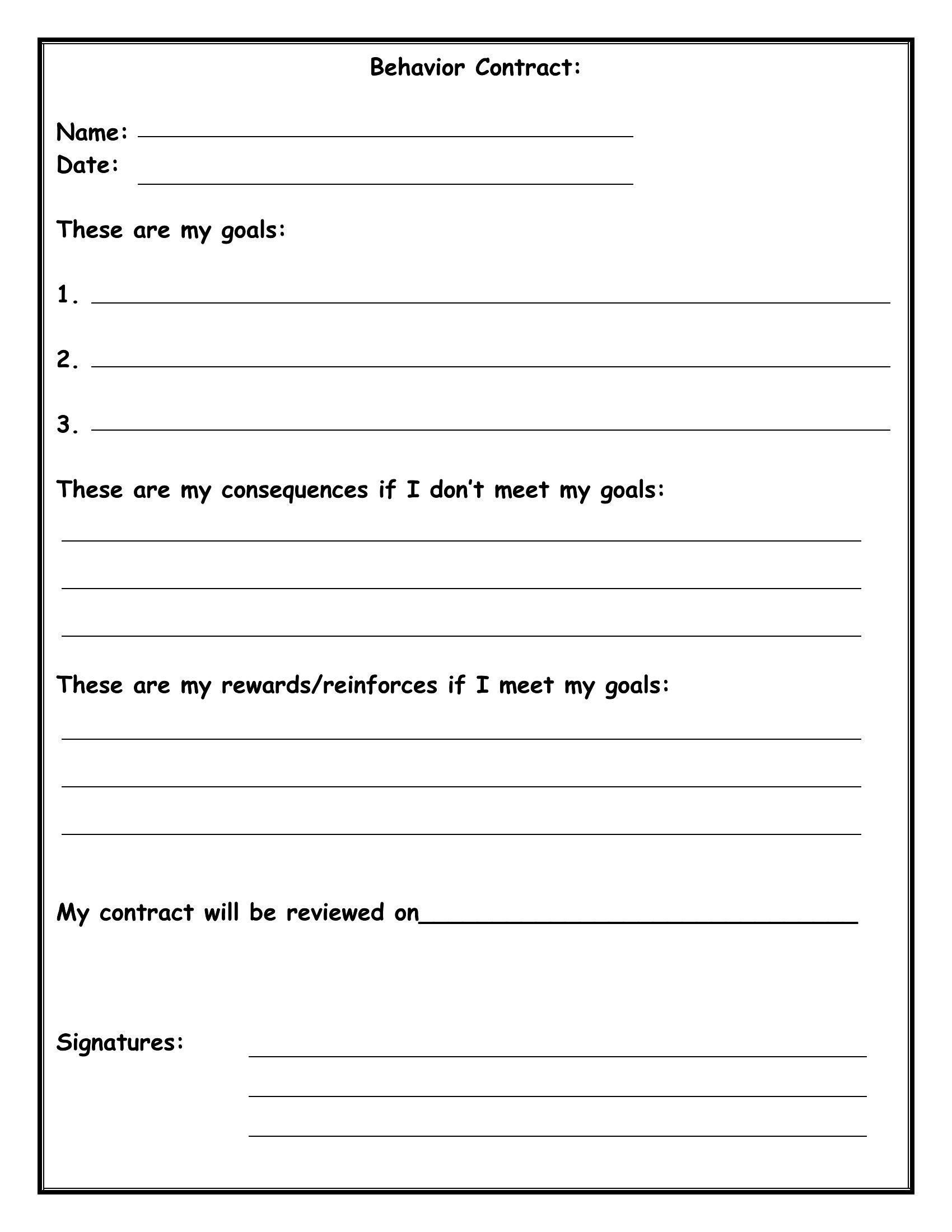
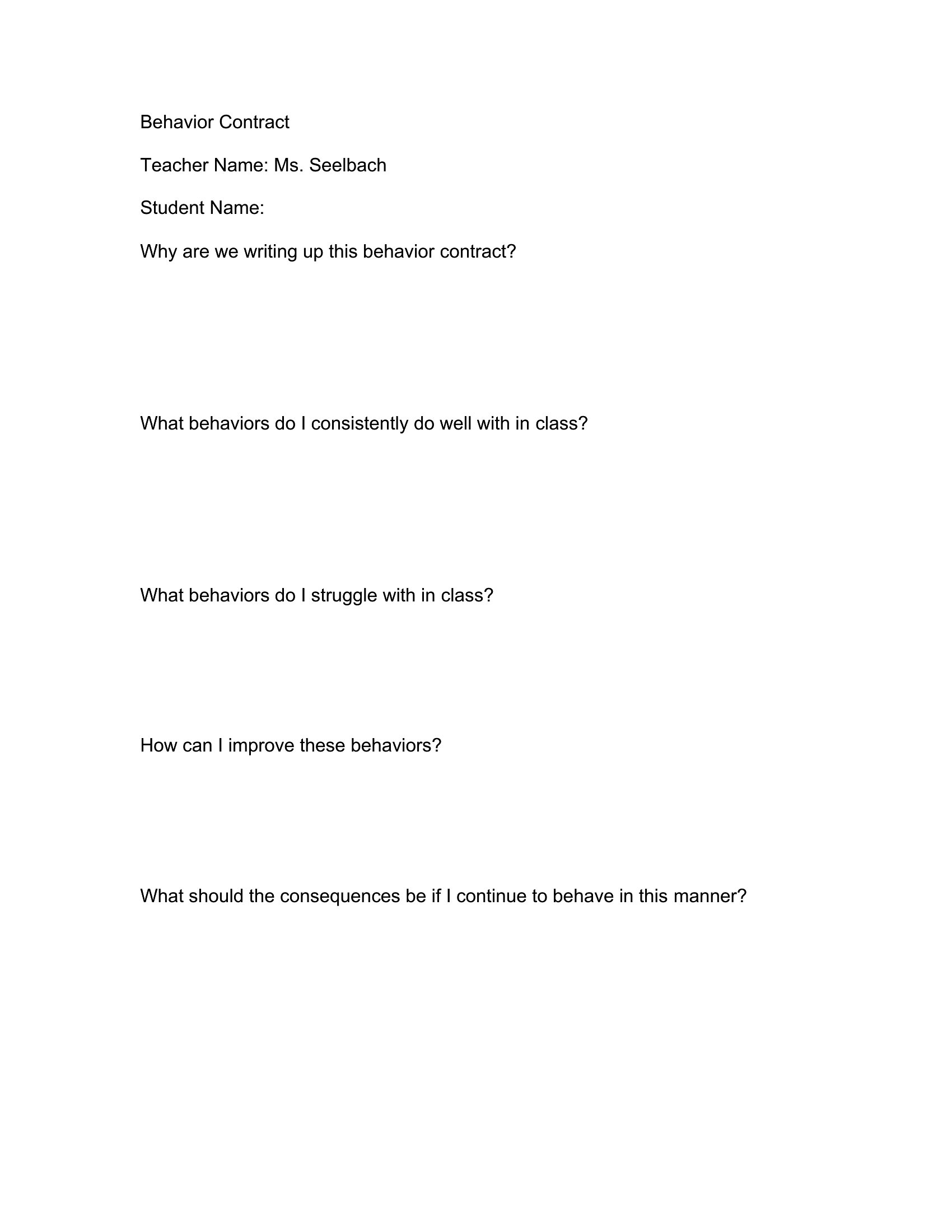
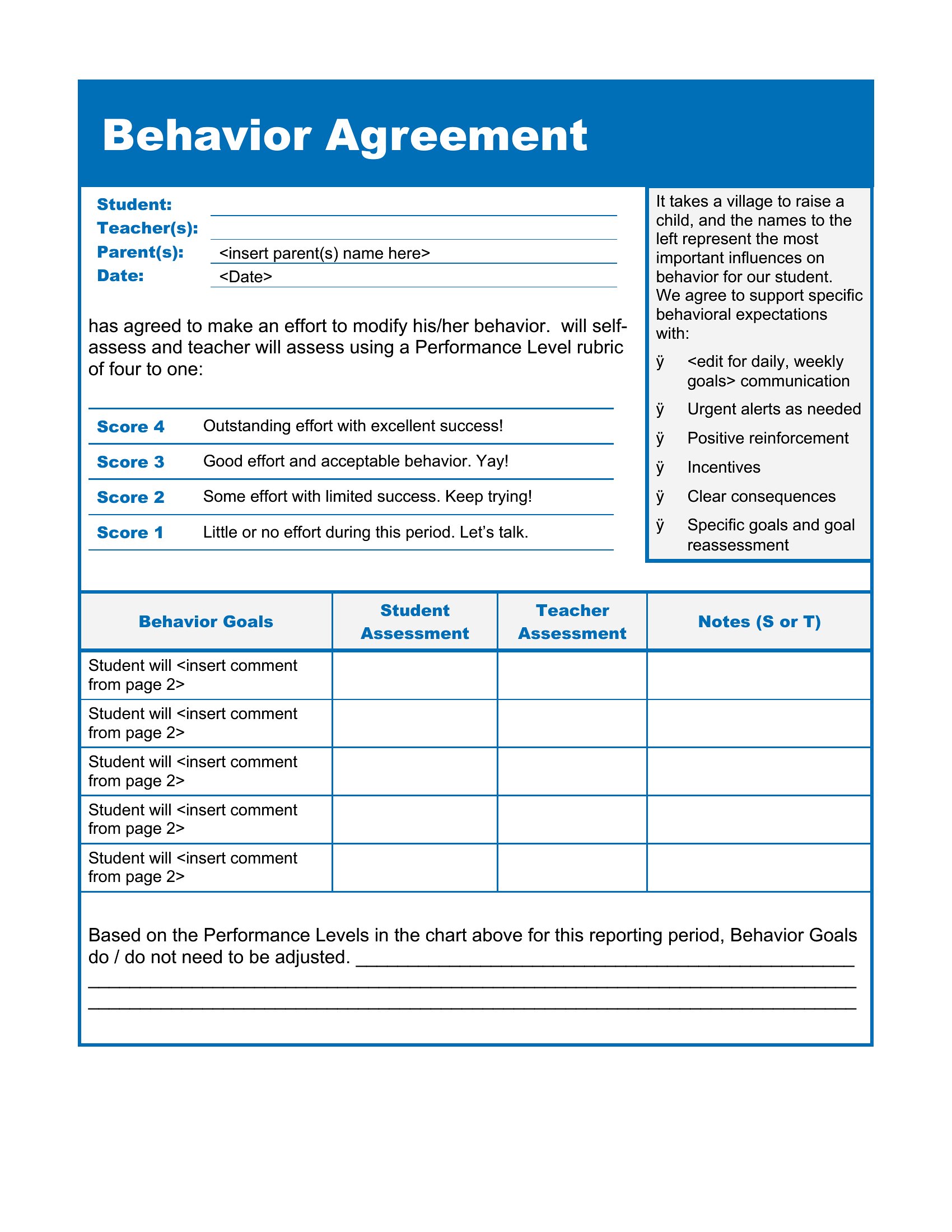
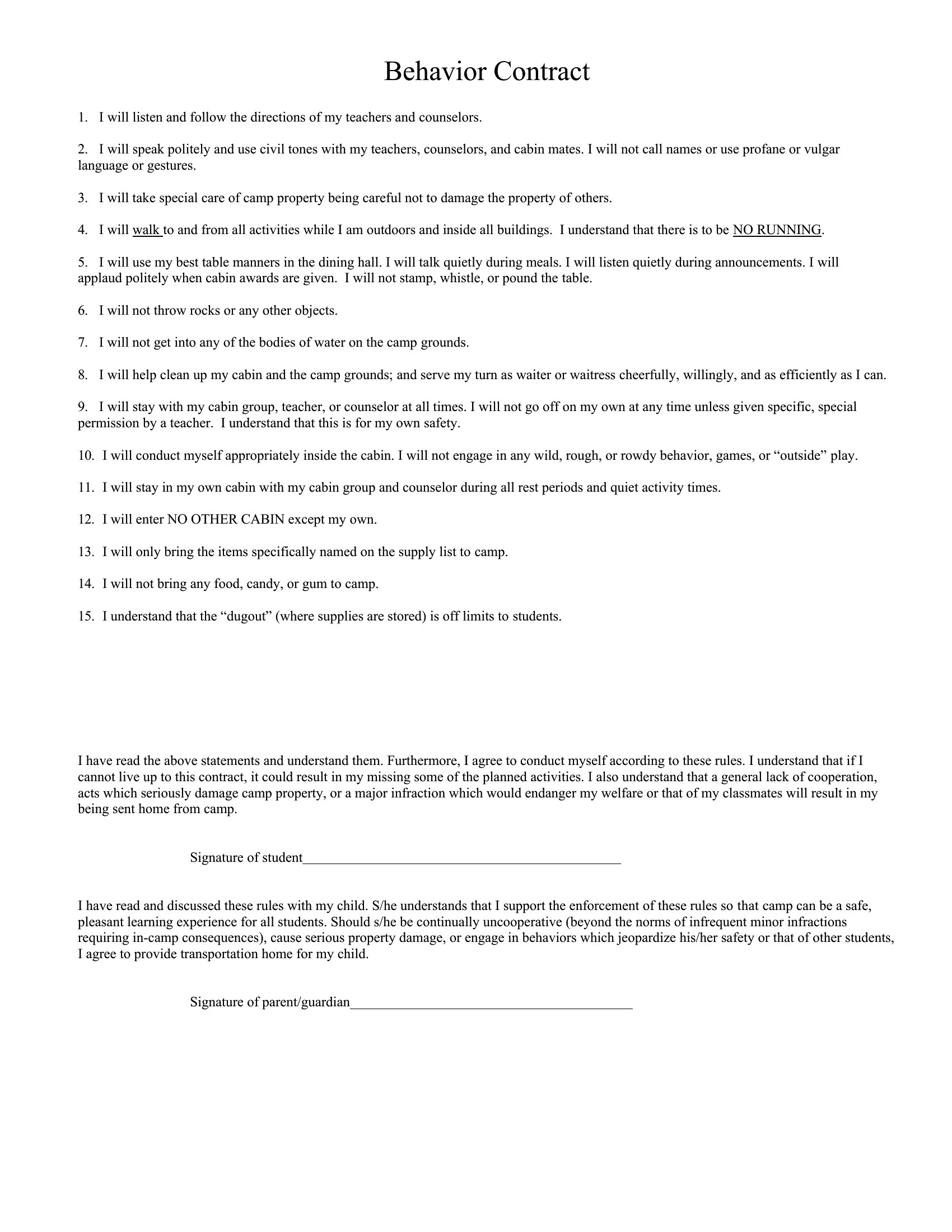
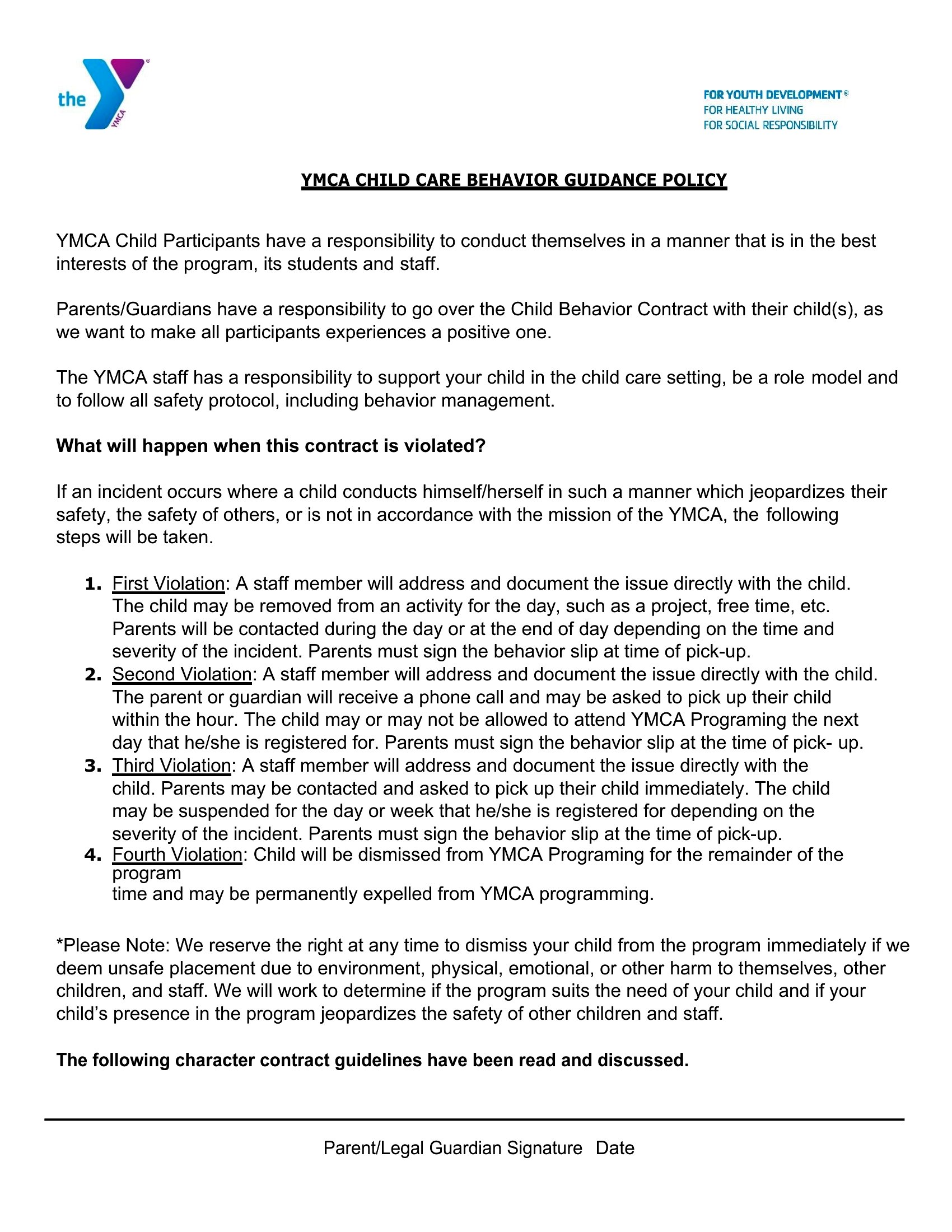
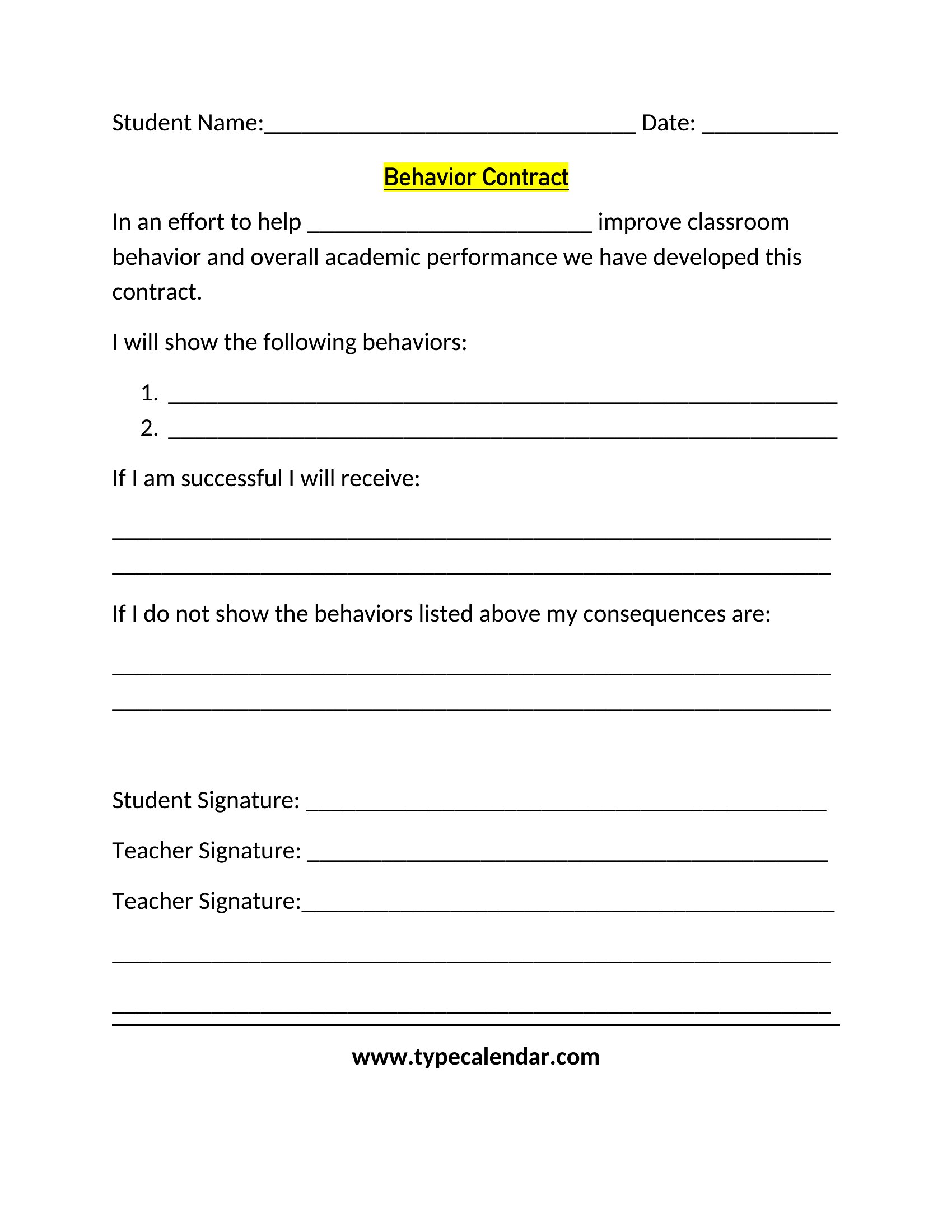
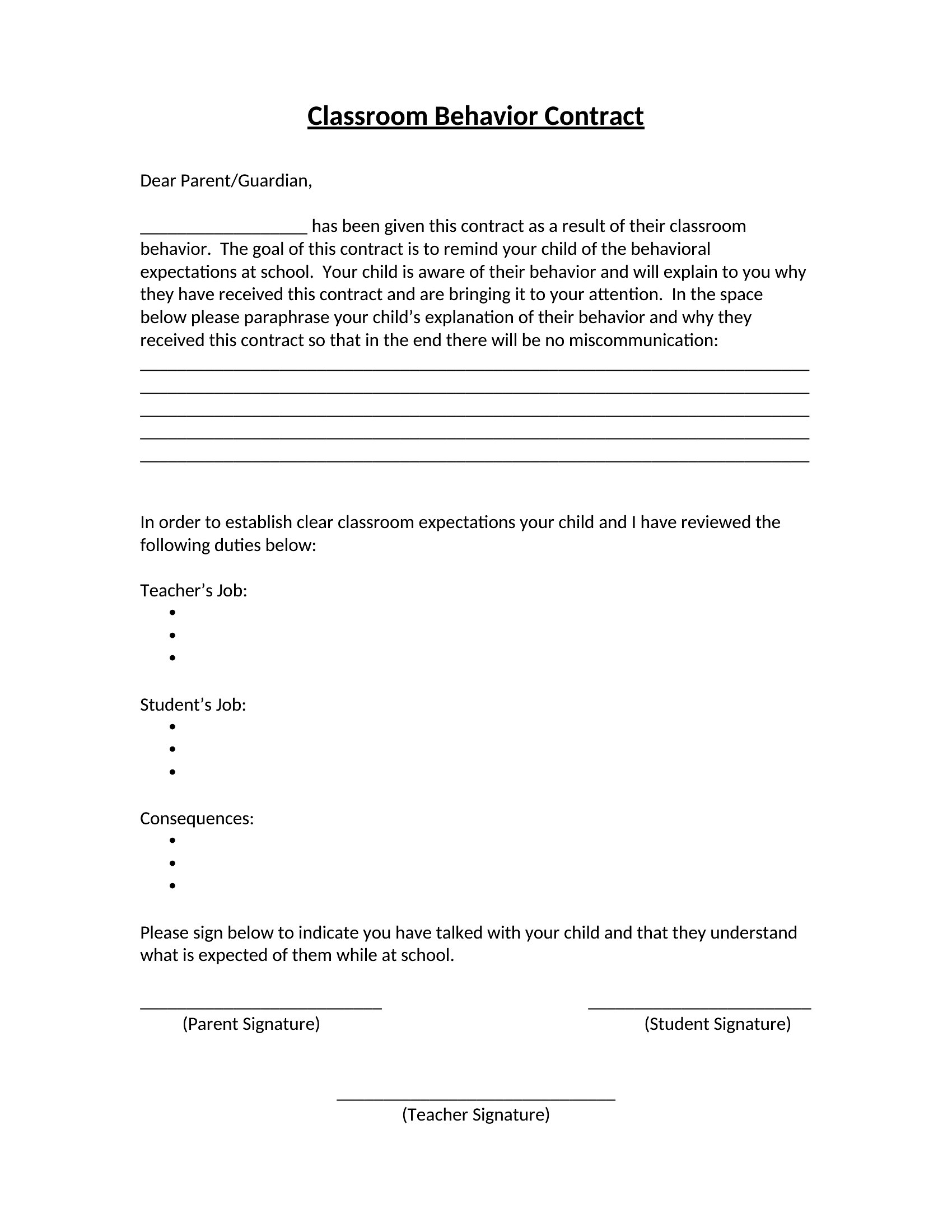
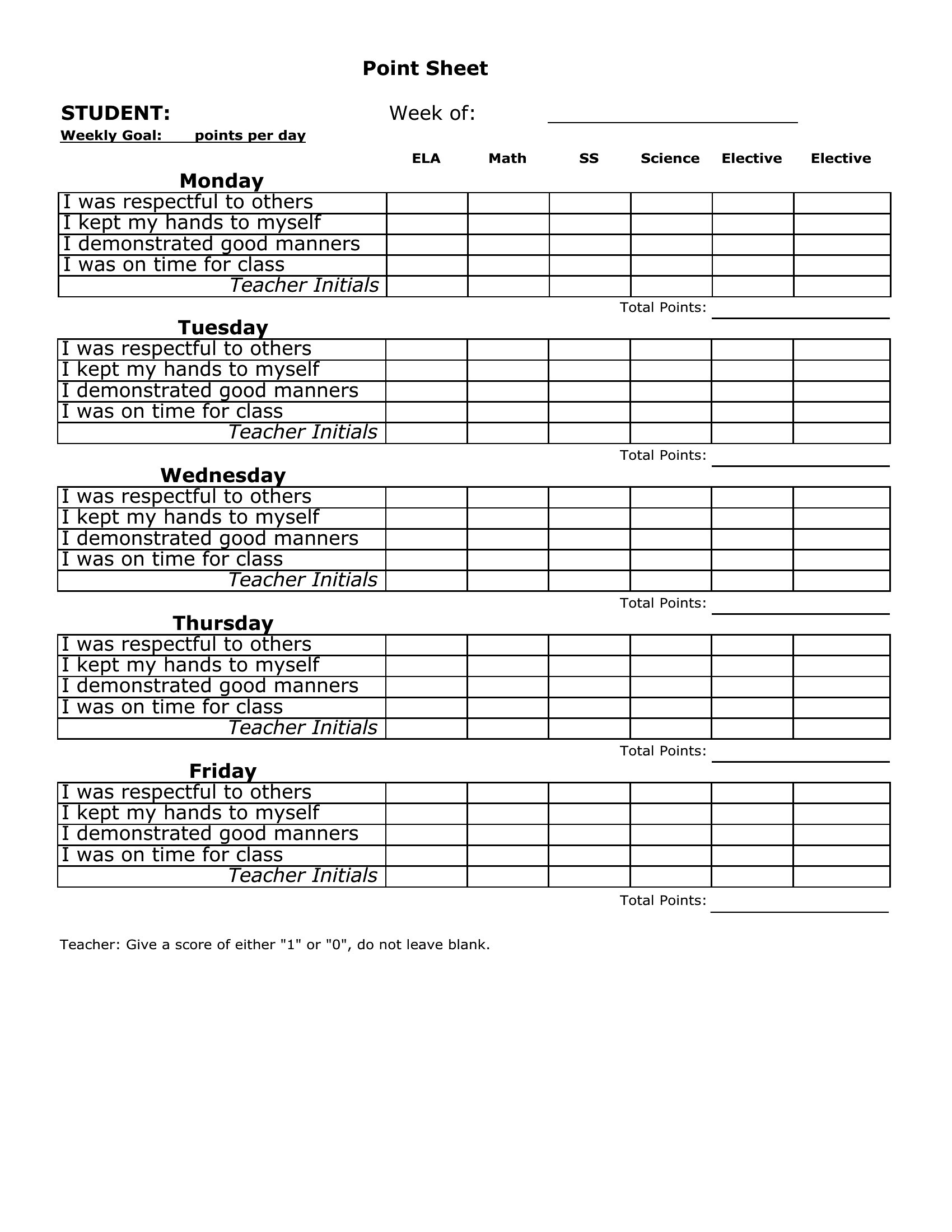
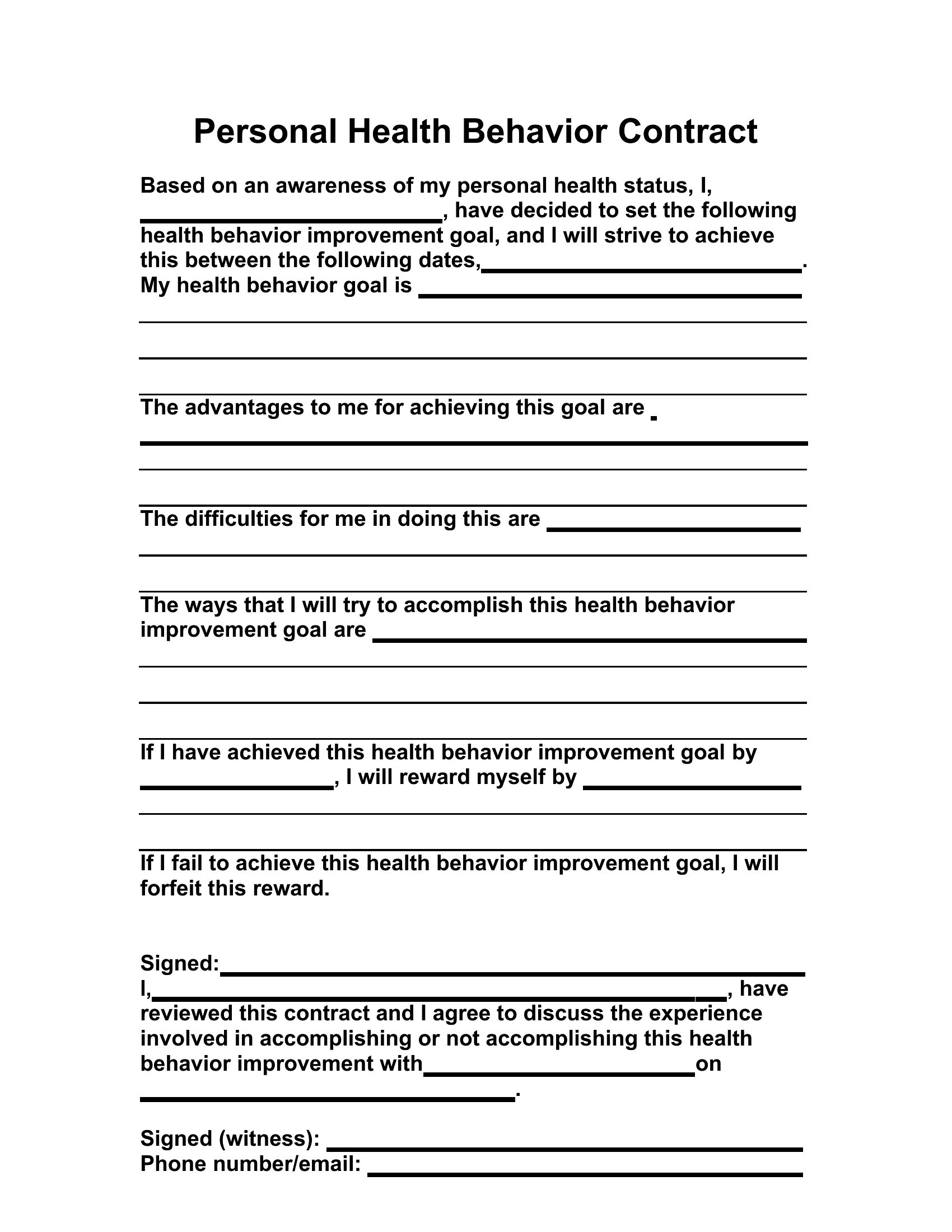
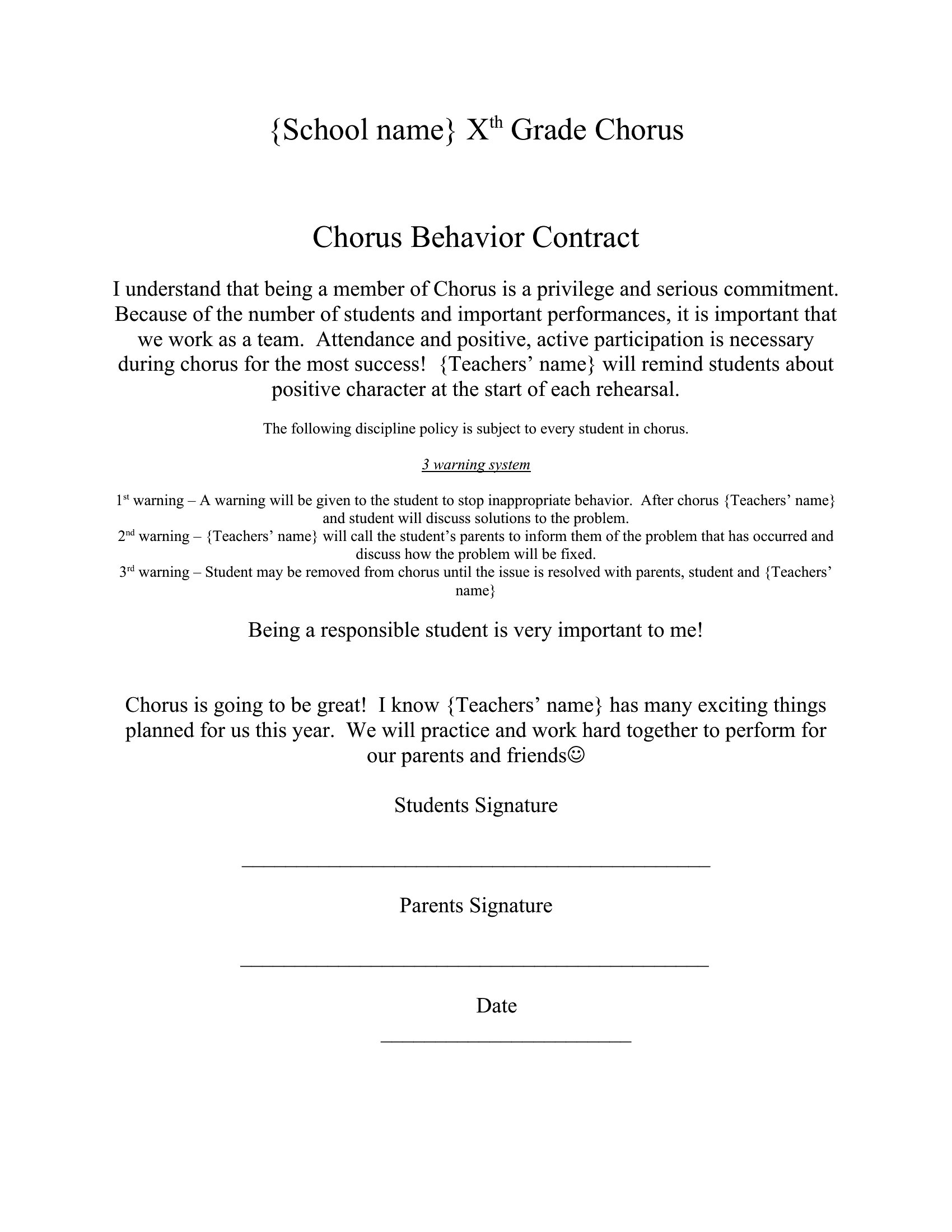
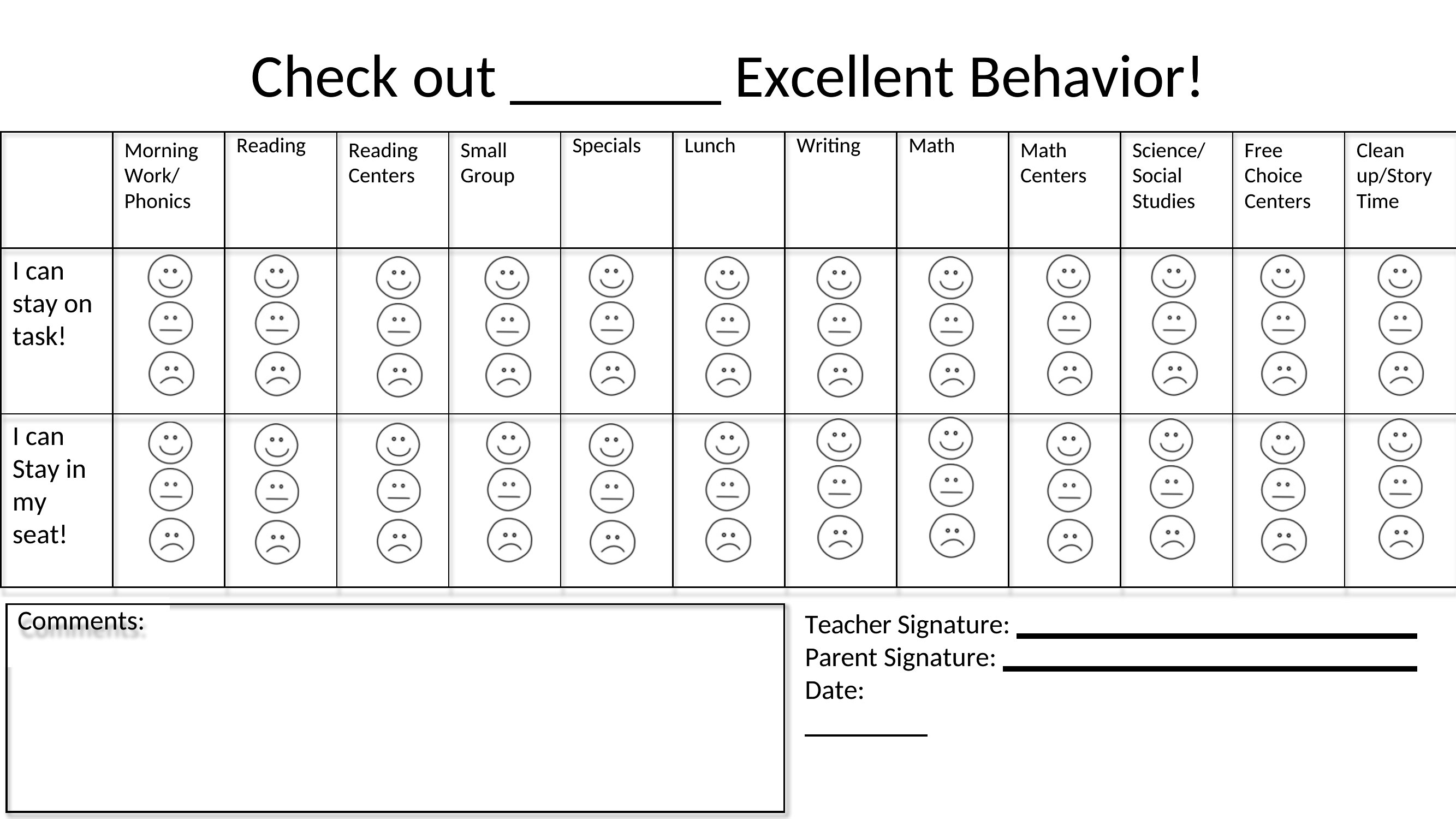
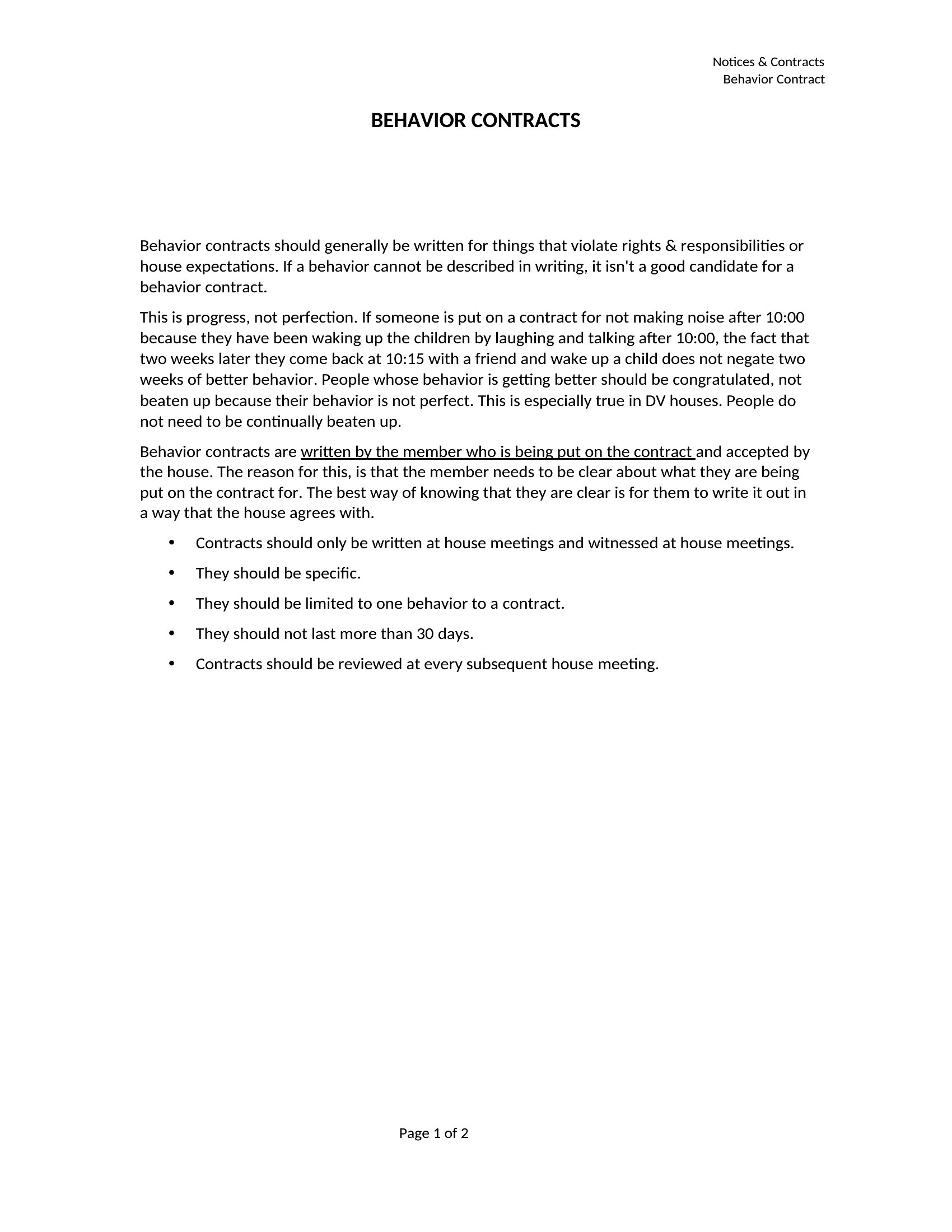
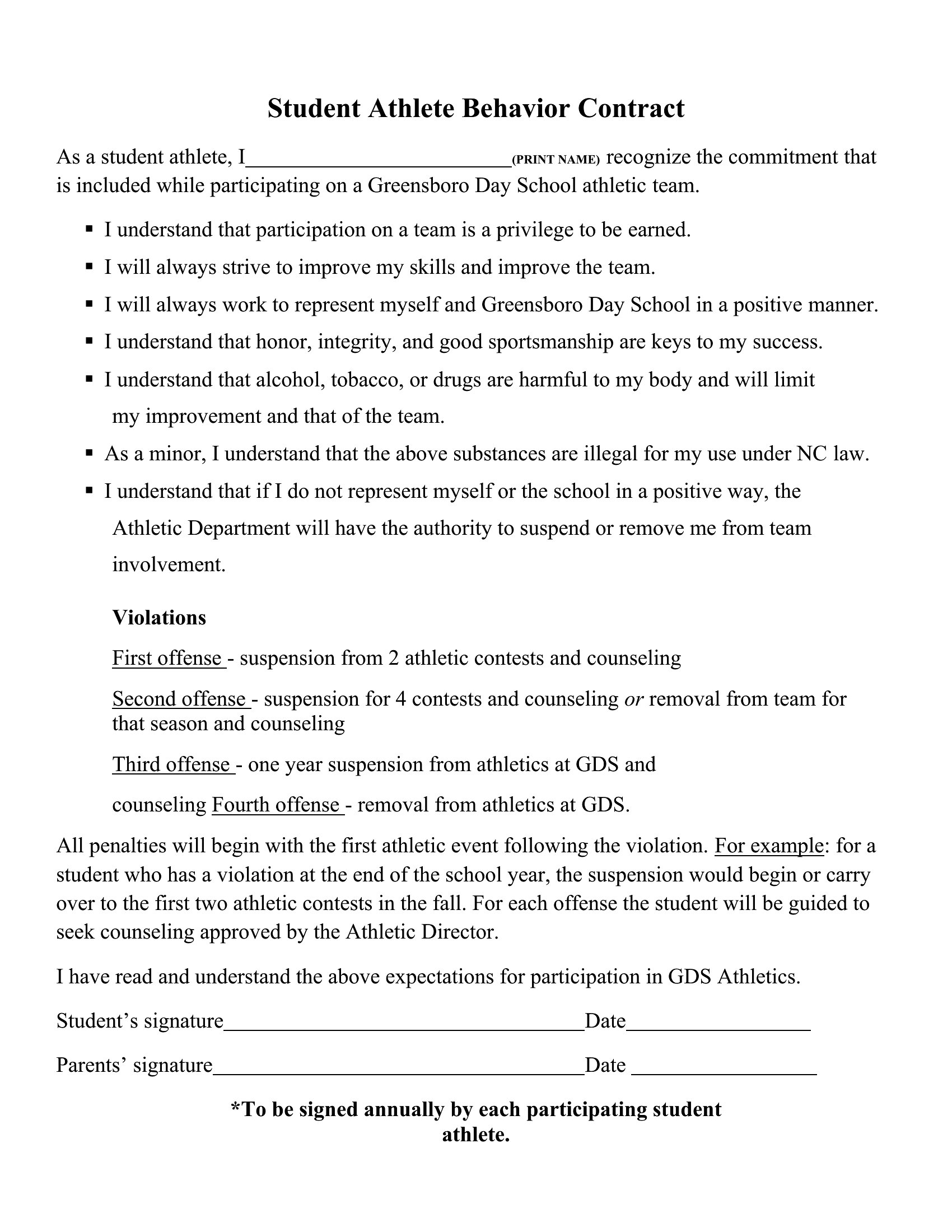
A behavior contract turns vague expectations into a clear agreement, spelling out goals, rewards, and consequences that everyone signs on to. This set of 51 templates serves teachers, parents, and counselors working with students, teens, or adults, drawing on approaches used in classrooms and ABA settings. Put the target behaviors and the payoff in writing, and follow-through gets a lot easier for both sides.
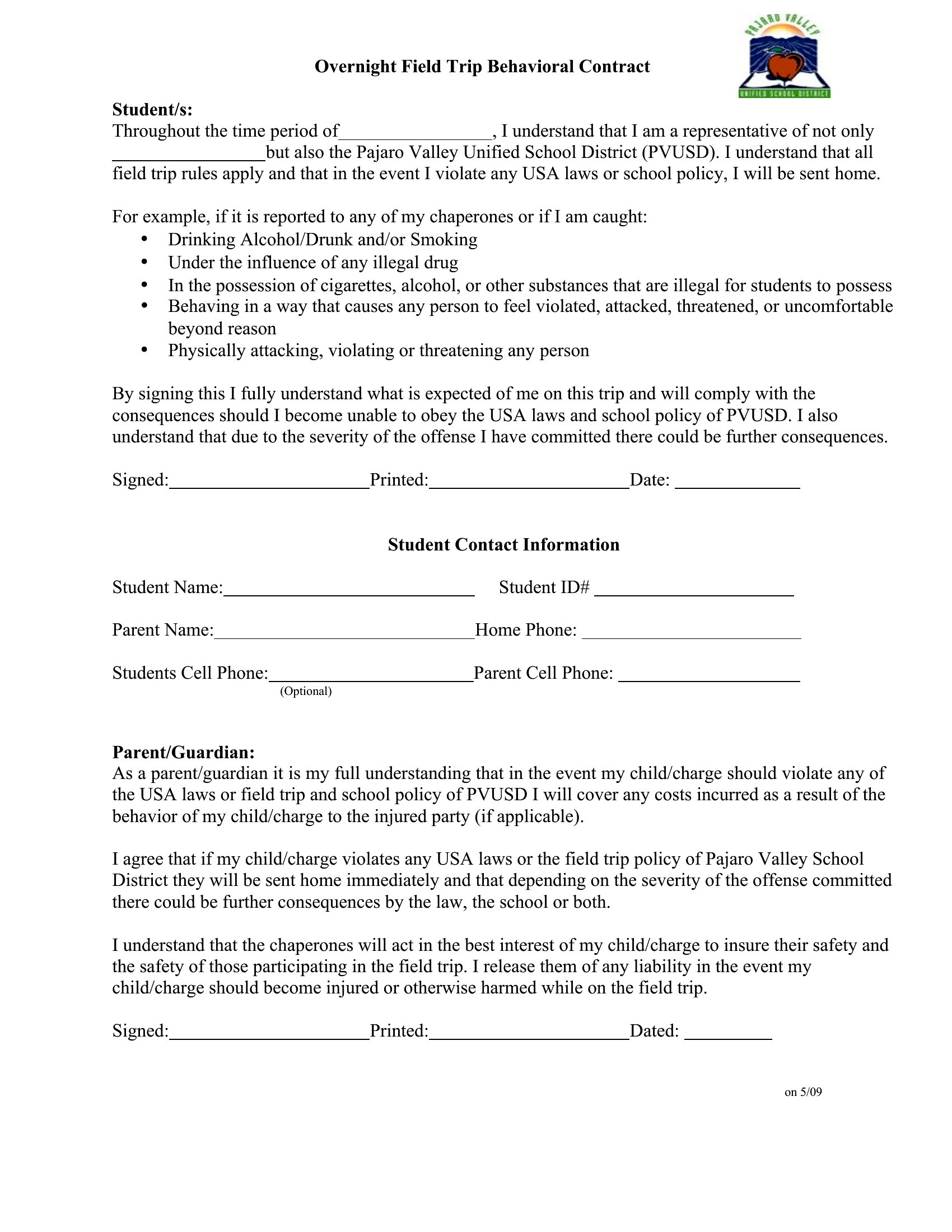
Each contract is editable in Word, so you can adjust the goals, rewards, and check-in schedule to fit the person and situation. Print a copy for the fridge, the desk, or the file, and revisit it together as progress builds. Download the template that fits your needs and start the conversation on the right foot.

When to use this Behavior Contract template

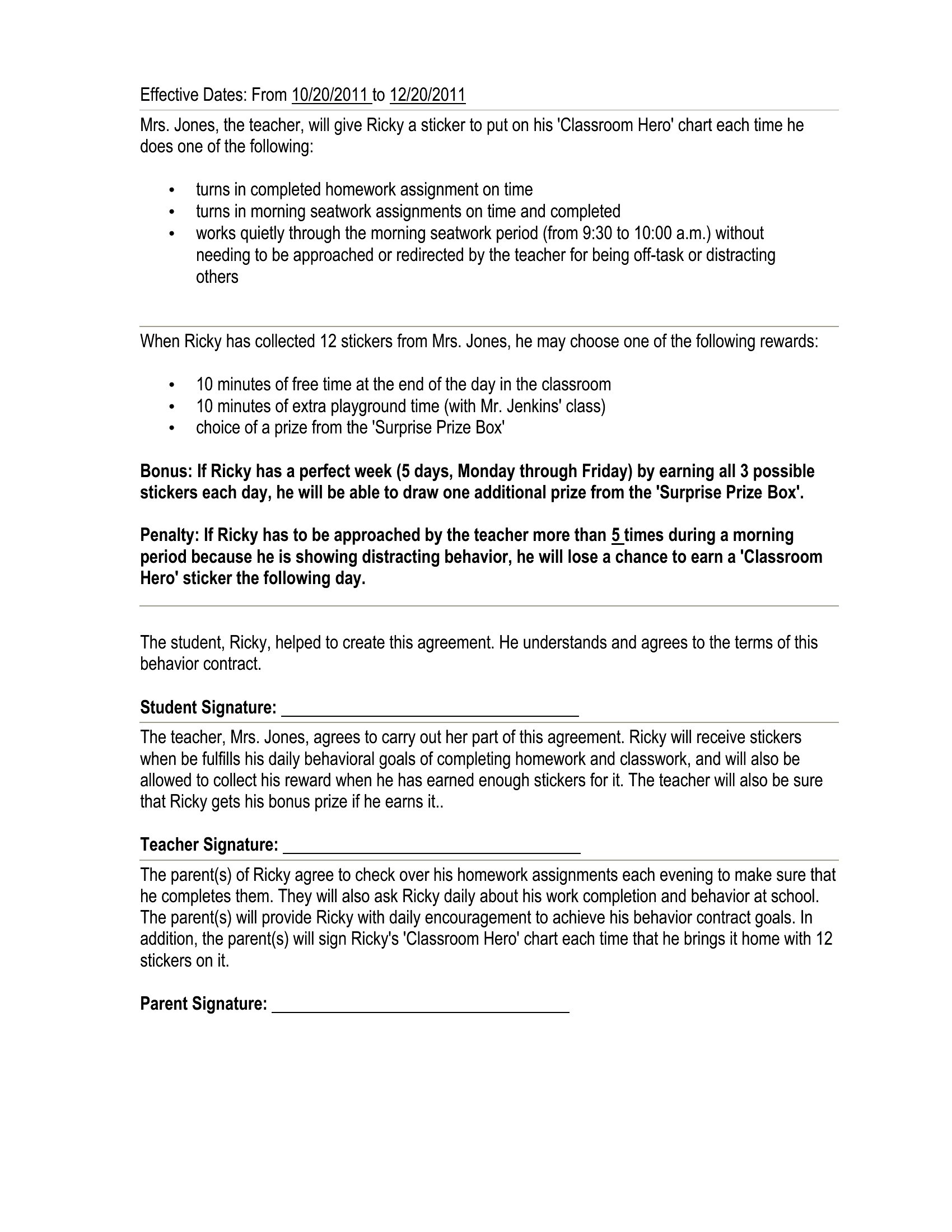
  • A special education teacher needs a structured contract to help a 7th-grade student reduce classroom disruptions, aligning with their IEP’s behavioral goals and offering small, immediate rewards for progress.
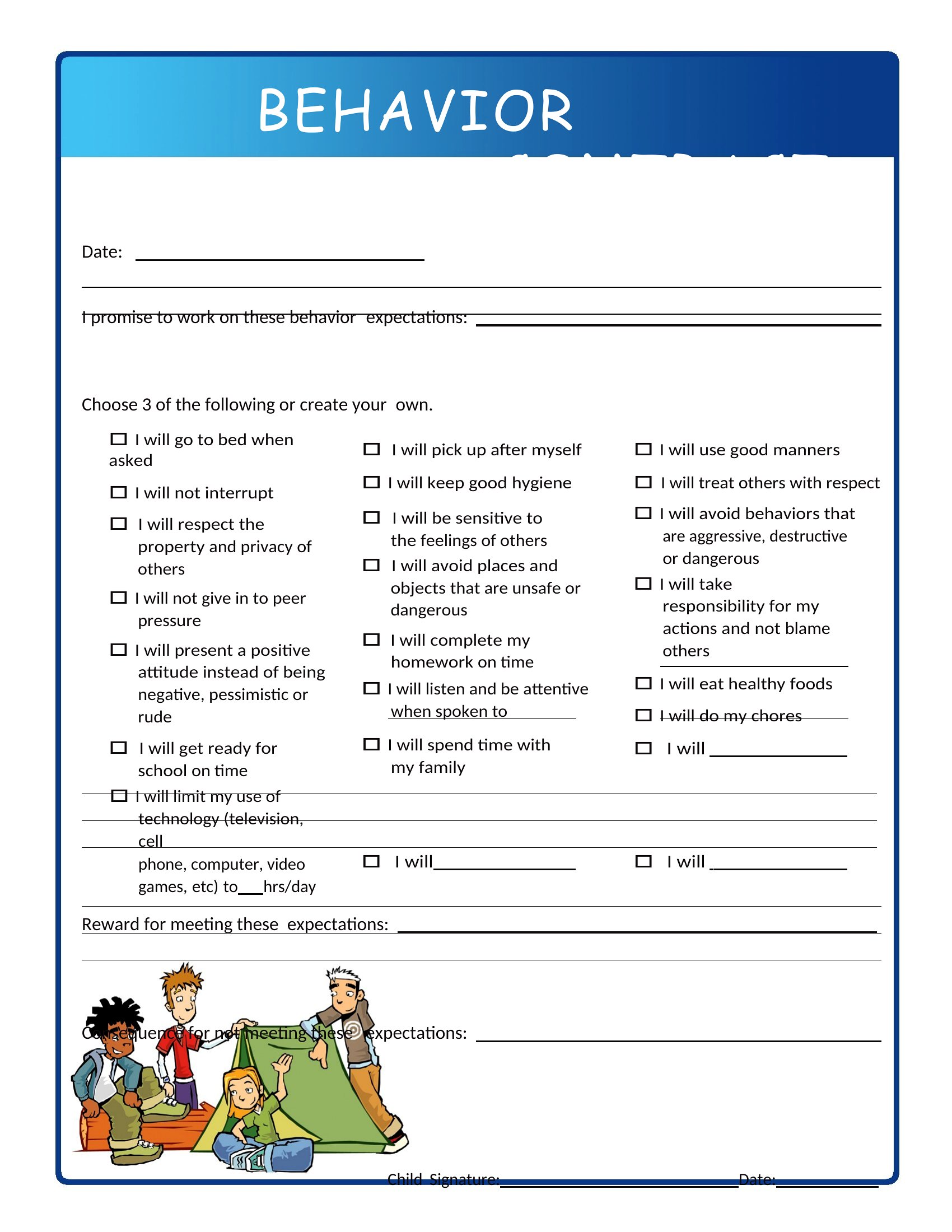
  • Parents of a teenager with ADHD want to set clear expectations for homework completion and screen-time limits, using a contract that ties chores to screen privileges to reduce arguments and build accountability.
  • A behavioral therapist working with a client in ABA therapy requires a contract to reinforce positive social interactions in group settings, with measurable outcomes and a tiered reward system for consistency.
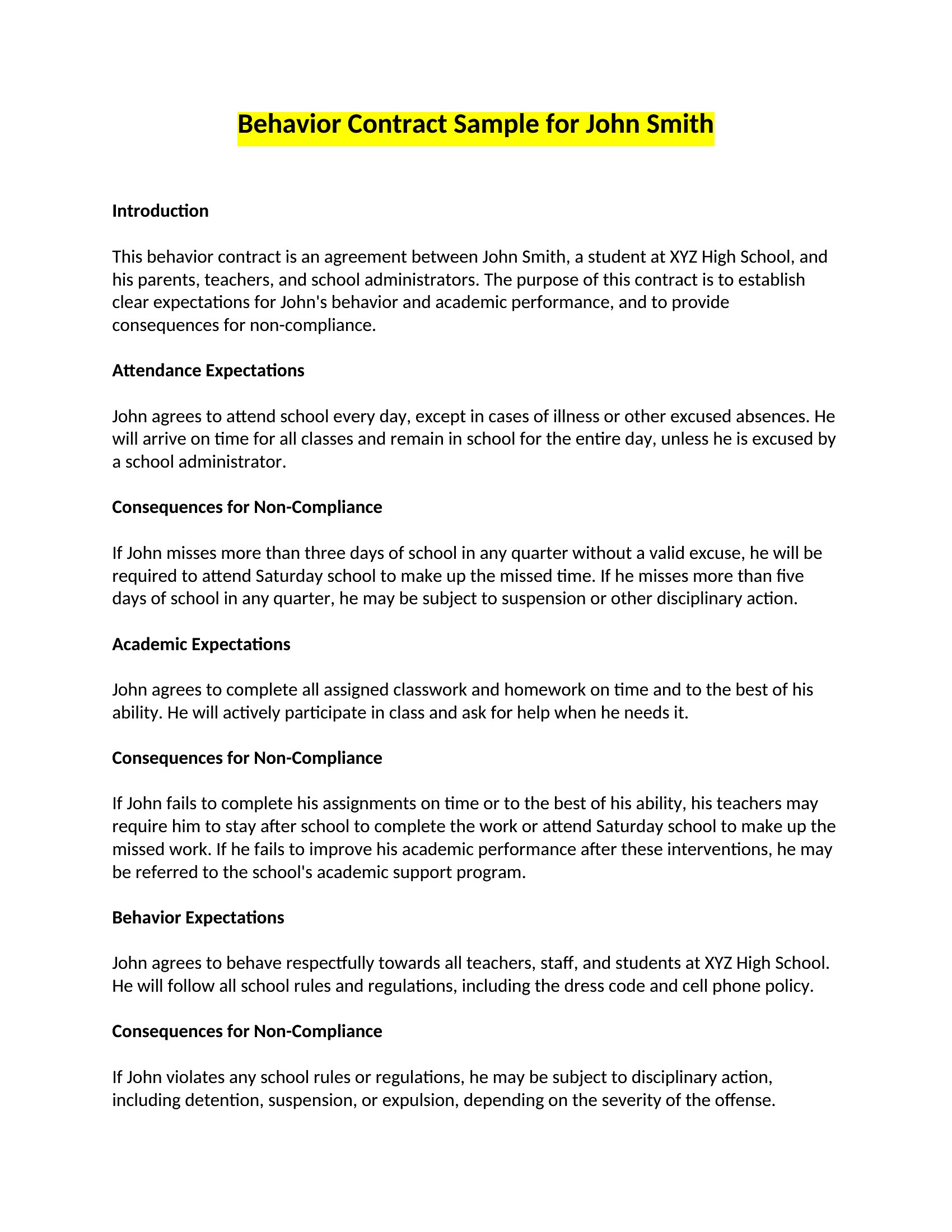
  • A school counselor is designing a contract for a high school student struggling with tardiness, combining motivational check-ins with penalties that escalate if the behavior continues, while keeping it simple for quick sign-offs.

Which format should I download?

Word

All templates here are in Word format, which is ideal because it’s widely accessible and easy to customize. Choose Word when you need to fill in specific details, adjust language for your audience, or add your school/district’s letterhead. The editable nature of Word also lets you tweak rewards, consequences, or timeframes to fit a child’s unique situation—unlike PDFs—which would require printing and rewriting. If you’re collaborating with a team (like a therapist and parent), Word’s track changes feature helps document edits before finalizing the contract.
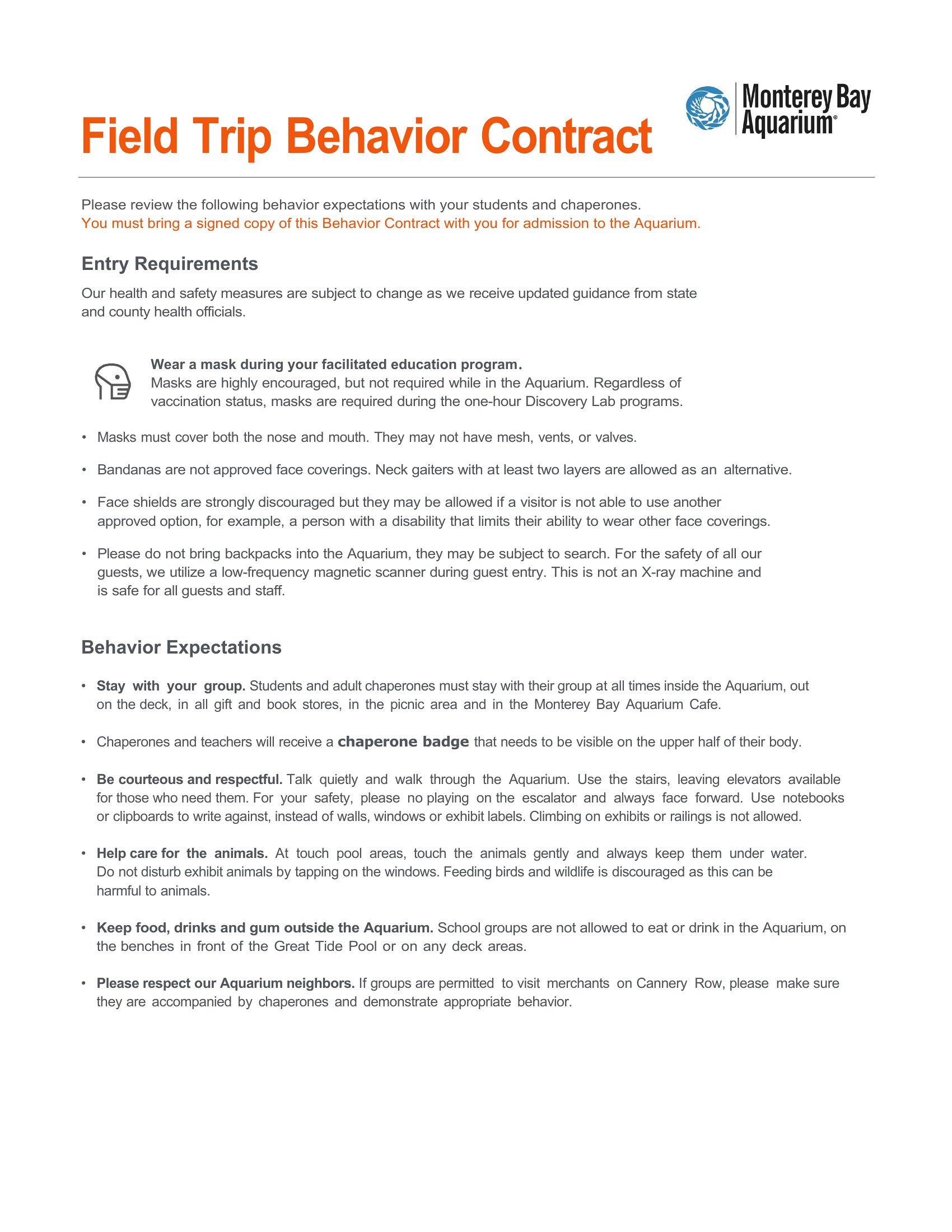
Choose from 51 Behavior Contract Templates
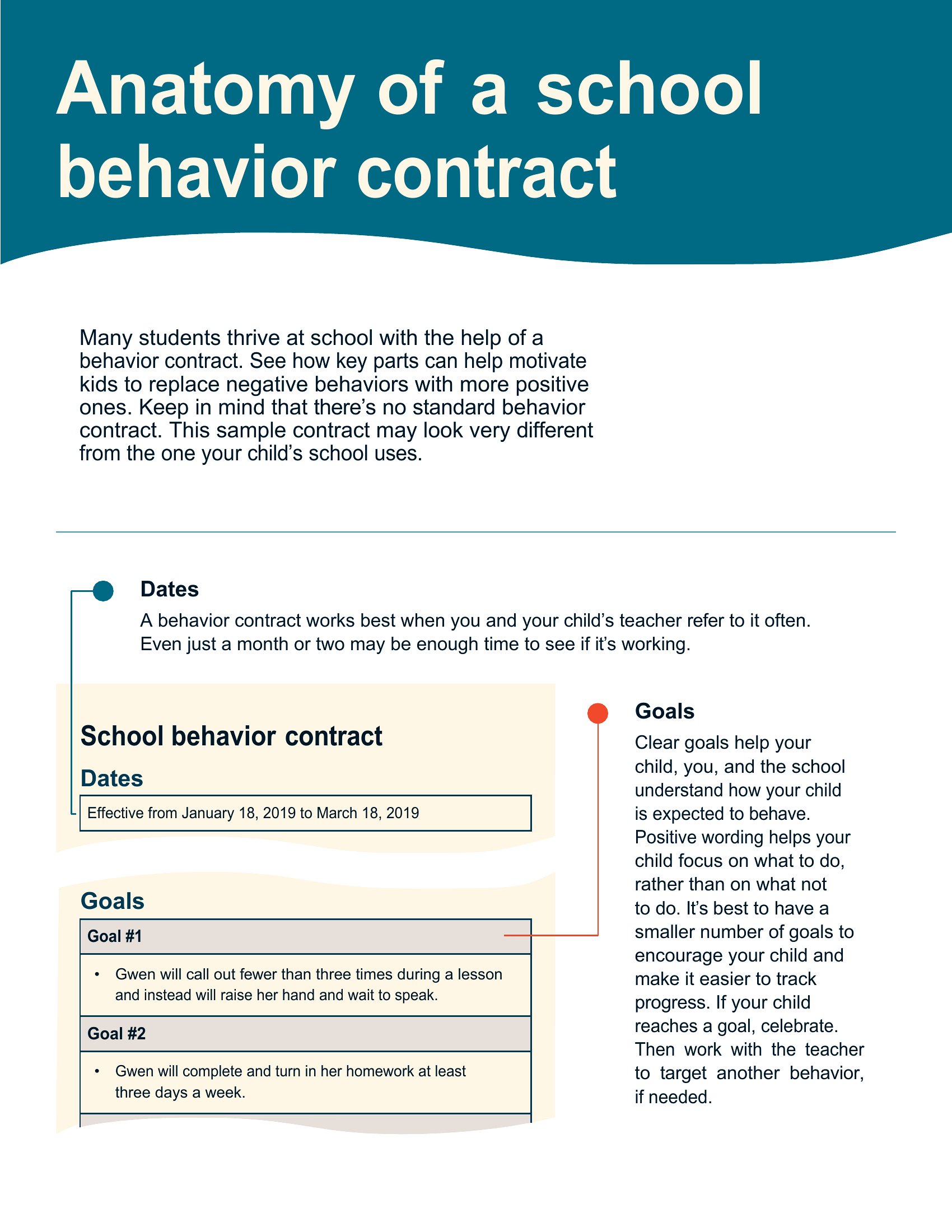
How to use this Behavior Contract template

How detailed should the ‘target behaviors’ section be in a contract for a child with anxiety?

For anxiety-related behaviors, focus on clear, observable actions—like ‘raise hand before speaking’ or ‘take three deep breaths before a panic’—instead of vague terms like ‘calmer.’ Break these into small steps if needed, and pair them with rewards that reduce anxiety, such as a 10-minute break or a favorite activity. Avoid tying rewards to performance outcomes, which could increase stress.

Can I use these templates to create a contract for a student with defiance, even if their behavior isn’t tied to a specific diagnosis?
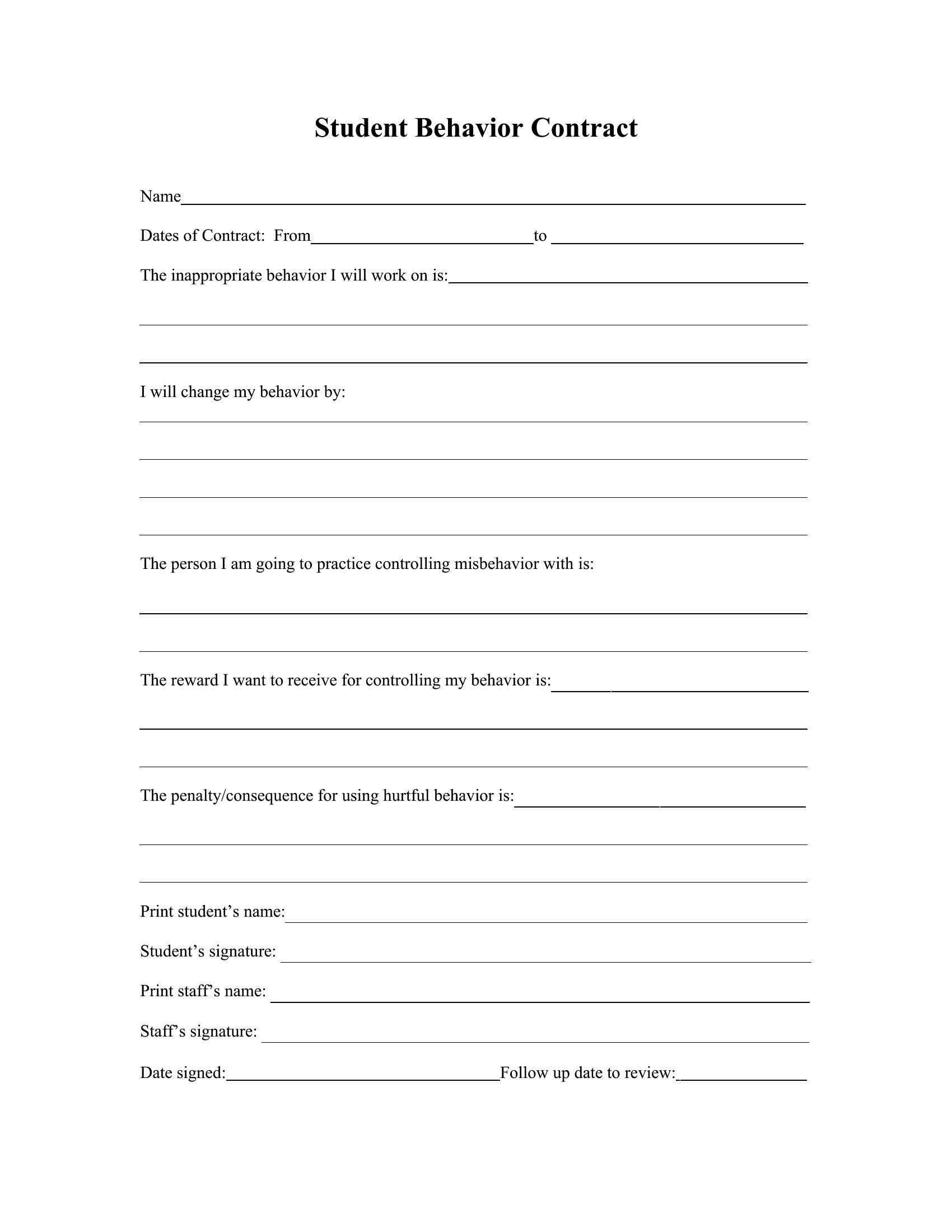
Yes, but tailor the language to avoid sounding punitive. Frame consequences as natural outcomes (e.g., ‘if homework isn’t done, we’ll revise the contract to add a 15-minute study check-in daily’) rather than punishments. Include the student in drafting the contract to build buy-in, and use positive reinforcement for small wins. If defiance escalates, consult a behavior specialist to adjust the approach.

What’s the best way to handle a contract if the child meets all goals too quickly?

Build in a ‘level-up’ clause from the start, like adding a new challenge (e.g., ‘if you meet these goals for 2 weeks, we’ll add a new behavior to track’) or extending the contract with more complex expectations. Celebrate the progress publicly (e.g., a sticker chart or verbal praise) to maintain motivation. If the child loses interest, shift to a new contract topic entirely, like social skills or responsibility tasks, to keep it engaging.

Comments

Join the conversation

Sign in to share your thoughts and leave a comment on this resource.

Newsletter

Get Weekly Design Updates
Join our community to receive curated resources and inspiration.
Weekly Tips Resources Early Access
We respect your privacy. Confirmation email required. Privacy Policy