

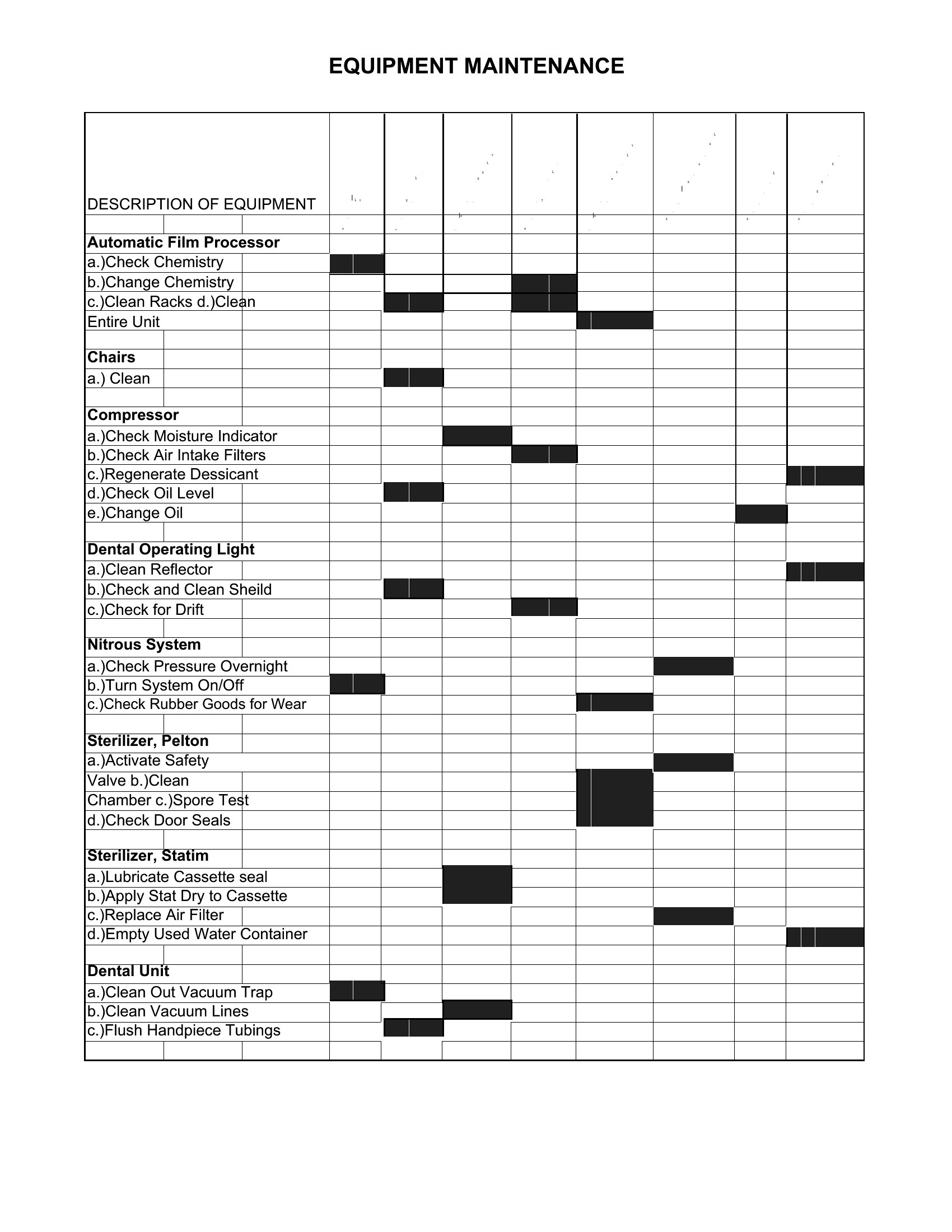
FAQ
Can these logs help prove compliance during an OSHA or safety audit?
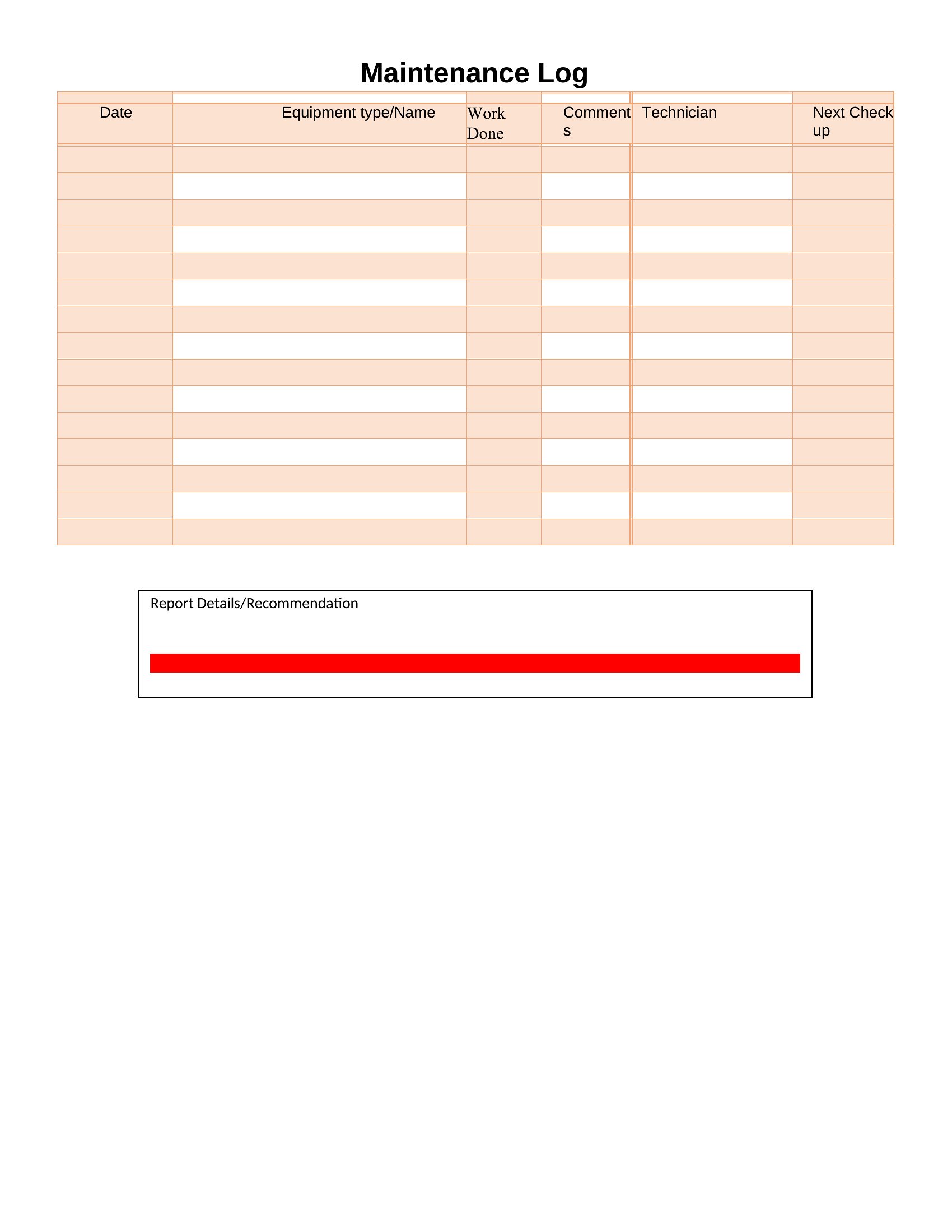
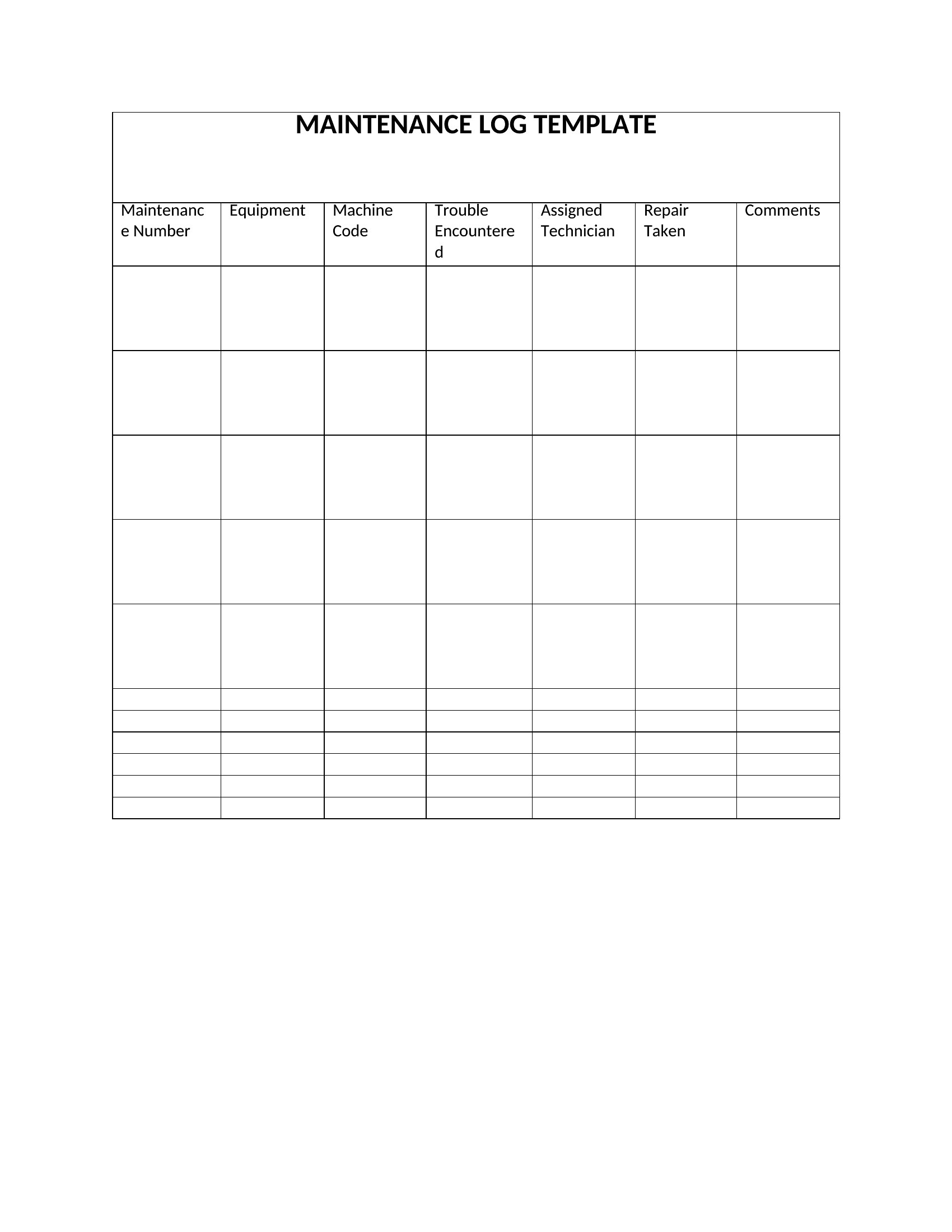
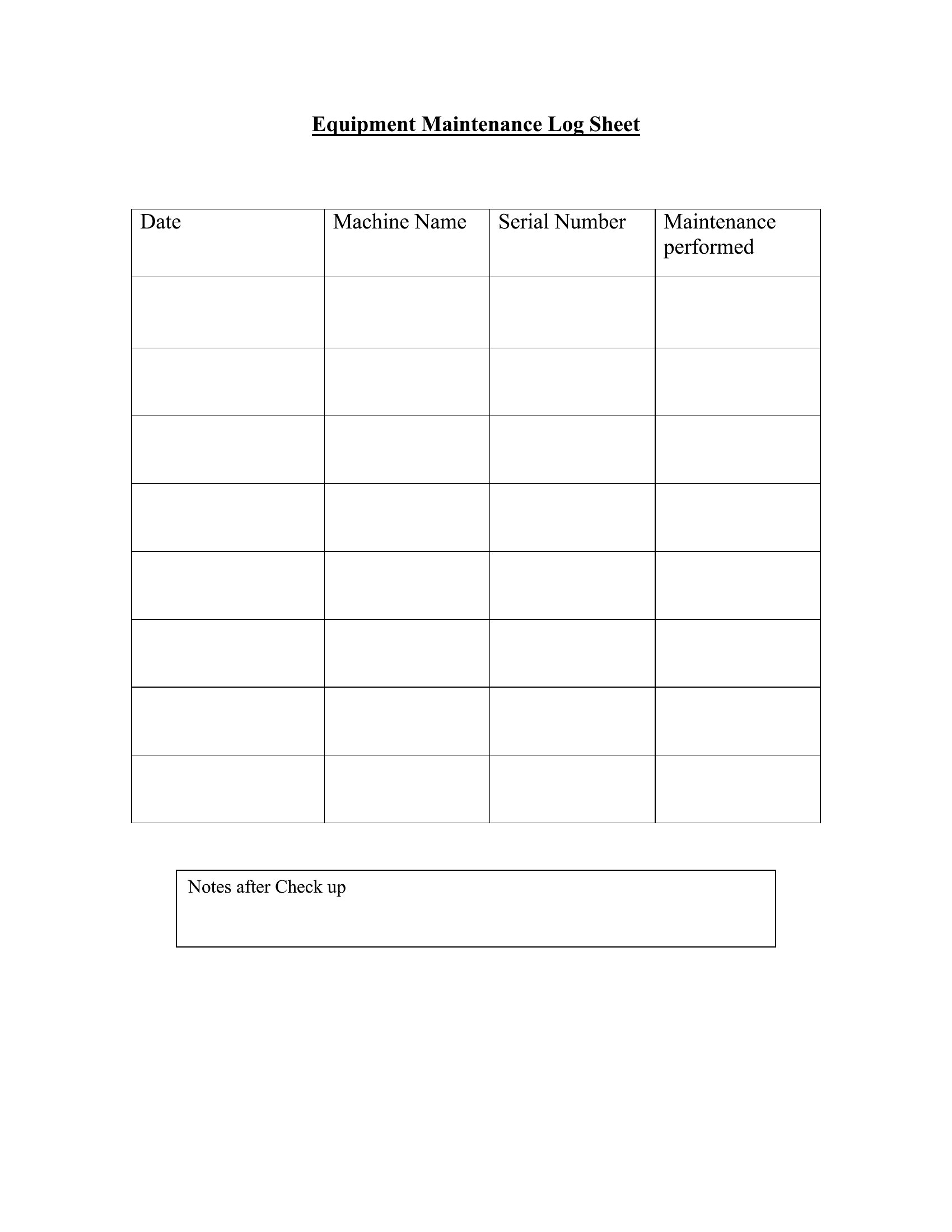
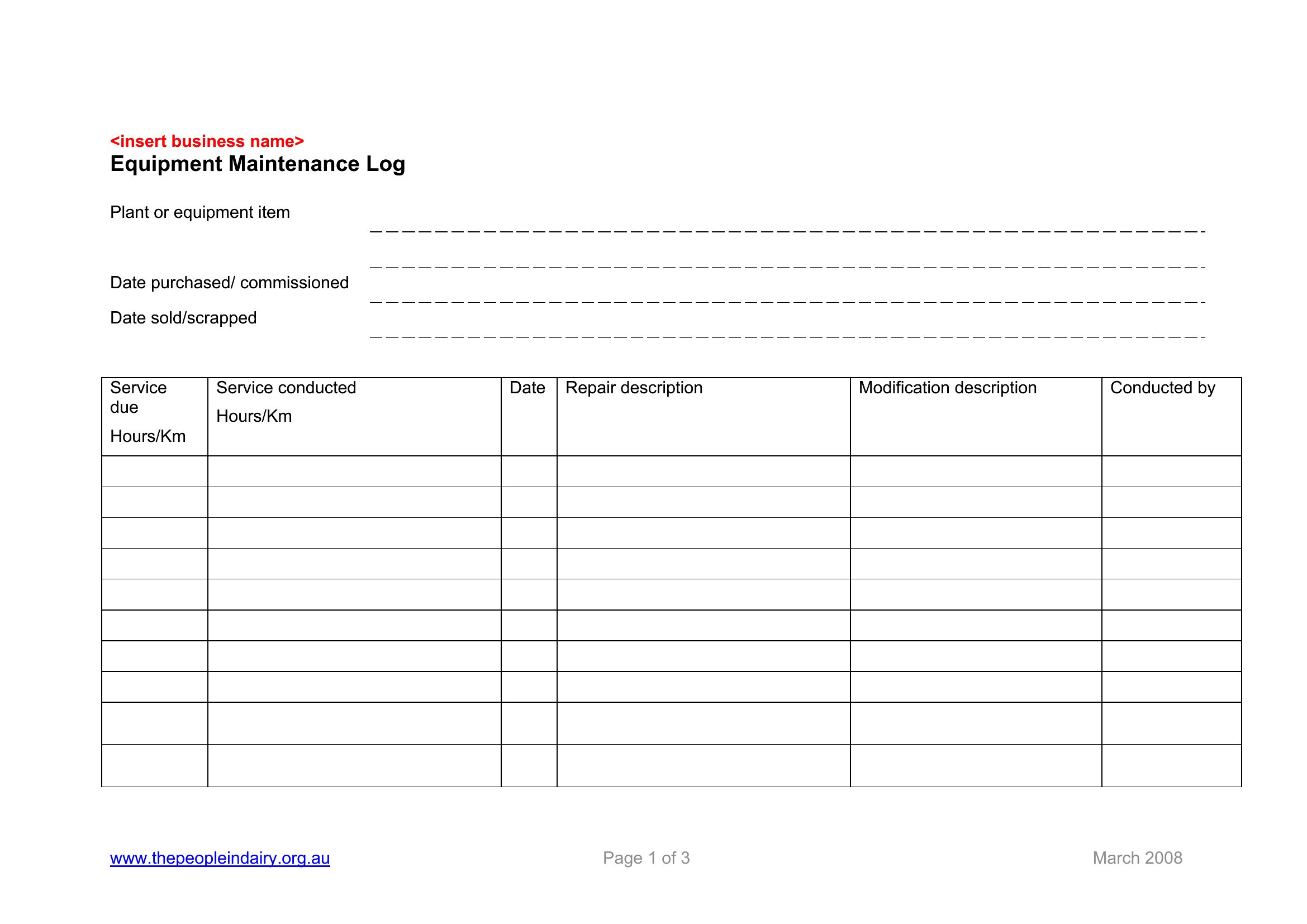
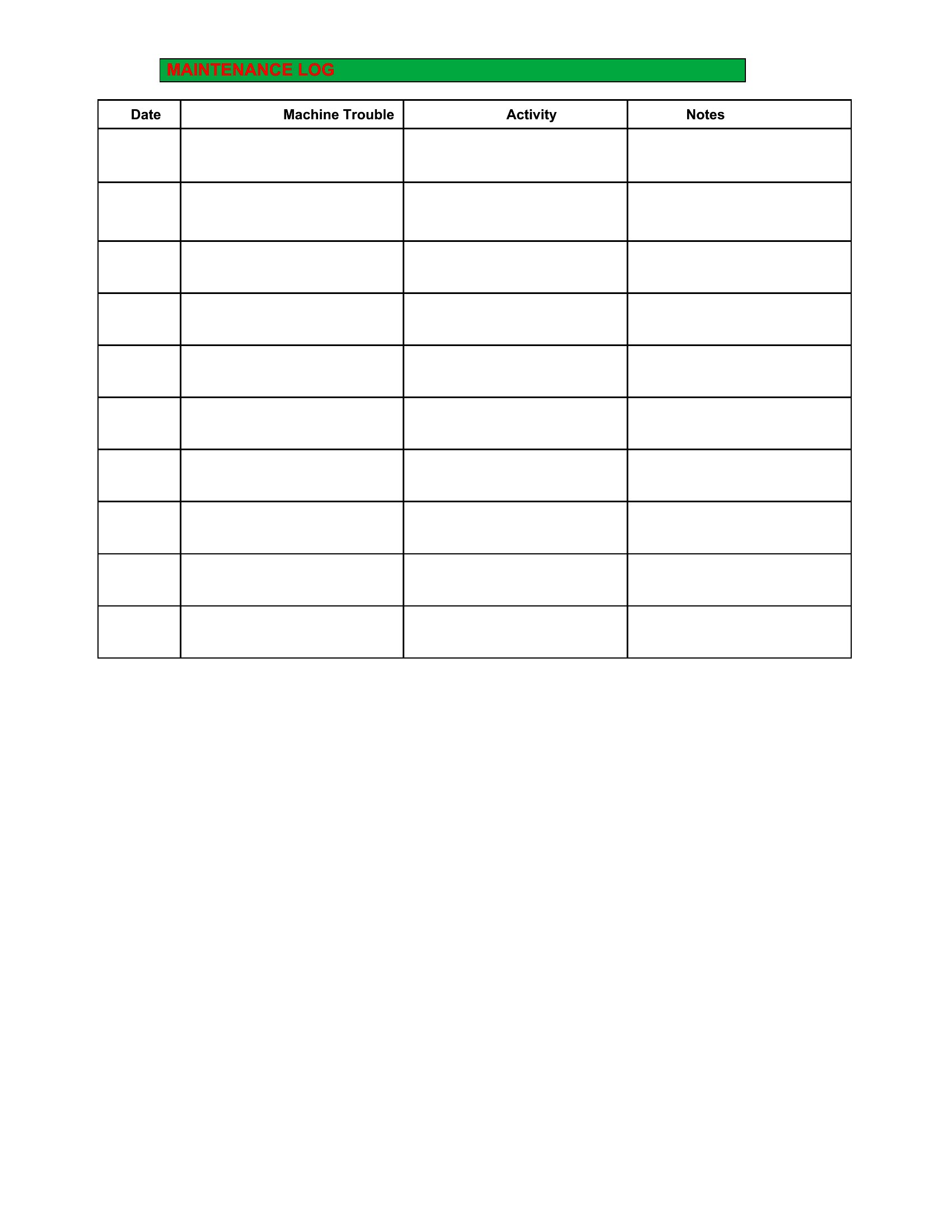
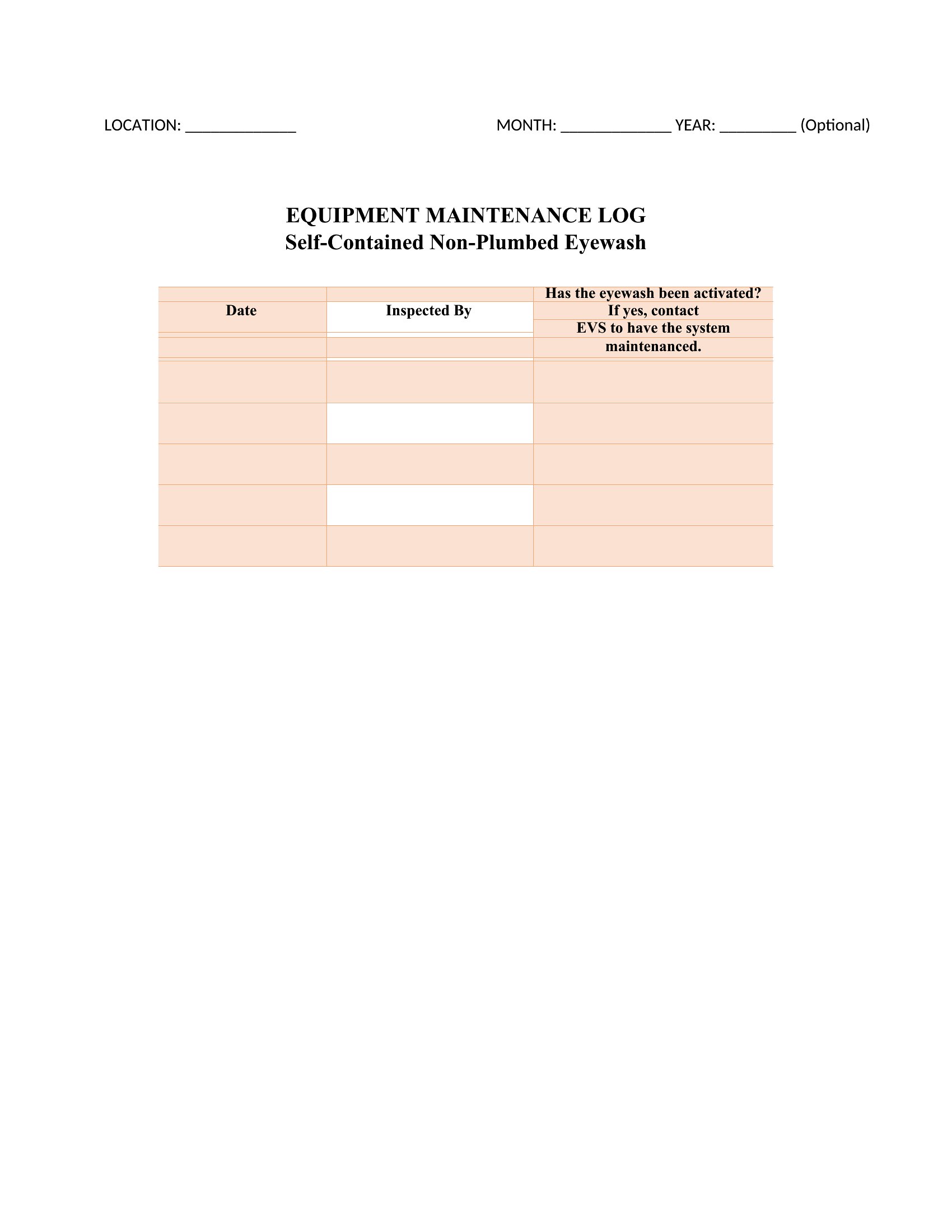
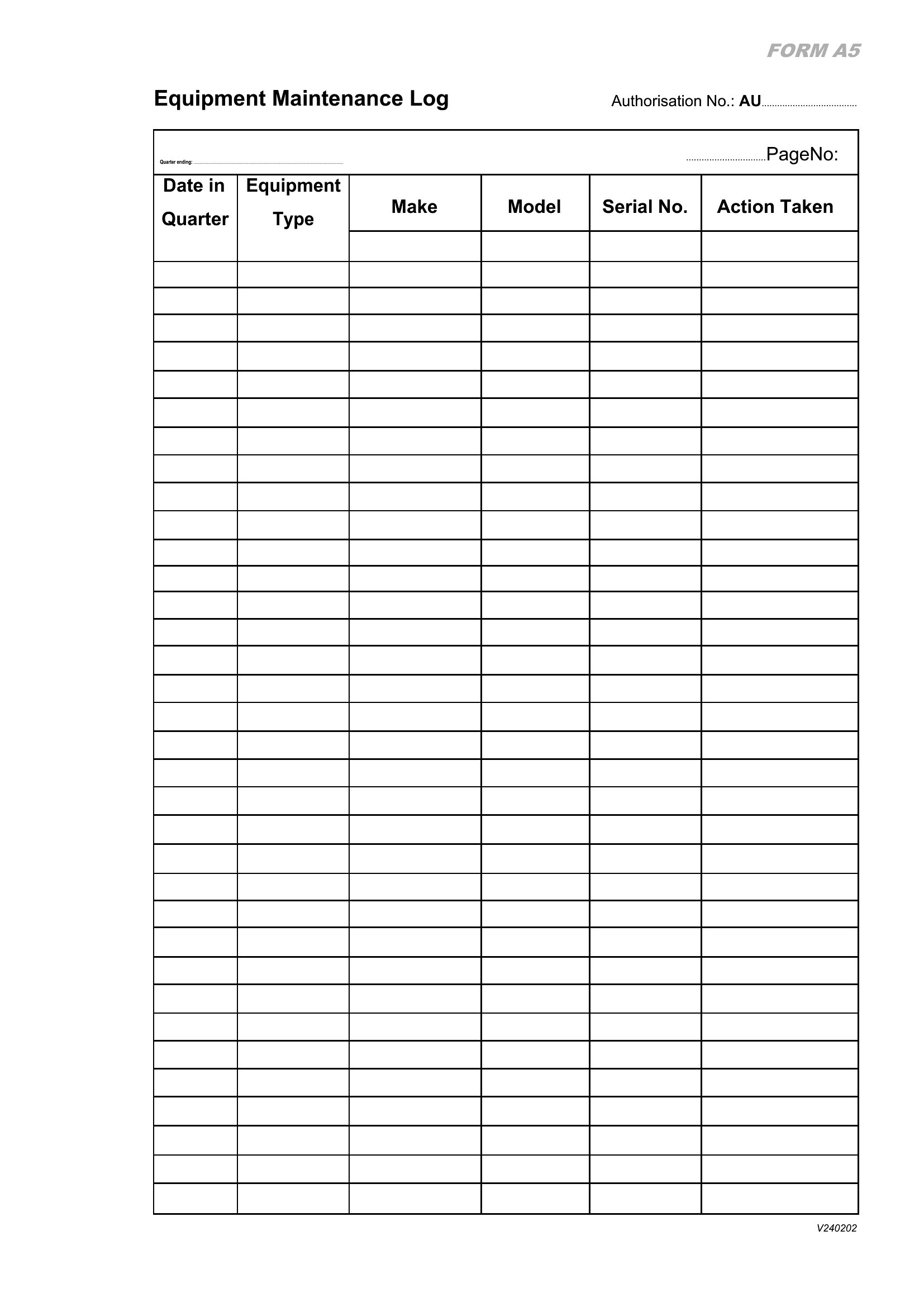
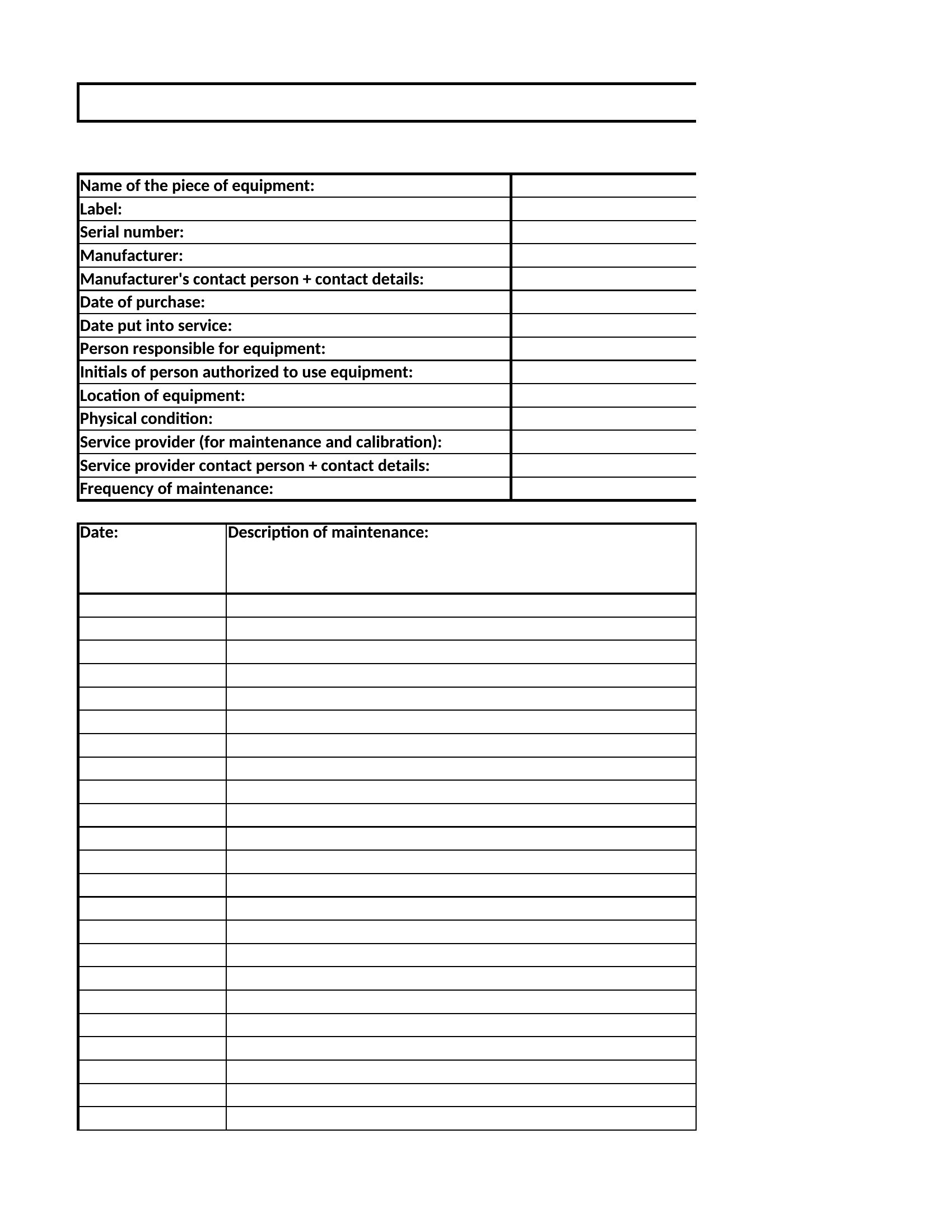
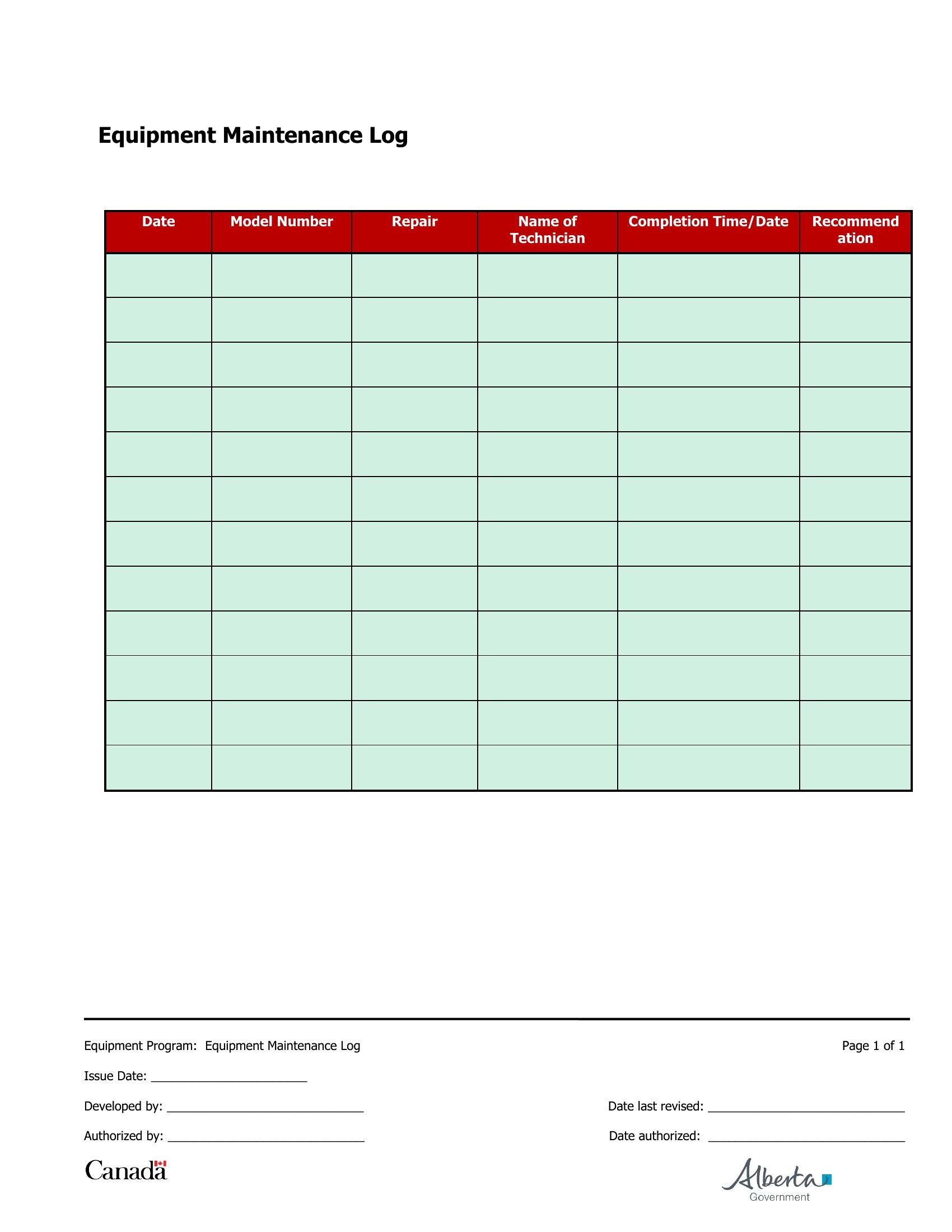
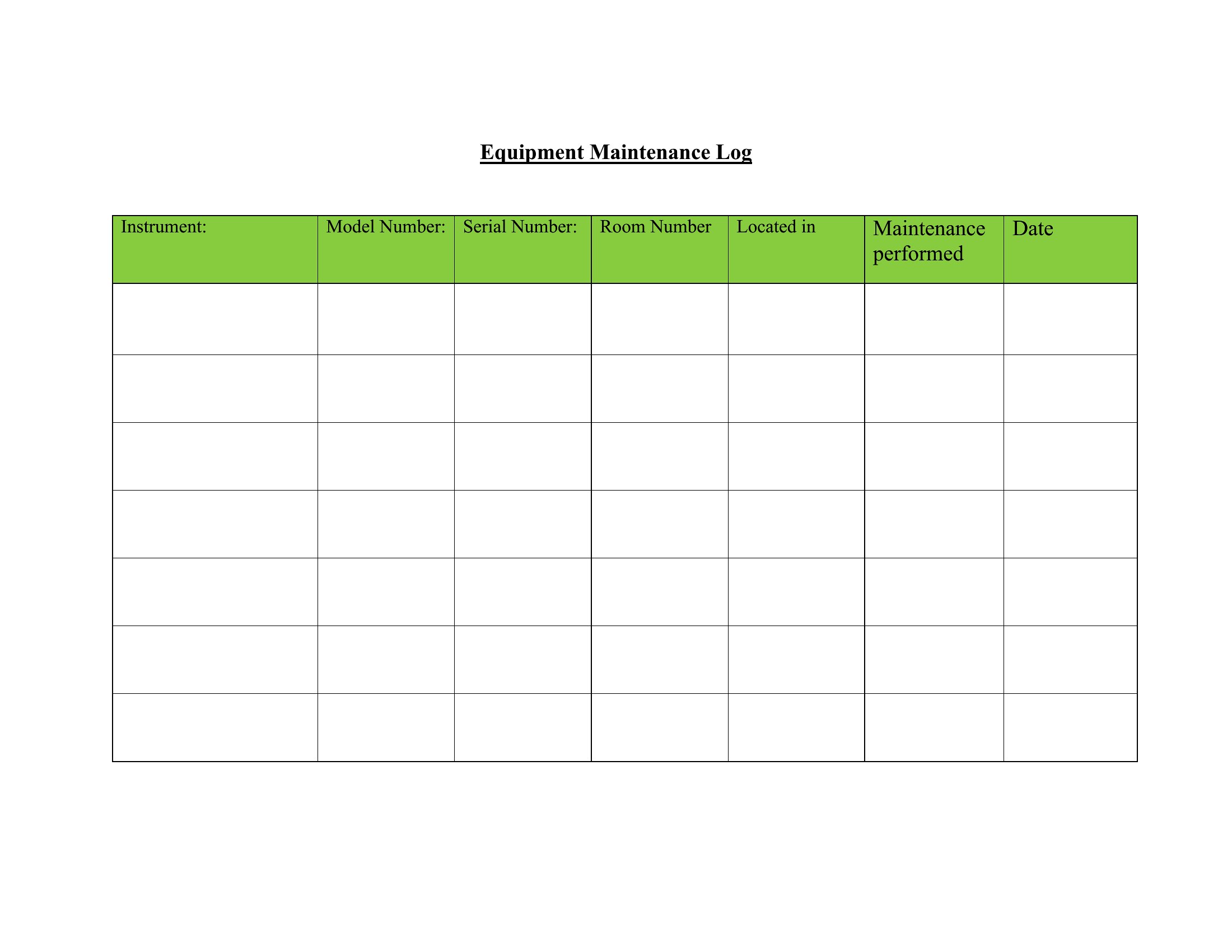
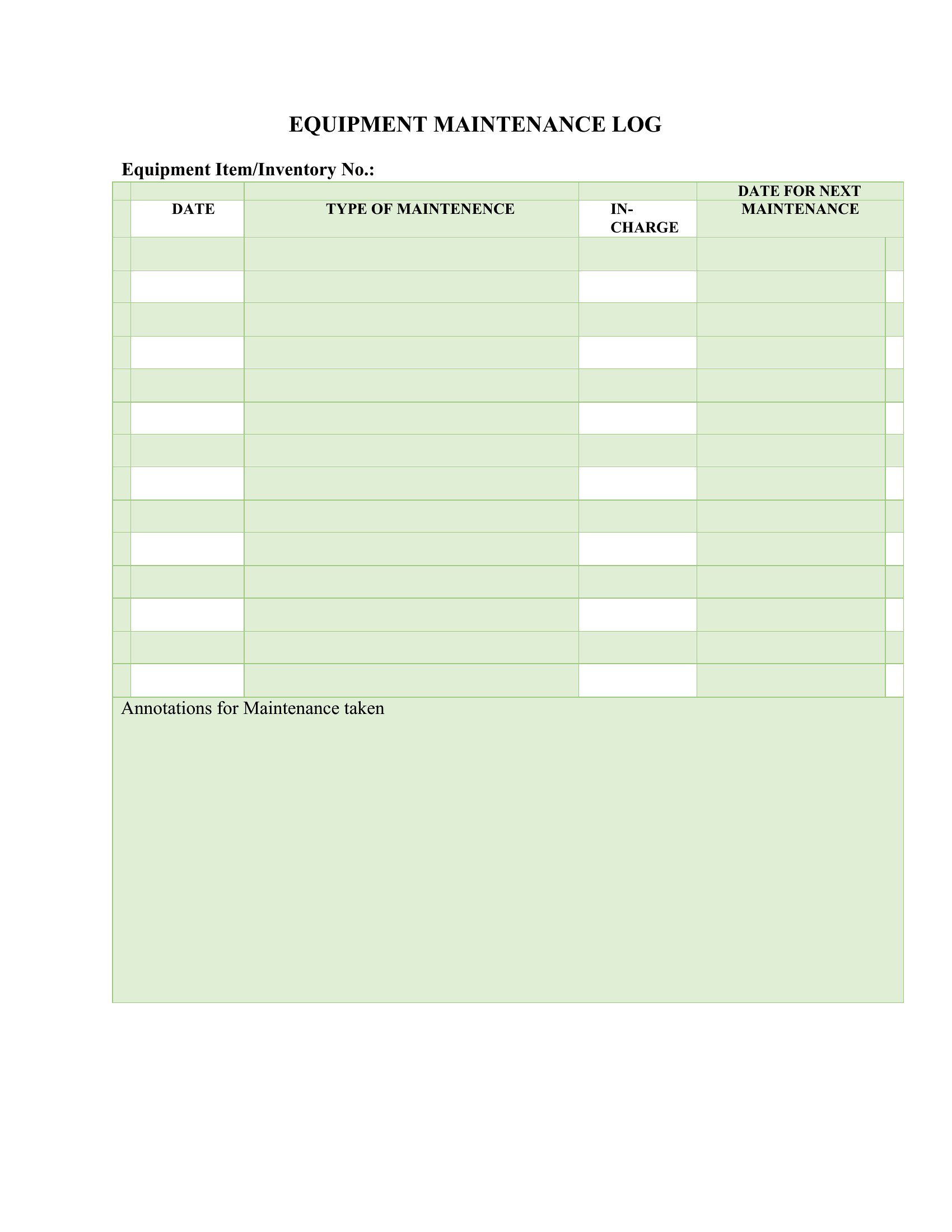
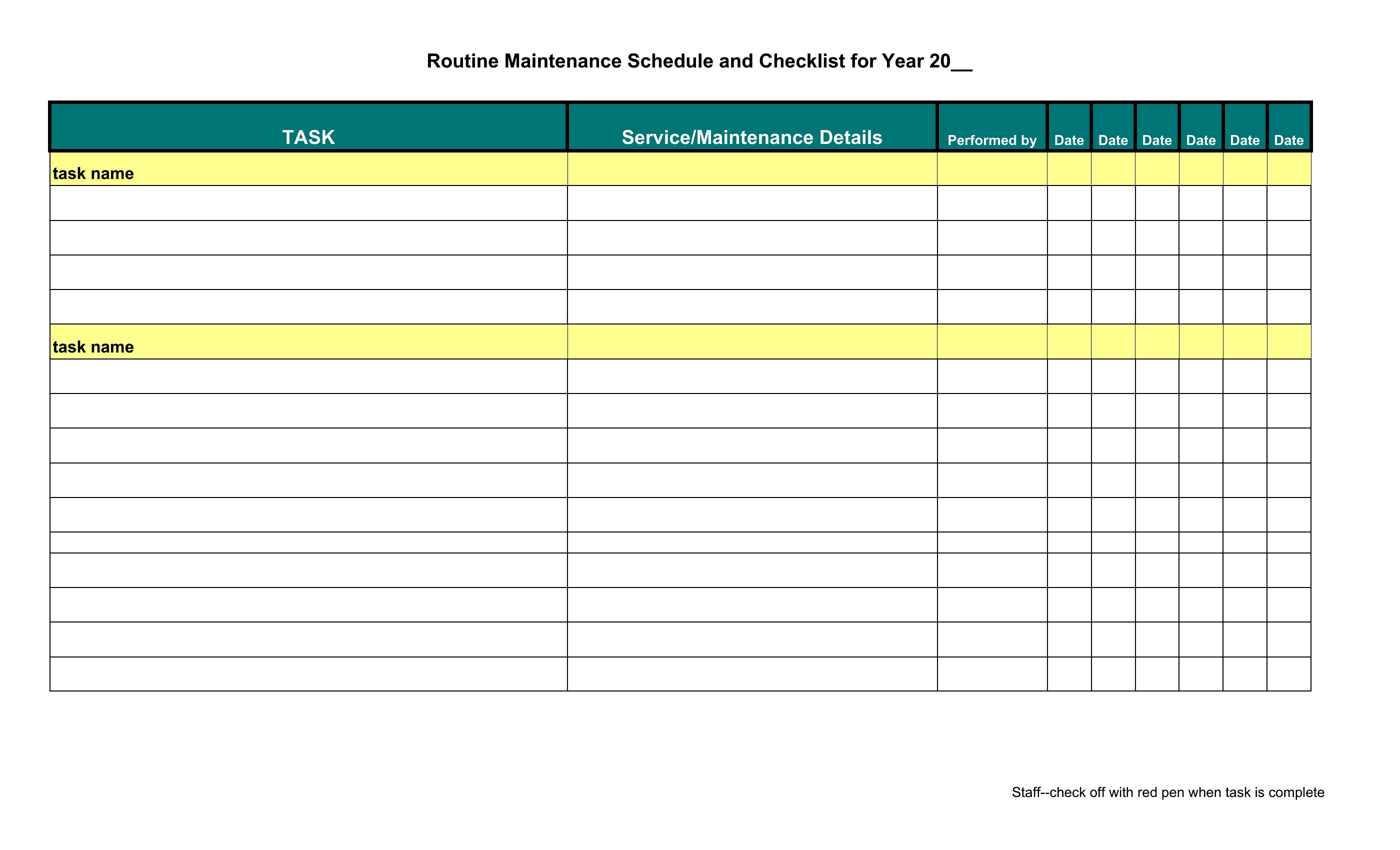
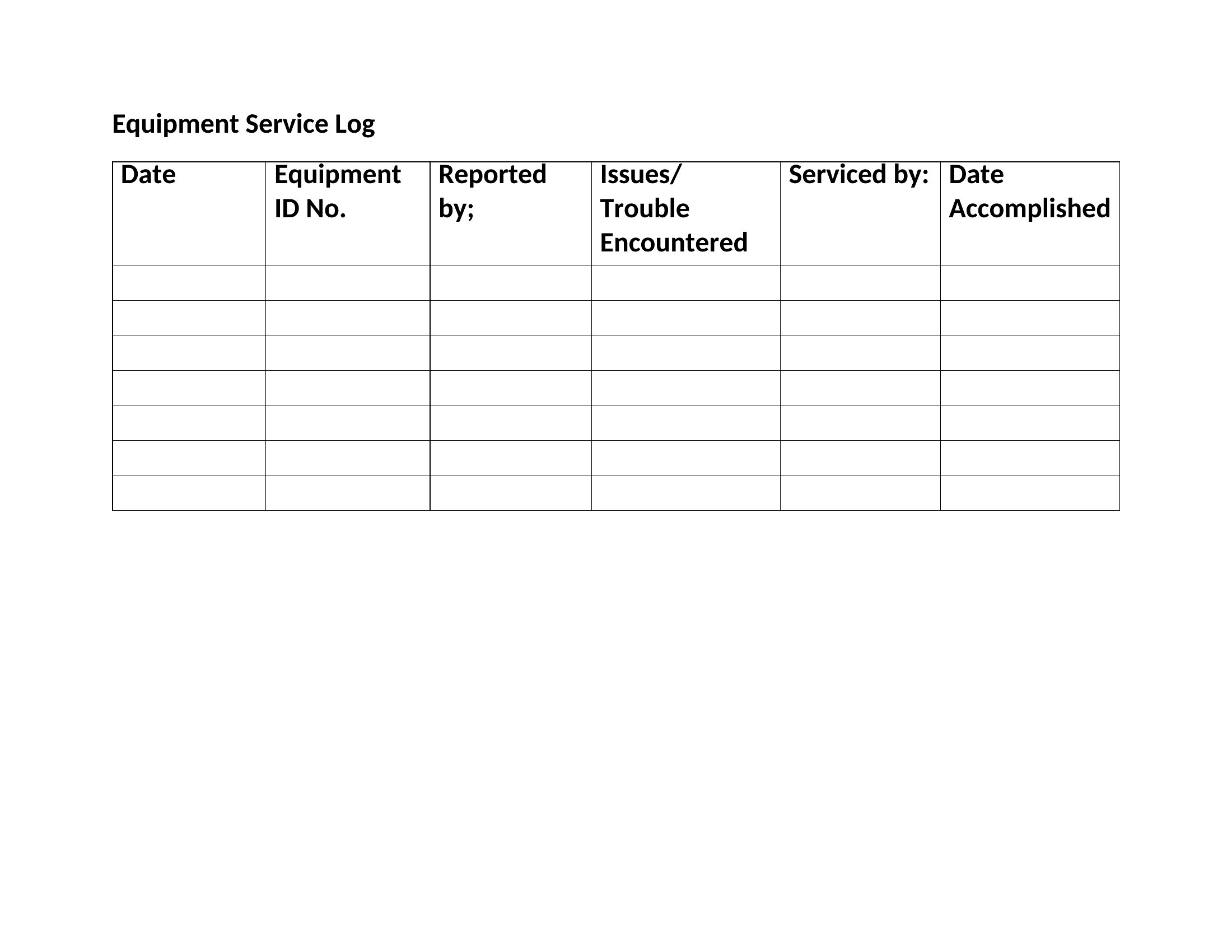
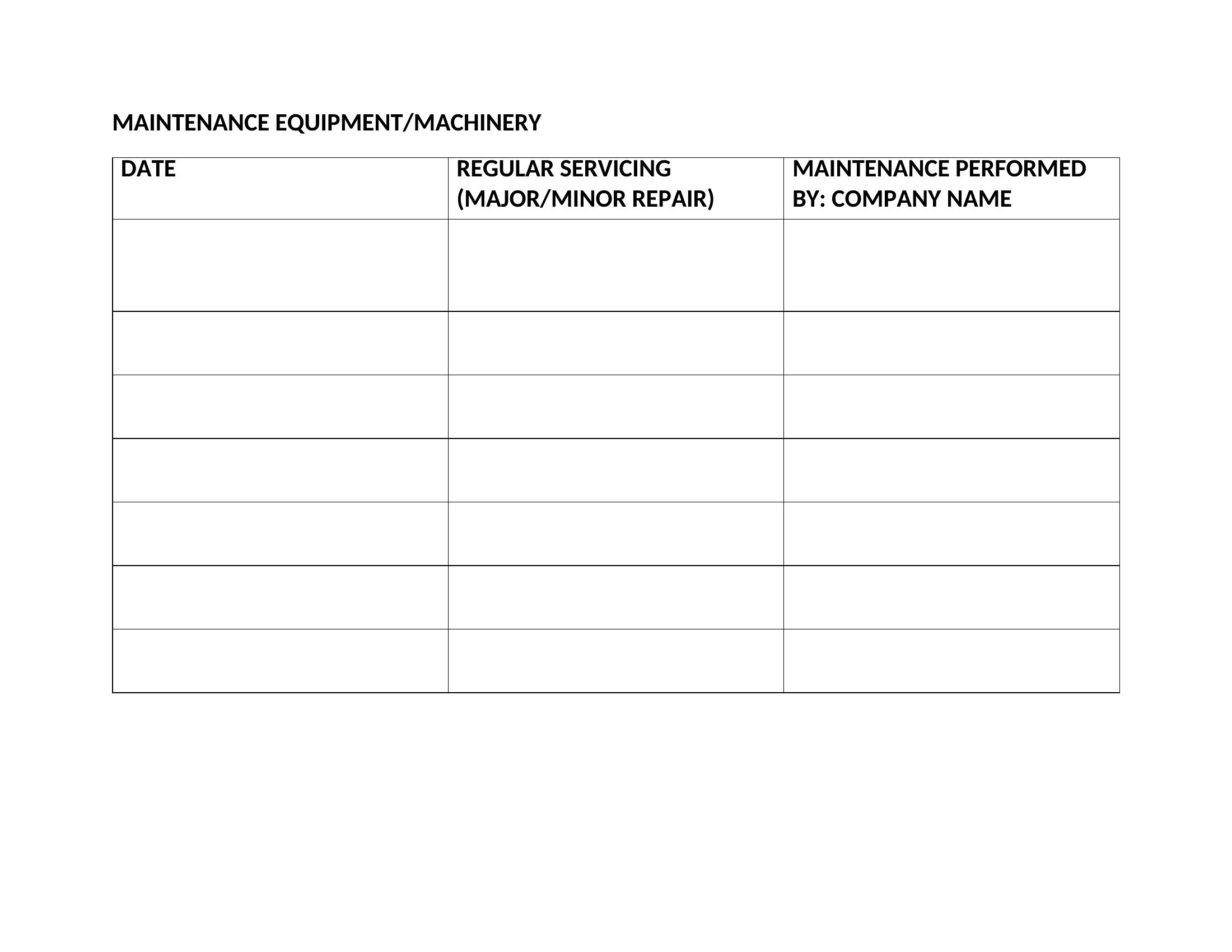
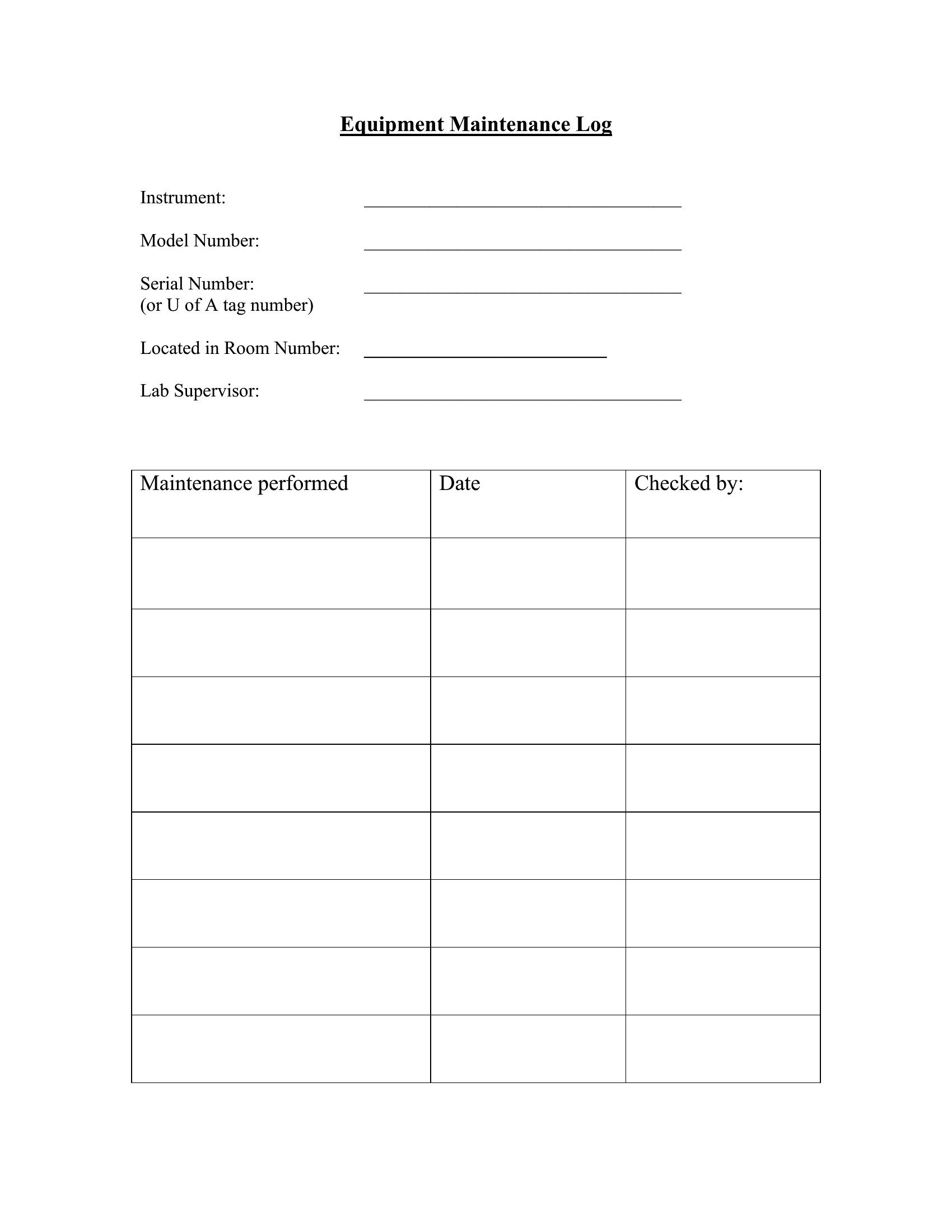
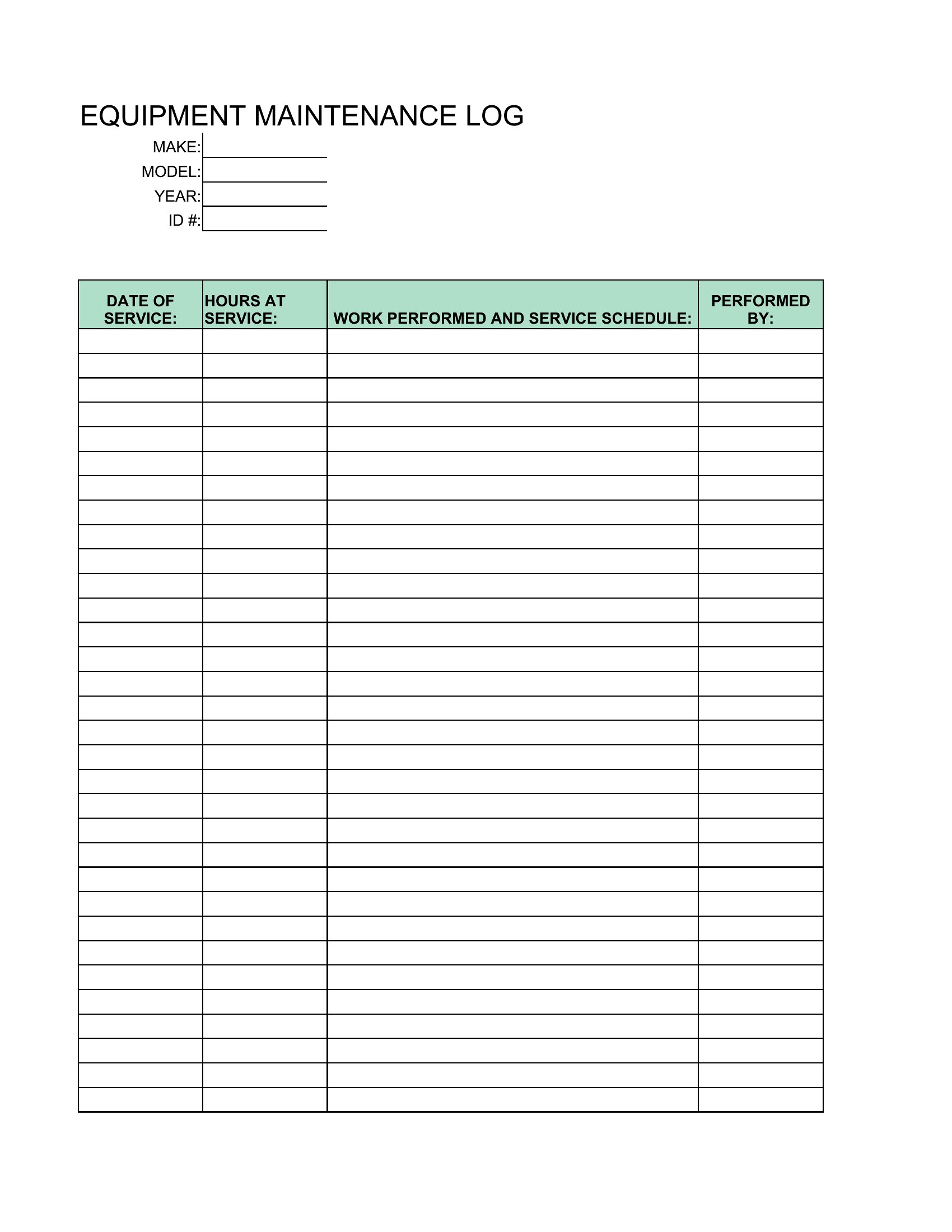
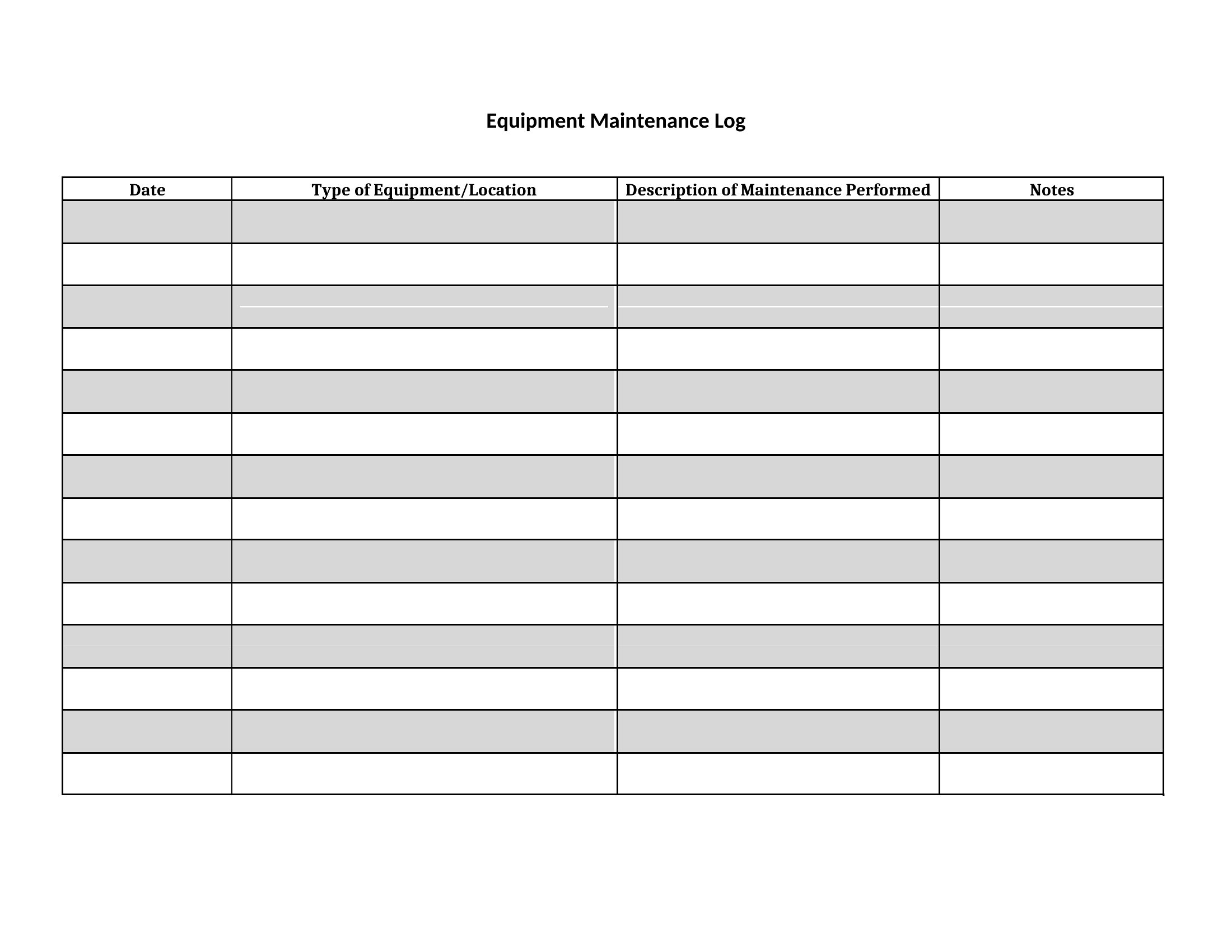
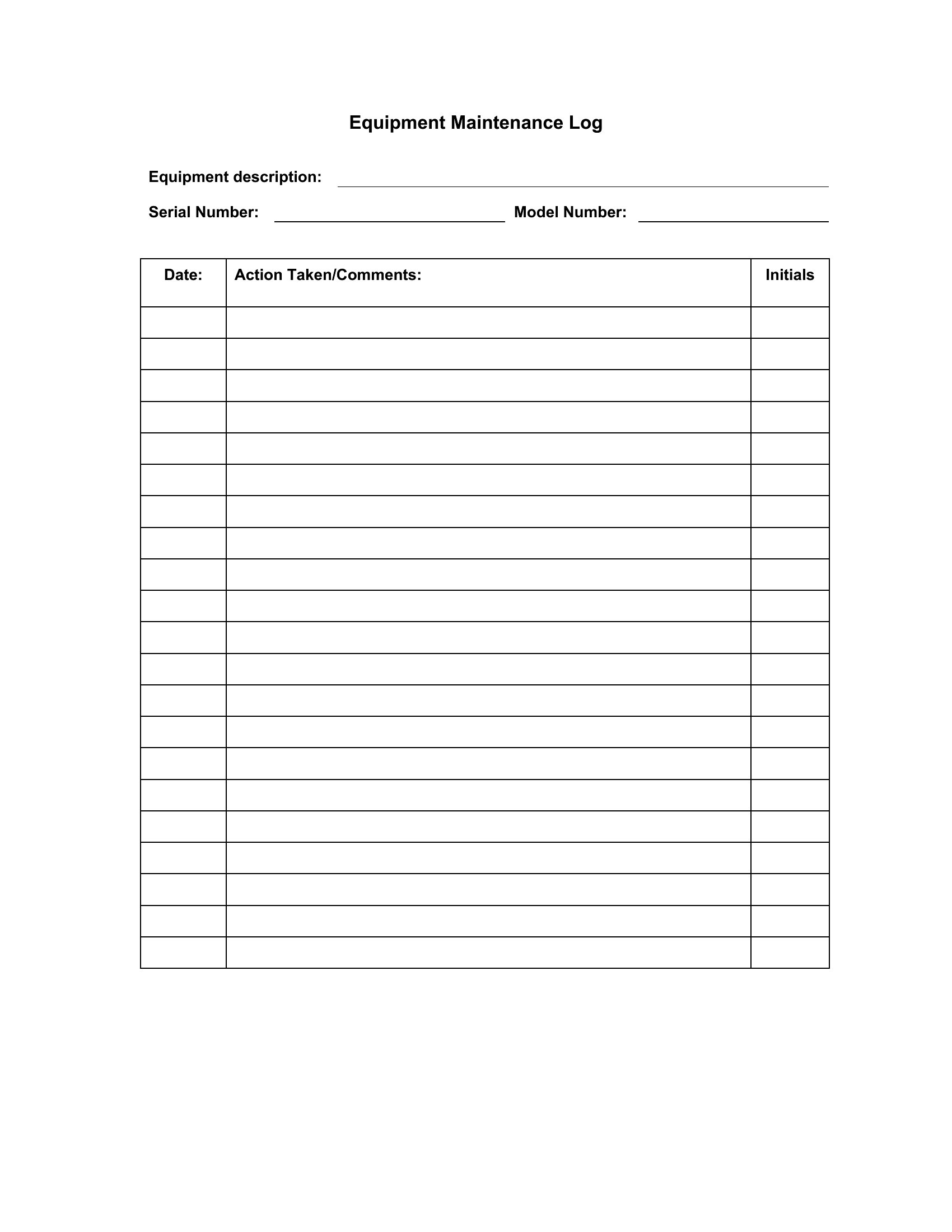
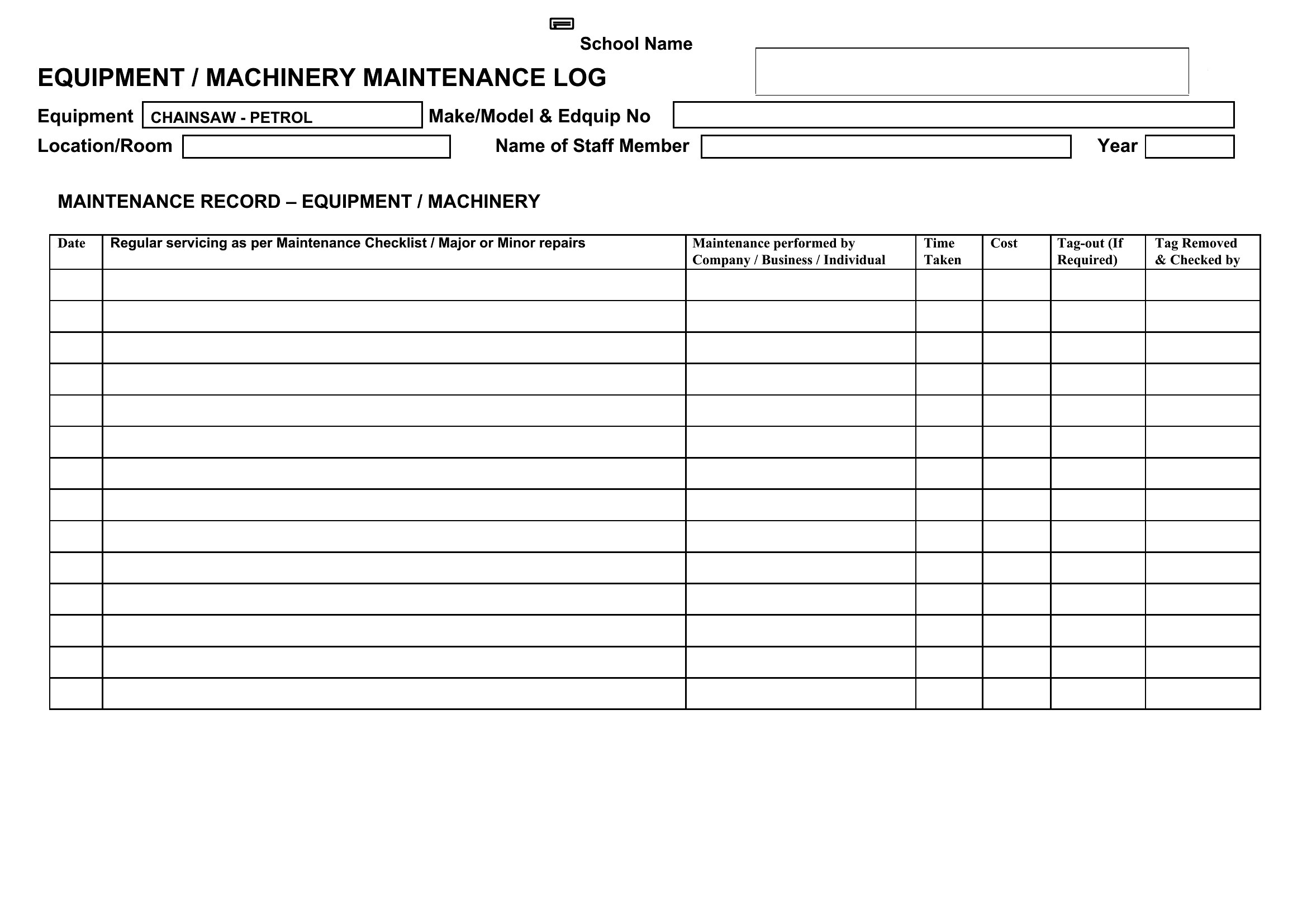
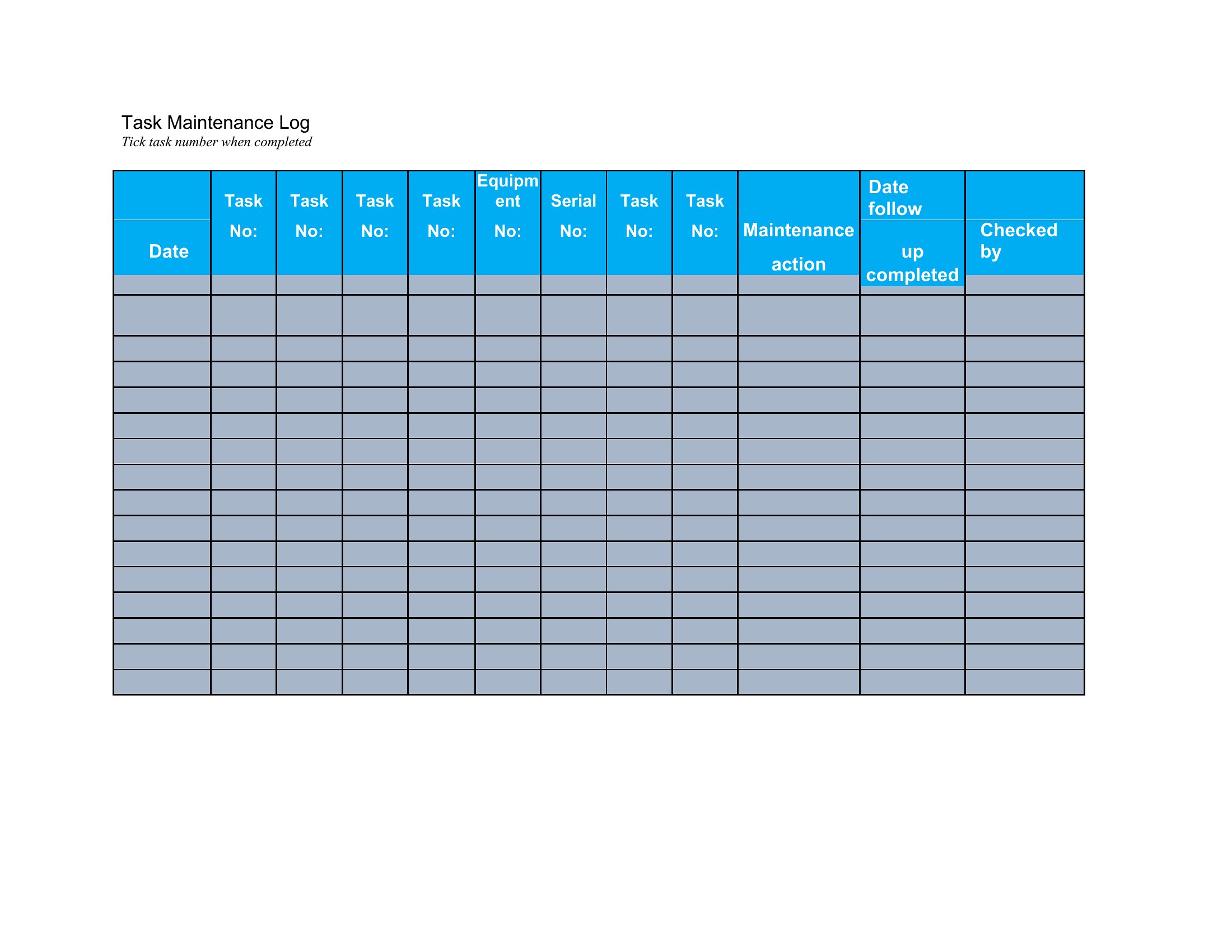
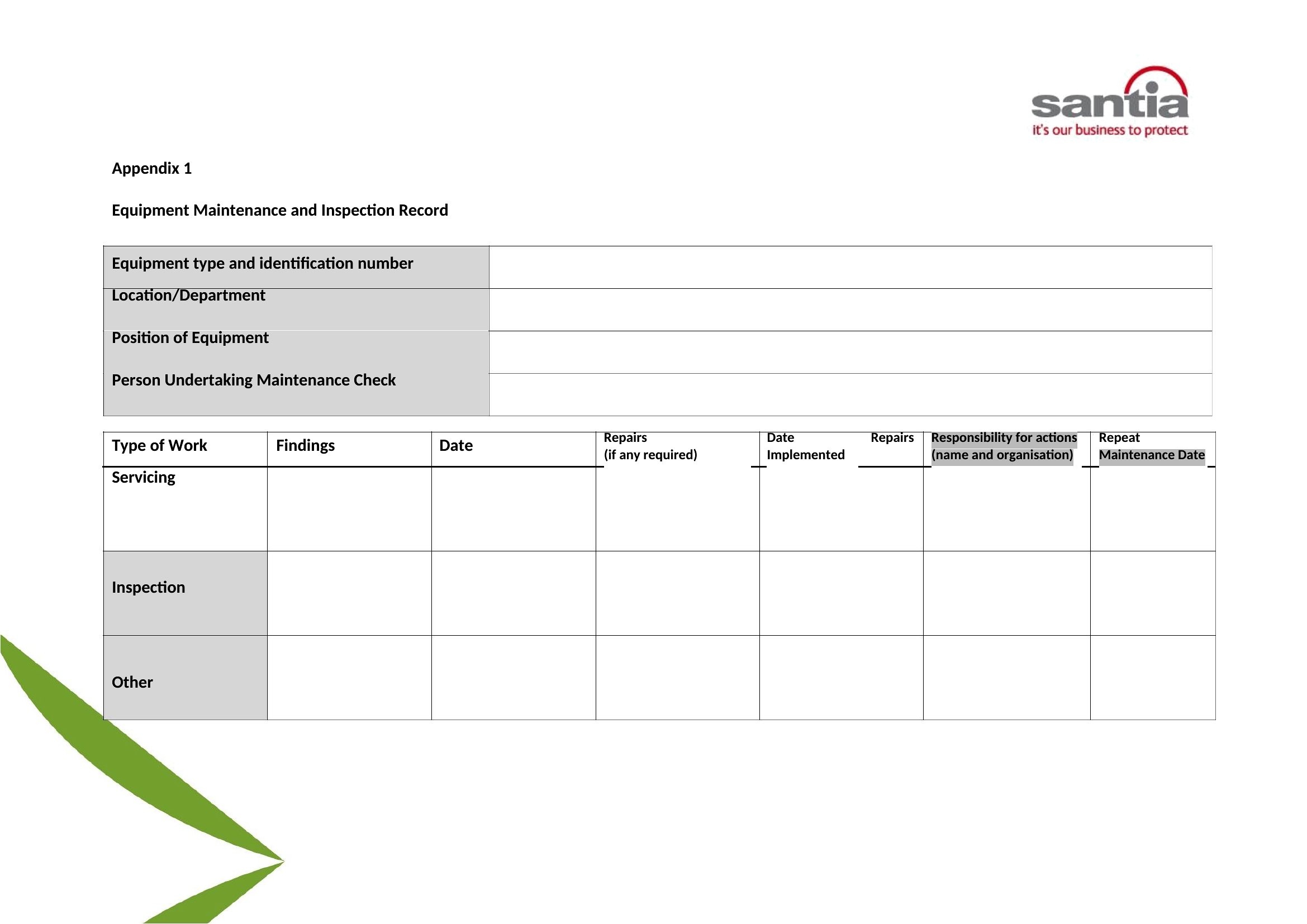
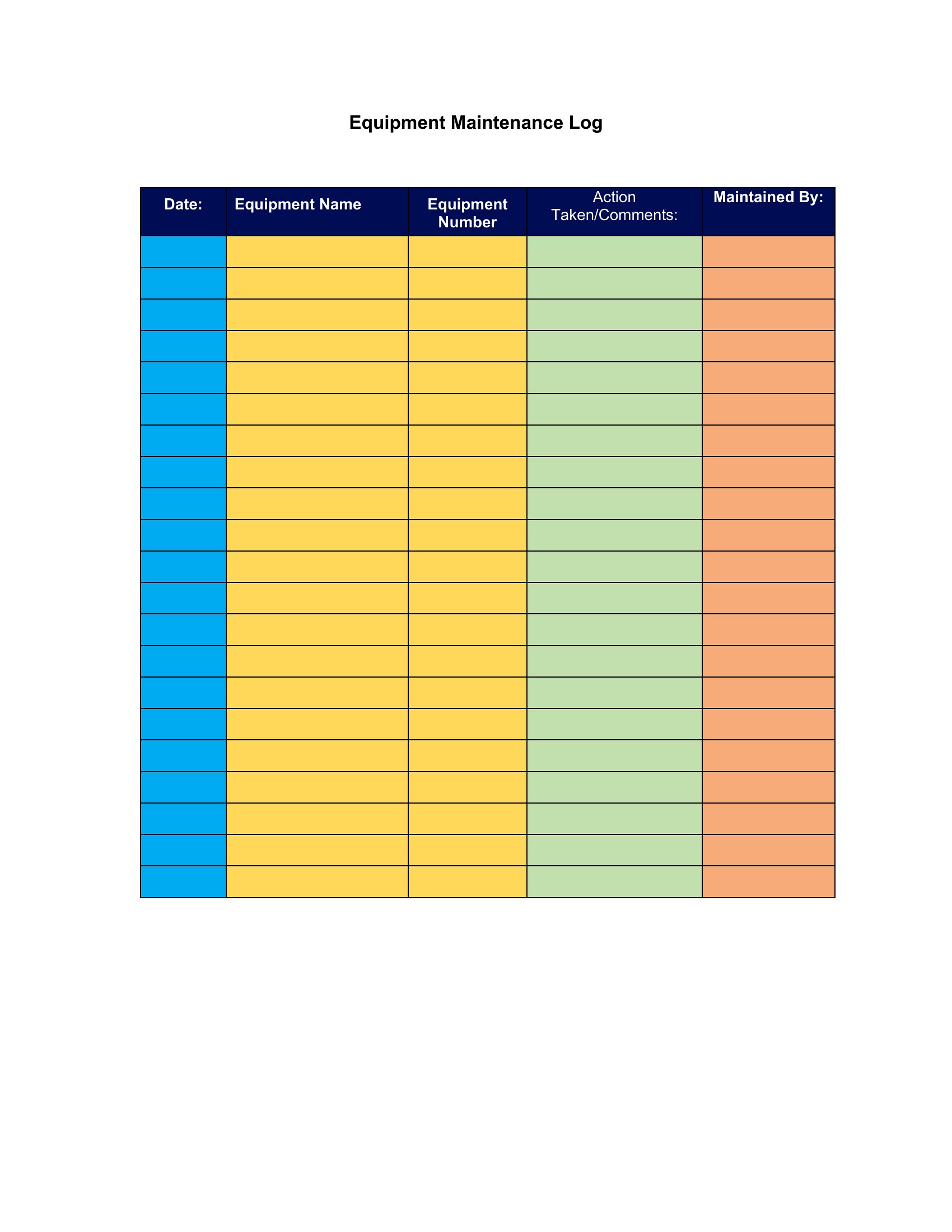
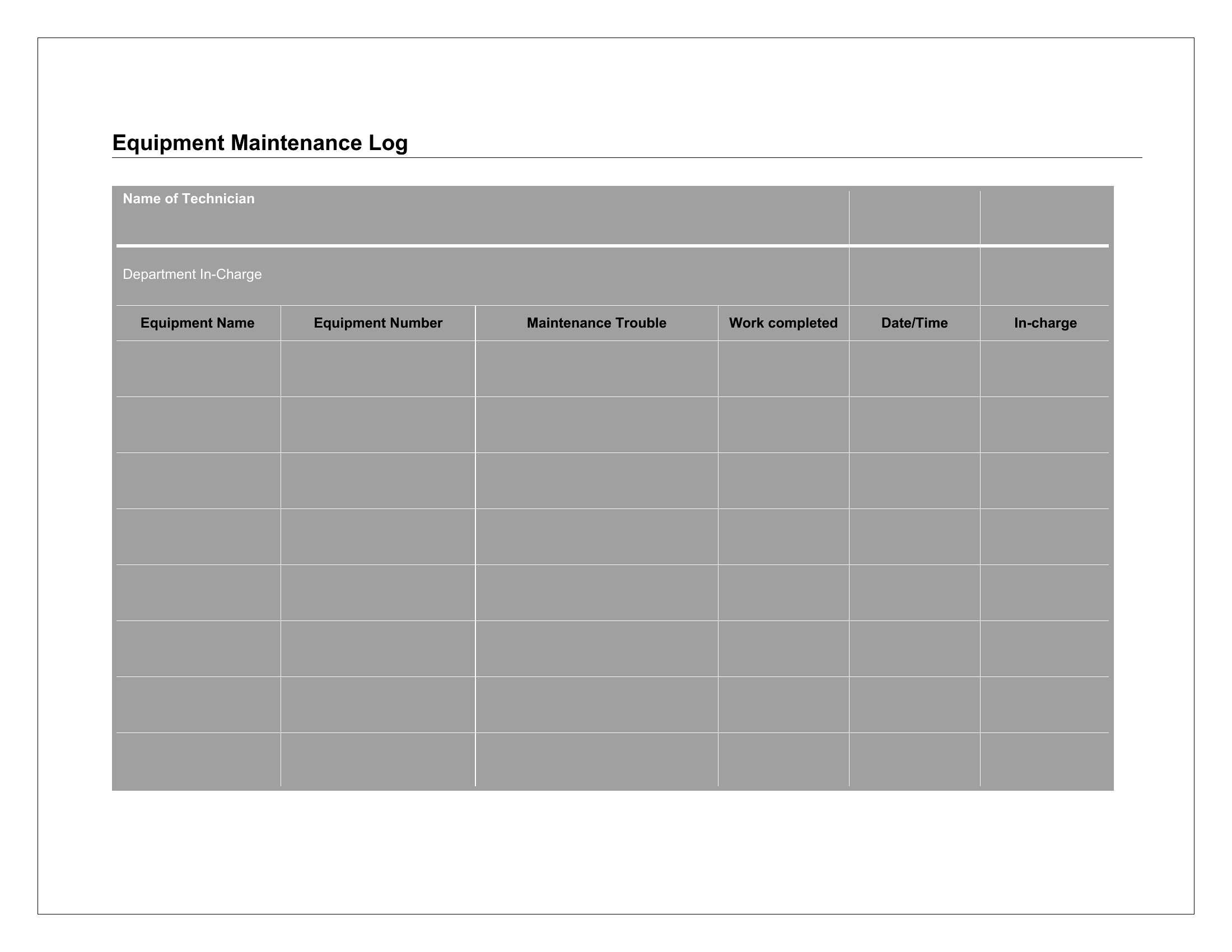
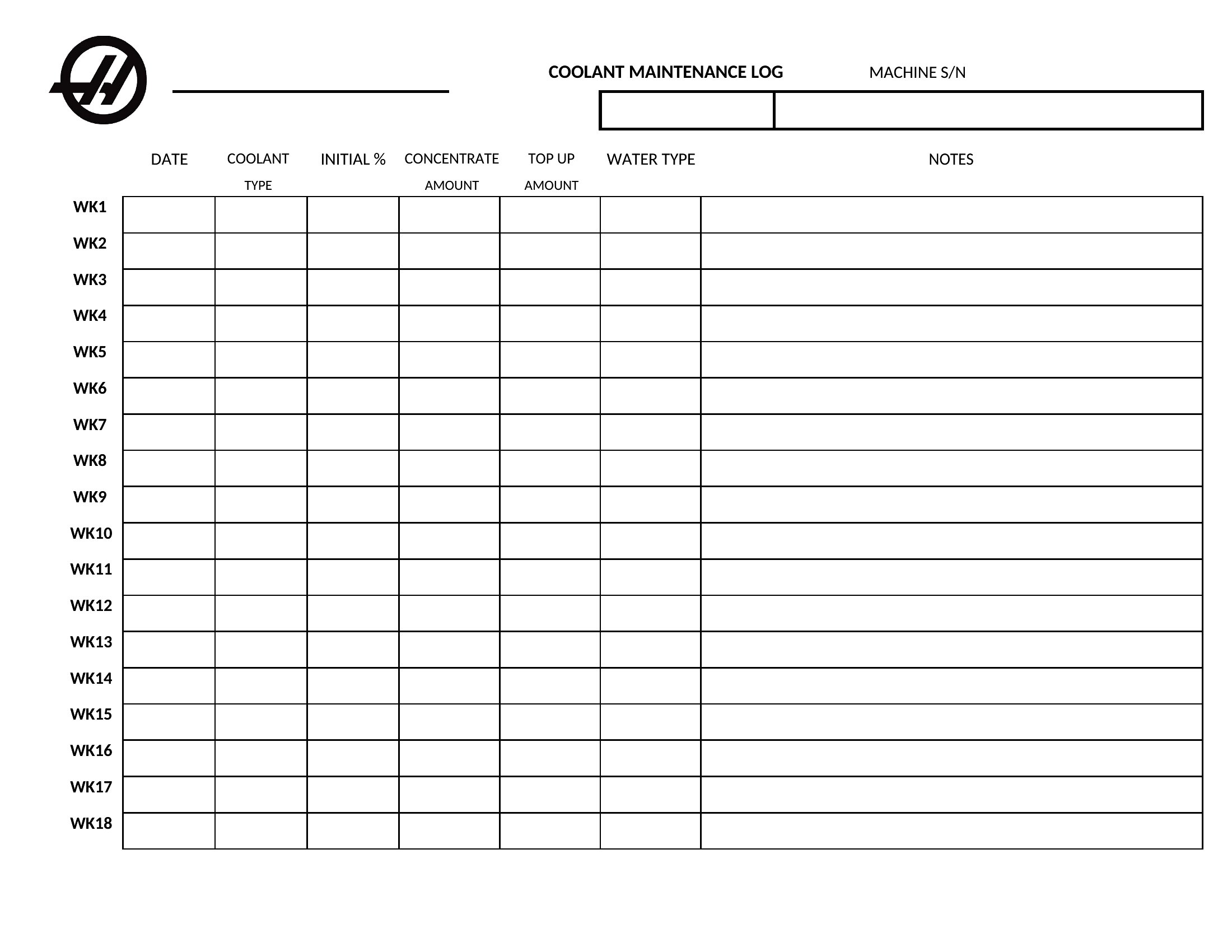
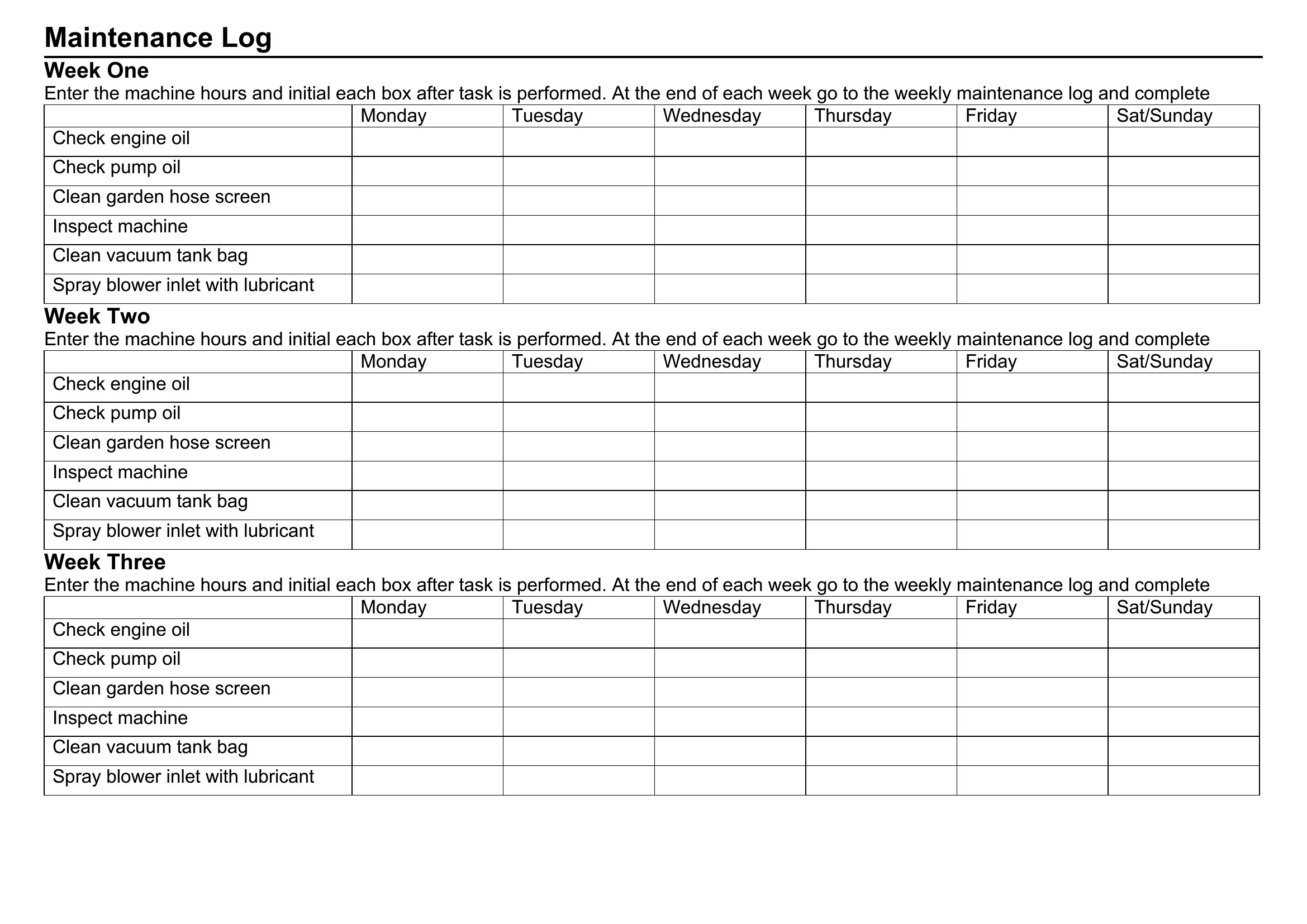
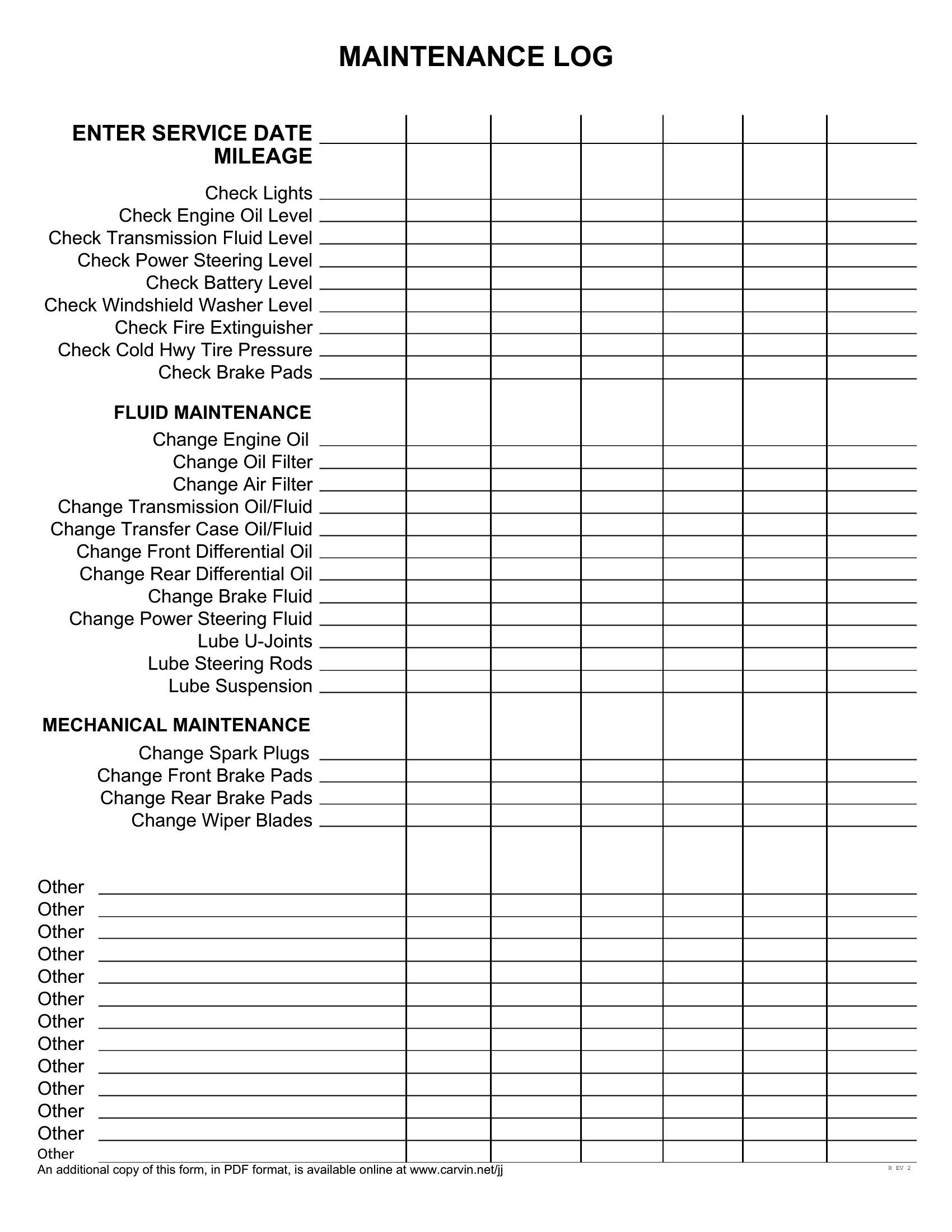
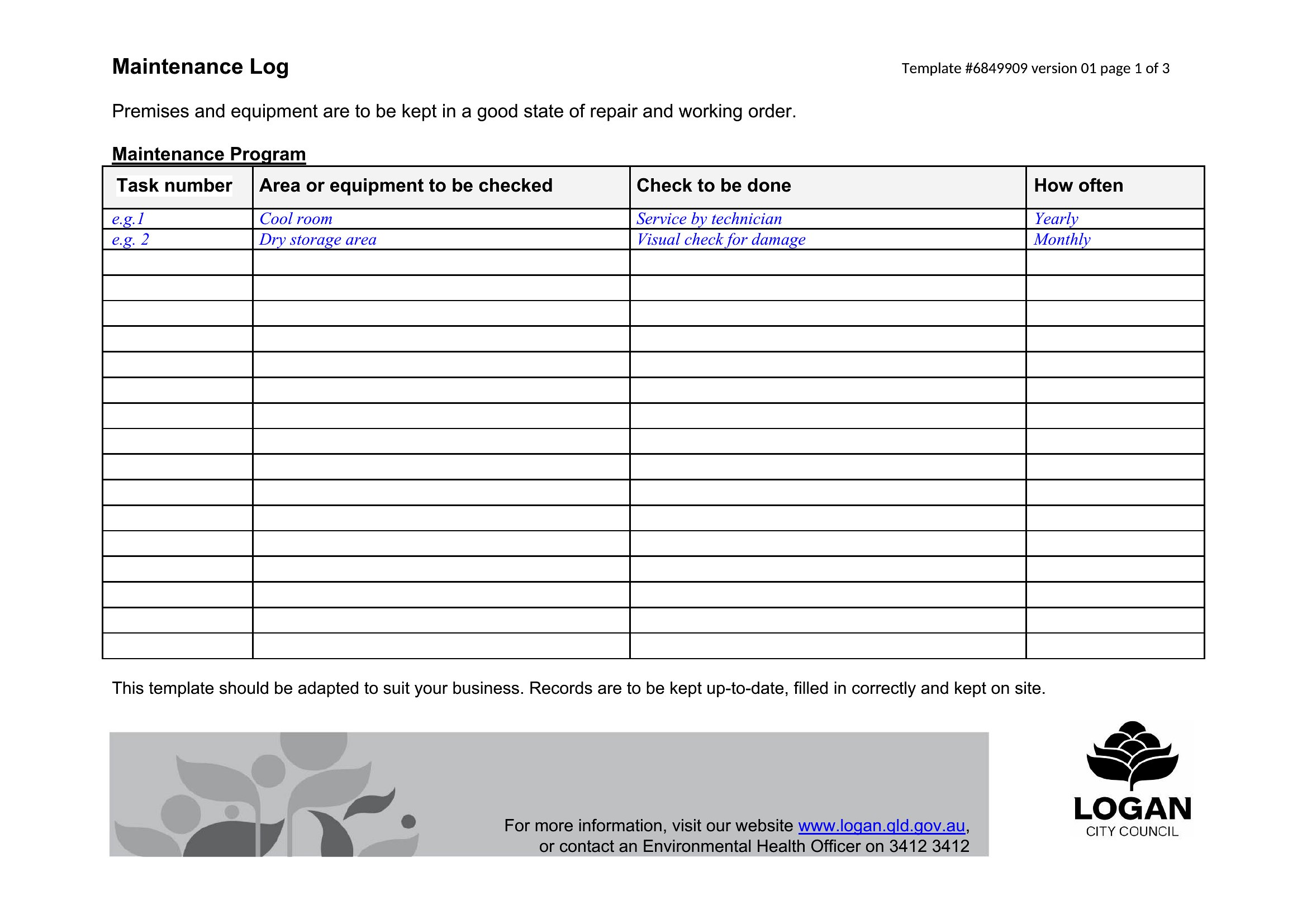
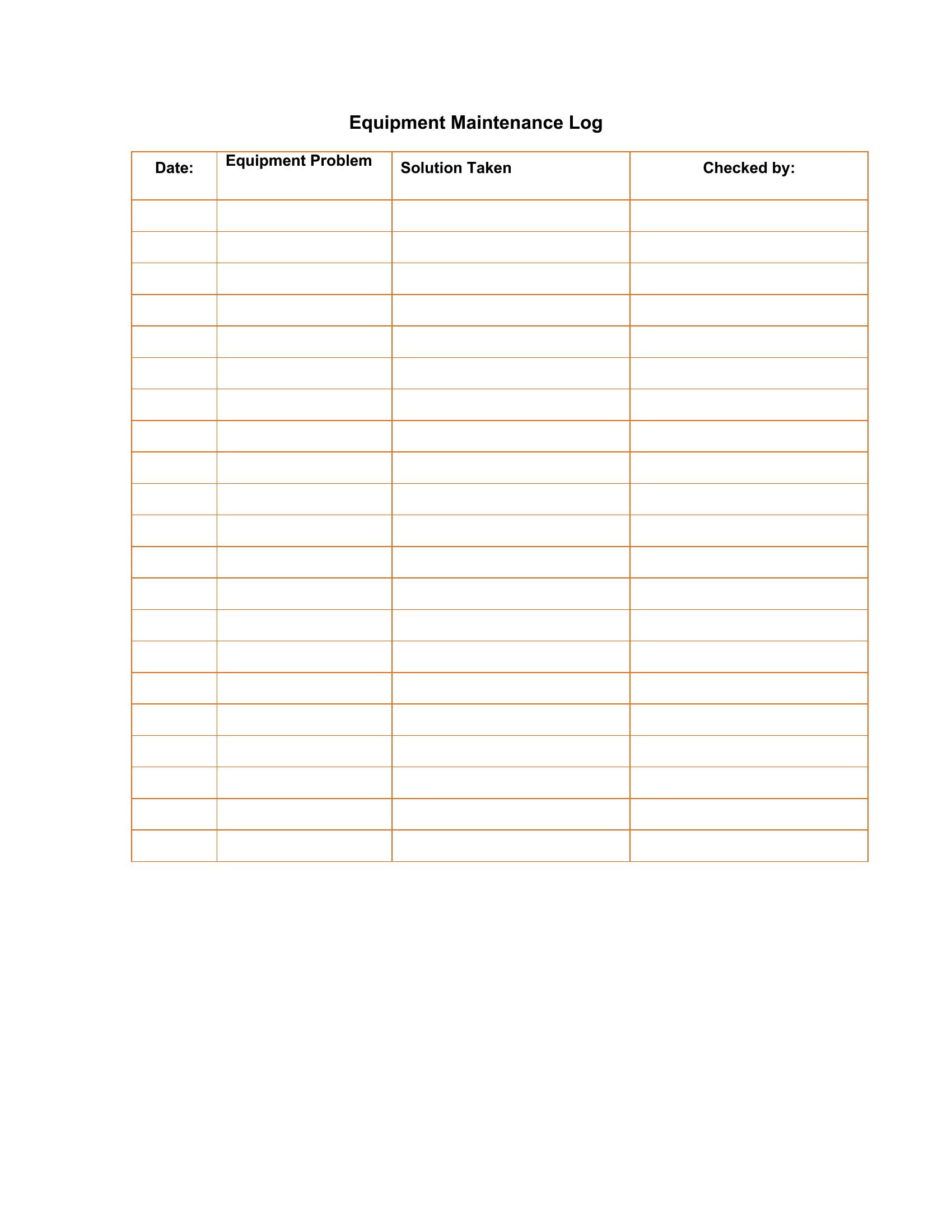
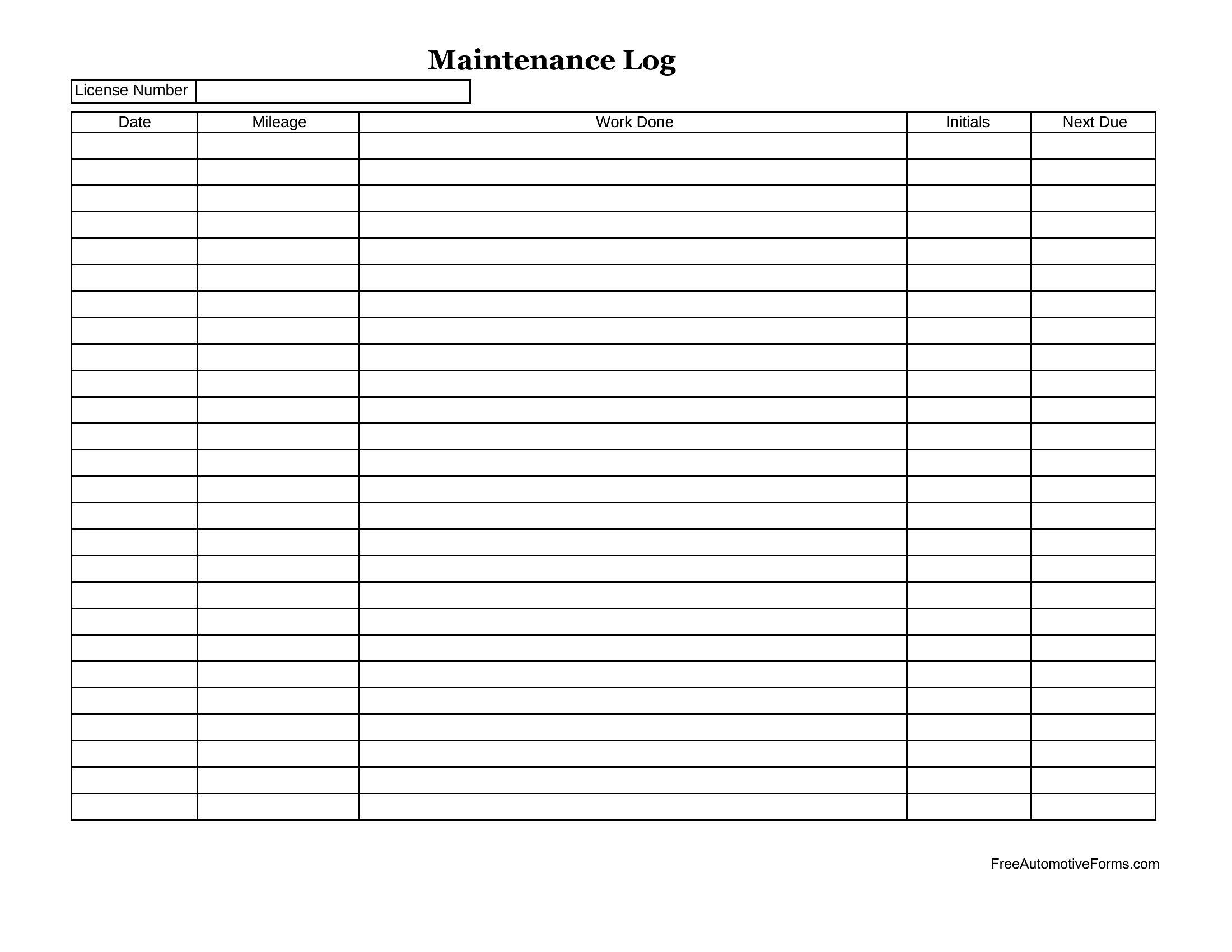
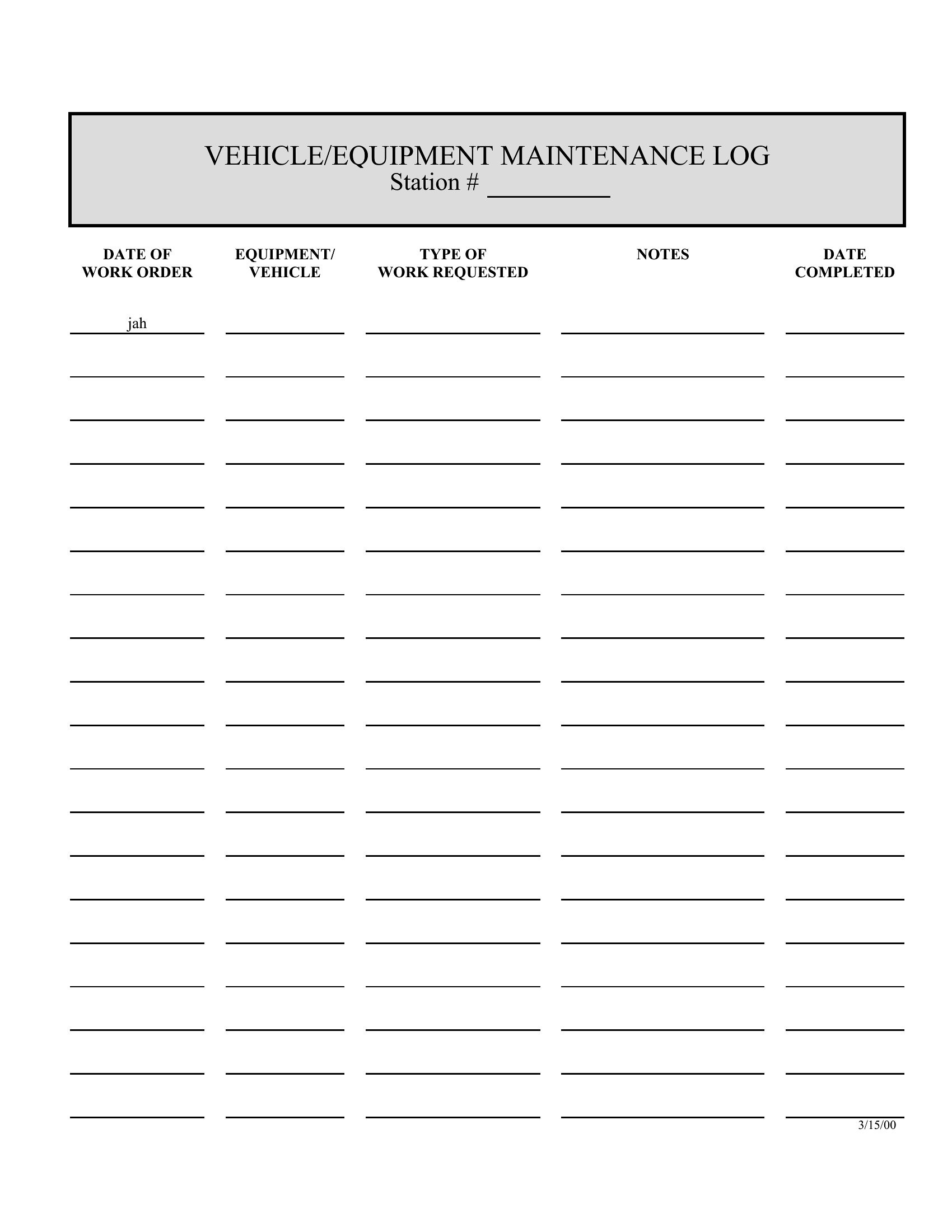
These templates provide a structured record of inspections, repairs, and technician signatures, which can serve as evidence of due diligence. However, they should be paired with actual maintenance records and training logs for full compliance. Always consult a safety professional to tailor logs to your specific industry regulations.
What’s the best way to organize logs for multiple pieces of equipment in one facility?
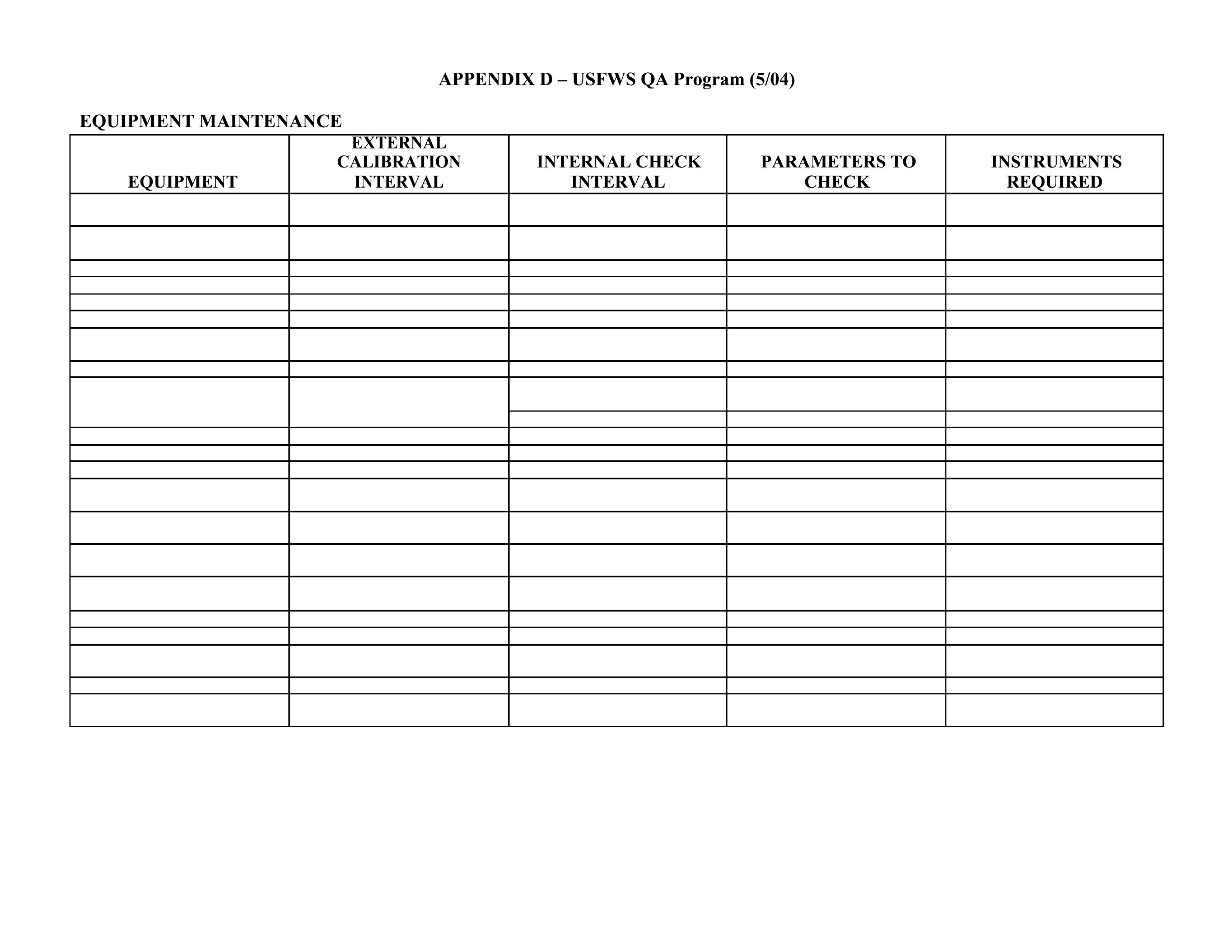
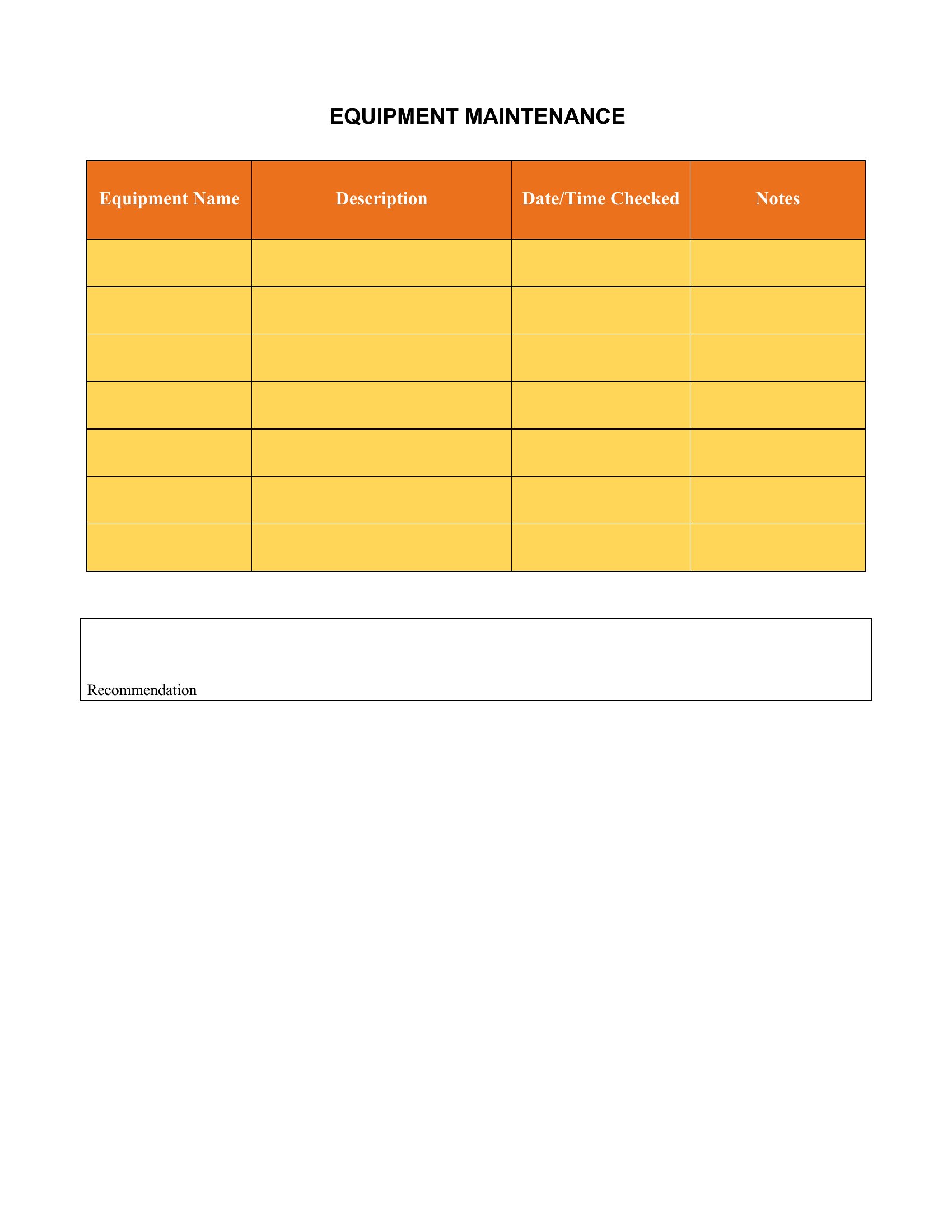
Use a separate tab or sheet in Excel for each machine type (e.g., ‘Conveyor Belts,’ ‘Air Compressors’) with a master index tab linking to each. In Word, create sections with dividers for different equipment zones or use headers to categorize logs by department. Color-coding or consistent column headers will make searches faster.
Should we include space for supplier or part manufacturer details in the log?
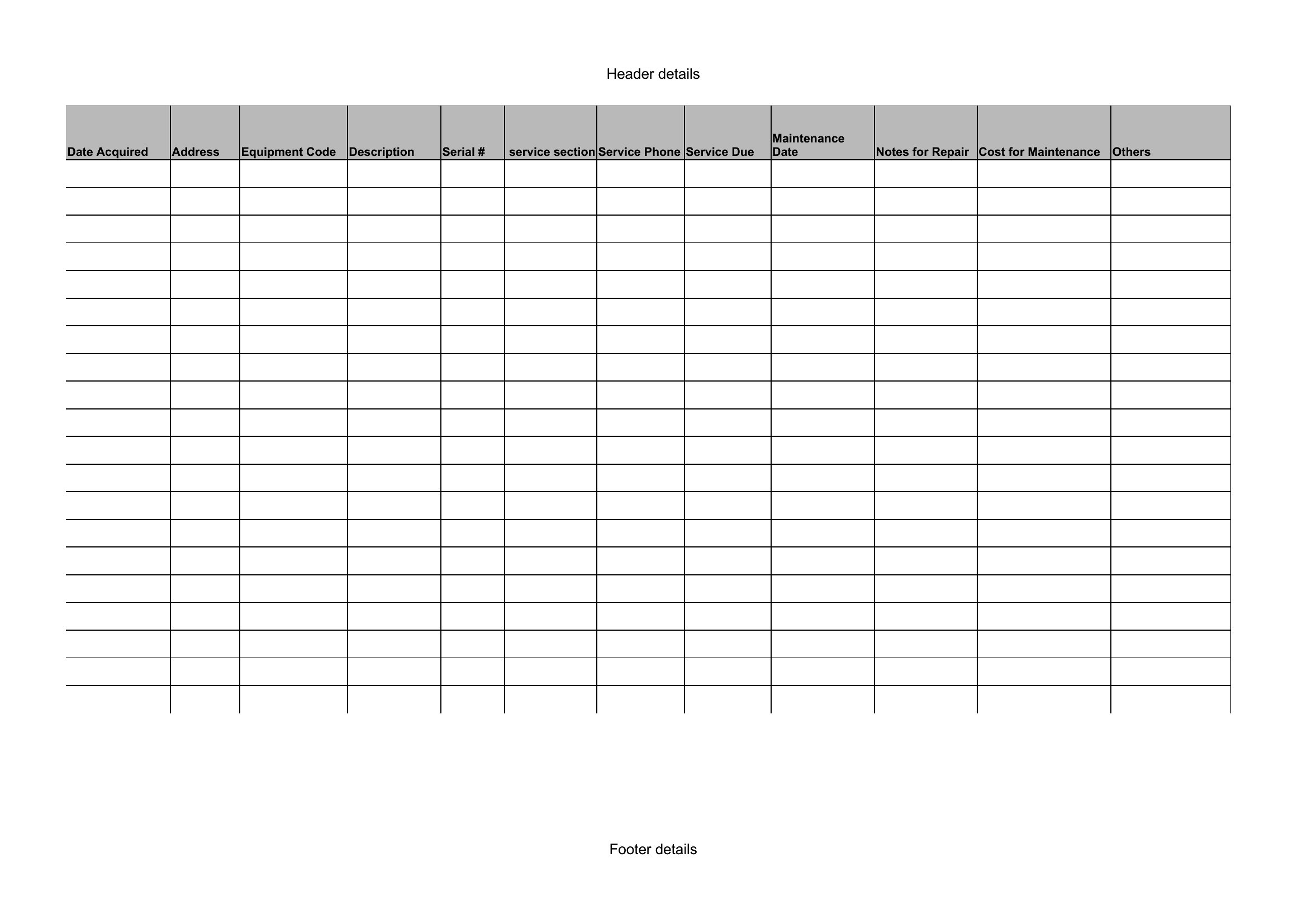
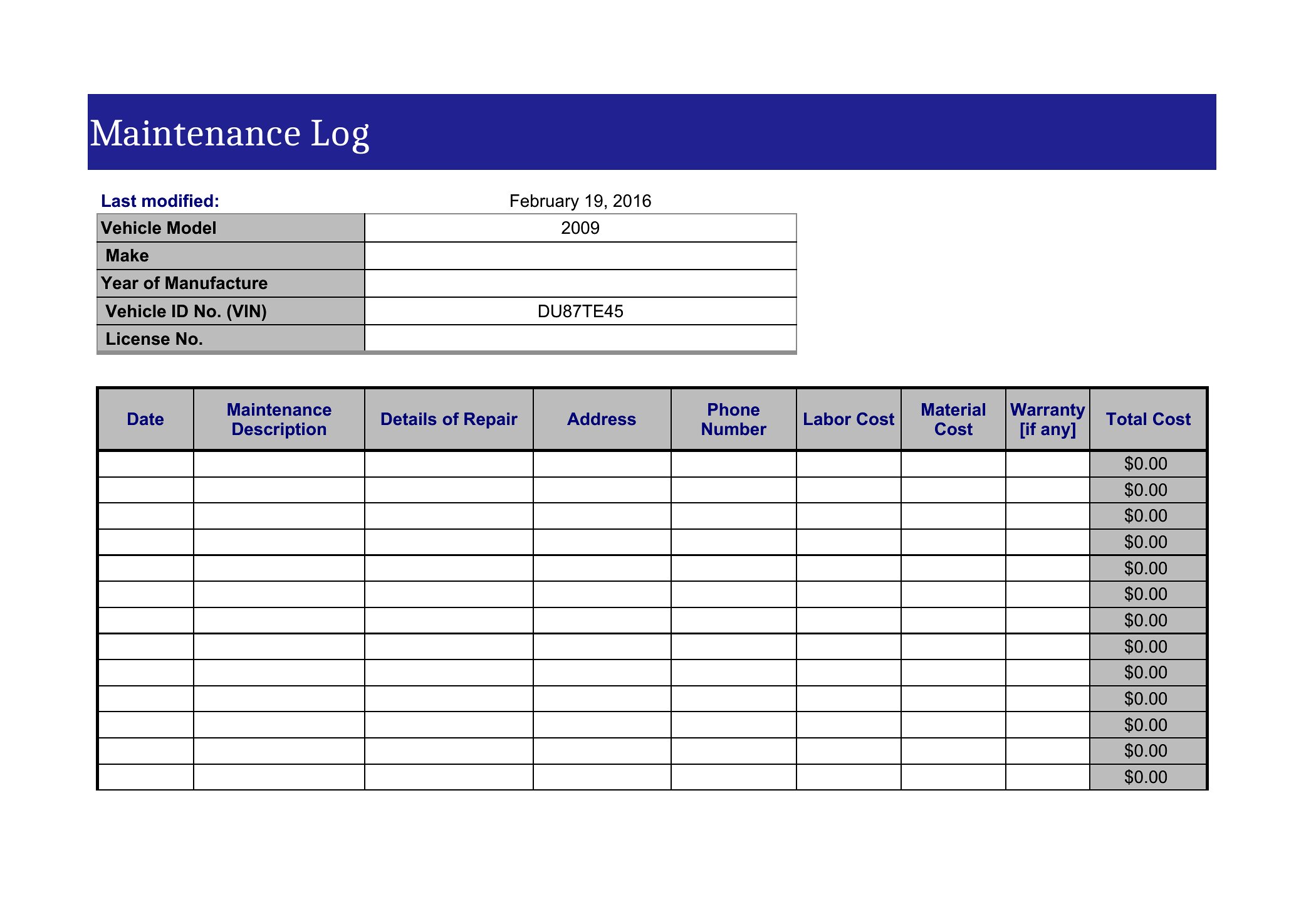
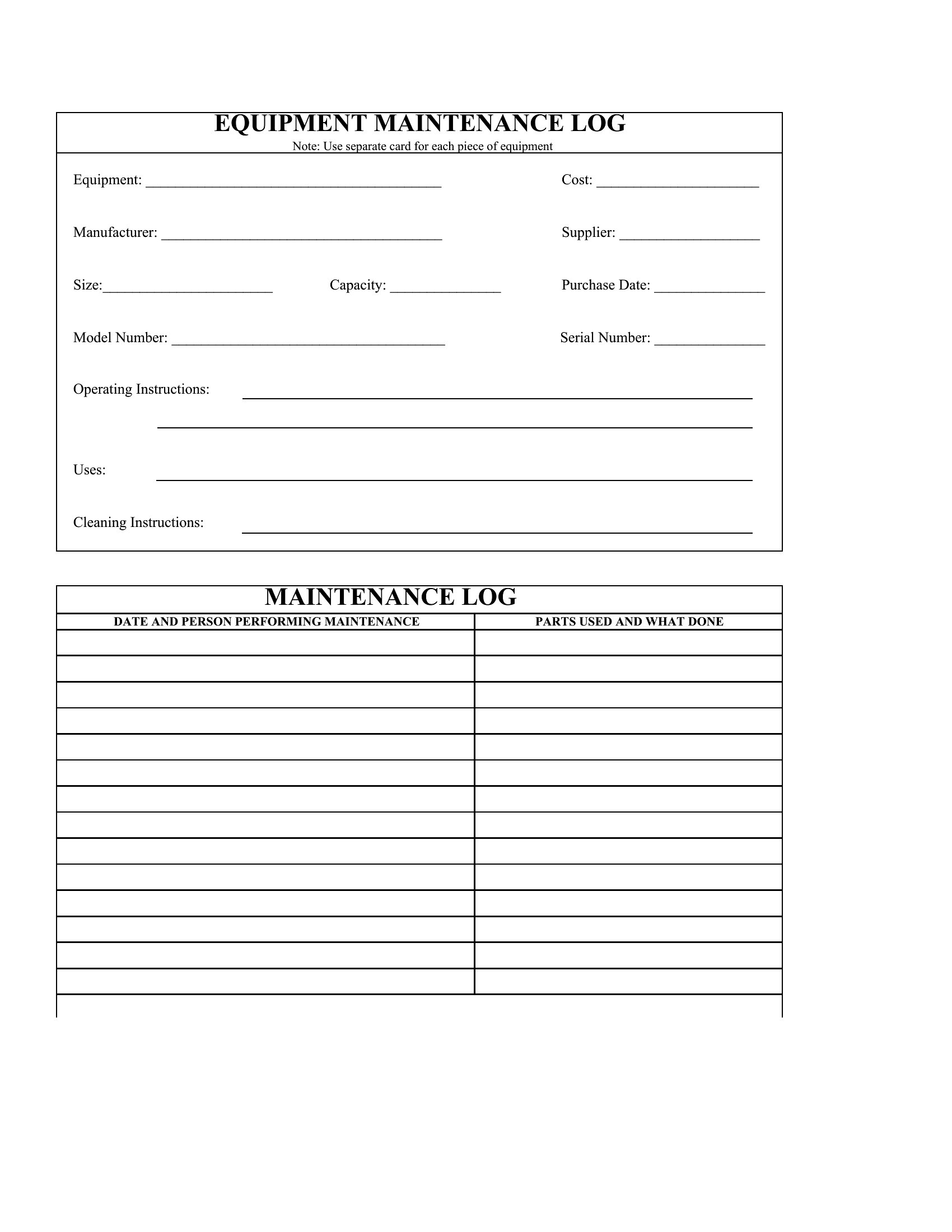
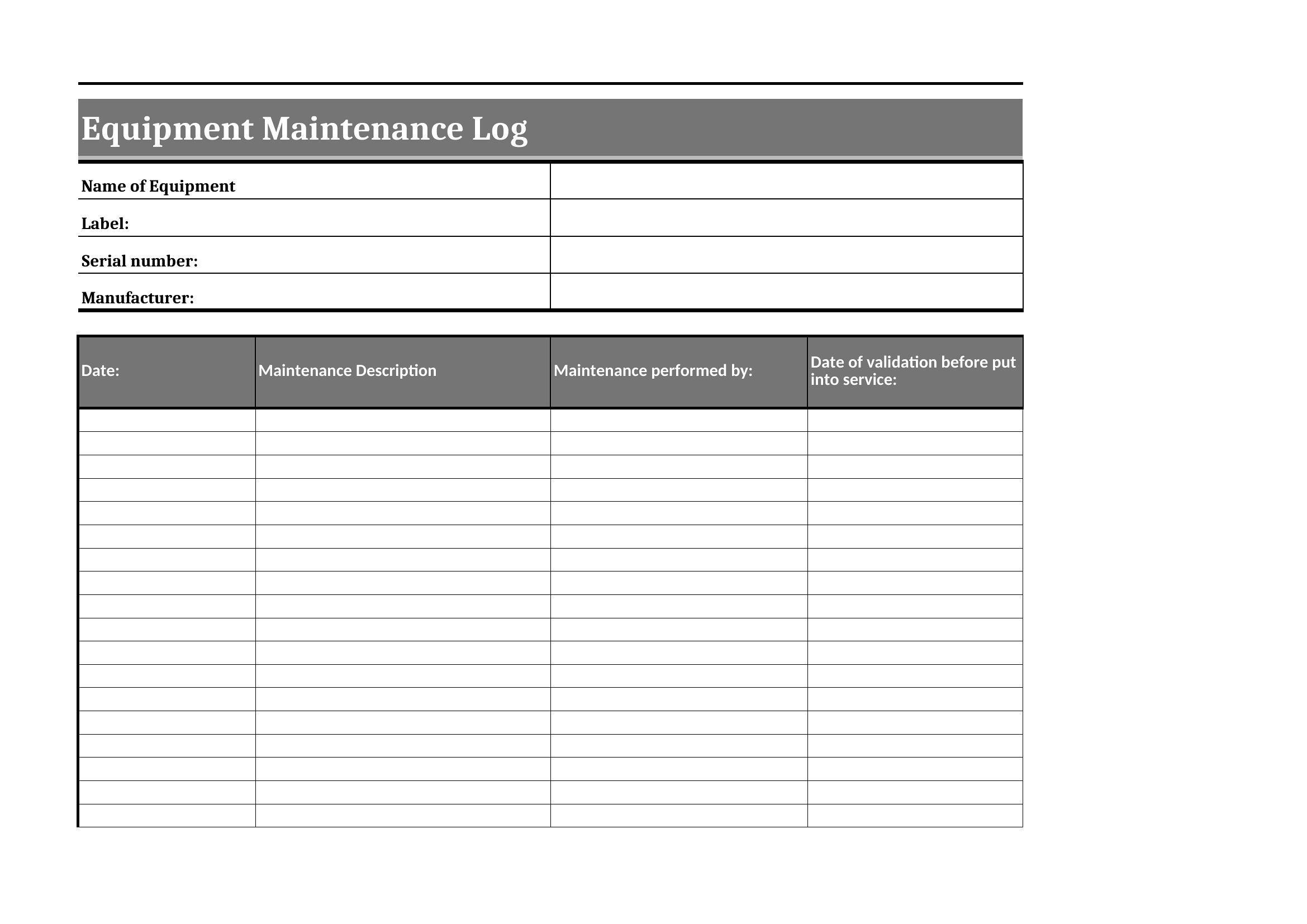
Yes, adding a column for part numbers, manufacturer names, and warranty details can streamline reordering and troubleshooting. This is especially useful for facilities with specialized equipment where compatibility issues are common. Start with a few key columns, then expand based on what your team finds most helpful during the first few weeks of use.
Comments
Join the conversation
Sign in to share your thoughts and leave a comment on this resource.