

FAQ
How do I handle unused retainer hours if my client doesn’t need them all by month’s end?
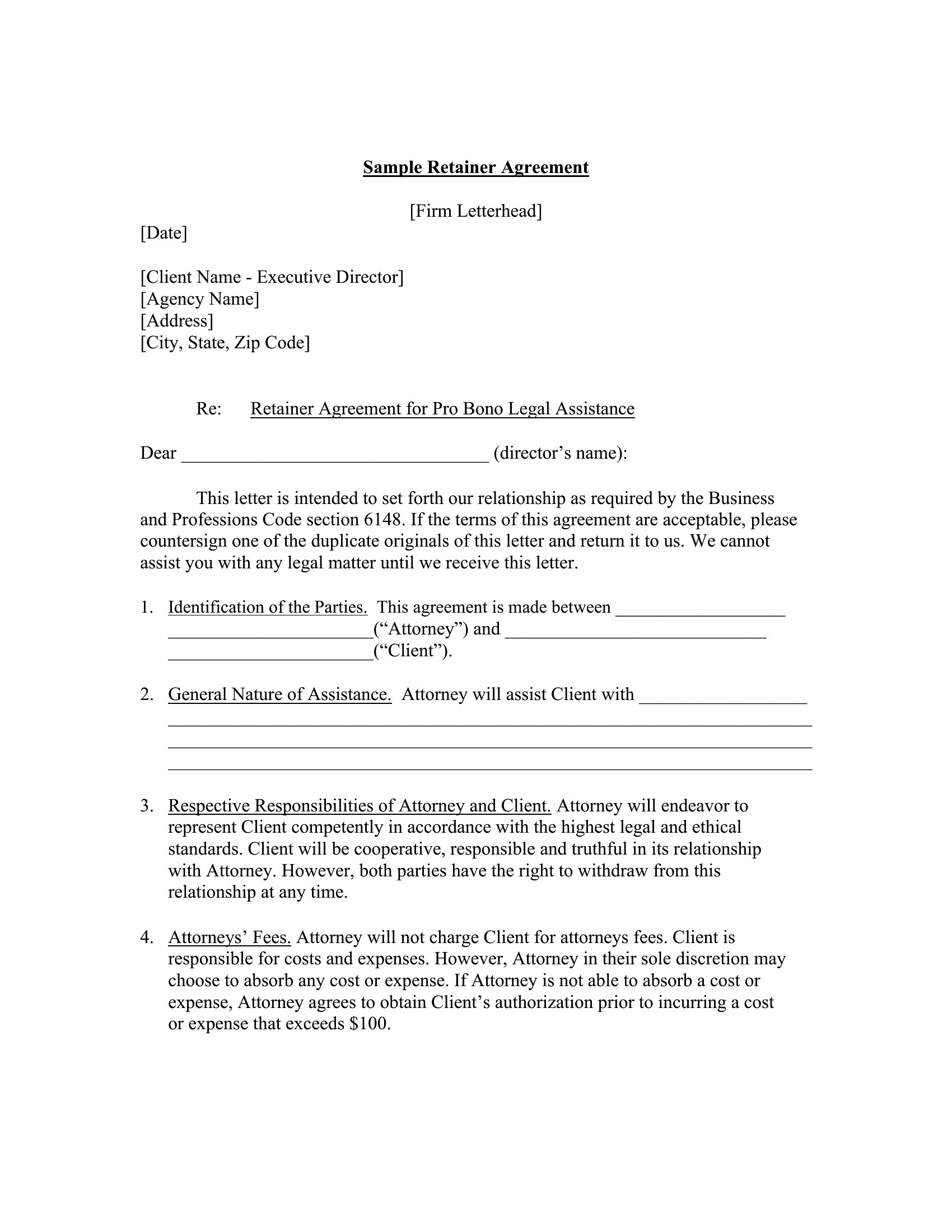
Most templates include a clause for rolling over unused hours to the next month or converting them into billable services. Specify whether a cap exists (e.g., 10 hours) and whether the client pays for unused time at a discount or loses it. Consult a lawyer to ensure compliance with your state’s rules on retainer forfeiture.
What’s the best way to define ‘scope of work’ in a retainer agreement to avoid disputes?
List specific tasks (e.g., “monthly content strategy reviews” or “two rounds of edits per deliverable”) and exclude work outside the retainer. Use bullet points for clarity and add a clause stating that additional tasks require a separate agreement. Vague language like “ongoing support” invites confusion, so be precise about what’s included.
Can I include a termination clause that lets me exit the agreement if the client becomes difficult to work with?
Yes, but phrase it carefully to avoid breaching contract law. A standard clause allows either party to terminate with 30–60 days’ written notice, but specify consequences like paying for unused retainer time or covering transition costs. If the client violates terms (e.g., non-payment), include immediate termination rights. Always review with a legal professional to align with your jurisdiction’s rules.
Comments
Join the conversation
Sign in to share your thoughts and leave a comment on this resource.