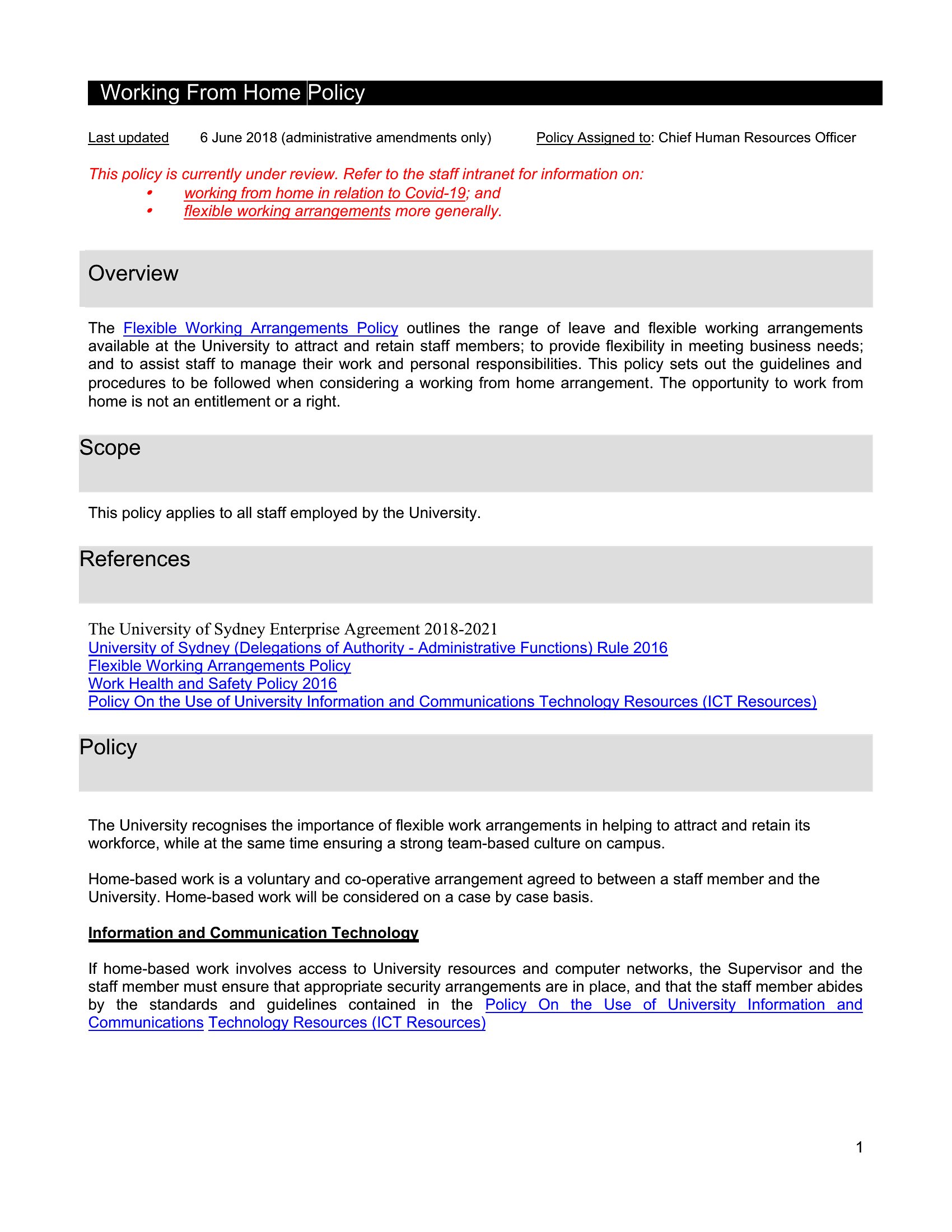
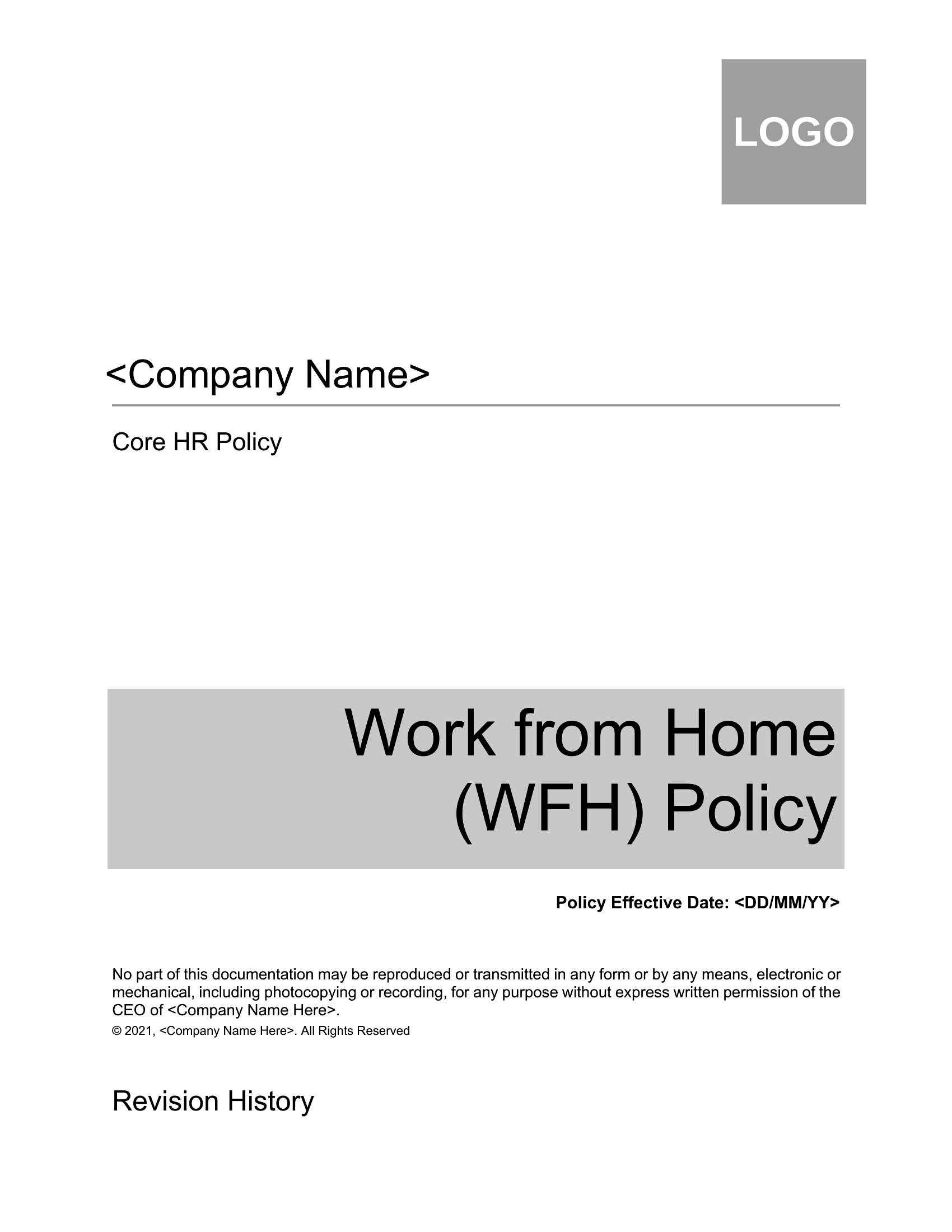
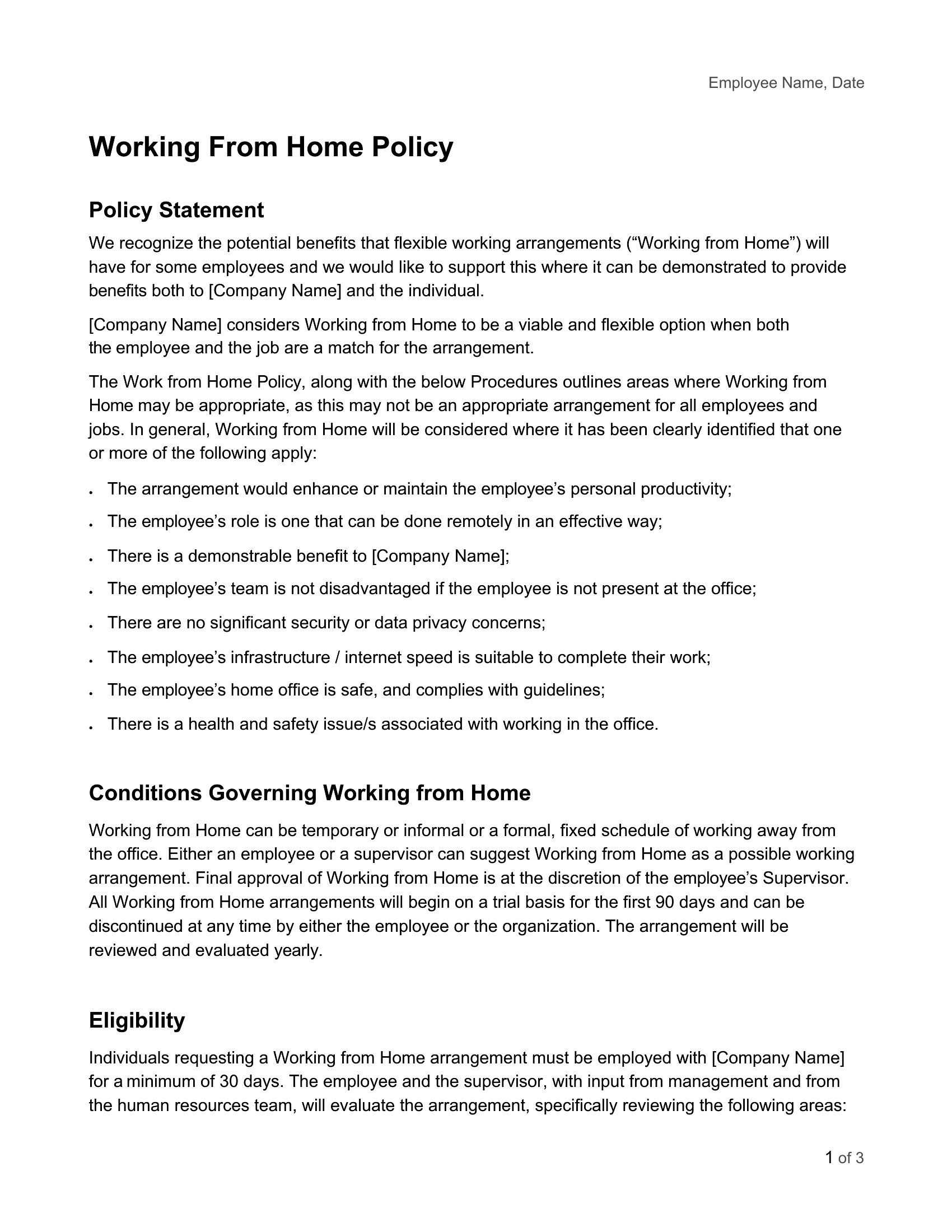
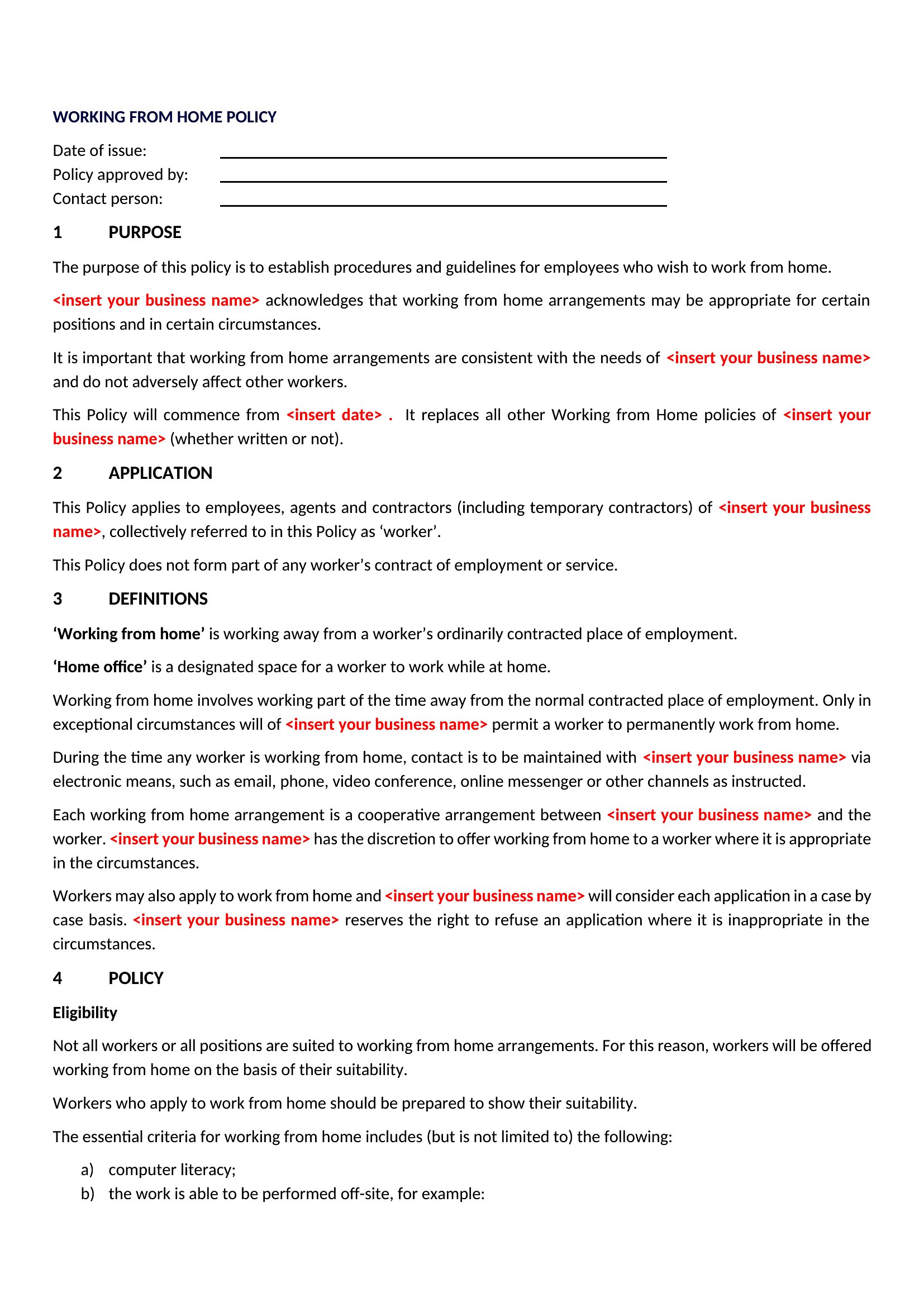
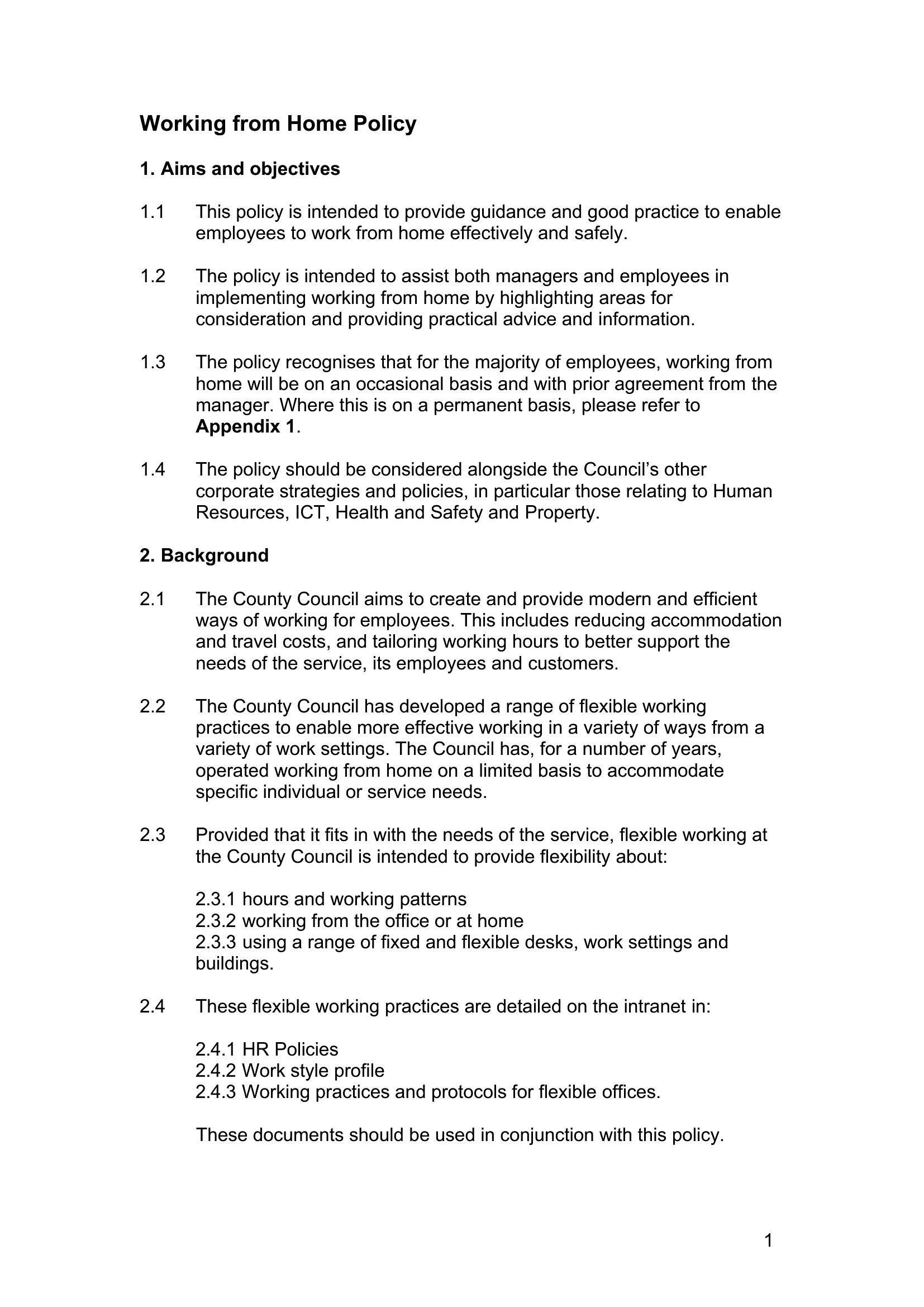
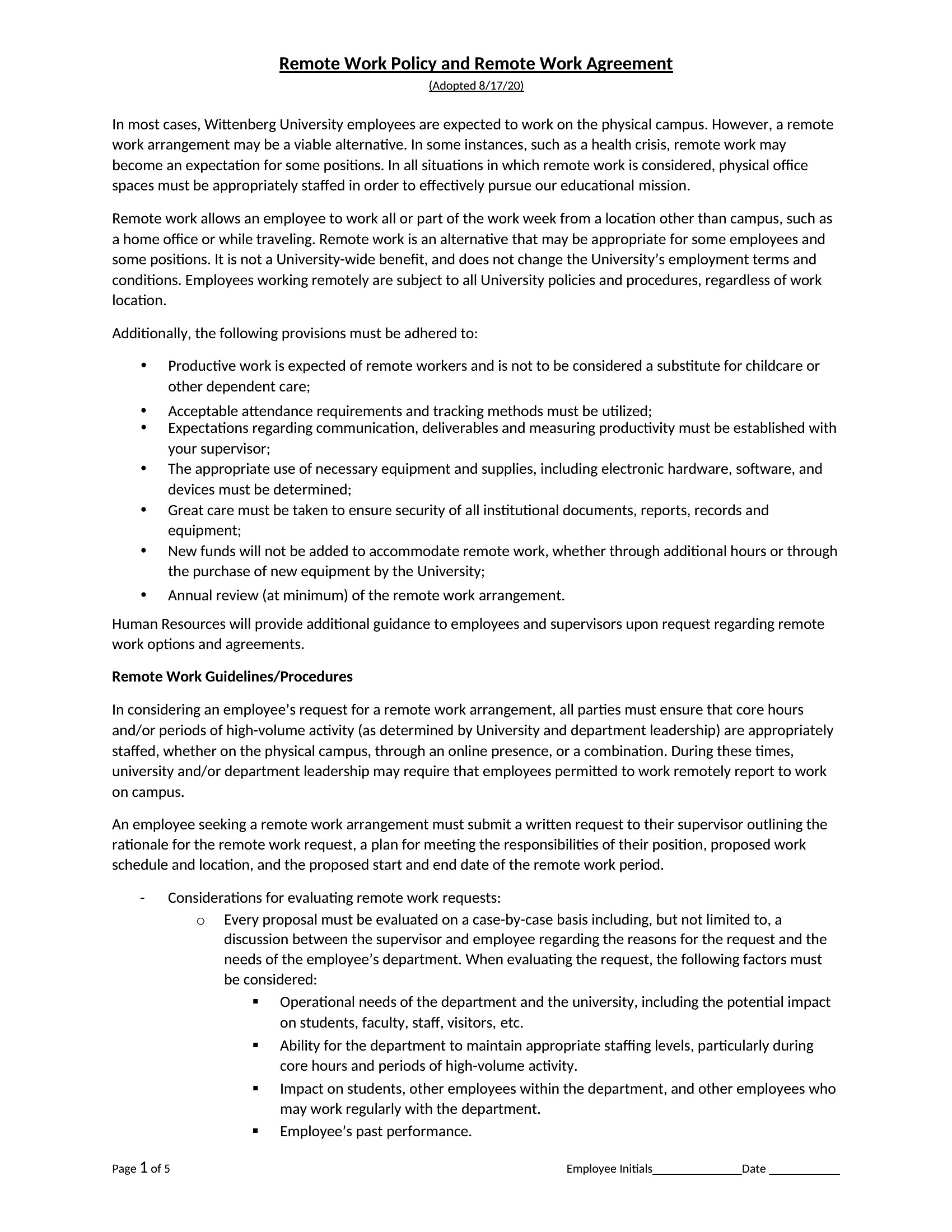
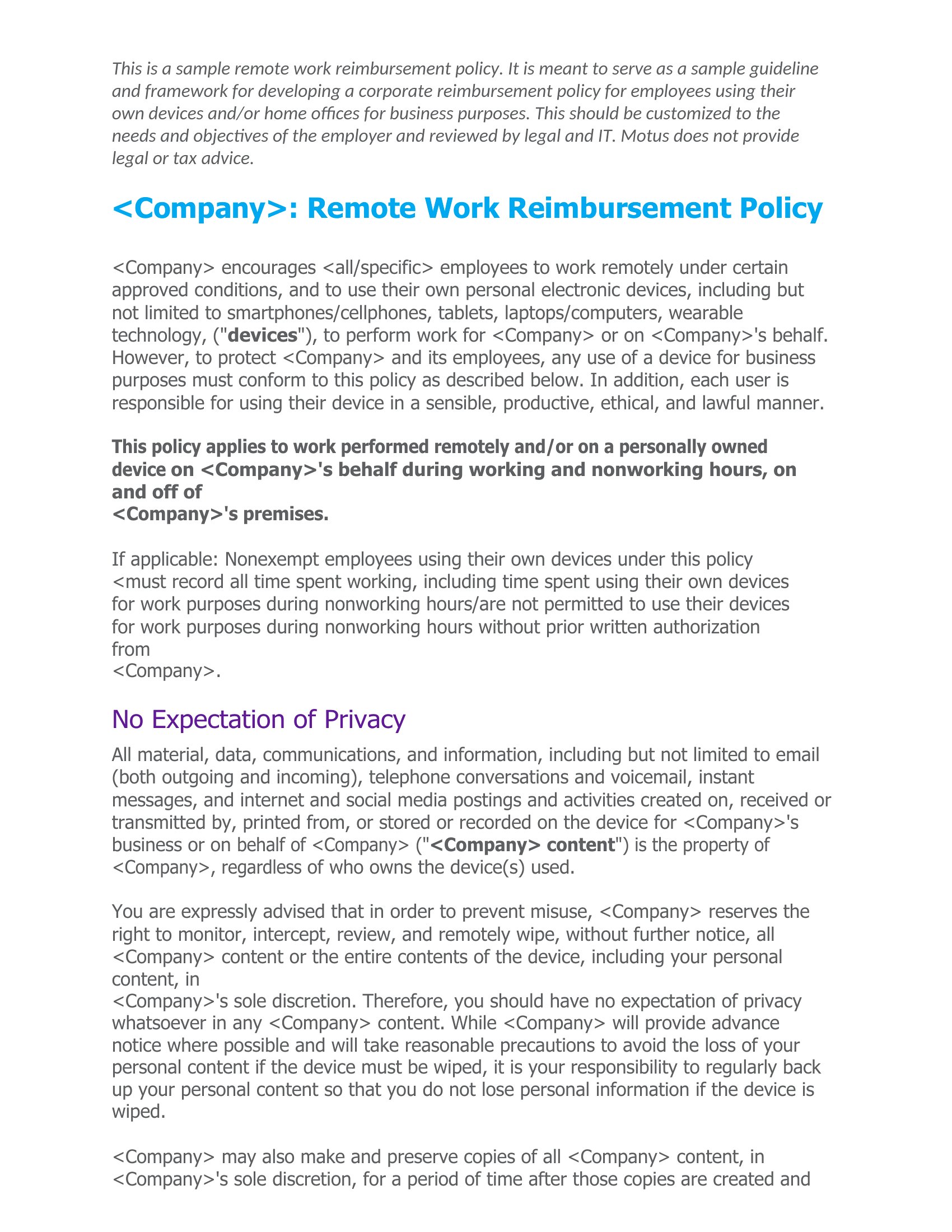
Free Work from Home Policy Templates (Word)
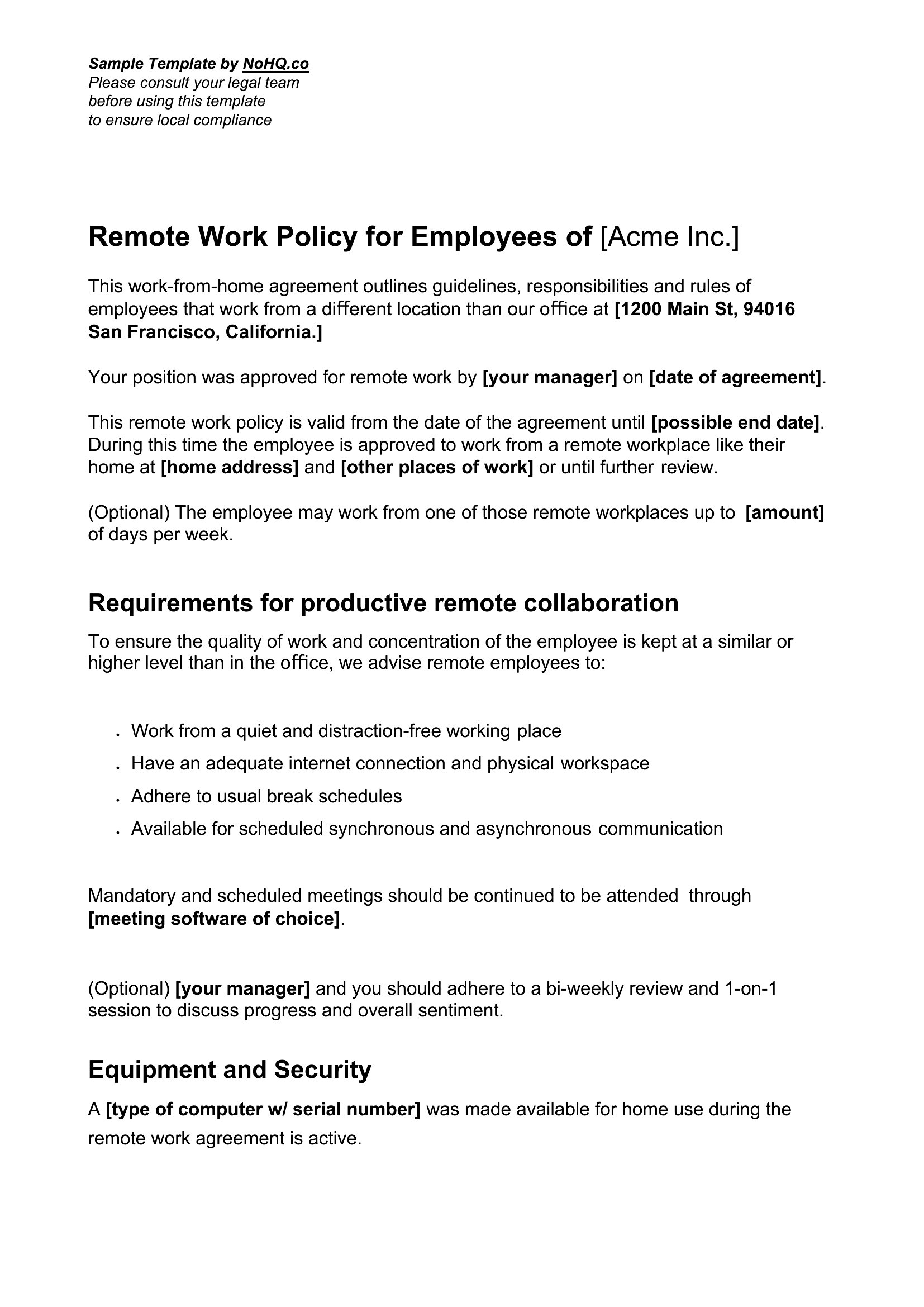
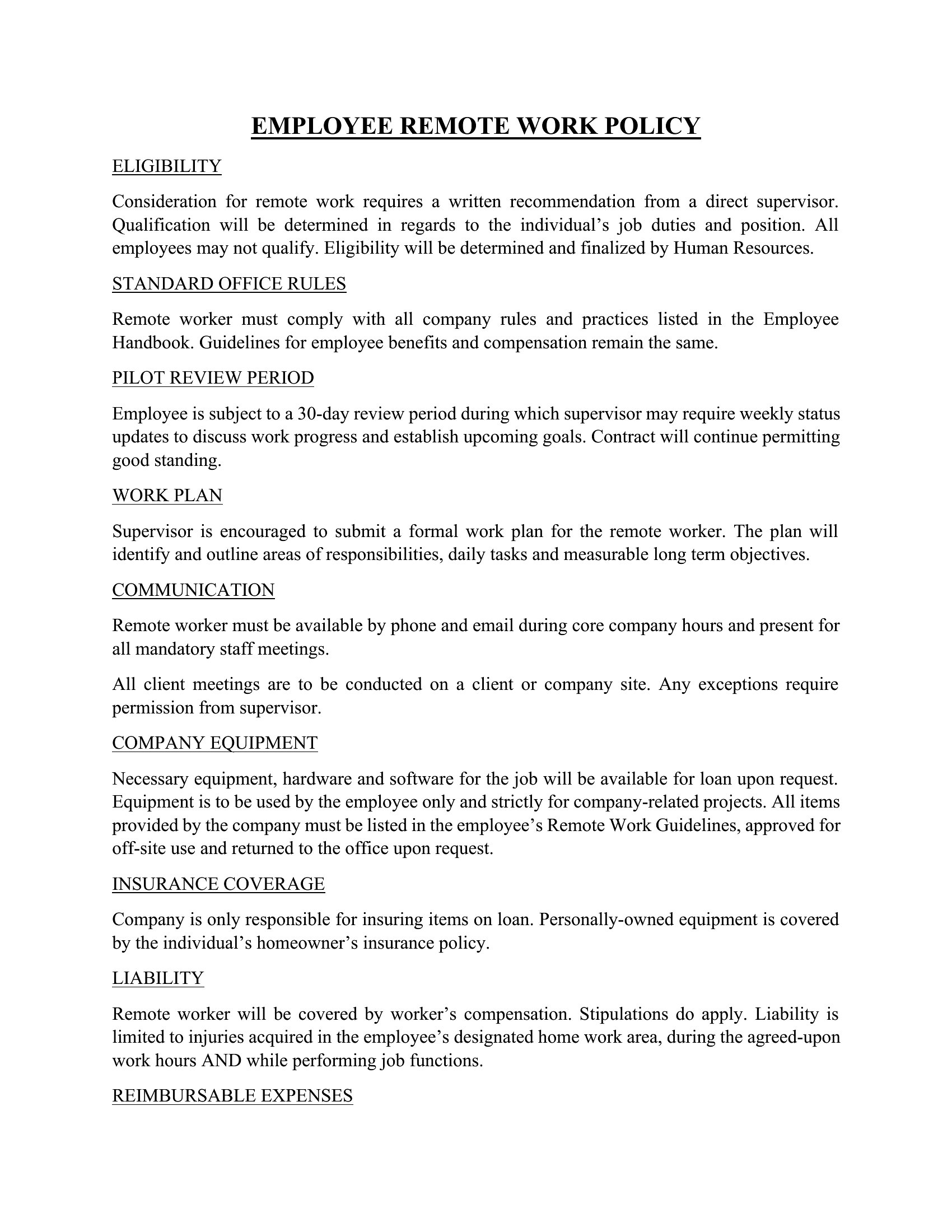
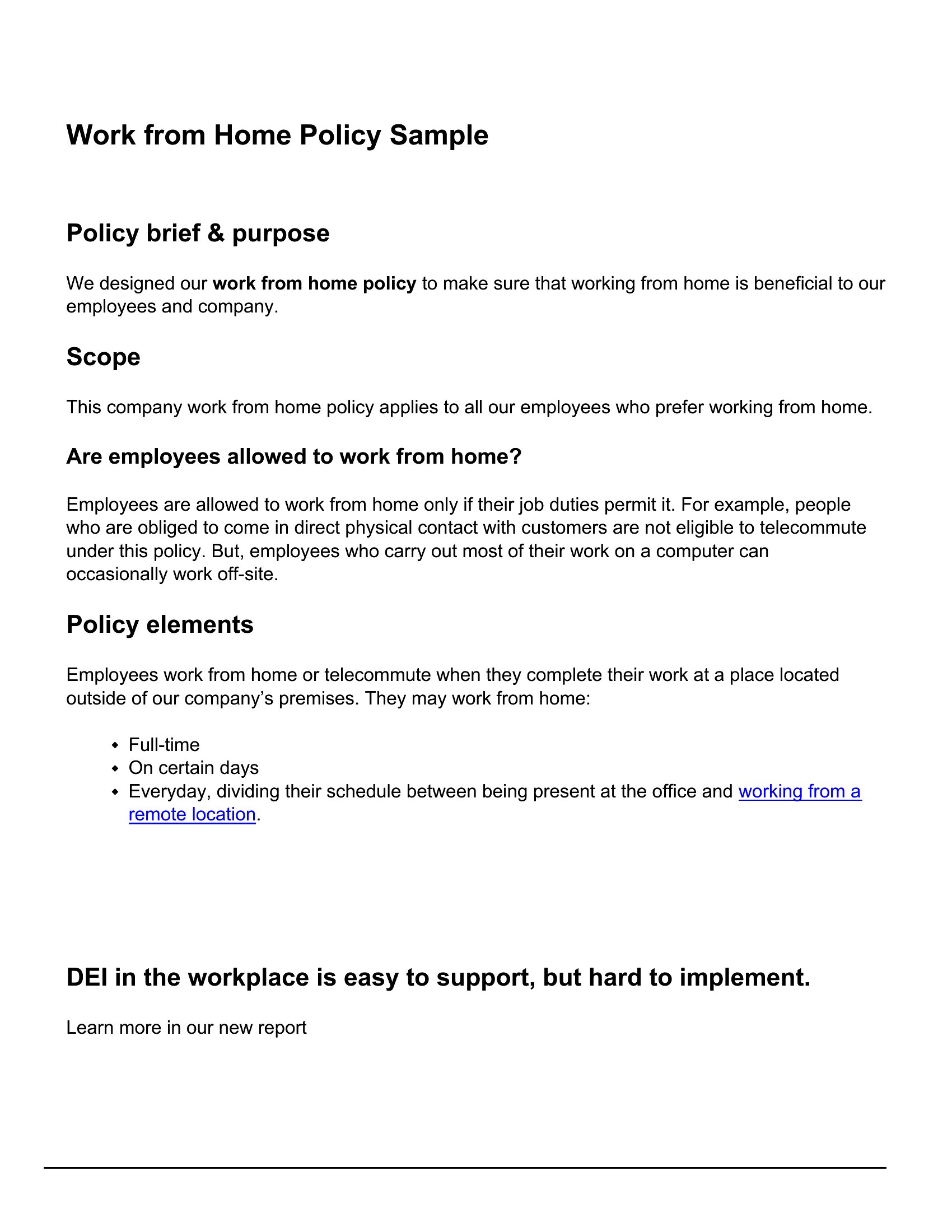
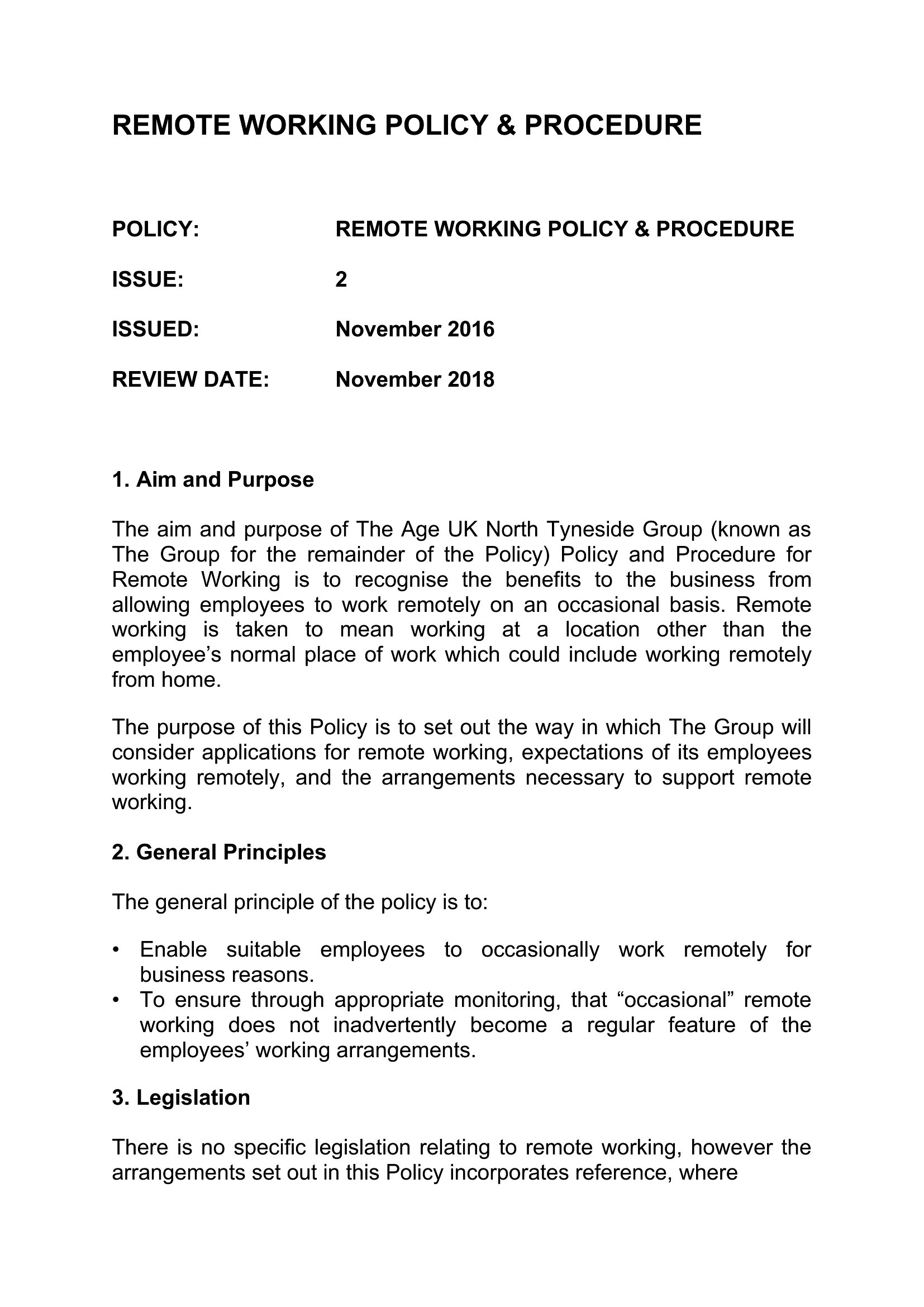
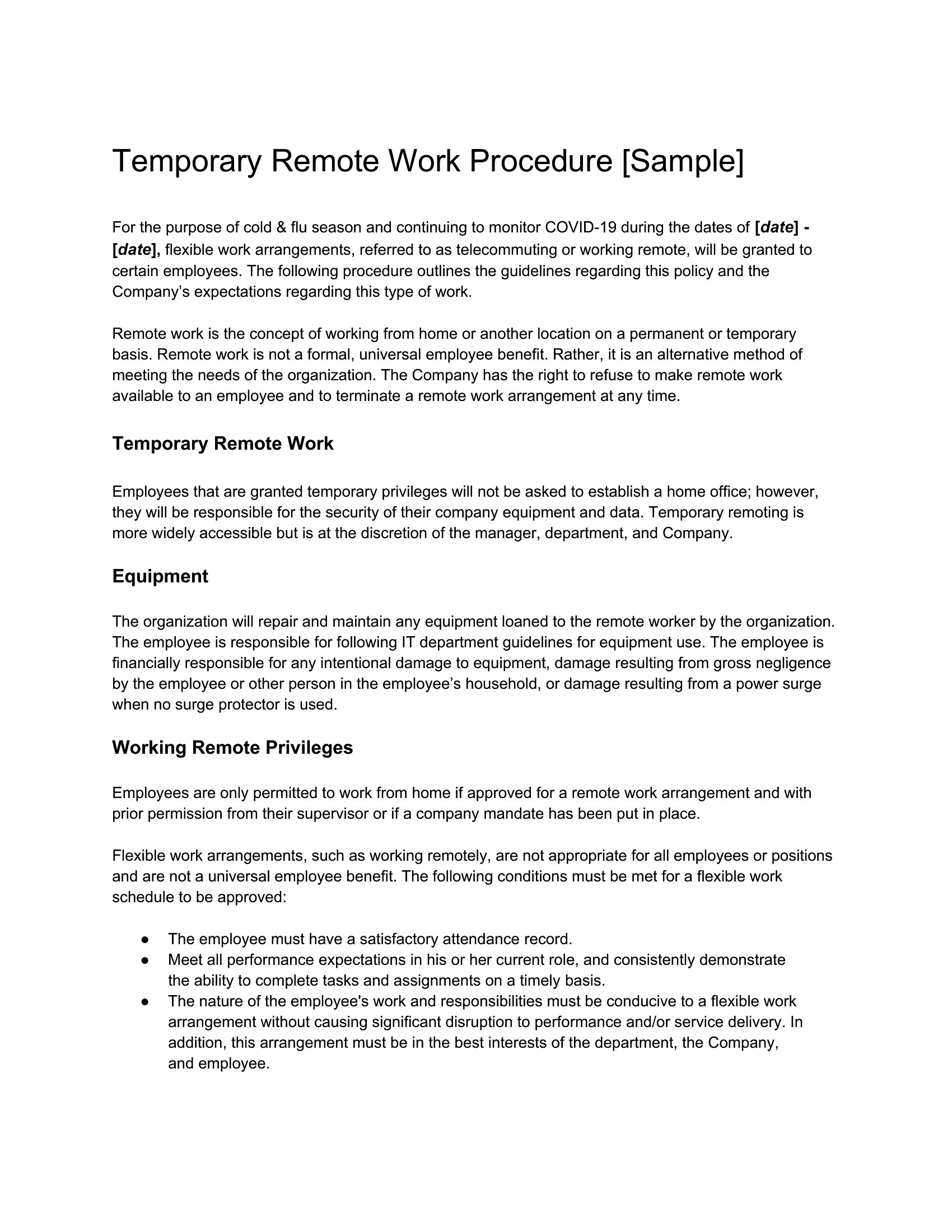
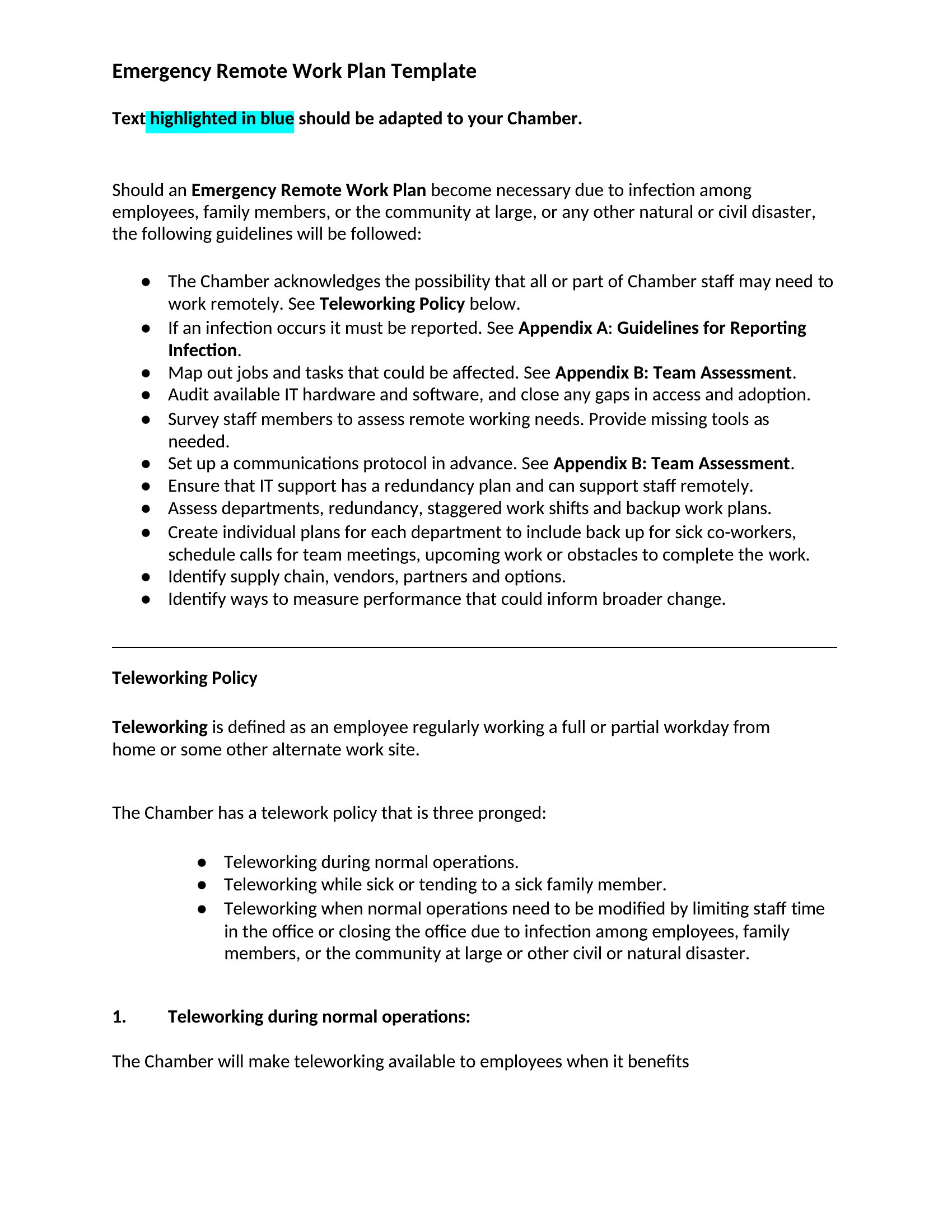
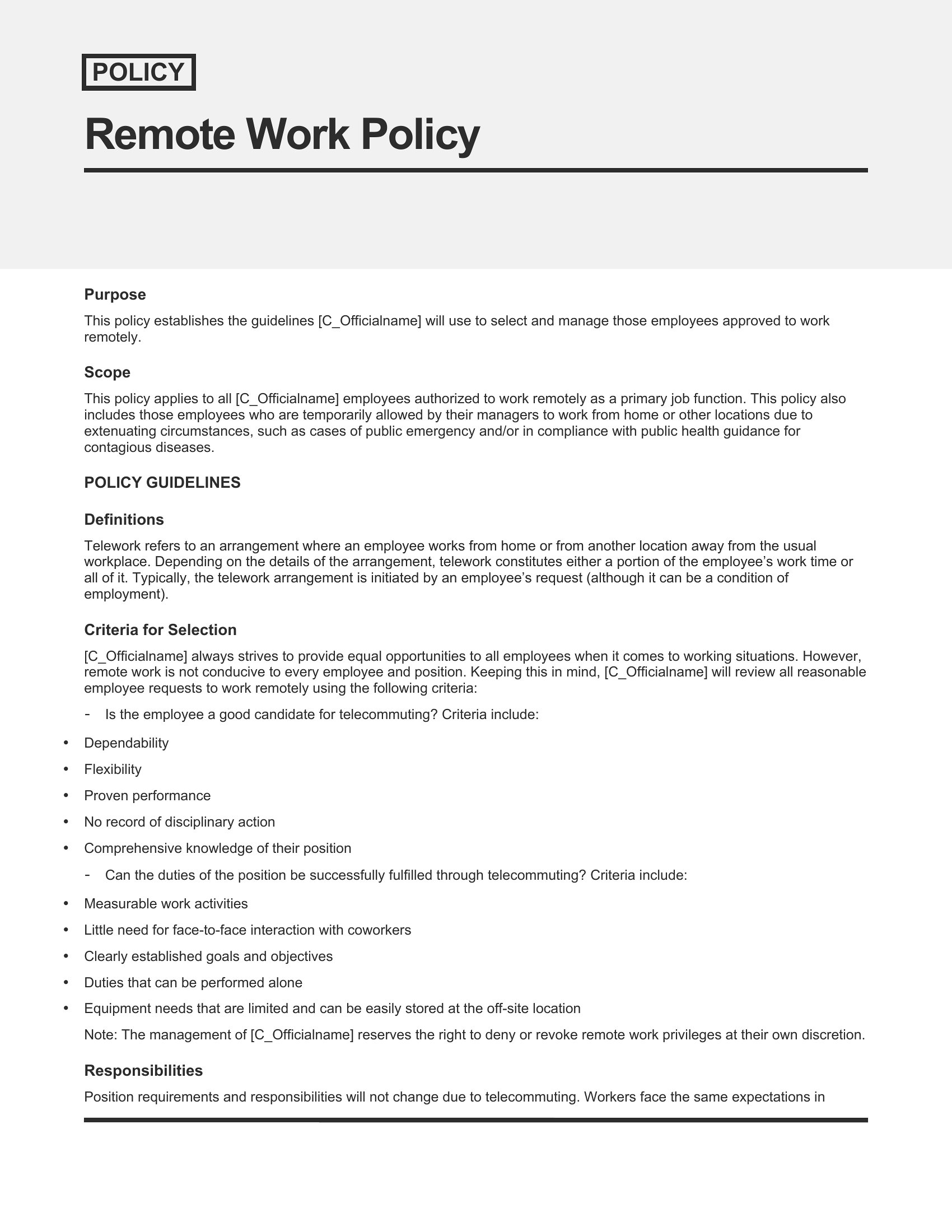
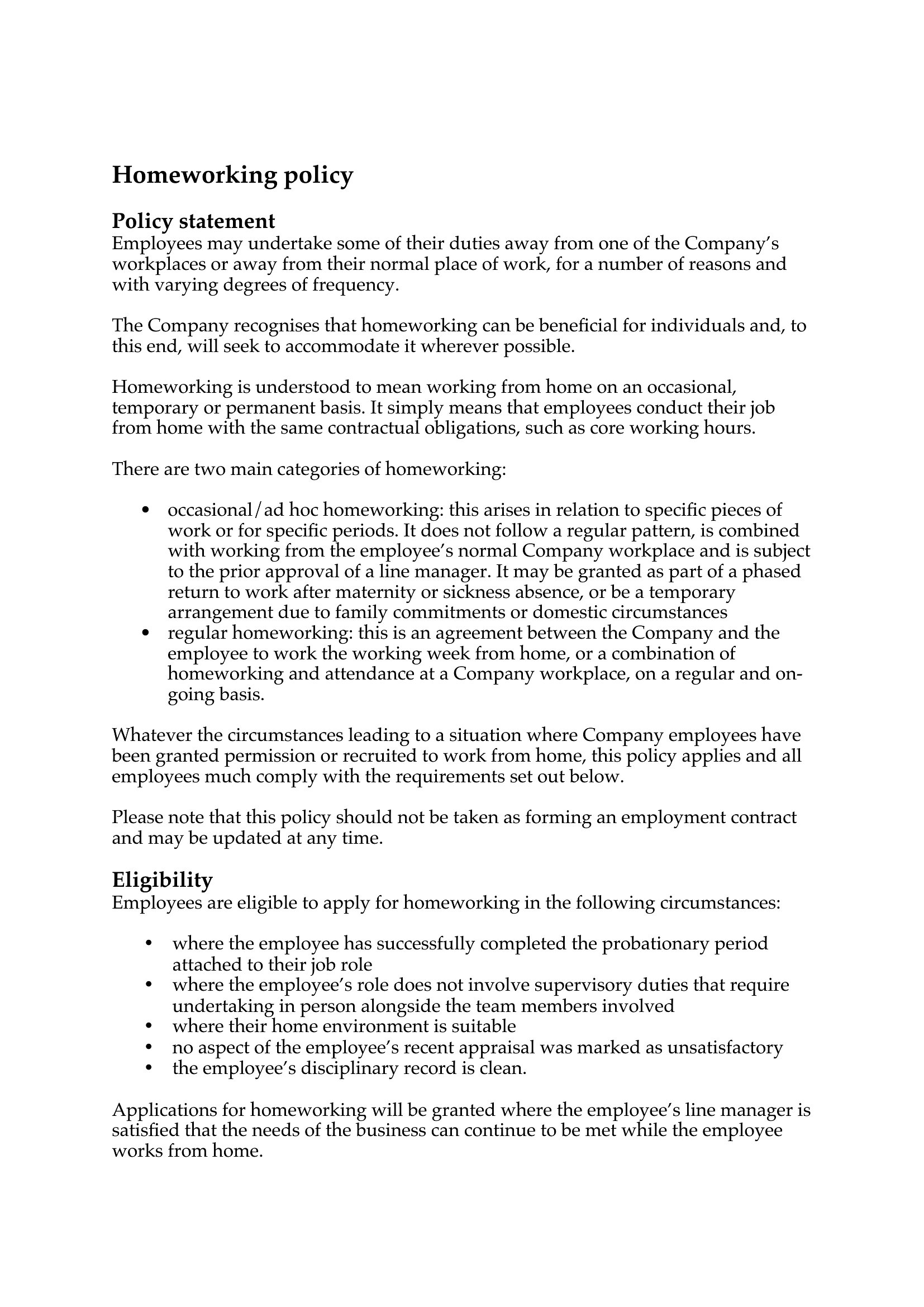
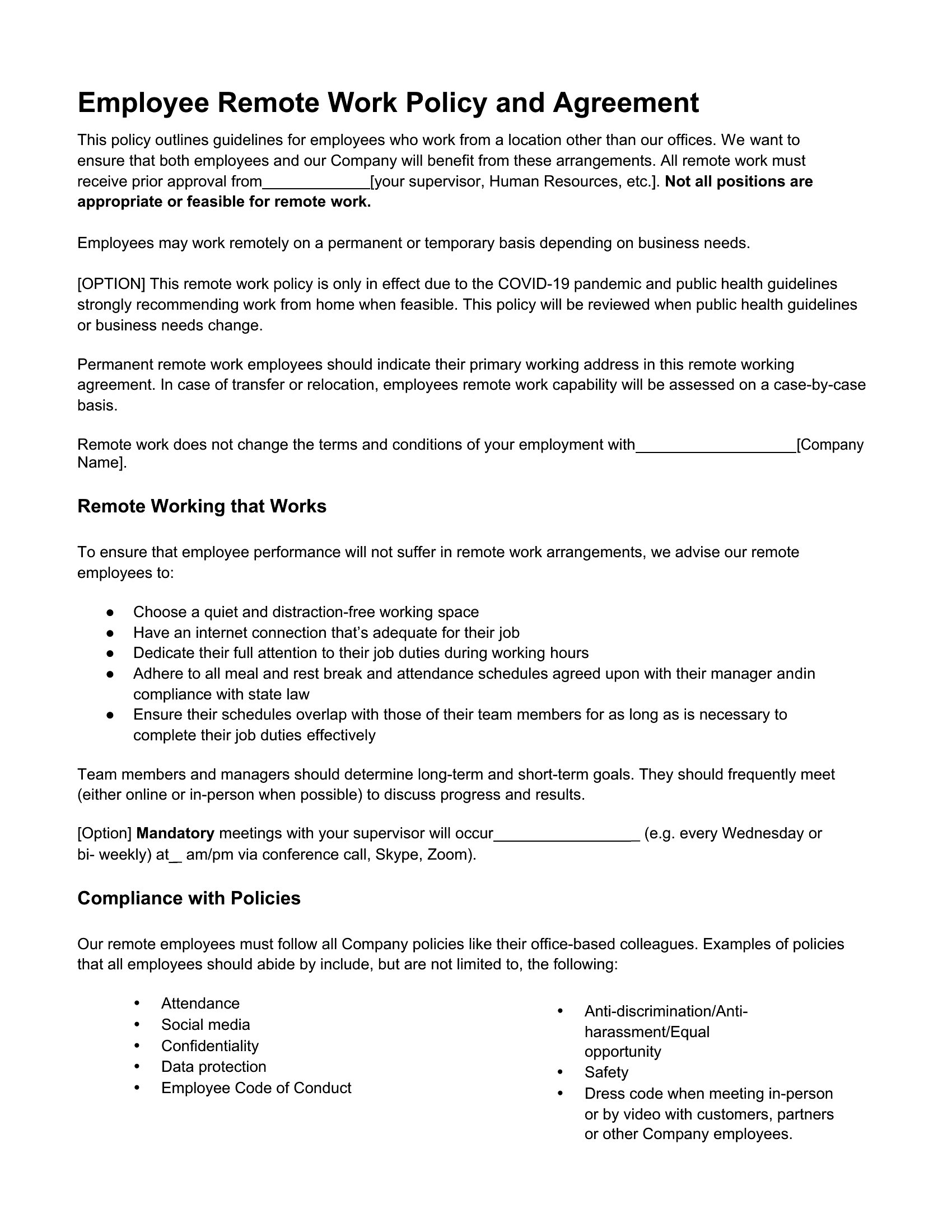
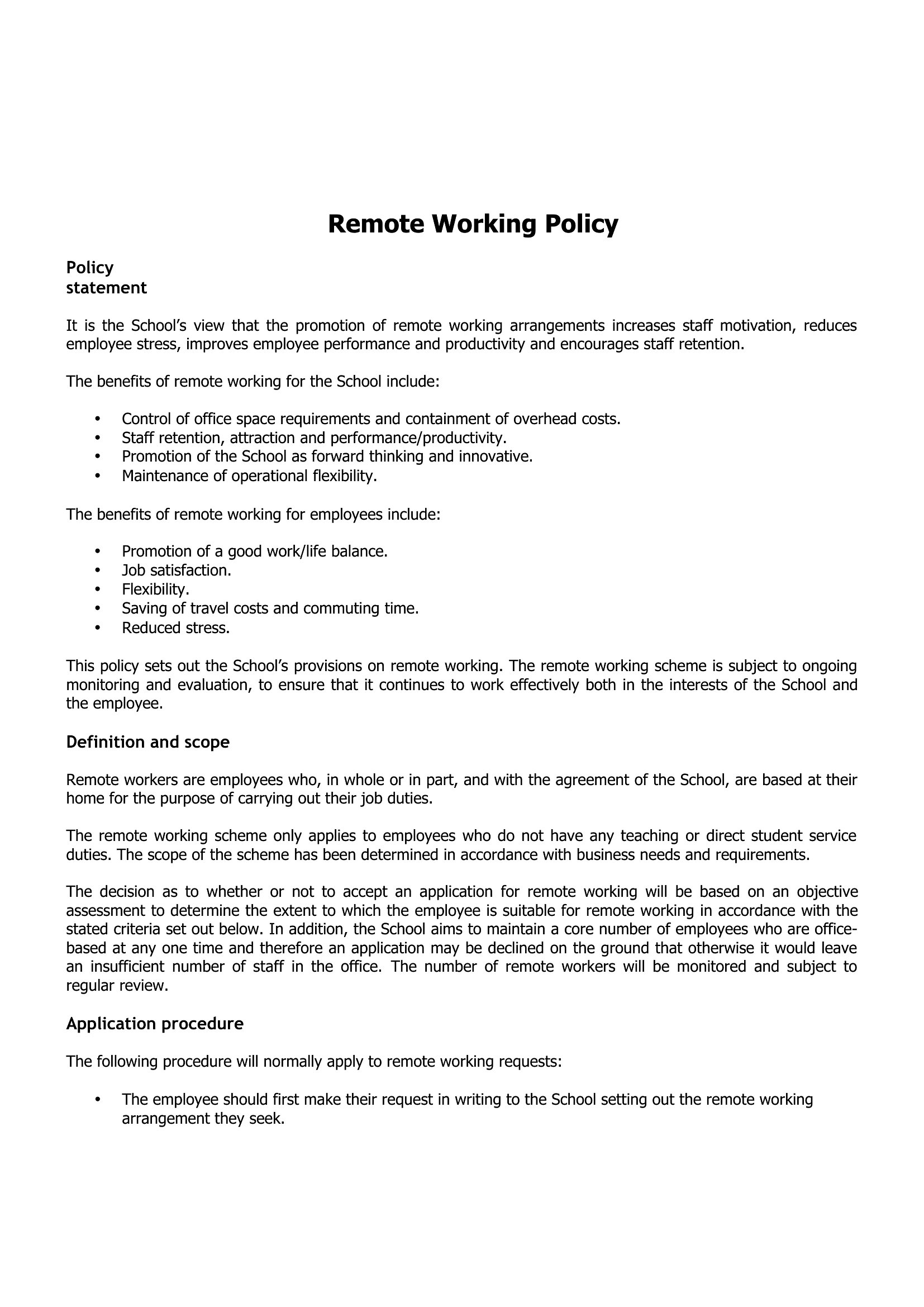
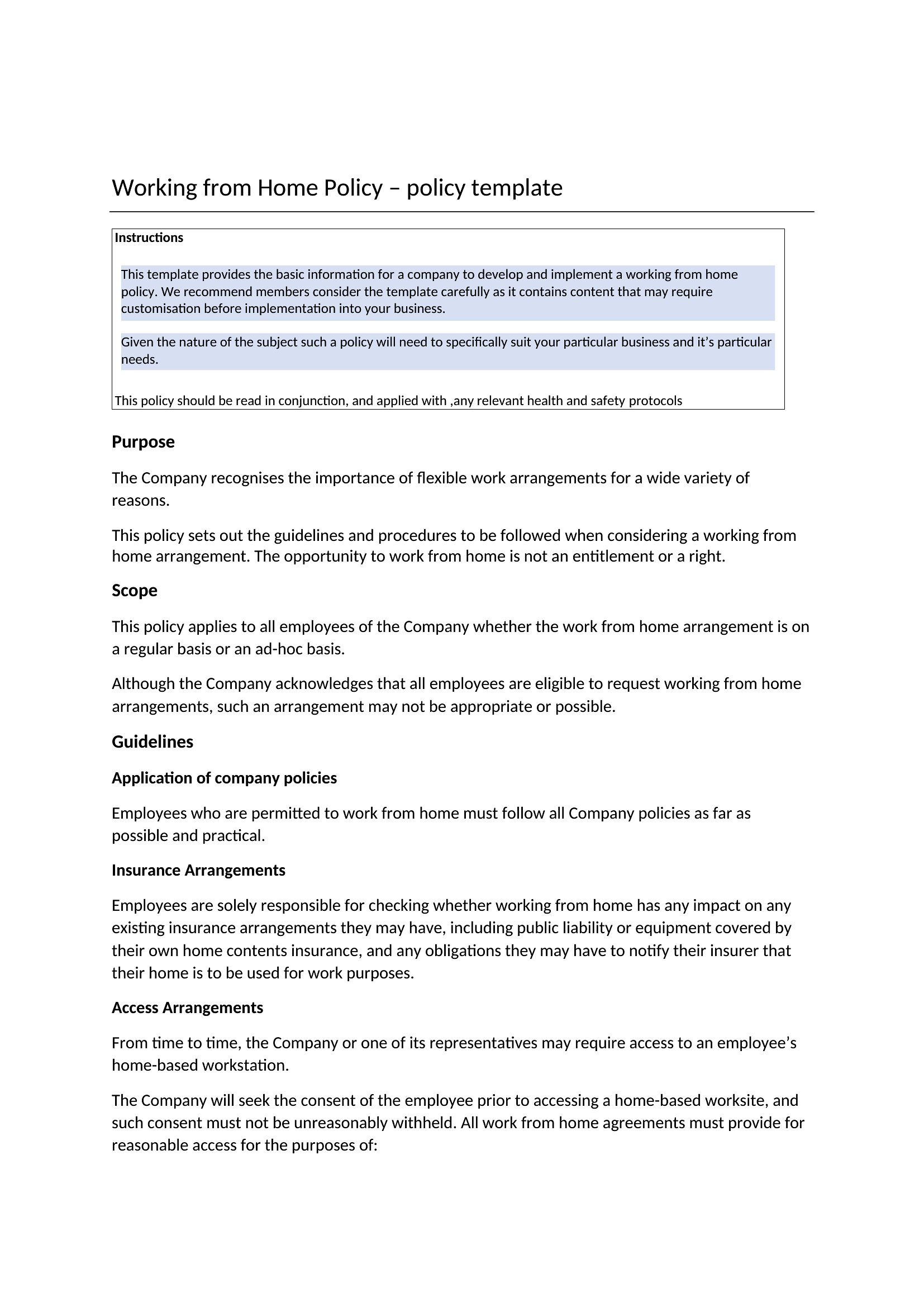
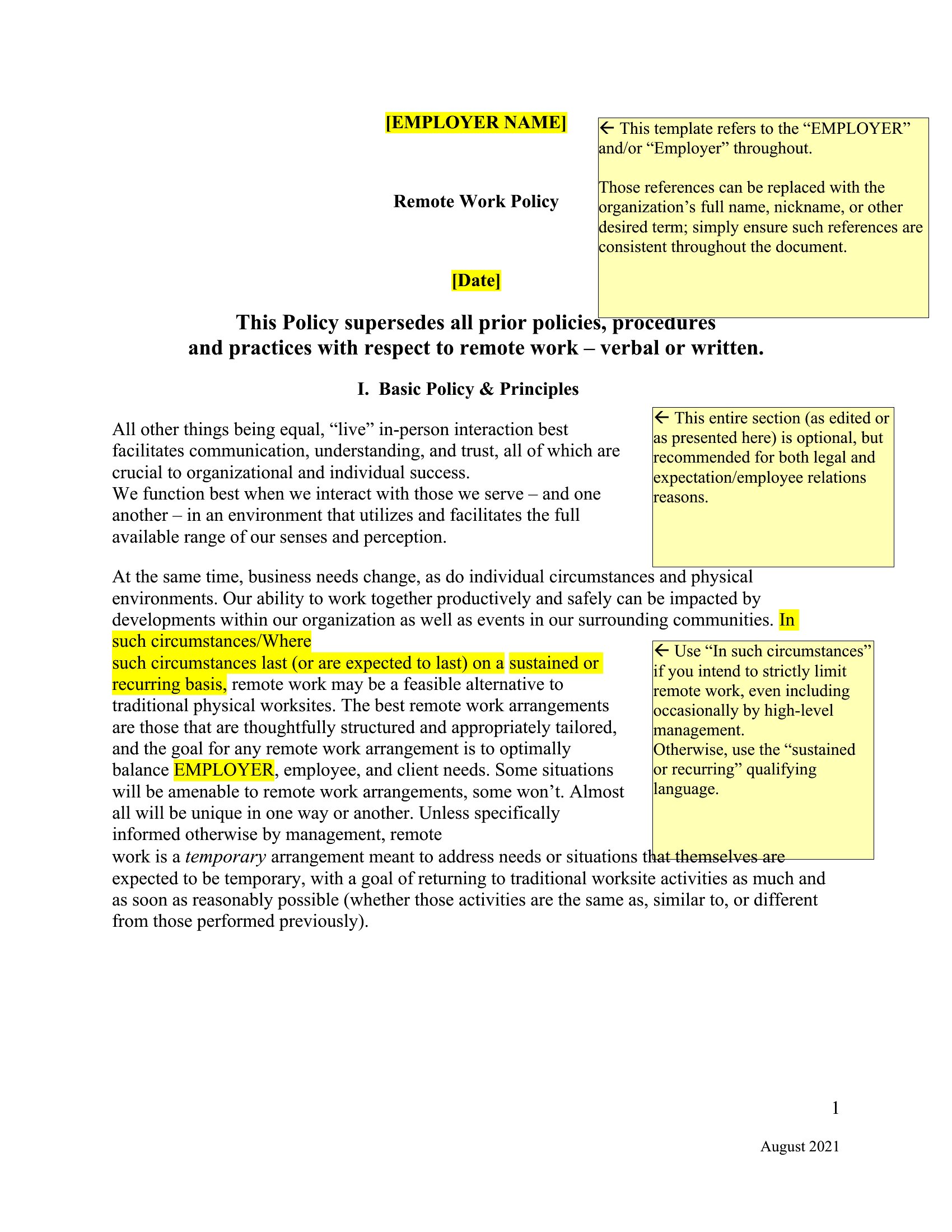
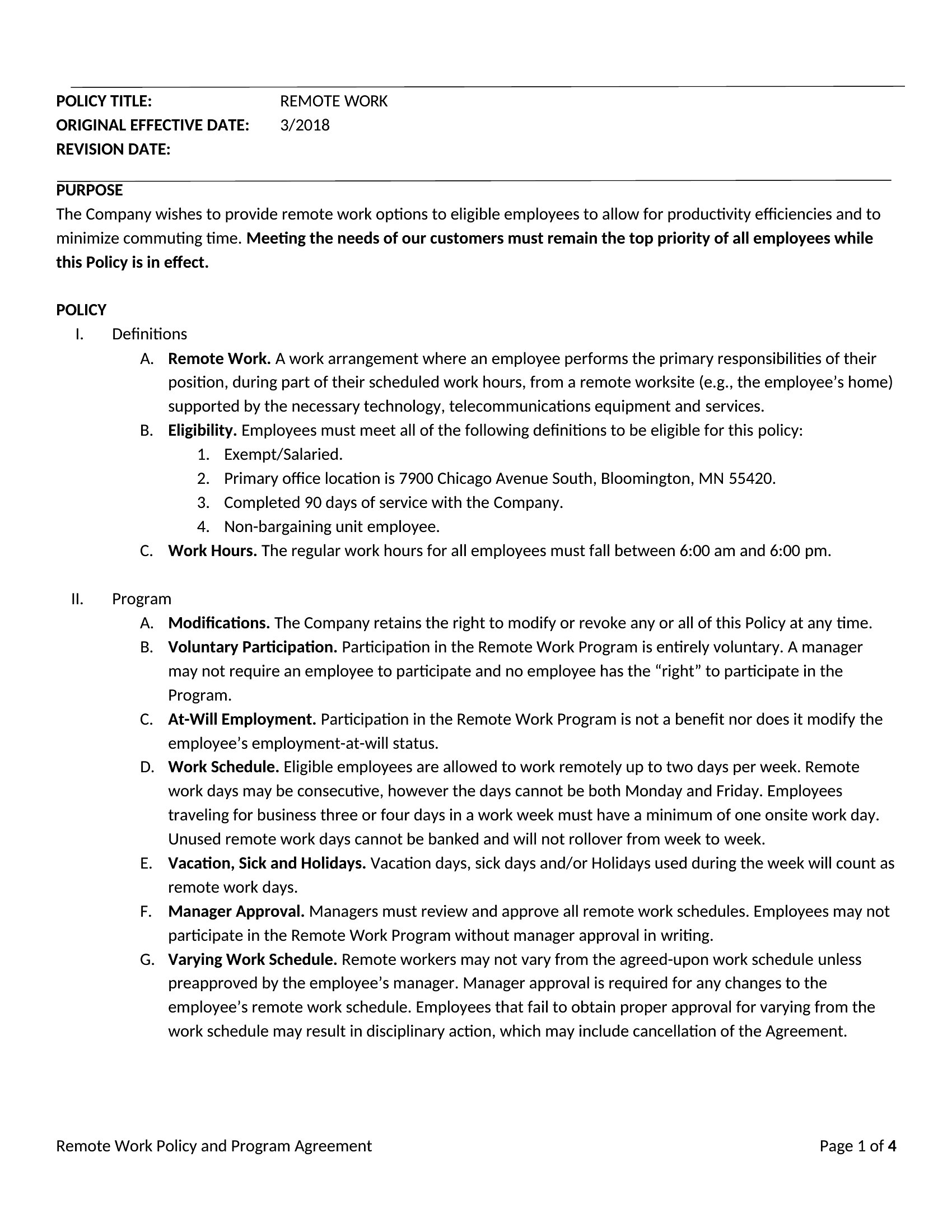
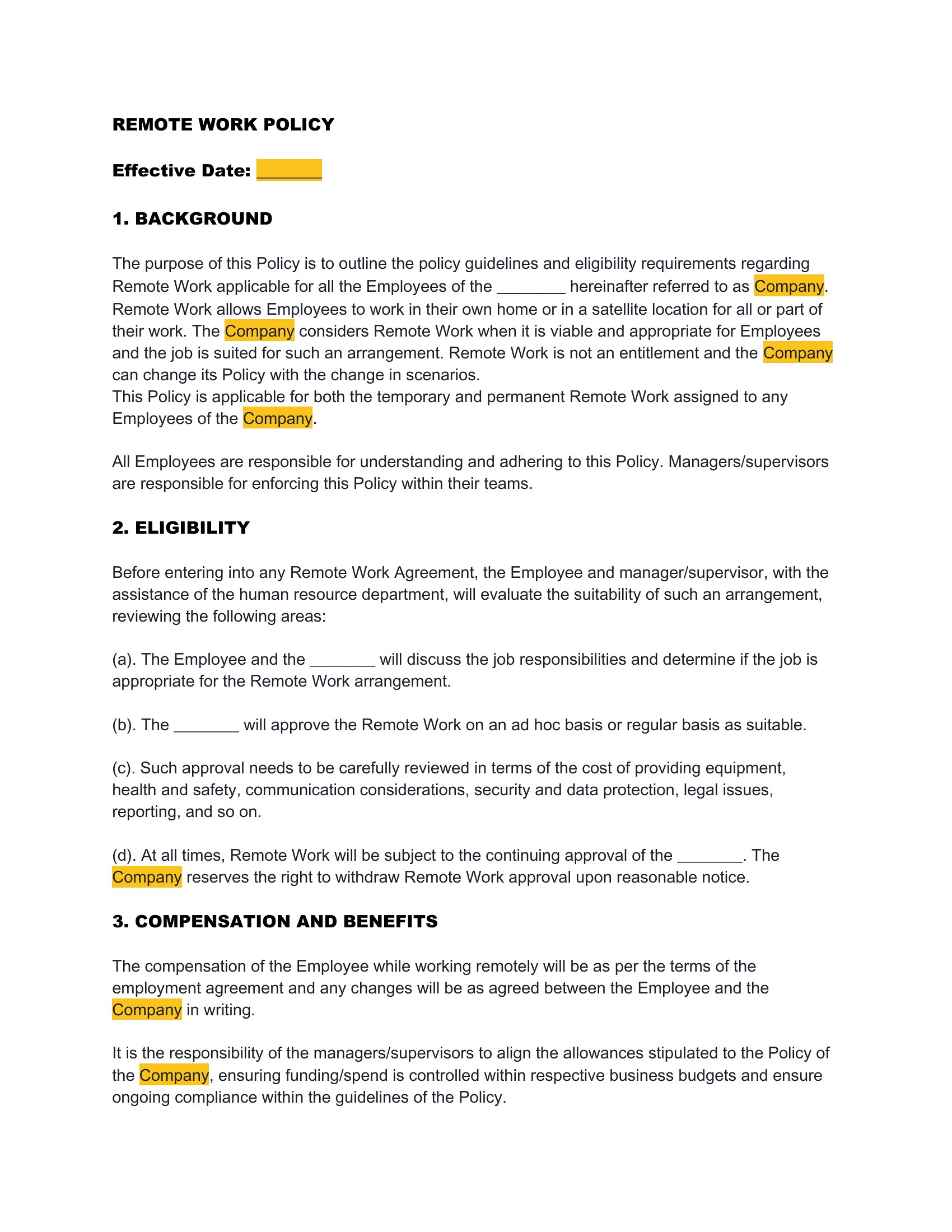
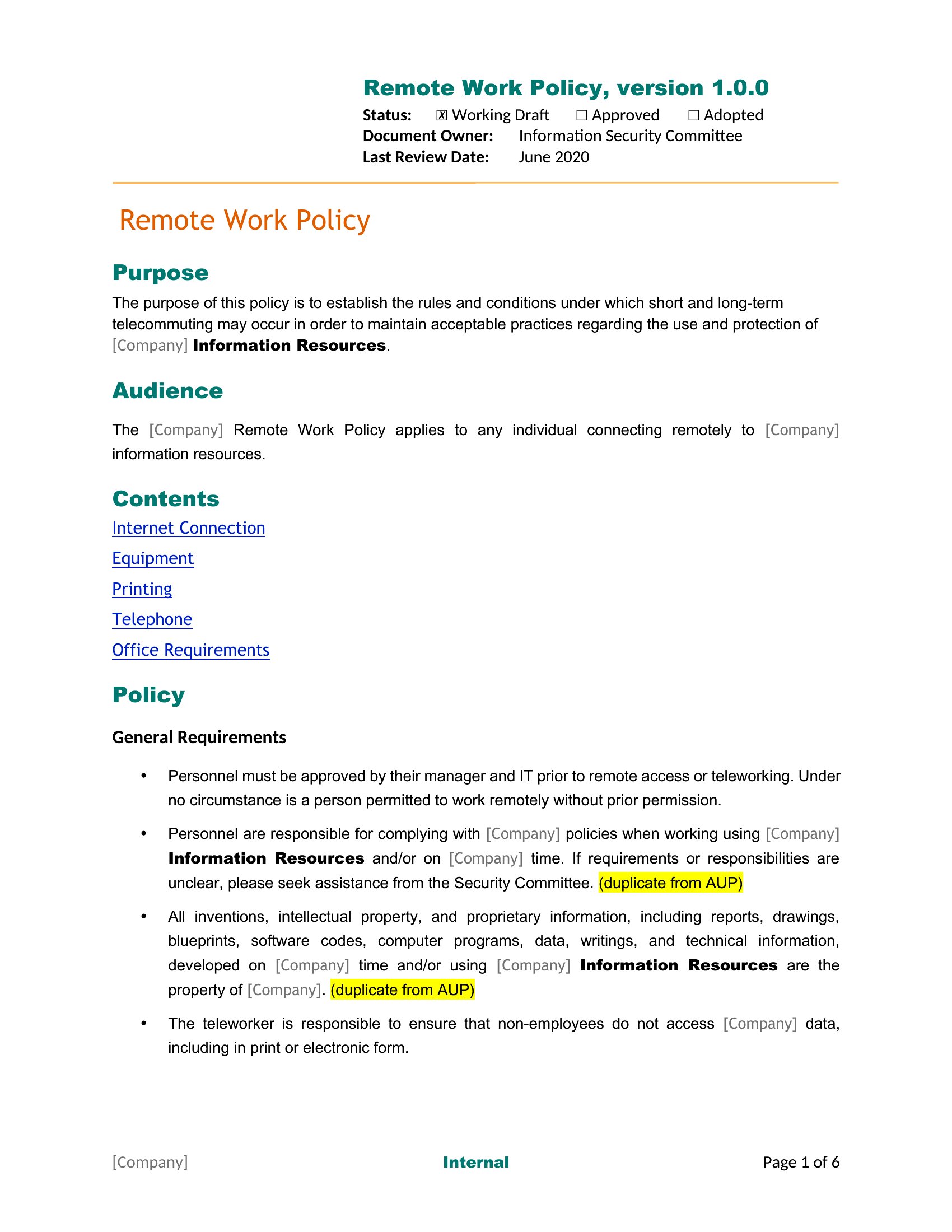
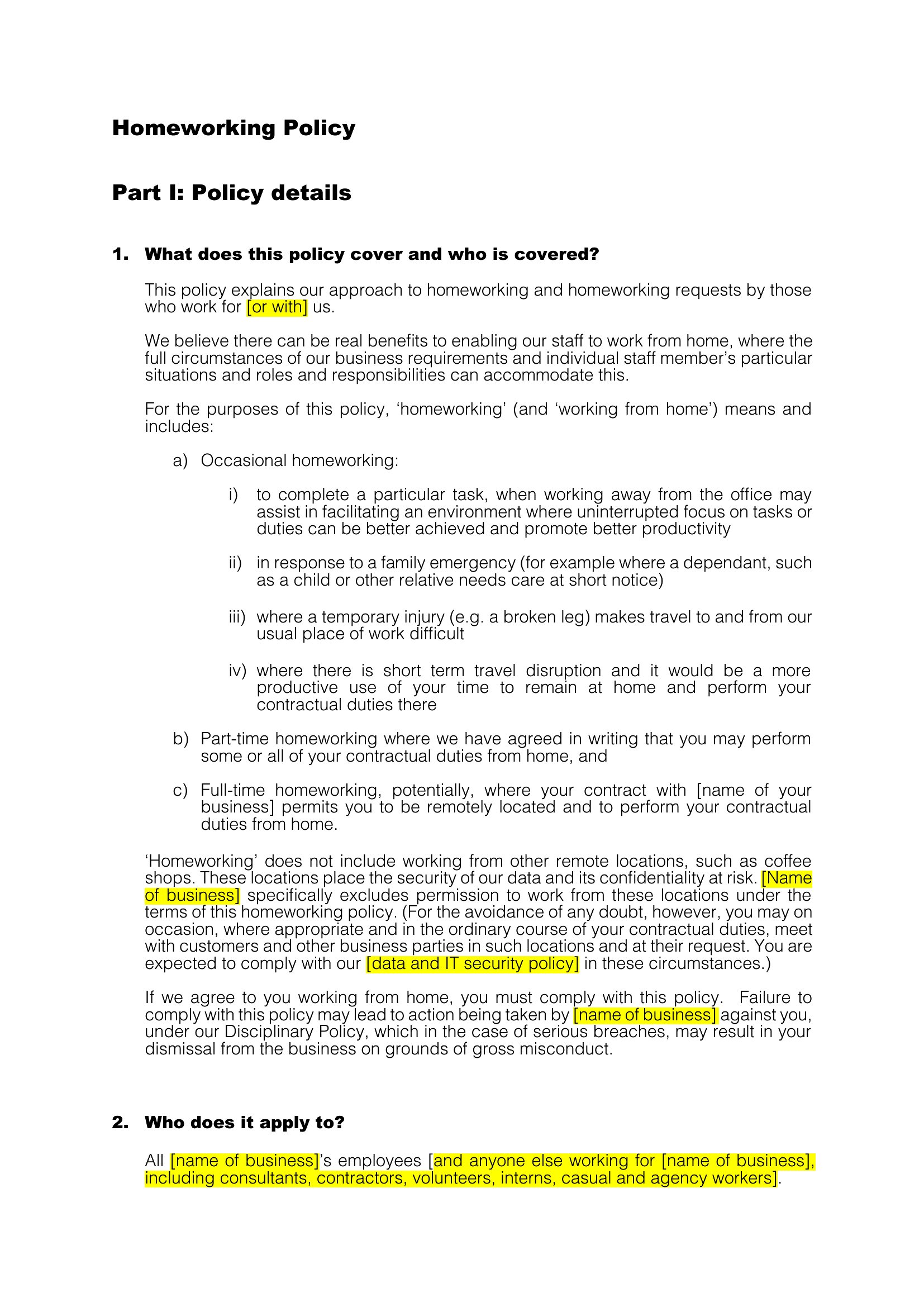
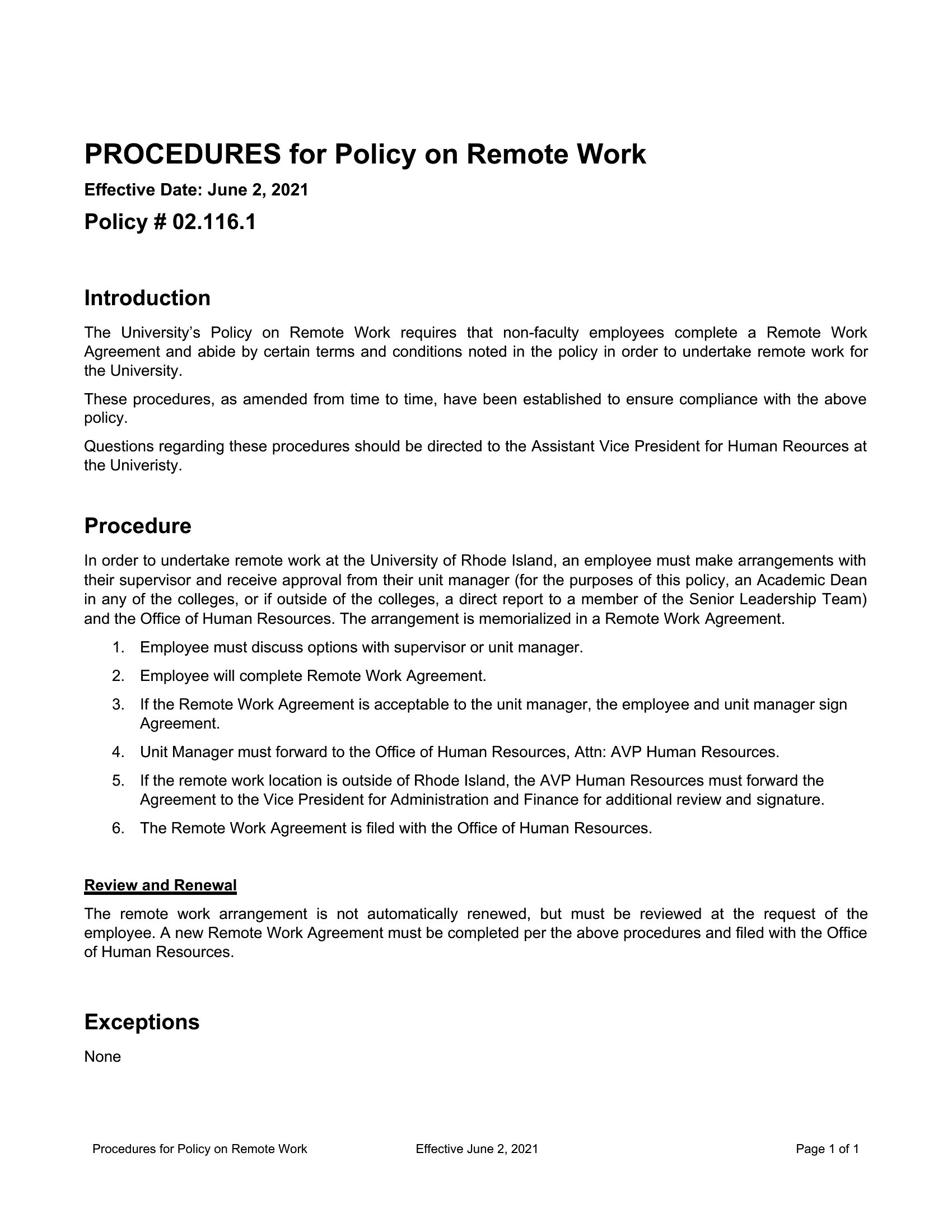
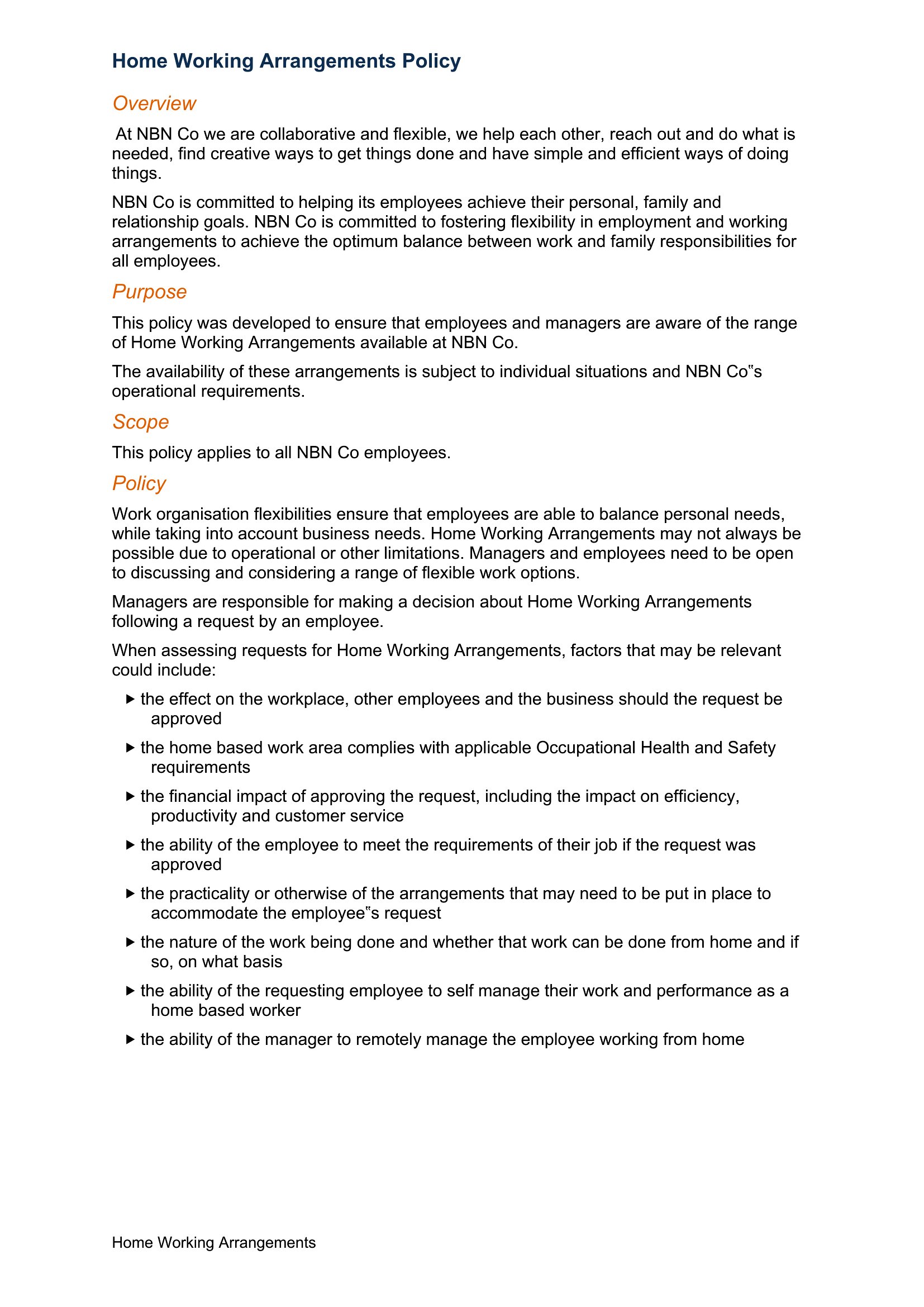
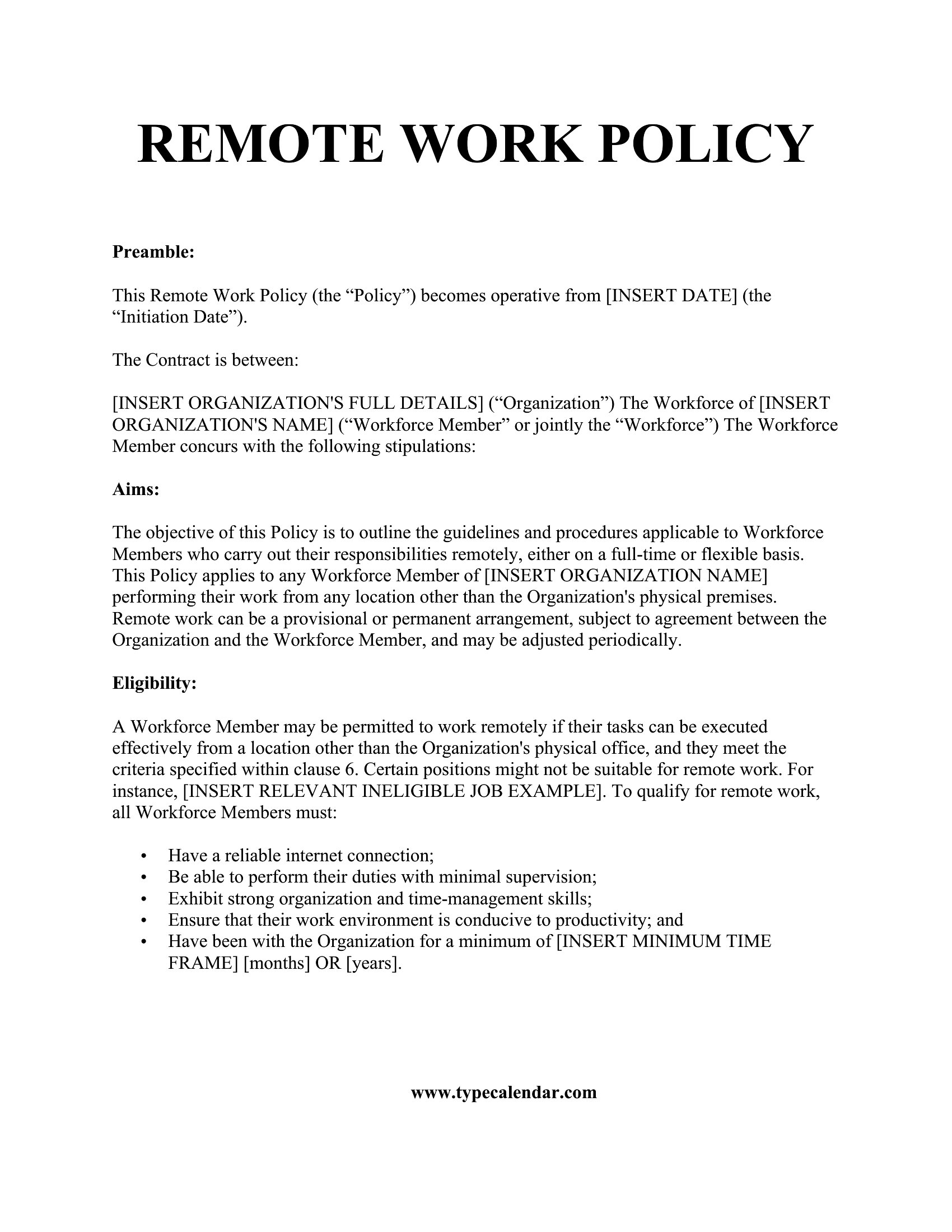
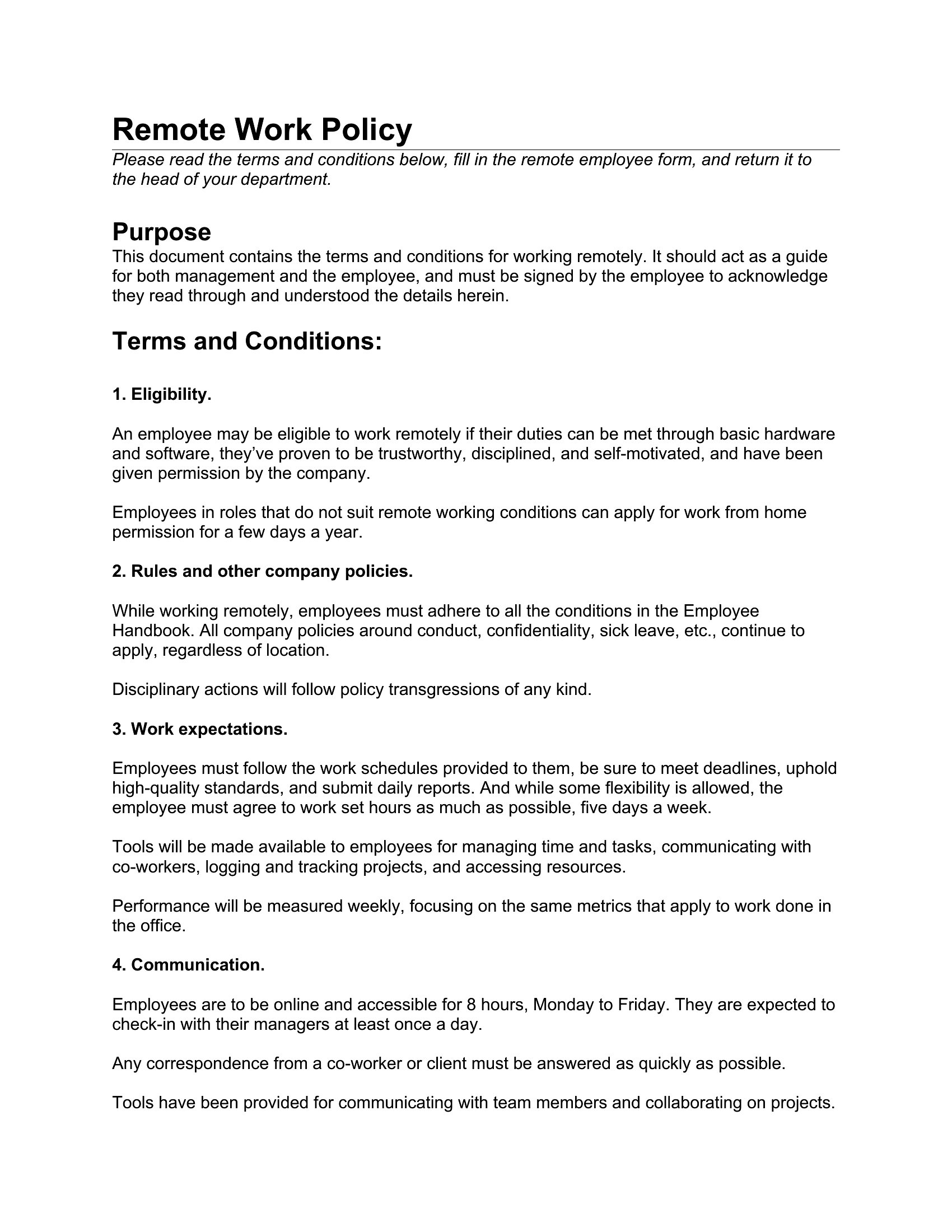
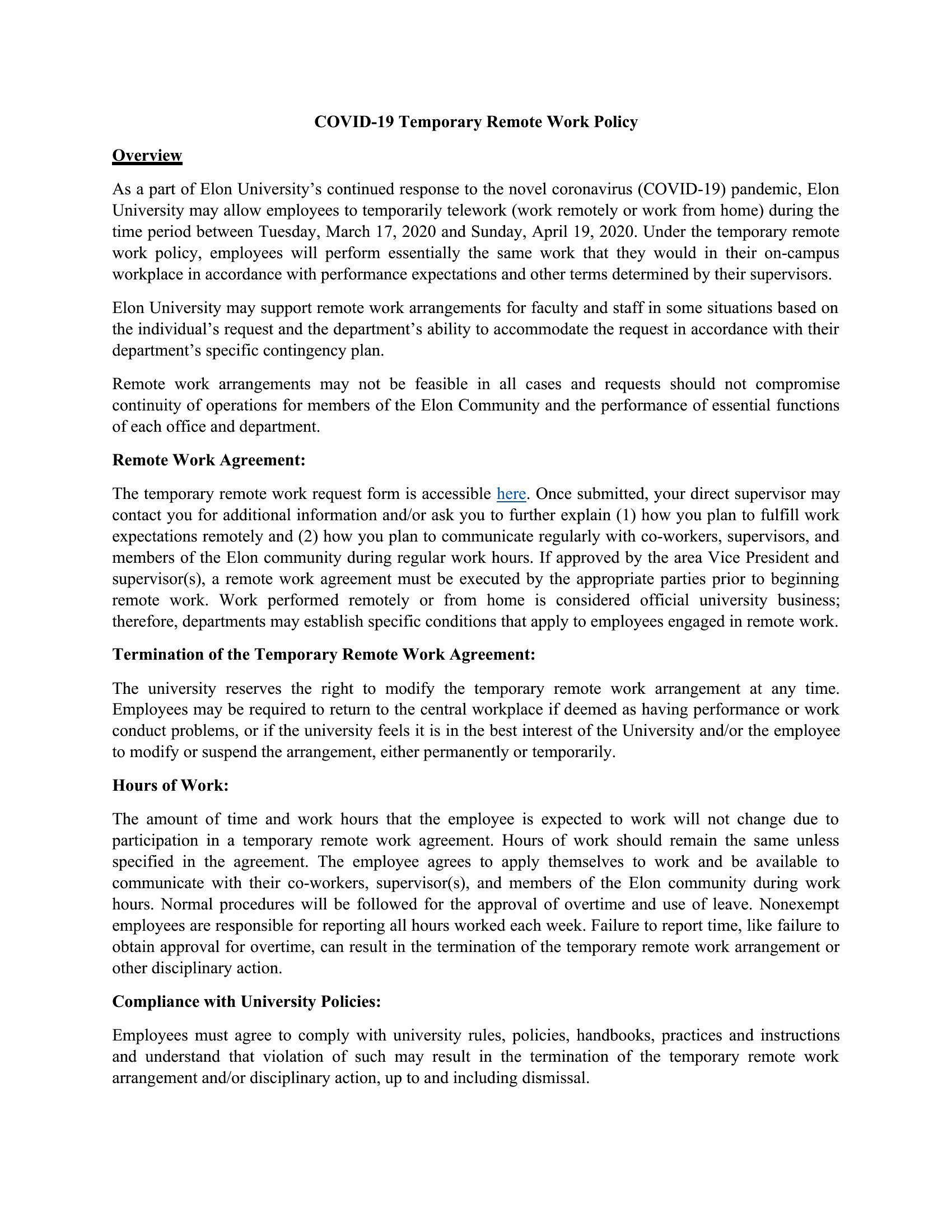
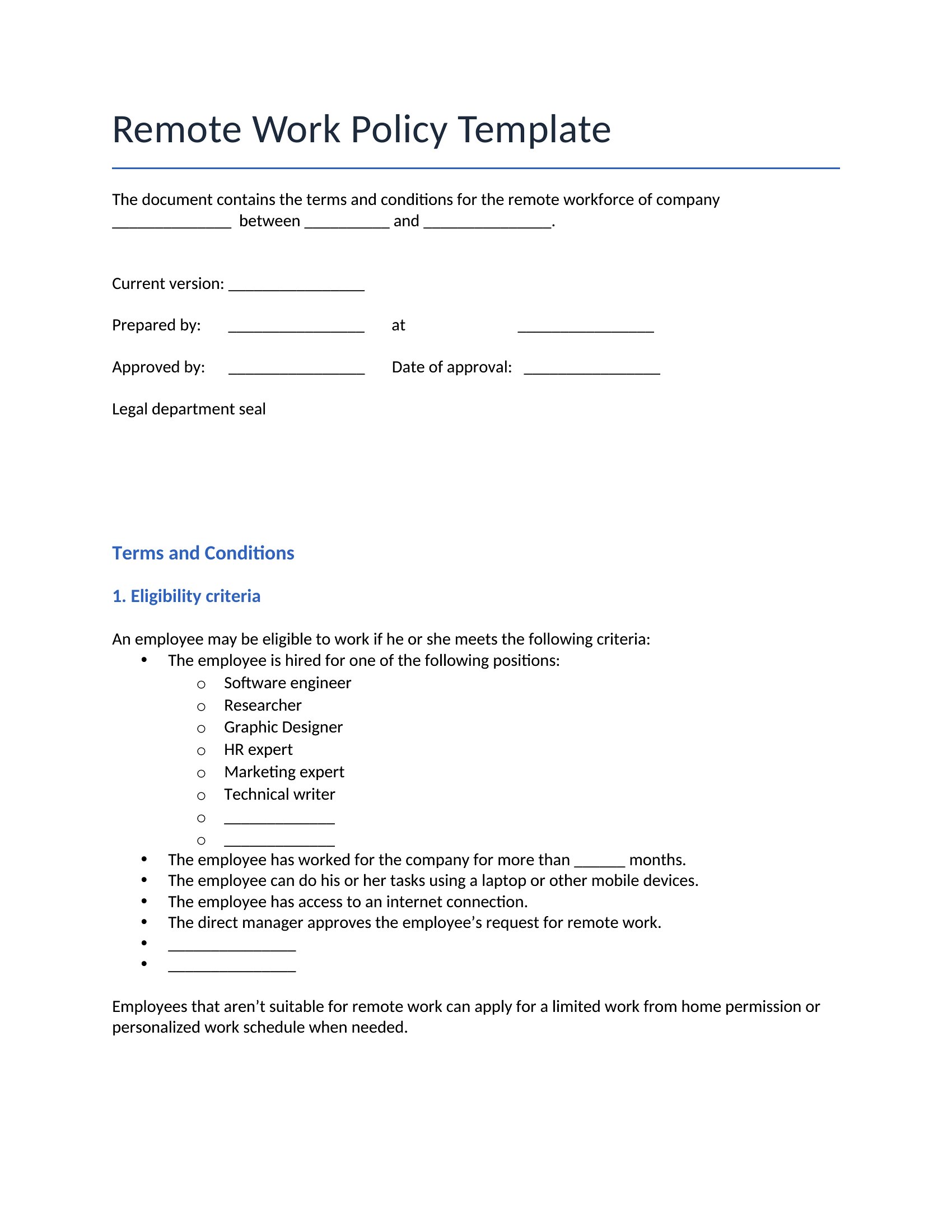
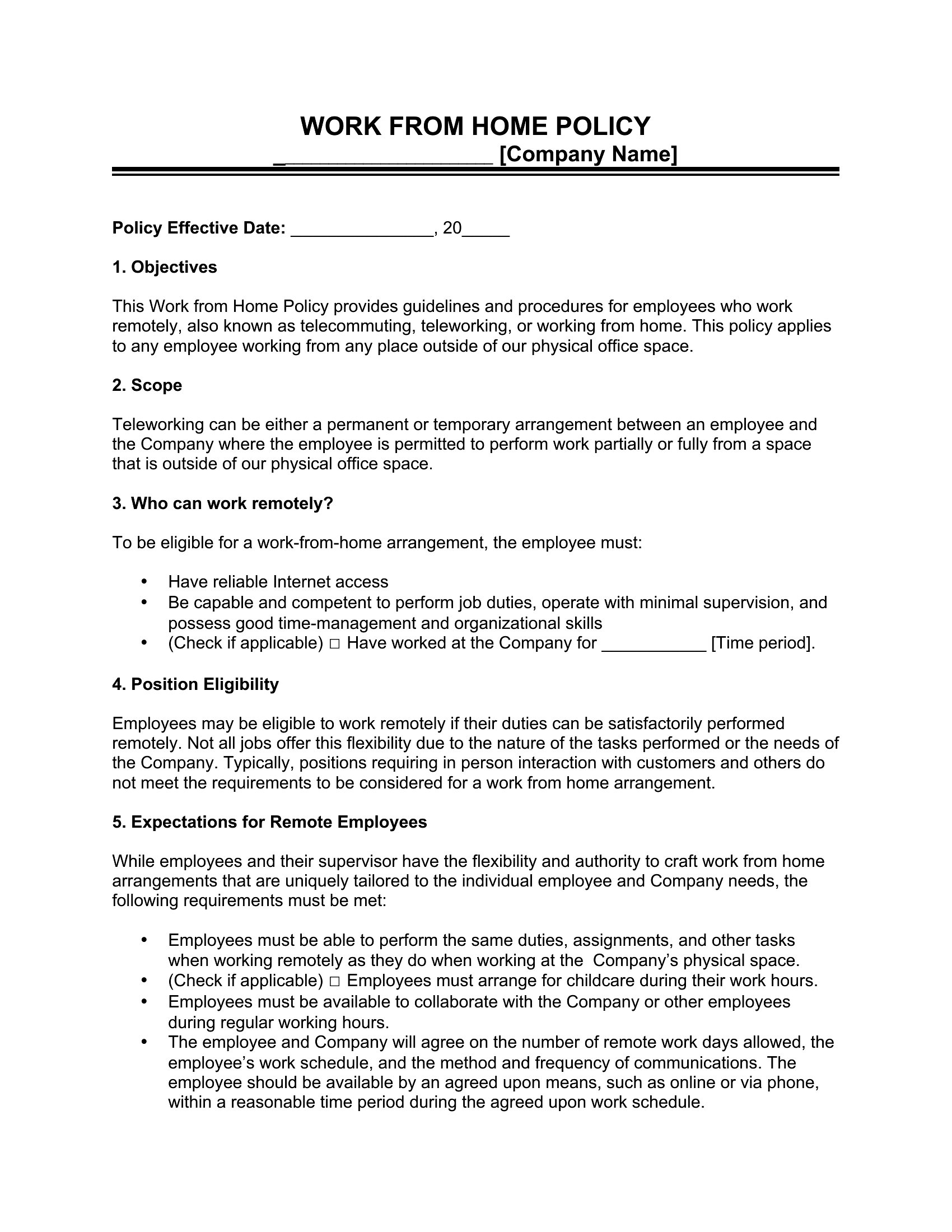
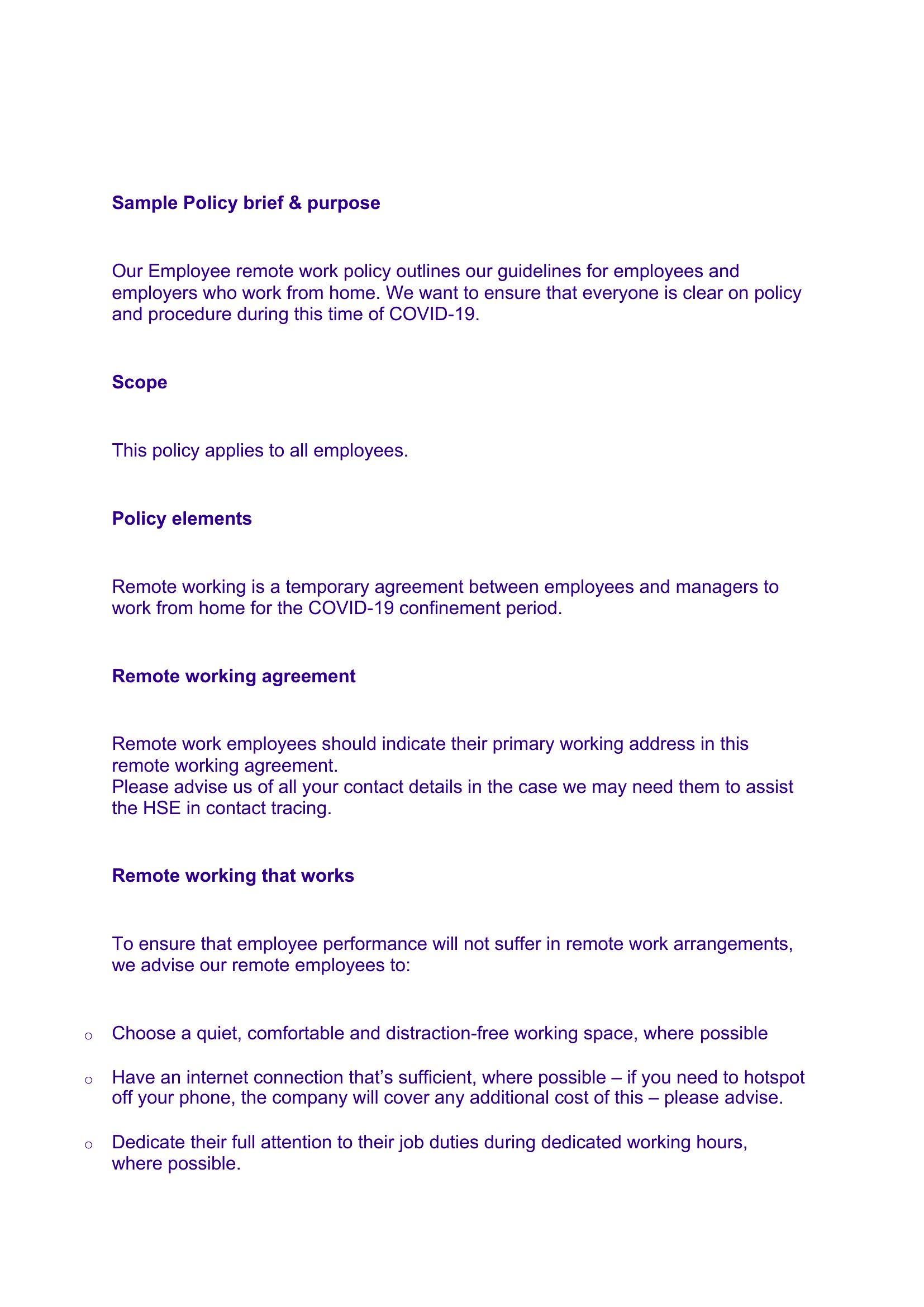
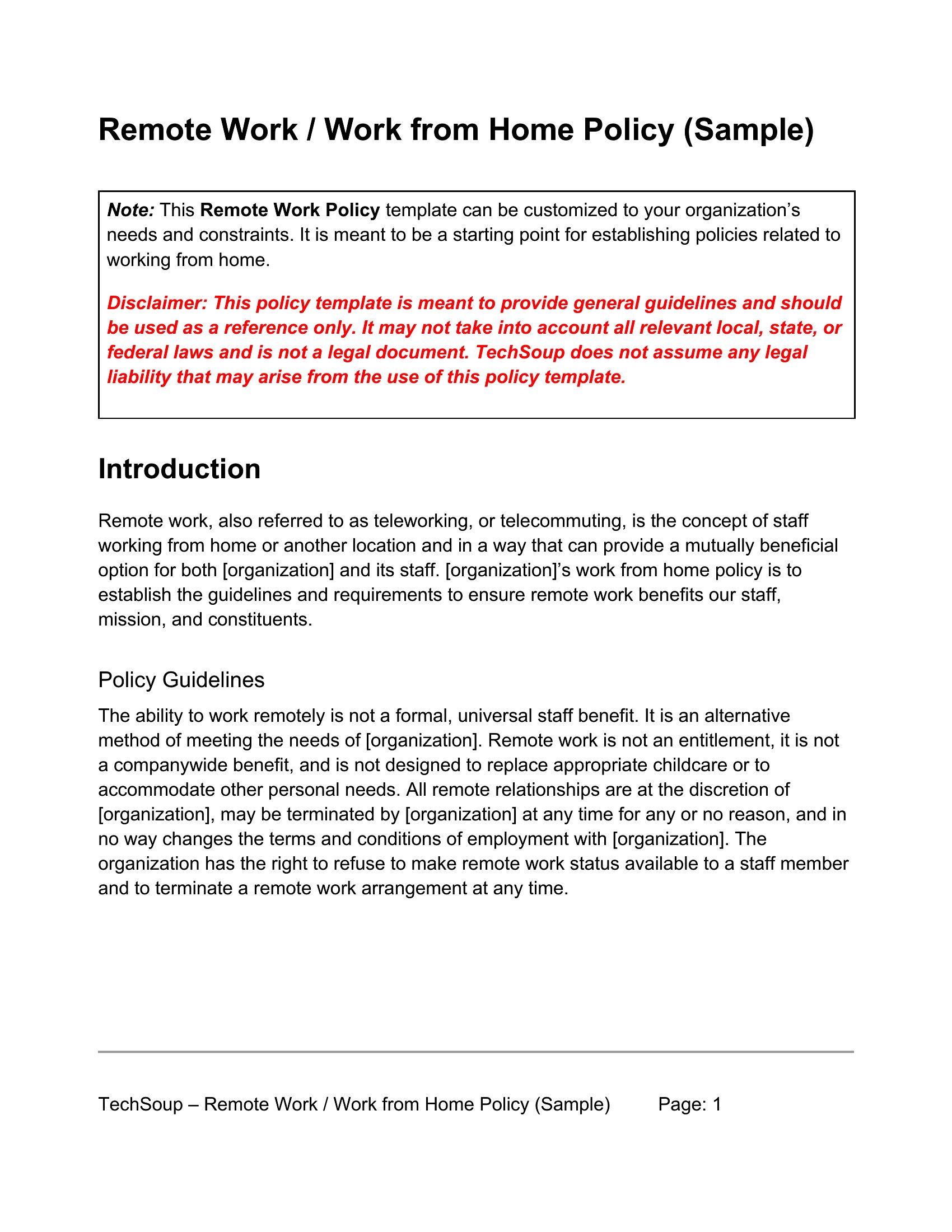
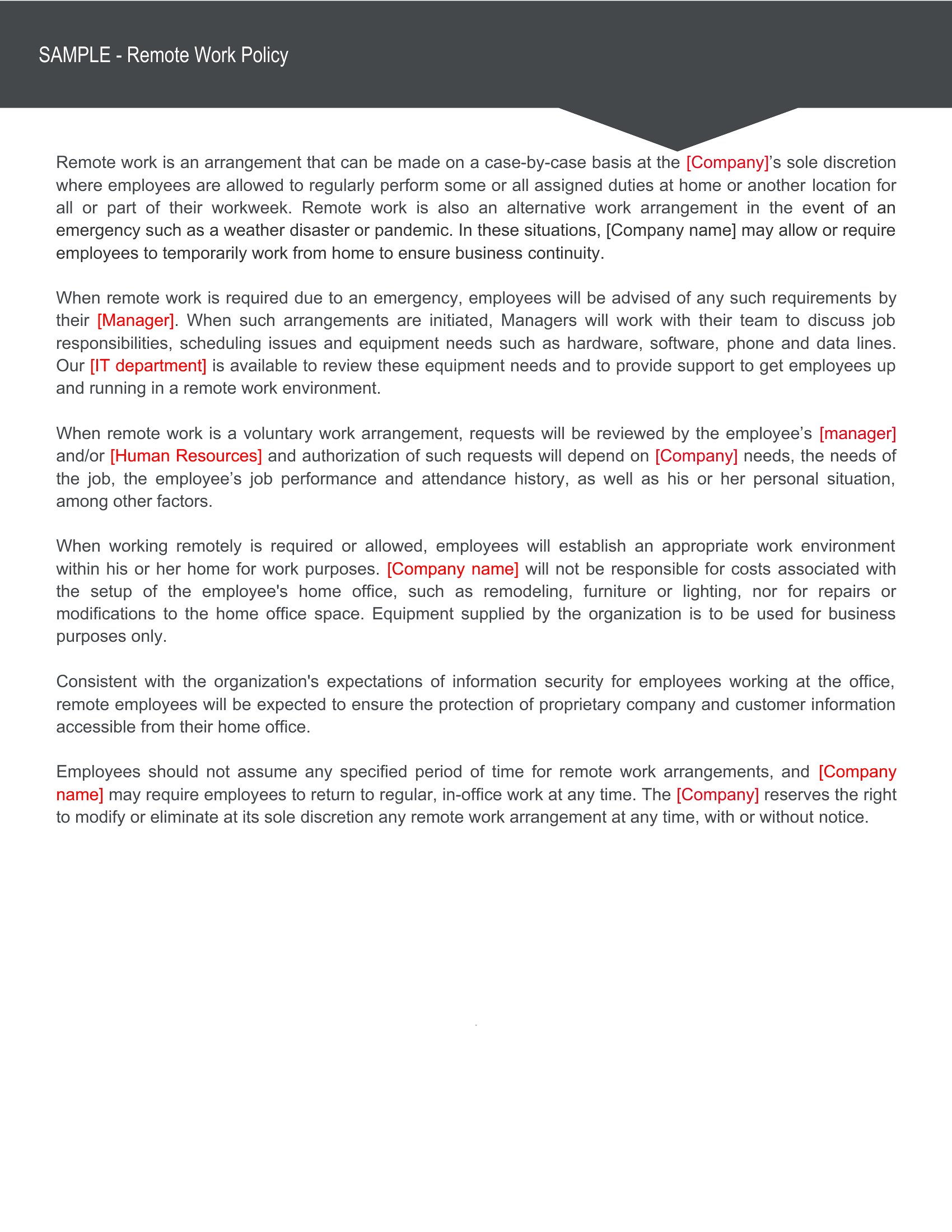
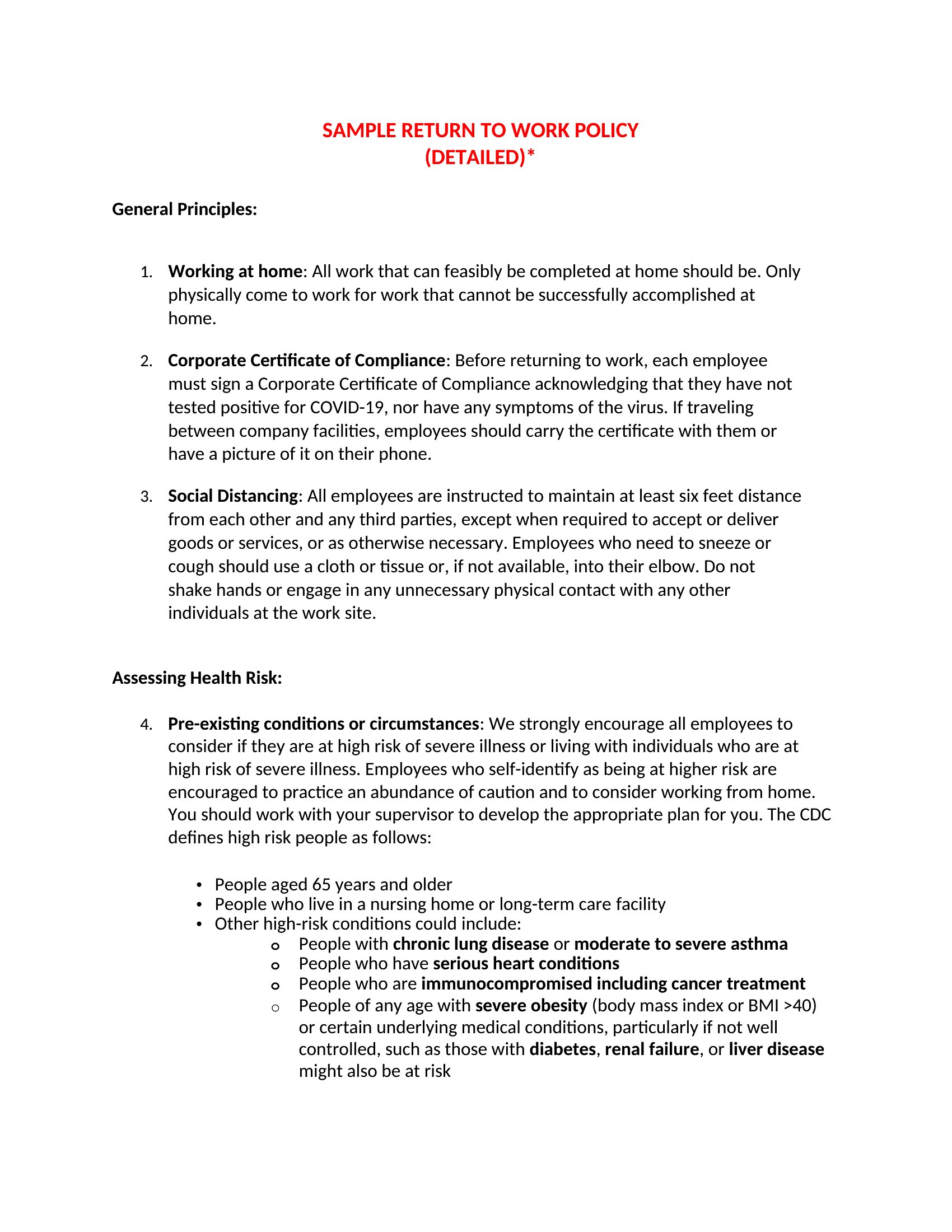
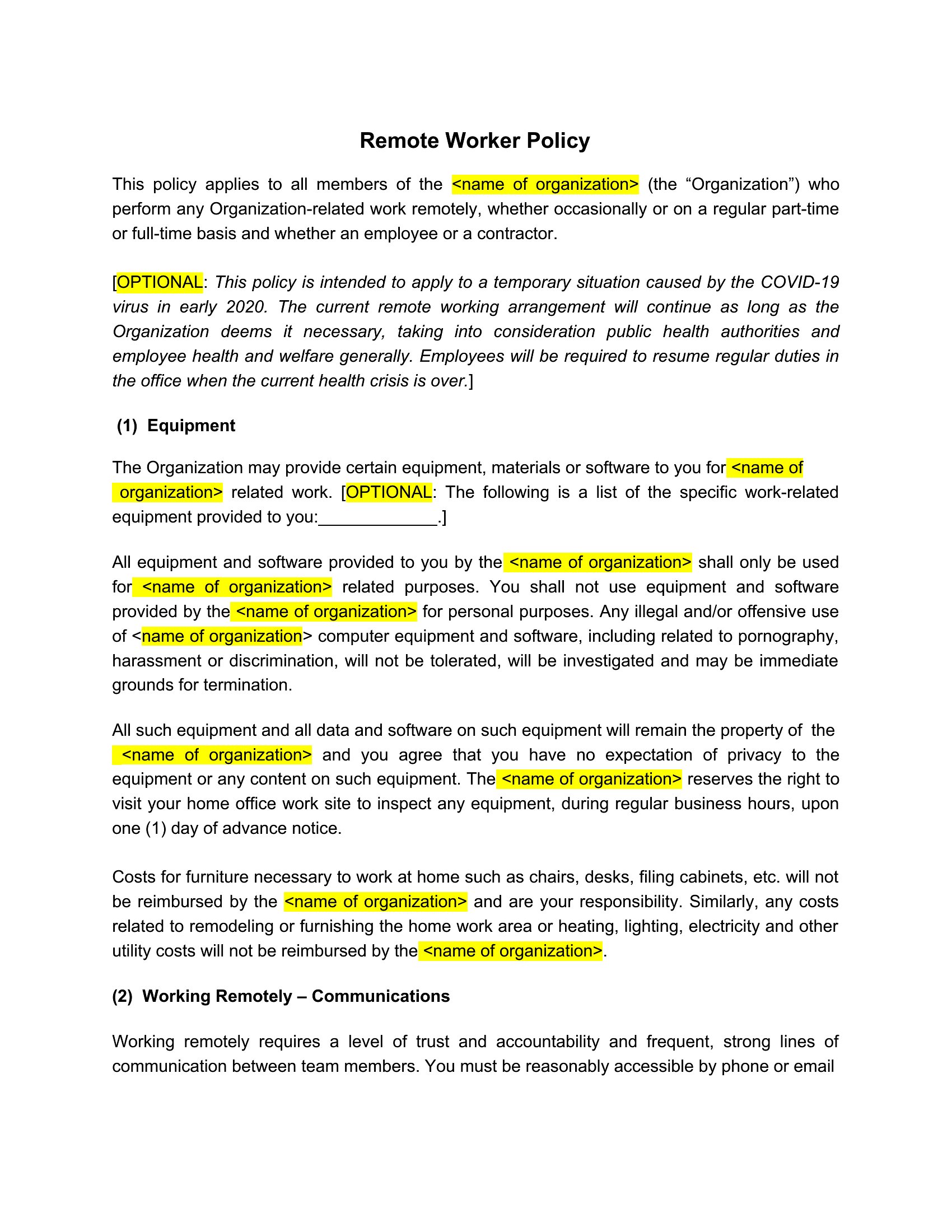
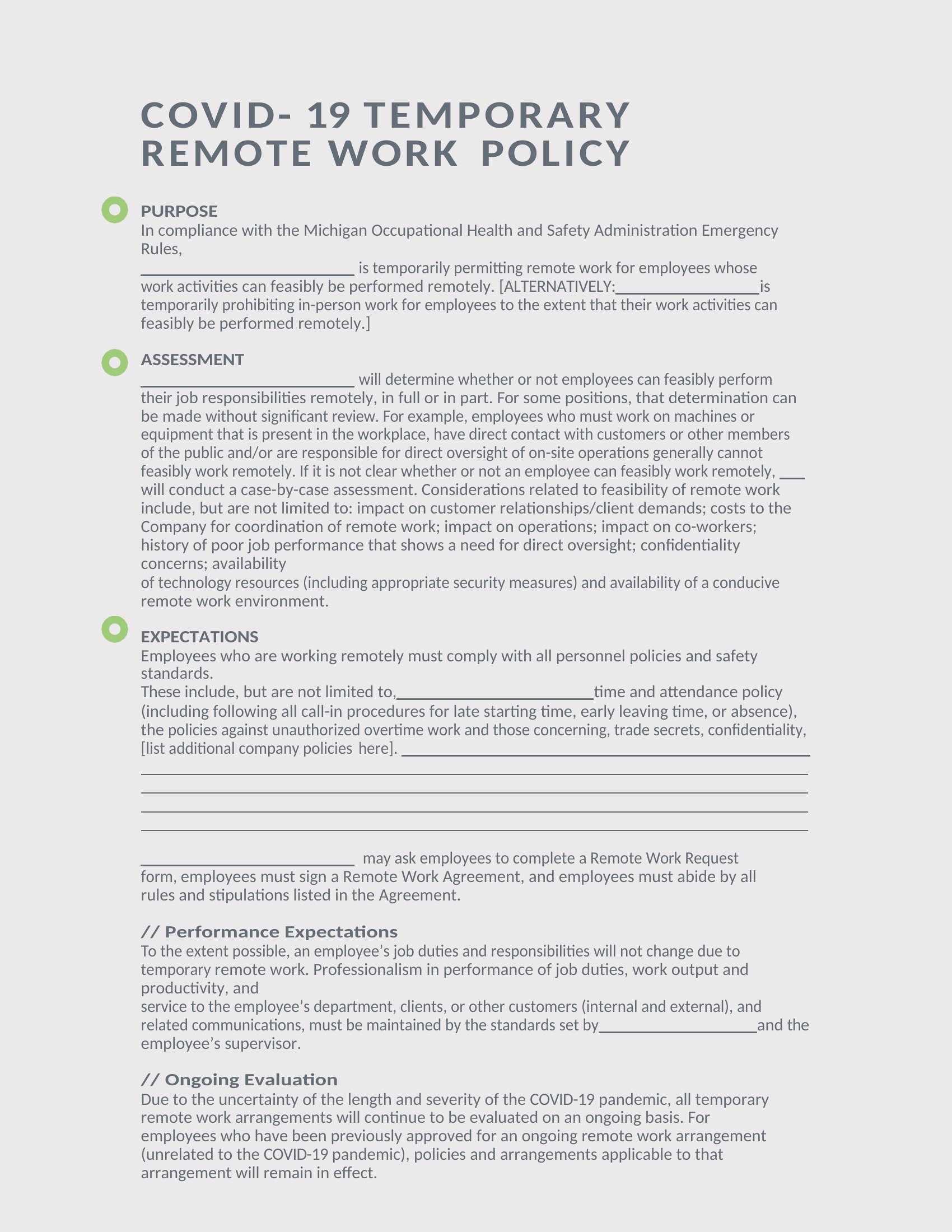
LegalRemote work runs more smoothly when expectations are written down instead of assumed, and a clear policy spares everyone guesswork later. These 47 work from home policy templates help employers and HR teams set out eligibility, hours, equipment, security, and communication standards for remote and hybrid staff. Layouts range from short guidelines to detailed agreements employees sign.
Each template is editable in Microsoft Word, so you can adapt the rules to your company and print copies for the handbook or individual files. Spell out who's eligible and how performance is measured to avoid friction down the line. Employment rules vary by state, so confirm yours before rolling out a policy. Download the version that fits your team and put your remote-work expectations in writing.
When to use this Work from Home Policy template
- Small business owners with 10–50 employees transitioning to hybrid work who need a simple, legally grounded policy to clarify remote work rules like hours and expense coverage.
- HR managers at startups with no existing remote policy needing a quick, employee-friendly document to explain Wi-Fi reimbursement, cybersecurity basics, and approved workspaces.
- Mid-sized companies with some remote staff who must align their policy with existing contracts, including non-compete clauses and data protection for off-site employees.
- Executive assistants to CEOs or founders drafting a high-level policy for C-suite members who work remotely but require strict confidentiality and device management provisions.
Which format should I download?
All 47 templates here are in Word format, which is ideal for customization. Choose Word if you need to tweak language to match your company’s existing HR manual or legal review process. The editable format also lets you add specific technical requirements (like VPN mandates) or company culture notes (like video call etiquette).
How to use this Work from Home Policy template
Should we include a trial period for remote work in this policy?
Yes, many templates suggest a 30–90 day trial period to assess productivity and compatibility with team workflows. Specify how performance will be measured (e.g., project deadlines, meeting attendance) and whether failures can result in a return-to-office requirement. Consult your HR advisor to align this with state labor laws, which vary on remote work probationary clauses.
How do we handle employees who live in different time zones?
Address core overlap hours (e.g., 10 AM–2 PM employee’s local time) and asynchronous communication tools like Slack or Asana in the policy. Some templates include a section on response-time expectations (e.g., “within 24 hours for urgent requests”). Avoid rigid policies—focus on collaboration outcomes rather than rigid sign-in times to accommodate global teams.
Can we require employees to sign this policy as a legal agreement?
While these templates can serve as a starting point for a signed agreement, they are not legally binding documents. Consult an employment lawyer to ensure compliance with local contract laws, especially if your policy includes penalties (e.g., loss of remote privileges) or data security obligations. Many companies use these as internal guidelines with a separate acknowledgment form for signatures.
Comments
Join the conversation
Sign in to share your thoughts and leave a comment on this resource.