FAQ
How do we decide which technical debt items to prioritize when everything seems urgent?
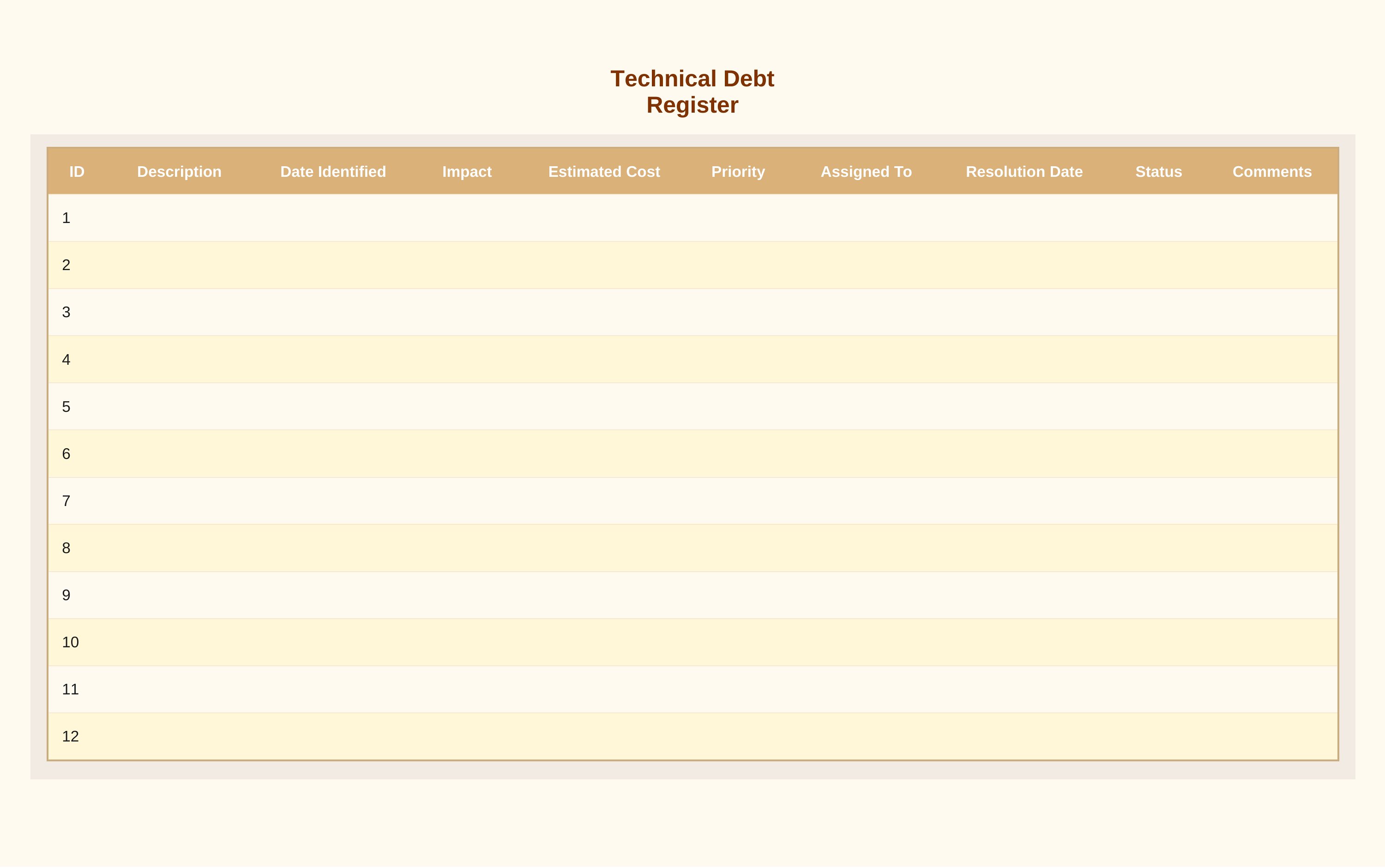
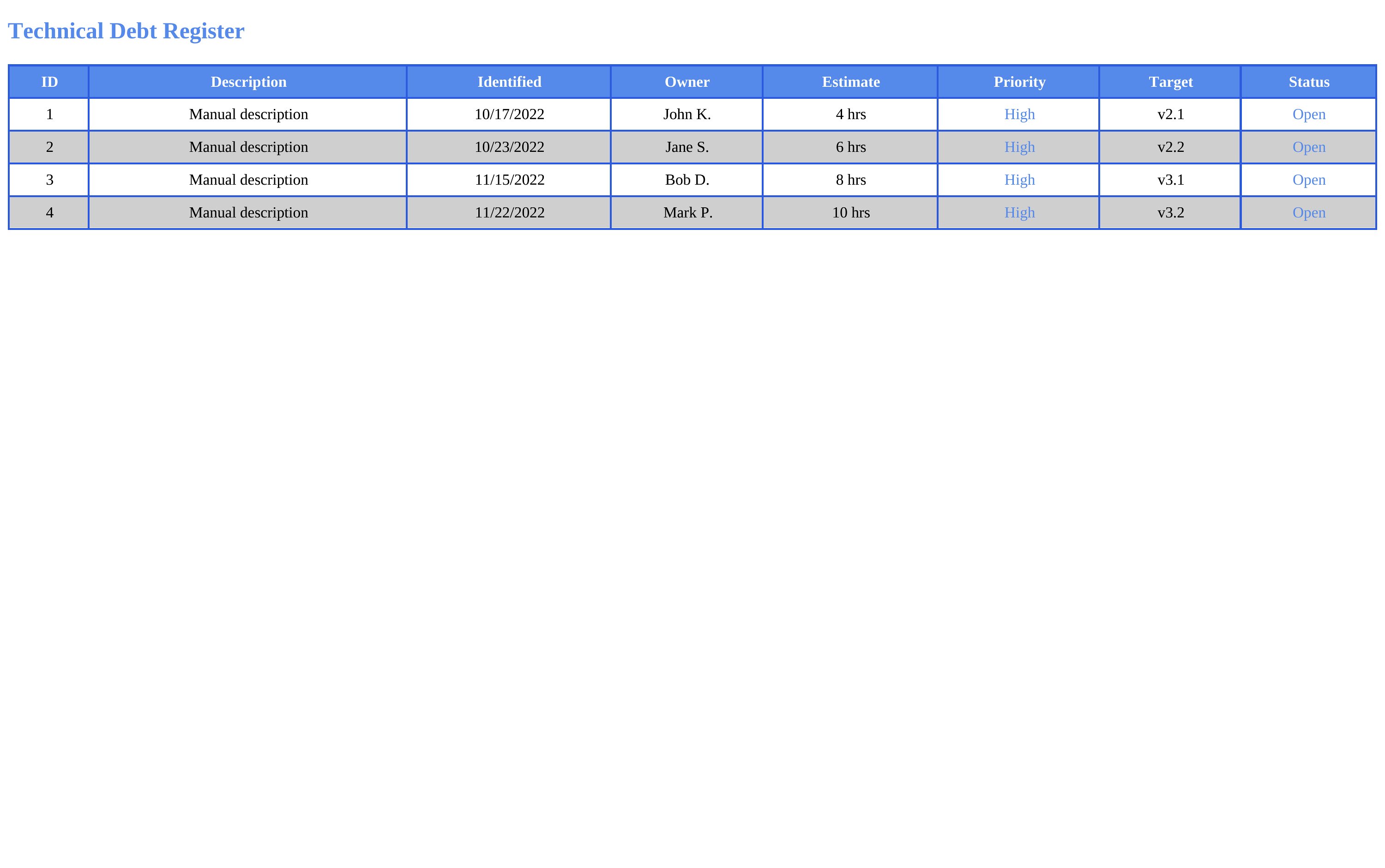
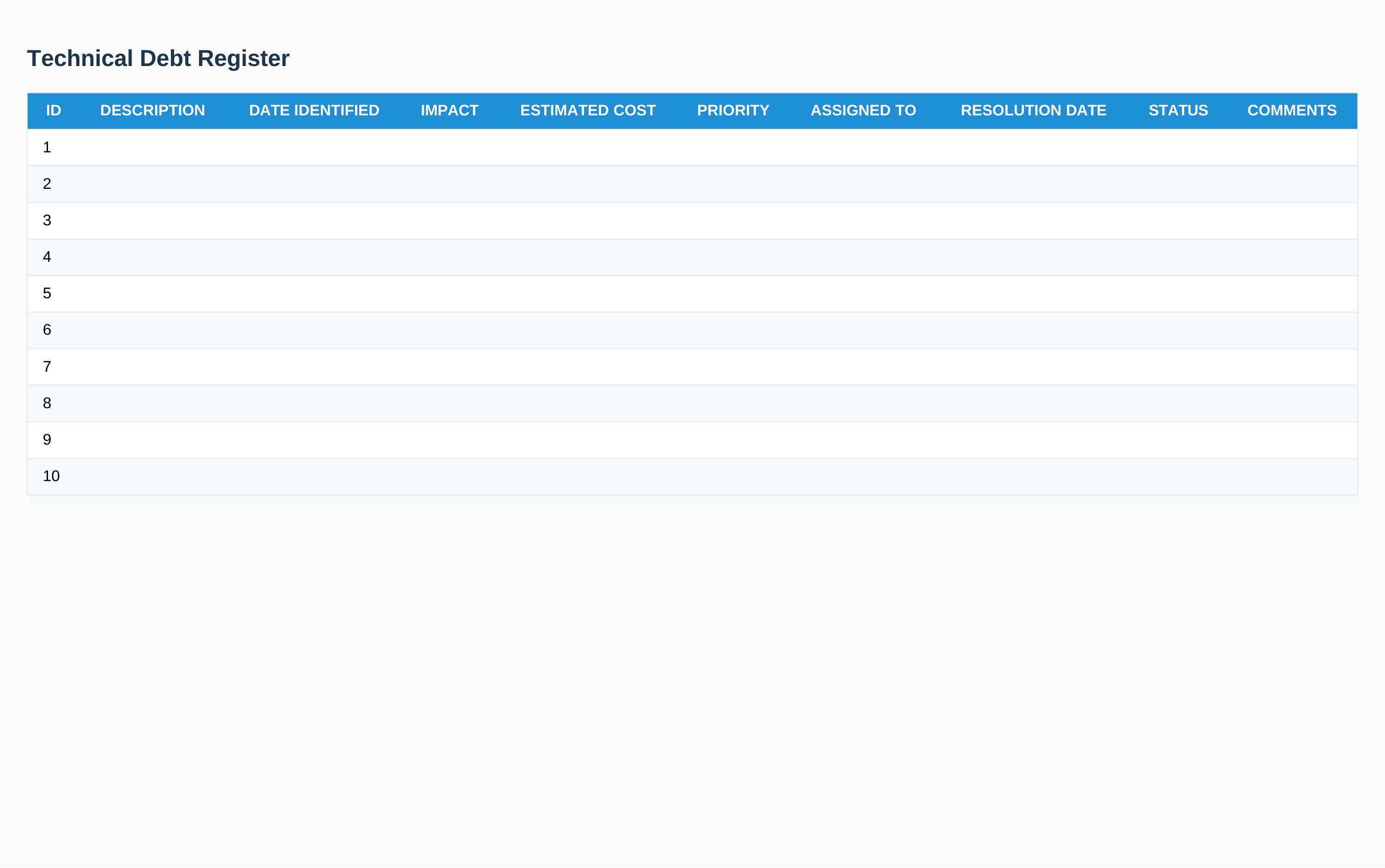
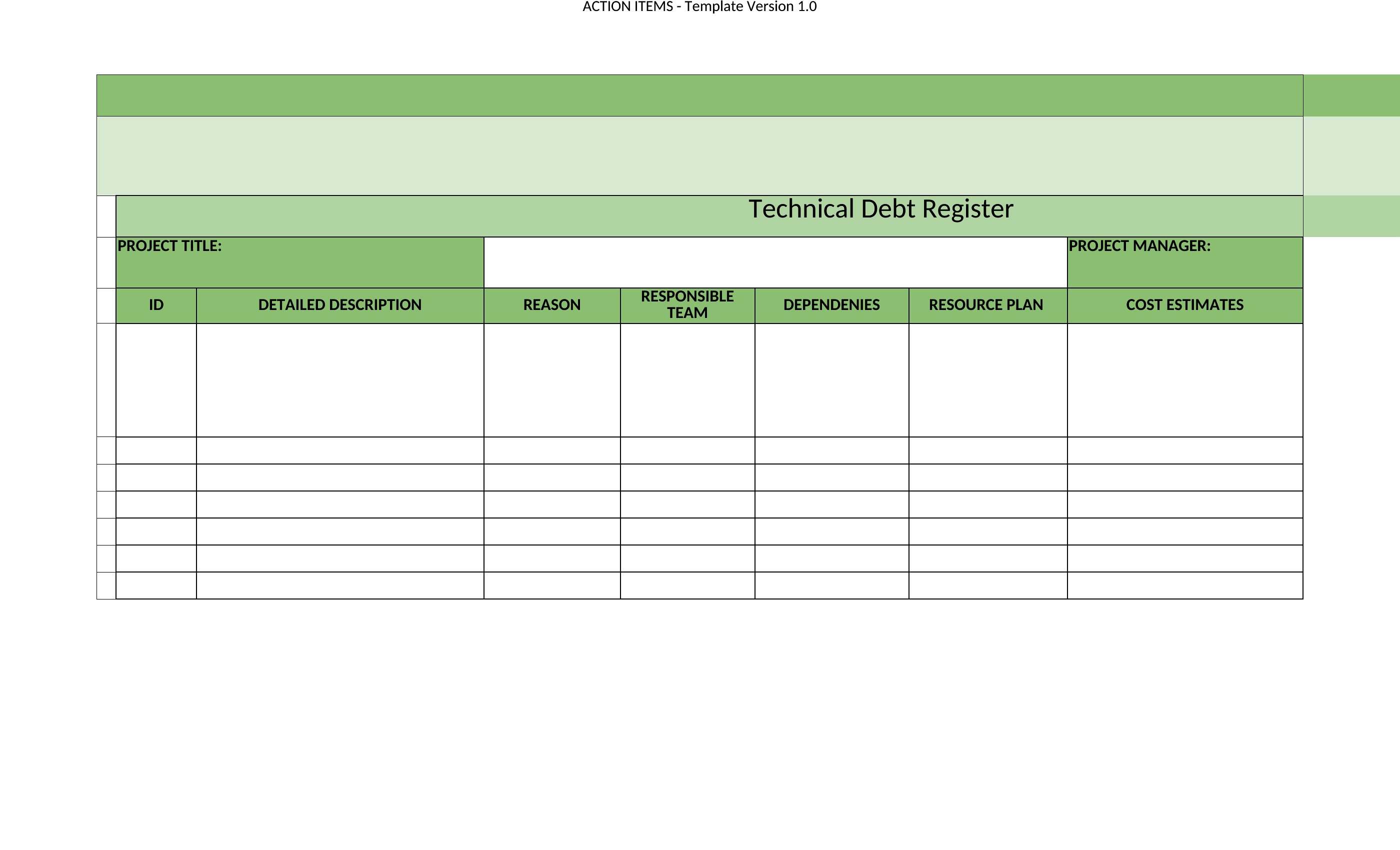
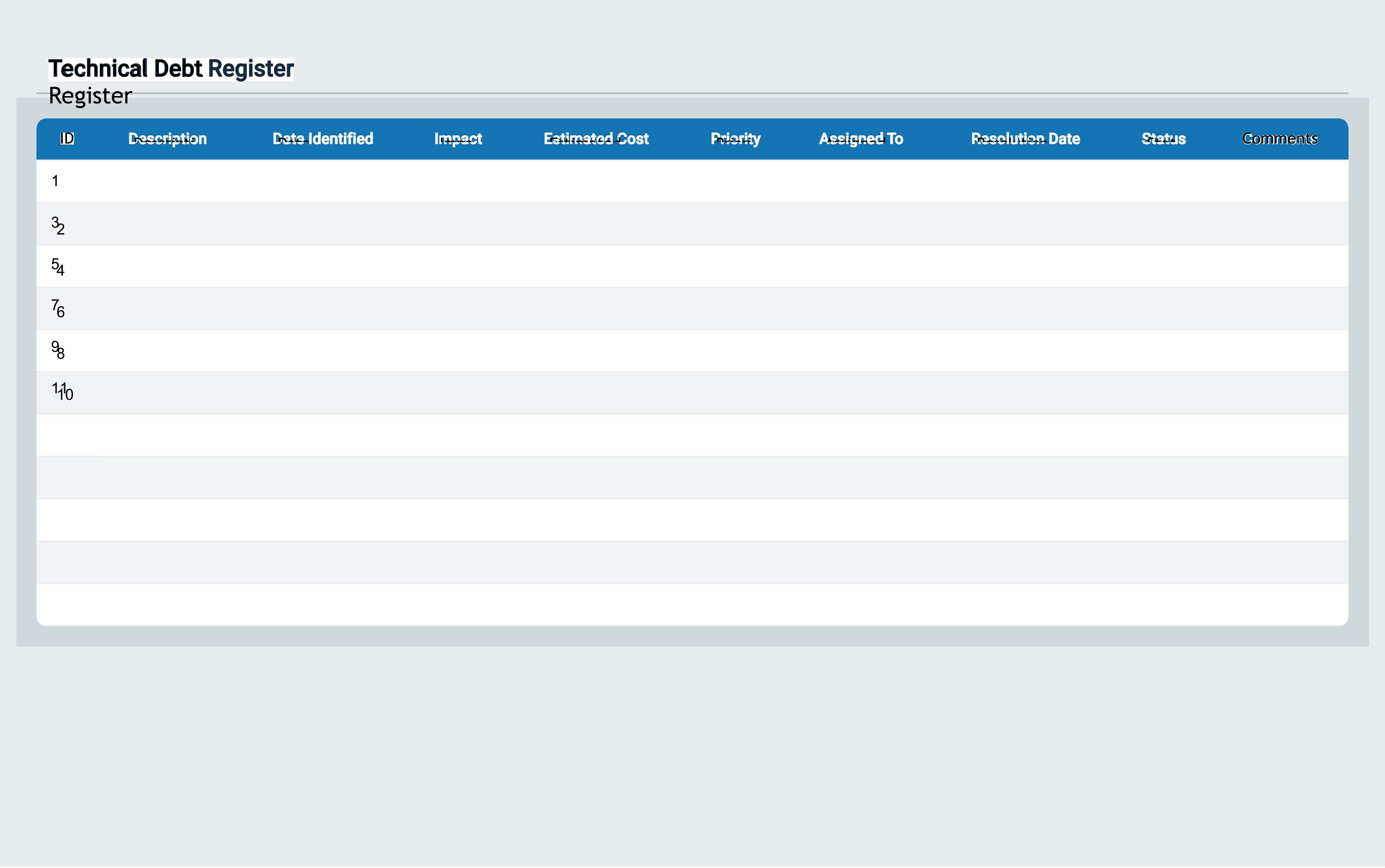
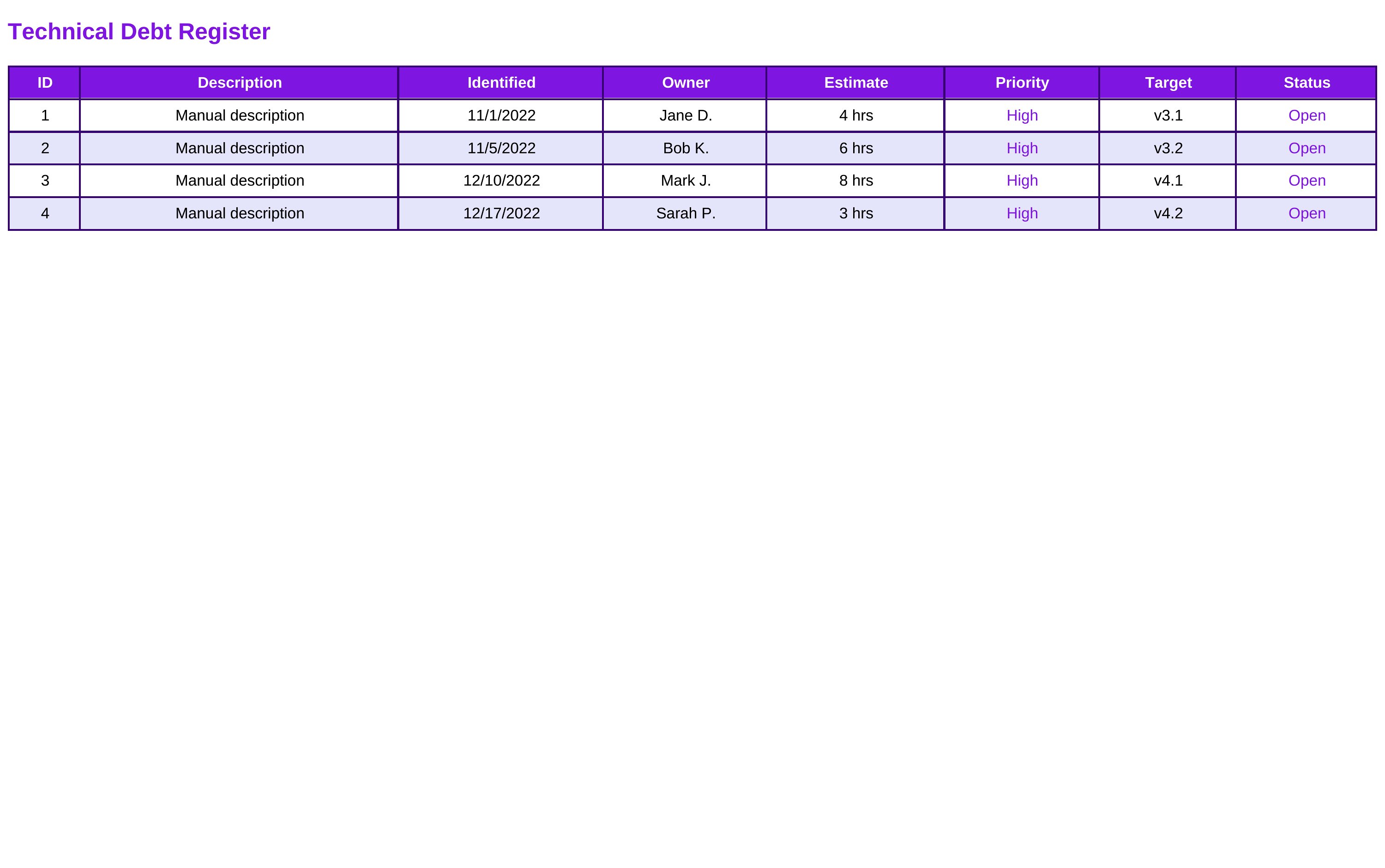
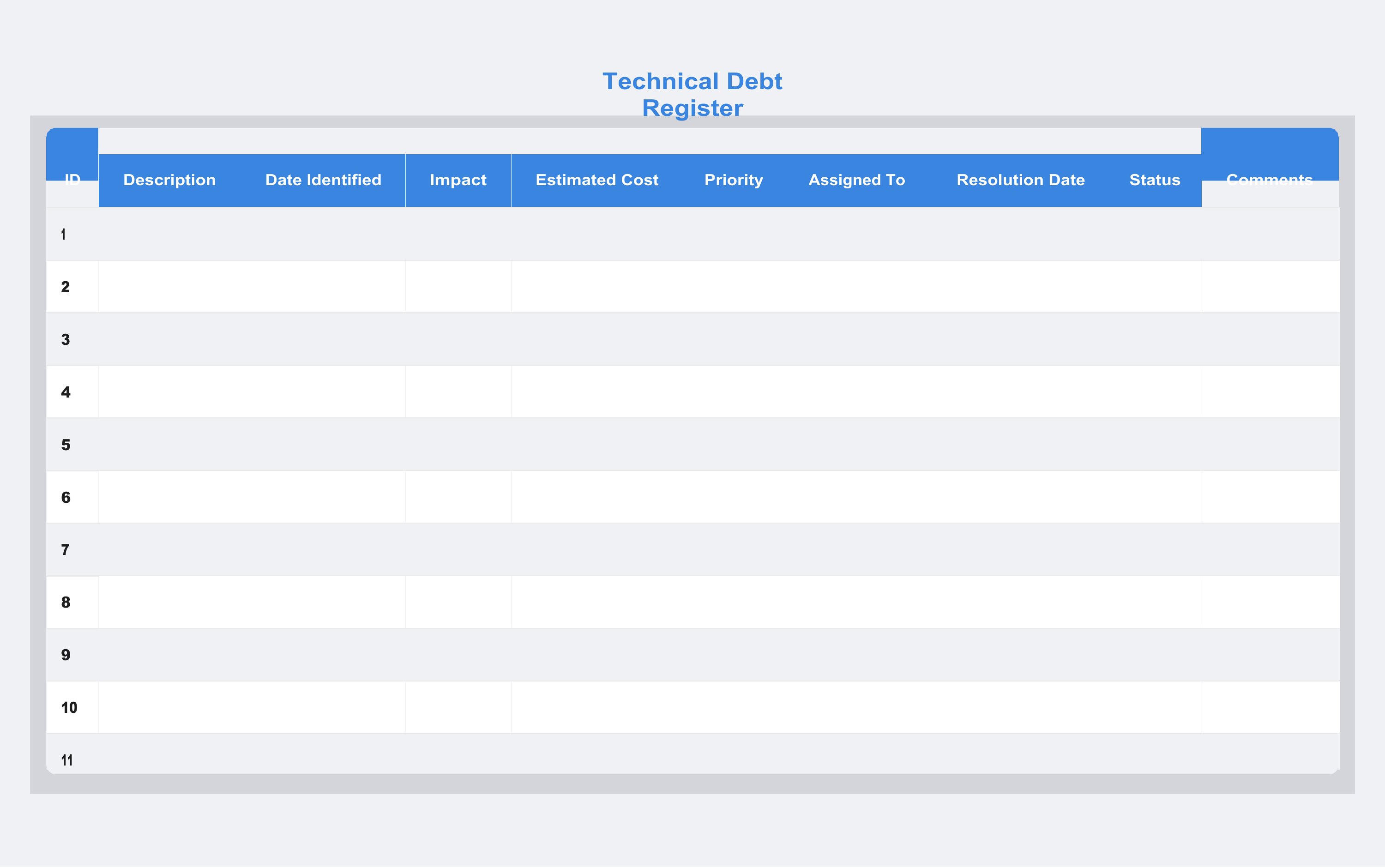
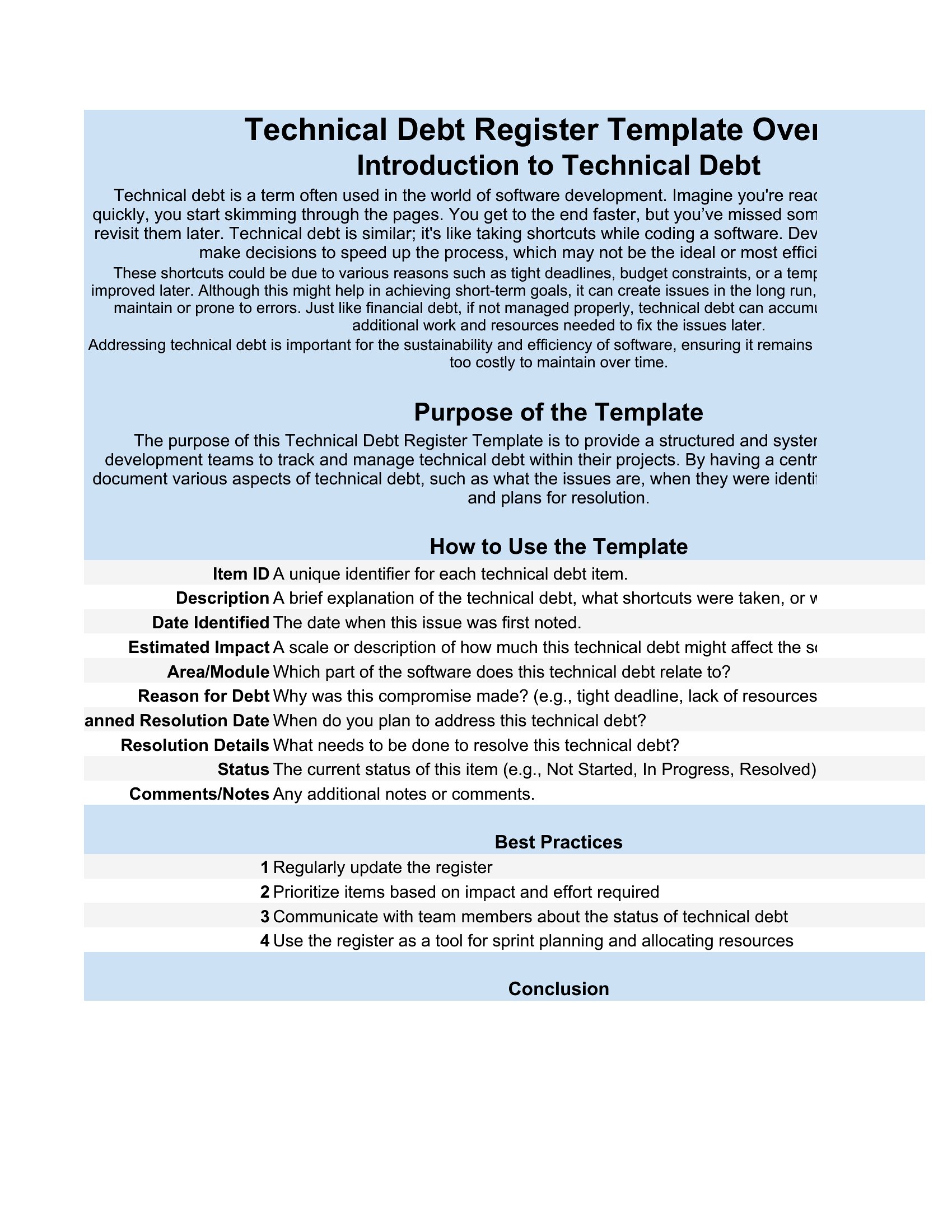
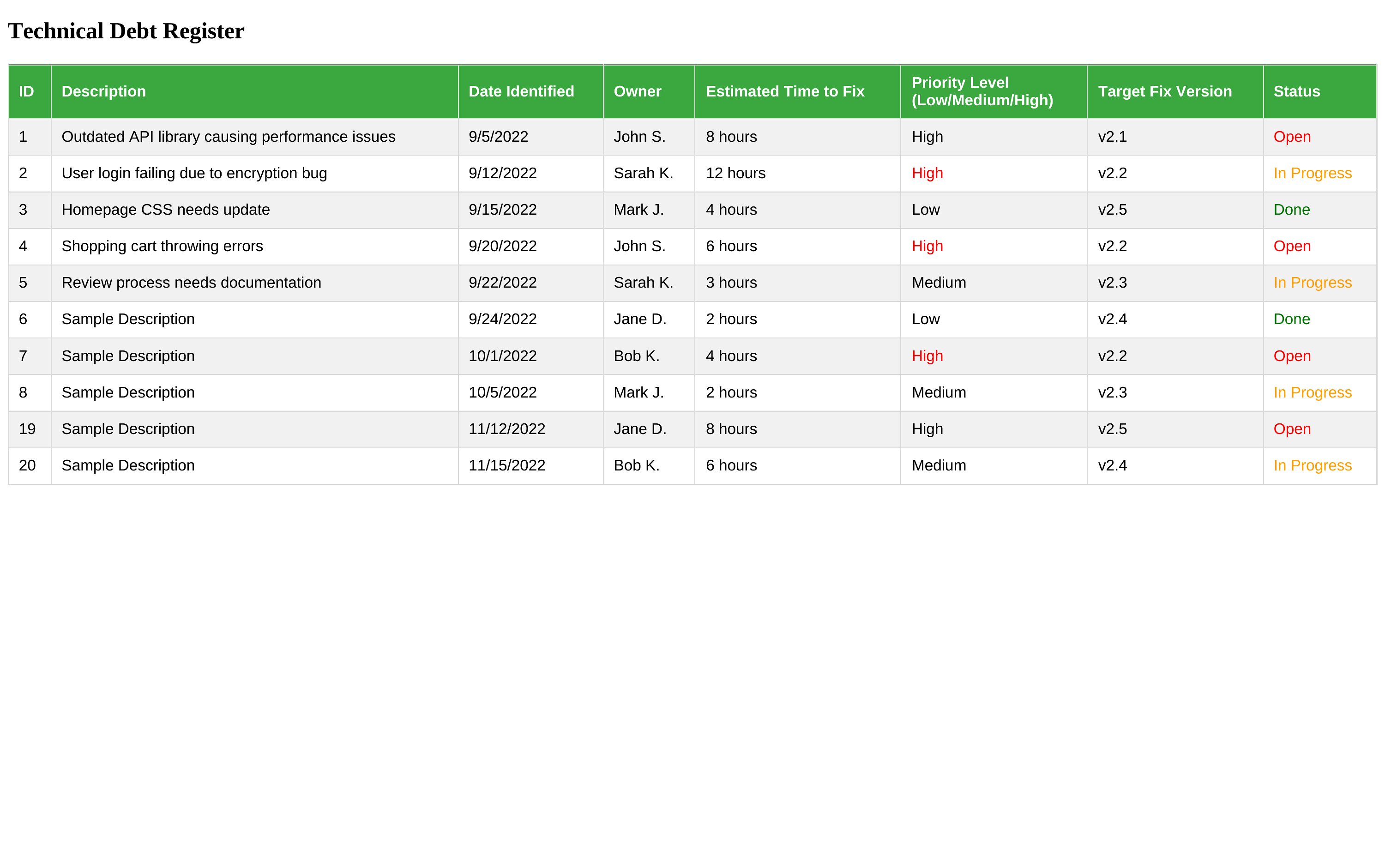
Start by categorizing each item by its impact (e.g., security risk, performance degradation) and effort to resolve. Use the priority columns to score each based on a simple scale—like 1 (low) to 5 (critical)—then sort by impact/effort ratio. Teams often combine this with business goals, such as aligning fixes with upcoming feature releases or user-facing deadlines.
Can we use this template to track architectural decisions as well as bugs or quick fixes?
Yes, the template is designed to capture any intentional trade-off or suboptimal choice, including architectural decisions. Add a column to note whether the item is a ‘known issue’ (like a hack) or a ‘strategic debt’ (like a deliberate shortcut for speed). This helps distinguish between fixes and future enhancements. Include a brief rationale for architectural choices to preserve context later.
What’s the best way to involve non-technical stakeholders in reviewing the technical debt register?
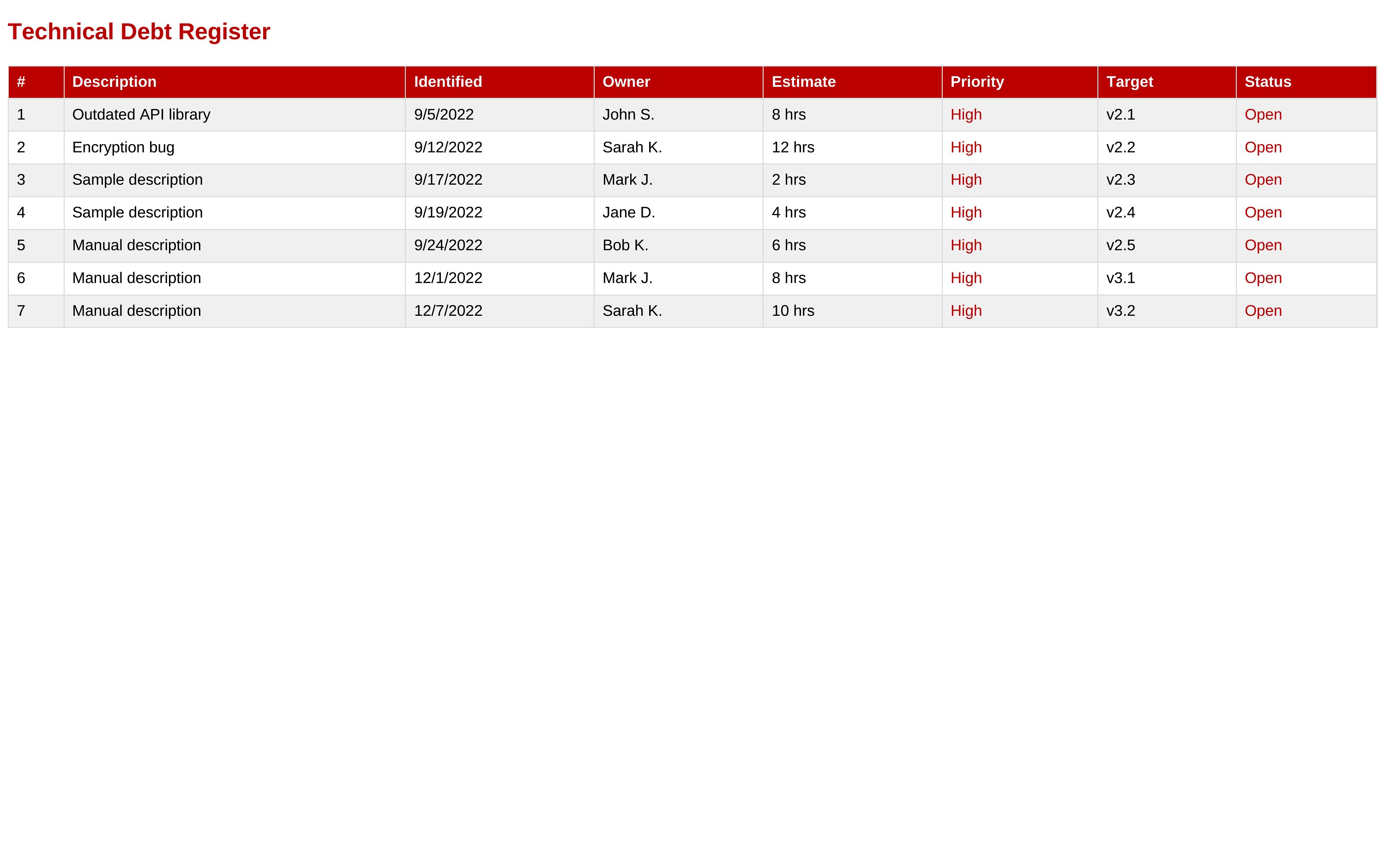
Simplify the language for stakeholders by focusing on business outcomes—like ‘this debt could cause downtime during peak traffic’—rather than technical jargon. Use the Word version for shared comments or create a high-level summary sheet in Excel with only the top 5–10 items. Pair the register with a 10-minute demo showing how unresolved debt could delay their priorities, which often secures their engagement.
Comments
Join the conversation
Sign in to share your thoughts and leave a comment on this resource.