FAQ
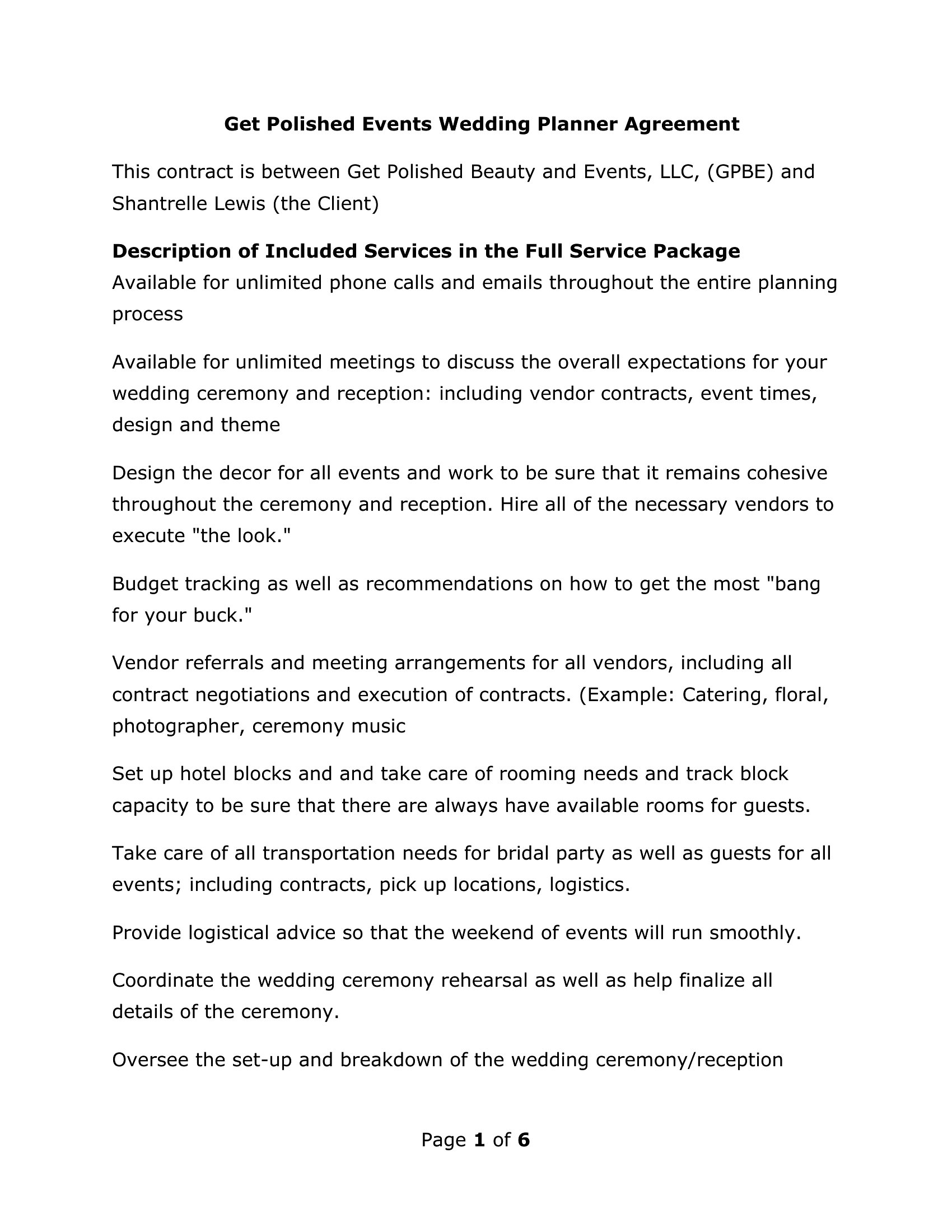
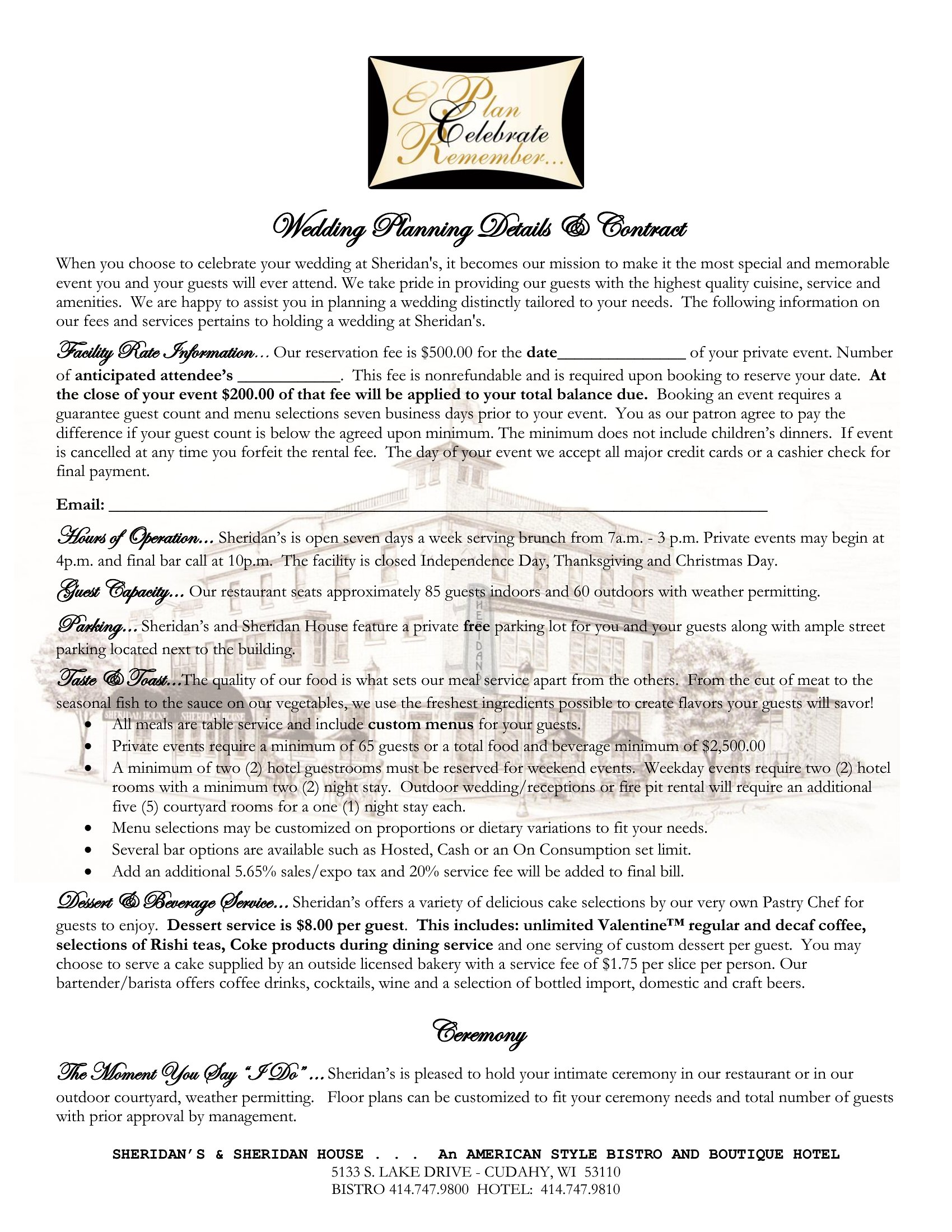
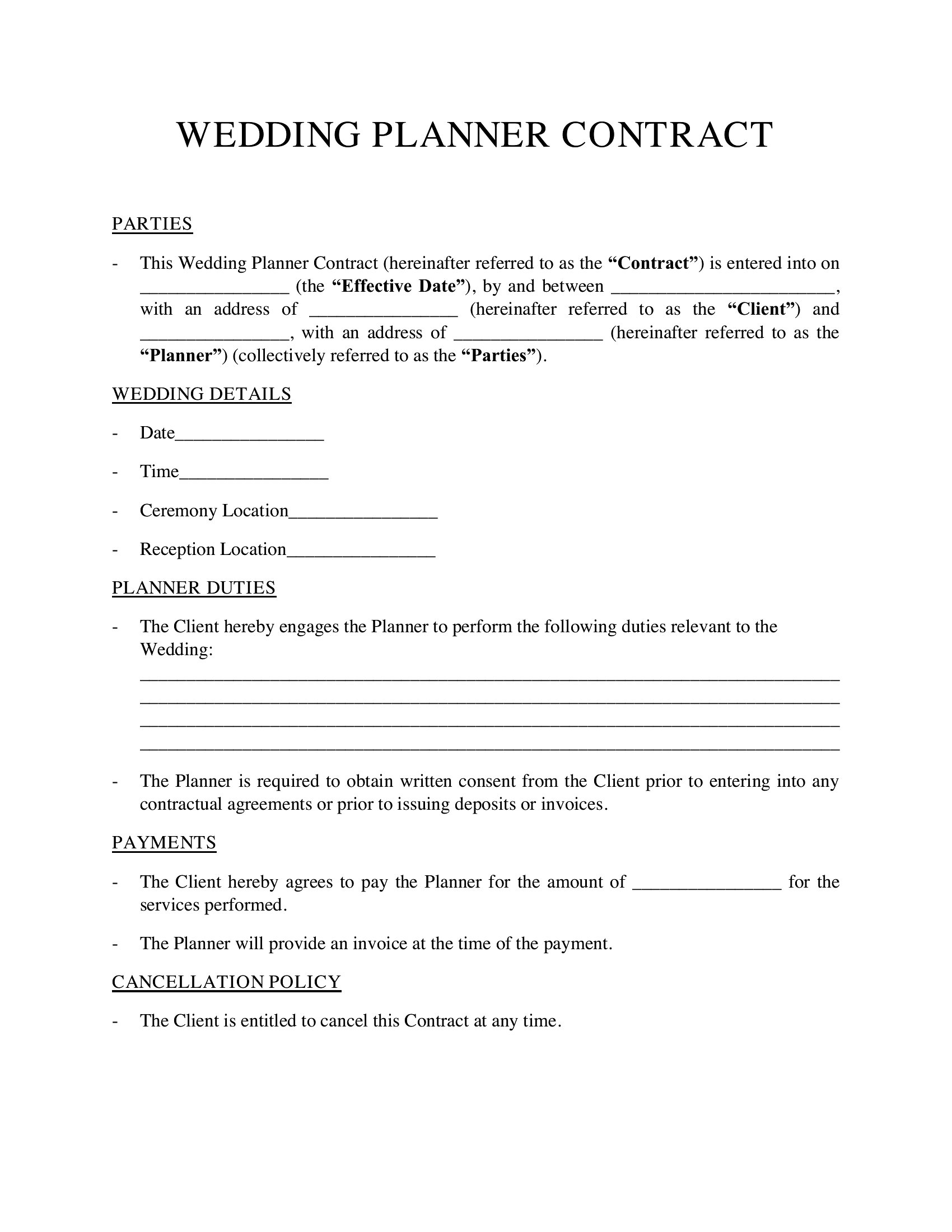
How do I decide which contract template fits my wedding planning business model?
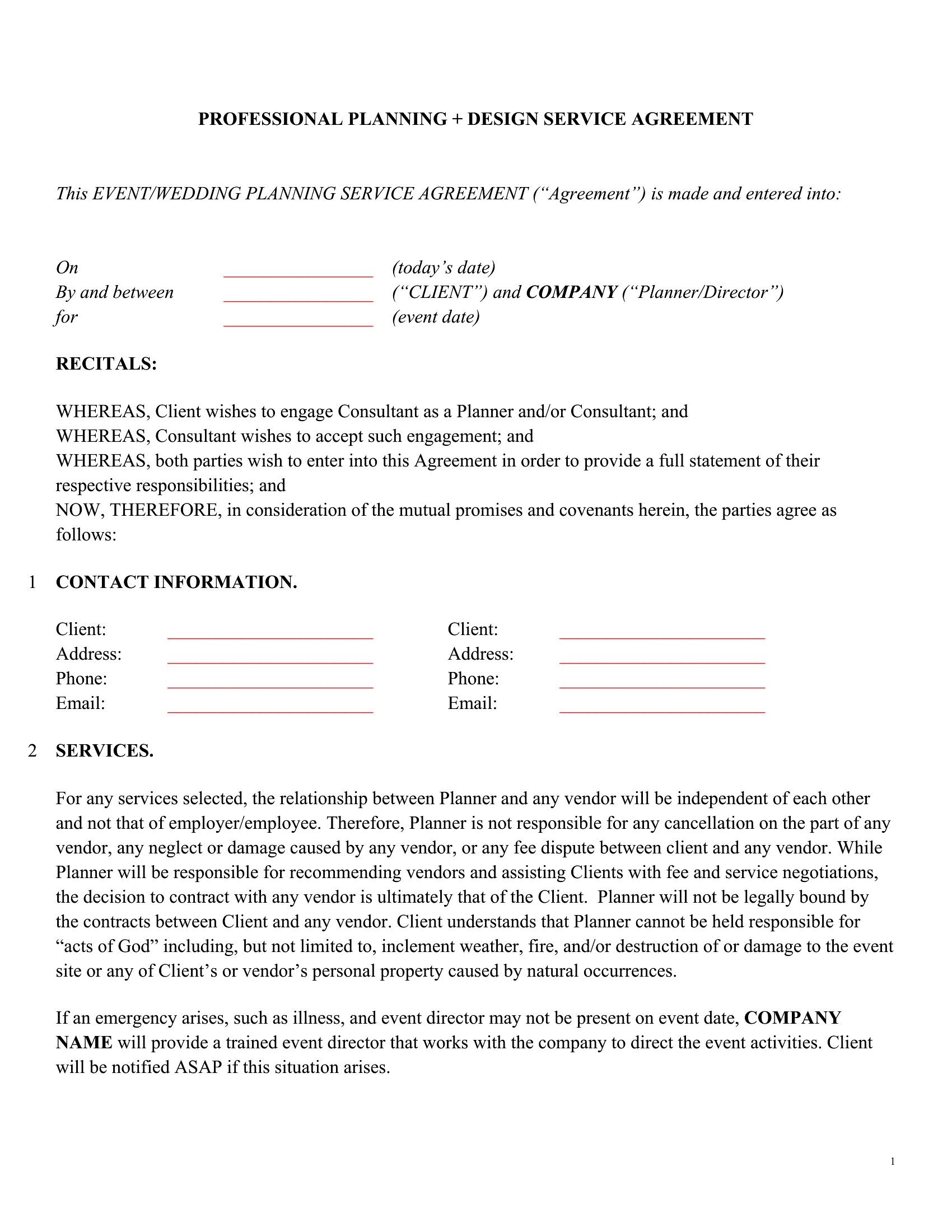
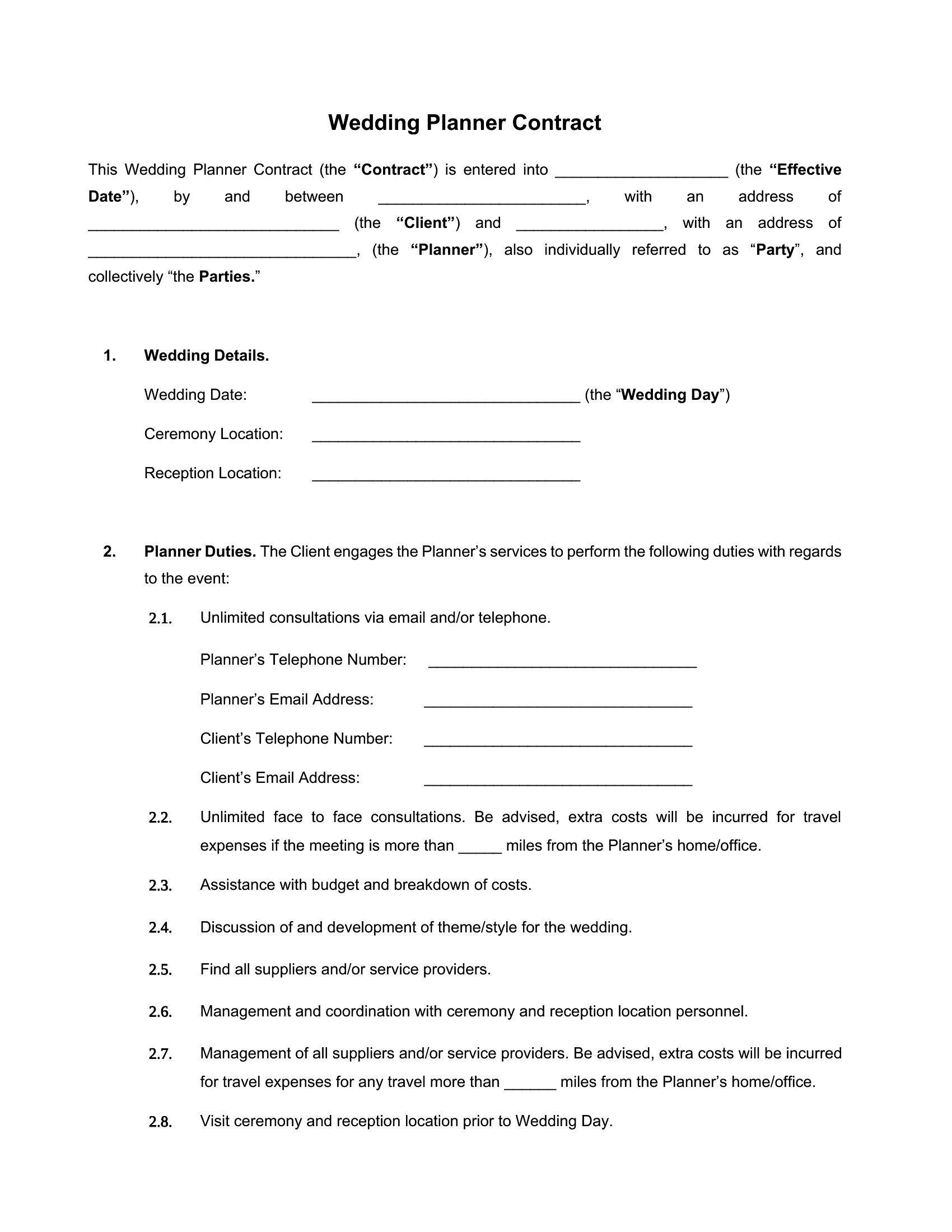
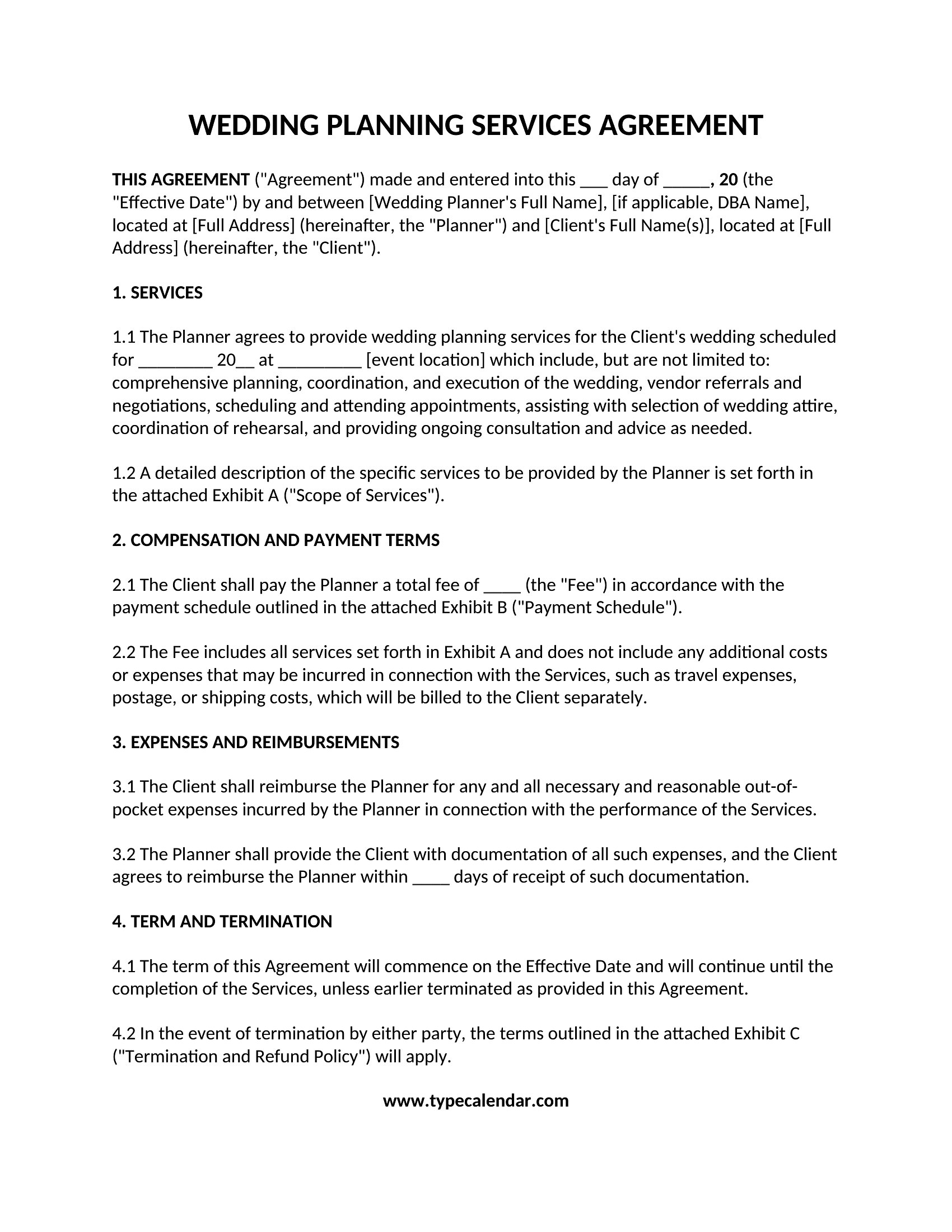
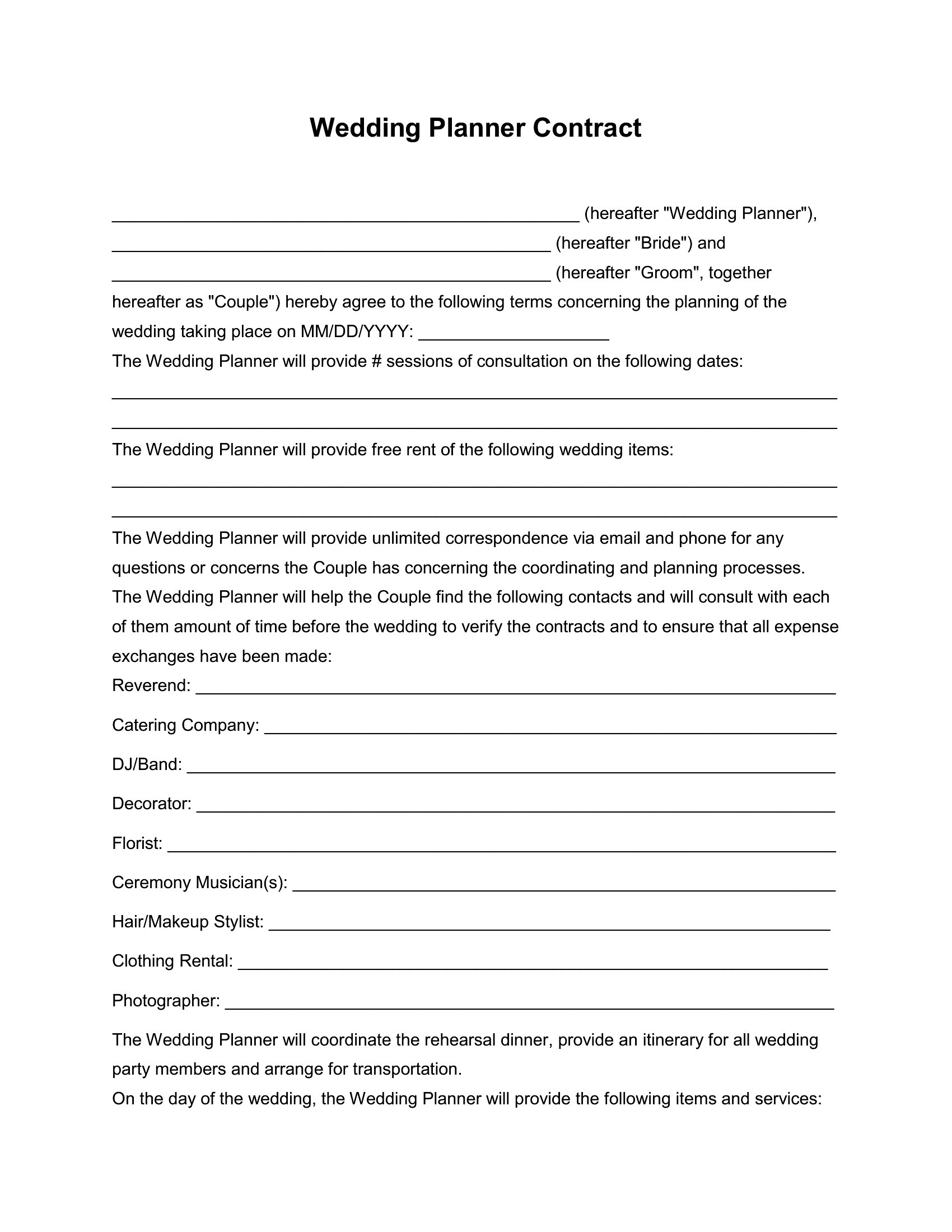
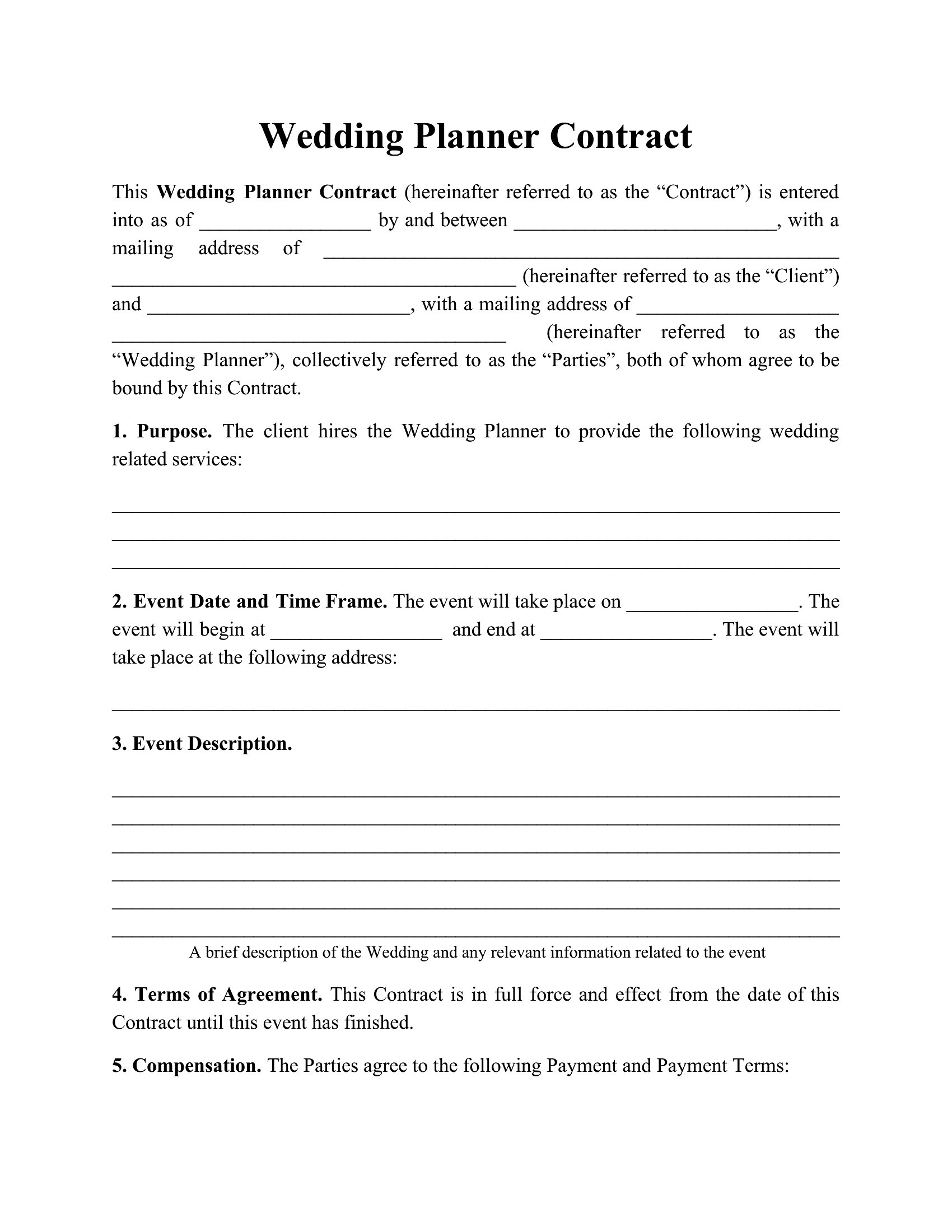
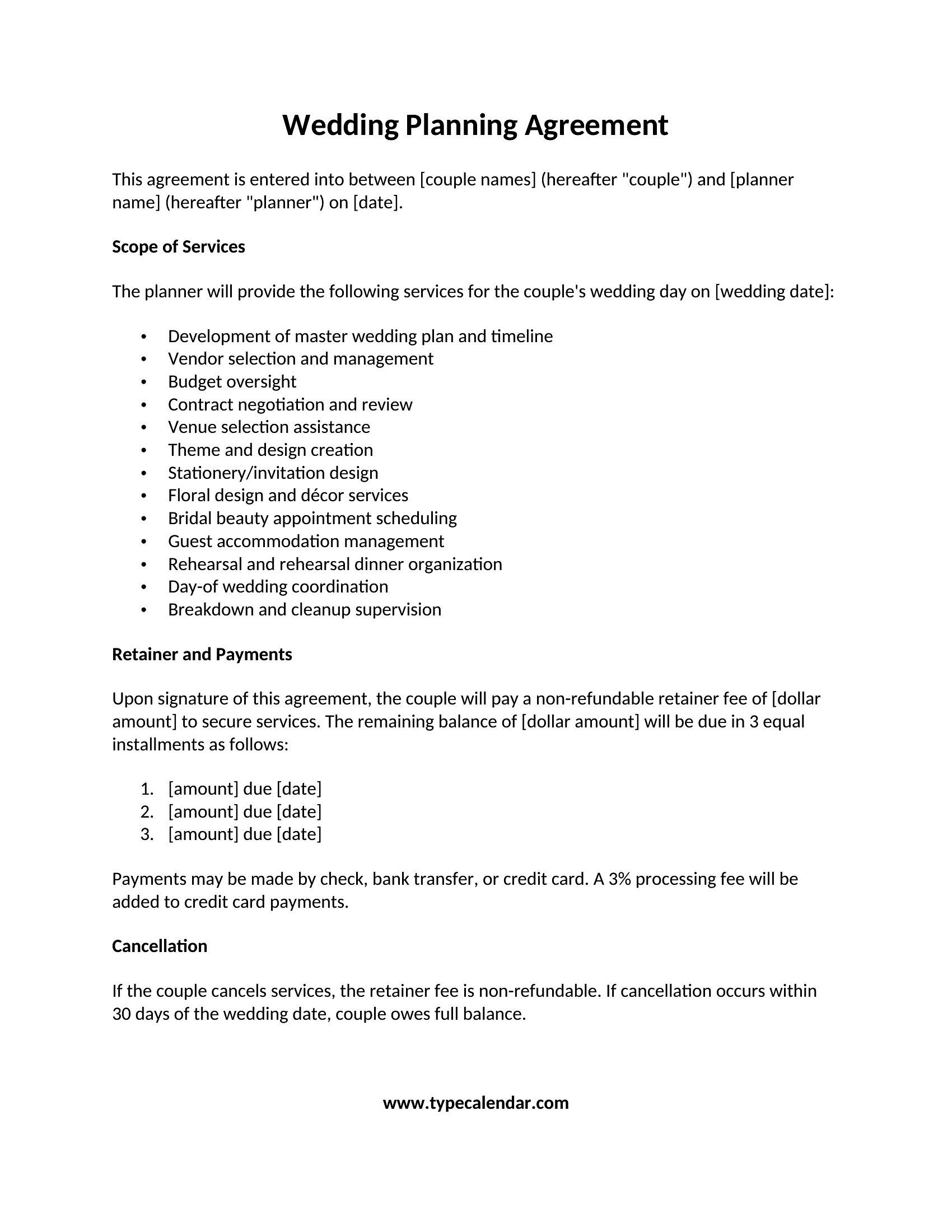
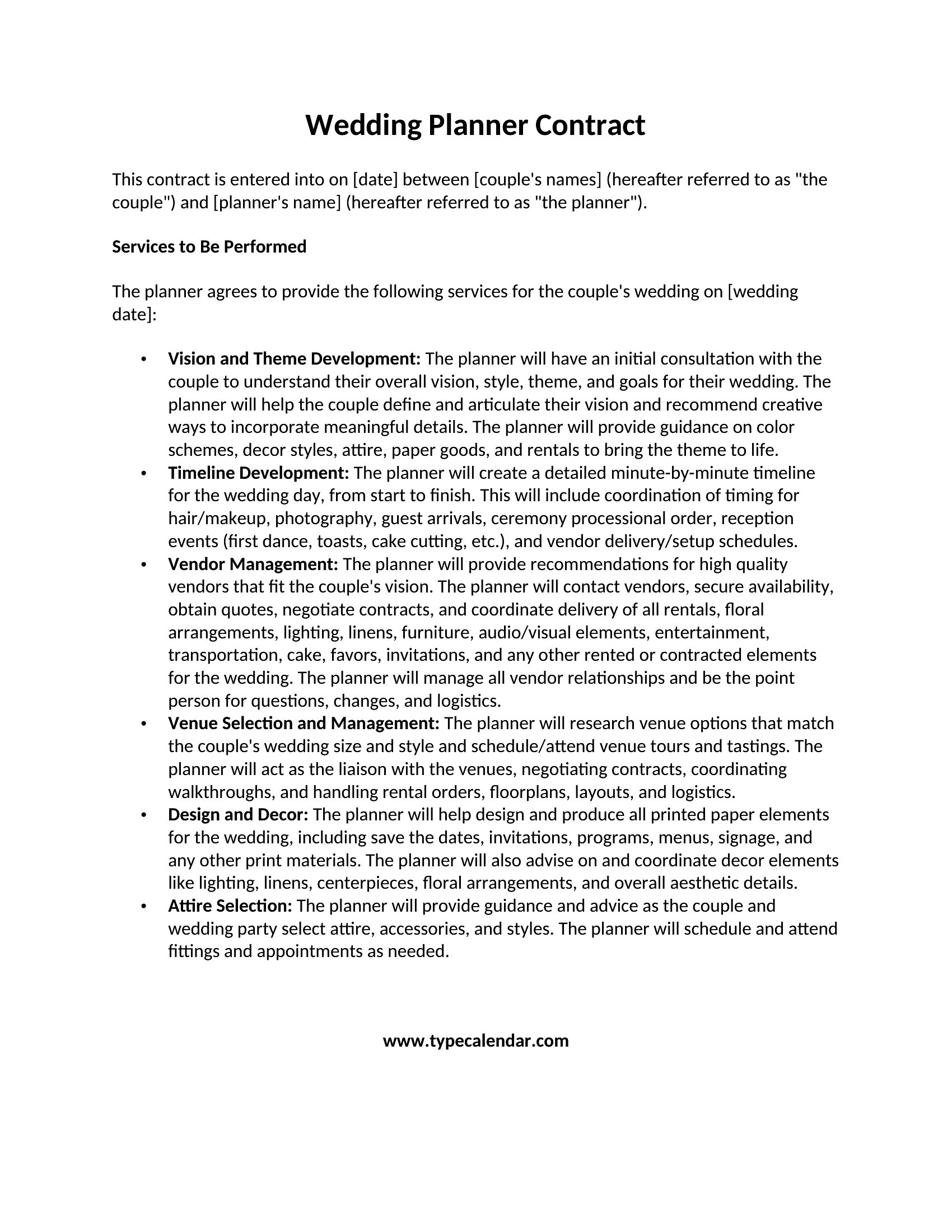
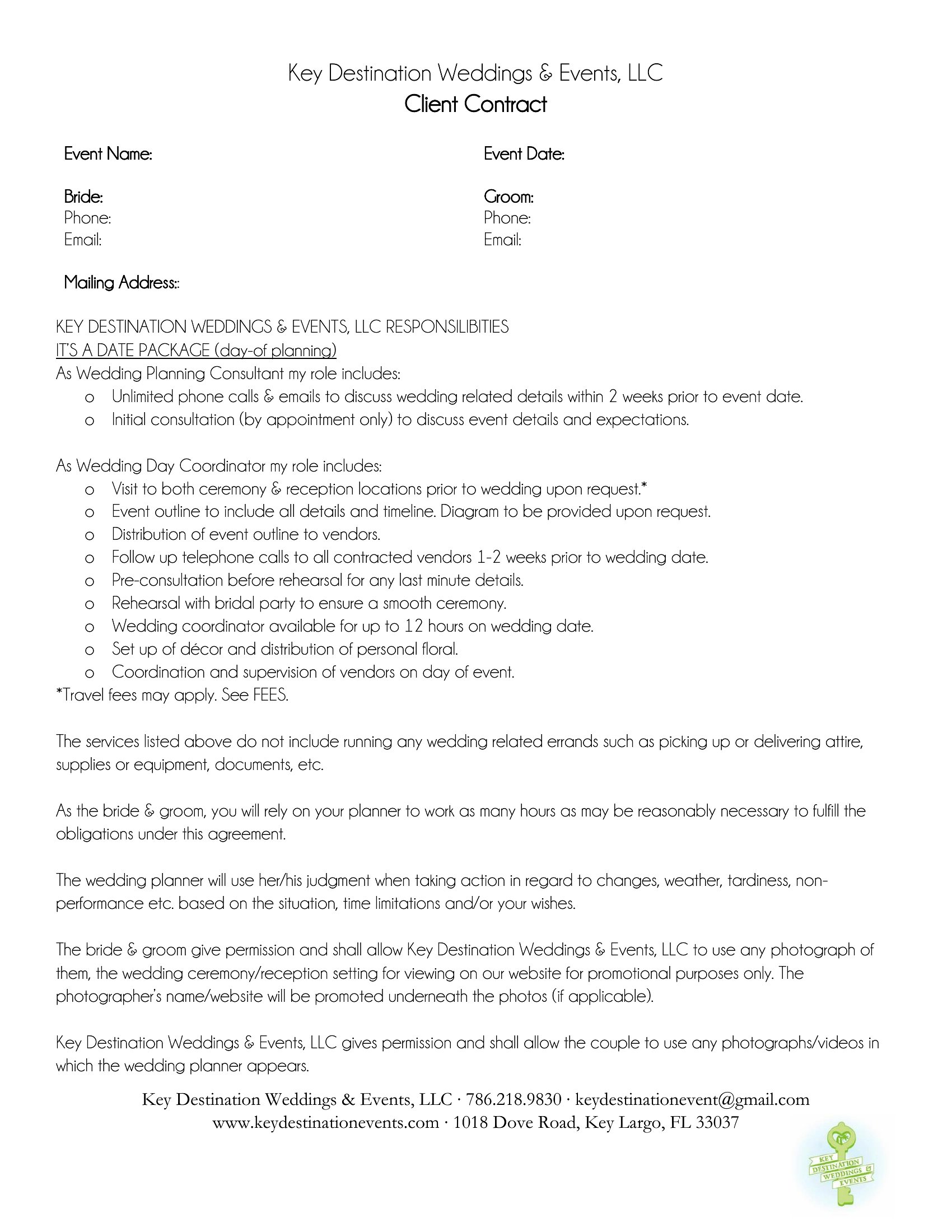
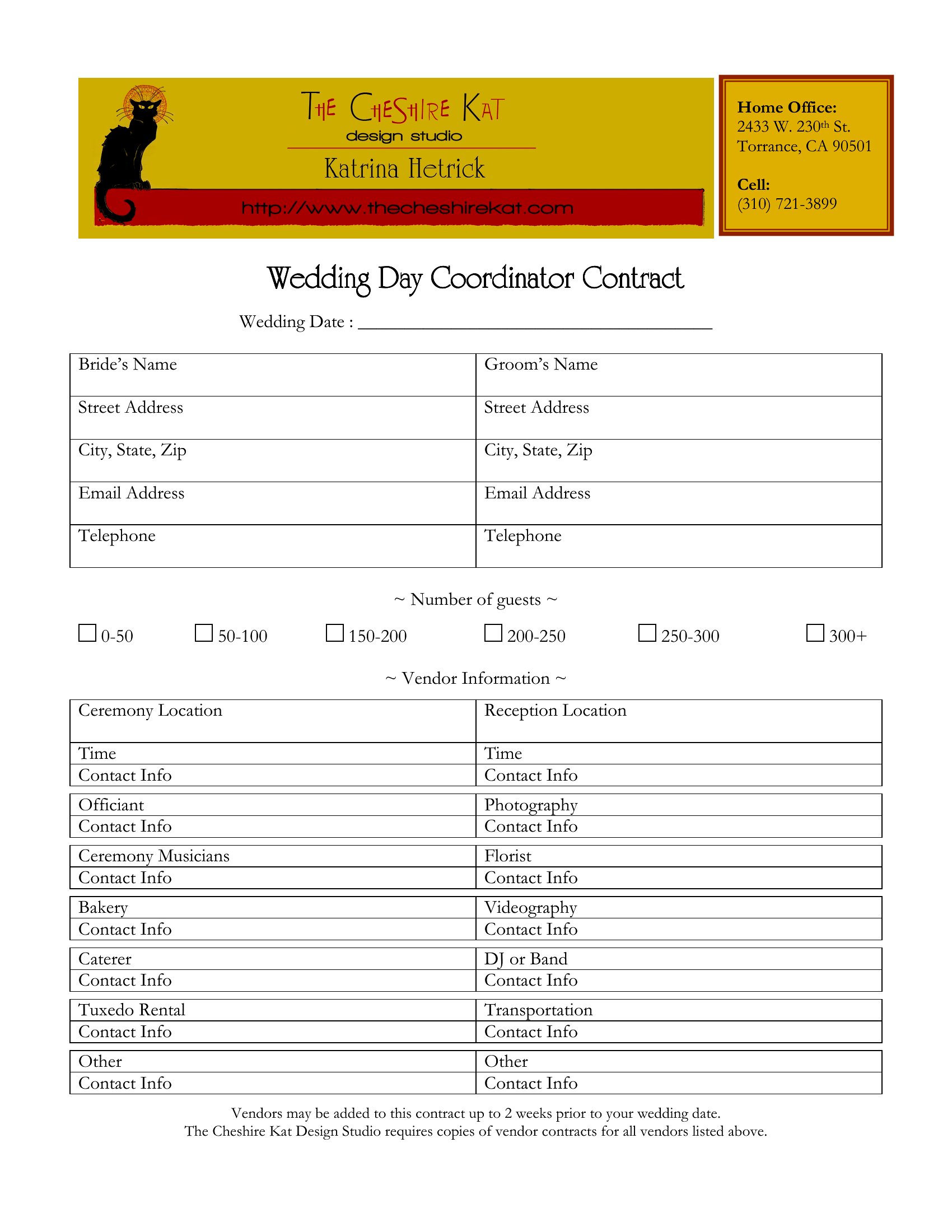
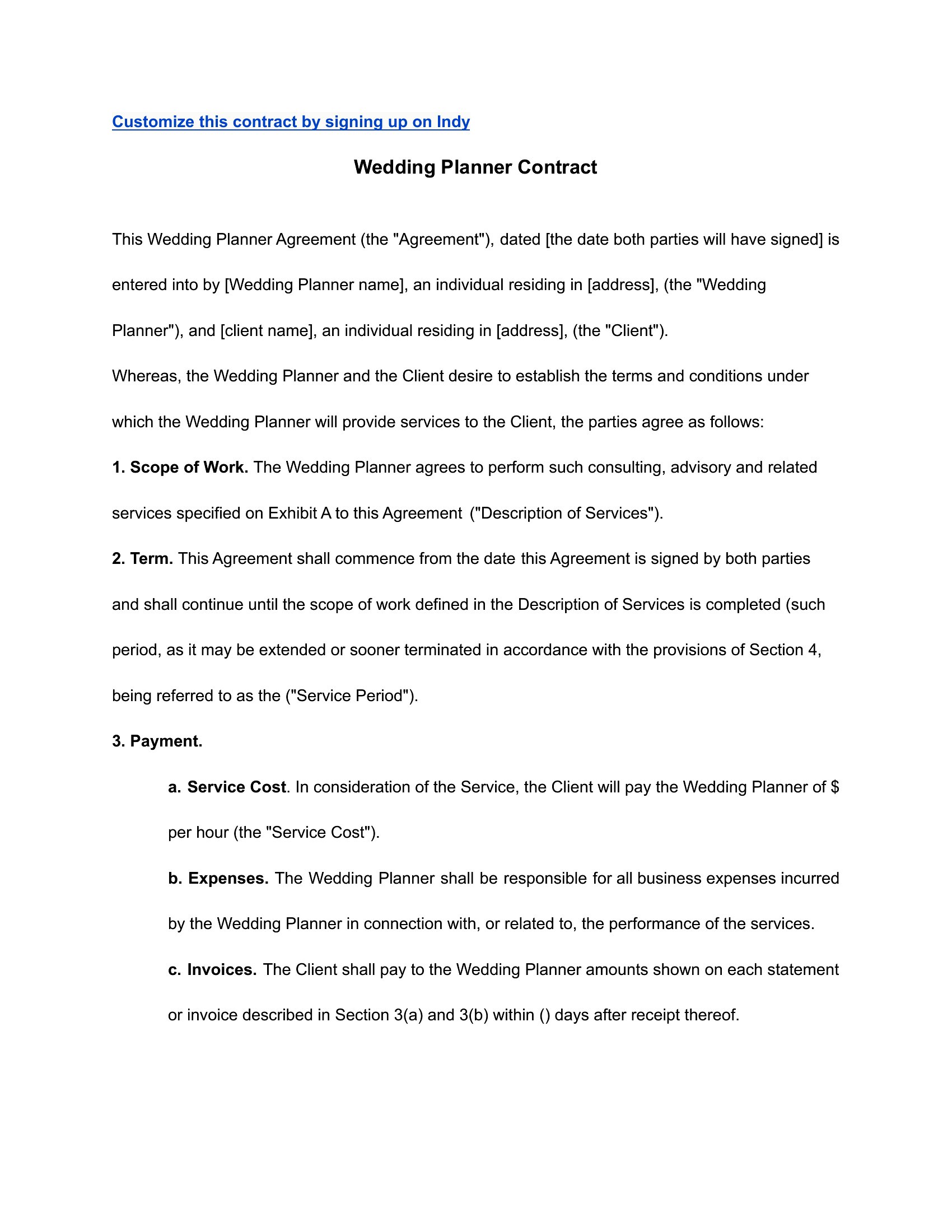
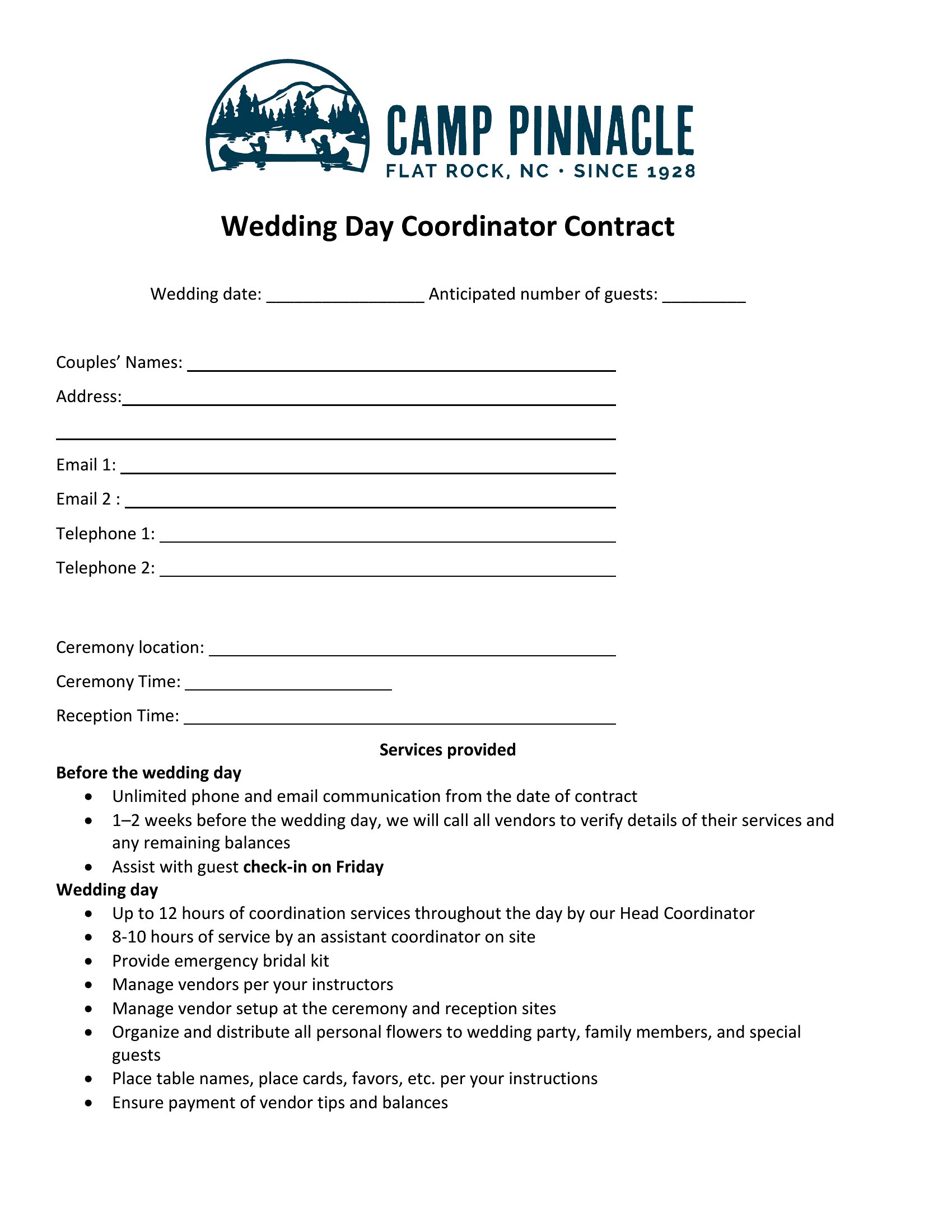
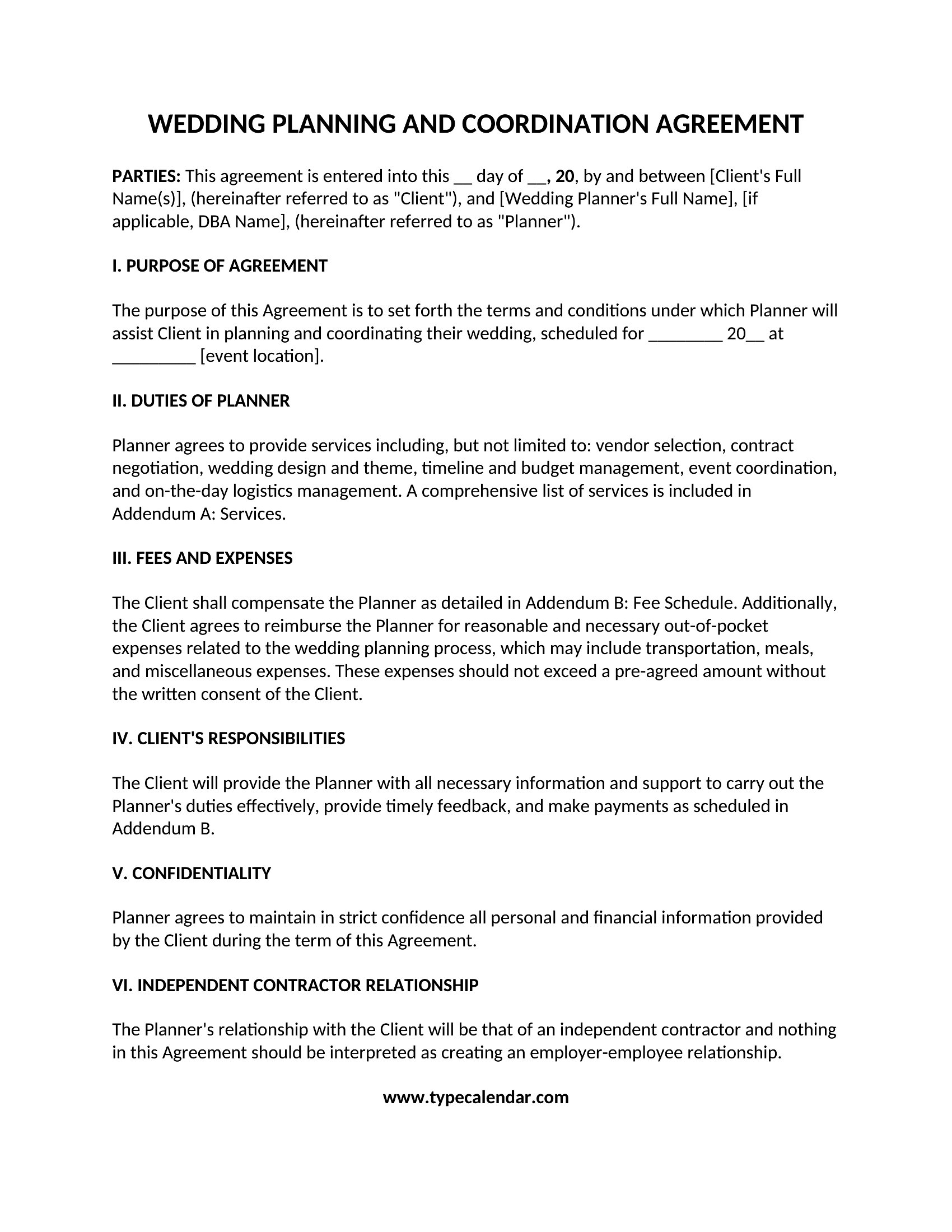
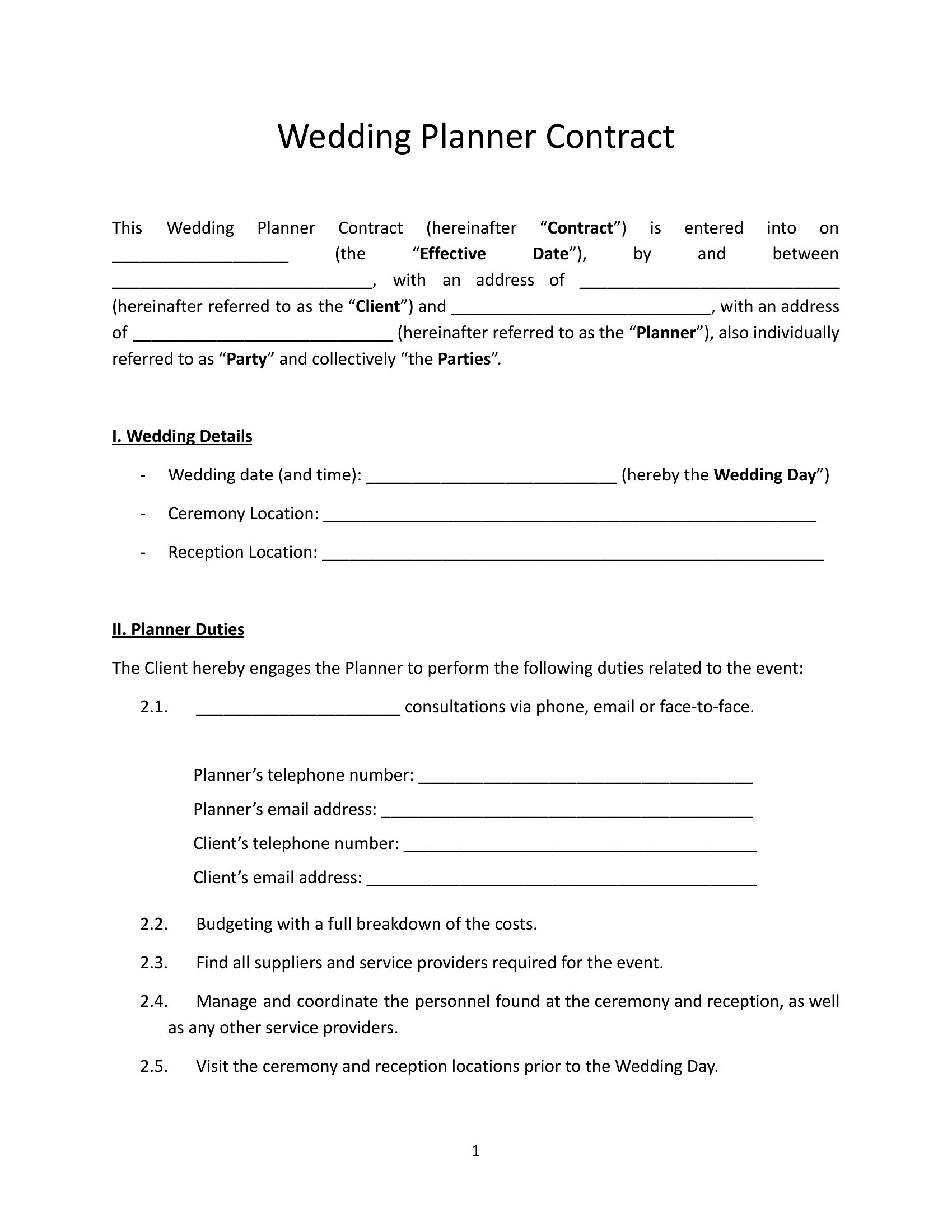
Start by identifying your most common services (e.g., full-service vs. partial planning) and whether clients typically pay upfront, in installments, or post-event. Compare templates with sections like ‘scope of work’ or ‘vendor management’ to see which aligns best. For example, a partial planner might skip detailed day-of coordination clauses, while full-service planners should include timeline breakdowns. Review sample templates to spot which covers your standard terms.
Should I include a ‘force majeure’ clause for destination weddings, and where should it go in the contract?
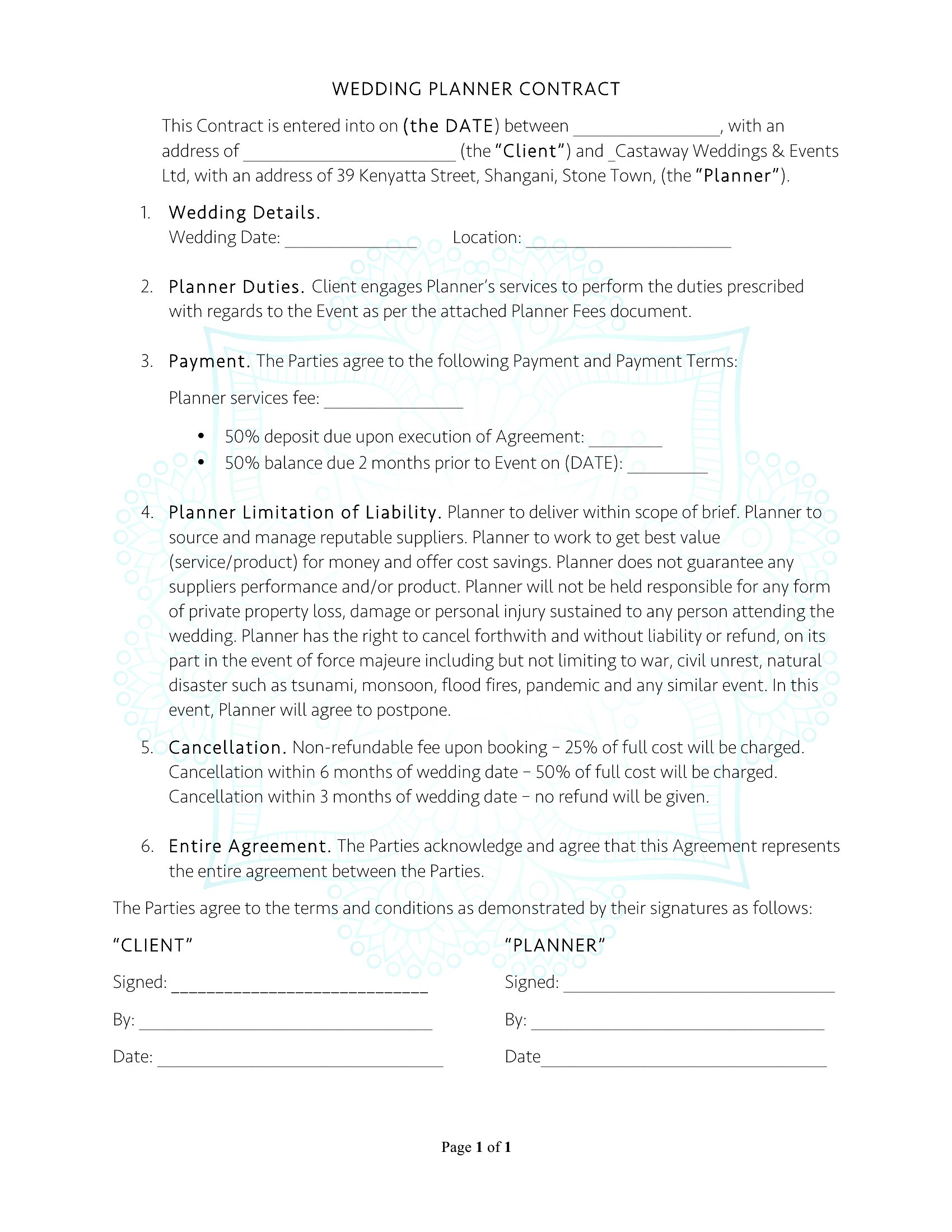
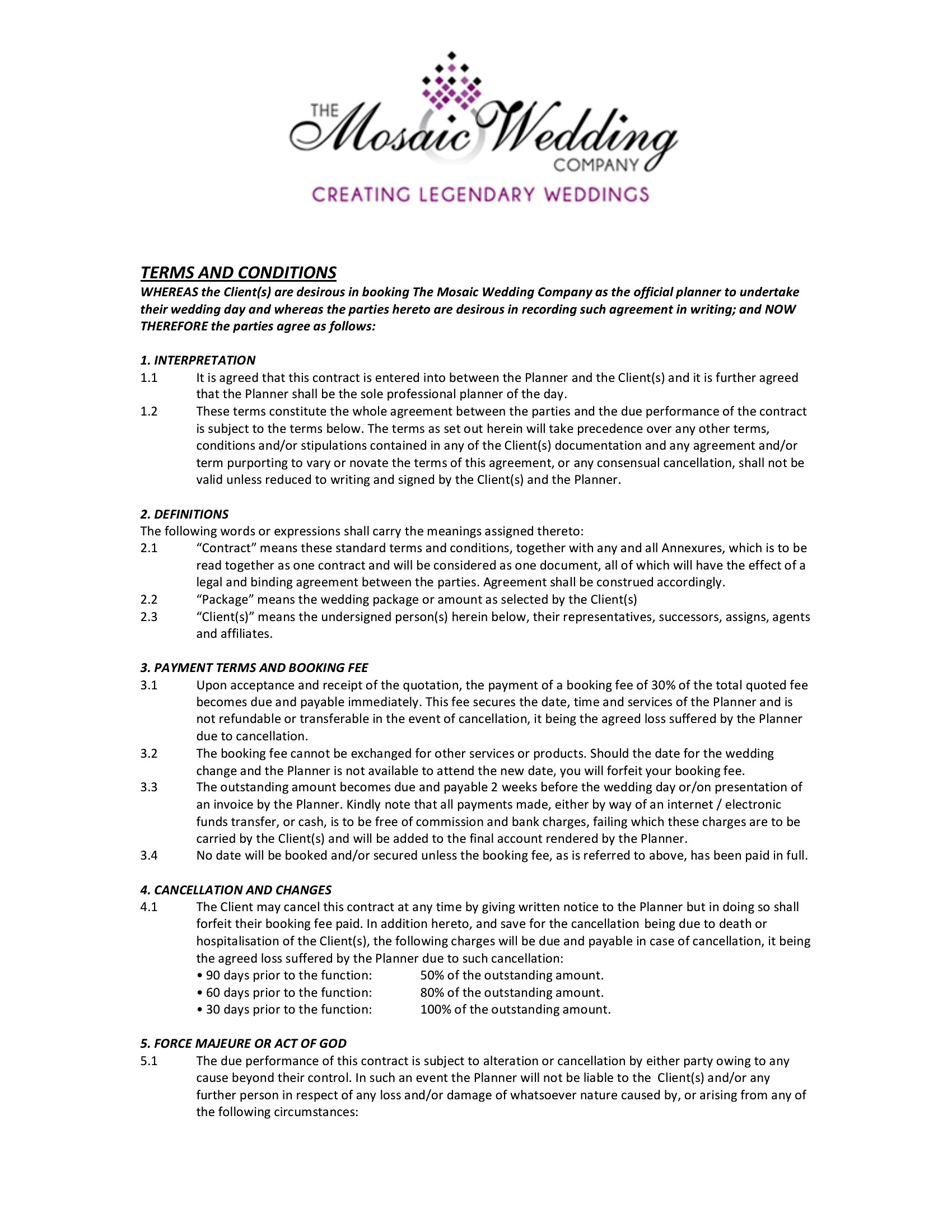
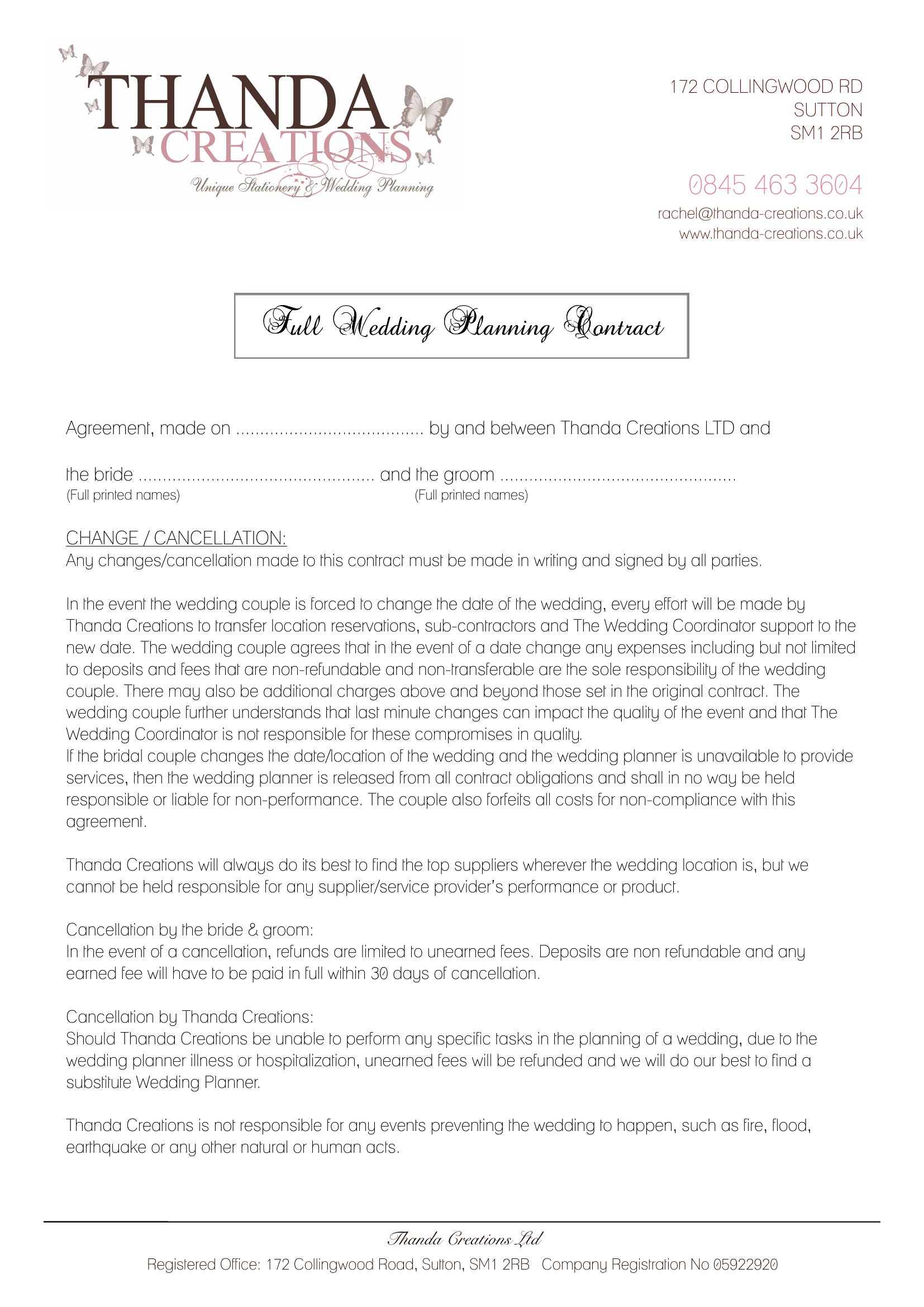
Yes, a force majeure clause is wise for destination weddings to address unexpected disruptions like natural disasters or political unrest. Place it under a section titled ‘Unforeseeable Events’ or ‘Cancellation Policy,’ near other risk-related terms. Keep it concise—refer to local laws for specifics—and avoid vague language. This template collection includes clauses that balance protection with fairness, so review the ‘sample’ contracts to see how others structure it.
What’s the best way to handle client requests for last-minute changes after the contract is signed?
Include a ‘Changes and Addendums’ section in your contract outlining how modifications are approved (e.g., written agreement, additional fees) and the timeline for processing. Politely direct clients to this section if they request changes post-signature. Use the editable Word templates to add a clause like, ‘All alterations require a 48-hour review period and may incur a $50 administrative fee.’ This sets clear expectations while giving you room to negotiate fairly.
Comments
Join the conversation
Sign in to share your thoughts and leave a comment on this resource.