
FAQ
Can I use this template if my subtenant will operate a different business type than my original lease allows?
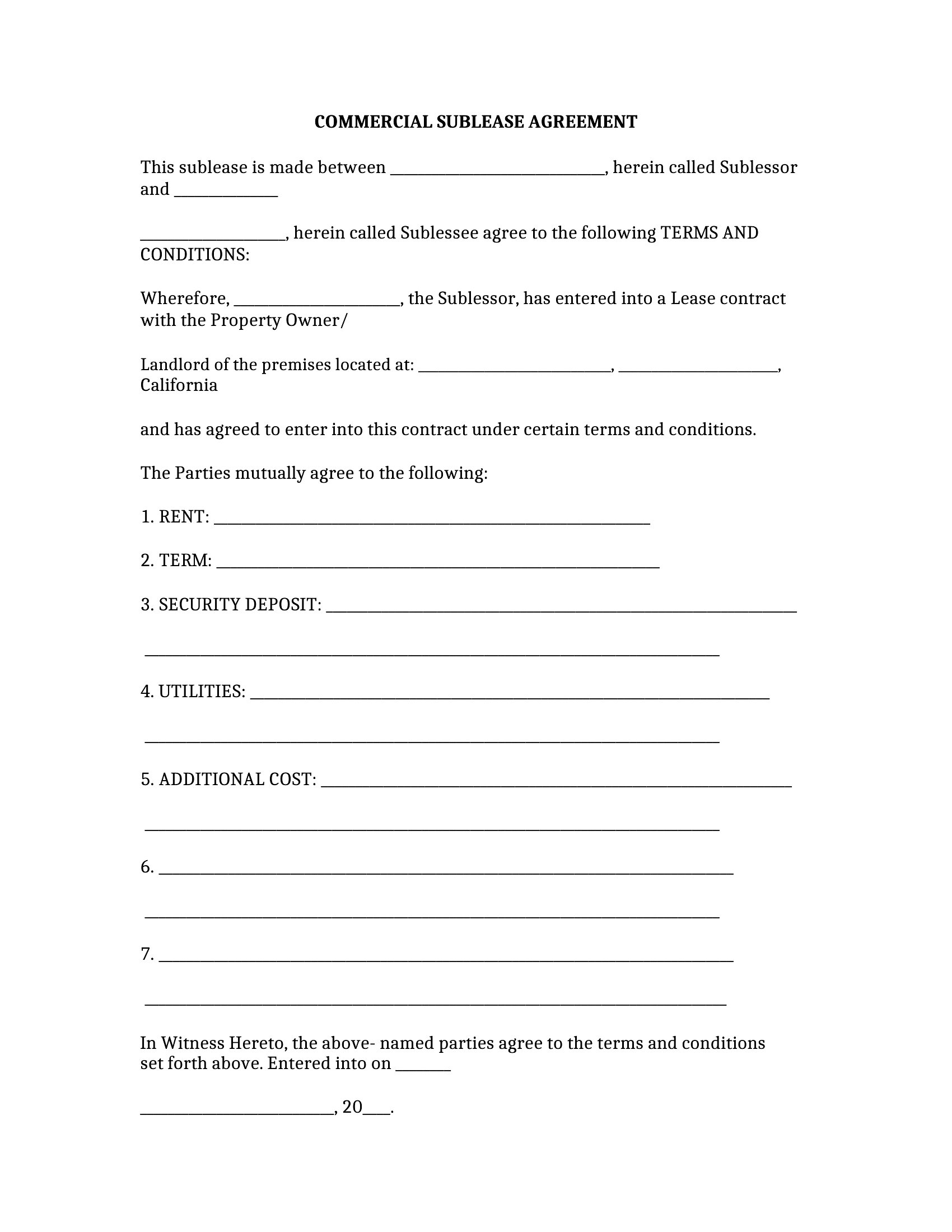
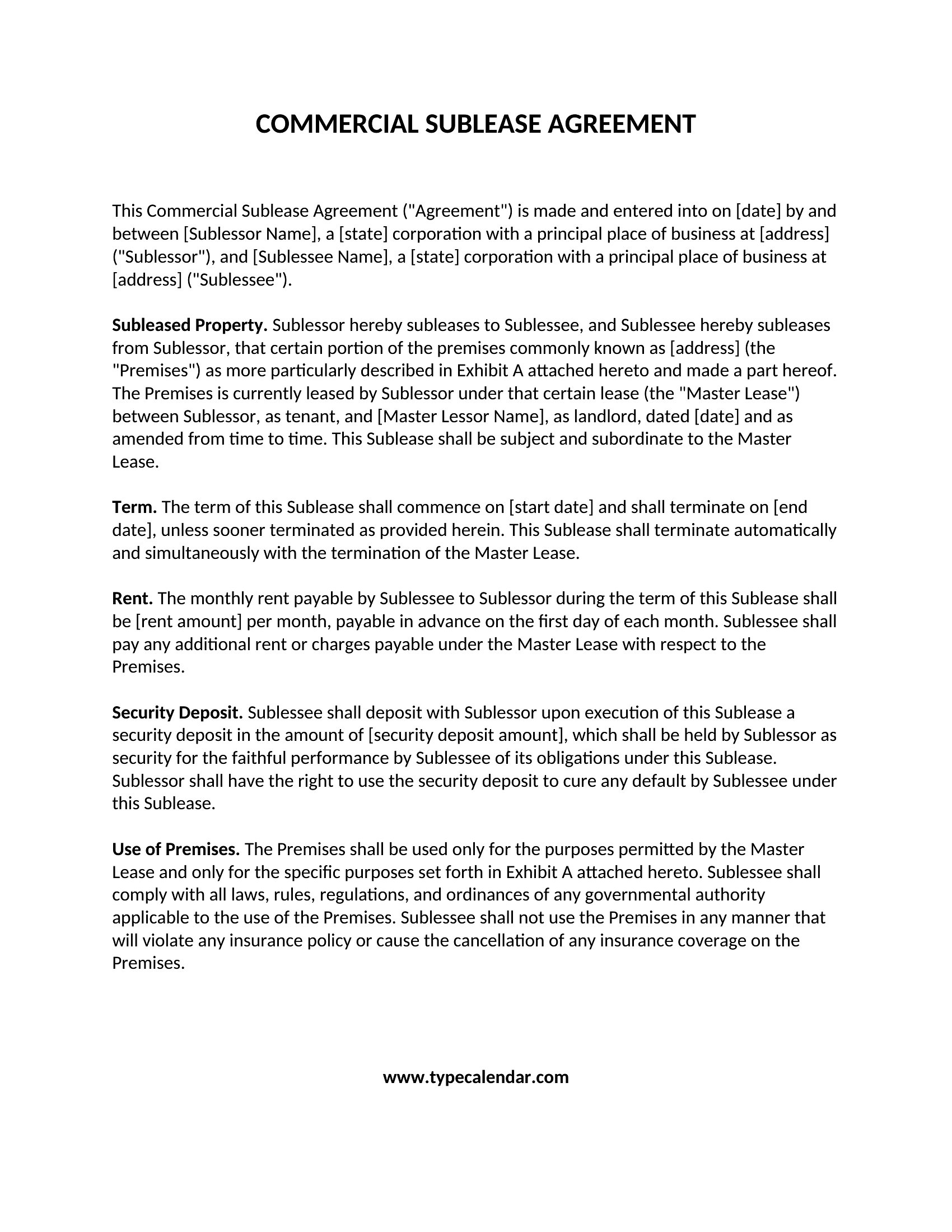
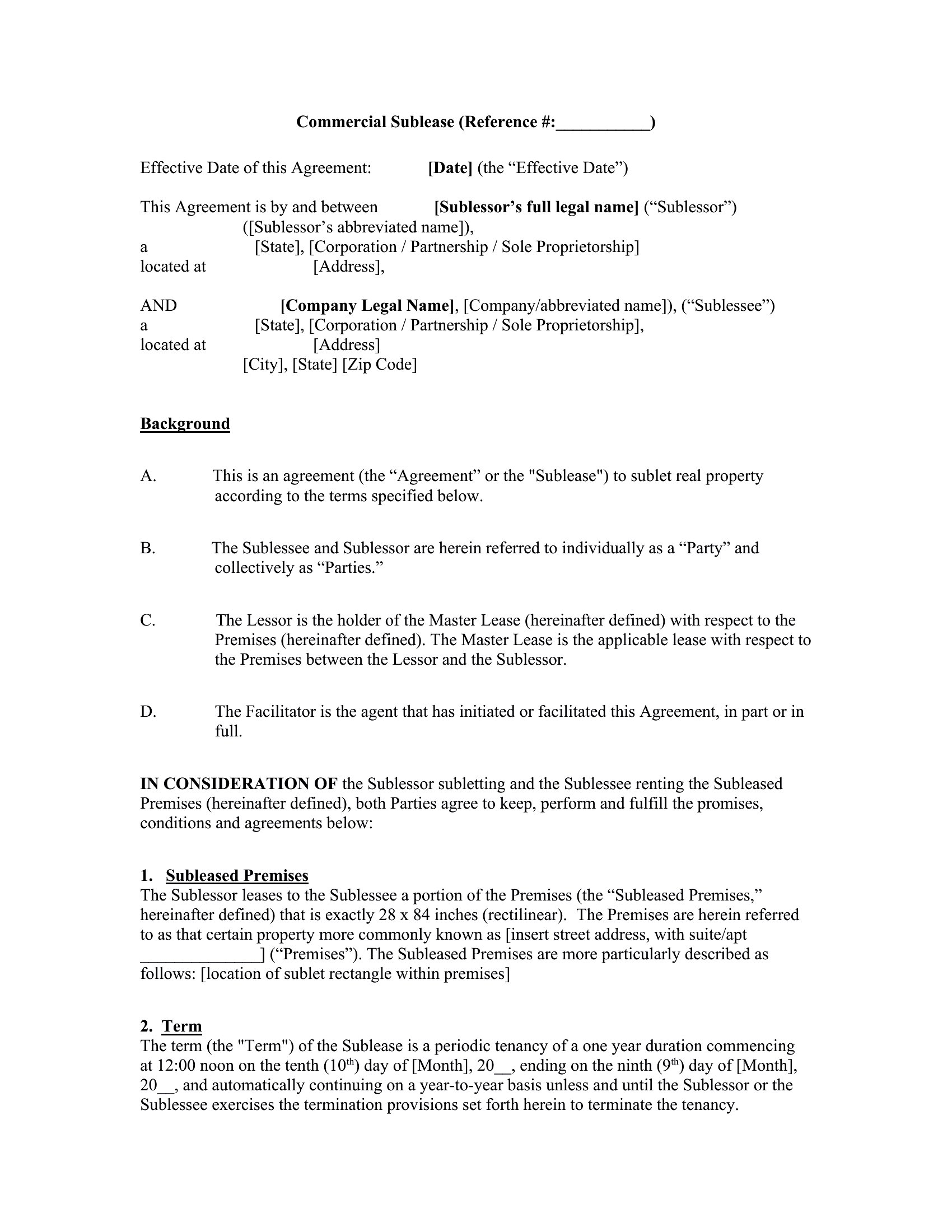
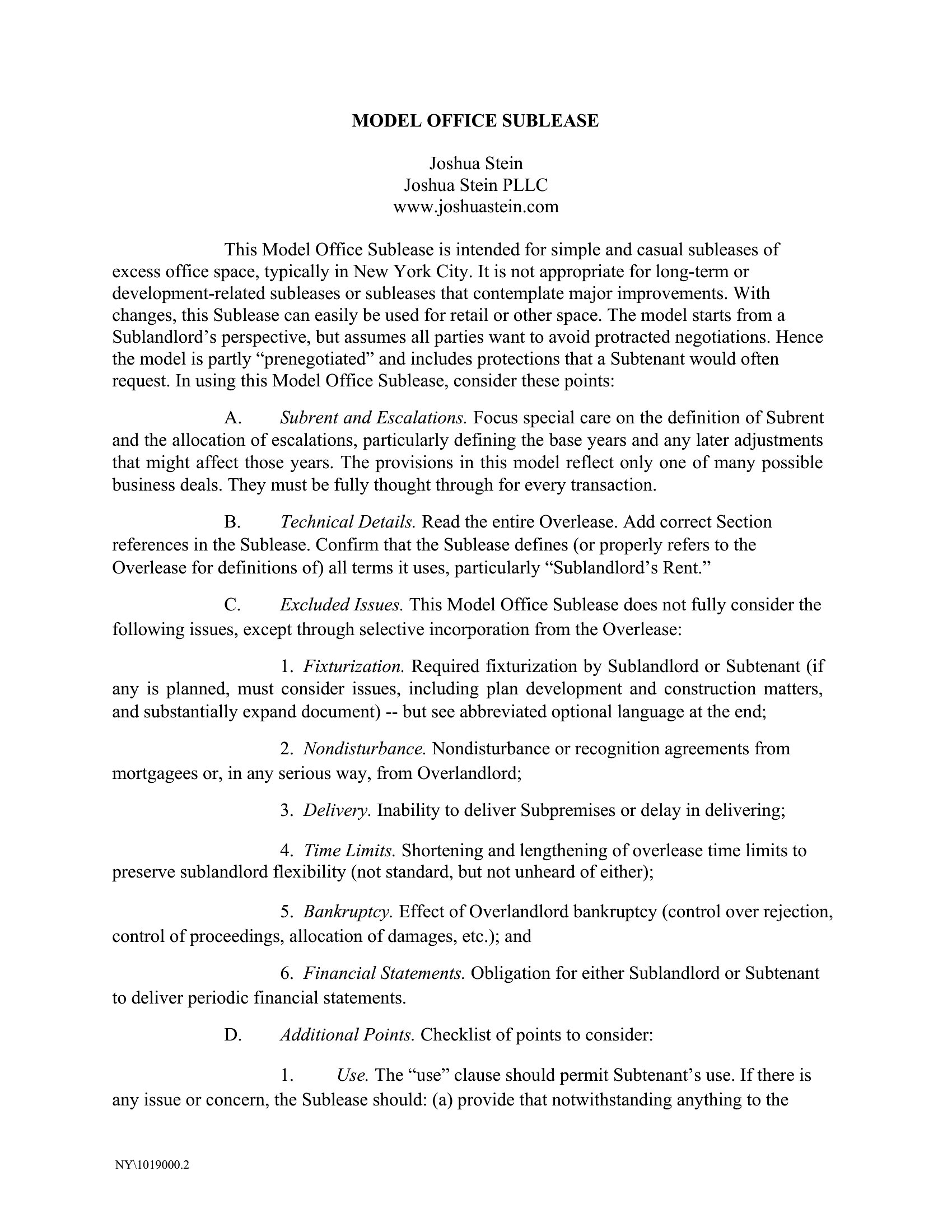
These templates include a ‘permitted use’ section where you can specify what the subtenant can and cannot do. Always review your original lease first—some landlords require explicit approval for subleases. If your lease is silent on business types, err on the side of caution and include a clause requiring subtenant approval from the master landlord.
What should I do if my sublease needs to include a rent adjustment clause tied to the original lease’s increases?
Look for templates with ‘rent escalation’ or ‘pass-through’ language. Most commercial subleases mirror the master lease’s terms, but you’ll need to clarify whether the subtenant pays a fixed percentage of increases or a set dollar amount. Consult your lawyer to ensure the clause aligns with your state’s commercial lease laws, especially in high-turnover markets like California.
Is it common to require a personal guarantee from the subtenant, and how do I draft it fairly?
Personal guarantees are more common for subtenants with limited credit history or high-risk businesses (e.g., food trucks, pop-ups). In Word, add a standalone clause stating the subtenant’s personal assets may be liable if they default, but pair it with clear dispute resolution steps. Avoid overly broad guarantees—focus on specific obligations like unpaid rent or property damage, and cap liability at the security deposit amount unless both parties agree otherwise.
Comments
Join the conversation
Sign in to share your thoughts and leave a comment on this resource.