Skip to content
50% off this one-time $1.99 pack with HALFOFF — or unlimited with Pro.HALFOFF
Premium

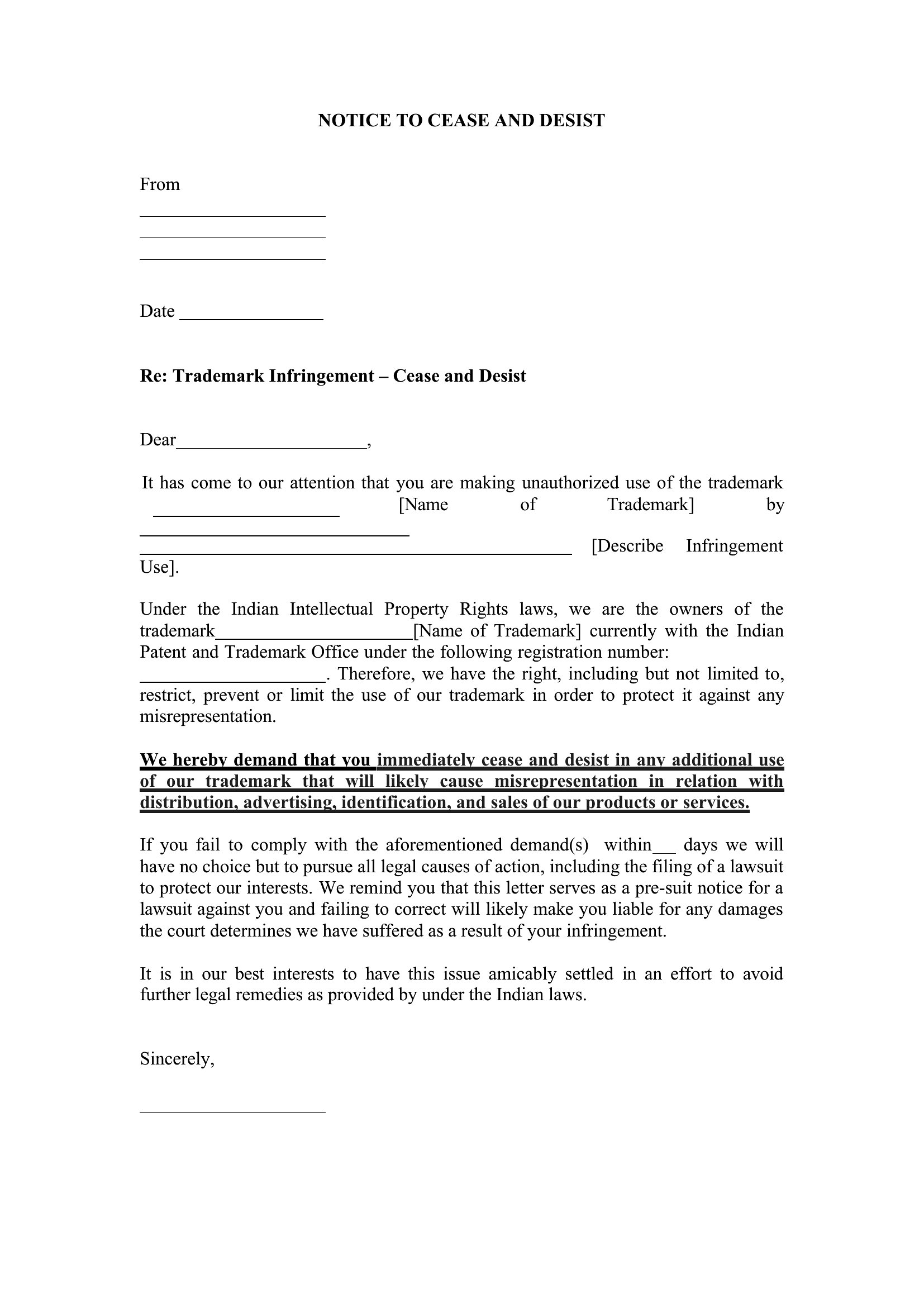
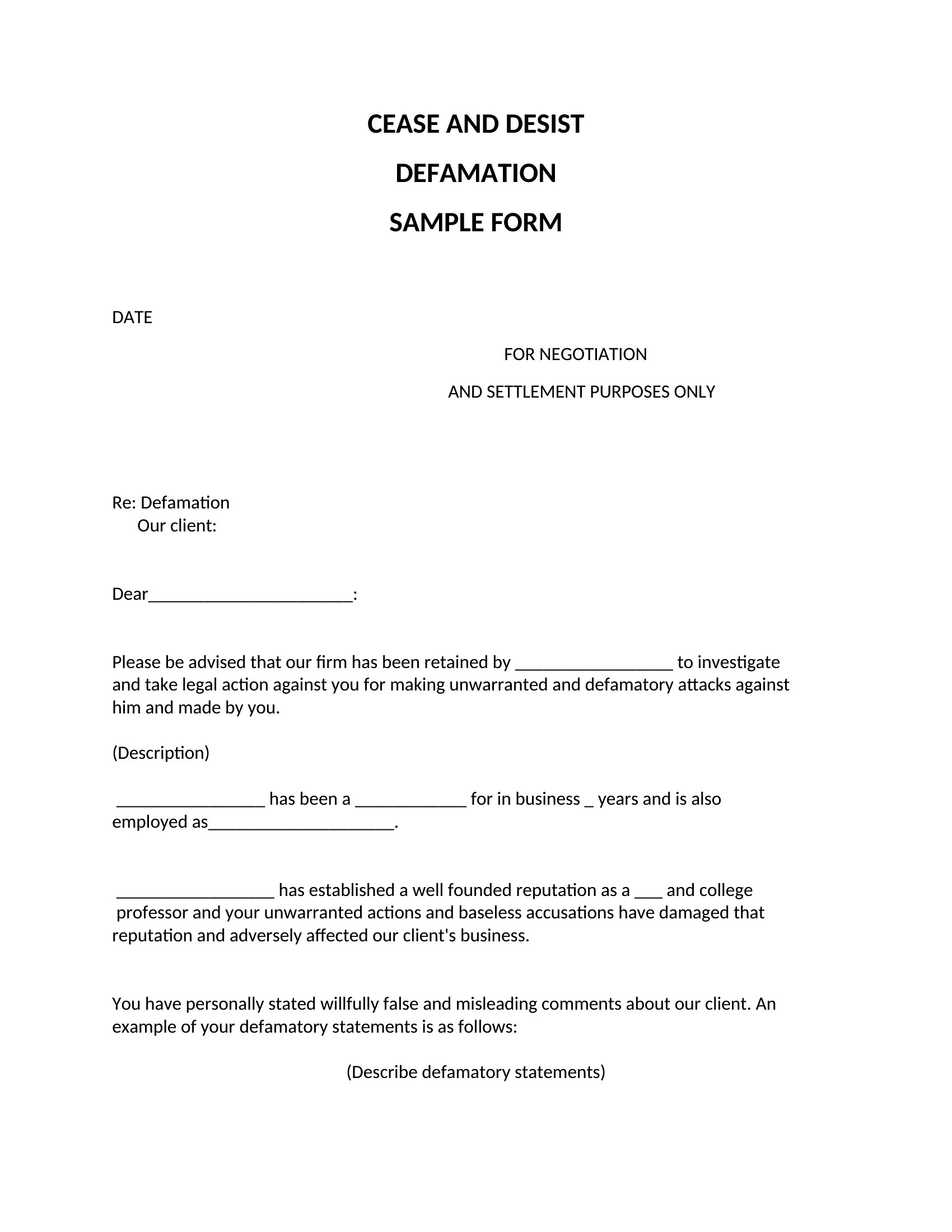
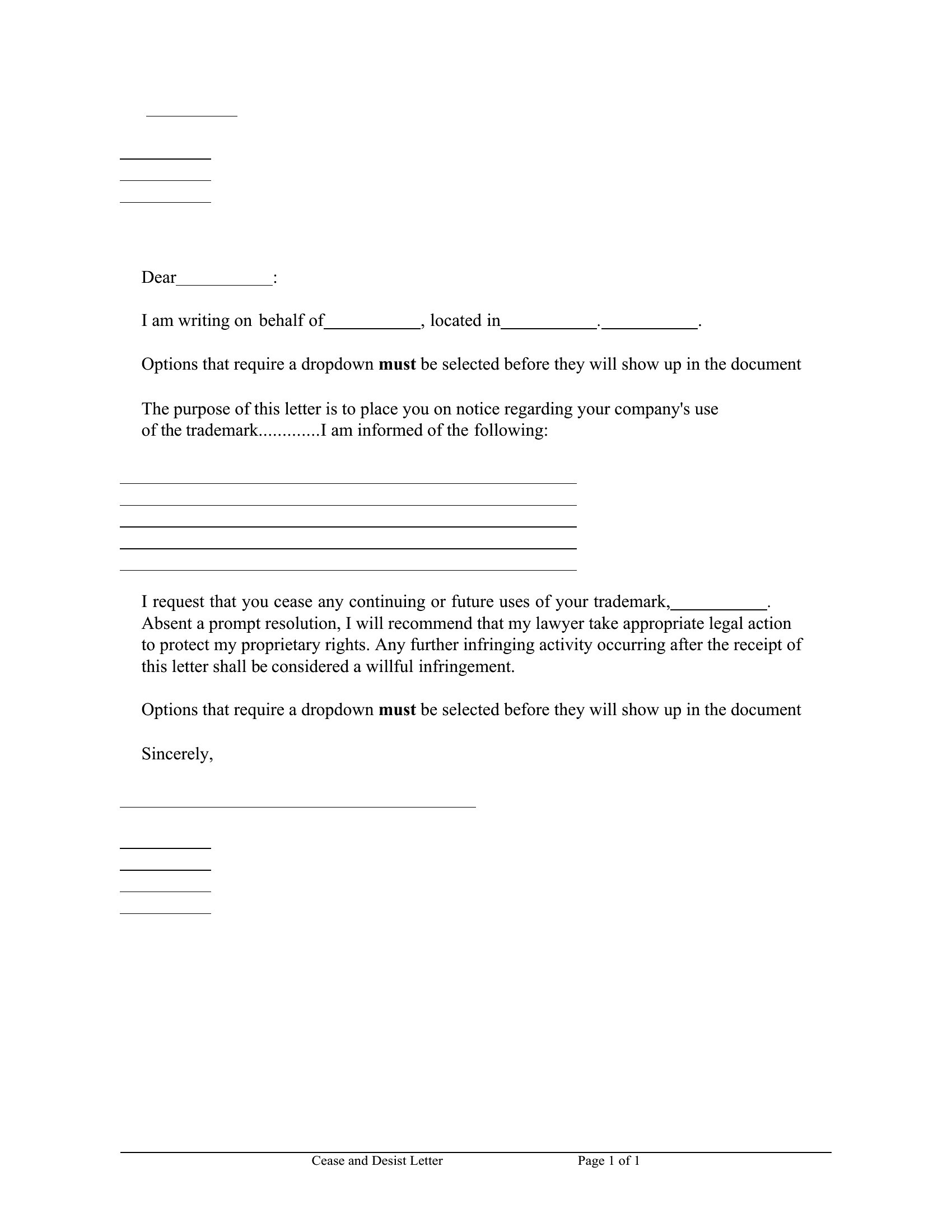
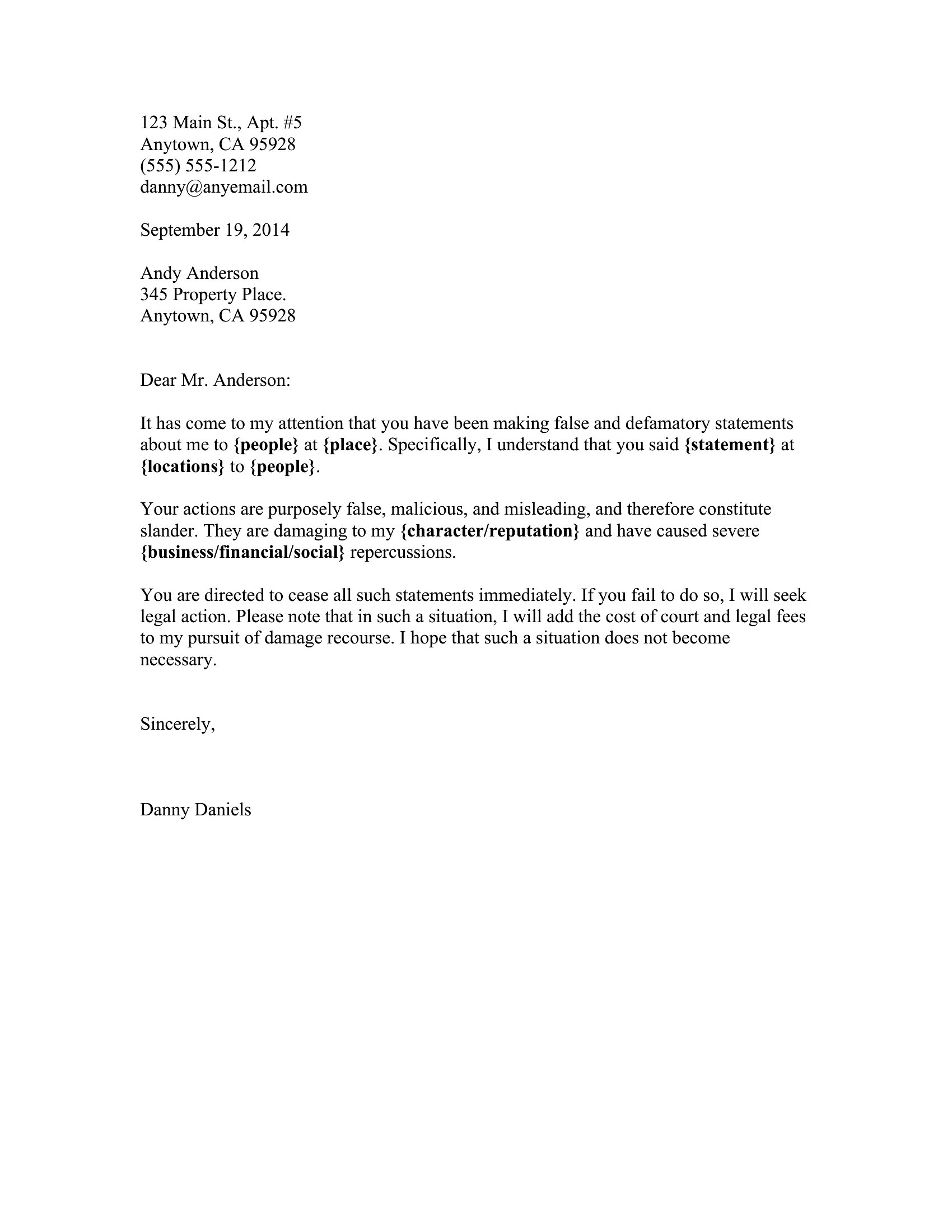
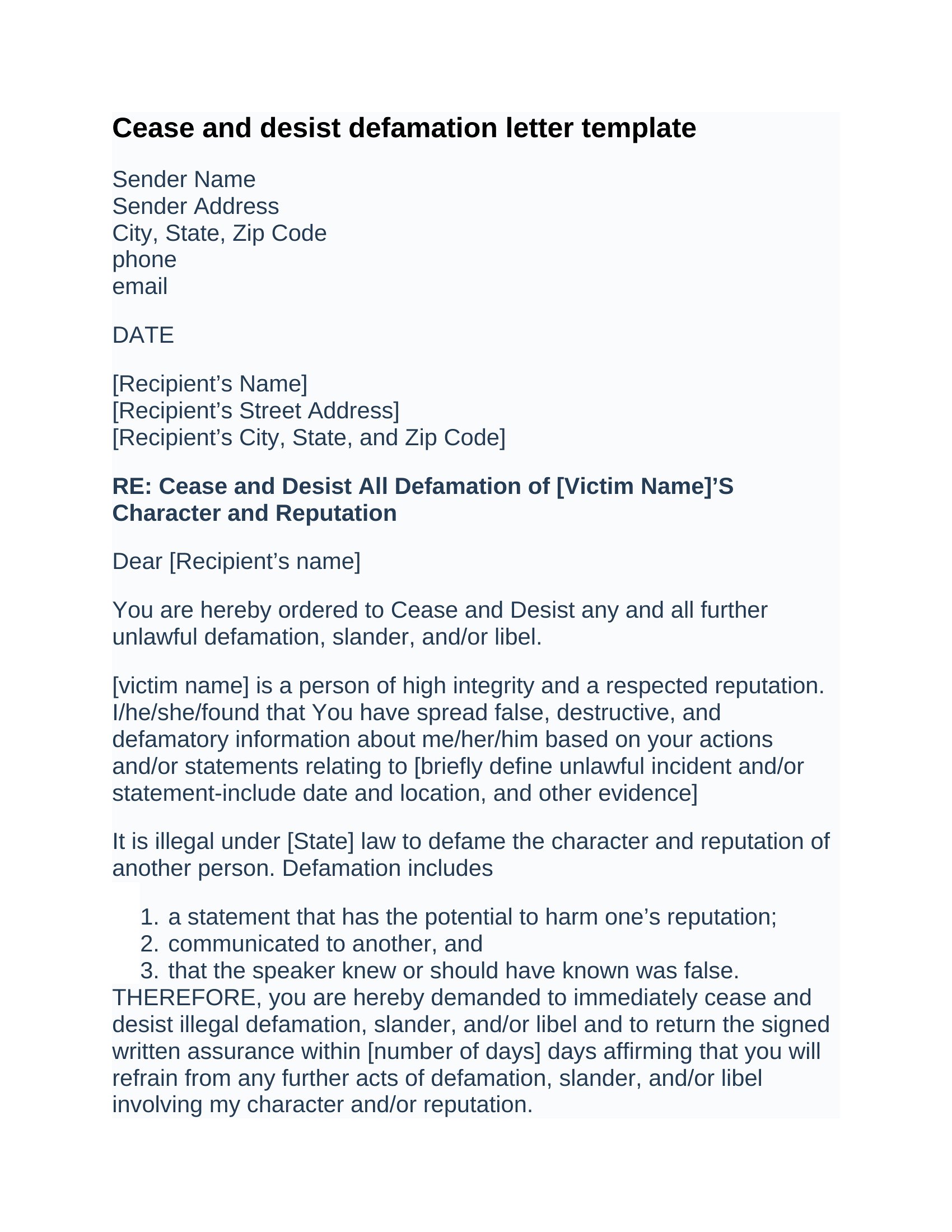
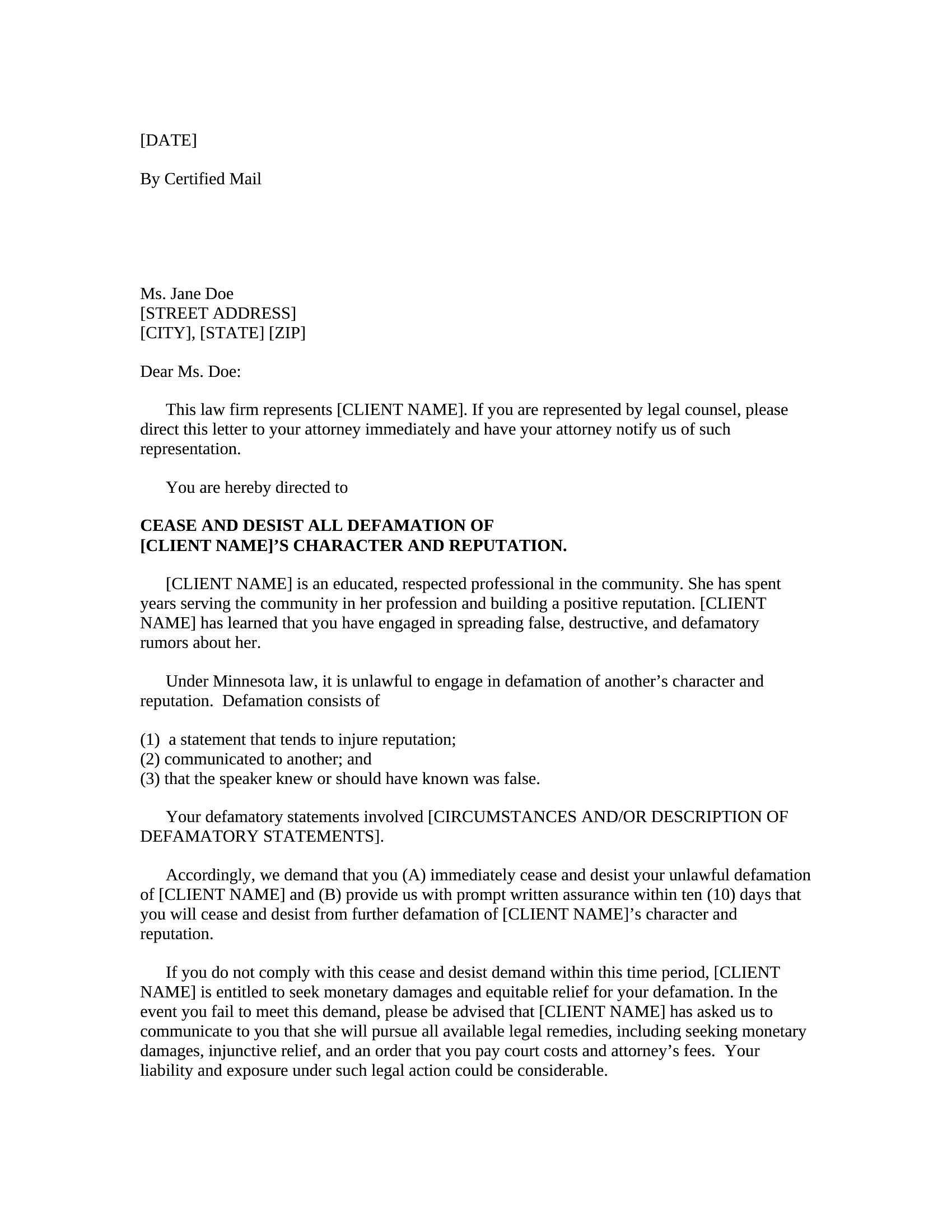
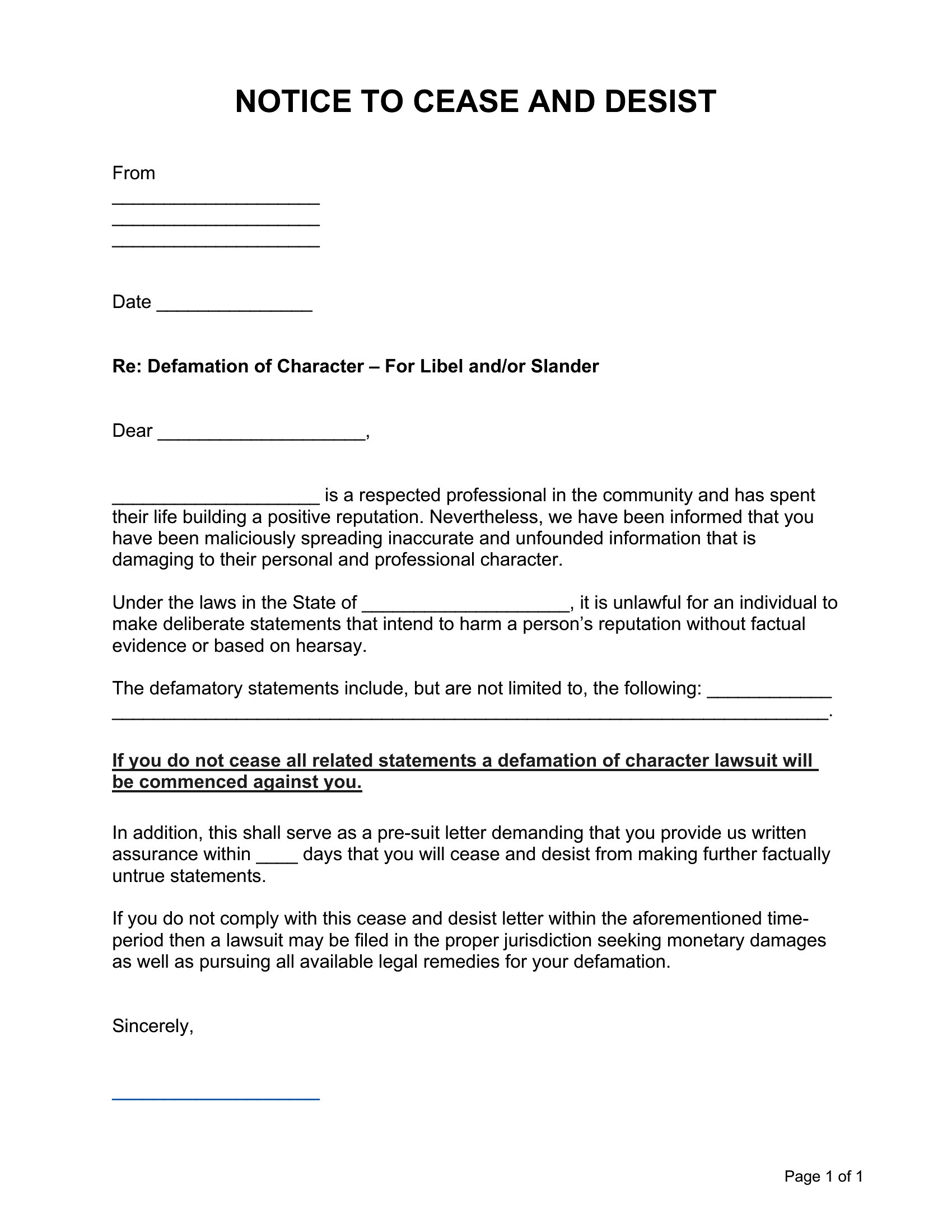
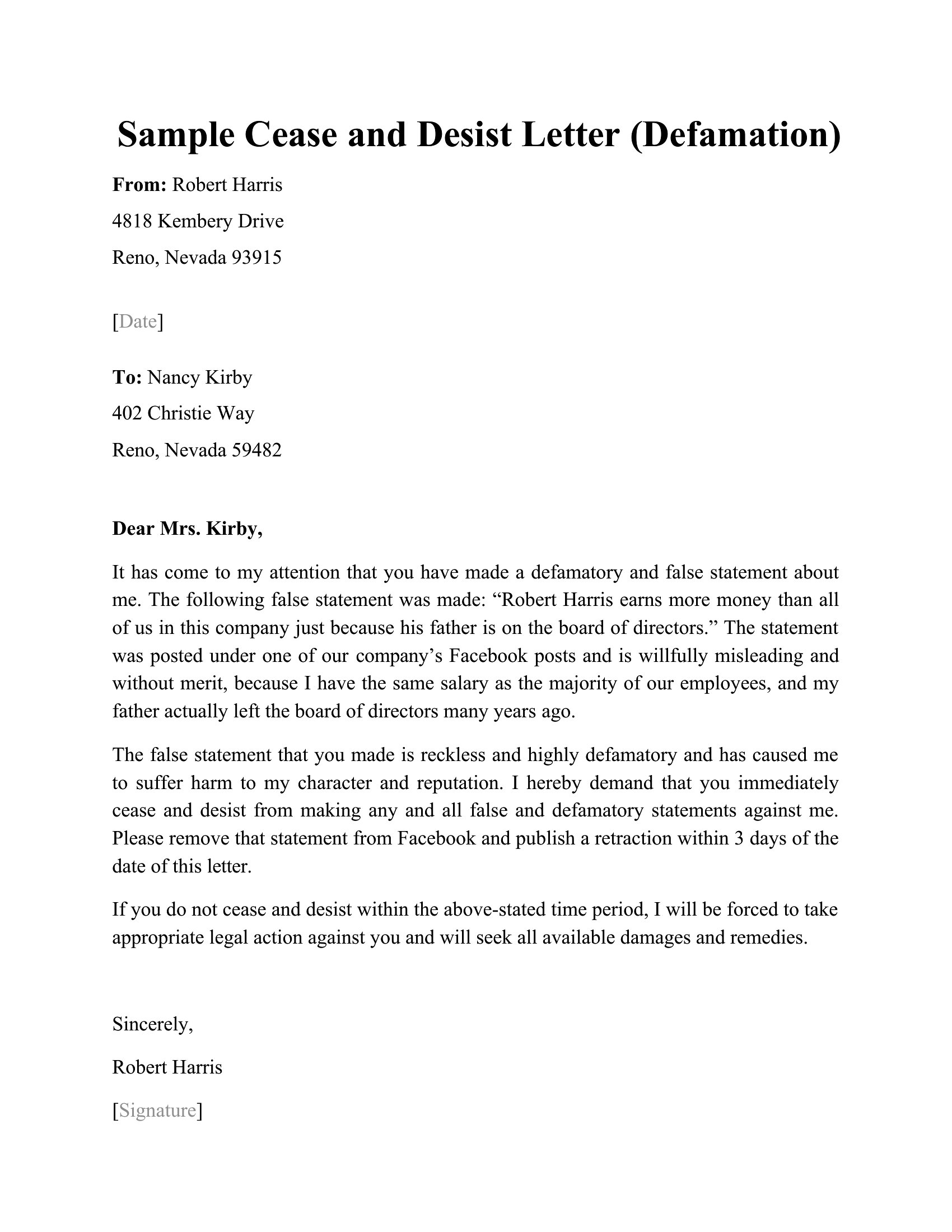
Cease and Desist Defamation Letters (Word)

Legal
ottosaari by ottosaari
Updated 0 downloads Quality-checked template

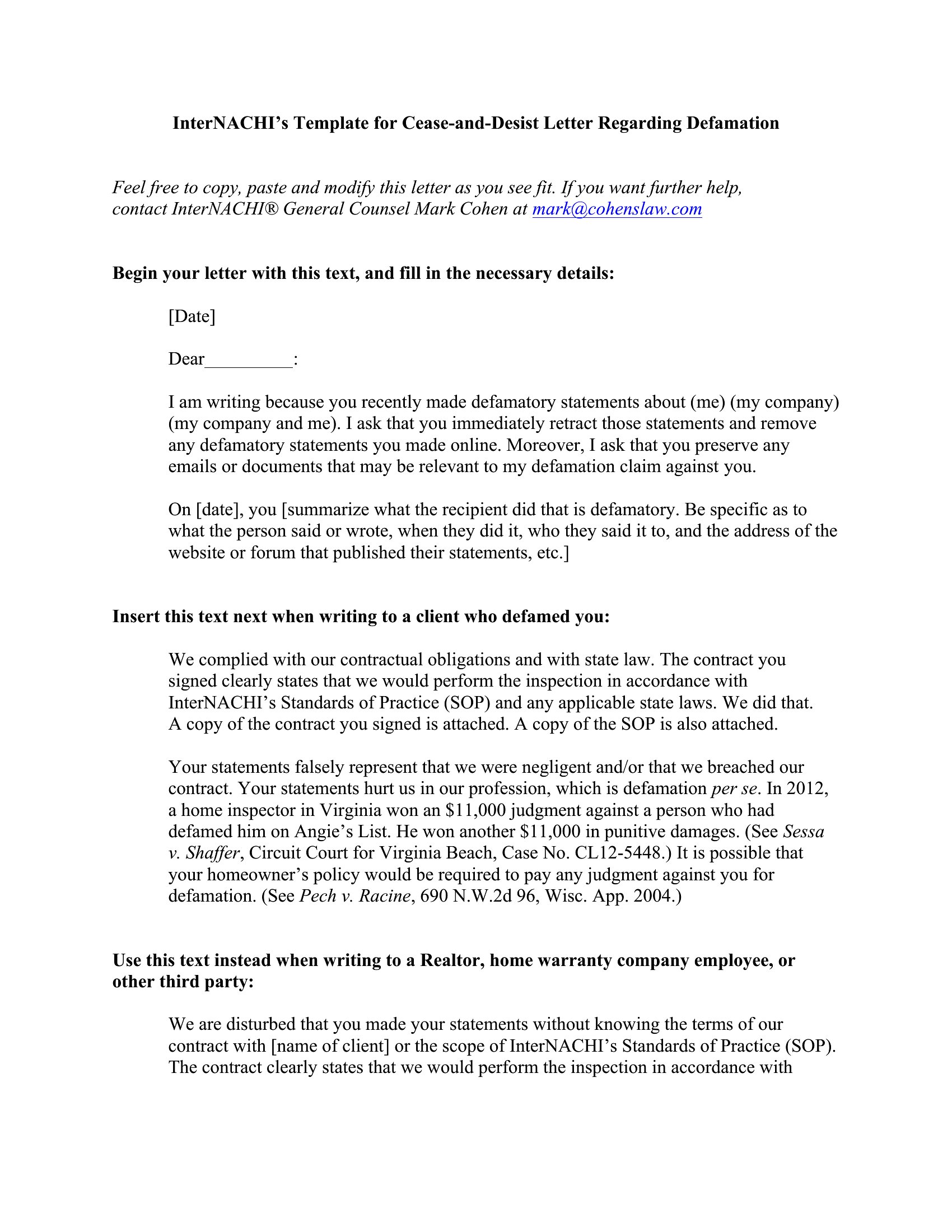
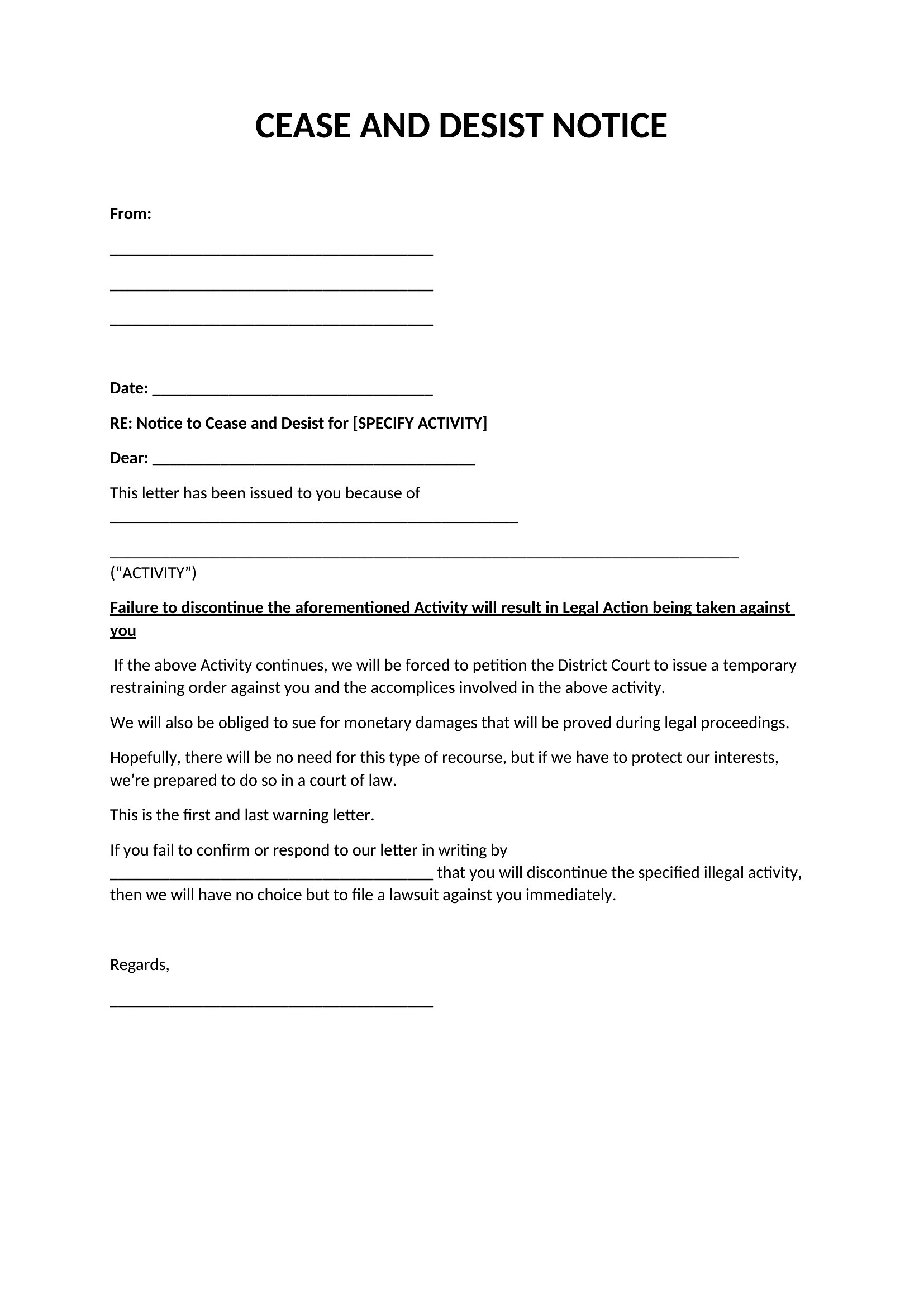
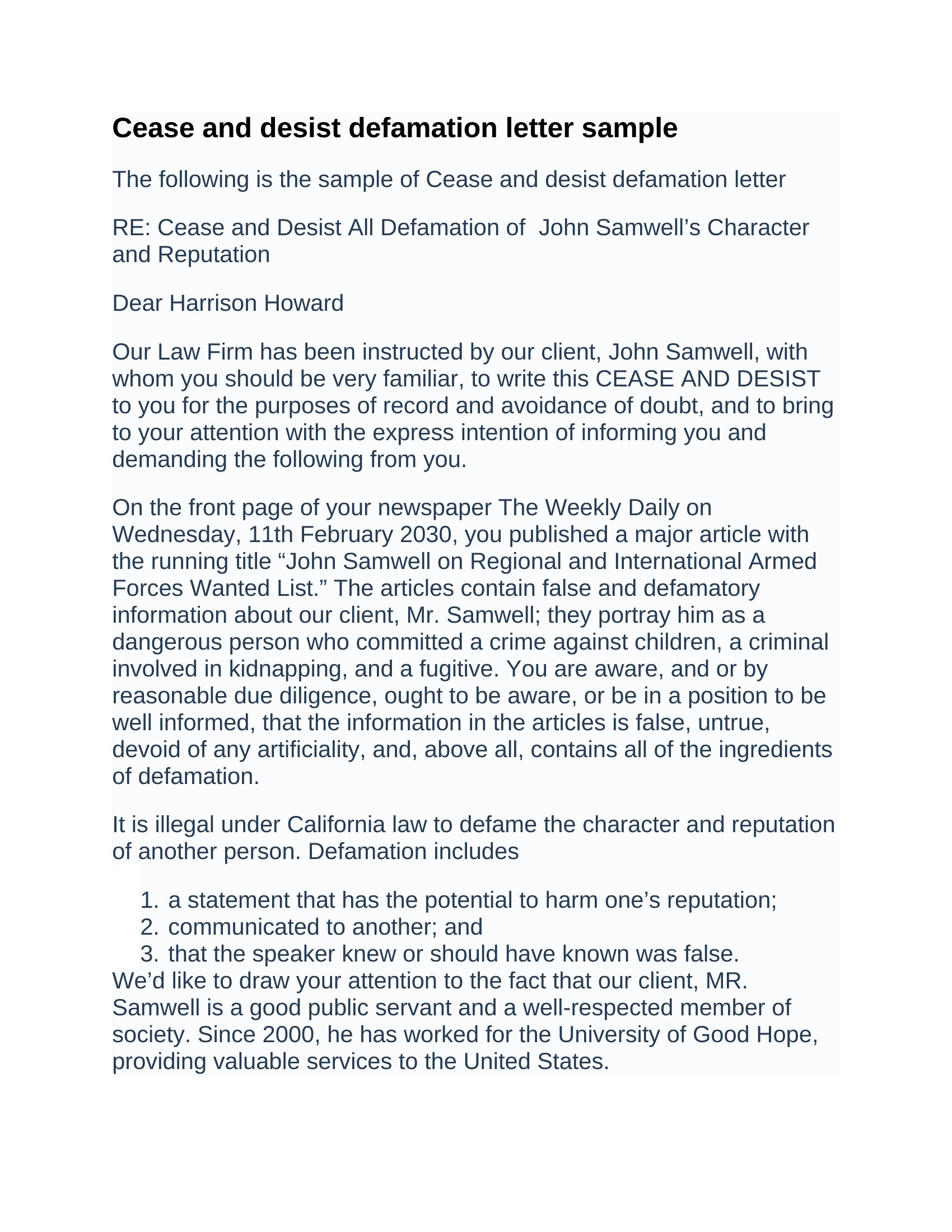
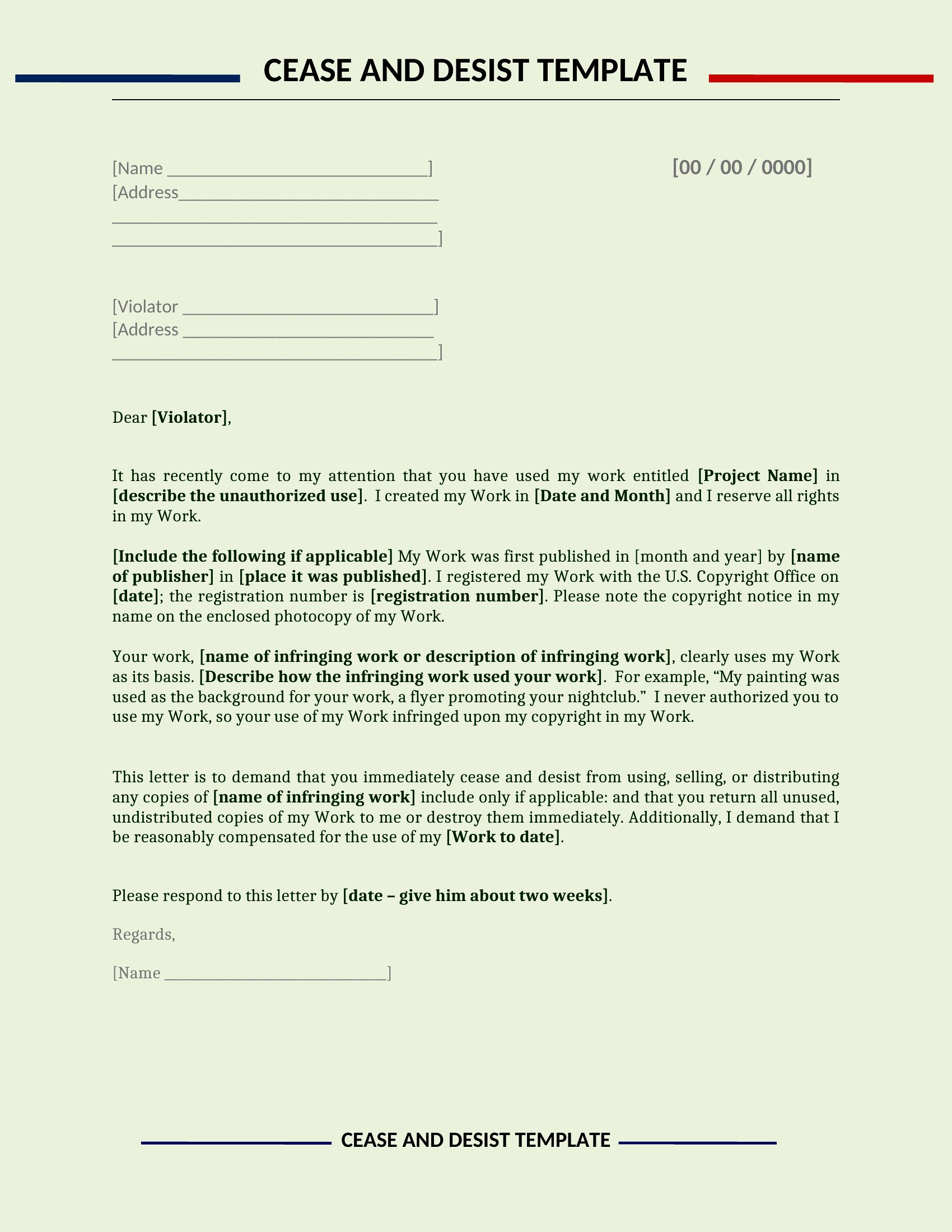
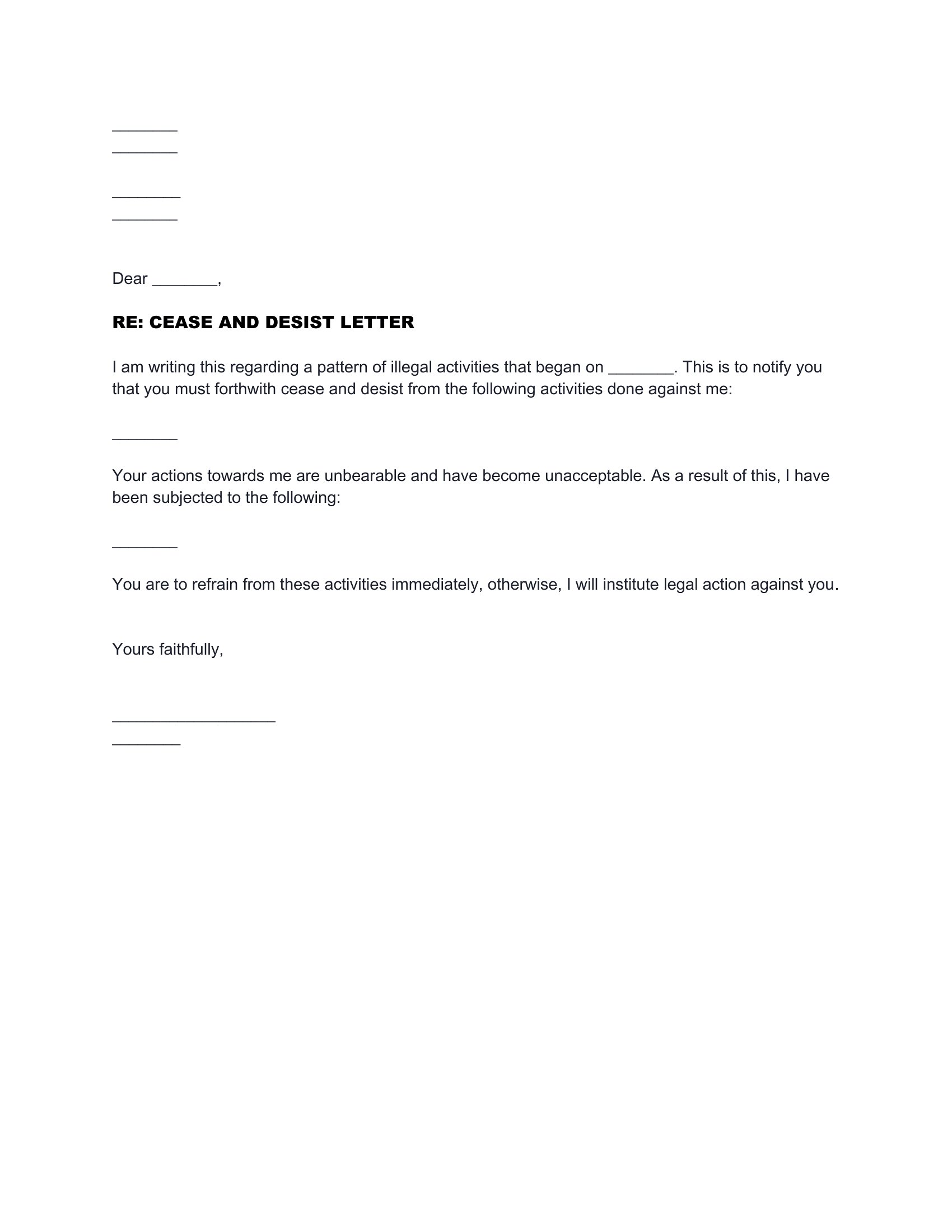
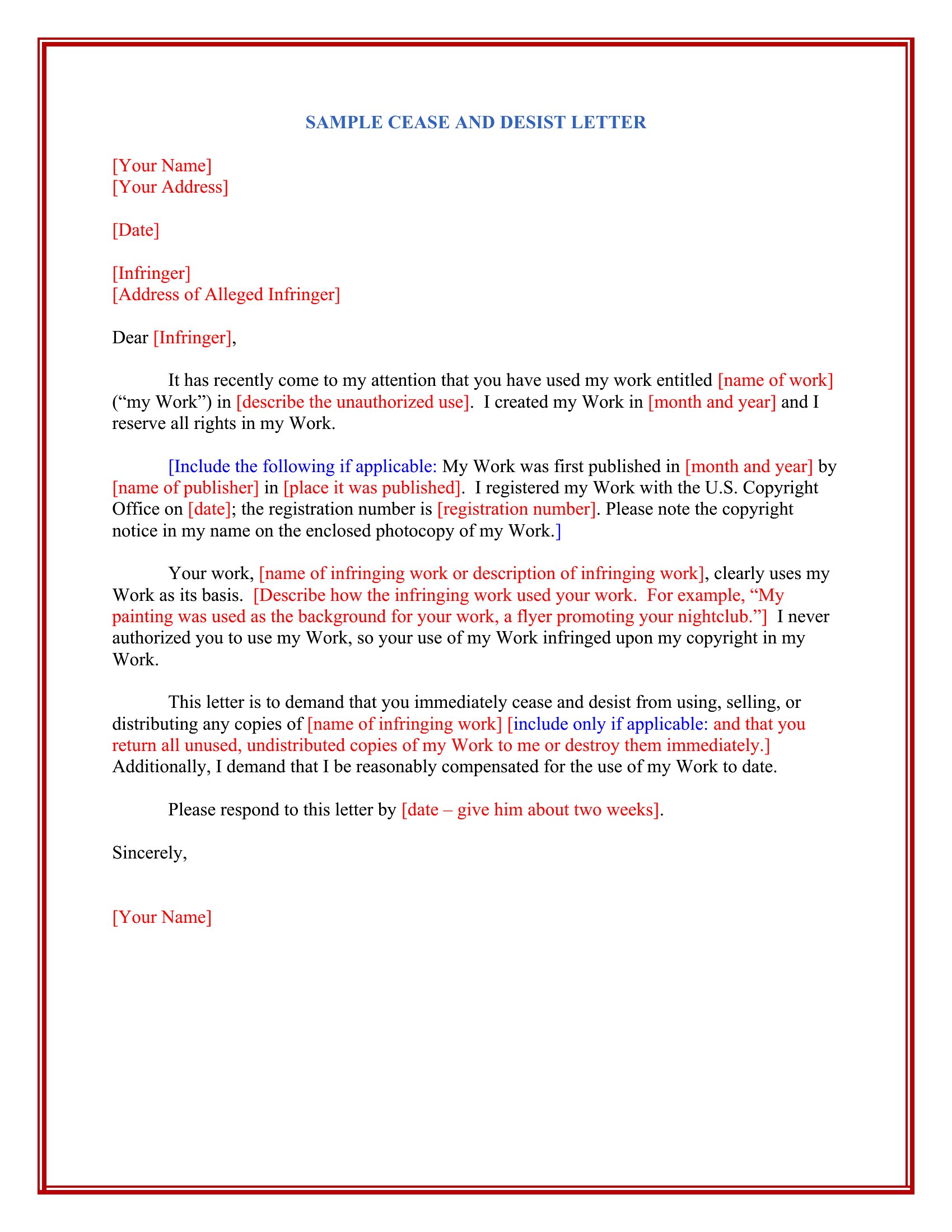
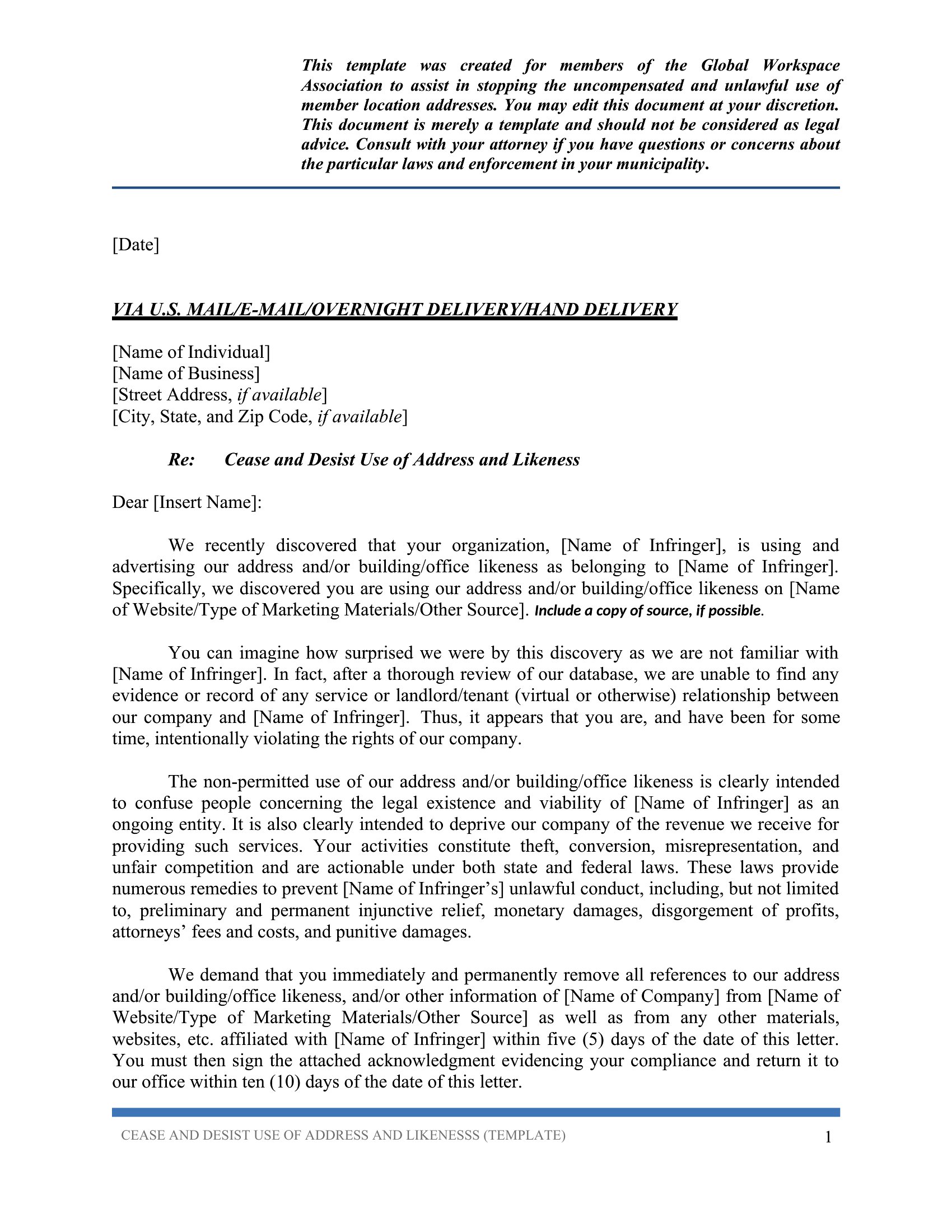
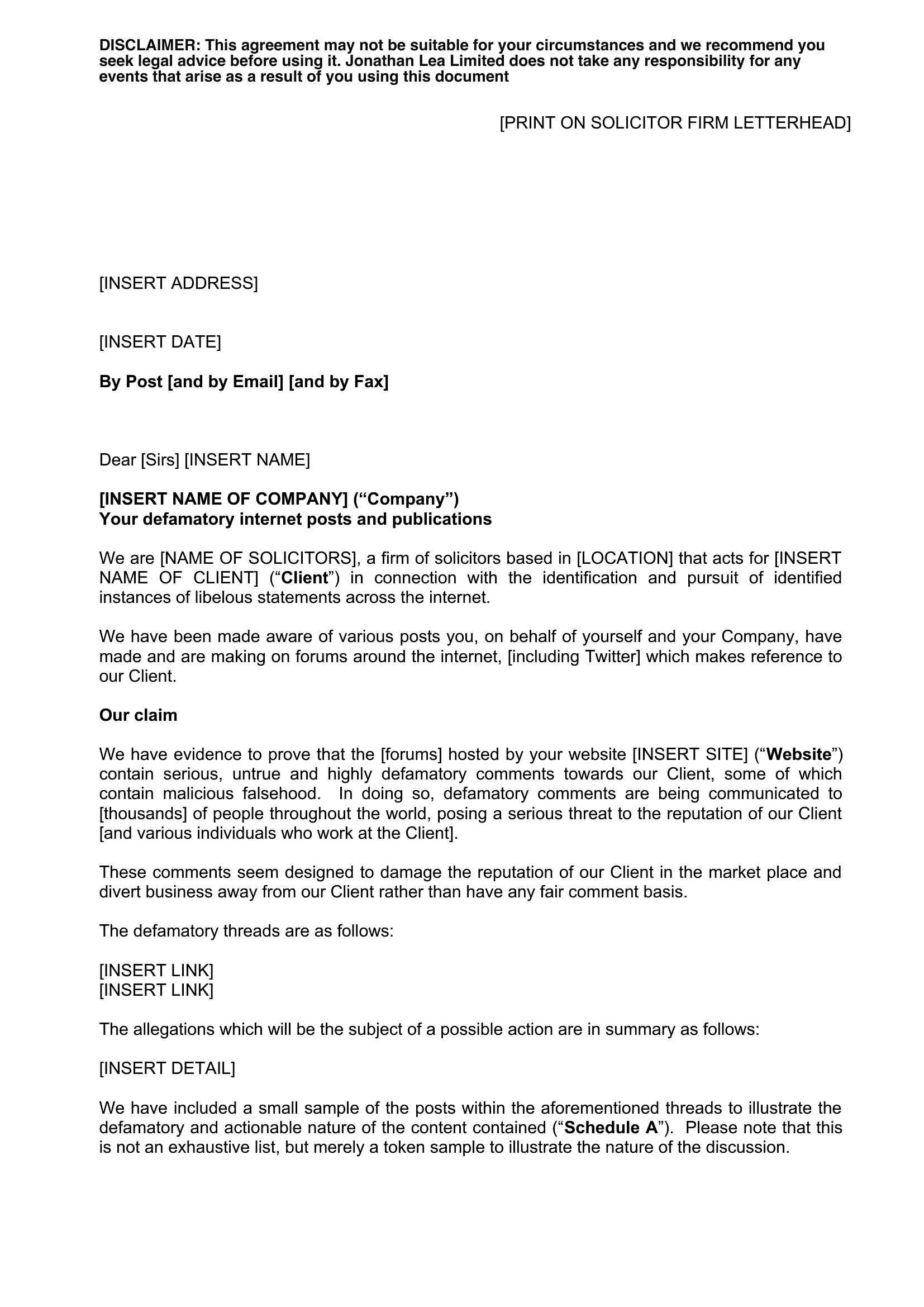
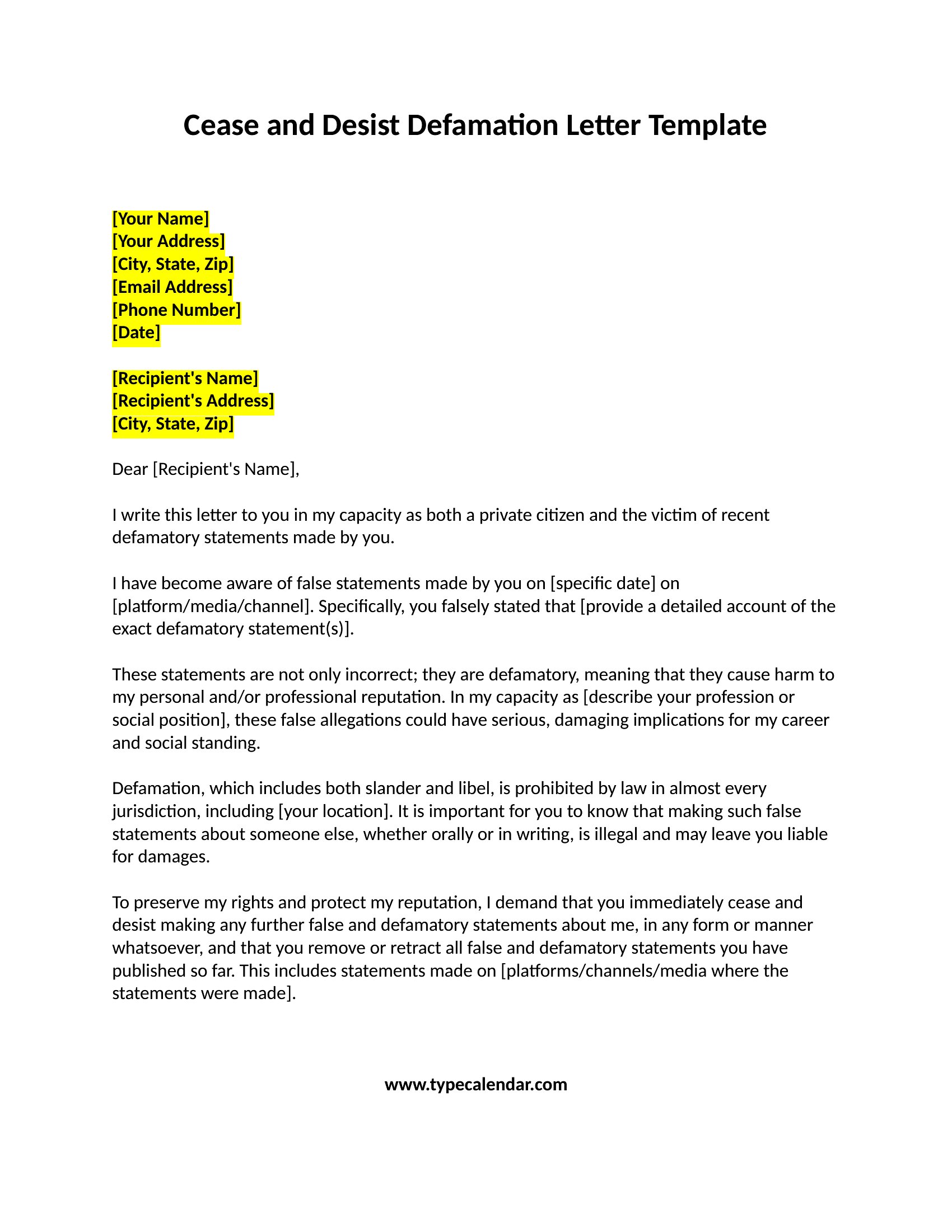
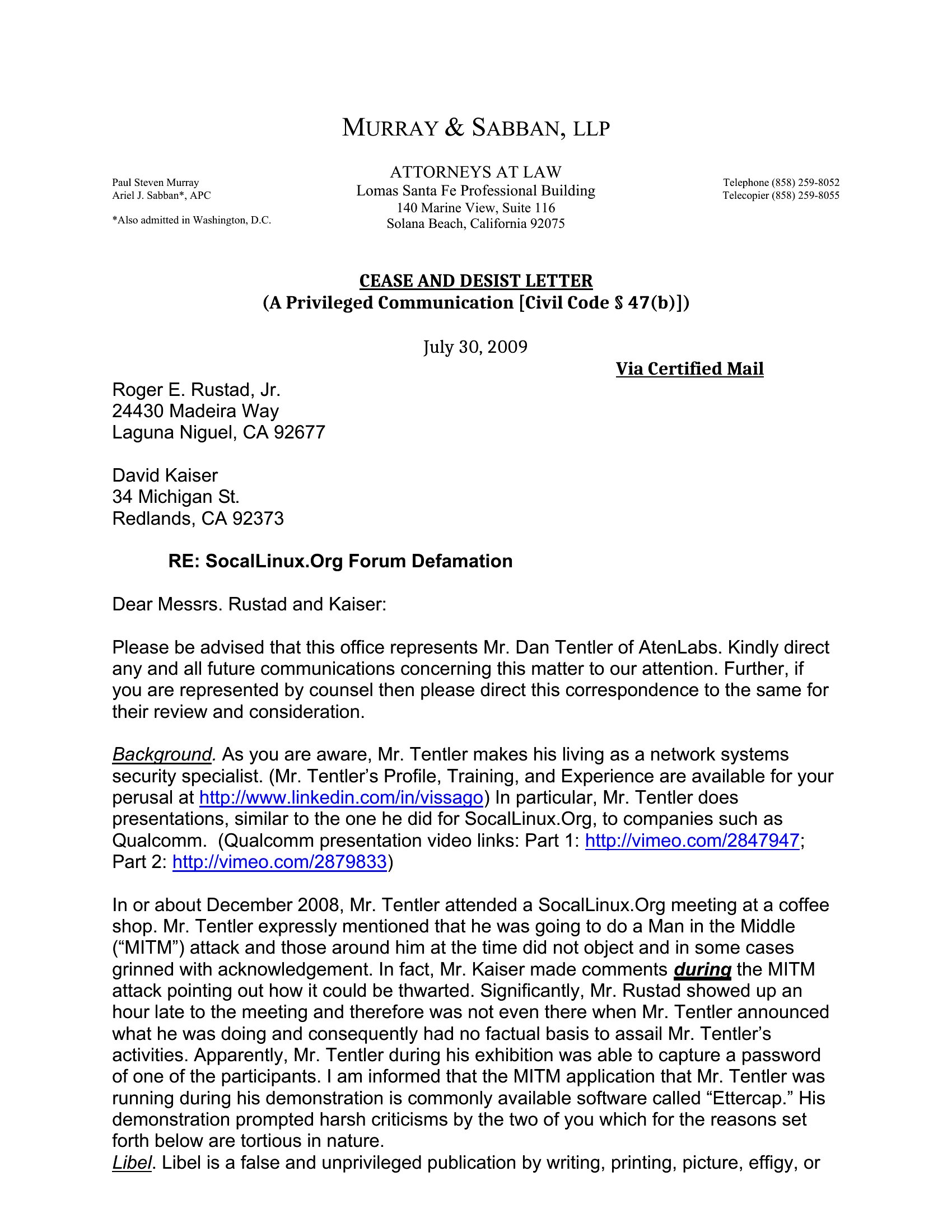
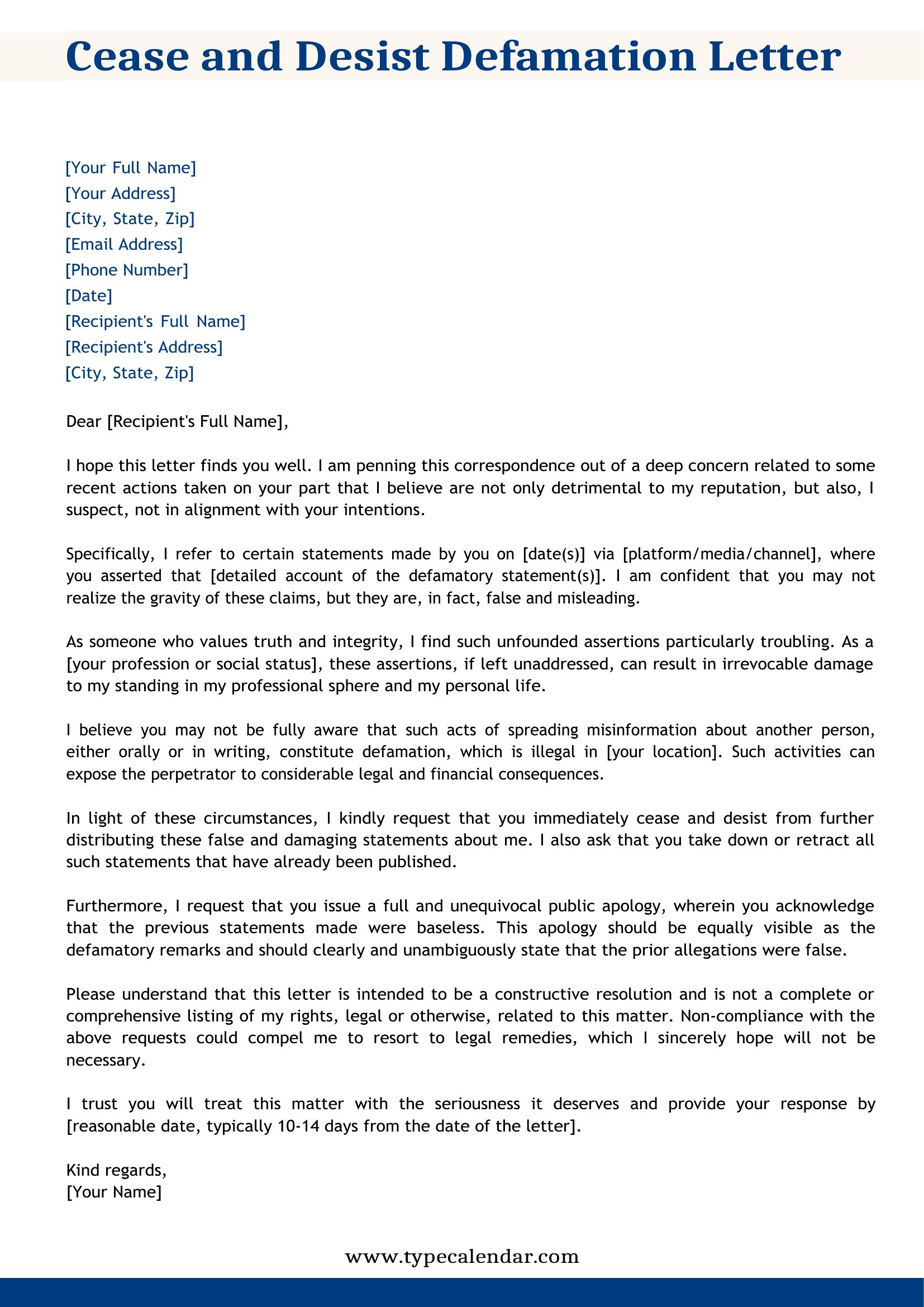
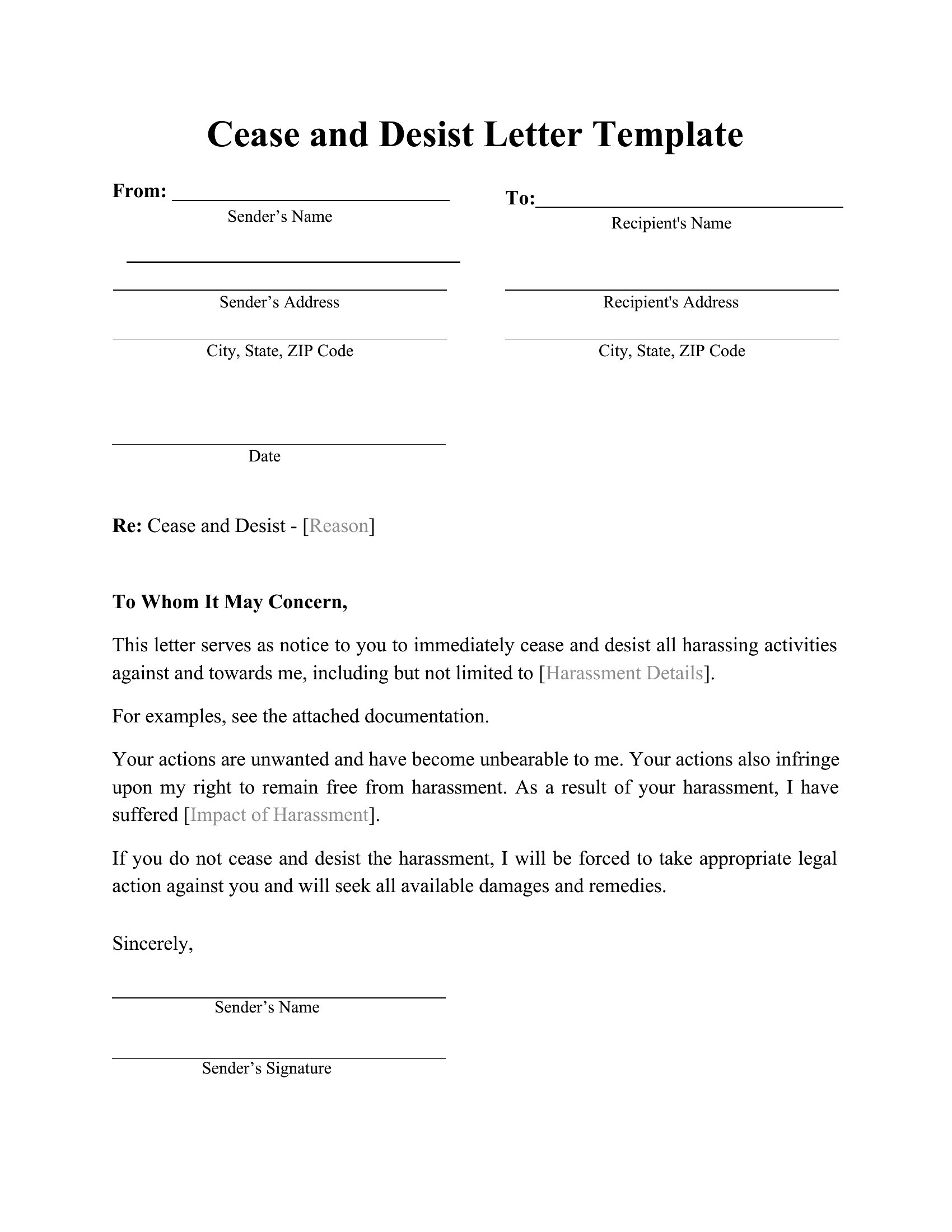
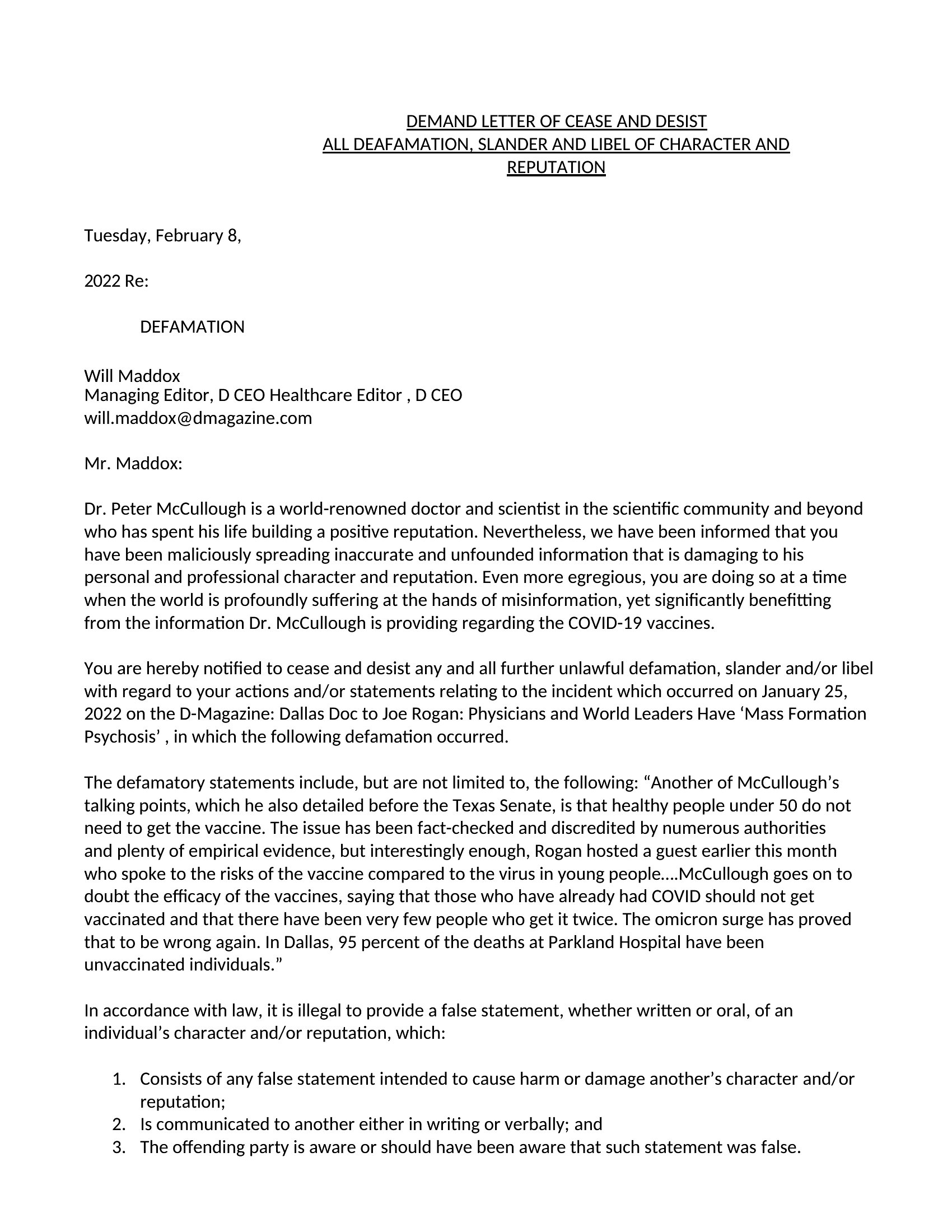
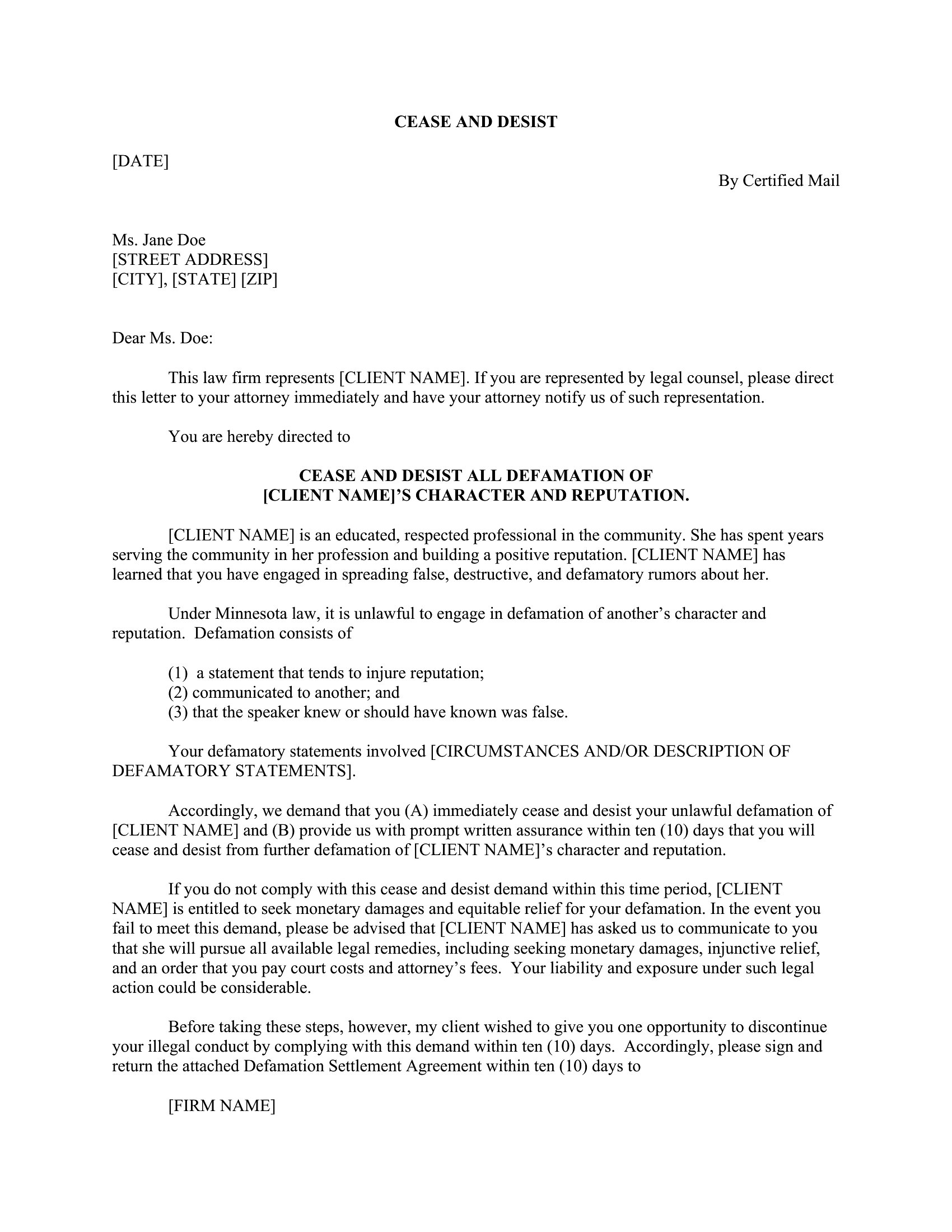
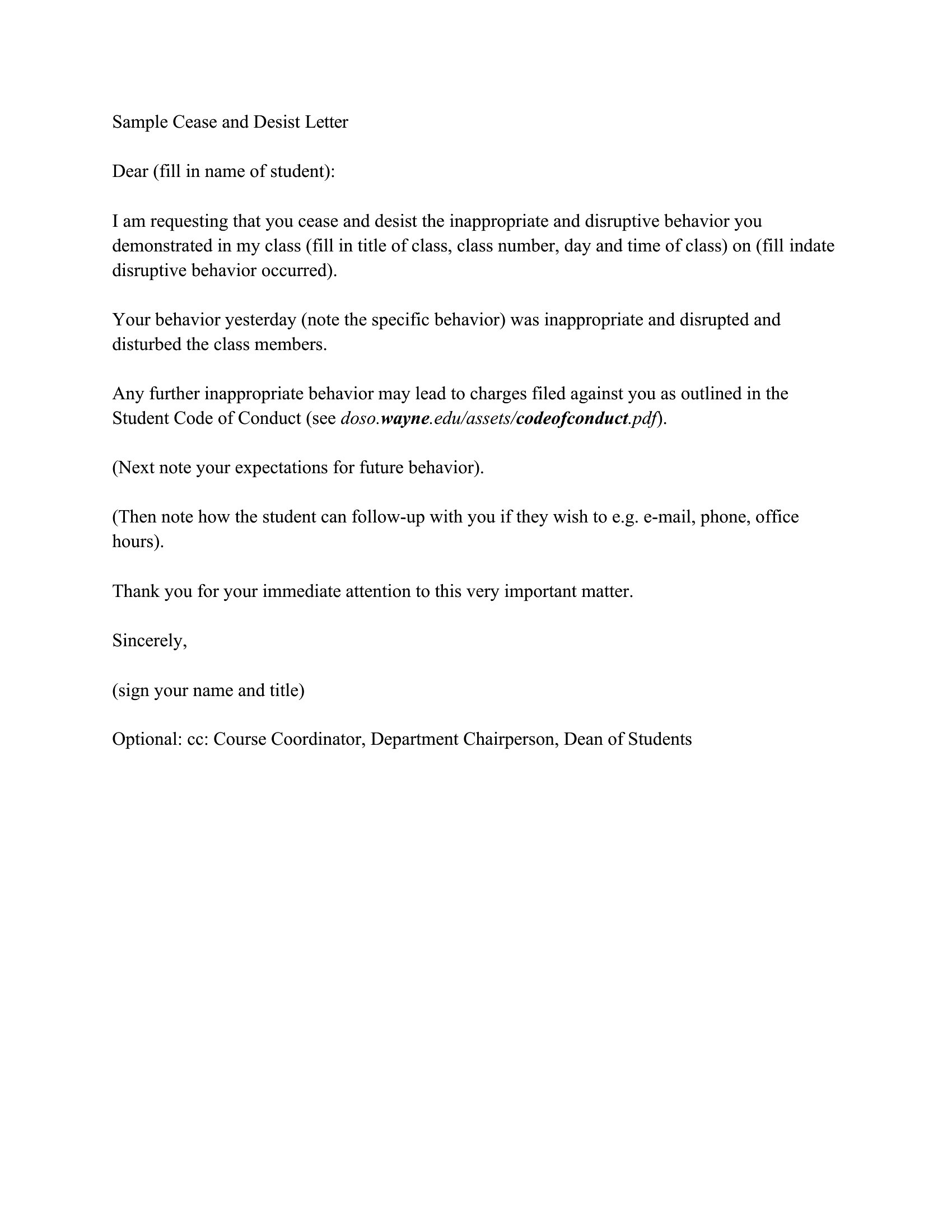
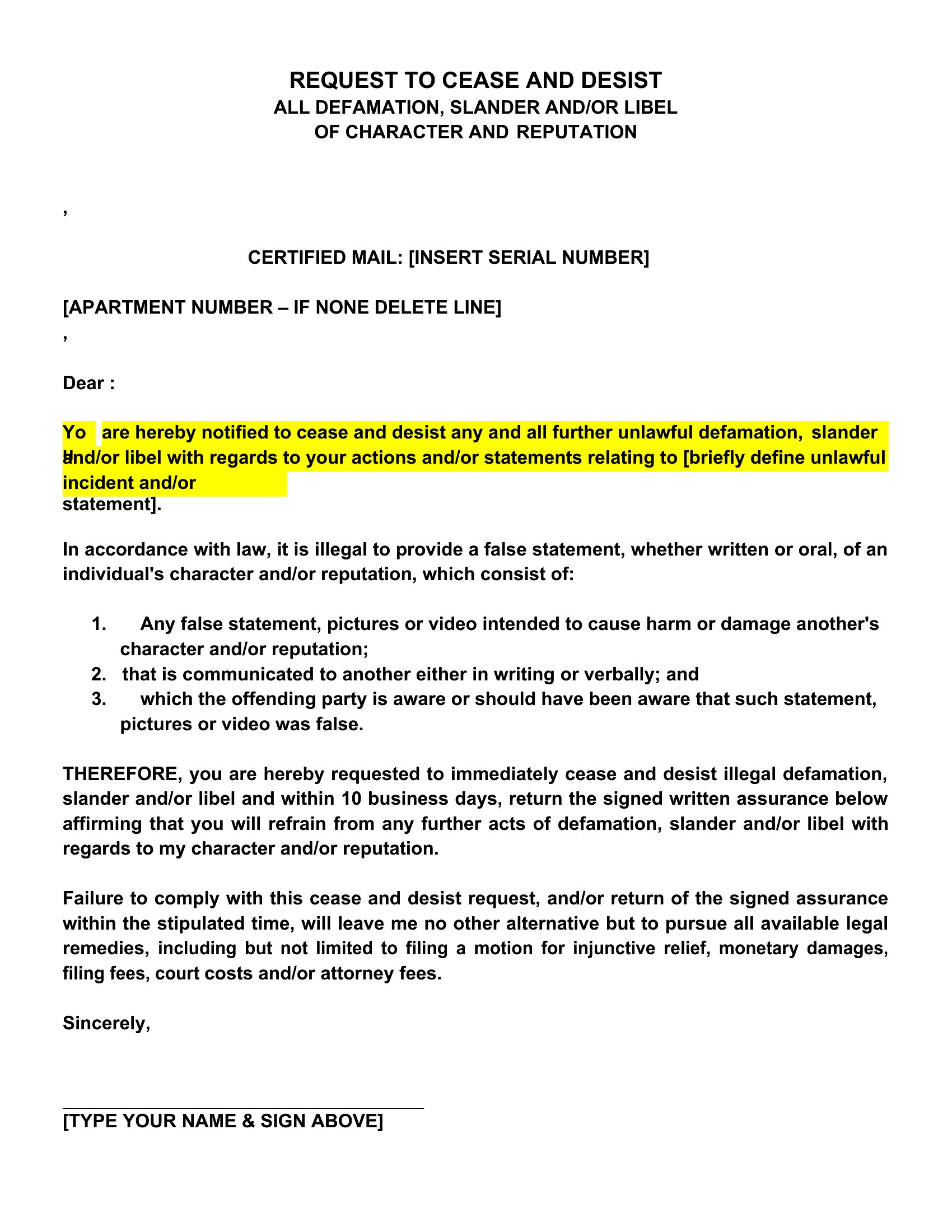
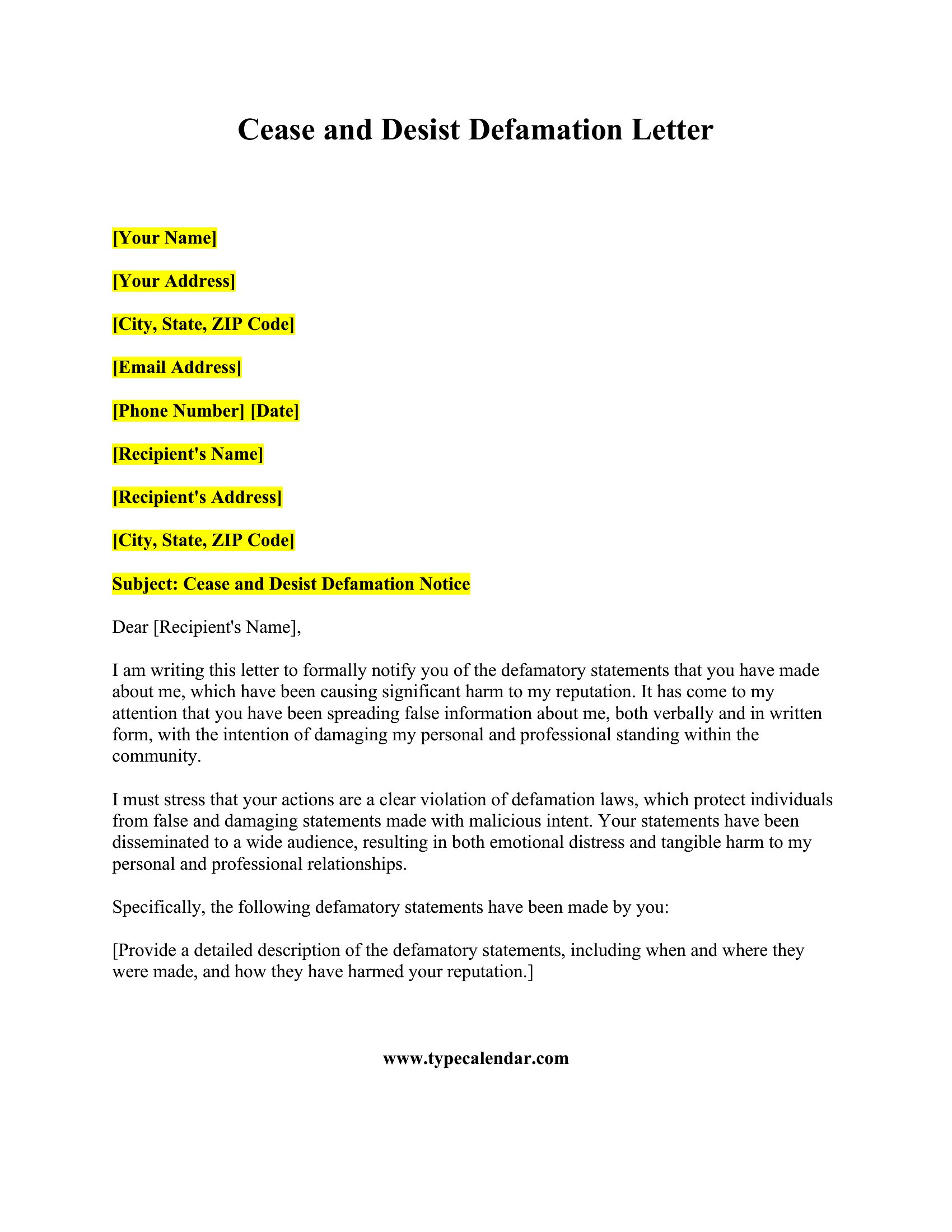
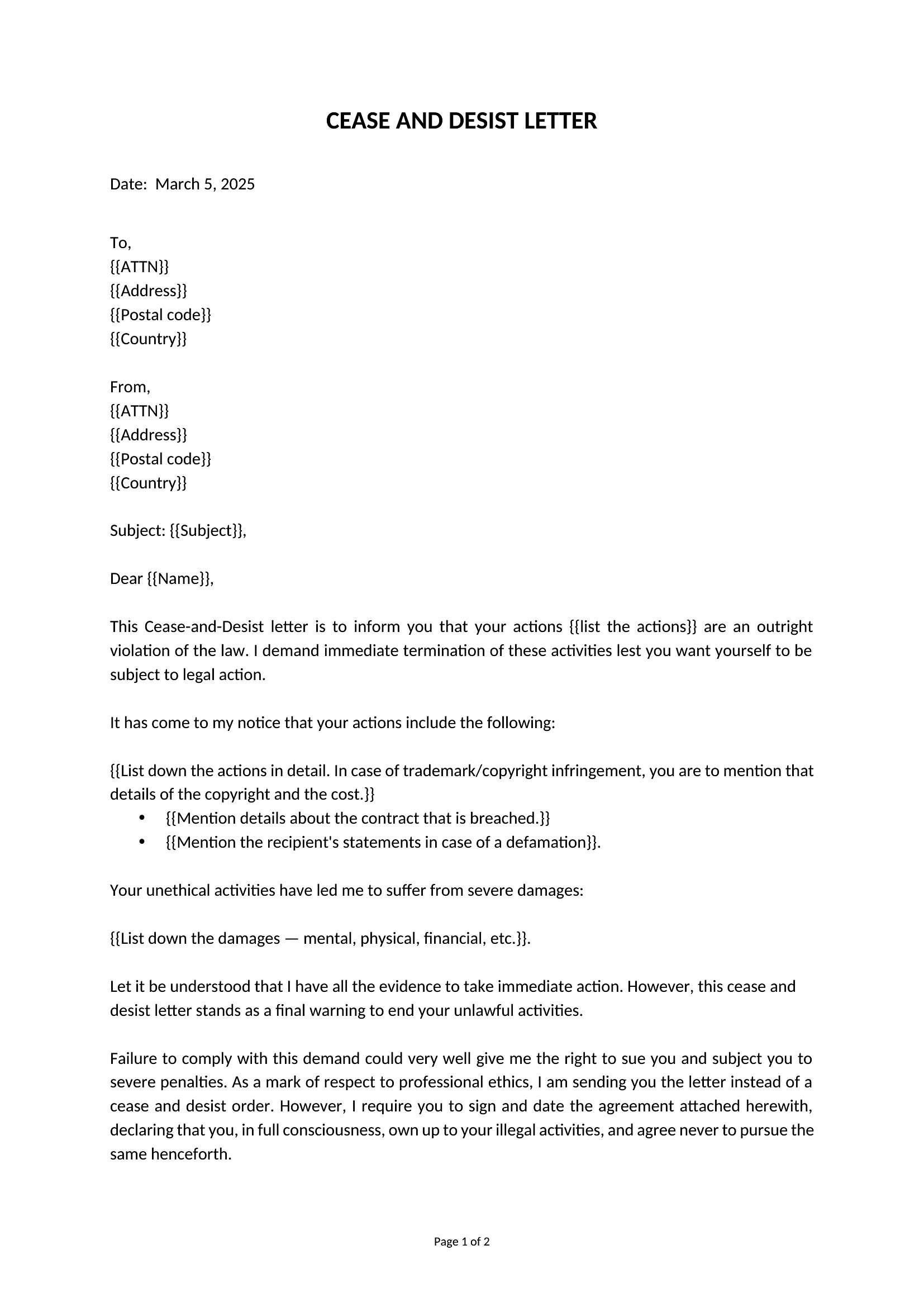
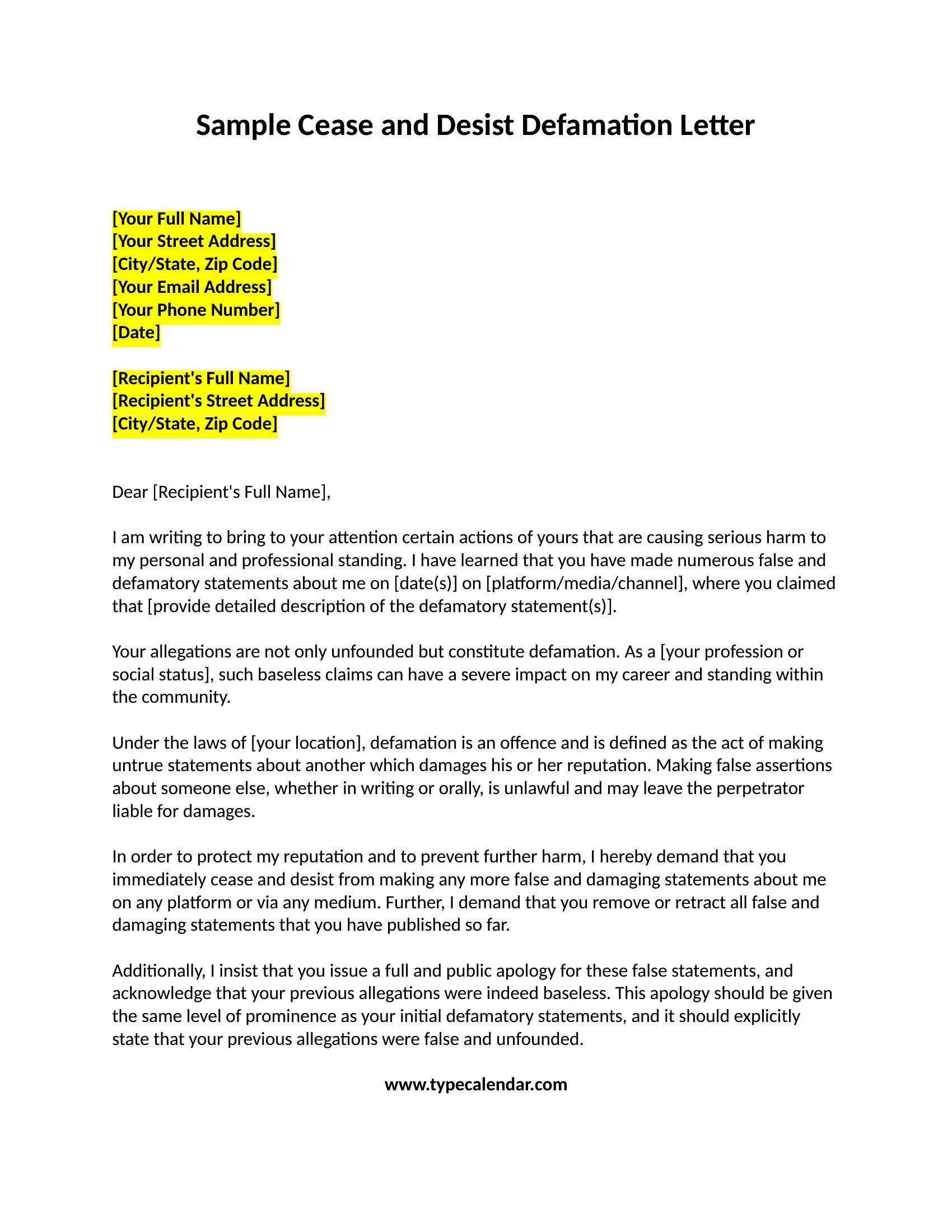
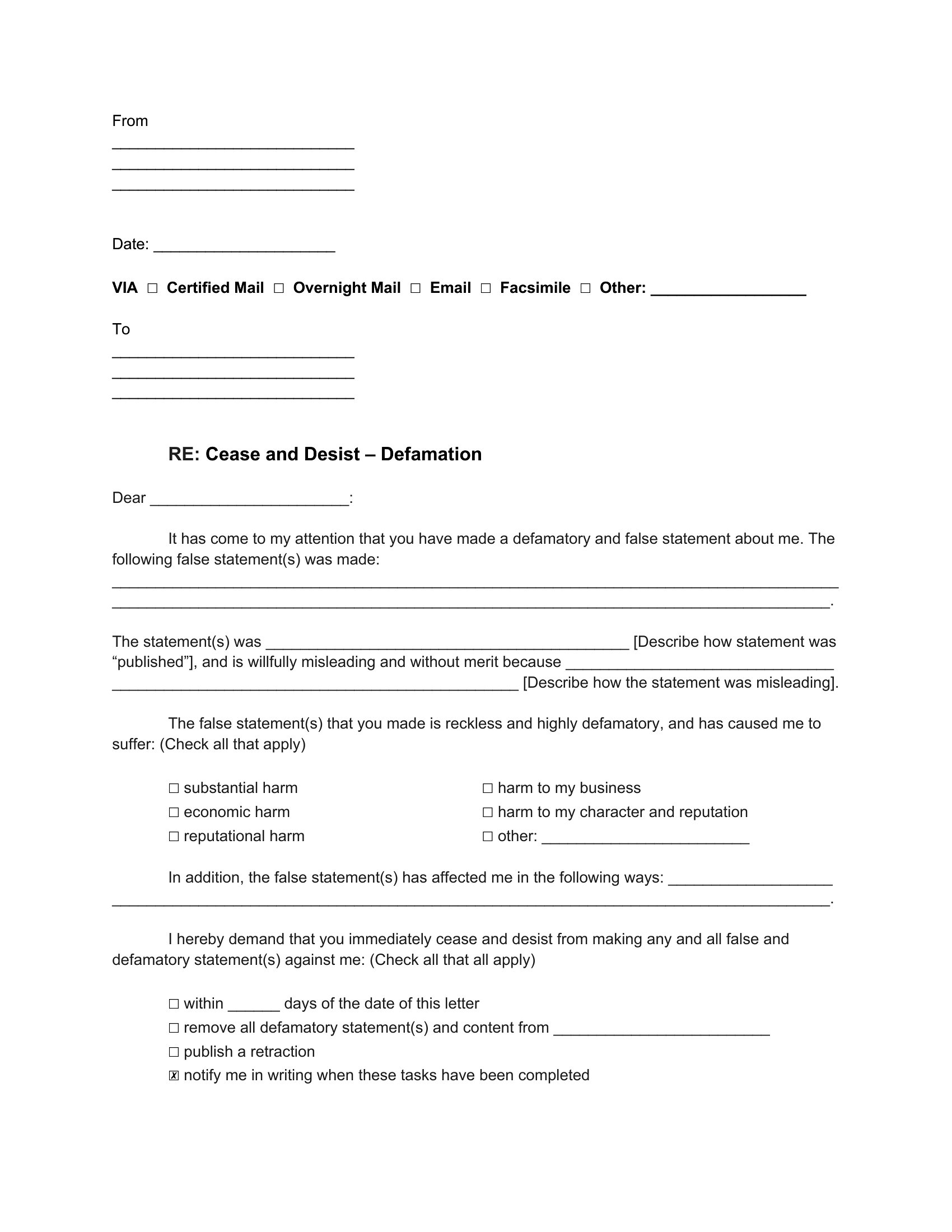
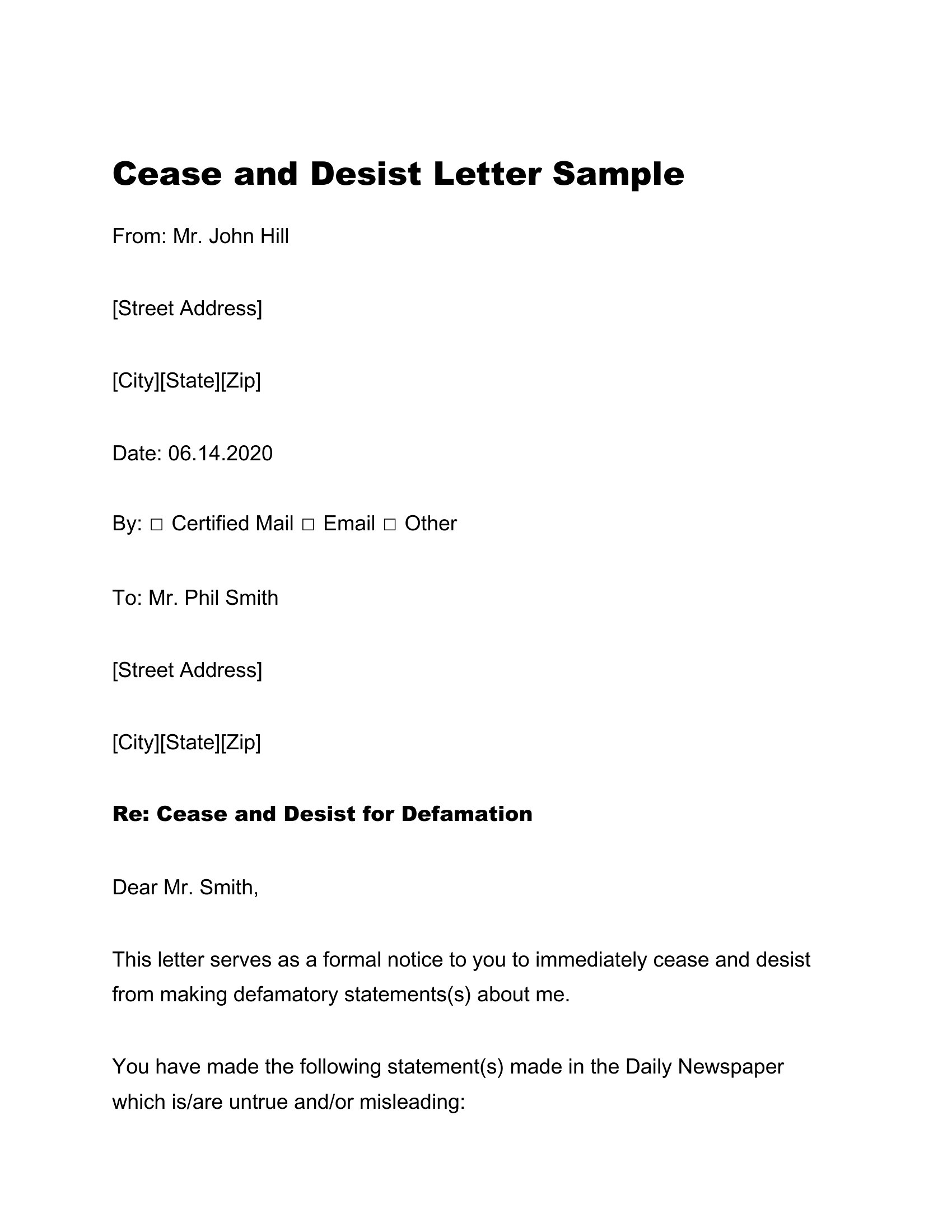
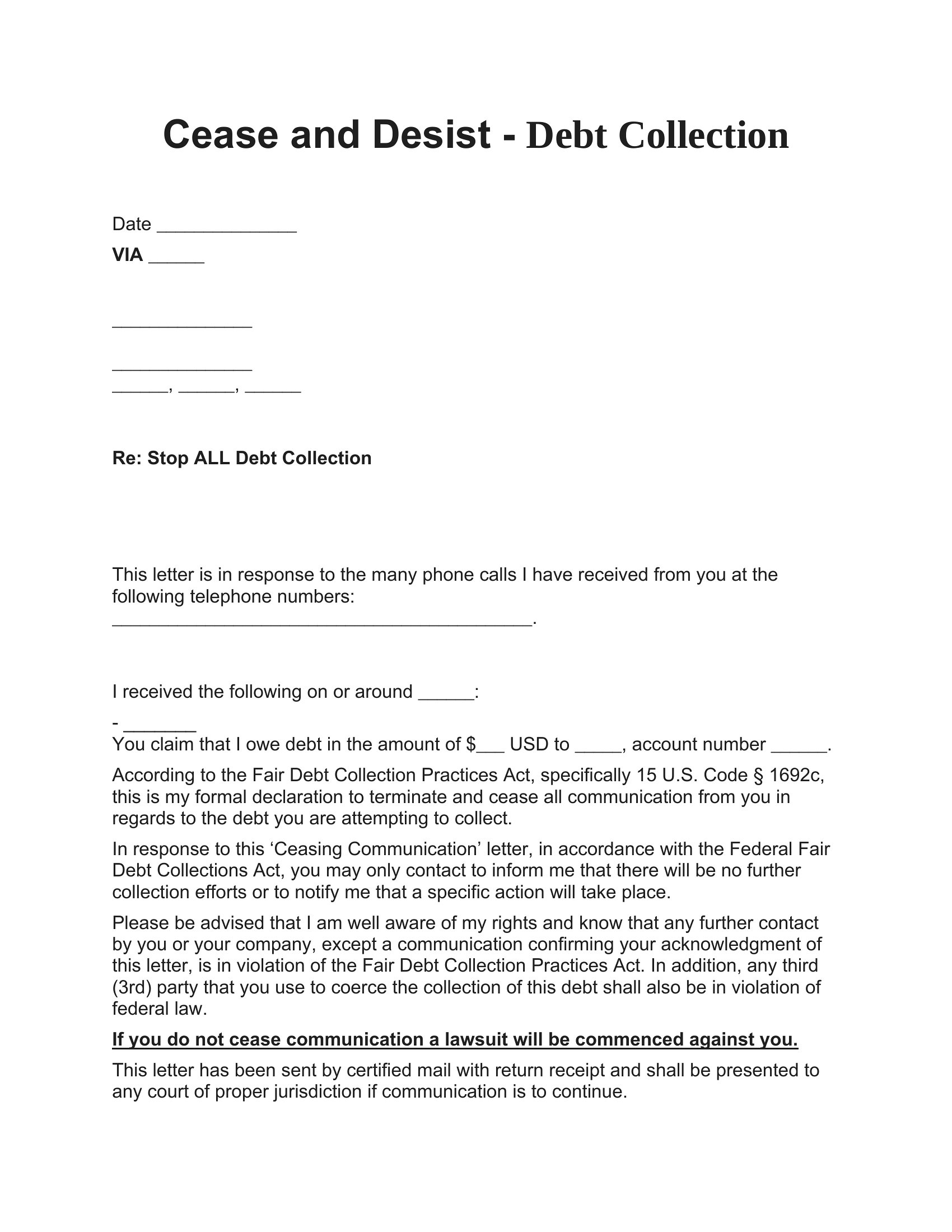
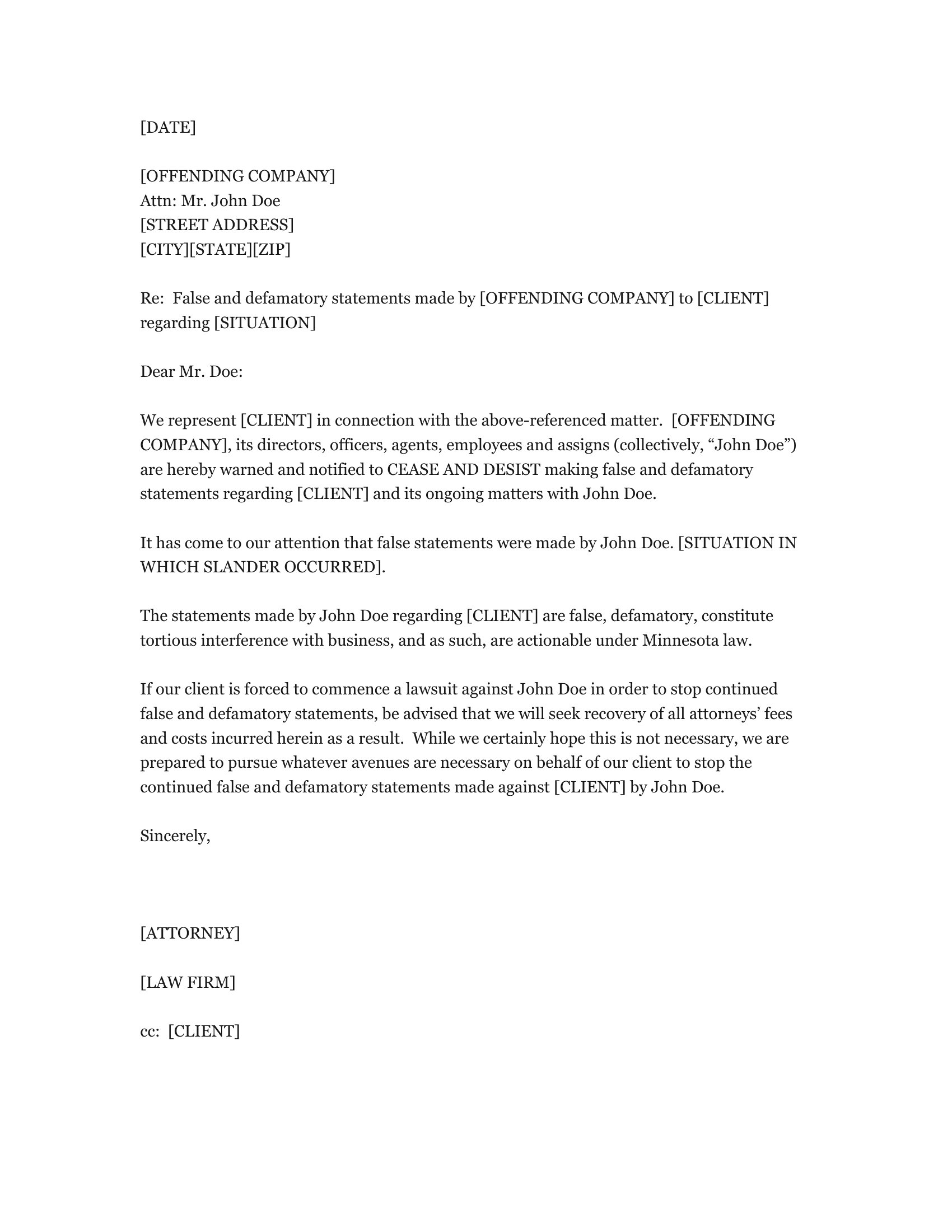
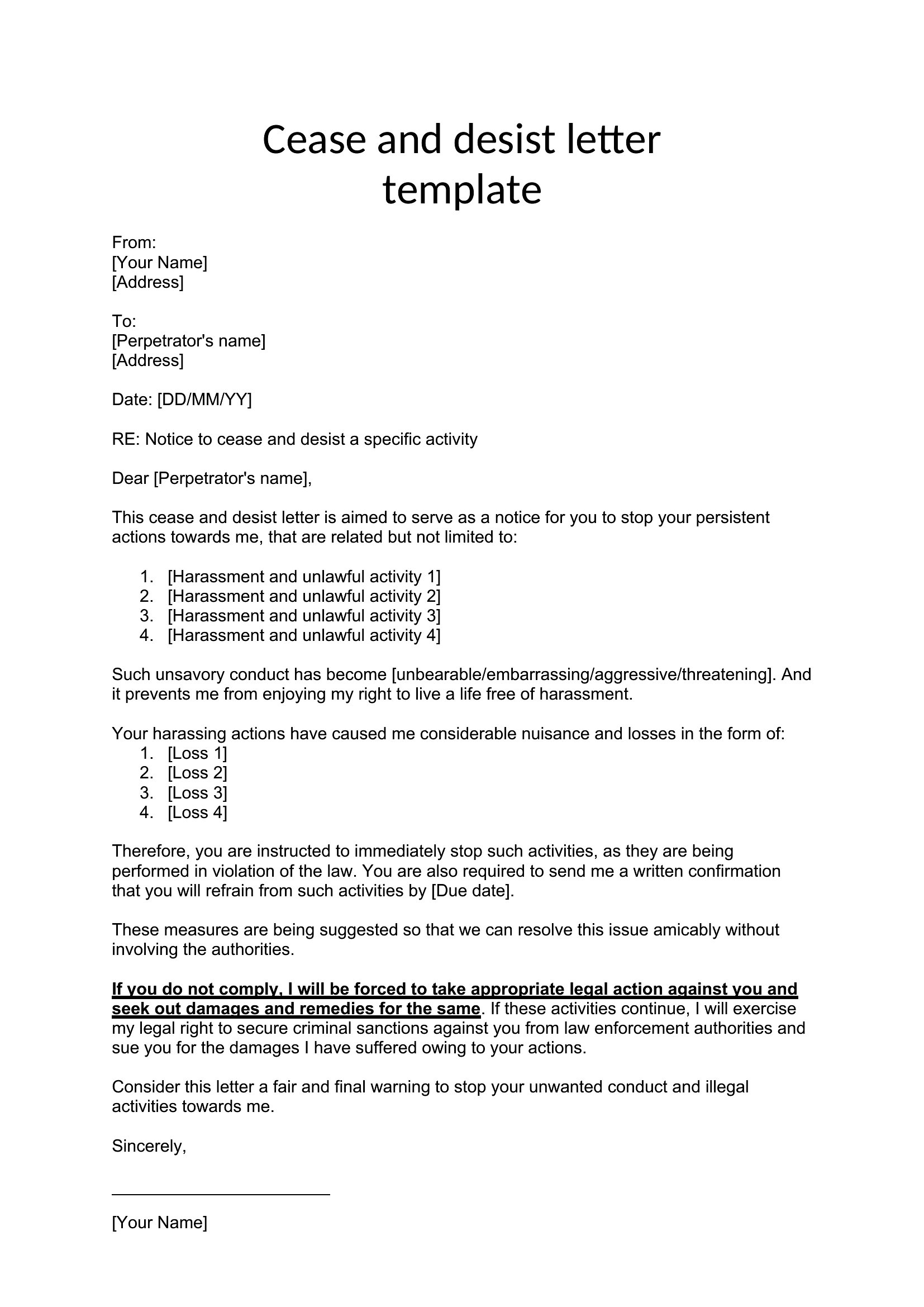
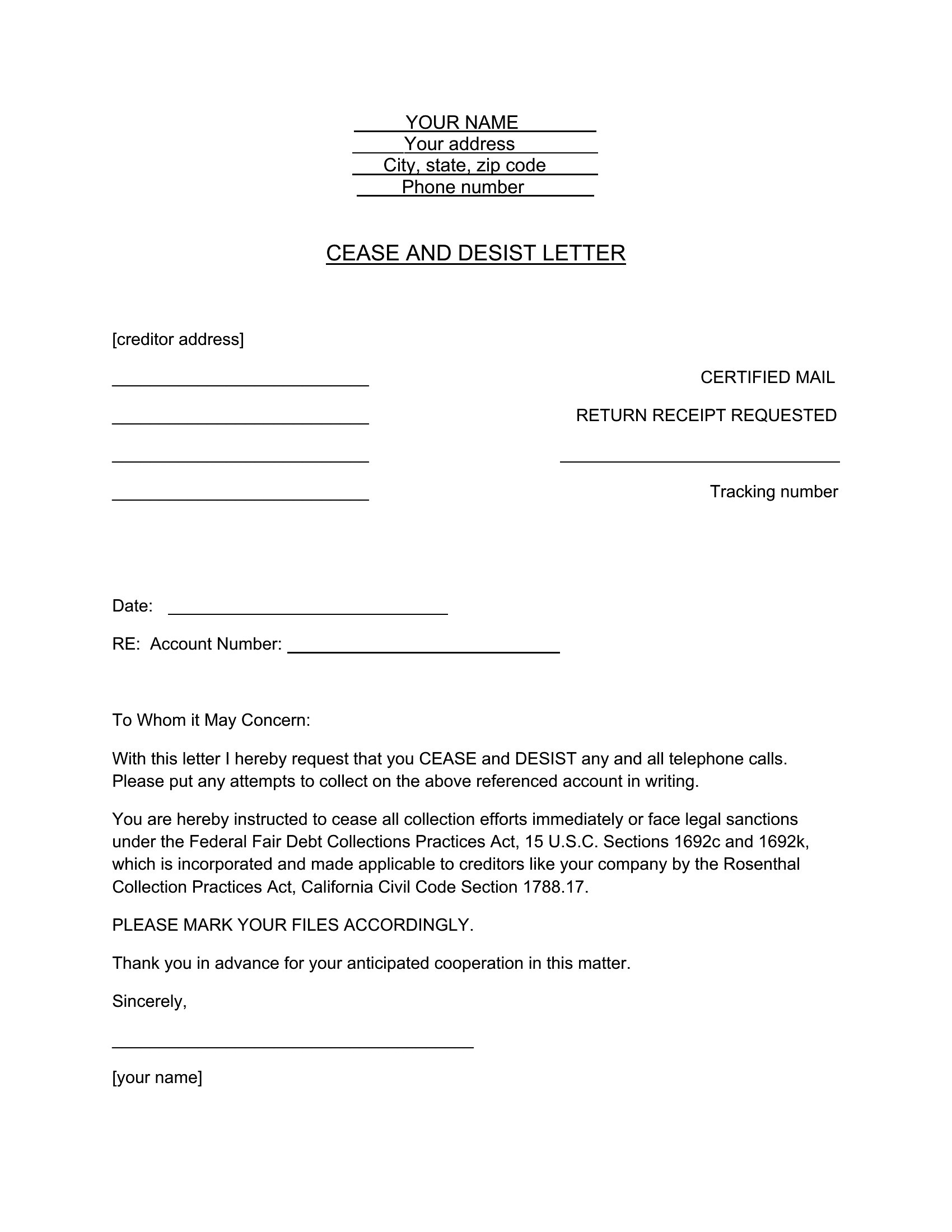
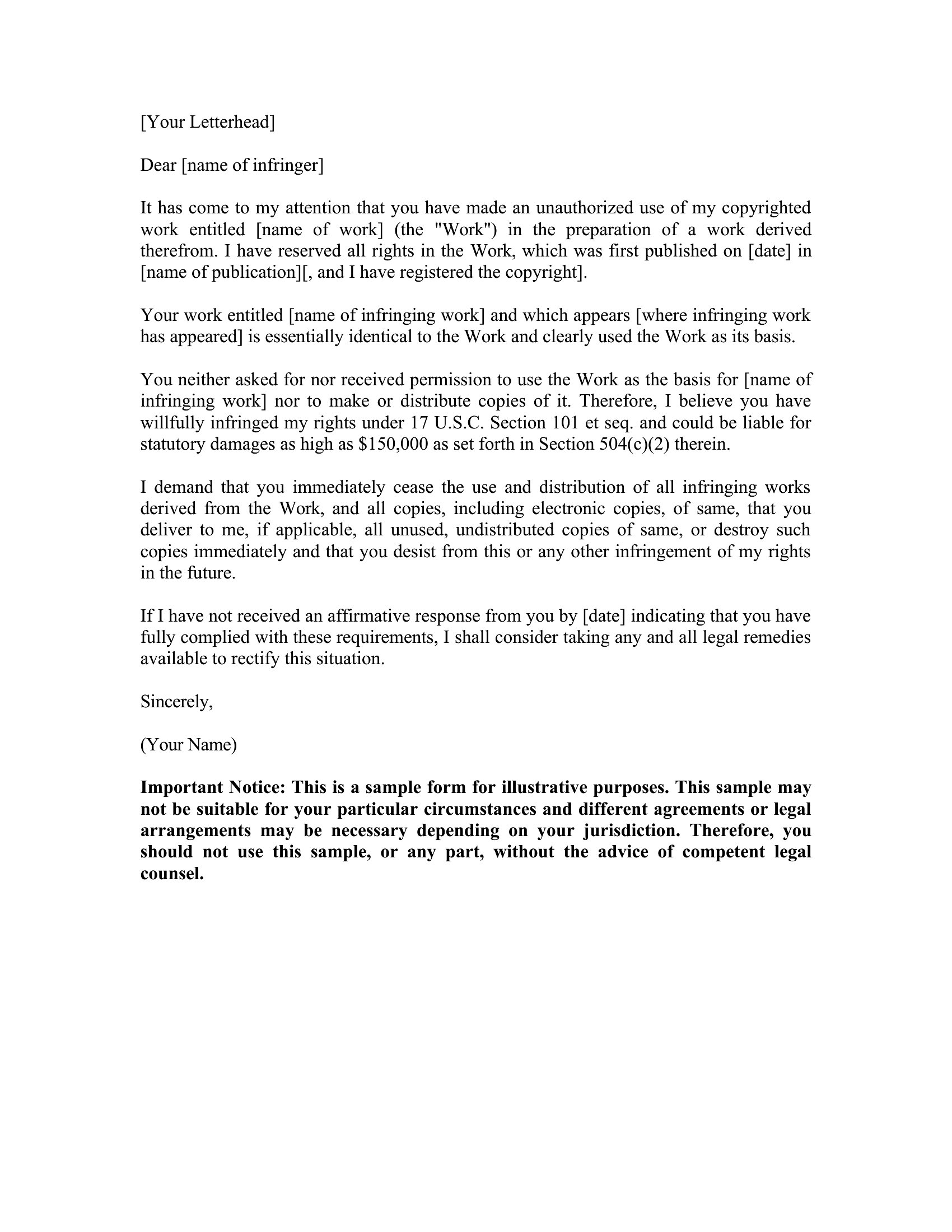
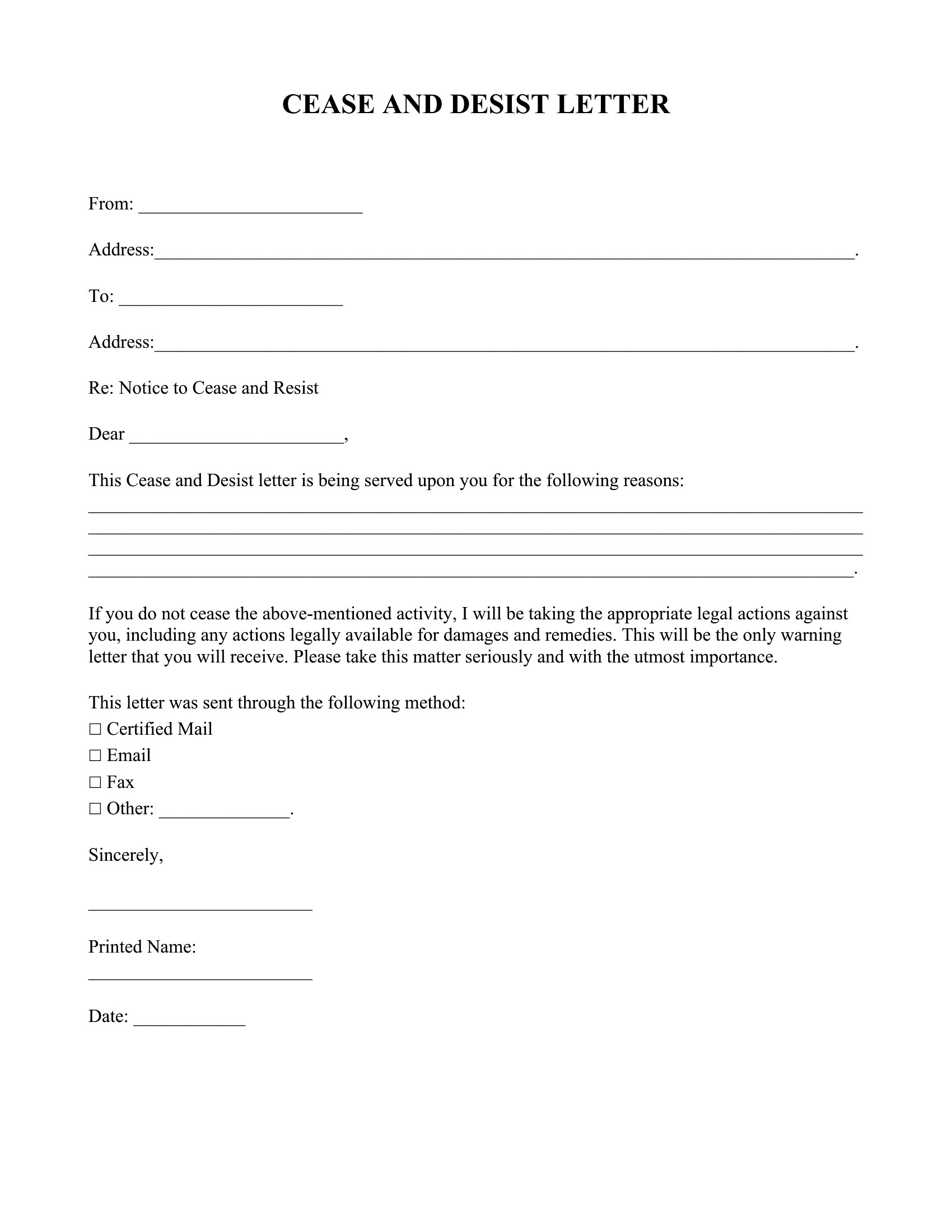
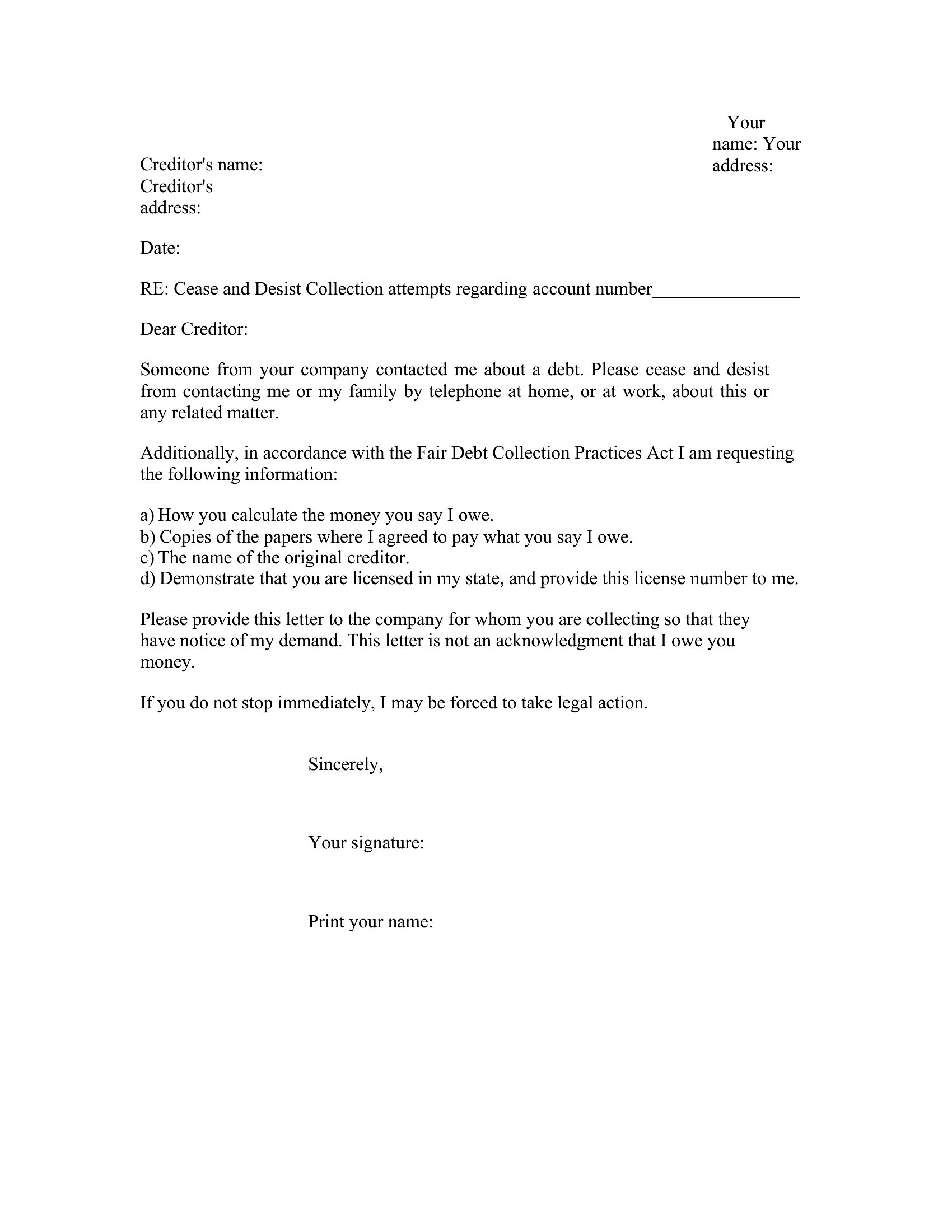
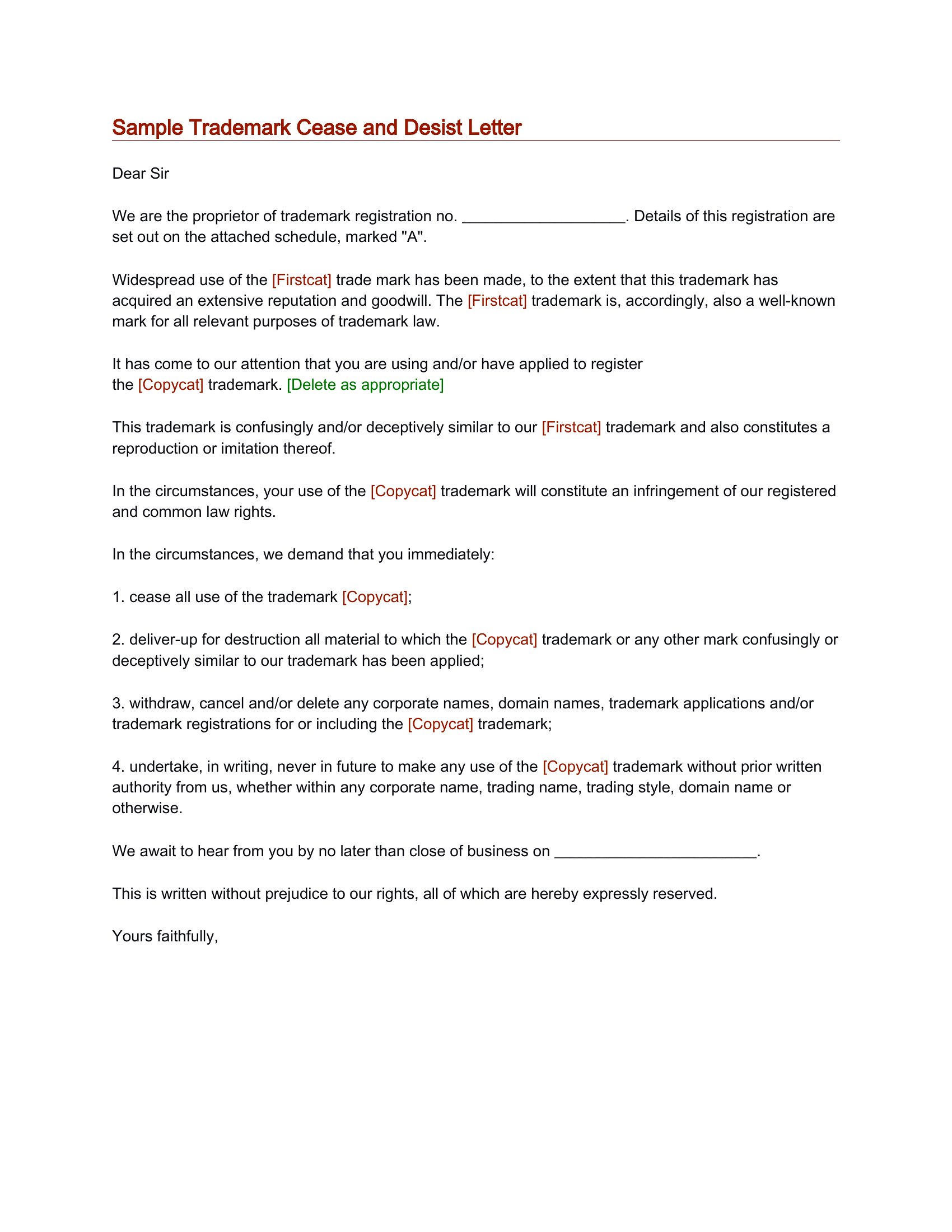
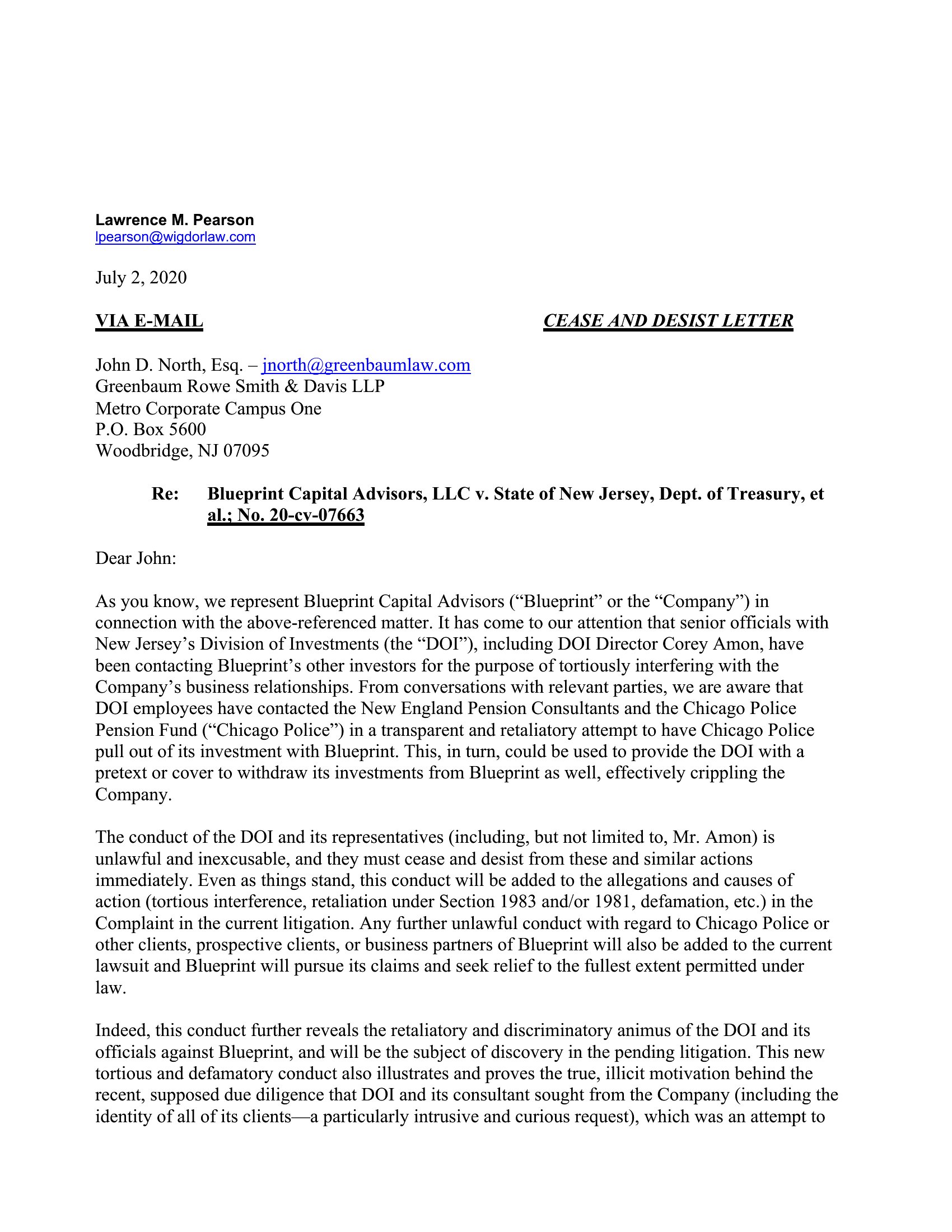
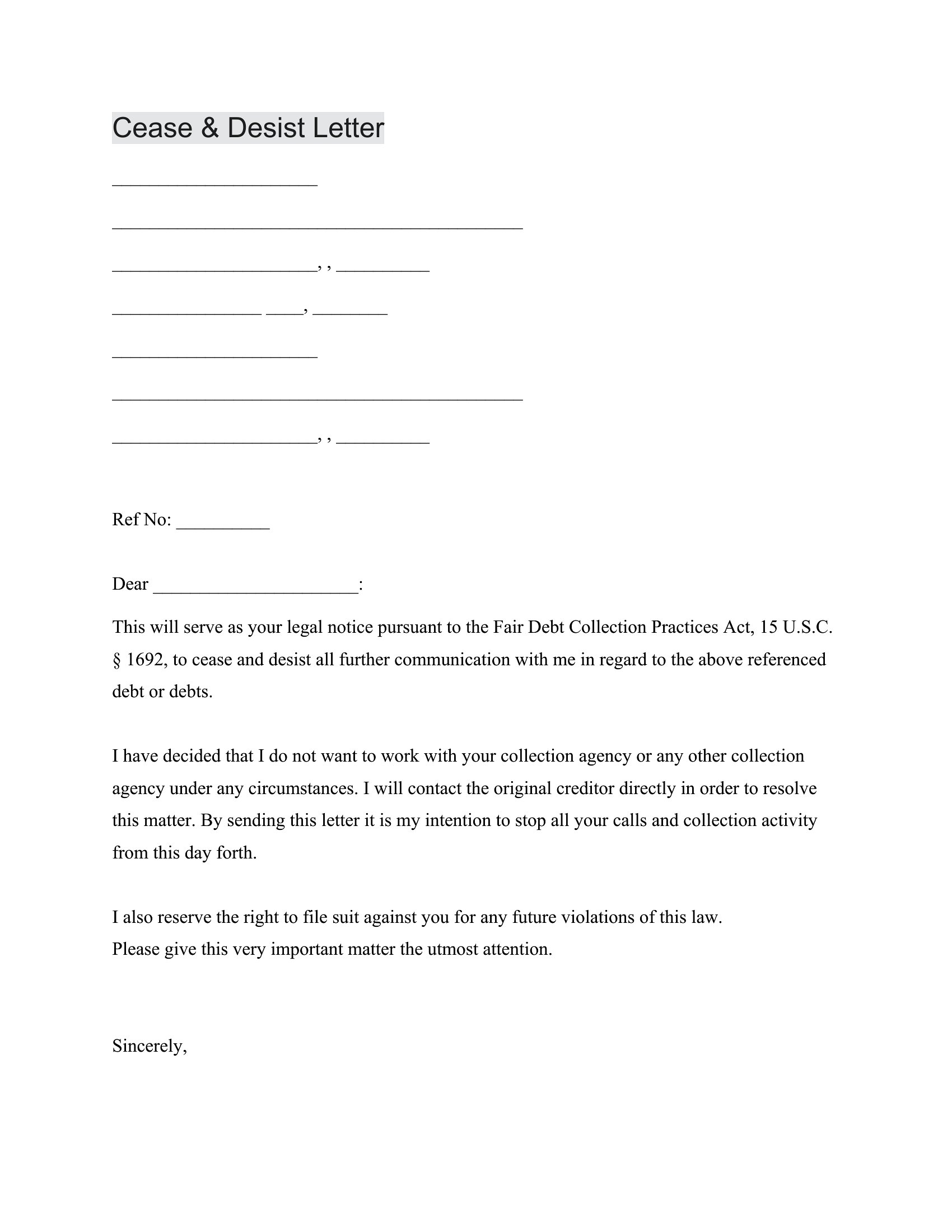
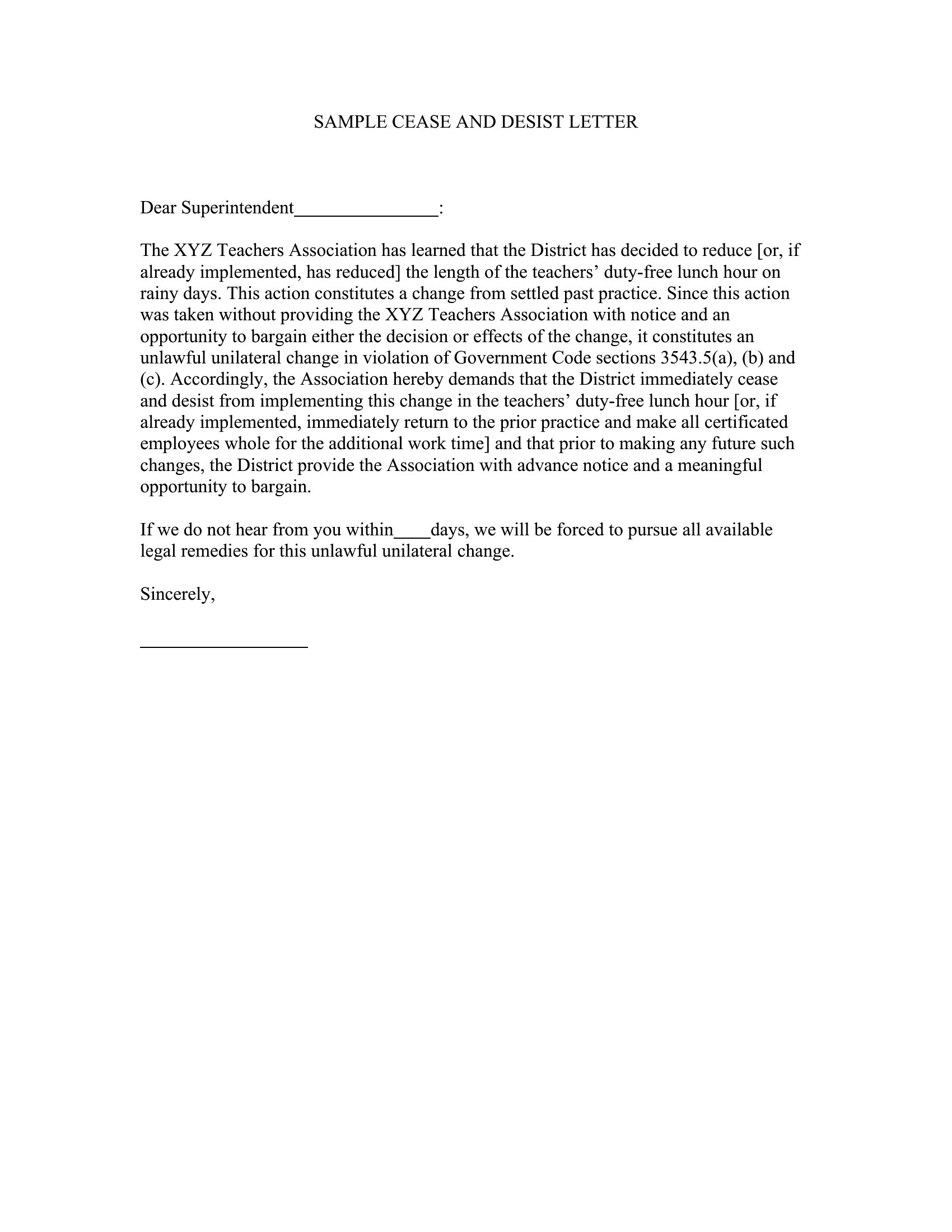
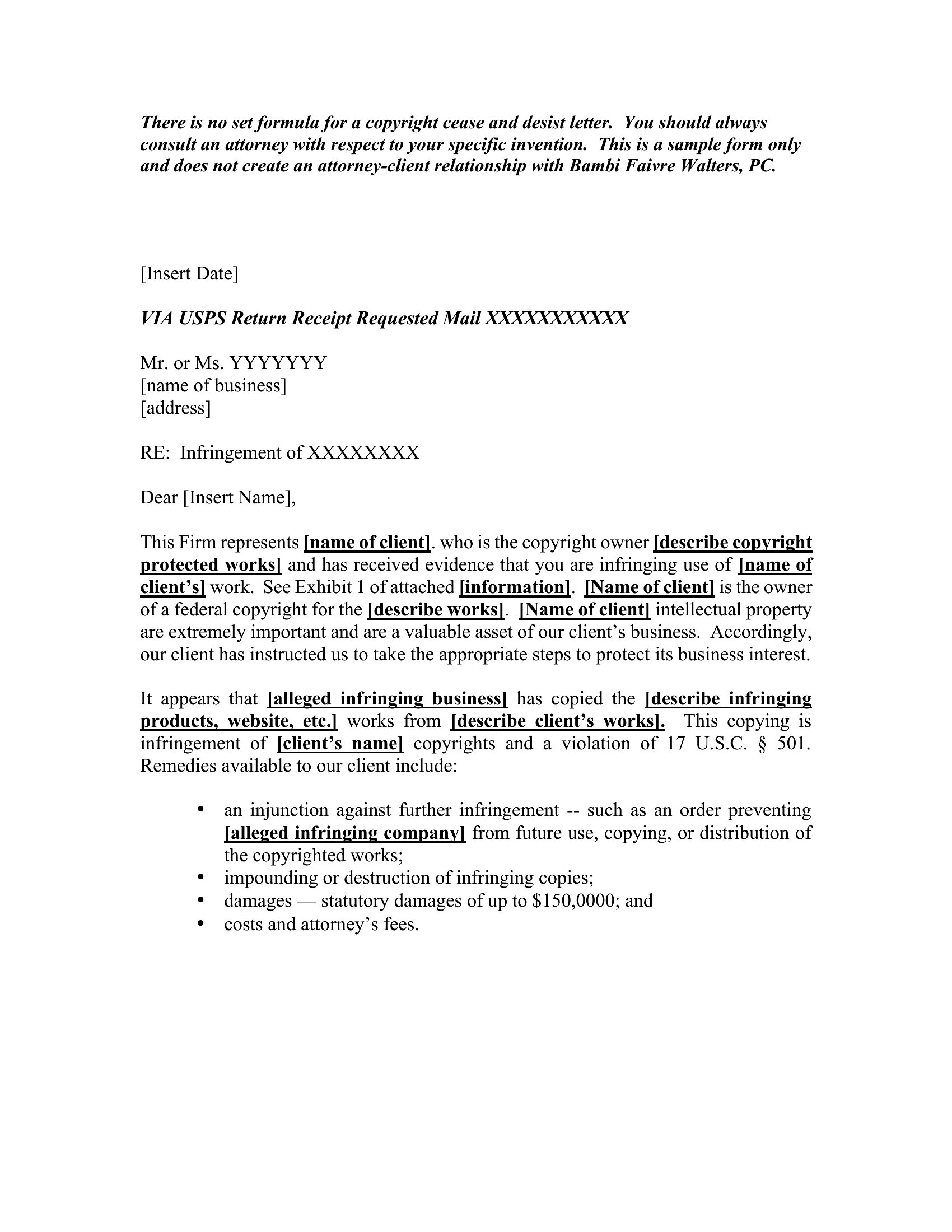
When someone spreads false statements that damage your name or business, a cease and desist letter is often the first formal step to make it stop. This set of 44 defamation letters helps you demand that the person retract the claims and quit repeating them. Individuals, business owners, and professionals guarding their reputation can put their objection on the record.

Each letter is editable in Word, with room to describe the false statements, the harm done, and the response you expect by a deadline. Defamation law is nuanced and varies by state, so review your draft with an attorney before sending anything that threatens legal action. Fill in the details, keep a copy, and send it by a trackable method.

When to use this Cease And Desist Defamation Letter template

  • A small business owner who discovers a former employee is publicly claiming false financial mismanagement, risking customer trust and partnerships. You need a formal, professional demand to halt the statements before legal action escalates.
  • A healthcare professional whose online reviews have been manipulated with fabricated complaints about patient care, threatening licensure or practice reputation. The letter should clearly reference defamation laws while preserving composure.
  • A nonprofit executive facing a defamatory social media campaign by a disgruntled board member, spreading lies that could deter donors or volunteers. You require a template that balances firmness with an offer to resolve the matter privately.
  • A freelance consultant whose online profile has been impersonated in a fake review site, claiming unethical practices that could deter future clients. The letter must address the platform’s moderators while demanding retraction from the impersonator.
  • A family whose relative’s online memorial page has been vandalized with false accusations, causing emotional distress and potential harm to their legacy.
  • A local shopkeeper whose neighbor is spreading rumors about stolen merchandise via community groups, scaring off regular customers and damaging local relationships.

Which format should I download?

Word

Microsoft Word is the only format for these templates, and it’s the best choice here. Word allows you to easily customize legal citations (like state-specific defamation laws) and include specific details about the defamatory statements. It also lets you preview the letter before printing or emailing, ensuring readability and professionalism. The editable format supports adding personal details—such as names, dates, and evidence of harm—without losing formatting or structure. If you need to share the letter with a lawyer later, Word files are universally compatible and easy to convert for review.

How to use this Cease And Desist Defamation Letter template

What details should I include about the defamatory statements to make the letter stronger?

Specify the exact false claims, where they appeared (e.g., social media, review site), who made them, and how they’ve harmed you. For example, ‘The post on [platform] stating ‘[Business Name] fraudulently charged customers’ has led to a 20% drop in inquiries.’ Include dates if possible. This helps demonstrate the impact and legitimacy of your demand. Avoid emotional language—stick to factual descriptions of the harm caused.

Should I mention a deadline for the person to retract the statements?

Yes, include a clear deadline, typically 7–14 days, to give them time to respond while showing urgency. Phrase it professionally: ‘You are required to retract these statements and cease repeating them by [date].’ This creates accountability without escalating tension. If the statements don’t stop after the deadline, you’ll have documented your efforts before taking further action.

What if the person ignores the cease and desist letter but doesn’t retract the statements?

Ignoring the letter may strengthen your case if you proceed with legal action, as it shows a pattern of defiance. Keep records of all communications and evidence of the defamation. Consult a lawyer to discuss next steps, such as filing a formal complaint or seeking an injunction. These templates are a starting point—legal advice should come from a qualified professional familiar with your jurisdiction’s defamation laws.

Comments

Join the conversation

Sign in to share your thoughts and leave a comment on this resource.

Newsletter

Get Weekly Design Updates

Join our community to receive curated resources and inspiration.

Weekly Tips Resources Early Access

We respect your privacy. Confirmation email required. Privacy Policy